Événement Conférence
World Environment Day Celebration 2025 | Multilateral Geneva Collectively Acting to Beat Plastic Pollution
05 Juin 2025
09:00 – 12:00
Lieu: International Environment House II
Organisation: Geneva Environment Network, Bureau régional du PNUE pour l'Europe
This year’s World Environment Day focus is on ending plastic pollution and comes exactly two months before countries meet in Geneva to continue negotiating a global treaty to end plastic pollution. At the Geneva Celebration, leading experts will highlight how the international Geneva multilateral diplomacy system is collectively taking action to tackle plastic pollution.

Geneva World Environment Day Celebration
The 2025 edition of World Environment Day focuses on putting an end to plastic pollution. For decades, plastic pollution has seeped into every corner of the world, leaching into the water we drink, into the food we eat, and our bodies. While plastic pollution is a major concern, it is also one of the most fixable of today’s environmental challenges, with some obvious solutions at hand.
This year’s World Environment Day observance comes as countries make progress towards securing a global treaty to end plastic pollution, including in the marine environment. In November 2024, the Republic of Korea hosted the fifth session of negotiations to develop a plastic pollution treaty, and is this year the official host of World Environment Day. The fifth session of the international negotiation committee will resume in Geneva from 5 to 14 August 2025.
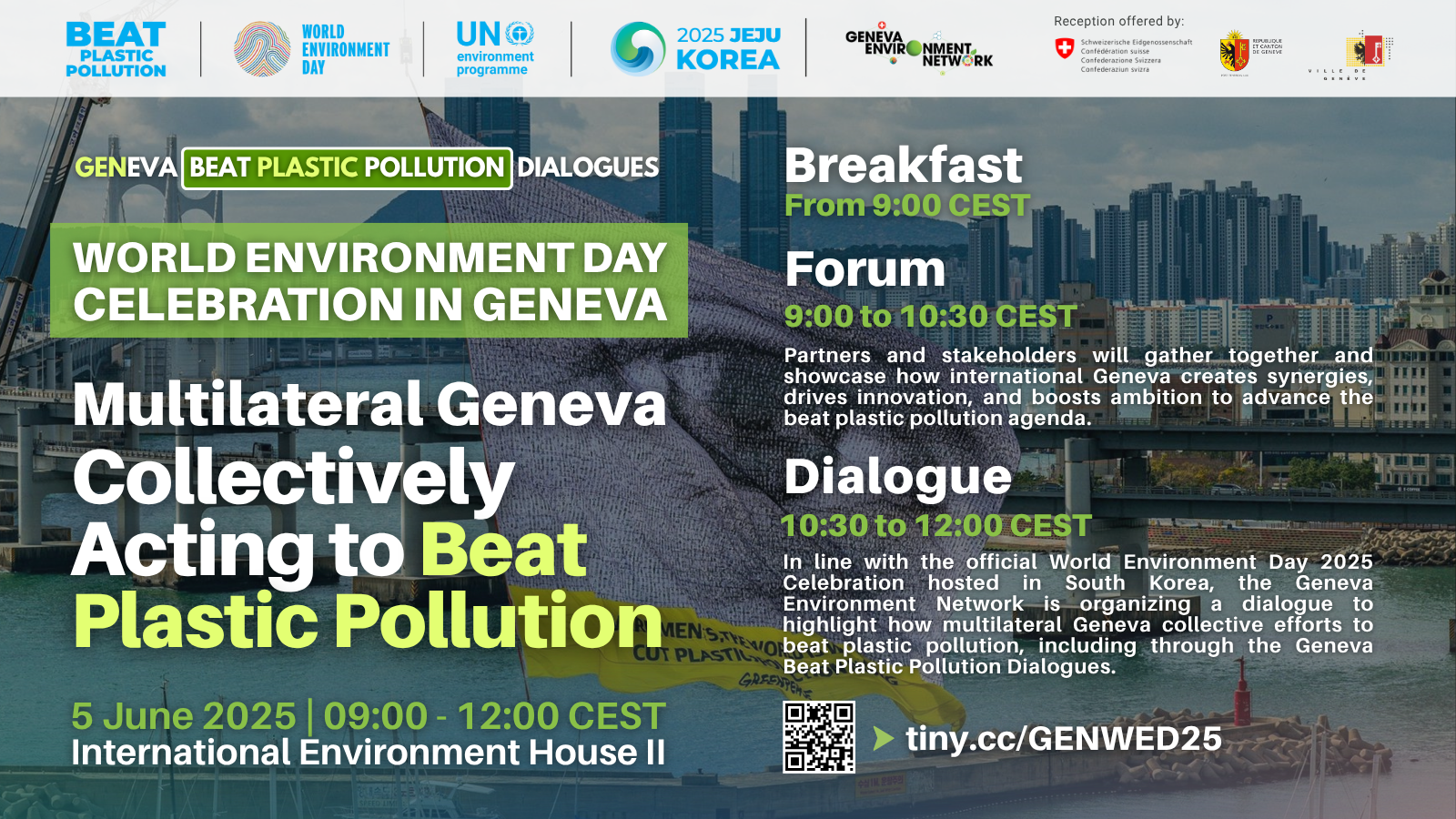
To celebrate World Environment Day, the traditional celebration at the International Environment House II in the morning of Thursday 5 June 2025, will include various key moments:
- World Environment Day Breakfast offered by the host country
- GENeva World Environment Day Forum showcasing how international Geneva is advancing the Beat Plastic Pollution agenda
- World Environment Day Dialogue building momentum towards the resumed fifth session of the Intergovernmental Negotiating Committee to develop an international legally binding instrument on plastic pollution, including in the marine environment
World Environment Day Forum | Multilateral Geneva Collectively Acting to Beat Plastic Pollution
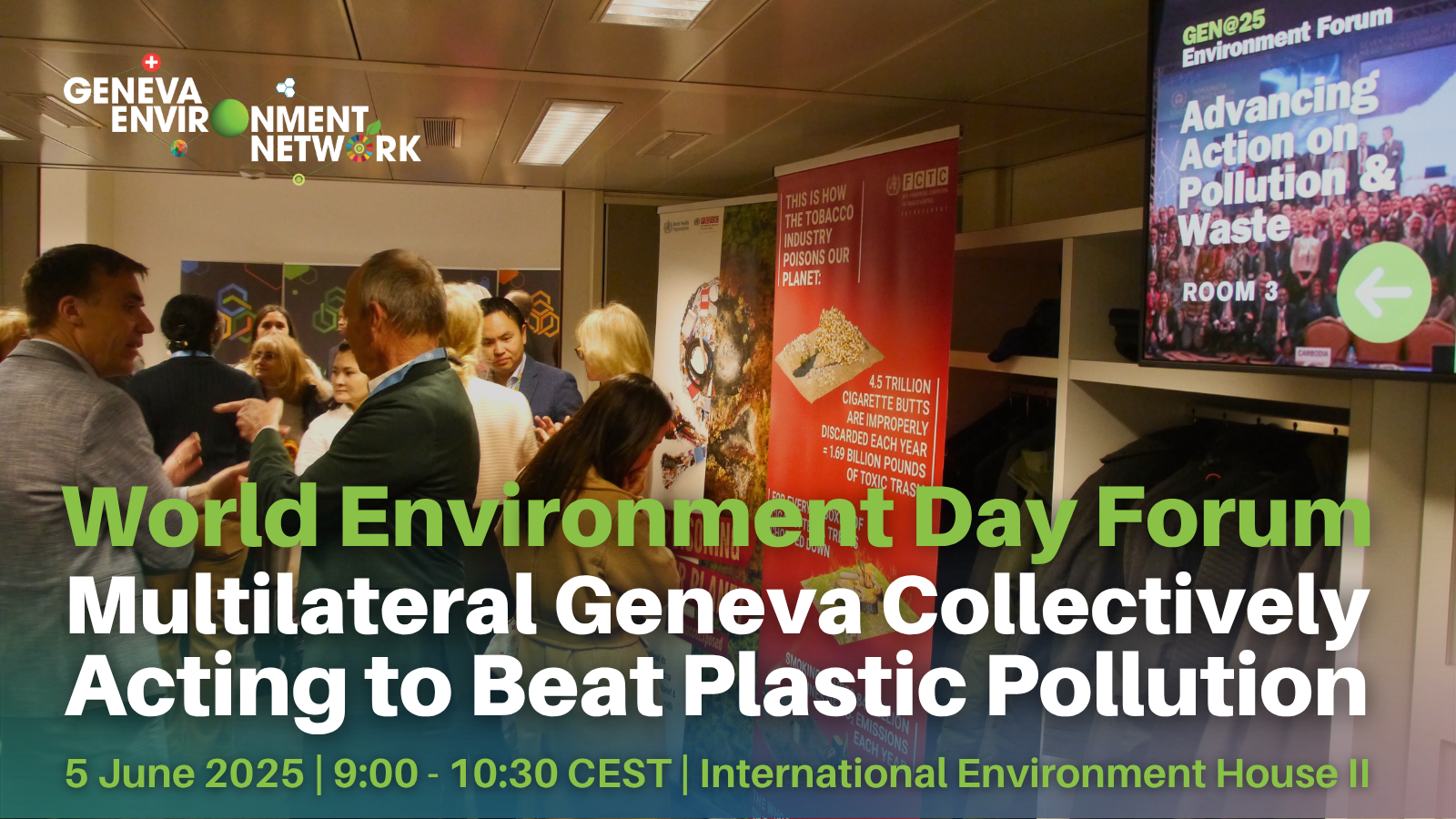
From 9:00 to 10:30 CEST, the International Environment House II will open its doors for the Forum. Partners and stakeholders will gather together and showcase how international Geneva creates synergies, drives innovation, and boosts ambition to advance the beat plastic pollution agenda.
Many actors in Geneva are actively working to address the plastic crisis at the global and local levels. As a hub of environmental and health governance, Geneva plays an important role in the multilateral processes to address plastic pollution. Showcasing Geneva expertise through the work on environmental issues, chemical governance, health, human rights, trade and many relevant areas of work, the Forum will spotlight their contribution to global processes to end plastic pollution.


World Environment Day Dialogue | Multilateral Geneva Collectively Acting to Beat Plastic Pollution
In line with the official World Environment Day 2025 Celebration hosted in South Korea, the Geneva Environment Network is organizing a dialogue to highlight multilateral Geneva collective efforts to beat plastic pollution, including through the Geneva Beat Plastic Pollution Dialogues.
These dialogues were launched two years before the adoption in 2022 of a historic resolution at the United Nations Environment Assembly, setting up the path to a global treaty to end plastic pollution. They have been making links with ongoing multilateral processes to tackle plastic pollution, in Geneva and beyond and convened by the Geneva Environment Network in collaboration with the governments of Norway and Switzerland, the Basel, Rotterdam and Stockholm Conventions Secretariat, the Center for International Environmental Law, the International Union for Conservation of Nature (IUCN), the Forum on Trade, Environment & the SDGs (TESS), and the University of Geneva.
The intergovernmental negotiating committee to develop the international legally binding instrument (INC) that was set up following the adoption of the resolution, will be resuming its fifth session in Geneva, from 5 to 14 August 2025.
Multilateral Geneva plays a pivotal role in advancing the global agenda to beat plastic pollution, serving as a hub for multilateral cooperation, policy development, and scientific research. Various ongoing initiatives and processes to be highlighted during the celebration foster engagement among intergovernmental organizations, governments, businesses, scientists, civil society, and individuals to drive coordinated action to end plastic pollution, in support to a successful and ambitious outcome of the INC process.
Speakers
By order of intervention

Arnold KREILHUBER
Director, Europe Office, UN Environment Programme

H.E. Amb. Felix WERTLI
Ambassador for the Environment, Switzerland

H.E. Amb. Sung-yo CHOI
Deputy Permanent Representative of the Republic of Korea to the United Nations and other International Organizations in Geneva

Kate ROBERTSON
Technical Officer (Legal), Public Health Law and Policies Unit, Department of Health Promotion, World Health Organization

Juliette VOINOV KOHLER
Senior Legal Officer and Chief, Governance Branch, Basel, Rotterdam and Stockholm Conventions

Michael CAMILLERI
Branch Chief, Thematic Engagement, Special Procedures and Right to Development Division, Office of the United Nations High Commissioner for Human Rights

María Daniela GARCÍA
Deputy Permanent Representative of Ecuador to the World Trade Organization

Manal AZZI
Global Team Lead on Occupational Safety and Health Policy, International Labour Organization

Sonia PEÑA MORENO
Director, Centre for Policy and Law, International Union for Conservation of Nature

Margherita PUCINO
Global Metrics and Roadmaps Lead, Global Plastic Action Partnership, World Economic Forum

Efraim GOMEZ
Global Director, Global Policy Impact, WWF International

Carolyn DEERE BIRKBECK
Executive Director, Forum on Trade, Environment & the SDGs (TESS), Geneva Graduate Institute

Jane MUNCKE
Managing Director and Chief Scientific Officer, Food Packaging Forum

H.E. Amb. Luis VAYAS VALDIVIESO
Chair, INC on Plastic Pollution | Video Message
Highlights
Video
Summary
Arnold KREILHUBER | Director, Europe Office, UN Environment Programme
- This year’s World Environment Day underscores the urgent need to end plastic pollution, a pervasive problem affecting every corner of the planet. Plastics have infiltrated water, food, air, and even the human body. Global plastic consumption is projected to reach 516 million tons by 2025, yet only 9% of all plastic produced is currently being recycled, a figure that highlights how recycling alone is insufficient to address the crisis.
- Innovative and systemic solutions are essential to confront plastic pollution effectively. These include redesigning product life cycles, developing alternatives, and transforming how plastics are made, used, and reused. A circular economy model has the potential to reduce plastic leakage into oceans by over 80% and could result in savings of $70 billion for governments between 2021 and 2040, demonstrating both environmental and economic benefits.
- Everyone has a role to play in the fight against plastic pollution. Individual choices, such as avoiding unnecessary single-use plastics, can collectively make a significant difference. World Environment Day serves as a moment of reflection and action, prompting people to consider how their daily habits can contribute to a healthier planet.
- Plastic pollution is just one component of the broader triple planetary crisis, which includes climate change, biodiversity and land loss, and pollution. These interconnected challenges threaten all aspects of life on Earth and form the central focus of UNEP’s mandate, pursued through collaboration with member states and partners, especially from its base in Geneva.
- A critical milestone in addressing plastic pollution will take place in August, when global negotiations are set to continue in Geneva to finalize a legally binding treaty on plastics. This upcoming round of talks represents a historic opportunity that must not be missed, positioning Geneva at the center of global environmental diplomacy and action.
- Geneva’s role as a hub of environmental governance was prominently featured during the World Environment Day Forum. The event showcased the city’s collective efforts and expertise across a range of interconnected fields, including chemicals and waste governance, biodiversity, health, human rights, and trade, all contributing to global solutions for plastic pollution.
- Celebrations in Geneva this year include special events such as a film screening of Nature at Cinérama, a World Environment Day concert at Victoria Hall in partnership with the Orchestre des Nations, and the symbolic green lighting of the Jet d’Eau fountain. These activities underscore Geneva’s commitment to awareness-raising and public engagement around environmental issues.
- The Geneva Environment Network continues to serve as a vital platform for multilateral cooperation and knowledge exchange. The active involvement of various organizations based in Geneva reflects the city’s indispensable role in both regional and global environmental agendas.
- Switzerland’s support has been instrumental in UNEP’s ongoing presence and success in Geneva. As host to UNEP’s regional office for Europe and Central Asia, numerous environmental agreement secretariats, and key UNEP teams, Switzerland’s contributions have reinforced Geneva’s position as a leading center for environmental leadership and multilateral action.
H.E. Amb. Felix WERTLI | Ambassador for the Environment, Switzerland
- There are three key points for the success of the upcoming treaty on plastics pollution:
- Commitment: The goal is to conclude negotiations and adopt an effective treaty. Failure to do so could mean missing a crucial opportunity. The treaty must cover all stages of the plastic life cycle, addressing environmental and socio-economic concerns.
- Effectiveness: The treaty must be globally binding, include clear obligations, and establish a strong implementation mechanism. Key elements include reducing harmful plastics and chemicals, improving transparency, and promoting circular economy solutions.
- Collaboration: plastic pollution is multifaceted, affecting health, environment, human rights, trade, and labor. The presence of WHO, WTO, UNEP, ILO, and others shows Geneva’s unique role, not just in negotiation, but also in the future implementation of the treaty.
- Geneva holds the scientific expertise, the political momentum, and the platform for action. Success at INC 5.2 will depend on the collective willingness to compromise, build bridges, and demonstrate strong political will.
H.E. Amb. Sung-yo CHOI | Deputy Permanent Representative of the Republic of Korea to the United Nations and other International Organizations in Geneva
- World Environment Day was commemorated across different continents, including in Geneva and on Jeju Island, reflecting a shared global commitment to environmental protection and stewardship. The convergence of events held on the same day emphasizes the common purpose uniting countries in addressing urgent environmental issues.
- Since hosting World Environment Day in 1997 under the theme “Further Life on Earth,” the Republic of Korea has witnessed the growing complexity and scale of environmental challenges. Today, issues such as plastic pollution have become far more pervasive, demanding greater international attention and action.
- The severity of plastic pollution is underscored by findings from UNEP’s 2023 report, which revealed the presence of microplastics in remote and vulnerable locations such as the deepest oceans, mountain glaciers, breast milk, and even within human bodies. The annual environmental and social cost of this pollution is estimated between 300 and 600 billion USD, highlighting the immediacy and seriousness of the threat it poses to ecosystems, human health, and dignity.
- This year’s World Environment Day theme, “Beat Plastic Pollution,” brings attention to three urgent imperatives: strengthening international solidarity, advancing practical and scalable solutions, and promoting inclusive public participation. These priorities reflect the multifaceted and global nature of the plastic pollution crisis.
- Accelerating the creation of a comprehensive and legally binding global agreement on plastic pollution is essential. The historic 2022 UN Environment Assembly resolution marked a critical step forward, and although the fifth session held in Busan fell short of expectations, it established important groundwork for future negotiations. There is cautious optimism that the next session in Geneva will yield concrete and ambitious results.
- Addressing plastic pollution cannot be the sole responsibility of governments; a holistic approach involving all sectors of society is required. This includes the participation of international organizations, regional and local authorities, the private sector, civil society, and individuals. Each has a role to play in enabling a transition toward more sustainable systems.
- Achieving systemic change across the entire life cycle of plastics will depend on the innovation capacity of industries, the active engagement of informed citizens, and the leadership of cities and local communities. Broad-based and inclusive partnerships are essential to making progress on commitments made under international agreements.
- The Republic of Korea reaffirms its commitment to supporting international efforts to combat plastic pollution and will continue to work towards securing a sustainable future for generations to come, emphasizing the importance of collaboration and shared progress through dialogues like this one.
Kate ROBERTSON | Technical Officer (Legal), Public Health Law and Policies Unit, Department of Health Promotion, World Health Organization
- Strong health protections must be central to the plastics treaty. There is encouraging consensus on making human health a core objective. WHO urges a comprehensive approach that considers health risks at all stages of the plastic life cycle.
- Key recommendations include:
- Health risks and benefits should be considered in all relevant treaty provisions.
- A dedicated health clause should require strategies to prevent, mitigate, and monitor health impacts and human exposure.
- WHO does not support a blanket exemption for medical products, noting that the health sector also contributes to plastic pollution. However, special consideration may be needed when bans or phase-outs affect clinical safety and quality.
- WHO also calls for health considerations in transparency, tracking, labeling, monitoring, and information exchange. This includes sharing data on health risks and human exposure, ensuring health-related risks are not hidden under confidentiality claims.
- Geneva’s expertise and institutions offer crucial support for the implementation of the future plastics treaty. Existing forums, mechanisms, and initiatives can help countries avoid starting from scratch and foster effective collaboration and information sharing. Key contributions include:
- Health experts, including WHO and advisory groups, can help develop criteria and assessment methods, especially regarding chemicals and human health.
- WHO’s standard-setting bodies already create norms and specifications for health products, which can guide treaty implementation.
- Existing initiatives on health data collection, risk evaluation, waste management, and food labeling can be leveraged.
- Most importantly, Geneva provides a collaborative platform uniting institutions and member states to support effective treaty action.
Juliette VOINOV KOHLER | Senior Legal Officer and Chief, Governance Branch, Basel, Rotterdam and Stockholm Conventions
- The BRS Conventions, particularly the Basel Convention, contribute through action on the ground to address the often invisible harms of plastic pollution, including toxic additives, microplastics, and mismanaged waste in vulnerable areas. Addressing these hidden threats requires legally binding frameworks and concrete implementation support for parties.
- Plastic pollution is a defining environmental challenge, deeply linked to chemicals and waste management. The Basel Convention plays a key role in regulating the transboundary movement of plastic waste, protecting human health and the environment, and promoting environmentally sound management.
- The 2019 plastic waste amendments marked a major step by making plastic waste trade more transparent, traceable, and controllable. However, many countries still face implementation challenges, including gaps in legislation, infrastructure, and institutional frameworks, and also limited customs and enforcement capacity.
- A key but underrecognized issue is the presence of hazardous constituents in plastics, such as persistent organic pollutants, including flame retardants, plasticizers, and other toxic additives. These pose long-term health risks and are technically complex to manage, requiring advanced capacity for identification, separation, and safe disposal, and solutions to address fragmented and complex supply chains.
- To address implementation challenges, the BRS Secretariat provides targeted technical assistance to support real action on the ground. This includes:
- Legal and technical guidance on the 2019 plastic waste amendments
- Support for national strategies and inventories
- Promotion of environmentally sound management of plastic waste across its life cycle
- Since 2019, 126 projects in 76 countries have been supported with over $20 million in voluntary contributions from countries (EU, France, Germany, Netherlands, Norway, Sweden, Switzerland, USA) and private donors (e.g., Norwegian Retailers Environment Fund). Support is delivered through tailored pilot projects across sectors like tourism, fisheries, and retail, as well as education and awareness programs, focusing on prevention, minimization, and sound management of plastic waste.
- Support to parties is provided directly by the BRS Secretariat, through the Small Grants Programme (SGP) on plastic waste, in collaboration with 14 Basel Convention regional centers, and via the Plastic Waste Partnership (PWP). The PWP is a multistakeholder platform, engaging governments, industry, academia, and civil society, to promote good practices and scalable solutions across the plastic life cycle. Projects focus on:
- Education and awareness
- Plastic pollution prevention through alternatives
- Improved segregation, collection, and recycling systems
- Monitoring hazardous chemicals in plastic waste
- The Basel, Rotterdam, and Stockholm Conventions provide the foundation for legally binding controls to address both visible and invisible threats. As global treaty negotiations progress, the Secretariat remains committed to ongoing technical support and partnerships on the ground.
Michael CAMILLERI | Branch Chief, Thematic Engagement, Special Procedures and Right to Development Division, Office of the United Nations High Commissioner for Human Rights
- The global plastic pollution crisis, driven by unsustainable and unprincipled plastic production, is having catastrophic effects across all ecosystems, threatening human health and the environment, and creating a global human rights crisis with deadly consequences. Addressing this issue requires a legally binding treaty, as voluntary or nationally determined measures are insufficient to tackle its transboundary nature.
- An effective plastics treaty must include binding obligations tailored to the varying development levels and capacities of different states, and its outcomes should prioritize the advancement of human rights by addressing the full life cycle of plastics, rather than relying solely on downstream waste management, which cannot solve the crisis alone.
- A treaty rooted in human rights should support a just transition that uplifts those most affected by plastic pollution and production, ensuring fair labor conditions, community protection, and equitable benefits for vulnerable groups impacted disproportionately by the plastics industry.
- The right to health must be protected by controlling hazardous chemicals used in plastics, conducting human rights impact assessments of plastic alternatives, and ensuring that substitutions do not result in new forms of harm or toxic exposure.
- To uphold the right to a healthy environment, the treaty should set reduction targets for virgin plastic polymer production and promote upstream, toxic-free solutions such as reuse models, while also addressing the ongoing impacts of legacy pollution already present in ecosystems and communities.
- Mandatory disclosure of data related to plastic production, including emissions, pollutants, and quantities of plastics produced, imported, and exported, must be implemented in line with the right to access information, ensuring transparency and enabling informed public engagement.
- Those harmed by transboundary impacts and legacy pollution must have access to justice, including avenues for legal recourse, remediation, and accountability for actors responsible for environmental and human rights violations linked to plastic pollution.
- Equitable access to environmentally sustainable technologies should be ensured for all states, supported by strong safeguards to prevent conflicts of interest and greenwashing, and to protect scientific integrity and independent inquiry into plastics and their alternatives.
- A transparent and sufficiently funded financial mechanism should be established to support the implementation of the treaty, offering capacity building, technical assistance, and technology transfer, particularly to countries with less capacity to respond to the plastics crisis.
- Embedding human rights into the operational text of the treaty would mark a historic and transformative step, setting a new standard for ambition and comprehensive action. Article 10, concerning just transition, is proposed as an ideal section for integrating these principles, as the concept of a just transition is inherently tied to human rights, especially labor rights.
- Public participation must be safeguarded as a fundamental democratic right in environmental governance, requiring transparent, inclusive, and accountable decision-making processes that involve affected individuals and communities, and occur in environments free from reprisals and respectful of public freedoms.
- The treaty must align with existing international human rights frameworks to ensure policy coherence and effective outcomes. States have obligations to respect, protect, and fulfill human rights, and these duties should be reflected throughout the treaty text. The Office of the High Commissioner for Human Rights (OHCHR) remains committed to supporting this process and urges all parties to seize the opportunity to embed human rights solutions into global efforts to combat plastic pollution.
María Daniela GARCÍA | Deputy Permanent Representative of Ecuador to the World Trade Organization
- A whole-of-international-community approach is essential to ending plastic pollution, and Geneva hosts a significant share of the global expertise driving this effort.
- At the World Trade Organization (WTO), the Dialogue on Plastic Pollution, launched in 2020, now includes 83 members from all regions and development levels, representing over 90% of global plastic trade and production. Originally starting with 12 members, it is now the WTO’s largest plurilateral initiative.
- The DPP’s core mission is to explore how trade can support global efforts to combat plastic pollution, aligning trade policy with environmental goals.
- Trade expertise and policy are crucial to supporting environmental objectives and implementing an effective global plastics treaty. The WTO Dialogue on Plastic Pollution (DPP) plays a central role through three key workstreams:
- Crosscutting issues – enhancing transparency, technical assistance, and international cooperation.
- Reduction – focusing on reducing harmful and unnecessary plastics, especially single-use items and packaging, and promoting trade in non-plastic alternatives, safe technologies, and environmentally sound services.
- Trade promotion – using trade to scale solutions that help combat plastic pollution.
- Concrete efforts include:
- Improving transparency of trade flows for plastics (e.g. single-use and hard-to-recycle plastics), including cooperation with the World Customs Organization (WCO) for the 2028 Harmonized System review to better identify embedded plastics.
- Capacity building for developing countries via a matchmaking mechanism, linking technical needs with assistance from providers like the World Bank and GIZ, tailored to national priorities.
- Supporting data-driven decisions by improving statistical tracking of plastic-related trade.
- Trade measures, informed by daily systemic thinking of trade officials, are instrumental in reducing plastic pollution and ensuring successful treaty implementation.
- The WTO Dialogue on Plastic Pollution highlights how trade policy tools, such as bans, technical regulations, licenses, internal taxes, and extended producer responsibility (EPR) schemes, can be used to reduce plastic pollution. By 2023, 85 WTO members had adopted 2,223 measures, with data tracked through the WTO Environment Database. A survey conducted by the dialogue gathered further details on national actions and identified opportunities for greater alignment and cooperation, especially around single-use plastics.
- The dialogue also promotes trade in safe and sustainable substitutes to plastics, stressing the importance of harmonizing standards to reduce costs and support adoption. An important aspect of the DPP is its inclusive approach: it brings together WTO members with stakeholders from the private sector, civil society, international organizations, and academia. This model has been pioneering within the WTO framework.
Manal AZZI | Global Team Lead on Occupational Safety and Health Policy, International Labour Organization
- The plastics crisis is not only an environmental issue but also a significant human rights and labor issue.
- Tens of millions of workers worldwide are exposed to hazardous conditions throughout the plastics life cycle, from extraction and manufacturing to recycling and disposal. In plastic manufacturing alone, workers may encounter up to 2,000 hazardous chemicals, contributing to over a million deaths annually. Beyond chemical exposure, workers also face biological risks, psychosocial stress, and climate-related hazards like extreme heat and air pollution. Addressing plastic pollution must therefore also prioritize worker safety and rights.
- To be effective and meaningful regarding worker protections, the treaty must include:
- Occupational Safety and Health: The treaty must explicitly include strong, standalone provisions on occupational safety and health (OSH) that cover all workers, both formal and informal, throughout the entire plastic life cycle (production, recycling, waste management, and alternative business models). Current drafts risk weakening these protections.
- Just Transition: The treaty should include a clear, standalone provision on just transition aligned with the ILO definition, ensuring no workers or communities are left behind across the whole supply chain and all types of employment.
- Reference to ILO Labor Standards: It should explicitly reference existing, legally binding ILO conventions on labor rights and OSH (such as conventions 155, 187, and chemical safety standards), which provide a solid foundation for protecting workers.
- Rights-Based Approach: Safety and health must be recognized as fundamental worker rights, with guaranteed worker representation and consultation mechanisms to enhance legitimacy and effectiveness.
- ILO as Key Partner: The treaty should explicitly mention the ILO as a core agency for international cooperation on labor and workplace issues to ensure coherence with other UN processes and leverage the ILO’s mechanisms and expertise.
- Monitoring, Reporting, and Accountability: Establish transparent systems for ongoing monitoring and reporting on OSH indicators and compliance with international labor standards to ensure accountability and effective hazard response.
- The ILO can facilitate implementation by involving ministries of labor, employers, and workers’ representatives, ensuring practical and effective application. The treaty can leverage existing legally binding conventions and supervisory mechanisms, promoting ratification and compliance while benefiting from the ILO’s technical assistance for national systems.
Sonia PEÑA MORENO | Director, Centre for Policy and Law, International Union for Conservation of Nature
- Addressing plastic pollution must include a strong focus on biodiversity conservation, recognizing the deep interconnections between plastic pollution, biodiversity loss, and human health. Integrating nature and people as central components in the treaty text is essential to meet global biodiversity targets, the Sustainable Development Goals, and obligations from multilateral environmental agreements such as the High Seas Treaty and the Ramsar Convention on Wetlands.
- A science-based approach must underpin the plastics treaty, encompassing all phases of the plastic life cycle, from extraction and production to reuse, recycling, and end-of-life waste management, as established in UNEA resolution 5/14. This comprehensive scope ensures the treaty targets the full system of plastic production and pollution.
- The treaty should contain a specific reference to the protection of biodiversity and ecosystems from both current and future plastic pollution. This can be structured either as a standalone article or integrated with an article on health, adopting a One Health approach. Such inclusion aligns with the Convention on Biological Diversity and the Kunming-Montreal Global Biodiversity Framework.
- A dedicated article on international cooperation and coordination is necessary to ensure alignment between the treaty’s governance and other multilateral environmental agreements, such as the Basel, Rotterdam, and Stockholm Conventions, as well as global biodiversity and legal frameworks. Coordination across treaties can enhance synergies and implementation efficiency.
- Suggested treaty language should draw from prior INC proposals made by member states and elements present in other environmental agreements and decisions. These could be added as new treaty articles or incorporated into revised versions of articles such as Article 12 (on capacity building, technical assistance, and technology transfer) and Article 19 (on health).
- A comprehensive and collaborative approach is required to effectively tackle plastic pollution, demanding enhanced links between environmental treaties and organizations. Interconnected challenges such as human rights, biodiversity, health, and trade necessitate regime convergence, supported by the diverse expertise and institutional presence available in Geneva.
- Geneva-based organizations can play a vital role in driving both formal and informal dialogues, supporting coordinated advocacy, and promoting information sharing across science bodies, MEA secretariats, and the private sector. This collective action can help ensure that the treaty is not only well-structured but also practically implemented and impactful.
- Future national action plans on plastic pollution should be aligned with existing frameworks like National Biodiversity Strategies and Action Plans (NBSAPs), leveraging existing environmental planning to reinforce the treaty’s effectiveness. International Geneva can lead the development of innovative partnerships that combine expertise, cooperation, and potentially even financing.
- As a key source of biodiversity knowledge and standards, IUCN brings decades of project experience through initiatives like AFRIPAC and IslandPlas. With its regional and programmatic reach, IUCN supports conservation planning, legal frameworks, and treaty content development, while also assisting countries with implementation, though meaningful progress will require sustained collaboration across the Geneva environmental community.
Margherita PUCINO | Global Metrics and Roadmaps Lead, Global Plastic Action Partnership, World Economic Forum
- The plastics treaty represents a truly exciting and unprecedented opportunity for global transformation. Its ambition to address the full life cycle of plastic and the accelerated timeline for reaching an agreement set it apart from past international efforts.
- The Global Plastic Action Partnership (GPAP) defends the idea that tackling plastic pollution requires a systemic, holistic approach. This means rethinking how we design, produce, use, and manage plastic, and transitioning toward a circular plastic economy. Such a transition must include all stakeholders: governments, the private sector, civil society, and particularly the informal sector, which plays a crucial role in waste management.
- While GPAP does not advocate for any specific treaty outcome, remaining a neutral platform in the process, they draw on their experience supporting 25 countries in addressing plastic pollution. Through helping nations establish baselines, develop evidence-based roadmaps, and bring together key actors, it has been seen that progress is possible. That progress, in turn, builds trust and confidence across sectors and levels of government.
From this work, there are five elements as essential to enabling real change through the treaty:
- Countries will benefit from clarity on how to take effective national-level action.
- A transformation of this scale will require substantial investment. A well-defined financial architecture within the treaty could help unlock both public and private financing and foster coordination among funding sources.
- Continuous support for innovation, particularly technologies and business models that enable circularity, will be vital. Removing barriers and aligning incentives will help these solutions scale.
- The treaty must work in harmony with other multilateral environmental agreements to ensure coherence and avoid duplication.
- Finally, and perhaps most crucially, there is a unique opportunity to build a robust monitoring and reporting system. Such a system would not only track progress but also build trust, facilitate learning, and allow the treaty to strengthen and evolve over time, much like the Paris Agreement.
- Geneva and Switzerland can play a key role in this effort. The city is home to a diverse ecosystem of international organizations, technical bodies, NGOs, and policy experts, all of which can support treaty implementation across different national contexts. For example, GPAP hosts a Finance Coordination Group that serves as a hub for dialogue on financial solutions. This group helps align stakeholders, share knowledge, and ensure that financial support for treaty implementation is both effective and responsive to country needs.
Efraim GOMEZ | Global Director, Global Policy Impact, WWF International
- Achieving a successful treaty on plastic pollution requires unity on multiple levels, particularly as negotiations intensify leading up to August. This unity must guide the process through difficult and lengthy negotiations to reach the ambitious outcome needed.
- Recognition of the scale of the problem is essential. Every day, 30,000 tons of plastic pollution enter the oceans, and this ongoing crisis underscores the urgency of action. The timing, aligned with World Environment Day and the upcoming UN Oceans Conference, reinforces the need for global focus and accountability.
- Unity in ambition must translate into a treaty with the appropriate scope and strength to address the crisis. This means adopting a life cycle approach that covers the entire chain from production to consumption, ensuring no part of the plastic value chain is overlooked.
- A set of non-negotiable elements is necessary for the treaty to be effective:
- a global ban and phase-out of the most harmful products and chemicals;
- mandatory global product design requirements; systems to support transitions;
- alignment of financial flows and resources; and
- a governance structure that ensures decision-making, implementation, and accountability.
- These elements are essential to match the scale and urgency of the plastic crisis.
- The strength and momentum gained from the vast majority of countries that supported progress at Busan must be maintained and built upon. This collective desire for action demonstrates a strong foundation for moving forward in the treaty process.
- There must be unity in direction, where ambition is not compromised under the pretext that the “best should not stand in the way of the possible.” In this context, the phrase should serve as a reminder of the need to move forward decisively rather than a justification for weakened outcomes. The goal is not just movement but meaningful, ambitious progress.
- As the negotiations enter a critical phase, it is vital to maintain focus, solidarity, and ambition. The process ahead will be demanding, but collective commitment and support from stakeholders, such as WWF, are firmly in place to help achieve a robust and effective treaty.
Carolyn DEERE BIRKBECK | Executive Director, Forum on Trade, Environment & the SDGs (TESS), Geneva Graduate Institute
- Tackling plastic pollution requires a comprehensive approach that reflects the complexity of the issue, and there is strong momentum among global stakeholders, including those in Geneva, demonstrating a shared commitment to multilateralism as the most effective path toward coordinated and inclusive global action.
- As the treaty process advances toward its final stages, it is important to reflect on the fundamental reasons for pursuing an international treaty, recognizing that while there are many forms of cooperation available, a legally binding treaty addresses specific transboundary and systemic problems that individual or bilateral actions cannot resolve alone.
- The shared frustrations and concerns of individuals, such as excessive and unnecessary packaging, the ineffectiveness of current recycling systems, limited opportunities for reuse and repair, hidden toxic chemicals in plastic products, and the overwhelming scale of global plastic production, underscore the urgency of addressing plastic pollution through collective and structured international mechanisms.
- Countries around the world are often impacted by plastic pollution not generated within their own borders but transported through rivers and oceans from distant sources, and any meaningful solution must account for the reality that actions in one country frequently depend on regulatory changes and corporate behavior in another, sometimes far-removed jurisdiction.
- Addressing plastic pollution is not only an environmental imperative but also a profound economic challenge, as it requires transforming deeply entrenched patterns of production and consumption; this systems-level change presents complex political hurdles both domestically and internationally, especially as greater treaty ambition demands stronger political will and equitable consideration of differing national circumstances.
- International treaties are valuable because they enable countries to cooperate on problems that cross borders, coordinate collective efforts over time, manage interconnected supply chains, and establish common standards that reduce the fragmentation of regulations, thereby creating a more consistent framework that empowers businesses and governments to act more effectively.
- A successful treaty must include a clear and shared objective of protecting both human health and the environment from plastic pollution, while also establishing global rules that cover the entire lifecycle of plastics and offering guidance that can accommodate national differences without undermining ambition.
- The treaty must be flexible and dynamic, able to evolve over time with new scientific knowledge and societal needs; it should also enhance transparency about government actions and the materials used in plastic products, improve data availability to enable consistent monitoring and progress assessment, and deliver robust support for countries’ implementation efforts.
- With only a short window remaining before INC-5.2, the focus must now be on identifying and securing agreement on the treaty’s core elements, those that will provide a durable and adaptable foundation for international cooperation, ensuring the treaty remains effective and relevant for decades to come.
Jane MUNCKE | Managing Director and Chief Scientific Officer, Food Packaging Forum
- The Global Plastics Treaty must go beyond reducing pollution for environmental reasons; it must also address the profound and growing impacts of plastics on human health.
- Plastics are now deeply embedded in nearly every aspect of our lives: from health care and agriculture to fisheries, food packaging, textiles, buildings, transportation, and communication. Yet, despite their ubiquity, plastics are chemically complex materials. More than 16,000 chemicals are associated with plastic products, many of which leach out during normal use. This chemical diffusion occurs rapidly and silently, leading to constant exposure through air, food, and drinking water.
- As we mark World Environment Day, it is critical to recognize the opportunity before us: to prevent chronic diseases by minimizing exposure to harmful plastic chemicals and particles. Reducing plastic pollution is not only an environmental issue; it is a direct intervention in public health.
- Scientific evidence continues to grow. Of the approximately 800 plastic-related chemicals tested so far, many have been linked to serious health concerns: fertility issues, metabolic and cardiovascular disorders, neurological impacts, immune system disruption, and various forms of cancer. Alarmingly, 1,396 chemicals used in food contact materials have already been detected in human bodies. For at least 1,481 of these chemicals, there is solid evidence of transfer from plastic into food, making human exposure highly likely.
- Recent research confirms that micro- and nanoplastics, which form during the routine use of food packaging and processing equipment, also contribute to this exposure. These findings reinforce the urgency of reducing society’s overreliance on plastic materials.
- At the same time, our scientific understanding of how chemicals affect human health and ecosystems has significantly evolved. It is now clear that chemical safety must be assessed from a full life-cycle perspective, not only for plastics themselves but also for their alternatives and substitutes. The treaty must be grounded in independent, conflict-free science to ensure it avoids « regrettable substitutions », solutions that may simply shift harm to another form or time.
- The need for action is also reflected in our broader ecological impact. According to the Global Footprint Network, Earth Overshoot Day, the date when humanity’s resource consumption exceeds what Earth can regenerate in a year, will fall on July 24 in 2025, a full eight days earlier than in 2024. This acceleration is a clear signal of unsustainable overconsumption, and plastic production and pollution are major contributors.
- To be effective, the Global Plastics Treaty must reduce plastic production and consumption to sustainable levels, helping to shift Earth Overshoot Day later in the calendar. It must also prioritize human and environmental health, ensuring chemical safety and preventing long-term harm.
- This is our chance to turn a global crisis into an opportunity for systemic change, grounded in science, committed to health, and driven by sustainability.
H.E. Amb. Luis VAYAS VALDIVIESO | Chair, INC on Plastic Pollution | Video Message
- The call to action for World Environment Day 2025 emphasizes the urgent need for collective global efforts to address plastic pollution, highlighting the importance of international solidarity and cooperation in tackling this pressing environmental issue.
- Recognition is given to the sustained efforts and dedication of member states and observers who are actively working toward the success of the upcoming INC-5.2 meeting, which is expected to further negotiations for a legally binding instrument to combat plastic pollution under the mandate of resolution 5/14.
- There is a shared vision among stakeholders to deliver an effective, ambitious international treaty, reinforcing the global consensus on the necessity of binding commitments to address the full scope of plastic pollution.
- With INC-5.2 scheduled to take place in exactly two months, the current momentum is seen as critical and must be preserved to ensure meaningful progress, building on the energy and dialogue already taking place at high-level discussions.
- The event serves as both a continuation of and a response to the growing international engagement on plastics, reflecting how dialogues like these contribute directly to the treaty process and to mobilizing further action.
Forum Participants
Many actors in Geneva are actively working to address the plastic crisis at the global and local level. As a hub of environmental and health governance, Geneva plays an important role in the multilateral processes to address plastic pollution. Below is a list of stakeholders participating at the World Environment Day Forum.
2050Today
2050Today is the Geneva climate action forum where over 60 institutions of International Geneva, such as permanent missions, international organizations, academia, private and civil society entities, come together to tackle climate change by measurably reducing GHG emissions. In accordance with the 2050Today Charter, 2050Today mobilizes climate action by helping our members measure their emissions, implement common and customized solutions through working groups and benefit from applied research.
Aarhus Convention
The UNECE Convention on Access to Information, Public Participation in Decision-making and Access to Justice in Environmental Matters, protects every person’s right to live in an environment adequate to their health and well-being, including safely from the harms of plastic pollution and promotes three key pillars of environmental justice: access to environmental information, public participation in environmental decision-making, and access to justice in environmental matters.
Basel, Rotterdam and Stockholm Conventions
The Basel Convention on the Control of Transboundary Movements of Hazardous Wastes and Their Disposal aims to protect human health and the environment against the adverse effects of hazardous waste, including plastics with enhanced efforts through the Plastic Waste Amendments and the Plastic Waste Partnership. The Stockholm Convention on Persistent Organic Pollutants (POPs) also provides a relevant international framework that addresses some of the chemical additives to plastics.

Canton on Geneva
The Canton of Geneva has banned the free distribution of plastic bags since 2019. The Canton is committed to reduce waste generation, and addresses specifically single-use plastic, which should ultimately be banned. Various campaigns and initiatives to promote the use of reusable containers have been organized over the years.
Center for International Environmental Law
The Center for International Environmental Law (CIEL) aims to promote human rights and ensure a just and sustainable society by using the power of law to ensure environmental protection. The organisation is engaged in actions to address the global plastics crisis. Its work on plastics focuses on advocacy for an international treaty on plastic pollution, support to communities who fight against local infrastructure for plastics, and research and publications exposing the impacts of the plastic lifecycle on health, climate and the planet.
International Commission for the Protection of the Waters of Lake Geneva (CIPEL)
Since 2014, the International Commission for the Protection of the Waters of Lake Geneva (CIPEL), has been commissioning scientists to investigate the presence of plastic particles in lake sediments. The CIPEL investigates on the tributaries and the consequences of plastic for living organisms.
Forum on Trade, Environment & the SDGs
The Forum on Trade, Environment and Sustainable Development (TESS) seeks to strengthen the promotion and inclusion of international cooperation on trade policies that contribute to efforts to reduce plastic pollution, build waste management capacity in developing countries and promote plastic substitutes.
Geneva Beat Plastic Pollution Dialogues
The Geneva Beat Plastic Pollution Dialogues were launched before the adoption the historic UNEA Resolution 5/14, setting up the path to a global treaty to end plastic pollution. They have been making links with ongoing multilateral processes to tackle plastic pollution, in Geneva and beyond and convened by the Geneva Environment Network in collaboration with the governments of Norway and Switzerland, the Basel, Rotterdam and Stockholm Conventions Secretariat, the Center for International Environmental Law, the International Union for Conservation of Nature (IUCN), the Forum on Trade, Environment & the SDGs (TESS), and the University of Geneva.

Global Cities Hub – Geneva
The Global Cities Hub – Geneva aims to connect the international Geneva ecosystem with public policies and all relevant stakeholders. In January 2022, the Geneva Cities Hub, the Geneva Environment Network and the UN-Habitat Geneva Office, with the support of Norway, organised the first Geneva Urban Debate 2022 to promote the voice of local and regional governments in the UN Environment Assembly (UNEA) proceedings on plastics.
Global Framework on Chemicals
The Global Framework on Chemicals seeks to protect both the planet and human health, advocating for strong governance mechanisms and enforcing international standards.
Global Initiative Against Transnational Organized Crime
The Global Initiative Against Transnational Organized Crime is an independent civil-society organization, that comprises prominent law-enforcement, governance and development practitioners who are dedicated to seeking new and innovative strategies and responses to organized crime, including on tracing illicit plastic waste flows, supply chains and actors.
Global Self-Care Federation
The Global Self-Care Federation is dedicated to a world where self-care increasingly contributes to better health and more sustainable healthcare systems. It launched the Charter for Environmentally Sustainable Self-Care, the first industry-wide climate action resolution issued by the consumer health sector. By promoting best practices and advising on regulatory standards, the Charter seeks to minimize environmental impacts, without compromising on health outcomes, product safety and access to consumers.
Health Diplomacy Alliance
The Health Diplomacy Alliance aims at advance health initiatives through diplomatic channels and foster collaborations and cooperation among local, national, and international stakeholders to address complex health challenges while emphasizing inclusivity, equity, and sustainable solutions.
International Federation of Pharmaceutical Manufacturers & Associations
The International Federation of Pharmaceutical Manufacturers and Associations (IFPMA) represents the innovative pharmaceutical industry at the international level and in official relations with the United Nations. IFPMA supports an overall ambitious UN Global Plastics “Instrument” that creates globally harmonized plastic regulations. This is key to securing the scale and effect needed if we are to succeed in transitioning away from plastic where it is possible to do so safely while ensuring continued access to medical and medicinal products.
International Labour Organization
The International Labour Organisation (ILO) is dedicated to promoting social justice and internationally recognised human and labour rights. Thtough its Green jobs programme, the ILO promotes a just transition towards environmentally sustainable economies and societies. The ILO Chemicals Convention provides a basis for the sound management of all types of chemicals at the workplace, and is also relevant with regards to chemicals used in the plastics industry.

International Organization for Standardization
ISO is committed to improving resource efficiency, reducing the amount of waste released into the environment and promoting the development of a circular economy based on the optimal use of resources. In 2018, ISO published guidelines for the inclusion of environmental aspects in standards on plastics.

International Union for Conservation of Nature
IUCN leads various project marine plastic pollution and conducts advocacy work for a global plastics treaty. Together with the World Commission on Environmental Law (WCEL), IUCN produces research, technical and policy guidance, economic analysis, circular economic models, and programmatic action and actively engages in the Plastics Treaty negotiations.

Permanent Mission of Türkiye to the UN Office in Geneva
Türkiyie has been instrumental in the adoption of the United Nations General Assembly resolution proclaiming 30 March as International Day of Zero Waste. It provides an example at the national and international levels on how to reduce waste across sectors.
United Nations Environment Programme
UNEP supports governments, businesses, financial institutions, and other stakeholders in their just transition to a circular economy of plastics, thereby reducing plastic pollution and its impacts. UNEP, as host of the Secretariat for the Intergovernmental Negotiating Committee and long-term leading organisation fighting against plastic pollution, is fully committed to addressing global plastic pollution.
UNEP Finance Initiative
UNEP FI supports the Sustainable Blue Economy Finance Initiative, a global community convened by the UN that addresses the relationship between private finance and oceanic health, supporting the implementation of blue economy principles consistent with the SDGs and seeking to enable financial institutions to restore prosperity, biodiversity and the health of the oceans. In November 2019, UNEP FI published “Unwrapping the Risks of Plastic Pollution to the Insurance Industry”, a report linking plastic pollution risks and insurance and investment portfolios in the form of physical, transition, liability and reputational risks.
UNEP/GRID-Geneva
GRID-Geneva’s scientists can process satellite imagery using remote sensing software, create models from geospatial data using Geographical Information Systems (GIS), generate interactive maps and graphs for automatic updates.
UNEP Sustainable UN Facility
UNEP SUN facility in collaboration with a network of Focal Points representing UN entities, coordinates the Greening the Blue initiative, which monitors and reports on the UN system’s environmental footprint and the efforts to reduce it, including steps to eliminate single-use plastics from its premises.
UN Environment Management Group
The United Nations (UN) Environment Management Group (EMG) is a system-wide coordination body on environment and human settlements.

United Nations Economic Commission for Europe
The tackling of plastic pollution challenges is mainstreamed through various UNECE areas of work such as pollutant release and transfer registers (PRTRs) that can support effective and transparent reporting on plastic pollution; air pollution; green economy; forests and more by showcasing the negative impact of plastic pollution on a human and environmental health and by advancing a circular use of plastics.

United Nations Institute for Training and Research (UNITAR)
The United Nations Institute for Training and Research (UNITAR) provides innovative learning solutions to individuals, organizations and institutions to enhance global decision-making and support country-level action for shaping a better future, including on plastic pollution and solutions. UNITAR’s Chemicals and Waste Management Programme provides support to governments and stakeholders to strengthen their institutional, technical, and legal infrastructure and capacities for sound management of chemicals.
United Nations Office of the High Commissioner for Human Rights (OHCHR)
In 2011, the UN Human Rights Council recognised that hazardous substances and wastes could seriously threaten human rights. This growing threat has been particularly felt through the exponential acceleration of chemical production. The Special Rapporteur on hazardous substances and wastes (SR Toxics) is mandated by the United Nations to examine the human rights implications of toxic and other hazardous substances. In July 2021, the SR Toxics presented a report to the UN General Assembly on the “The stages of the plastics cycle and their impacts on human rights“, highlighting how every stage of the plastic lifecycle affects human rights and why human rights principles can and should be involved in the transition towards a chemically safe circular economy.
WHO Framework Convention on Tobacco Control
The World Health Organization Framework Convention on Tobacco Control is engaged in raising awareness on the issue of plastic filters in cigarette butts and the fact that cigarette butts are one of the most littered product in the world. At its 10th COP WHO FCTC adopted decision FCTC/COP10(14), which recognizes plastic cigarette filters as unnecessary, avoidable and problematic, single-use plastics that are widely spread in the environment, killing microorganisms and marine life, as well as polluting oceans and urges Parties to coordinate their efforts to address plastic waste of tobacco products and related electronic devices with the objectives of the WHO FCTC in relation to national policies and international treaties and fora dealing with plastics and hazardous waste. The resolution also requests the Convention Secretariat to examine regulatory options regarding the prevention and management of waste generated by the tobacco industry and its products, including a ban on plastic cigarette filters and the management of hazardous waste from cigarettes.

World Trade Organization
The Dialogue on Plastics Pollution and Environmentally Sustainable Plastics Trade (DPP) seeks to complement discussions in the Committee on Trade and Environment (CTE) and other fora. As of April 2025, 83 WTO members are participating in the informal dialogue. In December 2021, the Members issued a Ministerial Statement on plastic pollution. The 13th Ministerial Conference, issued a new Ministerial Statement, containing a series of principles and six actions to ensure trade is part of the solution to the growing plastic pollution challenge.
Zero Waste Switzerland
Zero Waste Switzerland is a community for those looking to reduce waste, preserve natural resources and create a more sustainable future. Its mission is to work towards reducing the amount of waste produced by raising awareness of waste related issues, encouraging long-lasting behavioural change towards a more zero waste lifestyle.
Zoï Environment Network
Zoï Environment Network cooperates and works on different UN chemical conventions and participates in pollution assessments. It also supports the making of international legal instruments on waste and chemicals, and the creation of (visual) products to make their importance better understood to non-specialists.
Artworks @ World Environment Day Forum
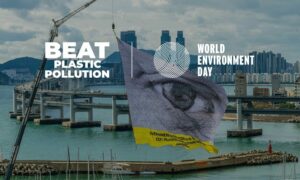
Dan Acher, Geneva-based artivist, raised its #WeAreWatching monumental eye flag, made up of thousands of portraits contributed from 190 countries in Busan, Republic of Korea, during the fifth session of the Intergovernmental Negotiating Committee to develop an international legally binding instrument on plastic pollution, including in the marine environment to demand bold action and urging leaders to agree on a Global Plastics Treaty. The #WeAreWatching flag will be exhibited at the World Environment Day Forum to share its crystal-clear message: the world is watching!

Benjamin Von Wong, environmental artist and activist—creator of the Giant Plastic Tap at UNEA 5.2— will be in Geneva to build his latest large-scale art installation, drawing attention to the health implications of plastic pollution. The installation will be on public display at the Place des Nations throughout the resumed fifth session of the Intergovernmental Negotiating Committee to develop an international legally binding instrument on plastic pollution, including in the marine environment, from 4 to 14 August 2025. A small version of the artwork of will be used to “pass the baton” during the World Environment Day Dialogue and a video message by Benjamin will be projected during the Forum. → Get involved!

Links
- World Environment Day
- UNEP Executive Director Inger Andersen’s Op-Ed for World Environment Day 2025
- World Environment Day 2025 mobilizes commitment, action to end plastic pollution globally | UNEP Press Release | 5 June 2025
- How one Korean province is aiming to make plastic pollution history | UNEP | 3 June 2025
- Everything you should know about microplastics | UNEP | 2 June 2025
- Plastics and the Environment
- Road to Geneva | Plastic Pollution INC-5.2
- Geneva Beat Plastic Pollution Dialogues
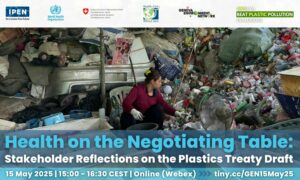
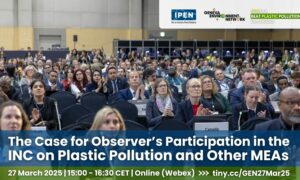
Road to Plastic Pollution INC-5.2 Series
Other Events in Geneva to Celebrate the Day

Nature | Ciné-ONU World Environment Day Screening
United Nations Office at Geneva
Cinerama
5 June 2025 | 18:45 CEST

Our Home | World Environment Day 2025 Concert
Planetary Collaboration, UNEP, Club diplomatique de Genève, Loterie Romande
Victoria Hall
5 June 2025 | 20:30 CEST


WED Showcase at Geneva Airport
WED Showcase at Geneva Airport
Geneva Airport will showcase WED content on their screens to mark WED
5 June 2025
Photo Gallery
Photos can be found on the BRS Flickr account.


Photo Credits
Photo by Dan Acher