
Event Conference
Plastics Treaty | State of Play and Priorities for an Ambitious Outcome
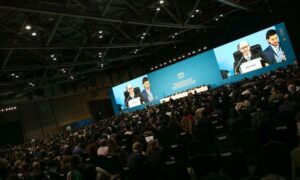
This event organized within the framework of the Geneva Beat Plastic Pollution Dialogues provided an overview on where we stand after the first part of the fifth session of the Intergovernmental Negotiating Committee to develop an international legally binding instrument on plastic pollution, including in the marine environment (INC-5.1), as Member States and observers are preparing for the resumed session.
About This Event
As governments and stakeholders prepare for the resumed session of the final negotiating meeting of the Intergovernmental Negotiating Committee to develop an international legally binding instrument on plastic pollution, including in the marine environment, this panel aims to review and update on the state of play, where the process stands, and priorities and key challenges for ongoing efforts to forge convergence.
This event was an opportunity to review the progress made and the key priorities for an ambitious and effective treaty text. The dialogue highlighted what the negotiations must focus on, as well as thoughts on key challenges and how to address them.
Geneva Beat Plastic Pollution Dialogues

The world is facing a plastic crisis, the status quo is not an option. Plastic pollution is a serious issue of global concern which requires an urgent and international response involving all relevant actors at different levels. Many initiatives, projects and governance responses and options have been developed to tackle this major environmental problem, but we are still unable to cope with the amount of plastic we generate. In addition, there is a lack of coordination which can better lead to a more effective and efficient response.
Various actors in Geneva are engaged in rethinking the way we manufacture, use, trade and manage plastics. The Geneva Beat Plastic Pollution Dialogues aim at outreaching and creating synergies among these actors, highlighting efforts made by intergovernmental organizations, governments, businesses, the scientific community, civil society and individuals in the hope of informing and creating synergies and coordinated actions. The dialogues highlight what the different stakeholders in Geneva and beyond have achieved at all levels, present the latest research and governance options.
Following the landmark resolution adopted at UNEA-5 to end plastic pollution and building on the outcomes of the first two series, the third series of dialogues will encourage increased engagement of the Geneva community with future negotiations on the matter.
Speakers
By order of intervention.

H.E. Amb. Tormod Cappelen ENDRESEN
Permanent Representative of Norway to the UN Office and other international organizations in Geneva

H.E. Amb. Luis VAYAS VALDIVIESO
Chair, INC Plastic Pollution, Ecuador
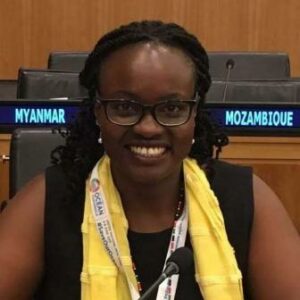
Tallash KANTAI
Team Leader/Writer, IISD Earth Negotiations Bulletin

Magnus LØVOLD
Project Supervisor, Norwegian Academy of International Law

Joshua LINCOLN
Senior Fellow, Center for International Law and Governance, Fletcher School of Global Affairs, Tufts University

Elena CIMA
Lecturer, International Environmental Law, University of Geneva

Michel TSCHIRREN
Head, Global Affairs Section, Federal Office for the Environment, Switzerland
Highlights
Video
Live on Webex.
Summary
Opening Remarks | Beyond Busan
H.E. Amb. Tormod Cappelen ENDRESEN | Permanent Representative of Norway to the UN Office and other international organizations in Geneva
- The plastic pollution crisis is the most rapidly escalating environmental problem worldwide, and with the second round of final negotiations approaching, global attention is focused on ensuring an effective treaty is concluded by the end of the year. This process serves as a critical test for the multilateral system’s ability to deliver results at a time when many question its effectiveness.
- Plastic pollution is a challenge that requires global solutions, and Norway, along with 69 partners in the High Ambition Coalition, has advocated for legally binding measures that regulate the entire life cycle of plastics to eliminate plastic pollution by 2040. Parallel efforts are also underway in the World Trade Organization (WTO) to complement the UN process and reinforce international cooperation.
- Without immediate action, plastic leakage into the environment is projected to rise from 20 million tons in 2020 to 30 million tons by 2040, while the accumulation of plastics in rivers and oceans could nearly double, reaching 300 million tons. These alarming trends underline the urgency of adopting strong, coordinated measures to curb pollution at every stage of the plastic life cycle.
- At INC-5.1, more than 100 countries supported phasing out the most harmful plastic products and chemicals in a globally coordinated manner. This broad consensus forms a strong foundation for future negotiations, with an equally large number of countries endorsing production reductions to sustainable levels and committing to life-cycle-based measures to achieve this goal.
- Ensuring a robust financial mechanism within the treaty is essential for supporting recipient countries in their efforts to combat plastic pollution. Reaching an agreement on key provisions related to financing and implementation—specifically articles 3, 6, and 11—before INC-5.2 is crucial to securing an effective treaty. These issues must not be left undecided until the final negotiations; rather, consensus should be reached in advance to ensure a smooth conclusion.
- As INC-5.2 approaches, there is a strong call for political engagement at the ministerial level to drive progress toward a successful treaty. Norway expects to participate at this level and encourages other nations to do the same, reinforcing the collective commitment needed to finalize an ambitious and effective agreement.
Chair Reflections | Beyond Busan
H.E. Amb. Luis VAYAS VALDIVIESO | Chair, INC Plastic Pollution, Ecuador
- Strong commitment from member states has been evident throughout the process, with significant progress achieved at INC-5. There is a high level of convergence on most provisions, and discussions during the inter-sessional period indicate that members are actively engaging with the chair’s text from INC-5.2 as a foundation for future negotiations.
- A key factor in the success of the negotiations is the ability to find common ground and reach agreements on complex provisions. Encouragingly, discussions are advancing, with member states delving deeper into these challenging areas and reporting on their preparations for INC-5.2, demonstrating a collective effort to build consensus.
- The negotiation process remains dynamic and must be kept alive to ensure a successful INC-5.2. While challenges remain, including complex issues that require resolution, the most persistent obstacle has been time constraints. Effectiveness and efficiency in organizing the work ahead will be crucial to overcoming this limitation and achieving a strong outcome.
- One of the distinctive aspects of this process is the high level of participation from observers, with more than 3,000 involved and numbers continuing to grow. This engagement is not only about presence but also meaningful contributions, as input from scientists, civil society, and the private sector plays a valuable role in shaping the negotiations.
- Efforts will continue to strengthen communication with all stakeholders, ensuring that their voices remain an integral part of the discussions at INC-5.2. Maintaining close collaboration with these groups will enhance the overall process and contribute to a well-informed, inclusive treaty.
Unpacking INC-5.1 and the Way Forward
Tallash KANTAI | Team Leader/Writer, IISD Earth Negotiations Bulletin
- Delegates made significant progress between INC-4 and INC-5.1, particularly with the shift to a more focused chair’s text, which reduced the document from 68 to 22 pages. INC-5.1 became known as the “Redline INC” as states openly declared their red lines, with discussions taking place in contact groups, informal settings, and corridor meetings. For the first time in this process, states formed coalitions around key issues and worked on bridging proposals, such as merging financial proposals from the African Group and the U.S., which contributed to Article 11.
- Despite this progress, major challenges remain:
- Many provisions focus on national-level action, which significantly lowers ambition given the global nature of plastic pollution.
- There are still outstanding issues regarding product design, extended producer responsibility, waste management, and technology transfer, with some important topics—such as a remediation fund for Small Island Developing States (SIDS) and specific articles on health and biodiversity—entirely missing from the text.
- Additionally, while parts of the chair’s text appear clean, some states argued it was unbalanced and announced they would submit further text, raising concerns that the document could expand again.
- The most difficult articles still require political will to unlock, including Article 3, which defines harmful products and chemicals; Article 6, which deals with supply and sustainable production; and Article 11, which focuses on financial mechanisms. These sections directly impact the treaty’s scope and ambition. The balance between addressing plastics’ full life cycle and protecting livelihoods in the plastics industry remains unresolved.
- The financial landscape has shifted since INC-5.1. While there was initial optimism about bridging financial proposals, shifting global economic conditions and waning political will for financial transfers from the Global North to the Global South have complicated discussions. The question remains whether a Montreal Protocol-style multilateral fund for plastic pollution is still viable.
- Beyond these negotiations, plastic pollution intersects with broader environmental and economic frameworks, touching on climate change, biodiversity, human health, food security, and trade. Relevant discussions are happening across multiple platforms, including the WHO, FAO, WTO, and various Multilateral Environmental Agreements (MEAs). States must keep this wider context in mind as they move toward INC-5.2 and work to finalize a meaningful treaty.
Magnus LØVOLD | Project Supervisor, Norwegian Academy of International Law
- Despite media headlines portraying INC-5.1 as a failure, the session in Busan marked a significant step forward. While the goal of finalizing the treaty by 2024 was not met, looking below the surface, the negotiations were the most productive yet, with clearer focus compared to previous INCs and tangible progress.
- The chair’s non-papers played a crucial role by highlighting areas of convergence and sharpening key choices. Countries revealed their red lines and made substantive proposals on Articles 3, 5, 6, 11, and 20, contributing to an atmosphere of increased trust in the process.
- A major development during the meeting in Busan was the emergence of a “progressive majority,” demonstrated by two joint statements—one from Mexico on product and chemical phase-outs (on behalf of 95 states) and another from Rwanda (on behalf of 85 states). These statements reflected growing leadership and momentum for ambitious treaty provisions.
- Moving toward INC-5.2, three key challenges need to be addressed:
- Technical and legal work: The treaty text must be further developed to ensure coherence and effectiveness. This is both an intellectual challenge—designing articles that fit together and achieve the treaty’s objectives—and a mobilization challenge, as the progressive majority must bring more states on board. While over 100 countries backed the joint statements in Busan, the number of states genuinely committed to addressing plastic pollution in good faith is even larger, and uniting them behind a common text will be critical.
- Procedural strategy: The progressive majority must establish a clear pathway for adopting the treaty, even if some countries refuse to participate. Spoiler tactics observed in Busan suggest that full consensus is unrealistic. There are alternative adoption methods, including a formal vote, forwarding the treaty to another decision-making forum, or allowing willing states to adopt the treaty independently. No country has the right to block others from exercising their sovereign right to enter into international agreements, so identifying and advancing a viable adoption process will be key.
- Political groundwork: Ministers, who will ultimately sign and approve the treaty, must be prepared for the leadership required to adopt a strong agreement. Environmental diplomacy has long operated on a principle of absolute consensus, making any deviation from that approach a challenge. Ministers need platforms—both at INC-5.2 and beforehand—to express their support for a strong treaty and reinforce the political momentum necessary for adoption.
Joshua LINCOLN | Senior Fellow, Center for International Law and Governance, Fletcher School of Global Affairs, Tufts University
- INC-5.1 saw a welcome shift towards strategic negotiations, with proposals now backed by coalitions, leading to a more structured and coordinated process. However, despite this progress, the deep divisions between parties meant that further breakthroughs in Busan were unlikely and unbridgeable, making it clear that additional negotiation rounds are necessary.
- While INC-5.2 is the next scheduled step, there is a growing sense that a further evolution of the process, essentially an INC-6, is needed to properly address the complexities of the treaty process. The upcoming intersessional period must be used to determine the most effective format for continuing negotiations. There are additional uncertainties that have been added to circumstances since Busan, such as the position of the United States.
- There are three looming questions that people were talking about before and during Busan.
- The idea of a “treaty of the willing,” where a subset of nations move forward with an agreement independently, has been discussed but is premature. This option, akin to the Ottawa Landmine Treaty, may be considered in the future but should remain secondary for now.
- The notion that “no deal is better than a bad deal” is gaining traction, particularly in the EU, where the preference may be to abandon weak commitments rather than accept a diluted treaty. This scenario is reminiscent of the failed Copenhagen climate talks, which eventually paved the way for the stronger Paris Agreement. Finally, a potential compromise could be a flexible treaty model, inspired by the MARPOL framework, where nations sign onto a core agreement with optional additional commitments and protocols. This could allow for varied levels of ambition while keeping all parties engaged in the process.
- The next few months before INC-5.2 must focus on refining the treaty text, bridging proposals, and strengthening coalitions such as the Rwanda Group and Mexico Group, both of which emerged strongly during the closing ceremony in Busan.
- Understanding the stance of key players like the African Group, particularly regarding financing, is crucial. These proposals were positive developments, but they require further structuring and reinforcement before the next round of negotiations.
- Treaty effectiveness must be prioritized by ensuring it has strong procedural foundations, particularly in areas such as national reporting, scientific advisory bodies, implementation mechanisms, review processes, and defined amendment procedures, all of which need refinement.
- A crucial missing element in the current treaty text is an explicit reference to the right to a clean, healthy, and sustainable environment. Given that this is now a recognized human right under the UN framework, it is both appropriate and necessary for its inclusion in the plastics treaty.
- There is also a significant lack of modeling and statistical work to analyze the trade-offs and long-term impact of key treaty provisions. Articles 3, 5, 6, and 11, which address plastic products, design, supply, and financing, require robust data-driven assessments to inform negotiations.
- A better understanding of the underlying motivations and interests of major players that are water. Without this insight, negotiations risk being stalled by misinterpretations or misaligned expectations between key stakeholders.
- Mapping influence networks within the negotiation process is essential to understanding how coalitions operate and how member states collaborate. Strengthening the roles of groups like the Mexico and Rwanda coalitions can provide greater clarity and drive more effective discussions.
- The intersessional period must be used to prepare for multiple possible scenarios, as uncertainties—particularly the evolving position of the United States—will only become apparent when the next round of negotiations begins. A combination of strategic planning, coalition-building, and adaptability will be crucial in determining the treaty’s trajectory.
Elena CIMA | Lecturer, International Environmental Law, University of Geneva
- Many lessons can be drawn from existing treaties and MEAs, including the financing mechanisms.
- The financial aspect is key in negotiating environmental treaties. International environmental law requires providing support to less developed countries and considering the differences among countries when designing a financial mechanism. Treaties should aim at preventing environmental harm while also facilitating compliance in less developed countries through technical and financial assistance.
- There appears to be a general agreement on the importance of the provision of financing, as mentioned in draft Article 11. However, significant disagreements among countries are present, and key questions remain unresolved, particularly regarding the obligations, sources, and mechanisms of funding.
- Five main challenges that have not been addressed in the current draft include:
- Type of the financing obligation: Different formulations have been proposed, including variations in language, commitment levels, and types of obligations.
- The subjects and recipients of the financing: Obligations can vary for different countries, and there are currently disagreements on this issue. For example, the Multilateral Fund of the Montreal Protocol is financed by mandatory contributions from developed countries and voluntary contributions from other parties.
- Identifying funding sources: The current text envisions multiple funding streams and mechanisms, including public, and private, plastic fees, extended producer responsibility, and multilateral aid. Mechanisms that integrate multiple sources can also be envisioned, similar to those in the Kyoto Protocol and the climate regime.
- Type of fund: Similar to the third point, this can also involve multiple funds, as seen in the climate regime where funds for mitigation, adaptation, and loss and damage coexist.
- Prioritization of vulnerable states: It is important to determine the factors to take into account when defining these categories. Existing MEAs provide examples of how to differentiate and identify more vulnerable countries.
- While these five challenges are central to Article 11, other unresolved aspects of the financing section will require further discussion and refinement as negotiations progress.
Discussion and Q&A
Q: Is there a path to having a rule of procedure that would allow voting?
Tallash KANTAI
- This is a controversial topic, and the current rules of procedure are unclear.
Magnus LØVOLD
- Discussion on this topic took more than half of the negotiation time at INC-2 in Paris, being highly controversial.
- If the question refers to the procedural path, there is a path for adopting the rules of procedure. More technically, rule 38.1 which addresses decision-making on substantive matters has been controversial, but Rule 38.2, which has not been contested, states that procedural questions can be settled by a simple majority vote.
- On the other hand, if the question concerns the political path to adopting the rules of procedure, that is a separate, difficult issue.
Q: Considering growth in plastic production is projected to become one of the biggest contributors of climate change and challenges the diminishing time we have to reduce GHG emissions, what legal and policy avenues do you think need to be prioritized if the like-minded countries won’t agree on a treaty that considers the full life cycle of plastics?
Tallash KANTAI
- We need to consider the scope of the treaty. If plastic pollution is addressed from the production stage as mentioned in Resolution 5/14, plastic-producing countries would need to step up, much like under the UNFCCC.
Joshua LINCOLN
- This is a moment of reflection on the question of where this issue will find a resolution – at the international level in a treaty, regional markets, or national frameworks. There is a proposal to address it through an international treaty, but if it does not happen, it will be addressed through other mechanisms, potentially being less effective. We must all think about whether we need a treaty now, as well as the potential costs of excluding this issue from the scope of the treaty.
Q: When and where will INC-5.2 take place?
Tallash KANTAI
- The Bureau is considering holding a meeting in July, possibly in Geneva, but we are waiting for the official communication.
The INC Secretariat announced on 4 March 2025 that the meeting will take place from 4 to 14 August 2025 at Palais des Nations in Geneva.
Q: Given the seismic geo-political shifts in recent weeks in the wake of the policy agenda and positioning of the current US administration, what approaches offer the optimal path in overcoming the challenges to reaching consensus on a global binding treaty on plastics pollution?
Joshua LINCOLN
- The position and engagement of the US on this topic are yet unknown. While it has recently withdrawn from other international negotiations, such as the pandemic treaty and the taxation treaty, no executive order has been issued regarding plastics. Although the executive order to remove the use of paper straws as the replacement for plastic straws indicates that there are challenges concerning the focus on plastics, it is not a question to be discussed at this stage. The focus should remain on continuing and enriching the work that we have been carrying out to build rich, profound, next-round negotiations on this treaty.
Tallash KANTAI
- Every treaty negotiation gives an opportunity to innovate and introduce new mechanisms, such as the Multilateral Fund for the Montreal Protocol and the Specific International Programme for the Minamata Convention on Mercury. The shift in the global financial landscape may drive innovation in the context of the plastics treaty as well.
Elena CIMA
- The global binding treaty on plastics is an extremely ambitious effort. The negotiation has been focusing directly on the establishment of a binding treaty that covers the whole supply chain, because of the high complexity of the problem and urgency of the situation.
- Most treaties start with a framework convention, followed by protocols that touch upon specific aspects, as seen in agreements like the WTO Fisheries Subsidies. The approach of dividing certain aspects of topics and setting some elements that are blocking the negotiation for the second wave could be considered, except for essential issues like financing.
Magnus LØVOLD
- Consensus makes the treaty-making process extremely sensitive. To ensure the treaty’s effectiveness, we need to establish rules and mechanisms that reduce and eliminate plastic pollution while setting standards that enable countries that may not join initially to do so later. There are many examples where the treaty was developed by a small group of states and later expanded through a process of universalization.
Joshua LINCOLN
- More work needs to be done with respect to exploring the fundamental interests of states to promote another depth of interest-based negotiation. The negotiations on the plastics treaty have covered an extraordinarily dynamic period in the international system, and we have experienced fundamental changes between every INC.
- There is a need for innovation now. Negotiators must bridge views and positions between major coalitions and groups, and these discussions should take place at the edges, among like-minded groups.
Q: How can we ensure the participation of NGOs in future discussions?
Joshua LINCOLN
- In Busan and previous rounds, I shared the frustration of many NGOs and observers. While the need to improve communication and participation for observers has been recognized, member states have also emphasized maintaining their own space to ensure the member state-led process.
- SIDS representatives have mentioned that the intercessional period is the best time for NGOs and observers to influence the process by engaging with member states, highlighting the importance of using this time wisely.
Magnus LØVOLD
- It is important to ensure that NGOs and observers can follow the discussion and meaningfully interact on various items. At the same time, countries involved in the negotiations must be open to input from NGOs, as has been the case in many past negotiations. In some cases, intersessional work can even be more essential than the negotiations themselves.
Q: What mechanisms are there in play to strengthen the treaty over time?
Tallash KANTAI
- There is a section in the treaty that allows states to amend the treaty. Given that science is still growing, the treaty needs to be flexible enough to take in new knowledge that will emerge in the future. The section on amendment might be easier to agree on because it is part of the final provisions and aligns with the agreed language in other provisions.
Magnus LØVOLD
- Ensuring credible decision-making mechanisms to strengthen the adoption of new annexes and protocols is essential.
- The decision-making rule of the Conference of the Parties (COP) has been contested in Busan, whether it will adopt its rules of procedure by consensus or by other mechanisms. A lot of work has to be done to achieve the ambition of concluding the treaty this year. Other MEAs have shown that adopting the rules of procedure for the COP can be challenging, as seen in the UNFCCC, which has been working on this process since 1996 with some rules of procedure still in brackets.
- Given the high number of decisions that have to be made by the COP, the decision-making rule should allow for a vote as a last resort if efforts at achieving consensus have been exhausted.
Joshua LINCOLN
- The Chair’s Text would be improved by naming a scientific body. Explicitly embedding scientific review inside the treaty as a fundamental part would enable us to refer back to the scientific and technical expertise on a wide range of issues, given that the front edge on plastics is moving quickly.
- The decision-making of the COP should also be revised within the draft treaty text so that it does not hobble the COP and create more problems.
Q: The panel has rightly focused on some positive lessons from other processes. Can they also suggest aspects of other processes that they feel should not be emulated under the Plastics process?
Joshua LINCOLN
- Every treaty process has different experiences. Although it is possible to draw on positive and negative examples from other treaties and issues, there is no guide on what has to be done in this particular process on plastics, emphasizing the need for agility, adaptation, and innovation.
Magnus LØVOLD
- When there is too much ambiguity in the provisions, it leaves a lot of room for interpretation of the requirements for states, lowering the treaty’s effectiveness by provoking political disagreements and failing to provide guidance to Parties for implementing their provisions.
- Striving for consensus has the risk of introducing ambiguity in the treaty provisions. Other treaty adoption modalities would have to be explored to allow for more clarity in the language.
Elena CIMA
- Although many lessons can be learned from other treaty processes, I agree that every negotiation is a different process, with different topics, times, and geopolitical situations.
- There is a question of whether to keep ambiguous language to allow for more Parties to join, or to opt for clear language with rigid formulation with the risk of low participation. This is a difficult question that we may need to tackle at one point.
Tallash KANTAI
- It is important to have a time frame, potentially concluding the negotiations by the end of the year.
Elena CIMA
- We need to think of a language and text that countries would not only sign but ratify, to ensure the full effectiveness of the treaty.
Joshua LINCOLN
- The International Convention for the Prevention of Pollution from Ships (MARPOL) first created a core element with issues that are less argued, such as principles and modes of implementation, and introduced specific protocols later. This approach provides an interesting model in the reflection from INC-5.1 to 5.2 and its potential application to the plastics treaty.
- While we need to keep high ambition and negotiate for the strongest treaty possible, having sensitivity and understanding of what is achievable today is also important. A weak or partial treaty is worse than no treaty at all.
Q: Do you believe there can be a place for the inclusion of “limitations on plastics subsidies” in the latest treaty text?
Joshua LINCOLN
- While this could be included in the national plans, regulating at the international level may be difficult since many states consider plastic subsidies to be a fundamentally domestic sovereign fiscal matter.
Elena CIMA
- Ensuring mutual supportiveness between environmental treaties and treaties in other areas of international law raises the question of adding subsidy regulations in the treaty text. Examples like the WTO’s Subsidies and Countervailing Measures Agreement suggest that a more aspirational or non-mandatory approach might be preferable.
Closing Remarks
Michel TSCHIRREN | Head, Global Affairs Section, Federal Office for the Environment, Switzerland
- It is clear that maintaining momentum and ambition is essential as we approach the INC-5.2.
- The main points of today’s discussion and priorities for ambitious outcomes can be summarized in three points:
- Need for measurable, binding targets through a full-life-cycle approach: Clear and measurable targets for reducing plastic pollution throughout its life cycle are needed, which is also foreseen in the UNEA 5/14. Adopting global targets for sustainable production to drive meaningful change, as also highlighted in the statement in Busan, implies the need to shift from business as usual.
- Addressing issues even if difficult: Legally binding measures to eliminate chemicals of concern in plastics are seen as key to an effective treaty. Although it is not an easy topic, it cannot be avoided. The Mexican statement, supported by around 100 countries, emphasized the importance of chemical phase-out. We can draw from existing models like the BRS by defining exemptions, setting phase-out dates, and allowing reservations at ratification. In addition to global principles, national circumstances need to be taken into account.
- Functioning solutions: Speakers have highlighted the progress made at INC-5 and the significance of the Chair’s text while underscoring the need to continue with the informal work involving various stakeholders and consider elements such as the process of reaching an agreement and determining the participants.
- It is also important to consider how the treaty will evolve over time, including the key elements needed to end plastic pollution and the potential outcomes if the right mechanisms are incorporated.
- Switzerland remains committed to collaborating with all stakeholders towards an effective plastics treaty.
- This is an opportunity to achieve a transformative global treaty with a global approach that protects the environment and human health while fostering sustainable development.