
Event Virtual
The Case for Observer’s Participation in the INC on Plastic Pollution and Other MEAs
27 Mar 2025
15:00 – 16:30
Venue: Online | Webex
Organization: International Pollutants Elimination Network, Geneva Environment Network
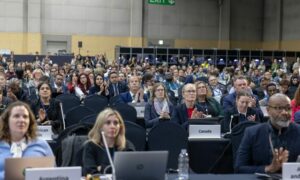
This event organized within the framework of the Geneva Beat Plastic Pollution Dialogues will provide guidance and increase clarity on why it is crucial to ensure the participation of civil society, right holders and other relevant observers in the Intergovernmental Negotiating Committee to develop an international legally binding instrument on plastic pollution, including in the marine environment, after recent restrictions in public participation.

About this Event
Public participation in environmental governance is a cornerstone of democracy and human rights, ensuring that individuals and communities can engage in decision-making processes that impact their health and environment. However, in recent years, there has been a concerning trend of restricted participation in international environmental negotiations, limiting the input of civil society organizations (CSOs), Indigenous Peoples, scientists, and other key stakeholders.
Instances such as the first part of the fifth meeting of the Intergovernmental Negotiating Committee (INC-5.1) on the Plastics Treaty and the Sixth United Nations Environment Assembly (UNEA-6) highlight these challenges, with closed-door meetings and restricted speaking rights diminishing transparency and inclusivity. The exclusion of affected communities and independent experts from global policymaking weakens accountability and the effectiveness of environmental decisions.
Leading experts joining the panel of this event will discuss the legal bases for ensuring inclusive participation in environmental governance, the benefits and barriers to public participation and in international decision-making processes. They will also present case studies where civil society engagement has led to stronger, more effective policies and make recommendations.
Geneva Beat Plastic Pollution Dialogues

The world is facing a plastic crisis, the status quo is not an option. Plastic pollution is a serious issue of global concern which requires an urgent and international response involving all relevant actors at different levels. Many initiatives, projects and governance responses and options have been developed to tackle this major environmental problem, but we are still unable to cope with the amount of plastic we generate. In addition, there is a lack of coordination which can better lead to a more effective and efficient response.
Various actors in Geneva are engaged in rethinking the way we manufacture, use, trade and manage plastics. The Geneva Beat Plastic Pollution Dialogues aim at outreaching and creating synergies among these actors, highlighting efforts made by intergovernmental organizations, governments, businesses, the scientific community, civil society and individuals in the hope of informing and creating synergies and coordinated actions. The dialogues highlight what the different stakeholders in Geneva and beyond have achieved at all levels, present the latest research and governance options.
Following the landmark resolution adopted at UNEA-5 to end plastic pollution and building on the outcomes of the first two series, the third series of dialogues will encourage increased engagement of the Geneva community with future negotiations on the matter.
Speakers
By order of intervention.

David BARRIO LAMARCHE
Legal Officer, Sustainable Development and Human Settlements Division, ECLAC

Anastasia GIADROSSI
Associate Legal Officer, Aarhus Convention Secretariat

Vito BUONSANTE
Law & Policy Advisor, IPEN

Rochelle DIVER
UN Environmental Treaties Coordinator, International Indian Treaty Council
Marcelo COUSILLAS
Director of the Legal Affairs Department, Ministry of Environment, Uruguay | President of the Steering Committee of the Escazú Agreement

Bethanie CARNEY ALMROTH
Professor at Gothenburg University | Member of the Steering Committee of the Scientists’ Coalition for an Effective Plastics Treaty
Chinkie PELIÑO-GOLLE
EcoWaste Coalition | Southeast and East Asia Regional Coordinator, IPEN

Ana Paula SOUZA
Human Rights Officer, UN Office of the High Commissioner for Human Rights (OHCHR) | Moderator
Highlights
Video
Summary
David BARRIO LAMARCHE | Legal Officer, Sustainable Development and Human Settlements Division, ECLAC
- The Escazú Agreement stands for a regional agreement on access to information, public participation, and access to justice in Latin America and the Caribbean.
- The treaty mirrored, for example, the Aarhus Convention. It regulates for the parties to this treaty three main rights: access to information, public participation, and access to justice in environmental matters, especially considering the region’s challenges, like being one of the most dangerous for environmental defenders and having limited government capacity.
- The agreement is novel and is still a work in progress. It is one of the latest multilateral environmental agreements to have been adopted.
- The treaty is also innovative since it is drafted in a very participatory and open way. Public participation is a big part of its DNA and the center of Article 7. The latter requires that participation be broad, open, and occur at early stages with reasonable timeframes. It also ensures that access to information and due consideration of public input are part of the decision-making process. There are specific provisions for promoting participation in international environmental forums and negotiations.
- Article 7.12 focuses on public participation in international forums. Each party should promote public participation in international environmental forums and negotiations, when appropriate, in accordance with domestic legislation. It also supports the promotion of national public participation in international forums dealing with environmental issues or those with an environmental impact.
- The website gives access to the recordings of the negotiations, the documents, and input provided not only by parties but also by different stakeholders who were a part of the meeting.
- The agreement emphasizes practical implementation of the right to participation, not just its legal recognition at national or regional levels. This is achieved through capacity building, cooperation, and the principle of progressive realization.
- The agreement provides a framework that can be used by parties in international and regional environmental negotiations, such as those under the INC (International Negotiating Committee) and other discussions on climate change, biodiversity, and other environmental issues.
- Countries in the region, such as Uruguay, have been mindful of the agreement’s standards in practice. These countries use the agreement to help better implement international commitments, especially in climate change and biodiversity negotiations. For example, countries refer to the Escazú Agreement when discussing access to information and participation in global treaties, such as: Article 6 of the UNFCCC and Article 12 of the Paris Agreement.
- The Secretariat has worked to connect international environmental agendas with the regional context and promote the agreement’s standards globally. They also provide resources through an observatory to track progress and link these agendas.
- A project on plastics is underway, which aims to develop an infographic that illustrates the connections and interrelationships between the Escazú Agreement and other global environmental issues. These resources will help highlight the importance of integrating Escazú’s standards in broader environmental frameworks.
Anastasia GIADROSSI | Associate Legal Officer, Aarhus Convention Secretariat
- The Aarhus Convention plays a vital role in promoting public participation in international environmental decision-making, including the current negotiations on a legally binding instrument to end plastic pollution. This aligns with UNEA Resolution 5/14 adopted in March 2022, which emphasized the need for the widest and most effective participation possible in the treaty development process.
- Public participation in environmental matters is a key principle of international environmental law, rooted in Principle 10 of the Rio Declaration. The Aarhus Convention is the first legally binding treaty to implement this principle, focusing on access to information, public participation in decision-making, and access to justice in environmental matters.
- Adopted in 1998 and in force since 2001, the Aarhus Convention currently has 48 parties, including the EU and its member states. It is open to all UN member states and has served as a model for other regional instruments, such as the Escazú Agreement in Latin America and the Caribbean. Moreover, Uzbekistan’s recent accession highlights its continued relevance.
- The three main pillars of the convention obligate parties to implement access to information, public participation, and access to justice at the national level. Beyond this, Article 3(7) imposes a binding requirement for parties to actively promote these principles in all relevant international environmental forums, such as the ongoing plastics treaty negotiations.
- Article 3(8) of the Convention provides legal protection to environmental defenders, ensuring they are not subject to penalization, persecution, or harassment for exercising their rights. To enforce this, a rapid response mechanism was established in 2021, with a designated official tasked with responding to such violations, particularly relevant given the risks faced by NGOs and public participants in international negotiations.
- The Almaty Guidelines, adopted in 2005, provide practical measures for implementing Article 3(7). These include ensuring access to documents, transparency of procedures, and participation rights in environmental forums. They cover both procedural aspects (e.g., room access, document availability) and substantive aspects (e.g., decision-making influence).
- Effective access to information is foundational for informed public participation. Forums are encouraged to adopt transparent policies on environmental information access, ensure timely online publication of official documents, and share information proactively, accessibly, and free of charge.
- Public participation improves decision-making quality and legitimacy by incorporating diverse perspectives. The guidelines urge that such participation extend to all forum meetings, including subsidiary bodies and all decision-making phases, involving any individual or group likely to be affected or interested, including public interest organizations.
- To facilitate this, suggested practices include granting observer status, opening advisory groups to the public, soliciting public feedback on drafts, and ensuring meeting rooms are open. Accreditation procedures, where used, should be simple and objective. Participation should also include the ability to speak and submit written statements at stages where decisions are still open.
- Special attention must be given to ensuring equity in participation. Paragraph 15 of the guidelines stresses the need for measures that account for disparities in resources, influence, and social or cultural conditions, including financial support for travel to ensure representation of those most affected but least able to attend.
- The guidelines also advocate for transparency and safeguards against undue economic or political influence. Processes should be designed to minimize inequality and support constituencies that would otherwise be excluded due to financial or structural barriers.
- For enforcement, international forums are advised to establish mechanisms for reviewing compliance with participation and information access standards, ensuring accountability and the possibility for recourse when these principles are breached.
- The Aarhus Convention and Almaty Guidelines serve as a robust framework and model for inclusive participation in the negotiation and implementation of the forthcoming global plastics treaty. Recent sessions of the Aarhus Convention’s Working Group of the Parties have highlighted the participation challenges NGOs face in this process and have reaffirmed the importance of applying these principles in ongoing negotiations.
- Beyond Aarhus, other international agreements, such as the Escazú Agreement, also contain provisions to promote public participation in environmental forums, reinforcing the global consensus on the need for inclusive and participatory environmental governance.
Vito BUONSANTE | Law & Policy Advisor, IPEN
- IPEN is a global network of public interest organizations from 131 countries. One of its key goals is to bring the perspectives of organizations from the Global South to the international stage, emphasizing the importance of public participation in global matters.
- One of IPEN´s missions is to generate data, often from low- and middle-income countries, on issues such as plastic pollution and other environmental concerns.
- Public participation in international forums is a core mission for IPEN, as it is essential to democracy and human rights, supports sustainable and inclusive decision-making processes, and helps ensure that voices from the Global South are heard.
- Including affected communities, such as those dealing with chemicals, waste, and plastics, is essential for effective implementation.
- There are increasing restrictions on civil society participation in global environmental negotiations. Closed-door negotiations are becoming more common (e.g., INC-5, where observers were excluded for half the week). Observers often have limited speaking rights and are placed at the end of speakers’ lists, reducing their influence. Additionally, participation faces logistical barriers: the meetings are held in expensive or inaccessible locations, visa rejections for participants from some countries, a lack of financial support to attend meetings, and inadequate time allocated on agendas for observer contributions.
- Legal obligations under regional agreements like the Aarhus and Escazú Agreements support public participation. International commitments such as the UN General Assembly Resolution on the right to a clean, healthy, and sustainable environment include procedural rights like access to information, justice, and participation. However, the implementation of these legal rights in practice remains inconsistent.
- Mere physical presence at negotiations is not enough. Meaningful participation includes: the ability to speak and contribute during sessions, sharing independent research and lived experiences, involvement in informal meetings where key decisions are made, consideration of input in the actual outcomes and treaty text, and removal of practical and procedural barriers (e.g., venue choice, agenda planning).
- IPEN’s presence brings transparency, legitimacy, and accountability. It has participated in environmental negotiations for 25 years to provide independent science and grassroots perspectives, especially from low- and middle-income countries. For instance, IPEN helped debunk myths about plastics and health in INC sessions, challenging misleading claims in Basel Convention technical meetings (e.g., on chemical recycling) and longstanding participation in Stockholm Convention POPRC meetings.
- Excluding civil society leads to weaker policies, missed opportunities for accountability, and greater influence by narrow private interests.
- The recommendations to improve participation are numerous. First, UNEP and meeting chairs should ensure civil society is included in all relevant meetings, not just plenaries, open informal meetings, or provide clear rationales and briefings if closed, and maintain transparent communication channels during and between sessions.
- Practical steps to enable participation are to consider venue accessibility and cost, provide support for visas and travel when possible, allocate agenda time for observers, design room layouts, and speaking order to allow participation.
- Parties to agreements like Aarhus and Escazú must uphold their legal obligations and raise concerns when rights are not respected.
Rochelle DIVER | UN Environmental Treaties Coordinator, International Indian Treaty Council
- The Anishinaabe Nation, divided by the US-Canada border yet maintaining unity as one people, faces direct environmental harm due to plastic pollution, particularly in Lake Superior. This pollution severely impacts traditional foods such as fish and wild rice, undermining Indigenous food sovereignty and the right to food, a shared struggle among many Indigenous communities globally who are frontline defenders.
- Indigenous Peoples participate in international negotiations not just as stakeholders but as rights holders, bringing firsthand experiences of harm and systemic marginalization. Despite this, they often remain unheard in formal treaty processes. The current framework must acknowledge the UN Declaration on the Rights of Indigenous Peoples as the minimum standard and ensure that these rights guide engagement in environmental treaties.
- The International Indian Treaty Council, representing Indigenous Peoples since 1977, has played a foundational role in gaining recognition at the UN and continues this advocacy within new processes such as the plastics treaty. It also co-leads the International Indigenous Peoples Forum on Plastics, organizing across all seven sociocultural regions without distinguishing between the Global North and South, since all Indigenous communities face impacts regardless of geography.
- During INC-5 in Busan, Indigenous delegates prepared interventions for every agenda item but were systematically denied the floor for three consecutive days. This exclusion prompted a direct action led by elder and advisor Juan Leon, highlighting the urgency of inclusion. The action risked participants’ accreditation but was seen as necessary due to the severity of being sidelined in negotiations affecting their rights and lands.
- Direct actions are typically prohibited on UN grounds, yet the Indigenous Caucus proceeded with the risk, underlining how little they had to lose when already excluded. The action took place late in the negotiations, underscoring not only Indigenous frustration but that of broader civil society and youth participants who were also left without a voice.
- Following the direct action, limited space was made for Indigenous voices, but the inclusion remained insufficient. Participation must extend beyond plenary statements and into actual negotiations, including access to contact groups and proper logistical support. The current structure forces Indigenous participants to spend thousands of dollars simply to secure meeting rooms, money that could instead fund more representatives.
- The organizational experience at INC-5 was marked by confusion and a lack of clarity about the negotiation process, even for those experienced in UN treaty bodies. Many delegates spent entire days unsure if or when they would be allowed to speak, often returning home without having had a chance to participate meaningfully.
- The International Indigenous Peoples Forum on Plastics has formally submitted a letter regarding these concerns and looks ahead to INC-5.2 with hope for more inclusive and transparent participation. There is trust that the Palais des Nations, along with member states, will uphold Indigenous and civil society involvement to ensure the resulting plastics treaty is legitimate, inclusive, and capable of achieving lasting, impactful change.
Marcelo COUSILLAS | Director of the Legal Affairs Department, Ministry of Environment, Uruguay | President of the Steering Committee of the Escazú Agreement
- The issue of public participation is a fundamental right for all humans. Under various circumstances, all humans are part of the public and have the right to engage in decision-making processes concerning environmental matters.
- Uruguay is a state party to the Escazú Agreement and presides over its Steering Committee. The Escazú agreement itself was negotiated and operates with significant public participation. At INC 5.1, the Uruguayan delegation submitted a note to the president of INC highlighting the provision of the agreement regarding participation in international forums and requesting that measures be implemented. Uruguay recognized that public participation in environmental negotiations is valuable both as a cornerstone of democracy and transparency and for its practical utility.
- The involvement of civil society organizations as active observers in international negotiations is of great importance to countries. Civil society organizations not only represent various interests and sectors, but they also conduct research and studies to contribute technical and scientific knowledge to states, particularly to smaller delegations that often lack the capacity to address all aspects and activities during sessions and international periods.
- A high value is placed on public participation, and Uruguay will continue to do everything possible to promote it and support the participation of civil society in this kind of negotiation at the INC.
Bethanie CARNEY ALMROTH | Professor at Gothenburg University | Member of the Steering Committee of the Scientists’ Coalition for an Effective Plastics Treaty
- Complex, interconnected, and transboundary environmental challenges – particularly the triple planetary crisis of pollution, climate change, and biodiversity loss – demand holistic systems thinking, which scientists are well-equipped to provide. These challenges impact Earth systems, societies, and economies globally, requiring cross-sector, cross-border collaboration informed by scientific evidence.
- The integration of science into policy has long been recognized by the UN, as seen in Agenda 21 and the Rio Declaration. Scientific knowledge is essential for sustainable development strategies, and the right to science is enshrined in Article 27 of the Universal Declaration of Human Rights. This right encompasses participation in science, access to its benefits, and protection from its potential harms.
- The 2009 Venice Statement further defined the right to science, emphasizing participation (including academic freedom and citizen science), the right to benefit from scientific advancements through technology transfer and capacity building, and the right to protection from harmful applications of science. Not all scientific innovations are inherently safe, and society must be shielded from hazardous outcomes.
- Resolution 5/14 of the plastics treaty negotiations reinforces the need for a strengthened science-policy interface, urging the incorporation of the best available science and diverse knowledge systems, such as Indigenous and local knowledge, into treaty deliberations. However, existing mechanisms to ensure this integration during negotiations appear insufficient or unclear.
- In response to the lack of formalized structures ensuring science-based negotiations, a scientist coalition was formed during INC-1 in Uruguay. Starting with only a few members, it has expanded to over 400 scientists from 65+ countries across all UN regions and disciplines. The coalition now regularly attends INC meetings, providing scientific support to negotiators and delegates through fact sheets, policy briefs, and bilateral consultations.
- The coalition’s work is especially critical for smaller delegations, which often lack access to in-house scientific expertise. Unlike larger delegations that include specialists such as chemists or marine scientists, these smaller teams may consist of only a few individuals with limited backgrounds in natural or social sciences, creating potential disparities in negotiation capabilities.
- By being present at negotiation sessions, the coalition helps all delegations, especially under-resourced ones, identify scientific misrepresentations or misunderstandings and to flag misinformation and disinformation. This ensures that policy decisions are informed by accurate, independent science rather than distorted by vested interests.
- Economic actors with vested interests are participating in the negotiations and have been shown, through empirical studies, to influence scientific outputs when science is industry-funded. This can lead to misleading claims that cast doubt on established evidence, thereby stalling or undermining effective policy action.
- Clear examples of this dynamic include the denial or dismissal of well-established scientific consensus on the health impacts of plastic pollution. Scientific evidence already confirms adverse effects across the entire life cycle of plastics, including links to developmental issues, cancer, metabolic and reproductive disorders—yet some statements falsely claim this evidence is insufficient or non-existent.
- Another case involves microplastics, with over 20,000 studies detailing their sources, behavior, and impacts on biological systems. Despite this, claims continue to circulate suggesting a lack of evidence. These are provably false and appear intended to delay regulatory action rather than reflect scientific reality.
- Independent, publicly funded scientists play a crucial role in countering such disinformation and in guiding evidence-based policy decisions. They help interpret complex data, evaluate proposed control measures, promote innovation, and steer negotiations away from ineffective or deceptive “false solutions.”
- Continued and meaningful participation of independent scientists in the negotiations is vital. Ensuring that their expertise is respected and integrated into policy frameworks is necessary for the development of robust, equitable, and effective responses to plastic pollution.
Chinkie PELIÑO-GOLLE EcoWaste Coalition | Southeast and East Asia Regional Coordinator, IPEN
- For 25 years, IPEN has worked towards a toxic-free future and played a key role in shaping multilateral environmental agreements.
- IPEN is actively involved in policy discussions such as the Global Framework on Chemicals (formerly DRS SYKM), the science-policy panel, the Intergovernmental Negotiating Committee (INC) on Plastic Pollution.
- IPEN plays a key role in negotiations as expert observers, ensuring that frontline environmental and public health concerns are represented. One of the most vital aspects of IPEN’s work is that it bridges the gap between local realities and global policymaking by contributing firsthand community-based knowledge. Moreover, it brings local and national data into international discussions, advocating for equitable, responsive, and just policies.
- IPEN empowers civil society by supporting civil society engagement not just in policy formation, but also in implementation at local and national levels. They share credible science and country-based data (135+ publications from 85+ countries) via an interactive map on IPEN’s website.
- The organization engages with rights holders by working closely with Indigenous Peoples, local communities, and other marginalized groups. They ensure their voices are amplified and that the policies respect and protect their rights and livelihoods.
- It is important to make sure the negotiations are open to the public interest, with open and inclusive negotiations to foster transparency, accountability, and the inclusion of diverse perspectives. It enhances the credibility, legitimacy, and effectiveness of the outcomes.
- Civil society allows IPEN to provide critical scientific data, share on-the-ground and lived experiences, and advocate for policies that prioritize human health and environmental justice.
- The involvement of public interest stakeholders ensures that decisions are not solely influenced by forces but forces seeking to control the outcome of the negotiations and continue business as usual.
- Civil society organizations advocate for science-based solutions that protect people and the planet. They provide independent monitoring and reporting, which helps governments and corporations remain accountable for their commitments.
Discussion and Q&A
Q: Can civil society complain with the compliance committees on the implementation of the provisions on participation in international fora?
Anastasia GIADROSSI
- Yes, there is a mechanism under the Aarhus Convention called the Compliance Committee, which reviews parties’ compliance with all provisions of the Convention.
- This includes Article 3, paragraph 7, which imposes a legally binding obligation on parties to promote the principles of the Convention in international forums.
- Members of the public, including both natural and legal persons, are entitled to submit a communication to the Compliance Committee.
- When such a communication is submitted, it leads to a discussion between the party concerned and the communicant to assess the alleged violation.
- So far, no cases have been submitted to the Committee specifically concerning violations of Article 3, paragraph 7. However, this does not exclude the possibility of such communications being brought forward in the future.
Marcelo J. COUSILLAS
- The Escazú Agreement has a mechanism very similar to the Aarhus Convention’s Compliance Committee: there is an equivalent committee under the Escazú Agreement, and anyone can submit a communication to it.
- The committee can address issues related to applying the principles of the Escazú Agreement in international negotiations.
- Ultimately, it is the responsibility of the member states to transfer or reflect the principles of the regional agreement into international forums.
- Additionally, the development of guidance documents or identification of good practices can also be undertaken through the agreement mechanisms.
Q: Who benefits from the lack of public participation in environmental negotiations, and can public participation be seen as a counterpoint to vested interests in these negotiations? And finally, who is accountable when public participation is not enabled?
Vito BUONSANTE
- Poor decision-making is often the result when transparency and participation are lacking. Lack of transparency tends to benefit actors with vested interests, typically those already embedded within government delegations or with close ties to state-owned businesses.
- These vested interests are often at odds with those of civil society, which is then excluded from influencing decisions.
- While recognizing that these are member–state–driven processes, the imbalance in representation, where business interests are consistently present and civil society is sidelined, leads to unequal decision-making.
- Transparency can help restore balance and ensure fairer outcomes.
- The compliance committees under Aarhus and Escazú are important tools for accountability, and it would be interesting to see how they respond to cases where public participation is excluded.
- Specifically in the context of the Intergovernmental Negotiating Committee (INC) on plastics, UNEP and its Executive Director have a responsibility, as outlined in the resolution, to guarantee the broadest participation possible in the negotiation process.
Rochelle DIVER
- The people do not benefit from a lack of participation; what we’re seeing is that it’s largely industry that benefits.
- There’s actually really strong participation from industry now, so this isn’t just a state-driven process anymore; it’s also an industry-driven one.
- We keep hearing that “this is a state-driven process,” and while that might be true, that statement often shuts down what we can say or push for afterward.
- States are there on behalf of their constituents; they are public servants, and that’s how they should act, but I don’t feel that’s been the case in these negotiations.
- Closed-door discussions and strict rules about not sharing anything from inside the room go against the kind of transparency that should be the norm.
- Elected officials are in these positions because people put them there, and they should be accountable to the public.
- Public participation isn’t just about being able to speak on the floor, it also means that state representatives should meet with their constituents, especially when they’re physically present at these negotiations.
- I really hope that moving forward, states will prioritize the voices of the people, the impacted communities, and those supporting them.
Bethany CARNEY ALMROTH
- If there isn’t broad participation, transparency, and inclusion in these processes, those who benefit tend to be actors who don’t always have the public’s best interests in mind.
- When we talk about sustainability, we refer to three aspects: economic, social, and ecological, but unfortunately, the economic aspect usually weighs the heaviest.
- Those economic actors are often the ones who hold the most power.
- It’s critical to bring in other representatives who can speak on behalf of the environment, human health, and societies and cultures.
- Doing so can shift the discussion toward something more representative, sustainable, and driven by justice and equity.
- I think accountability has already been touched upon, but I just want to emphasize how essential it is to elevate those other dimensions of sustainability that go beyond just the economic.
Chinkie PELIÑO-GOLLE
- When we ask who benefits, I’ve already mentioned the powerful forces that want to continue with business as usual, but we also have to ask a different question: who is being harmed and who should be held accountable for those harms?
- While powerful actors benefit, there are many vulnerable and impacted communities and populations suffering the consequences.
- Member states must take action by developing and adopting a meaningful global plastics treaty that focuses on addressing these impacts, not just protecting those who are already benefiting.
- We need to reiterate that many communities are raising their voices because they are directly affected. They are seeking justice, and we need to stand with them.
- Those responsible for the harm must act and be held accountable to address the concerns of these impacted populations.
Documents
Links
- Geneva Beat Plastic Pollution Dialogues
- Information submitted by the secretariat of the Convention on Access to Information, Public Participation in Decision-making (UNEP/PP/INC.5/INF/3) | 24 October 2024
- Our Health, Our Voices: The Case For Public Participation In Multilateral Environmental Governance Forums | IPEN | February 2025
-
Observers Engagement Guide | UNEP