
Newsletter 10 Jun 2024
Environment: What’s Up in GENeva | 10 – 16 June 2024
The Geneva Environment Network’s weekly newsletter includes the latest information on the global environmental agenda, main events, job vacancies, learning opportunities, as well as other useful resources and updates. Stay tuned and follow us on X (Twitter), Facebook, LinkedIn, Instagram, and Youtube, or visit our website regularly for additional updates.
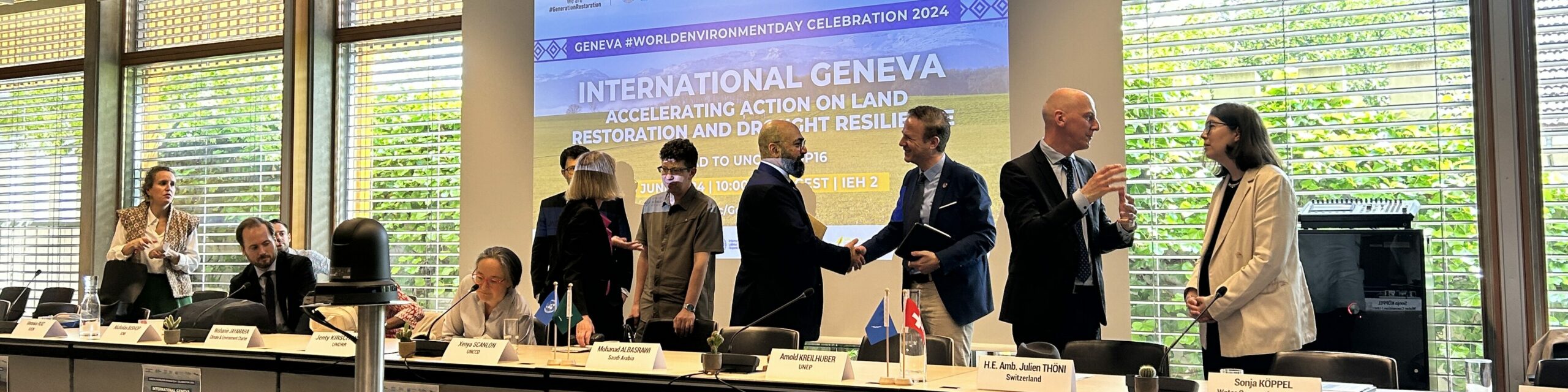
Image of the week | Panelists discussing at the closing of the Geneva World Environment Day Celebration 2024 held at the International Environment House, on 5 June 2024. © Enora Kerjean, Geneva Environment Network
Updates on Upcoming Chemicals and Waste Negotiations
This week, a new Chemicals and Waste Negotiations Briefing, organized within the framework of the Geneva Environment Network, will provide an overview of the work and key activities to advance the sound management of chemicals and waste globally. It will review the outcomes of the negotiations related to chemicals and waste that took place in 2023 and early 2024, and present the latest information on the important conferences scheduled in the coming months, as well as a follow-up on resolutions adopted at the UN Environment Assembly. The event will also present the new Global Framework on Chemicals, adopted by the 5th International Conference on Chemicals Management in Bonn in 2023, which provides a vision for a planet free of harm from chemicals and waste, for a safe, healthy and sustainable future. → Register and join us in person at the International Environment House 1, Room 3, or online on Tuesday 11 June at 10:00 CEST.
In 2024 and 2025, major upcoming negotiations on chemicals and waste include:
- 3rd Session of the Open-Ended Working Group (OEWG 3) of the Science-Policy Panel to contribute further to the sound management of chemicals and waste and to prevent pollution | Geneva, 17-21 June 2024 [dedicated briefing on 6 June]
- 14th meeting of the Open-Ended Working Group of the Basel Convention (OEWG-14) | Geneva, 24 – 28 June 2024
- Plastic Pollution INC Ad Hoc Intersessional Open-ended Expert Groups in-person meeting | Bangkok, Thailand, 24 – 28 August 2024
- 20th meeting Chemical Review Committee (CRC.20) of the Rotterdam Convention | Rome, Italy, 17 – 20 September 2024
- 20th meeting of the Persistent Organic Pollutants Review Committee (POPRC.20) of the Stockholm Convention | Rome, Italy, 23 – 27 September 2024
- UN General Assembly High-Level Meeting on antimicrobial resistance 2024 | New York, 26 September 2024
- 4th Global High-Level Ministerial Meeting on Antimicrobial Resistance | Riyadh, Saudi Arabia, 4 – 5 November 2024
- 5th Session of the Intergovernmental Negotiating Committee to develop an international legally binding instrument on plastic pollution (INC-5) | Busan, Republic of Korea, 25 November – 1 December 2024 [dedicated briefings to follow]
- 2025 Meetings of the conferences of the Parties to the Basel, Rotterdam and Stockholm Conventions | Geneva, 28 April – 9 May 2025
- 6th Meeting of the Conference of the Parties to the Minamata Convention | Geneva, 3-7 November 2025
A Science Policy Panel on Chemicals, Waste and Pollution Prevention
While the third session of the Ad Hoc Open-Ended Working Group on a Science-Policy Panel to contribute further to the sound management of chemicals and waste and to prevent pollution (OEWG 3) will officially begin next week, stakeholders are gathering in Geneva, and online, this week for informal, regional and other consultations and preparatory meetings. These include:
- Launch and Panel Discussion | Safeguarding the Integrity of a Science Policy Panel on Chemicals, Waste and Pollution Prevention | Wednesday 12 June 2024 | 14:00 – 15:30 CEST | Online
In this event, co-convened by the UN Special Rapporteur on toxics and human rights, the Office of the High Commissioner for Human Rights, the Geneva Environment Network and other stakeholders, leading experts will discuss why the new panel must include safeguards to avoid the risks associated with the existence of conflicts of interest by creating an environment in which actual or perceived conflicts of interest are adequately disclosed and prevented. → Register and join us on Webex on Wednesday 12 June - Youth Consultative Meeting for OEWG-3 SPP | Sunday 16 June 2024, 9:30 – 13:00 CEST | CICG & Online
This meeting serves as a collaborative platform, ensuring the effective integration of youth perspectives in the upcoming negotiations. Building upon intersessional activities, the meeting aims to consolidate youth input and ensure its effective integration into the third round of negotiations. - International Major Groups and Stakeholders Preparatory Meeting | Sunday 16 June 2024, 14:30 – 17:45 CEST | CICG
This meeting will coordinate Major Groups and Stakeholders’ positions and statements and facilitate an exchange of knowledge among them on key topics. - Science and Capacity Building to Support the United Nations Science-Policy Panel on Chemicals, Waste and Pollution Prevention | Tuesday 11 June 2024 | 14:00 – 17:00 CEST | Online
This webinar, co-convened by Norway’s Insitute of Marine Research, is designed for political representatives, scientists, end users, and resource managers to be informed by contaminant scientists and policymakers who will provide an overview of the current global state of science, biomonitoring, and capacity building in the context of the most pressing chemical pollution and waste issues. → Join the event online
Get ready by revisiting the sessions of the Road to OEWG 3 series and consult the latest information documents made available by the OEWG Secretariat. Other news related to the Science-Policy Panel on Chemicals, Waste and Pollution Prevention include:
- Exploring Outputs of the Intergovernmental Science-Policy Panel on Chemicals, Waste, and Pollution Prevention | Miriam L. Diamond, Gabriel Sigmund, Michael G. Bertram, Alex T. Ford et al. | Environ. Sci. Technol. Lett. | 6 June 2024
WMO Executive Council
This week, the World Meteorological Organization Executive Council, the executive body of the WMO responsible for implementing the decisions made by its Congress, is meeting in Geneva for its seventy-eighth session (EC‑78). It coordinates programmes, manages the budget, and considers and acts upon resolutions and recommendations from regional associations and technical commissions. Additionally, it studies and makes recommendations on issues that affect international meteorology and related activities. → Access the EC78 agenda and documents
The meeting will also be a pivotal moment to take stock of the most recent scientific findings revealed by WMO in its Global Annual to Decadal Climate Update. According to the latest decadal prediction:
- It is likely (86%) that at least one of the years 2024- 2028 will set a new temperature record, beating 2023 which is currently the warmest year.
- The chance (80%) of at least one of the next five years exceeding 1.5°C has risen steadily since 2015, when such a chance was close to zero.
These alarming data also inspired the speech delivered by the UN Secretary-General, António Guterres, on World Environment Day at the American Museum of Natural History, where he called for action to save the planet to keep the 1.5℃ temperature rise limit above pre-industrial levels alive. In his words, “We are playing Russian roulette with our planet. We need an exit ramp off the highway to climate hell. And the good news is that we have control of the wheel. The battle to limit temperature rise to 1.5 degrees will be won or lost in the 2020s – under the watch of leaders today.” → Read UN News article
Other recent news on climate include:
- El Niño is forecast to swing to La Niña later this year | WMO | 3 June 2024
- The great finance cook-off | Climate Action Network International | 3 June 2024
- COP28 Tripling Renewable Capacity Pledge | EIA | 3 June 2024
Aarhus Convention Linking Environment and Human Rights through Compliance
The 83rd meeting of the Convention on Access to Information, Public Participation in Decision-making and Access to Justice in Environmental Matters (Aarhus Convention) Compliance Committee takes place this week from 11 to 14 June 2024 at Palais des Nations. The Compliance Committee is a unique mechanism built into the Aarhus Convention, that ensures that the Convention is continuously under review and that the Convention’s Parties are in compliance with its provisions. Making clear links between environmental rights and human rights, this unique mechanism grants the public rights and imposes on Parties and public authorities obligations regarding access to information and public participation and access to justice.
The Committee is currently examining more than 40 communications submitted by members of the public to the Committee. It is also engaged with follow-up procedures regarding the non-compliance of 21 Parties to the Aarhus Convention. At this meeting, it will continue its deliberations on a number of draft findings concerning Parties’ alleged non-compliance. It will also hold a hearing to discuss the substance of a communication concerning one Party’s compliance.
Happening Abroad
Bonn Climate Change Conference | The UNFCCC Subsidiary Bodies meetings that are concluding this week in Bonn represent the last big milestone in climate negotiations ahead COP29 taking place later this year in Baku, Azerbaijan. → Follow the IISD Earth Negotiations Bulletin live coverage.
What (Else) to Read Next?
- Urgency of WTO work on fisheries subsidies spotlighted on eve of World Oceans Day | WTO | 7 June 2024
Looking ahead to World Oceans Day, Director-General Ngozi Okonjo-Iweala and the chair of the fisheries subsidies negotiations, Ambassador Einar Gunnarsson of Iceland, emphasized the need to conclude two tracks of ongoing work at the WTO for ocean sustainability: entry into force of the Agreement on Fisheries Subsidies and the completion of a second wave of negotiations to strengthen the Agreement. - Swiss glaciers remain under threat despite huge winter snowfall | Swissinfo.ch | 7 June 2024
After two years of extreme melting, Switzerland’s 1,400 ice giants are covered by thick layers of snow following up to six metres of snowfall this winter. Swiss glaciologist Matthias Huss talks to SWI swissinfo.ch about the impact of the recent dump and why the long-term future of the steadily shrinking Alpine glaciers remains grim. - Global Leaders Appeal for More Resources Ahead of UN meeting on Antimicrobial Resistance | Health Policy Watch | 6 June 2024
With less than four months to the United Nations High-Level Meeting on Antimicrobial Resistance (AMR), global leaders have proposed a variety of measures to address the growing threat of pathogens that are resistant to antibiotics. The recently published zero draft of the political declaration for the meeting aims to reduce global deaths caused by bacterial AMR by 10% by 2030 (using 2019 as the baseline). - This year’s Earth Overshoot Day lands on August 1st | Global Footprint Network | 5 June 2024
August 1st marks this year’s Earth Overshoot Day. This means that from January 1st to August 1st, humanity has used as much from nature as the planet’s ecosystems can renew during this entire year, according to Global Footprint Network’s latest calculations. In other words, in just 7 months, humanity used what Earth takes 12 months to regenerate.
- Experts warn of serious health impacts from climate change for pregnant women, children, and older people | WHO | 5 June 2024
Pregnant women, newborns, children, adolescents and older people are facing serious health complications due to climate change, according to a new collection of papers published in the Journal of Global Health, and yet the specific needs of these groups have been largely neglected in the climate response. - CIEL Welcomes City of Alameda’s No To Risky Geoengineering Experiment | CIEL | 5 June 2024
Alameda City Council members voted unanimously on June 4 against the go-ahead of a controversial experiment to test a highly speculative geoengineering technique in the Bay Area. The University of Washington-led project aimed to test technology that would advance Marine Cloud Brightening — a form of solar radiation modification that involves spraying saltwater particles into the air to thicken or brighten clouds, theoretically increasing their reflectivity and partially blocking the sun’s rays.
- UNESCO State of the Ocean Report 2024 | UNESCO | 3 June 2024
Framed around the seven Outcomes of UN Decade of Ocean Science for Sustainable Development (2021-2030), the Report covers physical, chemical and biological parameters describing the state of the ocean, summarizes threats posed to the ocean, illustrates access to observation infrastructure, data and information and provides new insights on ocean literacy, indigenous and traditional knowledge. - Revision of Gothenburg Protocol under the UNECE Air Convention will strengthen efforts to reduce air pollution across the region | UNECE | 3 June 2024
In a ground-breaking decision in December 2023, Parties to the UNECE Convention on Long-range Transboundary Air Pollution (Air Convention) agreed to revise the Protocol to Abate Acidification, Eutrophication and Ground-Level Ozone, as amended in 2012 (Gothenburg Protocol), which is expected to further strengthen efforts to reduce air pollution in Europe and North America. Delegations convened last week to start policy discussions on the revision process.
Events
See all
Conference
The contributions of health professions to the climate change & health agenda
10 Jun 2024 | 13:30 – 16:00
WHO Headquarter & Online | Zoom
Conference
Fisheries Subsidies: Back to the table | Perspectives on the Importance of Additional Rules
10 Jun 2024 | 13:00 – 15:00
WTO | Room S3
IISD
Body Meeting
83rd meeting of the Aarhus Convention Compliance Committee
11 – 14 Jun 2024
Palais des Nations | Room H307-2 / Room VIII
Aarhus Convention

Conference
Chemicals and Waste Negotiations Briefing 2024
11 Jun 2024 | 10:00 – 12:00
International Environment House I, Room 3 & Online | Webex
GEN, UNEP Chemicals and Health Branch, BRS, Minamata Convention
Virtual
Minamata Online | Webinar on Mercury-Added Products
11 Jun 2024 | 13:00 – 14:00
Online | Webex
Minamata Convention
Virtual
Preparing for COP29: Inter-parliamentary dialogue on climate change
11 Jun 2024 | 14:00 – 15:00
Online | Zoom
IPU

Body Meeting
Informal Committee on Market Access | Thematic session on Greening the Harmonized System and the linkages to the WTO
11 Jun 2024 | 14:00
WTO | Room D & Online
WTO
Virtual
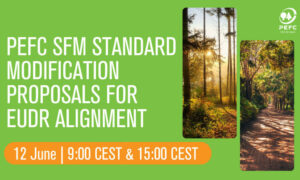
Introduction to the proposed amendments to the PEFC Sustainable Forest Management standard
12 Jun 2024 | 09:00
Online | Zoom
PEFC
Virtual
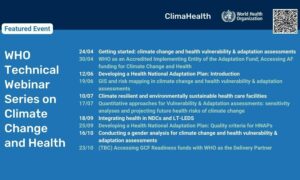
WHO Technical Webinar Series on Climate Change and Health | Developing a Health National Adaptation Plan: Introduction
12 Jun 2024 | 09:30
Online | Zoom
WHO
Virtual
Launch and Panel Discussion | Safeguarding the Integrity of a Science Policy Panel on Chemicals, Waste and Pollution Prevention
12 Jun 2024 | 14:00 – 15:00
Online | Webex
OHCHR, IPEN, CIEL, CYMG, GEN
Virtual
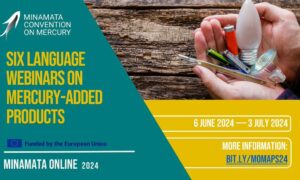
Minamata Online | Webinaire sur les produits contenant du mercure ajouté
12 Jun 2024 | 14:00 – 15:00
Online | Webex
Minamata Convention
Body Meeting
Fifty-fourth meeting of the Bureau
13 – 14 Jun 2024
Palais des Nations | Room H.307
UNECE Convention on the Transboundary Effects of Industrial Accidents
Conference
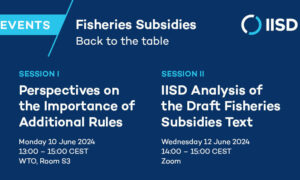
Fisheries Subsidies: Back to the table | IISD Analysis of the Draft Fisheries Subsidies Text
12 Jun 2024 | 14:00 – 15:00
Online | Zoom
IISD
Body Meeting
Dialogue on Plastics Pollution and Environmentally Sustainable Plastics Trade (DPP)
13 Jun 2024 | 10:00
WTO | Room S1 & Online | Zoom
WTO
Virtual
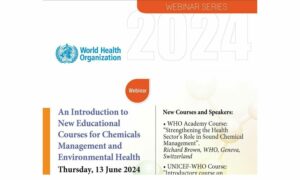
WHO Chemical Risk Assessment Network Webinar: An Introduction to New Educational Courses for Chemicals Management and Environmental Health
13 Jun 2024 | 15:00 – 16:00
Online | Zoom
WHO
Virtual
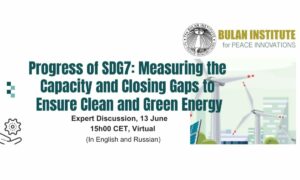
Progress of SDG7: Measuring the Capacity and Closing Gaps to Ensure Clean and Green Energy
13 Jun 2024 | 15:00 – 16:00
Online | Zoom
Bulan Institute

Conference
UN Virtual Worlds Day | Harnessing the Metaverse to Advance the SDGs
14 Jun 2024 | 09:00 – 19:00
ITU
ITU

Consultation
Civil Society preparations for OEWG-3
16 Jun 2024 | 09:00 – 17:45
CICG
UNEP’s Major Groups and Stakeholders
Jobs
See all


Intern
2 stagiaires en animation et gestion de projet – éducation à l’environnement à 80%
11 Jun 2024
J'aime ma Planète



Learning
See all
Online Course
Droit international de l’eau douce (formation en ligne)
16 Sep – 03 Nov 2024
Geneva Water Hub
Course in Geneva
Drive Social and Economic Transformation for Sustainable Prosperity, Nature-Positive Economy
24 Jun – 08 Nov 2024
Geneva Graduate Institute
IHEID