
Newsletter 08 Dec 2025
Environment: What’s Up in GENeva | 8 – 14 December 2025
The Geneva Environment Network’s weekly newsletter includes the latest information on the global environmental agenda, main events, job vacancies, as well as other useful resources and updates. The Geneva Environment Network is not responsible for the content of any linked site or any link contained in a linked site. Stay tuned and follow us on X (Twitter), Facebook, LinkedIn, Instagram, Bluesky, and Youtube, or visit our website regularly for additional updates.
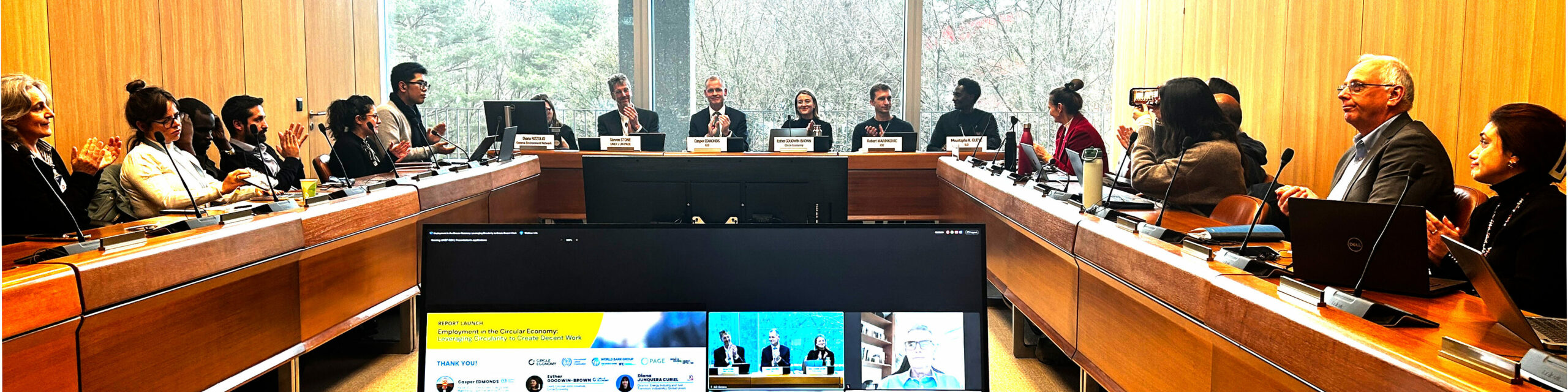
Image of the week | Applause marking the conclusion of the launch event of the report Employment in the circular economy: Leveraging circularity to create decent work, produced by the ILO, Circle Economy, the World Bank Group, and UN-PAGE, urging policies for decent jobs, sustainable enterprises, and stronger social protections in the circular economy. Based on data from 177 Member States, the study reveals that the circular economy employs between 121 and 142 million people worldwide in sectors such as repair, recycling, second-hand trade, and waste management — representing about 5 to 5.8% of total global employment (excluding agriculture). Most of these activities are concentrated in the Global South. → Read ILO Press Release © Geneva Environment Network, 4 December 2025, ILO Headquarters
International Geneva at the UN Environment Assembly
The United Nations Environment Assembly — the world’s highest-level decision-making body on the environment — is convening for its seventh session (UNEA-7) this week under the theme ‘Advancing sustainable solutions for a resilient planet’ at UNEP’s headquarters in Nairobi, Kenya. Numerous experts from Geneva are also present in Nairobi, contributing their expertise to help shape the global environmental agenda. → Learn more about Geneva’s engagement in UNEA-7.
Last week, in her opening speech to the seventh session of the Open-Ended Meeting of the Committee of Permanent Representatives (OECPR-7), UNEA preparatory session, UNEP Executive Director Inger Andersen underscored that more than 5,000 participants from over 180 countries have registered to attend the Assembly, with a programme featuring over 100 events. The Executive Director stressed that UNEA is an important moment to “deliver solutions that spark stronger, faster action on the three planetary environmental crises”, paving the way towards a resilient planet. The Executive Director also reminded at various key moments last week that UNEA-7 convenes at the close of a challenging year marked by some progress, including the entry into force of the BBNJ Agreement on marine biodiversity beyond national jurisdiction and the establishment of the new intergovernmental science-policy panel on chemicals, waste, and pollution prevention. However, major challenges persist: global temperatures are on track to exceed 1.5°C within the next decade, ecosystems continue to vanish, land degradation worsens, and pollution remains widespread. She also acknowledged the frustration many felt at the talks on an instrument to end plastic pollution not concluding this year. Despite these setbacks, countries remain engaged, and the work continues. During the closing plenary of OECPR last Friday, delegates agreed to transmit all resolutions and decisions to UNEA-7 for further consideration. On Saturday, they convened in informal-informal sessions in an effort to reach compromise on the texts. → Access all documents, follow negotiations live on UN TV and side events live on UNEP YouTube channel, stay up to date with the Earth Negotiations Bulletin live coverage and UNEP live feed, and subscribe to the “InsideUNEA” newsletter.
Key moments at UNEA-7 include:
- A special dialogue on the role of Indigenous Peoples and their communities in advancing sustainable solutions for a resilient planet, organized by the Indigenous Peoples and their Communities Major Group, on 8 December from 15:00 – 18:00 EAT / 13:00 – 16:00 CET. → Livestream
- The launch of the Global Environmental Outlook 7 on 9 December 2025 at 13:45 EAT / 11:45 CET → Learn more and follow live on UN Web TV
- The second UNEA Multilateral Environmental Agreements Day (MEAs Day), featuring an opening plenary session followed by two consecutive high-level dialogues and concluding with a moderated high-level plenary, on 10 December 2025.
- The Gala of Hope to announce and celebrate this year’s UN Champions of the Earth and UN World Restoration Flagships on 10 December 2025.
- A High-Level Segment held under the theme “Advancing sustainable solutions for a resilient planet” consisting of an opening plenary meeting with statements by key dignitaries, national statements, three leadership dialogues, a multi-stakeholder dialogue and a closing plenary meeting, during which UNEA will take action on the draft Ministerial declaration as well as the draft resolutions and decisions, on 11 December and 12 December 2025.
- The launch of the pilot of the improved World Environment Situation Room (WESR), UNEP’s new data and applications platform.
Side and associated events involving Geneva stakeholders that can be joined online include:
- Official Side Event | Beat the heat: Local and Regional Action for a resilient planet | 8 December 2025, 13:15 – 14:45 EAT / 11:15 – 12:45 CET | Global Cities Hub – Geneva & UNEP | Livestream
- Official Side Event | Flow Forward: Transboundary water cooperation to restore and sustain water ecosystems from source to sea | 8 December 2025, 13:15 – 14:45 EAT / 11:15 – 12:45 CET | IUCN, UNECE, European Commission, Finland, and Slovenia | Livestream
- MEAs Side Event | Joining Forces: How MEAs Drive Compliance and Enforcement Against Illegal Traffic | 8 December 2025, 15:00 – 16:15 EAT / 13:00 – 14:15 CET | BRS Conventions, Green Customs Initiative Secretariat, CITES, Minamata Convention on Mercury, UN Environment Programme-Ozone Secretariat | Livestream
- Associated Event | Prosperity Through Resilience: Sustainable Public Finance as the Engine of Circularity, Competitiveness, and Inclusive Economic Growth | 8 December 2025, 15:30 – 17:00 EAT / 13:30 – 15:00 CET | Coalition of Finance Ministers for Climate Action, UNEP, with the participation of PAGE | Livestream
- Associated Event | The Water Continuum: Uniting Climate, Nature, and People Through Water Flow | 8 December 2025, 15:30 – 17:00 EAT / 13:30 – 15:00 CET | UNEP, with the participation of UNECE | Livestream
- Official Side event | Synergies in the Chemicals and Waste Cluster: The Role of Emerging and Established Instruments | 8 December 2025, 18:15 – 19:45 EAT / 16:15 – 17:45 CET | Switzerland | Livestream
- MEAs Side Event | Leveraging AI for better cooperation, collaboration and impact for MEAs | 9 December 2025, 14:30 – 15:45 EAT / 12:30 – 13:45 CET | BRS Conventions, CMS, Multilateral Fund for the Implementation of the Montreal Protocol, CBD, Minamata Convention on Mercury, CITES, Cartagena Convention, Ozone Secretariat | Livestream
- MEAs Side Event | GEF-MEA Exchange on Financing: From Synergies to Solutions-Achieving a Resilient, Nature-positive, Pollution-free Future through GEF-9 | 9 December 2025, 16:00 – 17:15 EAT / 14:00 – 15:15 CET | BRS Conventions, GEF, CBD | Livestream
- MEAs Side Event | Managing Environmental, Industrial and Social Risks of Critical Energy Transition Minerals: Policies and Solutions for a Resilient Planet | 9 December 2025, 17:30 – 18:45 EAT / 15:30 – 16:45 CET | UNECE, BRS Conventions, UNEP, OHCHR | Livestream
- Associated event | Science to Inform Transformative Policies: Advancing the Independent Panel on Evidence for Action against Antimicrobial Resistance (IPEA) | 10 December 2025, 12:30 – 14:00 EAT/ 10:30 – 12:00 CET | UNEP, with the participation of WHO | Livestream
- Official Side event | Advancing the Human Right to a clean, healthy and sustainable environment through a Just Transition for generations of tomorrow | 10 December 2025, 13:15 – 14:45 EAT/ 11:15 – 12:45 CET | CYMG, CRIN, Costa Rica, Maldives, Mexico, Morocco, Slovenia, OHCHR | Livestream
- Official Side Event | Digital Product Information Systems for a resilient planet: Advancing circularity and transparency | 10 December 2025, 13:15 – 14:45 EAT / 11:15 – 12:45 CET | International Telecommunication Union (ITU), Ten-Year Framework of Programmes on Sustainable Consumption and Production (10YFP), UNEP | Livestream
- Official Side Event | Responsible, just and resilient environmentally sustainable management of minerals and metals – Elements for a global traceability, transparency and accountability framework | 10 December 2025, 18:15 – 19:45 EAT / 16:15 – 17:45 CET | Colombia, with the participation of the UNEP Resources and Markets Branch | Livestream
- MEAs Side Event | Atmospheric Monitoring of Substances under Multilateral Environmental Agreements: Opportunities for Synergistic Action | 11 December 2025, 14:30 – 15:45 EAT / 12:30 – 13:45 CET | Montreal Protocol, with the participation of BRS and the Minamata Convention on Mercury | Livestream
- Associated event | Enabling the shift to sustainability and circularity in the textile value chain | 11 December 2025, 15:30 – 17:00 EAT / 13:30 – 15:00 CET | UNEP, with the participation of the BRS Conventions | Livestream
- MEAs Side Event | Integrated Actions for a Resilient Planet – ACP-MEAs III Achievements and Pathways Forward | 11 December 2025, 16:00 – 17:15 EAT / 14:00 – 15:15 CET | BRS Conventions, Cartagena Convention, European Union, CBD, CMS, Minamata Convention on Mercury, UNEP | Livestream
- Associated event | Bridging Science and Policy: Strengthening Resilience to Tackle the Environmental Crisis | 11 December 2025, 16:45 – 18:30 EAT / 14:45 – 16:30 CET | Interim Secretariat of the Science-Policy Panel on Chemicals, Waste and Pollution with the participation of BRS Conventions, CITES and the Minamata Convention on Mercury | Livestream
Human Rights, Our Everyday Essentials
Every year on 10 December, the world celebrates Human Rights Day, the day when, in 1948, the United Nations General Assembly adopted the Universal Declaration of Human Rights. Decades since this landmark occasion, human rights have become more recognized and more guaranteed across the globe, expanding protection to groups in vulnerable situations such as persons with disabilities, Indigenous Peoples and migrants. This year’s UN Human Rights Day campaign, Our Everyday Essentials, aims to re-engage people with human rights by showing how they shape our daily lives, often in ways we may not always notice. It seeks to reaffirm the enduring relevance of the UDHR and its core values — equality, justice, freedom, and dignity — reminding us that human rights remain a steadfast promise for society. Too often taken for granted or seen as abstract ideas, human rights are #OurEverydayRights, the essentials we rely on everyday, emphasizing that they are positive, essential and attainable.
In the face of environmental degradation, and the triple crisis of climate change, pollution and biodiversity loss, equality for all also means advancing climate justice, and the human right to a clean, healthy and sustainable environment as recognized by the UN Human Rights Council and the UN General Assembly. → As a main international hub for addressing human rights issues, learn how International Geneva is taking urgent action to respect, protect and fulfill human rights, including the right to a healthy environment in our dedicated update.
Events addressing human rights and the environment taking place in Geneva this week include:
- RightsX Summit: Powering the future of Human Rights | UN Human Rights | 10-11 December 2025 | Palais Wilson
RightsX brings together governments, the UN system, civil society, the private sector, innovators and the broader human rights ecosystem to explore how technology, data, foresight, and partnerships can advance human rights in digital age. A session on Day 1 dedicated to “Showcasing UN Human Rights innovations for impact and partnerships strategy” will feature the announcement of the Right Here Right Now Global Youth Climate Summit. - Climate action and human rights: Practical pathways for financial institutions | UNEP FI | 10 December 2025 | 15:00-16:15 CET | Online
In celebration of International Human Rights Day, this session will offer practical guidance and real-world examples to help financial institutions integrate human rights into their climate strategies, advance a just transition, and deliver positive outcomes for people and planet. - Impact Exchange 2025: Reducing inequality through the progressive realisation of economic, social, and cultural rights ‘leaving no one behind, and the human rights economy | OHCHR, URG, FNF | 11 December 2025 | 15:00-17:00 CET | Palais des Nations, Room XIV
The Impact Exchange is new platform on human rights (intended to be annual), aiming to provide a ‘safe space’ and constructive forum. The first Impact Exchange event will reflect on national stories of implementation and impact in reducing inequality through the progressive realization of economic, social, and cultural rights ‘leaving no one behind,’ and the human rights economy. It centers people and the environment in economic, social, and environmental decision-making ensuring that development, macroeconomic, industrial and trade laws, policies, programs and plans as well as investment decisions, consumer choices, business models and business operations are firmly guided by human rights. - High-Level Conference on the Role of Civil Society in the UN at 80 on the occasion of the 2025 International Human Rights Defenders and International Human Rights Days | ISHR & ICJ | 11 December 2025 | 16:30-18:00 CET | Centre de Conférence de Varembé
The event will present the key findings and messages of a critical analysis that FES and ICJ have developed in the recent months and to discuss the current state of play with the UN reforms, in respect of the role of civil society in the preservation of a democratic order, the rule of law and human rights.
Spotlight on PFAS: The Forever Chemicals
Per- and polyfluoroalkyl substances (PFAS) are toxic, man-made, hazardous chemicals that have dangerous effects on the environment and our health. Composed of thousands of synthetic organic chemicals, PFASs were developed from the 1940s by the chemical industry and, since then, have been widely used in consumer products like non-stick cookware, waterproof clothing, food packaging, nail polish and other cosmetics, and firefighting foams, as they are known for their water-resistant, non-stick, smoothness, and stain-repellent properties.
These “forever chemicals” are also now known for their long-term persistent accumulation in the environment, as they do not break down easily and can accumulate in soil, water, and living organisms. Such compounds continuously pose exposure risks to humans, wildlife and the environment even long after they have been released into the environment. Exposure to certain PFAS has been linked to a range of adverse health outcomes, including increased risks of cancers, immune-system suppression, thyroid and metabolic disorders, reproductive and developmental harm, altered hormone regulation, and reduced vaccine effectiveness.
Recognized as an Issue of Concern, posing risks to human health and the environment, a broad range of instruments and measures have been implemented to address PFASs at various levels, including the phase-out of long-chain PFASs. At the international level, the Stockholm Convention has served as a central platform for advancing this work, although several uses remain exempt under the Convention. At its last meeting of the conference of the Parties this spring, Member States agreed to ban the production and use of long-chain perfluorocarboxylic acids (PFCAs), a group of pollutants within the broader family of PFAS chemicals, which are used in a range of applications, including in coating products, fabric/carpet protectors, textile impregnation agents and firefighting foams. PFHxS, PFOA and PFOS are three subgroups of PFASs currently listed under the Convention. These efforts are further reinforced by complementary regulatory initiatives and voluntary actions. → Read more on UNEP dedicated webpage.
PFAS contamination compromises various rights, including the right to a healthy environment and the right a safe and healthy working environment. Thus, the UN Special Rapporteur on toxics and human rights, Marcos Orellana, is dedicating his upcoming report to the Human Rights Council in 2026, on forever chemicals (PFAS) and human rights. The focus on the human rights implications of forever chemicals is both timely and essential as scientific studies have made clear that PFAS are widely disseminated and remain recalcitrant in the environment for decades. The scale, transboundary nature and long-term costs of contamination mean that delayed action will increase remediation costs and perpetuate avoidable risks and harms to human and environmental health. The deadline for submission is 9 January 2026. → Submit your input
PFAS contamination has regularly made the headlines this year:
- Across Europe, at least 23,000 sites are believed to be polluted with PFAS, according to an investigation by the Forever Pollution Project, exposing the lobbying and disinformation campaign to prevent the ban of these “forever chemicals”, including in Switzerland, thought to host at least 240 PFAS contamination hotspots.
- High levels of ‘forever chemical’ TFA in everyday cereal products all across Europe | PAN Europe | 4 December 2025
A new study reveals high levels of the “forever chemical” trifluoroacetic acid (TFA), recently found to cause harm to reproduction and development, in everyday cereal products across Europe. The most contaminated food is a typical breakfast cereal. Average concentrations are 107 times higher than those in tap water. - The good and the bad of PFAS | C&EN | 1 December 2025
A new study identifies many more PFAS than are commonly acknowledged to exist. A recently published report and companion piece exploring patenting and scientific publishing trends for PFAS, found that the number of existing PFAS could exceed more than the commonly cited estimate of 10,000-15,000 PFAS compounds. Despite growing restrictions, companies continue to patent new PFAS molecules. At the same time, research into PFAS destruction methods is accelerating, reflecting both industrial demand and environmental urgency. - ‘Forever chemicals’ contaminate more dolphins and whales than we thought – new research | Karen A Stockin, Emma Betty, Frédérik Saltré & Katharina J. Peters | The Conversation | 24 November 2025
New research has found PFAS contamination in dolphins and whales is more widespread than previously thought, including deep-diving species that live well beyond areas of human activity.
Greening the Blue | UN System Committed to Reduce its Environmental Footprint
With offices and personnel worldwide, the UN System is committed to supporting people and the planet by minimizing environmental harm. Coordinating the “going green” work across the UN System is the responsibility of the Sustainable United Nations (SUN) facility, based in Geneva. In collaboration with hundreds of UN personnel from across the UN System, the facility annually collects and analyzes information provided by UN entities on their environmental impacts. These findings, along with inspiring case studies, are published each year in the Greening the Blue Report, showcasing the UN’s collective progress to walk the talk.
The 2025 edition of the report, released on 4 December 2025, presents the environmental performance of the UN system in 2024, covering operations of headquarters and field offices worldwide. 60 UN system entities have submitted performance data for this Report, corresponding to the activities performed by 312,084 members of personnel. The UN system has achieved notable reductions in emissions and environmental impacts in the past years, and since 2019. Notably, total GHG emissions dropped by 7.2% from 2023 to 2024. The report also showcases UN system entities remain committed to strengthening collaboration to adapt their ways of working to further reduce emissions while maintaining the positive impacts and legacy of the UN system to the world.
CITES CoP20 | Carrying Forward the Spirit of Samarkand
The World Wildlife Conference or 20th meeting of the Conference of the Parties to the Convention on International Trade in Endangered Species of Wild Fauna and Flora (CITES CoP20) concluded in Samarkand, Uzbekistan, at 11:47 a.m. on 5 December 2025, following two weeks of intense negotiations for decisions that will shape international trade regulation in endangered species and on the Convention’s next three‑year agenda. In her closing remarks, CITES Secretary-General Ivonne Higuero, called for carrying forward the spirit of Samarkand — one of cooperation, respectful dialogue, and shared responsibility — in order to “translate the momentum built here into meaningful action.”
Parties and observers welcomed the decisions adopted, particularly those concerning sharks and rays, and emphasized the need to sustain strong momentum to secure the means of implementation. Key highlights and outcomes of CITES CoP20 include:
- Amendments of the CITES Appendices | CoP20 invited parties to decide on 51 proposals to amend the CITES Appendices. On top of the amendments agreed on during the first week of CoP20, parties further advanced action by:
- Deleting bontebok (Damaliscus pygargus pygargus) from Appendix II, which many delegates hailed as a “conservation success.
- Transferring the endemic dwarf succulent species Cycad spurge (Euphorbia bupleurifolia) and Avonia quinaria, as well as one species of Galápagos marine iguana (Amblyrhynchus cristatus) and three species of land iguanas endemic to the Galápagos Islands from Appendix II to Appendix I.
- Listing Bale and Ethiopia mountain adders (Bitis harenna and Bitis parviocula) – endemic snakes in Appendix I.
- Uplisting Home’s hinge-back tortoise (Kinixys homeana), Golden-bellied mangabey (Cercocebus chrysogaster), White-backed vulture (Gyps africanus) and Ruppell’s vulture (Gyps rueppelli) from Appendix II to Appendix I.
- Delaying by 18 months the inclusion of Epirus water frog (Pelophylax epeiroticus), pool frog (Pelophylax lessonae), marsh frog (Pelophylax ridibundus), and Albanian water (Pelophylax shqipericus) in Appendix II.
- Including Linnaeus’s two-toed sloth (Choloepus didactylus), Hoffman’s two-toed sloth (Choloepus hoffmanni) and African hornbills (Bycanistes spp. and Ceratogymna spp.), Mount Elliot leaf-tailed gecko (Phyllurus amnicola), Ringed thin-tail gecko (Phyllurus caudiannulatus) in Appendix II.
- Nomenclature Matters | CoP20 agreed on various decisions, including on the taxonomy and nomenclature of African elephants (Loxodonta spp.) to reflect the recognition of the two elephant species in the Appendices.
- Venue and dates of the next meetings | The CoP accepted Panama’s offer to host the next Conference of the Parties to the Convention, CITES CoP21, in 2028.
-
At CoP20, IUCN’s Species Survival Commission Pangolin Specialist Group (PSG) launched the West Africa Regional Pangolin Conservation Action Plan (2026–2056), setting out a coordinated 30-year roadmap to guide conservation action across the region. → IUCN press release
Reactions and analyses released last week include:
- Read the summary report and the daily coverage of the Earth Negotiations Bulletin.
- Landmark decisions at CITES CoP20 deliver historic safeguards for sharks and rays, okapi, Galápagos iguanas, geckos, sloths, and other species—many threatened by the global pet trade | WCS | 5 December 2025
- CITES CoP20: Wins for sharks, rays and big cats amid mixed results | WWF EU | 4 December 2025
- Winners and Losers of the CITES Conference | Pro Wildlife | 4 December 2025
- Victory as hundreds of species given new protections at UN summit | ifaw | 3 December 2025
- Global leaders unite to clamp down on ‘exotic pet’ trade | ifaw | 3 December 2025
- Numerous birds given new international protections | ifaw | 3 December 2025
-
Governments From Around the World Agree to Ban Commercial Trade of Galápagos Iguanas | WCS | 3 December 2025
-
CITES CoP20 Tackles Wildlife Crime Demand | TRAFFIC | 1 December 2025
Science-Policy Interfaces Shaping Informed Decision-Making
In less than two months, global leaders and stakeholders will gather in Geneva for the first session of the plenary of the Intergovernmental Science-Policy Panel on Chemicals, Waste and Pollution (ISP-CWP P1), which adoption marked one of the main wins for multilateralism in 2025. Together with the Intergovernmental Panel on Climate Change (IPCC) and the Intergovernmental Science-Policy Platform on Biodiversity and Ecosystem Services (IPBES), the ISP-CWP completes the trifecta of the intergovernmental bodies created to address the triple planetary crisis of climate change, nature loss, and pollution. Key events and deadlines coming up include:
- Intergovernmental Panel on Climate Change (or IPCC):
- IPCC authors meet in Paris to begin drafting the Seventh Assessment Report | More than six hundred experts appointed to the three Working Groups gathered in Paris last week to commence work on the first draft of IPCC’s Seventh Assessment Report (AR7). This is the first time in IPCC’s history that the three Working Groups are holding a joint Lead Author Meeting.
- Call for nominations of authors for 2027 Methodology Report on Carbon Dioxide Removal Technologies, Carbon Capture, Utilization and Storage | The report is being prepared by the Task Force on National Greenhouse Gas Inventories. Those interested in being nominated for the author team should contact their relevant Focal Point. Governments, Observer Organizations, and IPCC Bureau Members must submit their nominations by 12 December 2025.
- Registration for experts to serve as Expert Reviewers on the First-Order Draft (FOD) of the 2027 Methodology Report on Inventories for Short-lived Climate Forcers | The report produced by the Task Force on National Greenhouse Gas Inventories (TFI), will provide guidance on measuring anthropogenic emissions from key short-lived climate-forcing substances, including nitrogen oxides, carbon monoxide, and others, which significantly contribute to global and regional air quality and climate change. An online registration process has been developed and is open for prospective expert reviewers via the IPCC website. Registration will close on 13 February 2026.
- Intergovernmental Science-Policy Platform on Biodiversity and Ecosystem Services (or IPBES):
- The Twelfth session of the Plenary of IPBES (IPBES 12) will be held in Manchester, in the United Kingdom of Great Britain and Northern Ireland, from 3 to 8 February 2026, preceded by regional consultations and a Stakeholder Day on 2 February 2026. Registration should be done no later than 2 January 2026.
- Call to participate in the External review of the IPBES monitoring assessment | This external review is addressed to Governments and interested and qualified experts, including scientists, decision makers, practitioners and other knowledge holders. A last dialogue will be held in the context of the external review on 10 December 2025. The external review of IPBES monitoring assessment is open until 7 January 2026.
- Intergovernmental Science-Policy Panel on Chemicals, Waste and Pollution (or ISP-CWP):
- The first session of the Plenary of the Intergovernmental Science-Policy Panel on Chemicals, Waste and Pollution (ISP-CWP P1) will be hosted by the Government of Switzerland, from 2 to 6 February 2026, at the Geneva International Conference Centre (CICG). The session will be preceded by regional and stakeholder meetings on 1 February 2026, at the same venue.
- Engaging Scientists and Experts to Strengthen the Science-Policy Interface on Chemicals, Waste and Pollution | Road to ISP-CWP P1 | 16 December 2025, 14:00 – 15:30 CET | Online, Webex
In preparation for the inaugural Plenary Session (P1) of the ISP-CWP, this online event will turn to an array of potential partners for the Panel that engage experts on varied questions of chemicals, waste and pollution prevention. → Register to participate on Webex
To build momentum toward the ISP-CWP P1 and to celebrate the important role of Science-Policy Interfaces (SPIs) in translating scientific knowledge into effective and actionable policy a special event “Strengthening the Science-Policy Interface to Address the Triple Planetary Crisis” taking place on 17 December 2025, from 09:00 – 14:00 CET at the International Environment House II. Through lightning talks, fireside chats and an interactive fair, the Science-Policy Day will provide opportunities to engage and exchange with leading experts, stakeholders and Members States working in the interface of science and policy, fostering collaboration to advance solutions for today’s environmental challenges. → Register on Eventbrite to participate. Geneva-based organizations interested in sharing their work on science-policy by having a stand at the Fair, kindly use our contact form.
Enjoying the Last Days of Green Autumn in Geneva
This week, Geneva celebrates the Escalade, the annual commemoration of the victory over the Duke of Savoy’s surprise attack on the prosperous and independent Republic of Geneva during the night of 11–12 December 1602. Legend recalls Dame Royaume’s famous marmite of boiling soup that helped repel the invaders. Traditionally held on the weekend closest to 11 and 12 December, the Fête de l’Escalade has become one of Geneva’s most cherished events, featuring processions in period costume, historical reenactments, and commemorations that bring 17th‑century life vividly to the streets. This year’s festivities will take place from 12 to 14 December.
Suggestions to enjoy your free time and a Green Autumn in Geneva this week include:
- Closing Night – My Carbon Challenge | 9 December 2025 | IMPACT Hub Geneva, Maison de l’Avenir
After several weeks of exploring concrete actions to reduce our impact in terms of consumption, energy, food, mobility and much more, it’s time to get together and celebrate what everyone has achieved. - Crystel Ceresa, Aurora Exhibition | 11 December 2025 | Usine Kugler
Aurora brings forth blooming flowers on a golden background, somewhere between an inner garden and a suspended memory. These subjects evoke a sense of wonder before nature, its re-enchantment, and its fragility in a rapidly changing and often hostile world. Ceresa takes us on a journey as if through the eyes of a drone flying over ocean depths, coral reefs, wildflower fields, and distant horizons, all conducive to dreams and meditation. - Visite guidée de la Cathédrale Saint-Pierre | 11 December 2025 | Genève Accueil | Cathédrale Saint-Pierre
Dedicated to Saint-Pierre and the emblematic image of Geneva, the cathedral dominates the Old Town with its towers and spire. Witness to spiritual developments, first Catholic then Reformed, the cathedral is still the heart of the city today. - PLASTIC – Exhibition by Carlos Andrade – Opening Reception | 12 December 2025 | Le Grain
The exhibition Plastic by Colombian artist, Carlos Andrade, is an allegory of excess and expansion. As described by Carlos, “Plastic appears as a light but monumental mass, a plastic body that imitates painting while betraying it from within, an emotional topography from the remains of the modern world, an image where ideology shines as brightly as the material that composes it”. - Fête de l’Escalade à Genève | 12 – 14 December 2025 | Geneva Old Town
The Fête de L’Escalade is one of Geneva’s most iconic celebrations, commemorating the bravery and unity of the Genevans in the face of the Duke of Savoy’s attack in 1602. Every year, at the beginning of December, the city comes alive to honor this historic event through a variety of cultural, sporting, and festive activities. - Christmas Market of Creators and Artists | 14 December 2025 | Usine Kugler
This year, the Christmas Market returns to the former Kugler tap factory, an iconic industrial site that has become a vibrant artistic centre in Geneva. More than thirty creators with original pieces, imagined and crafted right here in their studios: artworks, design objects, jewellery, ceramics, books, textiles, photography, illustrations, editions, sculptures. - Léman : L’éveil d’un peuple | Until 14 December 2025 | ASL | Espace Léman
Through a wealth of documents, testimonials, objects, and audiovisual archive footage, this exhibition traces the decisive action taken by associations, scientists, fishermen, journalists, and institutions that helped turn the tide. At a time when new threats are looming over the lake, the exhibition also aims to remind us that every one of us can play a part in bringing about change. - Place des Nations | Until 14 December 2025 | Maxime Blondeau | Plaine de Plainpalais
“Place des Nations” is an international travelling exhibition project designed as a sensitive representation of our planet through the 195 nations of the world. - Noël au quai | Until 24 December 2025 | Quai du Mont-Blanc
After its birth at Parc de Bastions, its magic at the Jardin Anglais, the Christmas market now illuminates Quai du Mont-Blanc. It offers a wide selection of local artisans, samples of specialties offered by food stalls, and entertainment for children with an extensive program of activities.
What (Else) to Read Next?
- Employment in the circular economy. Leveraging circularity to create decent work | ILO, Circle Economy Foundation and the World Bank Group | 4 December 2025
This report addresses these gaps by developing and applying an internationally applicable methodology for measuring circular economy employment. The approach builds on existing labour and environmental frameworks and expert consultations, providing the first global baseline covering 177 of 187 ILO Member States. → ILO news release & launch event
- State of the Climate in the Arab Region 2024 | WMO | 4 December 2025
This report highlights that 2024 was the hottest year on record for the Arab region, where temperatures are rising at twice the global average. Droughts are becoming more frequent and severe, threatening water availability and agriculture. Extreme events in 2024, including heatwaves and floods, caused over 300 reported deaths, with actual human and economic losses likely higher. - Indigenous and local action brings back nature: UN recognizes three World Restoration Flagships | UNEP | 4 December 2025
The UN recognized three new World Restoration Flagships in Australia, Canada and South Africa, anchored in Indigenous Peoples and local knowledge. These three new World Restoration Flagships add to a growing portfolio of already 27 recognized flagships, collectively restoring over 18 million ha of diverse ecosystems worldwide, with plans to restore a total of more than 68 million hectares.
- ICC Office of the Prosecutor launches Policy on Addressing Environmental Damage Through the Rome Statute | International Criminal Court | 4 December 2025
The Office of the Prosecutor (OTP) of the International Criminal Court (ICC) launched its Policy on Addressing Environmental Damage Through the Rome Statute. The first Policy issued by the OTP in this area outlines how the Office may use its mandate and powers to investigate and prosecute Rome Statute crimes with an environmental dimension. Consistent with the OTP’s mandate and its Policy on Complementarity and Cooperation, the Policy also highlights the Office’s support for national efforts to investigate and prosecute environmental crimes. - New WMO guidance supports national estimates of greenhouse gas emissions using atmospheric observations | WMO | 3 December 2025
WMO has published the first IG3IS Good Practice Guidance for Estimating National-Scale Greenhouse Gas Emissions using Atmospheric Observations, marking a significant step forward in strengthening global transparency and improving the scientific basis for national greenhouse gas (GHG) inventories.
- Norway temporary U-turn on deep-sea mining gives hope for lasting pause to protect the deep sea | Sea at Risk | 3 December 2025
The Norwegian government has reached a budget agreement that halts all plans for deep-sea mining exploration and exploitation for the next four years. This decision marks a significant U-turn, with the country previously having approved the opening of a vast area of its continental shelf – 281,200 square kilometres – to deep-sea mining activities. - Nature has rights, declares one of the world’s highest courts. It’s time to defend them | CIEL | 3 December 2025
The recognition of the rights of Nature is also a tool for environmental defenders. Traditionally, those who demand environmental protection—for example, the protection of a river—have had to demonstrate how failing to protect it affects their human rights to health or water. But under the framework of the rights of Nature, ecosystems possess an intrinsic value that deserves to be protected and defended. - Trade and development report 2025 | UN Trade & Development | 2 December 2025
The Trade and Development Report 2025 reveals how the tightening link between trade and finance is reshaping global opportunities – and why the stakes are greatest for developing countries. Chapter 5 focuses on *New policy frontiers: Building climate-economic resilience in the global South”. - Best of 2025: Top 10 Art Installations Featured on My Modern Met | My Modern Met | 2 December 2025
From monumental sculptures in city squares to immersive environments in deserts and oceans, the top art installations of 2025 reveal how creativity continues to shape our world. Among these is Benjamin Von Wong‘s The Thinker’s Burden, a towering 20-foot remix of Rodin’s iconic sculpture, unveiled at the United Nations’ Plastic Treaty negotiations in Geneva. Constructed from recycled plastic waste, the piece slowly accumulated layers of debris throughout the negotiations, thus symbolizing the growing weight of inaction on global health. By reimagining The Thinker cradling a baby amid spiraling strands of DNA, Von Wong visualized humanity’s responsibility to future generations. His installation became a rallying symbol for treaty advocates and a poignant reminder that microplastics are not just environmental hazards but also threats to our own health. - The State of the World’s Land and Water Resources for Food and Agriculture 2025. The potential to produce more and better | FAO | 1 December 2025
In order to meet the demands of a growing global population, agriculture needs to produce about 50 percent more food, feed and fibre by 2050 compared with the volumes it generated in 2012, according to estimates by the Food and Agriculture Organization of the United Nations (FAO). - COP30 Editor’s take: Why climate policy needs to move beyond consensus | The New Humanitarian | 1 December 2025
Global political conditions since the 2015 Paris Agreement have fundamentally changed – the 1992 UNFCCC categorisation of “developed” and “developing” countries even more so. Many leaders appear to have calculated it as in their interest to ignore, manage, or take advantage of existential climate risk rather than damage their economies by preventing it. Climate diplomacy is, therefore, very clearly no longer a bubble insulated from wider politics.
- The Republic of Congo officially confirms its intention to accede to UN Water Convention | UNECE | 1 December 2025
The Republic of Congo has officially reaffirmed its desire to accede to the Convention on the Protection and Use of Transboundary Watercourses and International Lakes, better known as the ‘United Nations Water Convention’. The announcement was made during a national workshop held on 26–27 November 2025 in Brazzaville, coupled with the inaugural session of the Water Advisory Council.
- Air quality: PM2.5 atlases track pollution sources in EU cities and beyond | The Joint Research Centre: EU Science Hub | 1 December 2025
A JRC analysis of 150 urban areas in the EU reveals the scale of PM2.5 pollution stemming from the residential sector (average contribution at 29% on EU cities), while industry PM2.5 recorded a decline thanks to the implementation of EU policies on industrial emissions (average contribution at 18%). As for enlargement countries, the analysis of 118 urban areas shows the residential sector and industry are the two major contributors to PM2.5 pollution.
- Laying the foundations for our shared future: How ten years of climate cases built a legal architecture for climate protection | Climate Litigation Network | December 2025
The report shows how a surge in climate lawsuits is forcing governments to set clear rules for national climate action. Governments now have legal duties to keep people safe, pull their weight to limit global temperature rise to less than 1.5°C, protect future generations, and show that their actions match their promises. - A Dozen Critical Minerals for Africa’s Inclusive Growth and Development | African Development Bank Group | 25 November 2025
This synthesis paper argues that Africa can convert its mineral endowment into diversified, higher-value growth by focusing on twelve strategically important minerals—nickel, copper, cobalt, lithium, bauxite, phosphate, PGMs, iron ore, rare earth elements, manganese, graphite, and vanadium while closing structural gaps in power, logistics, technology, and capital.
Events
See all

Conference
Geneva Forum 2025
08 – 12 Dec 2025
Palais des Nations | Room XII & Centre de l’Espérance
OSI

Body Meeting
45th Session of the Executive Body for the Convention on Long-range Transboundary Air Pollution
08 – 11 Dec 2025
Palais des Nations | Room VII
UNECE Convention on Long-Range Transboundary Air Pollution
Body Meeting
143th Session of the Executive Committe (EXCOM 143)
08 Dec 2025 | 10:00 – 13:00
Palais des Nations, Room VII
UNECE
Conference
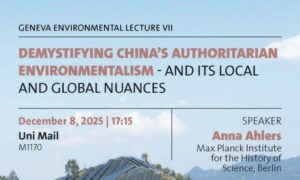
Demystifying China’s Authoritarian Environmentalism – and Its Local and Global Nuances
08 Dec 2025 | 17:15 – 18:45
Uni Mail | Room M1170
UNIGE

Conference
RSB Annual Conference 2025: Plan B: When Hope Isn’t a Strategy – Accelerating Action Beyond Promises
09 – 11 Dec 2025
International Environment House II & CICG
RSB

Conference
16th session of the Multi-year Expert Meeting on Commodities and Development
09 – 10 Dec 2025
Palais des Nations | Room III
UNCTAD

Conference
Forum Economie & Durabilité – vers un monde fragmenté ?
09 Dec 2025 | 08:30 – 12:00
FER Genève
FER Genève

Conference
How political parties deal with environmental issues. A comparative perspective
09 Dec 2025 | 12:30 – 13:30
Room S11, Maison de la Paix
IHEID
Virtual
Crowdsourcing for Flood Risk Management: Harnessing Community Data and Local Knowledge
09 Dec 2025 | 13:00 – 14:30
Online | Zoom
WMO, GWP

Body Meeting
5th session of the Team of Specialists on Environmental, Social and Governance Traceability of Sustainable Value Chains in the Circular Economy
10 Dec 2025 | 10:30 – 16:00
Palais des Nations, Room H-207 & Online | Teams
UNECE
Virtual
Climate action and human rights: Practical pathways for financial institutions
10 Dec 2025 | 15:00 – 16:15
Online | BrightTalk
UNEP FI

Virtual
Sports Events: Enjoy the Moment, Protect What Makes it Special
10 Dec 2025 | 16:00 – 17:00
Online | Teams
Sports for Nature
Virtual
Can reducing methane emissions build a healthier, more sustainable future?
11 Dec 2025 | 09:30 – 11:00
Online | Zoom
IPU, UNECE, UNESCAP
Conference
12th Trilateral WHO-WIPO-WTO Technical Symposium | Antimicrobial Resistance: Addressing the Innovation Gap, Access Inequities, and Supply Challenges
11 Dec 2025 | 10:00 – 16:30
Centre de Conférence de Varembé (CCV) | Room Genève & Online
WHO, WIPO, WTO
Virtual
Developing and Implementing National Waste Management Strategies: Introducing the new IOMC Toolbox Management Scheme
11 Dec 2025 | 10:30 – 12:00
Online | Zoom
IOMC

Conference
International Mountain Day | Protecting Mountains and Snow Leopards
11 Dec 2025 | 13:00 – 13:50
Palais des Nations, Room Concordia 4
Kyrgyzstan

Virtual
From Extraction to Value Chains: Pathways to driving value in critical minerals
11 Dec 2025 | 15:00
Online | Zoom
IGF
Conference
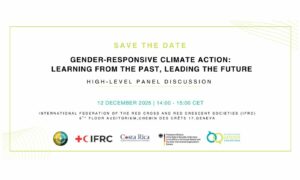
Gender-Responsive Climate Action: Learning from the Past, Leading the Future
12 Dec 2025 | 14:00 – 15:00
IFRC Headquarters | Auditorium
Costa Rica, Germany, IFRC, International Gender Champions
Jobs
See all

Consultant
National Consultant Technical Oversight of Risk Reduction Activities in Tajikistan
09 Dec 2025
UNEP Europe Office

Intern
2 stages en animation et gestion de project – éducation à l’environment (à 80%)
14 Dec 2025
J'aime ma Planète
Updates
See all
20 Oct 2026
Human Rights and the Environment

04 Dec 2025
Mountains and the Role of Geneva


23 Aug 2026