
Update
Environmental Impacts of the Conflict in the Middle East
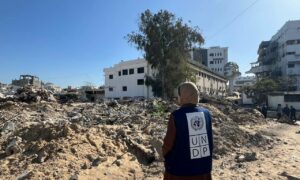
The current conflicts in the Middle East are generating wide-ranging humanitarian and environmental impacts, affecting human health, ecosystems, and critical infrastructure. Disruptions to energy, water, transport, and trade systems are compounding risks to food security and economic stability, while damage to industrial and hazardous sites raises concerns about environmental and public health impacts. Often described as a “silent casualty” of war, environmental damage can have long-lasting consequences, compounding risks for communities’ livelihoods and delaying recovery. This update explores the environmental dimensions of these crises, their cross-sectoral implications, and the UN’s response.
Environmental Governance & International Law in Times of Conflict
Environmental governance and international law provide important frameworks for limiting environmental damage during armed conflict and protecting civilian populations and critical infrastructure. Instruments such as International Humanitarian Law establish obligations to avoid or minimize harm to the environment and to essential systems such as water and energy. For example, the Protocol Additional to the Geneva Conventions of 12 August 1949, and relating to the Protection of Victims of International Armed Conflicts (Protocol 1) clearly states:
Article 35 – Basic Rule
3. It is prohibited to employ methods or means of warfare which are intended, or may be expected, to cause widespread, long-term and severe damage to the natural environment.Article 55 – Protection of the Natural Environment
1. Care shall be taken in warfare to protect the natural environment against widespread, long-term and severe damage. This protection includes a prohibition of the use of methods or means of warfare which are intended or may be expected to cause such damage to the natural environment and thereby to prejudice the health or survival of the population.
2. Attacks against the natural environment by way of reprisals are prohibited.
However, the current crisis highlights the complexity of implementing and monitoring these frameworks in rapidly evolving conflict settings, particularly in relation to environmental impacts. Continued efforts to strengthen compliance, improve transparency, and enhance mechanisms to assess and address environmental damage will be important to support recovery and reduce long-term risks.
Upholding Obligations under International Law, Including the UN Charter
As the UN Secretary‑General warned, we are witnessing a grave threat to international peace and security.
“All the unlawful attacks in the Middle East are causing tremendous suffering and harm to civilians throughout the region – and pose a grave risk to the global economy, particularly to the most vulnerable people. The situation could spiral beyond anyone’s control. It is time to stop the fighting and get to serious diplomatic negotiations. The stakes could not be higher”.
He has been urging all Member States to strictly uphold their obligations under international law, including the UN Charter, to respect and protect civilians in accordance with international humanitarian law, and to ensure nuclear safety. Various UN agencies have referred to the escalating crisis as a major humanitarian emergency and communicated on the status of their ongoing operations.
In light of the new killings and injuries of UN peacekeepers and UN-contracted workers, it is important to reaffirm our solidarity with colleagues around the world in our shared commitment to advancing international peace and security.
- UNRWA has recorded 391 colleagues killed in Gaza since the start of the war in the Gaza Strip (310 UNRWA personnel, and 81 persons who were supporting UNRWA, up to 28 April 2026.
- On 18 April 2026, a UN peacekeeper was killed, and three were injured after a UNIFIL patrol came under fire in southern Lebanon. Condemning the incident, the UN Secretary General said that this was the third deadly attack on UNIFIL peacekeepers in recent weeks, occurring despite the announced 10‑day cessation of hostilities beginning on 16 April, and warned that attacks against peacekeepers must stop and may constitute war crimes.
- On 17 April 2026, the UN Children’s Fund (UNICEF) expressed outrage at the killing of two contracted workers delivering clean water to families in the Gaza Strip.
- WHO has also reported attacks on health care with verified incidents affecting health facilities, personnel and medical assets.
- OHCHR has confirmed the killing of nearly 300 journalists in Gaza since 2023, with many more injured.
Cost of Conflicts: A Plea for Peace
“Conflicts harm human rights, undermine development and pollute the environment… Peace is a precondition for achieving human rights, the SDGs and climate action.”
The UN Special Rapporteur on the right to development, Surya Deva, has underscored the far‑reaching consequences of conflict through the launch of the campaign “Cost of Conflicts – A Plea for Peace”, calling for a fundamental course correction of the world. He emphasized that resources allocated to warfare could instead support sustainable development, noting that the expenditure by a single actor in the conflict could have financed the UN’s regular budget for 16 years. His forthcoming thematic report, “Peace for Development”, to be presented at the 2026 UN General Assembly, will further examine these linkages and advocate for renewed commitment to peace as a foundation for development.
UN Response
Guided by the principles and purposes articulated in the UN Charter, as civil servants, we work to promote and protect human rights, foster respect for international law, and uphold the obligations arising from treaties and other sources of international legal frameworks.
UN Task Force
While the conflict in the Middle East continues to escalate, with ongoing attacks causing widespread fear, civilian suffering and further deepening the humanitarian crisis across the region. In response, the United Nations has announced the establishment of a task force to help address the growing and urgent needs.
UN Secretary-General Special Envoy
While UN efforts to support affected civilians and de-escalate the conflict are ongoing, the Secretary-General has stressed the need to take immediate action to mitigate its consequences, and named veteran French diplomat Jean Arnault as his Personal Envoy to lead UN efforts on the Middle East conflict and its consequences.
Environmental Impacts of Conflict in the Middle East
The conflicts in the Middle East are generating significant environmental damage across the region, with wide-ranging impacts on ecosystems, critical infrastructure, and human health. While some impacts are immediate and visible – such as fires, air pollution, and infrastructure destruction – others are more diffuse and long term, including soil degradation, water contamination, and ecosystem loss.
These effects are often difficult to fully measure due to limited access to affect areas, disruption to monitoring systems, and the need for long-term data and studies to assess the cumulative impacts. Yet we know the environmental impacts can persist for years, undermining livelihoods, delaying recover, and increasing vulnerability to future crises. Evidence from UN agencies and research organizations have already highlighted how environmental damage is emerging as a critical dimension of the conflicts, with implications extending far beyond the immediate crisis.
Mapping Environmental Impacts of the Conflict in the Middle East
As highlighted by the Executive Director Inger Andersen of the UN Environment Programme (UNEP) at the 173rd meeting of the Committee of Permanent Representatives to UNEP in Nairobi on 20 April 2026, and echoing the UN Secretary-General’s call for the immediate cessation of all hostilities, the destruction of infrastructure – including fuel storage, refining and processing facilities – across the Middle East region has polluted the air, soil and water. Fires from damaged oil and gas facilities release heat and air pollutants – creating serious risks to those responding to the fires and to people living in affected areas. At the same time, damage to maritime vessels has led to significant oil spills, contaminating rivers, groundwater, and marine environments, with far‑reaching consequences for human health, wildlife, and ecosystems in a region already facing acute water scarcity. Ending the destruction is essential to safeguard human life and enable the containment and remediation of pollution, as conflict‑related environmental damage has been shown to persist for many years. UNEP is working closely with the wider UN system to monitor the environmental situation and will report on environmental impacts of regional significance arising from the conflict.
The Conflict and Environment Observatory (CEOBS) pointed out that several pollution incidents, placing people and ecosystems at risk of acute and chronic harm, as well as trends that could lead to substantial environmental harm as the war continues, could be observed. These include harm due to pollution from military sites and material, marine pollution, fossil energy infrastructure incidents and damages to nuclear facilities. Read more at:
- War disrupts the relationship between people and every other element of the landscape; how should we restore that relationship after conflict ends? | CEOBS | 21 April 2026
- The due regard principle in IHL: Protecting the environment amid armed conflict | CEOBS | 9 April 2026
- Iran War: Environmental risk overview as of 27th March | CEOBS | 27 March 2026
- Black rain: the health and environmental risks from Tehran’s oil fires | CEOBS | 9 March 2026
- Operation Epic Fury: emerging environmental harm and risks in Iran and the region | CEOBS | March 2026
- Three days of Operation Epic Fury: a rapid overview of environmental harm in Iran and the region| CEOBS | 3 March 2026
Land, Agriculture & Ecosystems
Conflict is severely affecting land systems, agricultural production, and ecosystems across the region. Damage to farmland, vegetation, and irrigation systems is disrupting food production and rural livelihoods, while military activity is degrading soils, reducing water retention, and increasing erosion.
- In the Gaza Strip for example, assessments by the UNEP indicate widespread environmental degradation, including the loss of vegetation and damage to agricultural land, with large areas no longer viable for cultivation. Soil compaction, contamination, and debris are further undermining ecosystem functioning and increasing flood risks.
- Similar patterns are emerging elsewhere in the region, including in southern Lebanon, where conflict-related environmental damage is affecting agricultural systems, ecosystems, and rural livelihoods. Lebanon’s Ministry of Environment’s latest report, “Guiding the Steps Towards a Post-War Recovery of Lebanon’s Natural Ecosystems” and the World Bank’s Rapid Damage and Needs Assessment on Lebanon, indicate the destruction of significant areas of farmland, including olive groves, citrus plantations, and other crops central to local economies and cultural heritage. 5,000 hectares of forest cover and 2,154 of hectares of orchards and agricultural land have been damaged, alongside broader losses in livestock and agricultural production, having large implications for biodiversity, food security, and income generation. Assessments in southern Lebanon have also identified soil contamination including elevated phosphorus levels and heavy metal residues associated with munitions and infrastructure damage.
- The report “Legacy of conflict in South Lebanon’s soils 2026” jointly prepared by Source International, Amel Italia and Amel Association International reveals alarming evidence of environmental contamination linked to military activities in South Lebanon. Conducted under the Turabna – Janoub Soil Monitoring Project, the study presents the findings of the first independent soil monitoring campaign carried out in August 2025 across the districts of Nabatieh and Marjaayoun. The report documents statistically significant increases in heavy metals associated with warfare, including lead, antimony, copper and zinc, compared with historical soil samples collected in 2001. Researchers identified both widespread deterioration in soil quality and localized contamination hotspots near heavily bombed areas, particularly in Houla, where antimony levels reached nearly 500 times historical averages. The factsheet with the main results can be consulted following this link.
- Beyond agriculture, the conflict is contributing to wider ecological degradation. Analysis by CEOBS highlights contamination risks from munitions residues, debris, and damaged infrastructure, including documented incidents involving the use of white phosphorus, which can lead to soil and vegetation damage and pose severe risks to human health and ecosystems. Research by CEOB highlights how conflict-related environmental stress and contamination can persist long after hostilities end, affecting biodiversity, ecosystem stability, agricultural recovery, and livelihoods.
- Reports also point to the destruction of ecologically significant woodland areas – such as the Monk Forest in southern Lebanon – where fires, munitions, and land clearance have damaged habitats that previously supported some of Lebanon’s most diverse plant and animal species
Water Systems & Marine Pollution
Water systems are highly vulnerable to conflict-related damage, particularly in a region already facing acute water scarcity. Attacks on water infrastructure, including pipelines, treatment facilities, and desalination plants, can disrupt access to safe water while increasing the risk of contamination.
- Across the Gulf, desalination is a critical source of drinking water, with several countries relying on it for the majority of their supply and approximately 100 million people who relying on it. There are growing concerns with multiple reported incidents involving strikes on desalination facilities. The United Nations Environment Programme (UNEP) has warned that these strikes on desalination infrastructure risk severe consequences especially as it is an already water-scarce region. For example, in Bahrain, a drone strike damaged a desalination plant supplying freshwater to civilians, while in Kuwait, attacks on integrated power and desalination facilities disrupted critical infrastructure. In Iran, a strike on a desalination plant on Qeshm Island cut water supplies to 30 villages, illustrating the immediate humanitarian consequences of such attacks.
- In parallel, damage to maritime vessels and coastal energy infrastructure – particularly in the Gulf and along the Iranian coastline – has led to oil spills and chemical pollution affecting marine and coastal ecosystems. A recent example includes an oil spill from the damaged Iranian vessel Shahid Bagheri, which began leaking heavy fuel oil following a strike and is now threatening the ecologically significant Hara mangrove wetlands near the Strait of Hormuz. The spill risks contaminating a protected biosphere reserve that supports fisheries, migratory birds, and endangered species.
- These environmental impacts also have direct consequences for human health. Contaminated water supplies increase the risk of waterborne diseases, while disruptions to water treatment and distribution systems limit access to safe drinking water – particularly in densely populated areas such as Gaza, where repeated outbreaks of waterborne disease have been reported.


Damage to Energy & Industrial Infrastructure and Risk to Nuclear Sites
The conflict is also causing extensive damage to energy and industrial infrastructure across the region, with significant environmental, economic, and humanitarian implications. Strikes on oil and gas facilities, refineries, storage sites, and associated transport infrastructure have led to fires, explosions, and the release of pollutants into the air, soil, and water. These incidents do not only disrupt critical energy supply but also generate acute and long-term environmental and human health risks.
- In Iran for example, attacks on fuel depots around Tehran in March 2026 led to prolonged oil fires that generated dense plumes of black smoke over the city and surrounding areas. These emissions included soot, sulphur compounds, and toxic hydrocarbons, contributing to severe air pollution and the phenomenon of “black rain,” where precipitation mixed with airborne pollutants deposits contaminated residues on land and water systems. Residents reported respiratory problems, skin and eye irritation, and headaches, while the World Health Organization (WHO) warned that exposure to polluted air and contaminated rainfall could pose longer-term health risks.
- Similar patterns are emerging across the region. Strikes on energy infrastructure and fuel storage sites have generated large smoke plumes and fires, with pollution spreading across urban and coastal areas, including parts of the Gulf. These events can rapidly degrade air quality and create cross-border environmental impacts
- In addition to fossil fuel infrastructure, renewable energy systems have also been affected. For example in Debel, Lebanon, damage to solar panels which provided the town with electricity and supplied power to the town’s water station.
- The conflict has also raised significant concerns about risks to hazardous industrial and nuclear sites. The region hosts numerous facilities handling radioactive materials, petrochemicals, and other hazardous substances, where damage could result in severe and long-lasting environmental contamination. Strikes on or near nuclear-related facilities, powerplants, and industrial complexes increase the risk of radiological and chemical pollutant releases. Even without a direct nuclear incident, damage to associated systems such as power supply, cooling infrastructure, or containment measures can elevate risks and complicate safe operation.
Additional news include:
- UN nuclear agency chief ‘deeply concerned’ by reports of latest attack on Iran power plant | UN News | 4 April 2026
- War in the Middle East: Iran nuclear facility hit as equivalent of ‘one classroom of children’ killed, wounded daily in Lebanon | UN News | 21 March 2026
Environmental Impacts of the Conflict in the Gaza Strip
The Gaza Strip provides one of the most acute examples of the environmental damage that can result from prolonged warfare, with severe and widespread damage to water systems, land, ecosystems, and public health.
In September 2025, UNEP issued a report in response to a request from the State of Palestine to assess environmental damage arising from the conflict in the Gaza Strip, pursuant to the UN Environment Assembly (UNEA) Resolution 6/12 ,“Environmental assistance and recovery in areas affected by armed conflict”. This follows a first assessment of environmental damage in the Gaza Strip issued by UNEP since October 2023. It finds that two years of escalating conflict have caused unprecedented levels of environmental damage in the Gaza Strip, damaging its soils, freshwater supplies and coastline.
As stressed by UNEP Executive Director Inger Andersen, “Ending the human suffering that has engulfed Gaza must be the first priority,” and restoring freshwater systems and removing debris to enable humanitarian access and restore essential services are urgently required to save lives.
The assessment includes 30 recommendations for reversing the damage to Gaza’s environment. Among the report’s key findings:
- Freshwater supplies in Gaza are severely limited and much of what remains is polluted. The collapse of sewage treatment infrastructure, the destruction of piped systems and the use of cesspits for sanitation have likely increased contamination of the aquifer that supplies much of Gaza with water. Marine and coastal areas are also likely contaminated, although testing is not currently possible.
- The water crisis has contributed to a surge in infectious diseases, including cases of acute watery diarrhea (which has increased 36-fold) and acute jaundice syndrome, indicative of hepatitis A (which has increased 384-fold).
- Much of Gaza’s vegetation has been destroyed. Since 2023, the enclave has lost 97 per cent of its tree crops, 95 per cent of its shrubland and 82 per cent of its annual crops. Food production at scale is not possible. That comes as over 500,000 people in Gaza are facing famine conditions, with about 1 million others in a food emergency.
- Some 78 per cent of Gaza’s estimated 250,000 buildings have been damaged or destroyed. This has generated 61 million tonnes of debris – about as much as 15 Great Pyramids of Giza or 25 Eiffel Towers by volume. About 15 per cent of this debris could be at relatively high risk of contamination with asbestos, industrial waste, or heavy metals if waste streams are not effectively segregated early on.
- The loss of vegetation and compaction by military activity have affected soil structure and reduced its ability to absorb water, increasing runoff and flood risks, and reducing groundwater recharge.
International Commission of Inquiry on the Occupied Palestinian Territory, including East Jerusalem, and Israel Finding on Harm Suffered as a Result of Environmental Destruction
A Conference Room Paper to the 60th Session of the Human Rights Council (HRC60), “Legal analysis of the conduct of Israel in Gaza pursuant to the Convention on the Prevention and Punishment of the Crime of Genocide” (A/HRC/60/CRP.3) issued by the Independent International Commission of Inquiry on the Occupied Palestinian Territory, including East Jerusalem, and Israel, notes the environmental destruction in Gaza since 7 October 2023, underscoring the immediate as well as the lasting and widespread impact of damaged structures, the presence of toxic remnants of deadly explosions released into the environment, including hazardous heat and chemical reactions, smoke and ash to the health of Palestinians in Gaza.
The Commission notes the environmental destruction in Gaza since 7 October 2023.
- On 13 December 2024, UNOSAT reported that it had “identified 60,368 destroyed structures, 20,050 severely damaged structures, 56,292 moderately damaged structures, and 34,102 possibly damaged structures for a total of 170,812 structures.”
- UNEP estimated a total of 50,773,494 tonnes of debris in Gaza as of 1 December 2024, which would take approximately 21 years to completely dispose of (using 105 trucks).
- Toxic remnants of deadly explosions released into the environment, including hazardous heat and chemical reactions, pose long-term threats for generations.
- Furthermore, a Palestinian environmental expert in August 2024 told Al-Mezan, “Smoke and ash from the destruction of homes and other infrastructure, combined with particles from cement, severely damage the respiratory health of Palestinians in Gaza. These fine particles settle in the lungs, increasing the risk of long-term health problems such as lung cancer, and exacerbating conditions in individuals with weakened immune systems, especially those suffering from asthma.”
The Special Committee to Investigate Israeli Practices Affecting the Human Rights of the Palestinian People and Other Arabs of the Occupied Territories raised its concerns in September 2024 on the immediate as well as the lasting and widespread impact of the contamination caused by the debris from the destruction of buildings and structures in Gaza
Other Sources
A recent opinion in the Guardian also refers to various sources on the environmental degradation in Gaza and concludes on the environmental impacts of armed forces, concluding that the military tends to be excused from environmental scrutiny, although its footprint, even in peacetime, is enormous.
Thematic Impacts Across Systems and Sectors
The environmental impacts of the conflict are closely interconnected with broader humanitarian and economic systems, amplifying risks far beyond the region. Disruptions to energy, water, and infrastructure are cascading across sectors, affecting health, food security, trade, economic stability and the enjoyment of human rights at both regional and global levels.
While the war continues across the Middle East, with impacts growing far beyond the region, UN agencies are expanding humanitarian relief efforts as displacement rises and civilian needs grow. Millions across the region face growing risks from disrupted health services, overcrowded shelters and strained aid operations. The escalating violence is also driving widespread environmental damage, as documented by multiple stakeholders. UNEP and others have echoed the UN Secretary-General’s call for an immediate cessation of hostilities, essential to halt the destruction and allow the people – and the environment – of the region to begin the long process of recovery.
The crisis in the Middle East continues, with strikes and counter-strikes reported across the region, driving civilian casualties, displacement and rising humanitarian needs. The UN Secretary General reaffirmed his call for peace, underscoring that “It’s time for the force of the law to prevail over the law of force. It’s time for diplomacy to prevail over war.” Recent articles note that fertilizer shortages and higher energy prices threaten crop yields, while remittance losses and potential shifts to biofuel production could amplify food price volatility, particularly in Africa, Asia, and other import-dependent regions.
As stressed by the United Nations and stakeholders, this has included strikes affecting nuclear sites, which carry risks of long-term environmental and public health consequences. Humanitarian needs have been deepening, with rising civilian casualties, mounting displacement and growing strain on services. The ongoing crisis is also exposing a central vulnerability in the global economy: the dependence on fossil fuels flowing through regions affected by conflict, a situation which is strengthening the UN’s case for a faster transition to cheaper, more resilient renewable power. Leading experts who have been exposing the environmental impacts of the war include Kaveh Madani, UNU-INWEH Director, who called for wider popular resistance to the long-term environmental harms of global warfare:
“All the weapons that have been produced have had carbon footprints — the missiles that fly, the jets, the tanks that are burned, the oil fields that are being attacked and the gas fields that are being burned. All of these are producing a lot of greenhouse gas emissions.”
UN agencies, stakeholders and international experts have reported in that the conflict in the Middle East is triggering severe humanitarian, economic, food, energy, and environmental consequences far beyond the region. They have warned that war-driven dependence on fossil fuels and vulnerable shipping routes is amplifying global instability, making the case for accelerating renewable energy, biofertilizer production, and resilient food and energy systems as essential pathways from crisis to long-term security and sustainability. In its situation report on 16 April 2026, WHO highlighted that environmental and industrial hazards remain of high concern, with attacks on vital infrastructure such as water desalination plants and fuel facilities. Such attacks can disrupt water access for rural communities, leading to health risks and environmental contamination.
- Middle East crisis puts aid, food, fuel further out of reach for millions already struggling – UN agencies | UN News | 1 May 2026
- Nuclear fears resurface among younger generations amid global tensions | UN News | 1 May 2026
- Hormuz crisis strangling global economy, Guterres warns, demanding solutions to end stalemate | UN News | 30 April 2026
- Hormuz disruption shows why early-warning data matters | UNCTAD | 28 April 2026
- Israel must stop using water as a weapon of collective punishment in Gaza | Doctors Without Borders | 28 April 2026
- West Bank – The impact of Settler attacks | January 2023 – December 2025 | OCHA | 27 April 2026
- Oil shocks ripple through plastics, but trade barriers hold back their greener alternatives | UNCTAD | 27 April 2026
- UNOPS chief speaks to Al Jazeera on urgent need to move fertilizers through Strait of Hormuz | UNOPS | 25 April 2026
- Middle East war: After oil and gas, concerns grow over minerals crunch | UN News | 23 April 2026
- When Oil Prices Surge, Regions Cannot Afford to Stand Still | Patricia Fuller, IISD and Champa Patel, Climate Group | 23 April 2026
- A Strait Too Narrow: How Fertiliser Disruption Is Unravelling Global Food Security | European Climate Foundation | 21 April 2026
- Final Gaza Rapid Damage and Needs Assessment | European Union and the United Nations | 20 April 2026
- Gaza: Human development set back 77 years as recovery costs rise to $71 billion | UN News | 20 April 2026
- MIDDLE EAST LIVE 20 April: Uncertainty grows in the Strait of Hormuz | UN News | 20 April 2026
- War on Iran, war on nature | The Ecologist | 20 April 2026
- The Environmental Frontline: How The War In Iran Is Poisoning The Middle East | Evan Kwiatkowski, The Organization for World Peace | 20 April 2026
- Middle East war: UNESCO grants ‘enhanced protection’ to 39 heritage sites in danger | UN News | 17 April 2026
- Strait of Hormuz crisis should catalyze African biofertilizer production | Susan Chomba | Mongabay | 16 April 2026
- Middle East conflict chokes end of supply chain as lights go out in the Pacific | UN News | 15 April 2026
- Statement attributable to the Spokesperson for the Secretary-General – on the Middle East | UN News | 13 April 2026
- Fossil fuels are driving a cost crisis for households, businesses and nations. Clean energy is the cure. Because sunlight and wind don’t depend on vulnerable shipping straits | Simon Stiell, UN Climate Change Executive Secretary | 10 April 2026
- Advocacy brief: The cost of war in Gaza on women and girls | UN Women | April 2026
- Global Economy in the Shadow of War | IMF | April 2026
- Iran Fact-Finding Mission calls on parties to the devastating regional conflict to end hostilities and investigate alleged violations, and strongly condemns violent rhetoric | Human Rights Council’s Investigative Bodies | 10 April 2025
- Iran’s Black Rain and the Health Shadow of Oil Wars | Think Global Health | 10 April 2026
- Middle East crisis exposes global energy fault line as UN urges shift to renewables | UN News | 2 April 2026
- War’s Environmental Fallout: U.N. Expert Decries Targeting of Oil Sites & Desalination Plants | Democracy Now! | 1 April 2026
- The Strait of Hormuz crisis affects more than just oil. Here are 9 other commodities | WEF | 1 April 2026
- A Silent Casualty of War: The Rising Risk of Ecocide in the Gulf | Arab Gulf States Institute | 1 April 2026
- “Military Escalation in the Middle East: Economic and Social Implications for the Arab States region” Assessment | UNDP | 30 March 2026
- How the War in the Middle East Is Affecting Energy, Trade, and Finance | IMF | 30 March 2026
- Kaveh Madani, expert iranien de l’eau: «La guerre est le pire des cauchemars pour quelqu’un qui se bat pour l’environnement» | Le Temps | 29 March 2026
Middle East war: UN initiatives support mediation efforts, ‘lifesaving’ fertiliser shipments | UN News | 28 March 2026 - MIDDLE EAST LIVE 27 March: Humanitarian crisis deepens across the region | UN News | 27 March 2026
- The UN and the crisis in the Middle East: What you need to know | UN News | 26 March 2026
- UN chief says Middle East conflict should accelerate shift to renewables, and other climate and nature news | Tom Crowfoot/WEF | 25 March 2026
- From Middle East Energy Shock to Efficiency Action | UNECE | 24 March 2026
- War’s Environmental Damage: How Conflicts Accelerate Global Warming | Climate Fact Checks | 24 March 2026
- Tehran’s toxic cloud: satellite images show oily fires burned for days | Oliver Holmes, Damien Gayle and Tural Ahmedzade/The Guardian | 23 March 2026
- Greenpeace warns Trump’s threat to bomb Iran’s power grid risks humanitarian and nuclear disaster | Greenpeace | 23 March 2026
- UNEP statement on environmental damage arising from the conflict in the Middle East | UNEP | 13 March 2026
- The war in Iran could plunge the world into hunger | Grist | 11 March 2026
- Iran Water Worries | Carbon Brief | 11 March 2026
- ‘Toxic rain’ warning from oil depot strikes amid ongoing Middle East war | UN News | 10 March 2026
- The critical infrastructure that’s so vital to Middle East nations – and vulnerable to Iranian attack | The Independent | 10 March 2026
- The true price of the Iran war for oil, people and the environment | Global Witness | 9 March 2026
- What is the ‘acid rain’ in the wake of US bombings in Iran? An atmospheric scientist explains | The Conversation | 9 March 2026
- How the Iran war could create a ‘fertiliser shock’ – an often ignored global risk to food prices and farming | The Conversation | 5 March 2026
- The Iran War Is Also a Climate War | Covering Climate Now | 5 March 2026
- As the Gulf conflict widens, so does its environmental footprint | Dialogue Earth | 4 March 2026
- Middle East crisis increases Southeast Asia’s coal risk | Climate Home News | 4 March 2026
- Environmental Consequences of the Escalating War in the Middle East | Ecosphere | 2 March 2026
Energy Systems and Global Energy Markets
Damage to energy infrastructure and instability in key transit routes are contributing to volatility in global energy markets. As highlighted by the International Energy Agency and other institutions, supply disruptions are reinforcing short-term reliance on fossil fuels while exposing the vulnerability of global energy systems to geopolitical shocks. At the same time, these dynamics are strengthening calls to accelerate the transition to more resilient and diversified energy systems, including renewable energy.
- Moving from Energy Crisis to Energy Security with Renewables | IRENA | 12 April 2026
- How the Energy Shock Could Deepen Debt Risks in Developing Economies | IISD | 26 March 2026
- Don’t lock in future fossil fuel insecurity in response to the Iran war | Grace Alexander | CEOBS | 18 March 2026
- War-driven energy price spikes highlight value of renewables: UN climate chief | UN News | 16 March 2026
- The Middle East and Global Energy Markets | IEA
Food Systems and Agriculture
Disruptions to energy markets and fertilizer supply chains – particularly through the Strait of Hormuz – are increasing risks to agricultural production worldwide. According to the Food and Agriculture Organization (FAO), reduced access to fertilizer, rising input costs, and trade bottlenecks are likely to affect crop yields and contribute to food price volatility, particularly in import-dependent regions. Sever analyses warn that prolonged disruption could trigger broader agrifood crisis, with cascading impacts on global food security.
- Lebanon: New IPC analysis shows conflict escalation pushing nearly a quarter of population into acute food insecurity | WFP | 29 April 2026
- Strait of Hormuz crisis: FAO Director-General outlines risks, actions and policy responses | FAO | 28 April 2026
- FAO: Protracted Strait of Hormuz crisis could turn into global agrifood catastrophe | FAO | 13 April 2026
- ‘Clock is ticking’: Hormuz disruption raises fears of global food crisis | UN News | 13 April 2026
- FAO Food Price Index rises in March as Near East conflict raises energy costs | FAO | 3 April 2026
- FAO Chief Economist warns of severe global food security risks from disruption to Strait of Hormuz trade corridor | FAO | 26 March 2026
- Global Agrifood Implications of the 2026 Conflict in the Middle East – Impacts on energy and fertilizer trade, and food security | FAO | 15 March 2026
- When energy crises hit the food system | Biovision | 13 March 2026
Health
Environmental degradation and infrastructure damage are contributing to growing public health risks. Air pollution from fires, contamination of water supplies, and exposure to hazardous materials are increasing the incidence of respiratory illness and waterborne diseases. The World Health Organization has identified environmental and industrial hazards as a major concern, particularly where damage to water and sanitation systems limits access to safe drinking water. These impacts are compounded by displacement, overcrowded shelters, and strained health services.
- Middle East Escalation of Conflict, Global external situation report #6 | WHO | 30 April 2026
- Middle East Escalation of Conflict, Global external situation report #4 | WHO | 16 April 2026
- Middle East Escalation of Conflict, Global external situation report #3 | WHO | 9 April 2026
- Middle East Escalation of Conflict, Global external situation report #1 | WHO | 26 March 2026
- Iran war’s environmental toll could leave damage and health risks for decades, experts say | Tammy Webber/AP | 26 March 2026
- Update on escalating conflict in the Eastern Mediterranean Region | WHO | 17 March 2026
- WHO Situation Report | Middle East Escalation of Conflict | WHO | 11 March 2026
Human Rights
Environmental damage is closely linked to broader human rights concerns, including displacement, loss of livelihoods, and reduced access to essential services. Damage to critical infrastructure – such as water, food, and energy – is increasing vulnerability among affected populations and placing additional strain on humanitarian response efforts. International human rights bodies have emphasized the need to protect civilians and essential infrastructure in accordance with international law.
- Deaths and Displacement in Lebanon – Update on the Human Rights Situation in Lebanon | OHCHR | 24 April 2026
- UN experts call for end to attacks on Gaza shelters, forced displacement in West Bank | OHCHR | 13 April 2026
- Iran: Israel’s Oil Depot Strikes Endanger Environment, Health | Human Rights Watch | 13 April 2026
- Questions and Answers: US, Israel, Iran, and the Laws of War | Human Rights Watch | 8 April 2026
- Türk condemns deadly wave of Israeli strikes on Lebanon | OHCHR | 8 April 2026
- Türk deplores incendiary rhetoric in Middle East war | OHCHR | 7 April 2026
- Middle East war: UN’s Türk decries ‘severe restrictions’ on free speech | UN News | 1 April 2026
- Ending war between USA-Israel and Iran must focus on human rights of Iranians: UN experts | OHCHR | 30 March 2026
- Middle East Conflict: Coordinated, Comprehensive and Impartial Approach to All Violations Needed | Human Rights Watch | 25 March 2026
- UN experts denounce aggression on Iran and Lebanon, warn of devastating regional escalation | OHCHR | 12 March 2026
- Middle East: All parties to the conflict must refrain from unlawful attacks on energy infrastructure | Amnesty International | 11 March 2026
Trade, Transport and Supply Chains
The conflict is disrupting one of the world’s most critical trade corridors – the Strait of Hormuz – through which large volumes of oil, gas, fertilizers, and agricultural commodities transit. Analysis by United Nations Conference on Trade and Development, highlights the broader implications for trade flows and vulnerable economies dependent on these critical imports.
- The Strait of Hormuz Trade Tracker, developed jointly by AXSMarine (Signal Group) and WTO, offers a range of indicators for shipments of key commodities – crude oil, natural gas, fertilizer-related products including sulphur and ammonia, and agricultural products – through the Strait of Hormuz.
- UNECE launches online observatory to ease the flow of goods along inland transport corridors in the Gulf | UNECE | 28 April 2026
- From gas to grain: Fertilizer disruptions raise risks for food security and trade | UNCTAD | 30 March 2026
- Activating land and multimodal transport routes in the Gulf with UN TIR Convention can help ease trade pressures | UNECE | 17 March 2026
- War in Iran: IRU launches road transport information hub | IRU | 17 March 2026
- Strait of Hormuz disruptions: Implications for global trade and development | UNCTAD | 10 March 2026
- Hormuz shipping disruptions raise risks for energy, fertilizers and vulnerable economies | UNCTAD | 10 March 2026
Broader Global Environmental Impacts of Conflict
Beyond its immediate regional impacts, the conflict also highlights the broader environmental consequences of modern warfare, particularly in relation to climate change and long-term ecological degradation. Military activity, destruction of infrastructure, and associated fires and emissions contribute significantly to greenhouse gas emissions and environmental harm.
Research by the Conflict and Environment Observatory in 2022 estimates that the world’s armed forces produce approximately 5.5% of global greenhouse gas emissions. However, these emissions are exempted from mandatory reporting under the Paris Agreement and are not properly held to account for their vast range of other environmental harms, from deforestation to pollution, soil destruction to unregulated dumping.
More recent analyses suggest that the current conflict is contributing to increased emissions through the burning of oil and gas infrastructure, intensified military operations, and the disruption of lower-emission energy pathways. Analysis by the Climate & Community Institute estimates that 5 million tonnes of carbon dioxide were released in the 14 first days of the US-Israel war on Iran.
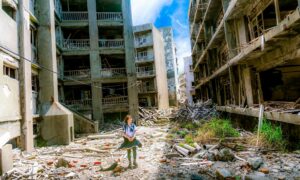
UN Staff for Gaza
With the spiral of chaos we are witnessing — where colleagues are being killed in the line of duty and countless civilians, including children, are dying simply trying to access basic necessities — it becomes increasingly difficult to remain silent as a UN civil servant. Numerous voices from UN institutions have been stressing that this must stop. “The only path forward is diplomacy. The only hope is peace,” stressed the UN Secretary-General António Guterres.
The “UN Staff for Gaza” private association of current and former members of UN Staff and related personnel, has gathered to speak out about what is happening in the Gaza Strip. Born from an open letter circulated in late July, this initiative provides a channel for UN colleagues through which to exchange information and build common resolve, express solidarity with colleagues on the ground and pay tribute to the hundreds of staff who have been killed, help amplify calls by the Secretary-General and wider UN leadership, and promote a positive organizational culture in which colleagues feel safe and empowered to express their convictions.
This initiative was inspired by the words of the Secretary-General, who said that the UN “must continue to speak out at every opportunity,” and repeatedly appealed for an immediate and permanent ceasefire, the unconditional release of all hostages, and unhindered humanitarian access.
Keeping Up with the Latest Developments
The situation in the Middle East remains highly dynamic, with impacts continuing to evolve across humanitarian, environmental, and economic systems. Environmental damage in particular is often underreported in real time and may only become fully visible over the longer term. Further updates and analyses are available through United Nations agencies, research organisations, and humanitarian actors covering the latest developments and the growing environmental, humanitarian, health, and economic impacts as the situation develops.