Event Virtual
Road to Busan | Launch and Panel Discussion | Analysis of Governments’ Authority to Mitigate Micro- and Nanoplastic Releases to Inform the Global Plastics Treaty Negotiations
06 Nov 2024
14:00 – 15:30
Venue: Online | Webex
Organization: University of Wollongong, Minderoo Foundation, Geneva Environment Network
This event is co-organized by the University of Wollongong with the support of the Minderoo Foundation and the Geneva Environment Network within the framework of the Geneva Beat Plastic Pollution Dialogues Road to Busan event series ahead of the fifth session of the Intergovernmental Negotiating Committee to develop an international legally binding instrument on plastic pollution, including in the marine environment (INC-5), scheduled to take place from 25 November to 1 December 2024 in Busan, Republic of Korea.

About this Event
Micro- and nanoplastics bioaccumulate in human tissue resulting from plastic’s persistence by design including use of harmful chemicals. The report, to be launched at this event, presents a chemical engineering systems approach to the design of plastic products to mitigate micro- and nanoplastic exposure and harm. The authority of national and regional governments is demonstrated for regulation and mitigation of risks to human health from micro- and nanoplastics exposure resulting from plastic throughout its existence including during production, use, recovery, disposal and in the environment. Due to this authority, from manufacturing and consumer product safety through to environmental protection, there is the possibility of litigation stemming from health effects. Links to the global plastics instrument are made, emphasizing the need to include specific measures, approaches and principles in the instrument related to micro- and nanoplastics.
Leading experts joining the panel of this event reflected on its findings and messages, as well as links with other recent studies.
Geneva Beat Plastic Pollution Dialogues

The world is facing a plastic crisis, the status quo is not an option. Plastic pollution is a serious issue of global concern which requires an urgent and international response involving all relevant actors at different levels. Many initiatives, projects and governance responses and options have been developed to tackle this major environmental problem, but we are still unable to cope with the amount of plastic we generate. In addition, there is a lack of coordination which can better lead to a more effective and efficient response.
Various actors in Geneva are engaged in rethinking the way we manufacture, use, trade and manage plastics. The Geneva Beat Plastic Pollution Dialogues aim at outreaching and creating synergies among these actors, highlighting efforts made by intergovernmental organizations, governments, businesses, the scientific community, civil society and individuals in the hope of informing and creating synergies and coordinated actions. The dialogues highlight what the different stakeholders in Geneva and beyond have achieved at all levels, and present the latest research and governance options.
Following the landmark resolution adopted at UNEA-5 to end plastic pollution and building on the outcomes of the first two series, the third series of dialogues will encourage increased engagement of the Geneva community with future negotiations on the matter.
Speakers
By order of intervention.

Moe PAULO
Acting Director, Department of Environment, Tuvalu | Member of the INC Delegation

Tuulia TOIKKA
Ministerial Adviser, Ministry of Environment, Finland | INC Focal Point

Karen RAUBENHEIMER
Lecturer at Australian National Centre for Ocean Resources and Security (ANCORS), University of Wollongong

Chideraa NDUBUISI
Research Assistant, University of North Carolina at Charlotte

Jeffrey SEAY
Professor of Chemical Engineering, University of Kentucky


Niko URHO
Independent Consultant

Bart KOELMANS
Professor of Aquatic Ecology and Water Quality, Wageningen University

Elena BUZZI
Junior Environmental Policy Analyst, OECD

Andres DEL CASTILLO
Senior Attorney, Environmental Health Program, Center for International Environmental Law
Highlights
Video
Live on Webex.
Summary
Opening Remarks
Moe PAULO | Acting Director, Department of Environment, Tuvalu | Member of the INC Delegation
- Tuvalu faces immense challenges in managing plastic waste. Plastic pollution impacts are felt daily, not only on the fragile environment but also on the health and livelihood of the people of Tuvalu.
- Tuvalu, despite its small size and low contribution to global pollution, is bearing the brunt of a plastic crisis that is not its responsibility.
- Tuvalu, as an Island nation, with limited resources and geographical isolation, struggles to manage the influx of plastic waste, especially micro-plastics and nanoplastics (MNPs). These tiny particles, often invisible to the naked eye, are pervasive in the marine environment, threatening fisheries, food security, and the overall well-being of communities.
- Without proper facilities for monitoring or technical capacity to analyze the presence and impacts of microplastics, Tuvalu is at a significant disadvantage. The oceans are Tuvalu’s lifeline; the contamination of these waters with microplastics is not just an environmental issue, it is a direct threat to the survival of communities.
- At the international level, there is so much that can and must be done. There should be stronger, more inclusive international policies.
- It is not enough to simply capture or clean up these particles after they have been released; this issue must be tackled at its source by redesigning plastics to minimize their contribution to micro-plastics and nanoplastics pollution. There should be a transition toward materials and production methods that prioritize a closed-loop system, one that prevents these harmful particles from entering oceans in the first place.
- The international community is encouraged to provide the necessary support to small island nations like Tuvalu. There are needs for technical and financial support to build capacity for effective waste management, data collection, and pollution mitigation. Without this, efforts will be severely limited, and the effects of plastic pollution will continue to threaten ecosystems and ways of life.
- Plastic pollution, particularly microplastics, is a global issue that requires global solutions. Through international cooperation, shared research, and innovative approaches, we can work towards reducing plastic releases and creating a more sustainable future, not just for Tuvalu, but for the world.
Tuulia TOIKKA | Ministerial Adviser, Ministry of Environment, Finland | INC Focal Point
- The final round of negotiations on a global treaty to end plastic pollution is very close, with less than three weeks before the meeting in Busan. In Busan, the ambition agreed upon at UNEA-5 must be upheld, with an international legally binding treaty to end plastic pollution as the goal.
- Micro- and nanoplastics are central to the INC negotiations.
- The University of Wollongong’s report is released on the date marking 20 years since the term “micro-plastics” was first used to describe tiny plastic fragments in the environment. Knowledge of their sources, pathways, and impacts has since grown significantly, and this report is timely.
- The report’s recommendations echo recent calls from Nordic Ministers of Environment for dedicated measures on microplastics in the plastic treaty. Both suggest:
- Bans or restrictions on intentionally added microplastics
- Requirements for better product design to reduce microplastic release.
- The Nordic countries also prioritize enhancing the science-policy interface, particularly in addressing emerging issues like chemicals of concern in the plastic treaty. Scientific guidance could help:
- List products with primary microplastics as avoidable;
- Set thresholds for secondary releases via product design standards; and
- Applying the precautionary principle, which has proven effective in EU legislation, would address microplastics even with limited evidence. The EU’s restriction on intentionally added microplastics and exploration of secondary micro-plastics controls reflect this approach.
- The report notes that microplastics act as carriers for harmful chemicals, intensifying their effects on human health. This underscores the need to address both microplastics and hazardous chemicals in the treaty. To ensure progress, technical work could be identified and pursued between the treaty’s adoption and the first Conference of the Parties.
- Discussions on micro- and nanoplastics must continue beyond Busan.
Presentation of the Report: Purpose, Scope and Intent of the Report
Karen RAUBENHEIMER | Lecturer at Australian National Centre for Ocean Resources and Security (ANCORS), University of Wollongong
- The report Analysis of Government’s Authority to Mitigate Micro- and Nanoplastic Releases Through Closed-Loop Design to Inform the Global Plastics Treaty highlights the unique hazards of micro- and nanoplastics (MNPs) and reinforces the need for policies focus on them in plastic treaty negotiations.
- It reviews evidence supporting regulatory actions to limit MNPs exposure, utilizing existing legal authority, and proposes approaches to address MNPs in the global plastics instrument, aligning with the latest INC Chair non-paper .
- The report emphasizes that the impact of science on policy often depends on whether a country’s legal framework includes the precautionary principle. Three case studies illustrate:
- The US lacks a precautionary principle, the impact of science on policy depends on litigation and a high scientific burden of proof.
- The EU uses the precautionary principle, allowing flexible proof standards and proactive policy.
- Tuvalu has limited in influencing product design, Tuvalu relies on international standards for support.
- The report further debunks past assumptions of plastic safety, showing that MNPs shed continuously, even during product use, especially with heat.
- This shedding complicates reuse, refill, and repair options, as older items shed more MNPs, and recycling processes can produce MNPs.
- Uncontained plastic waste in landfills and incineration emits MNPs into soil, air, and water systems, with wastewater sludge contaminating crops, revealing the vast reach of MNP pollution.
Presentation of the Report: Effect of Micro- and Nano-Plastic on Human Health and Issues with Current Risk-Assessment Methodologies
Chideraa NDUBUISI | Research Assistant, University of North Carolina at Charlotte
- Plastic production continues to increase dramatically, and these plastics inevitably break down into micro- and nanoplastics.
- The hazard potential of micro-plastics is complex and multifaceted, depending on several key characteristics, including the size of the particles, their shape, polymer type, and chemical burden. Recent peer-reviewed publications have documented microplastic accumulations in both human and animal tissues. These particles are found in virtually every human tissue, ranging from the placenta to the brain.
- Evidence for health impacts is mounting rapidly. There is strong evidence at the cellular level showing widespread inflammation and significant oxidative stress responses. Imaging evidence also links micro-plastic exposure to cancer development, disruption of the gut microbiome and intestinal health, endocrine system disruption, developmental impacts—particularly concerning for fetuses and children—respiratory health effects, cardiovascular complications, reproductive system damage, and neurotoxicity.
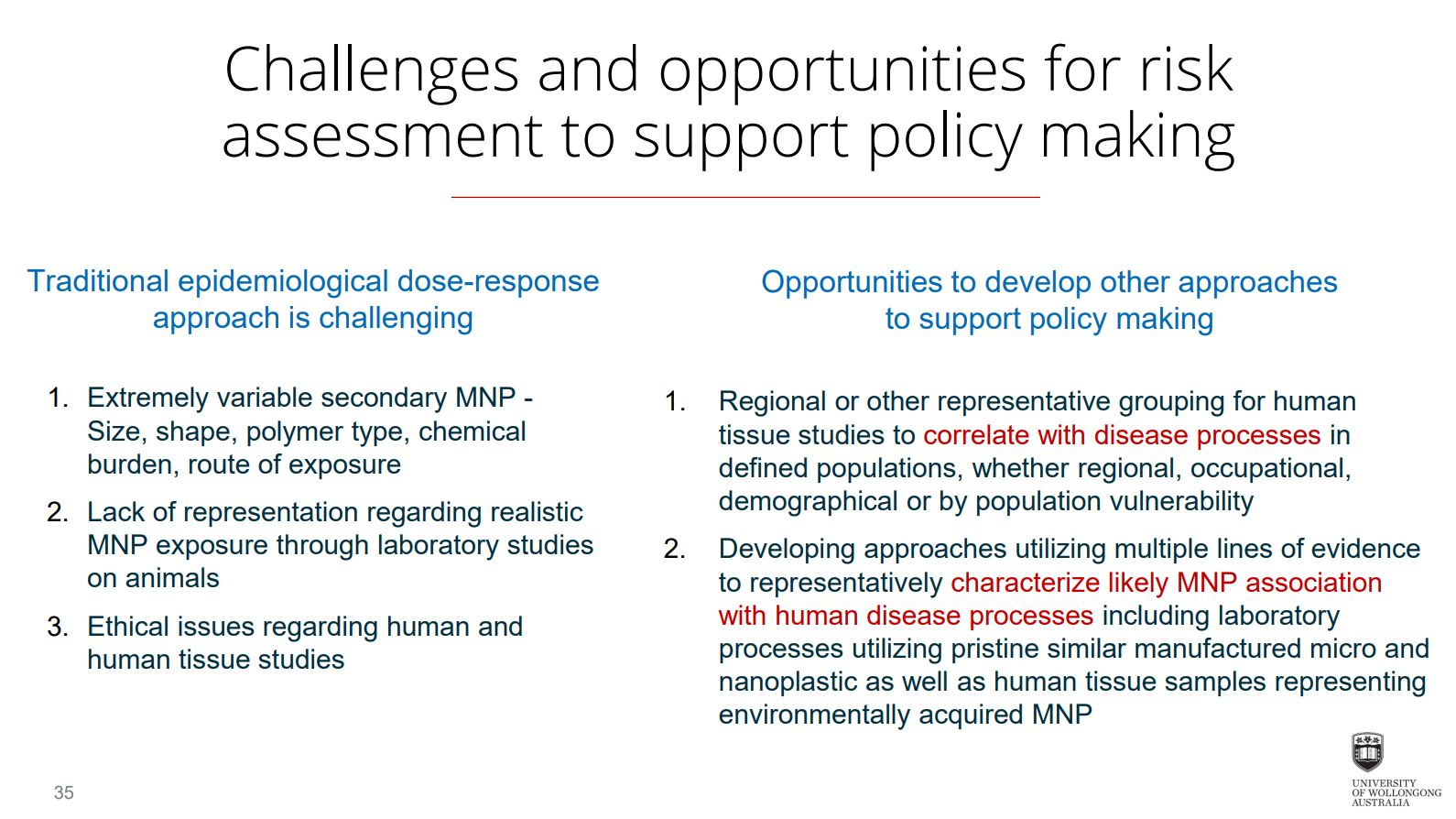
- The challenge faced in risk assessment is significant. Traditional dose-response methods have proven inadequate due to the extreme variability in microplastic characteristics. There is a shift toward studying associations between documented exposure levels, human tissue accumulation patterns, and disease rate correlations. This approach, while different from traditional toxicology, provides crucial insights into the real-world impact of microplastic exposures.
Challenges in traditional epidemiological approaches and opportunities for risk assessment
- The extreme variability in microplastic characteristics makes standardization difficult.
- Laboratory studies struggle to replicate realistic exposure scenarios, and ethical constraints limit direct human studies.
- However, new approaches to support policy are being developed, such as regional and demographic studies correlating microplastic presence with disease patterns. Multiple lines of evidence are combining laboratory studies with real-world tissue sampling, with a focus on vulnerable populations and occupational exposure groups.
- While more research is needed, the evidence we have today is sufficient to warrant immediate action to address microplastics.
Presentation of the Report: A Chemical Engineer’s Perspective of a Closed-Loop Approach to Plastic Pollution
Jeffrey SEAY | Professor of Chemical Engineering, University of Kentucky
- Conventional plastic waste management—landfilling, incineration, and recycling—is insufficient against the growing plastic pollution crisis. Even circular economy models fail to prevent plastic particles from shedding as they degrade in use or in the environment.
- Our relationship with plastic must be rethought and redesigned to tackle this newly realized risk. Manufacturing and use of plastic must be maintained in a closed-loop system to eliminate exposure and public health risks it brings.
- Previous thinking assumed that plastic was permanent and inert, posing no hazard beyond being an eyesore. Plastic was thought to be safe for use in products like microbeads, personal care items, toothbrushes, textiles, and baby bottles. This isn’t the case.
- What was thought to be a waste management problem has turned out to be an emerging public health crisis. Plastic is friable, meaning it fractures into smaller and smaller particles over time, eventually reaching the micro and even nanoscale.
- Plastic abrasives, scrub pads, and synthetic clothing release microplastic particles through use. Plastic equipment used in manufacturing other products wears down and sheds particles, and our synthetic clothing, carpets, and furniture release plastic fibers. Even the goal of collecting and recycling 100% of post-consumer plastic cannot stop the release of microplastics. The shedding of plastic, whether mechanical or chemical, releases microplastics, exposing workers and leading to environmental release.
- Humans are exposed to microplastics through the environment and in their homes through everyday items like paints, cookware, and food packaging.
- Even when captured and sequestered in a properly designed landfill, plastics continue to break down into smaller pieces. These pieces eventually end up in leachate and ultimately in wastewater sludge, which is often land-applied, exposing food crops to microplastics.
- Even incineration, as currently designed, does not effectively destroy microplastics, leaving them to be released through particulate emissions, wastewater discharges, fine dust, and bottom ash, which is often landfilled.
- Plastic is persistent but not permanent. All plastic breaks down into smaller pieces over time through weathering in the environment, such as exposure to UV light or just through normal use. The chemical additives in the plastic polymer formulation are more easily diffused out of the matrix due to an increased surface area-to-mass ratio and newly exposed surfaces. This process is governed by the laws of molecular diffusion.
- In addition to chemicals intentionally added during manufacturing, non-intentionally added substances, such as contaminants from raw materials, leftover catalysts, and reaction side products, are also present and can leach out.
- If microplastics have been exposed to environmental conditions, external persistent pollutant species, such as PCBs or PFAS, may absorb onto the surface and be carried along with the particle. Finally, environmental microbes, including pathogens, may also adhere to the microplastic surface and be carried along for the ride.
- To address these concerns, the report proposes six strategies for consideration in the global agreement. These strategies include
- These strategies encompass the closed-loop design concept to eliminate exposure to microplastics through environmental degradation and normal use. These concepts address production reduction, elimination, simplification, post-use recovery, transparency, redesign, and cleanup.


- Traditional toxicology has historically focused on dose response to exposure, including the body’s natural defense mechanisms. This focus has been on setting safe exposure limits, threshold values, and lethal doses. However, exposure to microplastics embedded in tissue represents a potential hazard that has not been thoroughly evaluated. It is highly likely that there is no safe exposure threshold for microplastics.
- Essential uses for plastic in healthcare, automotive, aerospace, and construction may remain, but categories like intentional releases, degradable uses (e.g., paints), and direct contact items (e.g., food packaging, textiles) should be eliminated, especially for vulnerable populations. Essential-use plastics should be recycled or fully destroyed through redesigned thermal decomposition methods, as current incineration is ineffective.
- To avert a global public health crisis, the plastic manufacturing and use cycle must be redesigned, reprioritized, managed, and remediated to ensure that a closed-loop system is maintained throughout the life cycle.
Presentation of the Report: Authority to Regulate at National and Regional Levels
Mary Ellen TERNES | Senior Fellow, Global Council for Science and the Environment (GCSE)
- Micro- and nanoplastics (MNPs) are often overlooked as hazardous particles, regulated merely as dust or particulate matter instead of persistent hazards.
Legal Authorities and Strategies
- These invisible particles are harmful because they cannot biodegrade, unlike natural materials, and disrupt cellular functions in organisms.
- Many have not been regulated appropriately and treated as particulate dust, carbonous soot, turbidity in drinking water, or total suspended solids in surface waters rather than hazardous particles.
- Where a net may capture a turtle or a whale, these tiny fibers can gum up the works of our cellular processes. This is what happens when you make something unnatural that does not go away and does not meaningfully biodegrade. When the bulk of the plastic that sheds is not considered, humans and the environment are not protected from this “invisible” material, everywhere around us.
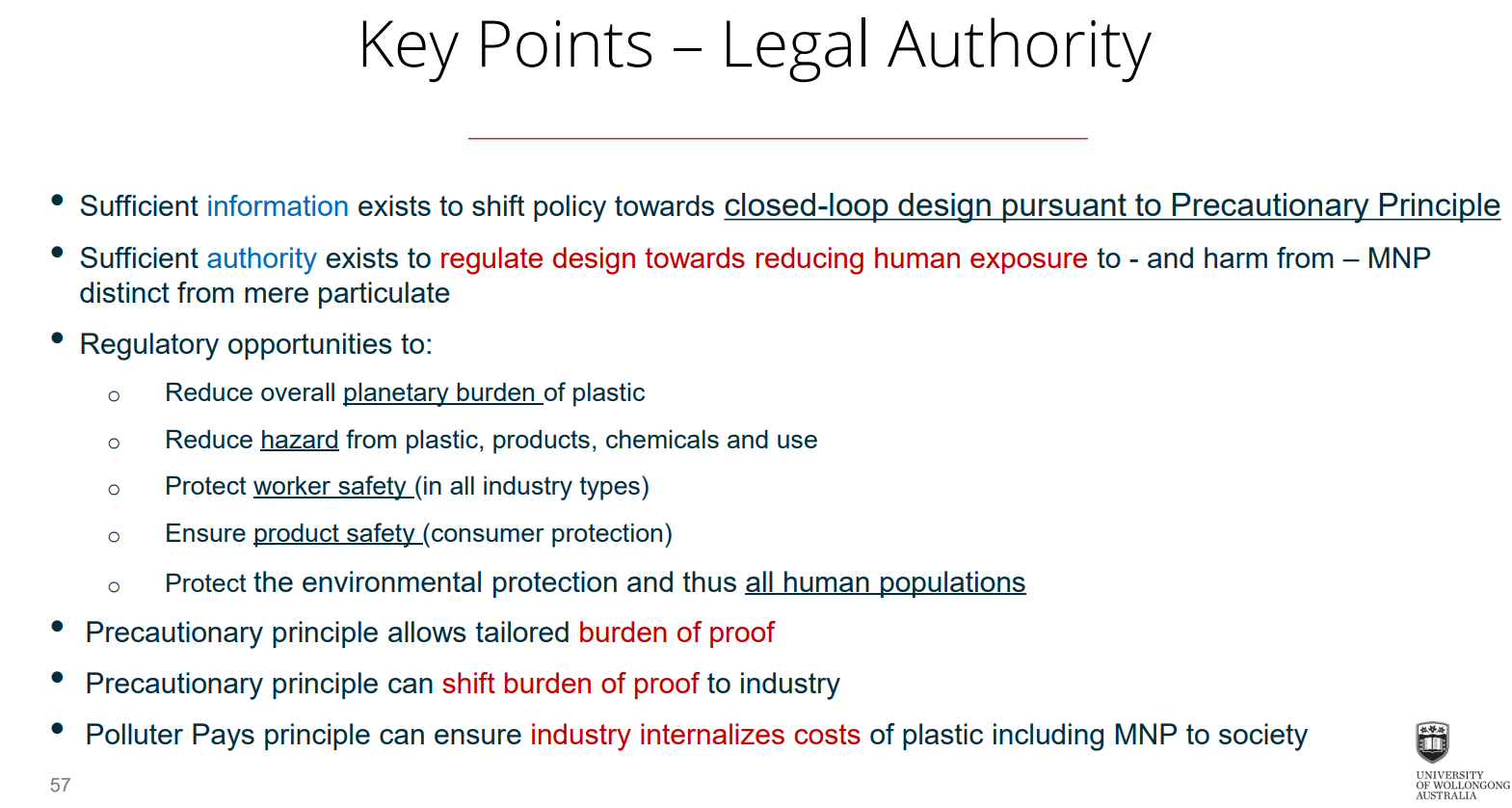
- There is sufficient information to deal with this from a policy perspective.
- Traditional dose-response models do not apply to MNPs due to their almost infinite variability and widespread presence.
- While some MNPs are primary-types of plastics, intentionally manufactured as small particles, the majority are secondary, emerging from a breakdown in the environment and our daily surroundings. The planet is saturated with MNPs: there is no place without MNPs.
- These particles exist as shards, fibers, and filaments, each presenting unique hazards not captured by conventional testing.
The Precautionary Principle
- The precautionary principle is essential as it accommodates multiple lines of evidence and the potential for harm of MNPs better than conventional methods.
- It can be implemented in flexible ways to address the hazard from micro nanoplastics.
- If not used, and the conventional dose response is preferred, it is likely that the way forward would be litigation. Litigation is costly, inefficient, and requires paying lawyers instead of funding the transition away from the scenario causing harm.
Lessons learned from not using the precautionary principle:
- Past experience shows that waiting for clear evidence of harm leads to cycles of costly litigation and, ultimately, regulatory changes after harm has occurred.
- In the US there are various instruments but no specific regulations on plastics.
- Research on microplastics is flourishing, mostly correlative and not necessarily dose-response, both tissue studies and dose-response animal and cellular studies.
- There is a move into a period of reaction, but it’s not direct regulatory action. Instead, insurance companies are developing exclusions, and reliability issues are arising for workers and consumers who now point to published research saying they’re harmed.
- Regulatory agencies begin thinking about rulemaking. There are also contract disputes, with entities claiming that their material won’t harm them because they bought it from another source. This all leads to a chilling effect on global business.
- Then, significant litigation with plastics arises. The Plastic Litigation Tracker provides summaries of the cases being filed, which are fast and furious.
- For instance, litigation has financial and structural impacts on businesses, with widespread bankruptcies and workforce displacement when industry fails to proactively manage environmental risks.
- There also is Superfund litigation, with PFAS for example. The Superfund law, the Comprehensive Environmental Response Compensation Liability Act, has now listed PFAS as hazardous substances.
- Soon, superfund litigation will become as common as litigation for trespass, nuisance, and public nuisance. The recent cases in New York, Baltimore, and California involve public nuisance. Along the way, bankruptcies and displaced workers continue to occur.

Existing and New Authority to Regulate Design by Simply Recognizing MNP and Shifting BOP
- Existing industrial chemical product regulations, and existing industrial regulations could be used to regulate micro nanoplastics.
- Through the precautionary principle—using more than just compelling science but multiple lines of evidence:
- Cost-benefit triage can be applied, shifting the burden of proof and internalizing costs.
- Industry can ensure that their products pose no potential risk from the release of micro nanoplastics or exposure to them.
- Existing consumer product regulations, drinking water and food regulations, and existing environmental worker protection regulation should absolutely consider micro and nanoplastic testing, limits on MNP content, and assurances that MNP will not be released.
Presentation of the Report: Options for the Global Plastics Instrument
Niko URHO | Independent Consultant
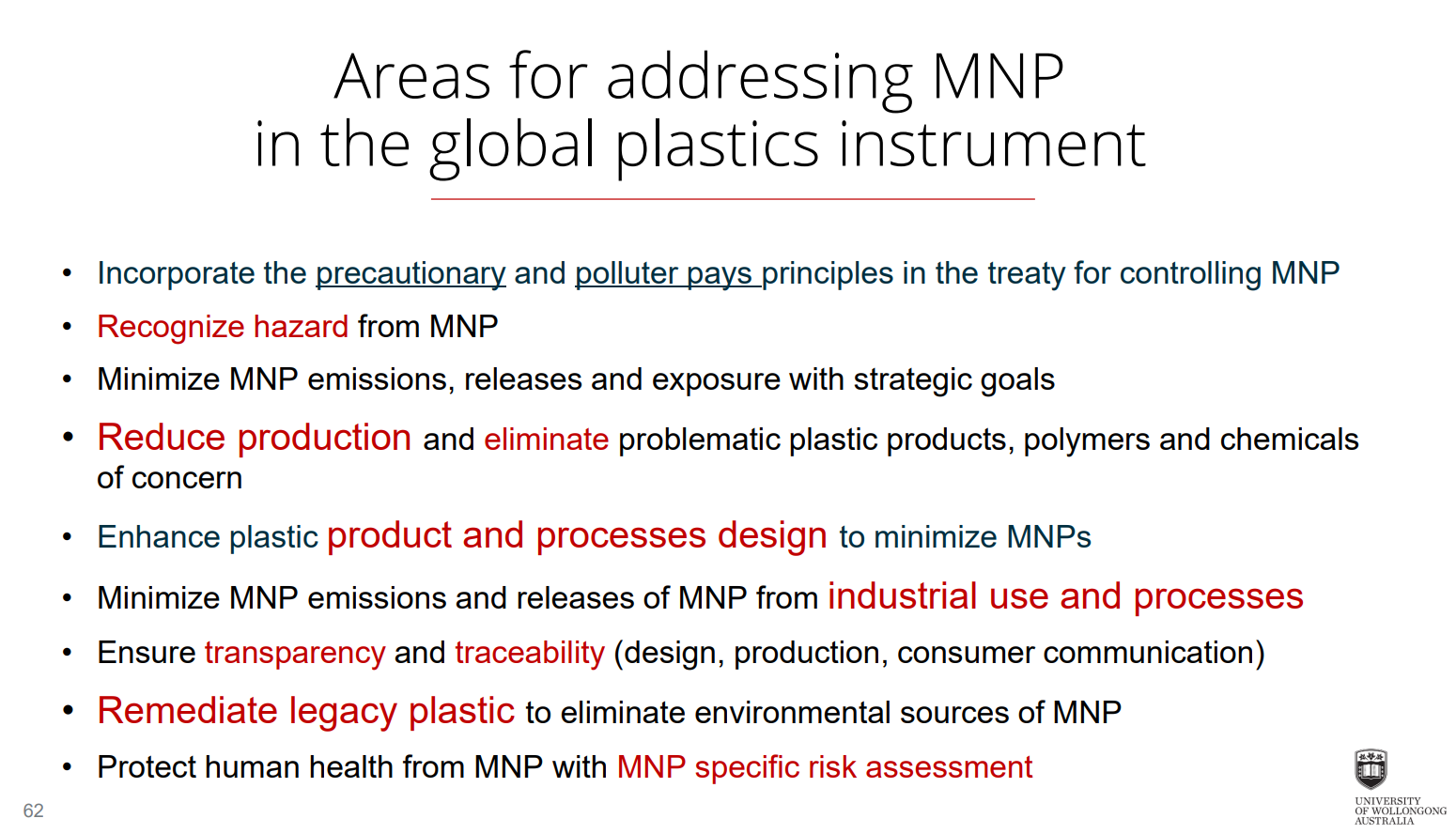
It’s essential to incorporate the precautionary and polluter-pays principles in the treaty to control MNPs.
- The potential health risks of MNPs are alarming, although strong evidence remains lacking in some areas. The majority of health costs associated with MNPs fall on society, while producers typically bear only a small portion.
- To address this, it is proposed to include the precautionary principle in the preamble or objective, which would lower the burden of proof to control MNPs. Additionally, including the polluter-pays principle would help internalize the cost of MNP pollution.
- The co-chairs’ paper reaffirms the principles of the 1992 Rio Declaration but does not currently single out these principles.
It’s important to define strategic goals in the plastics instrument to minimize MNP emissions and releases.
- Emissions and releases present significant risks to occupational safety and consumer protection, and the saturation of MNPs in ecosystems is affecting health and productivity.
- Therefore, the paper proposes to agree on a goal to minimize MNPs, ultimately aiming for their elimination. A cap on plastic production is also crucial.
- The co-chairs’ paper in Article 7 references managing, reducing, and where possible, eliminating emissions and releases and specifies several MNP activities.
We need to reduce production and eliminate problematic plastic products, chemicals, and polymers of concern.
- Problematic plastic products contribute to the human and planetary burden of MNPs, and chemicals of concern in plastics enter the body via MNPs.
- The paper proposes to include treaty measures to eliminate products with intentionally added microplastics and other problematic plastics, minimizing MNP emissions by listing these in a treaty annex.
- The co-chairs’ paper includes a placeholder in Article 3 for developing measures and lists for banning and controlling plastic products and chemicals of concern.
The treaty must enhance plastic products and process design to minimize MNPs.
- Plastics break down into MNPs that enter the human body, releasing associated chemicals of concern.
- Proposed measures include redesigning plastics and processes to define design criteria for minimizing MNPs and setting regulatory thresholds for MNP releases using best-available technology and mitigation measures.
- The co-chairs’ paper provides an avenue to address this in Article 5, encouraging improved design and performance of plastic products.
The treaty should aim to minimize MNP emissions and releases from industrial use and processes.
- Industrial processes, from plastic production to recycling, contribute to MNPs and pose significant health risks for workers.
- Proposals include adopting the best-available technology to eliminate MNP emissions, specific worker safety provisions, and regulations for stack emissions and fugitive ground-level emissions.
- The co-chairs’ paper addresses this in Article 7, calling for measures to minimize microplastic emissions during plastic production.
Enhancing transparency of MNPs and associated chemicals is crucial.
- Consumers are not informed about MNPs or the chemicals within plastic products.
- The proposal suggests treaty measures for disclosing MNP shedding potential and associated hazards through labeling, creating emission and release profiles, and establishing MNP release and transfer registers for industrial and other processes.
- Article 3 of the co-chairs’ non-paper provides a placeholder for transparency and traceability of products and chemicals, while Article 5 encourages chemical composition transparency but does not mention MNPs specifically.
Finally, the treaty should protect human health from MNPs with dedicated measures.
- A growing body of evidence indicates the potential health impacts of MNPs.
- Proposed measures include developing an inventory of prioritized high-risk MNP sources, monitoring MNP levels in humans and the environment, and risk assessments better tailored to MNPs, moving from causality to correlation.
- The co-chairs’ paper partially addresses this in Article 9, which acknowledges human exposure to microplastics, and Article 19, which emphasizes the need to protect human health through ongoing monitoring.
The co-chairs’ non-paper provides numerous avenues to address MNPs, but more specificity is needed. This could include a global cap on MNPs as a strong measure, along with targeted measures from design to waste management.
Panel Discussion
Bart KOELMANS | Professor of Aquatic Ecology and Water Quality, Wageningen University
- Risk assessment can be thought of as a pizza with four crucial ingredients as risk assessment relies on essential components: risk assessment involves exposure, effects, and risk characterization, which rely on clear, effective communication.
- exposure assessment, effect assessment, risk communication & management & risk characterization.
- Risk thresholds, such as regulatory levels, can help determine if exposure poses a risk. While the precautionary principle is important, it’s also useful to incorporate mechanistic assessments and allow multiple assessment methods.
- How can this be achieved for complex mixtures like microplastics and nanoplastics? A possible approach has been conceptualized in a graph developed as part of the BRIGID project.
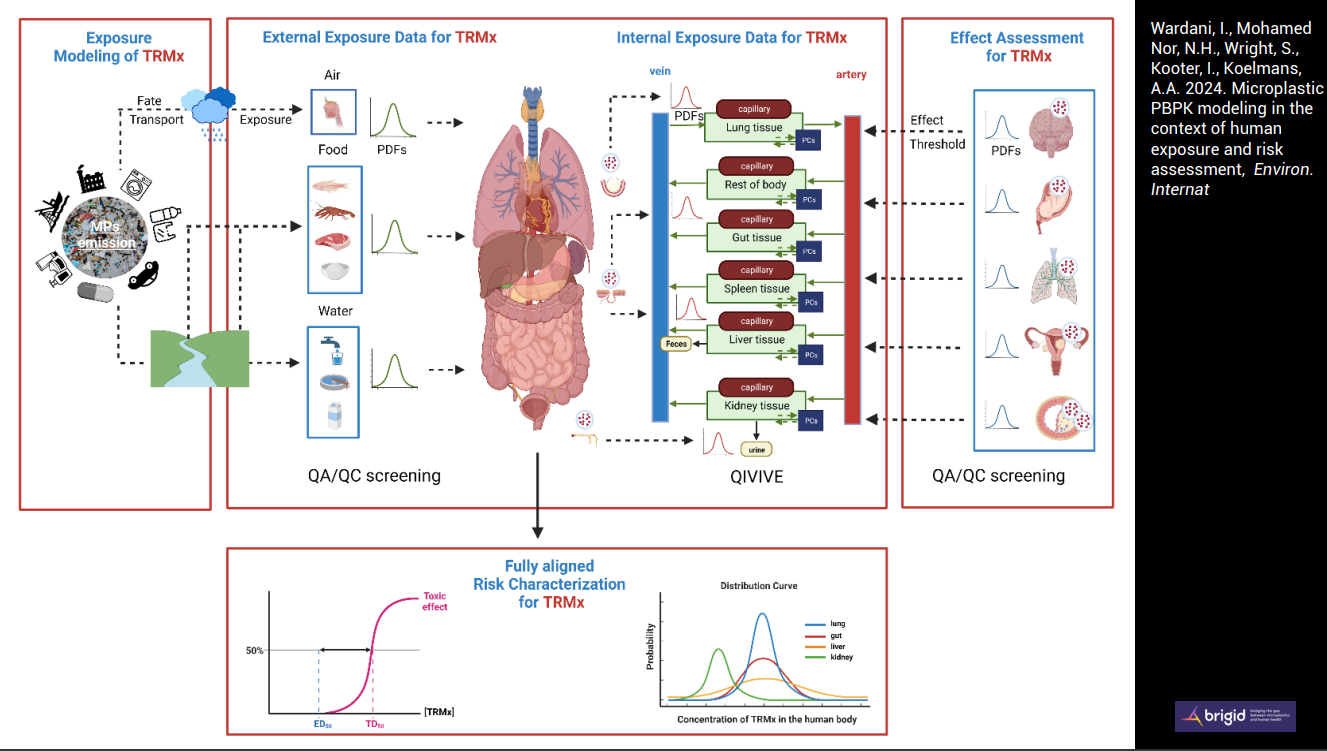
- Exposure modeling deals with emissions. Various activities and products produce emissions, resulting in a complex, diverse mixture.
- Emissions from various sources create diverse mixtures, making it challenging to define exposure since there is not one single particle type. Toxicologically relevant metrics, like inflammation-causing particles, can help assess hazards within realistic mixtures.
- Distributions: Current research projects aim to measure these distributions in food, air, and water to understand exposure levels.
- Particle behavior varies; some penetrate deeply, while others do not. Combining particle traits and human physiology allows predictions verified by measurements in human tissues.
- Effect assessment, including in vitro and in vivo tests, aims to identify thresholds where effects start, as certain particles may impact specific organs.
- Exposure and effect assessment coming together:
- Integrating exposure and effect data could yield a range rather than a single risk ratio.
- These distributions could be valuable to policymakers, regulators, and risk assessors for further developments in the field.
- Micro- and nanoplastics are complex, affecting bioavailability and bioaccessibility across organisms.
- MNPs are a particularly complex issue, as seen in this paper that reviews 20 years of research developments in microplastic science. Although measuring particles in humans is challenging, advances now allow for a standardized approach to exposure and biodistribution models linked to toxic effects.
- The framework is available, but populating it with high-quality data will take time—likely several years.
Elena BUZZI | Junior Environmental Policy Analyst, OECD
- The OECD Environment Directorate has been working for the past 5 to 7 years on policies to eliminate plastic pollution.
Implications if plastic production, consumption and waste management continue under business as usual:
- Without significant policy changes, plastic use and waste will continue growing, leading to 30 million tons of plastic waste entering the environment by 2040, up from 20 million tons in 2020. Microplastic emissions will nearly double, and waste burning or dumping will increase, exacerbating health and air pollution risks. Greenhouse gas emissions from plastics could rise to 2.8 gigatons, about 5% of total emissions by 2040. Immediate action is essential to mitigate these environmental and health impacts.
- OECD’s recent work suggests a viable path to eliminating plastic pollution through stringent, global policies.
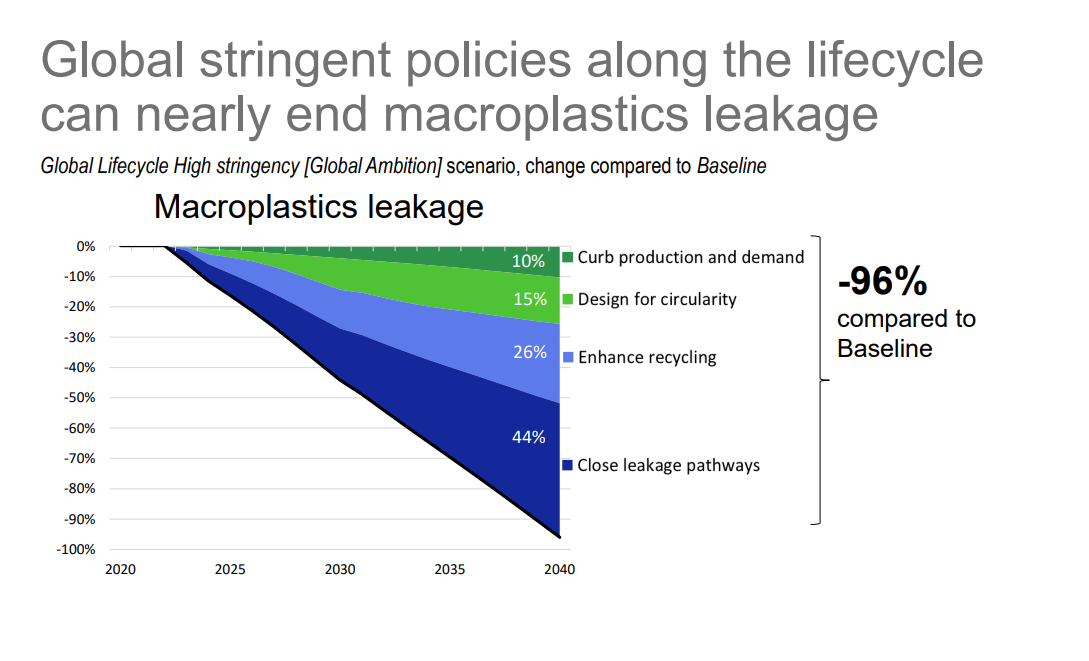
Components of an effective policy mix:
- Interventions in the upstream and midstream to :
- curb production and demand for plastics,
- improve the ecodesign of plastic products.
- This would account for about 25% of reductions in the release of plastics to the environment, mainly because they help keep products in use for longer and reduce waste streams.
2. Policies to improve the collection, recycling, sorting, and treatment of waste would contribute to another 70% of reduction in plastic leakage by 2040.
- Overall, a whole-of-life-cycle approach, if implemented globally with stringent policies, could come very close to ending the leakage of plastic waste to the environment by 2040.
- Microplastics is a complex part of plastic pollution.
- Many microplastics come from the degradation of plastic waste that is mismanaged, but emissions of microplastics during the production and use phase of plastic products.

- From a policy perspective, it is important to recognize that microplastic pollution requires a very different set of interventions than macroplastic leakage. Unlike macroplastics, microplastic emissions rise as countries develop due to increased plastic use.
- Policies must target emission sources alongside waste management improvements.
What can policymakers do to mitigate plastic pollution?
- Policymakers can mitigate plastic pollution by promoting research, particularly on the risks and cost-effectiveness of mitigation measures.
- While further research is needed, action should not be delayed, as sufficient evidence exists to reduce exposure and risks.
- A life-cycle approach focusing on reducing microplastic emissions and waste at the source is most cost-effective.
- Interventions like ecodesigning plastic products, phasing out harmful chemicals, and reducing vehicle use can also reduce microplastics.
- End-of-pipe solutions could also potentially be relevant to capture microplastics once they are released, particularly at pollution hotspots.
- The OECD’s recent findings align well with the report being launched today, particularly on the need for a whole-of-life-cycle approach to plastic pollution, the need to slow down production and demand for plastics, and the need to redesign plastic materials and products to reduce environmental and human health risks.
Andres DEL CASTILLO | Senior Attorney, Environmental Health Program, Center for International Environmental Law
- Treating microplastics solely as pollutants is misleading, as they also carry harmful substances like flame retardants, POPs, and unreacted monomers.
- A report on CBA’s sources of marine litter from 2021, highlights the significant microplastic pollution linked to offshore oil and gas activities, where microplastics are used in production and drilling processes—paradoxical since oil and gas are the primary source of plastic.
- The US election results could hinder global climate action, but plastic pollution presents an opportunity to accelerate climate goals. By 2050, plastic production could consume 31% of the remaining carbon budget, making it critical to act in line with the Paris Agreement.
- The OECD has defined plastic pollution in a broad sense, as emissions and risks resulting from plastic production, use, waste management, and leakage.
- CIEL is developing reports not only on plastics governance but also on microplastics, using a sectorial approach to show how science is developing and exposing the different hazards and exposure of microplastics.
- In agriculture, microplastics are used as carriers of pesticides and fertilizers that enter soils and threaten the soils themselves. There is also increasing evidence that microplastics are present in the atmosphere and breathed in by humans, and the EU is addressing this issue.
- One of the main conclusions is that more plastic production means more pollution. A study from April this year shows how the increase in plastic production is linked to pollution, including microplastics.
- If we do notake action, the volume of airborne microplastics and toxic emissions will follow the expected rise in plastic production.
- Some clarity is needed about polymer plastics, plastic pellets and microplastics, in order what kind of policies are needed. CIEL offers a compilation of key terms from different multilateral environmental agreements and the EU’s legislation, defining microplastics from a legal perspective.
- There is a historical evolution of how governments have viewed microplastics in the negotiations on the plastics treaty. There have already been three versions of the draft and three versions of the chair’s views on the potential structure of the treaty. In Nairobi and the compilation text, there are standalone provisions for microplastics and nanoplastics, which is not the case in the versions presented as non-papers, but it does not mean they are excluded.
- In the compilation text, there are many references to microplastics, sometimes contradictory, but sometimes complementary.
- Recognizing that microplastics are linked to plastic pollution, which comes from the UNEA resolution 5/14 and is absent in the current non-paper but is in the compilation text.
- In the scope, there are contradictions where sometimes microplastics are included, but other times there are brackets for areas that could be excluded. This shows how diverse countries’ policies on this issue are.
- There also are references to microplastics in the financial and trade measures sections.
- In the chair’s paper, microplastics are mentioned in three parts: the definition, the article related to emissions and releases, and in the article on health, which is weak because it provides non-binding measures.
- From a legal perspective, it is important to mention that under the UNCLOS Convention, countries already have obligations related to pollution prevention, reduction, and control of the marine environment.
- There is a differentiation between reducing toxins and harmful substances, especially persistent ones. The obligation is to minimize pollution to the fullest extent.
CIEL’s Recommendations:
- Consider the precautionary principle, access to information, and legally binding measures to ban and reduce the production and release of microplastics and plastic-associated chemicals.
- Binding targets for the global phase-out of microplastic use in agriculture, a sector where this is feasible.
- Use a full life cycle approach for plastics, regulating upstream parts like fossil fuel extraction, material production, monitoring, and reporting provisions.
- Including indicators on human health protection, such as biomonitoring of plastic chemicals, microplastics, and nanoplastics, is essential.
Documents
- Analysis of governments’ authority to mitigate micro- and nanoplastic releases through closed-loop design to inform the global plastics treaty negotiations | Karen Raubenheimer, Niko Urho, Mary Ellen Ternes, Jeffrey Seay, Derek Orndoff, Chideraa Ndubuisi and Lauren Maunder | University of Wollongong | 6 November 2024
- Presentations made during the event
Links
Next on the Road to Busan Series
Road to Busan | Plastics Treaty Talks: Designing an Effective Treaty
07 November 2024 | 16:00–17:30 CET | Online