
Event Conference
Launch and Panel Discussion | Status, Potentials and Risks of Chemical Recycling of Waste Plastics | Basel OEWG-14
26 Jun 2024
13:15 – 14:45
Venue: CICG | Room B & Online Webex
Organization: Switzerland, Geneva Environment Network
This side event to the fourteenth meeting of the Open-ended Working Group of the Basel Convention on the Control of Transboundary Movements of Hazardous Wastes and their Disposal (Basel OEWG-14), launching a new report "Status, Potentials and Risks of Chemical Recycling of Waste Plastics", a study on the evaluation of approaches for the feedstock recycling of plastic waste commissioned by Switzerland, was organized within the framework of the Geneva Beat Plastic Pollution Dialogues.

About this Event
Chemical recycling aims to convert plastic waste into chemicals or raw materials for the chemical industry using different technologies such as solvolysis, liquefaction, pyrolysis, and gasification. It could reduce primary plastic production and climate-affecting emissions and detoxify material flows. However, its feasibility depends on specific conditions and its ability to treat heavily contaminated waste fractions is not sufficiently backed up by evidence. Chemical recycling also lacks an internationally recognized or legal definition. Currently, the technical feasibility and economic viability are not proven and the environmental assessment is ambiguous.
Despite high expenditure associated with the preparation of input materials and the cleaning of the generated products, operating problems and the limited availability of suitable input materials for the chemical recycling processes, a large number of processes is currently under development and corresponding pilot plants are realized. Associated opportunities and risks depend on the specific environment, the general conditions of the respective countries, and the respect of plant safety and emission standards, which prejudge the avoidance of direct negative impacts of chemical recycling process operation on the environment.
The establishment of structures for chemical recycling of plastics in countries with insufficient infrastructures and governmental controls to ensure environmentally sound operation raises concerns as it could result in uncontrollable environmental risks. Also, it could encourage the export of plastic waste for recycling to such countries, with the risk of ending up in the environment.
Given that an end-of-waste criteria for products from chemical recycling and allocation rules for recycled content of the products are defined to ensure equal opportunities for all chemical recycling plants as well as planning security for companies; and that the operation of chemical recycling plants follows established rules of engineering and principles of environmental and emissions legislation, chemical recycling processes may contribute to the recycling of plastic waste. However, excessive subsidies for chemical recycling of plastics are currently not justified.
This side event to the Basel OEWG-14 organized in the framework of the Geneva Beat Plastic Pollution Dialogues launched “Status, Potentials and Risks of Chemical Recycling of Waste Plastics“, a study on the evaluation of approaches for the feedstock recycling of plastic waste commissioned by Switzerland. It provided a platform for stakeholders to discuss chemical recycling of waste plastics and to identify potential benefits, risks and experiences.
A light lunch was provided at this event.
Geneva Beat Plastic Pollution Dialogues

The world is facing a plastic crisis, the status quo is not an option. Plastic pollution is a serious issue of global concern which requires an urgent and international response involving all relevant actors at different levels. Many initiatives, projects and governance responses and options have been developed to tackle this major environmental problem, but we are still unable to cope with the amount of plastic we generate. In addition, there is a lack of coordination which can better lead to a more effective and efficient response.
Various actors in Geneva are engaged in rethinking the way we manufacture, use, trade and manage plastics. The Geneva Beat Plastic Pollution Dialogues aim at outreaching and creating synergies among these actors, highlighting efforts made by intergovernmental organizations, governments, businesses, the scientific community, civil society and individuals in the hope of informing and creating synergies and coordinated actions. The dialogues highlight what the different stakeholders in Geneva and beyond have achieved at all levels, and present the latest research and governance options.
Following the landmark resolution adopted at UNEA-5 to end plastic pollution and building on the outcomes of the first two series, the third series of dialogues will encourage increased engagement of the Geneva community with future negotiations on the matter.
Basel Convention OEWG-14
The fourteenth meeting of the Open-ended Working Group will take place from Tuesday, 25 June to Friday, 28 June 2024, with pre-meetings, including Bureau and regional meetings, to be held on Monday, 24 June. The Working Group is expected to progress items in its work programme, with topics to include:
- A draft renewed strategic framework
- Work to improve the functioning of the prior informed consent procedure
- Technical guidelines on Persistent Organic Pollutants, e-waste, waste lead-acid batteries and used and waste pneumatic tyres
- Practical guidance on the development of inventories of waste for certain waste streams
- Plastic waste
- Providing further legal clarity
- Work of the Implementation and Compliance Committee
- Basel Convention Partnership Programme
Speakers
By order of intervention.
Walter SCHULDT
Minister, Permanent Mission of the Republic of Ecuador to the UN Office and other international organizations in Geneva

Elias REHMANN
Scientific Officer, Municipal Waste Section, Federal Office for the Environment, Switzerland

Peter Georg QUICKER
Study Author | Professor, Unit of Thermal Processes and Emission Control in Waste Management and Recycling, RWTH Aachen University

Julia ROETTGERDING
Policy Officer, Directorate-General for Environment, European Commission

Santos VIRGILIO
Technical Advisor, Ministry of Environment, Angola

Lee BELL
Technical and Policy Advisor, IPEN

Jon KHOO
Environmental Policy Lead, the LEGO Group

Siddika SULTANA
Executive Director, Environment and Social Development Organization (ESDO)

Diana RIZZOLIO
Coordinator, Geneva Environment Network | Moderator
Highlights
Summary
Opening Remarks
Walter SCHULDT | Minister, Permanent Mission of the Republic of Ecuador to the UN Office and other international organizations in Geneva
- This report will be instrumental for the current discussions at the Basel Convention OEWG-14 and other processes, including the negotiations of the legally binding instrument on plastic pollution.
- This report is also a tool for the science-policy interface discussed last week at the third meeting of the open-ended working group (OEWG) to prepare proposals for the science-policy panel and in BRS.
- In BRS, there was a wide and clear recognition of the importance of the best available science as the basis for decision-making, and of the need for proper space for adequate interaction between scientists and actors such as diplomats and negotiators in the different processes of policy making at all levels—international, regional, national.
- Such interaction must be transparent, with the purpose of sharing experiences, information, best practices, and lessons learned. It is particularly important for initiatives or processes that are still in a pilot or developing process where risks are still not fully certain or manageable, and where there is certainly a lack of regulation, measures, policies, and control of the implementation of such policies and regulation.
- This study is relevant to the plastic pollution treaty that Ecuador is currently chairing. The United Nations Environment Assembly resolution 5/14 already established the importance and even the possibility of creating a mechanism to provide policy-relevant scientific and socioeconomic information and assessment related to plastic pollution. It also promotes research and development of sustainable, innovative, and efficient approaches, which could be related to chemical recycling, to increase knowledge through awareness raising, education, and to improve understanding of the global impact of plastic pollution on the environment. The resolution also planned to consider the best available science, traditional knowledge, and best practices from all actors. Ecuador supports this approach and the use of those tools, not only in the process of the INC but also in the future design of the treaty and of the different bodies.
- We commit to use the study and report in the negotiation process of the INC, but also in developing national action plans
- While the 56th session of the Human Rights Council is parallelly taking place in Geneva, a report presented today highlighted the need for investors to consider the risks their activities and investments pose to the environment. It emphasized the importance of incorporating an environmental, social, and governance (ESG) approach to assess the potential impacts of their business activities and investments on human rights and the environment, including the right to health. The report called for states and investors to develop policies and regulations that include this approach. This study could provide insights into the economic costs and benefits of procedures such as chemical recycling, as well as the potential risks and necessary measures to address the impacts of these activities.
Elias REHMANN | Scientific Officer, Municipal Waste Section, Federal Office for the Environment, Switzerland
- Pollution from plastic production, use, and disposal is a global challenge. While it is a priority to look at the full life cycle, to reduce the amount of plastics that we produce and to reuse plastic products to keep them in use as long as possible, there will always be some part that is turned into waste. Increasing the recycling of plastic waste is one aspect of tackling plastic pollution.
- Chemical recycling of plastics refers to technologies that can break down the polymer chains (the molecules constituting plastics) to break them down into smaller molecules. Those can then be used again to make plastics or other chemical products.
- However, chemical recycling is controversially discussed. Some groups see it as a contribution to a more circular economy and enabling more recycling of plastic waste and the reduction of primary plastic production. Others say that the technology does not perform well, is not feasible on an industrial scale, creates lots of pollution, and thus in the end, does more harm than good to people and the environment.
- To assess the environmental impacts of chemical recycling, it should be compared to the other alternatives for handling plastic waste, such as mechanical recycling, incineration, or landfilling. The outcomes of such a comparison differ from one country to another, depending on the national context of waste management and the facilities available.
- The discussions on the environmentally sound management of plastic waste take place within various committees such as the Basel Convention or the negotiations for an international legally binding instrument to end plastic pollution. To support those ongoing discussions with science-based facts and an evaluation of the role that chemical recycling can play in the management of plastic waste, Switzerland commissioned this study. The aim was to get an overview of the state of technology, governance, and environmental assessments.
- This panel today will hopefully allow to get a clear picture of what chemical recycling is, what it can or cannot do, what its environmental effects are, and what its place could be in a circular economy and in turn help to inform policymakers and observers about chemical recycling and its potential status within the environmentally sound management of plastic waste.
Peter Georg QUICKER | Study Author | Professor, Unit of Thermal Processes and Emission Control in Waste Management and Recycling, RWTH Aachen University
- The report focuses on three main topics: technologies, environmental impact, and governance.
Technologies
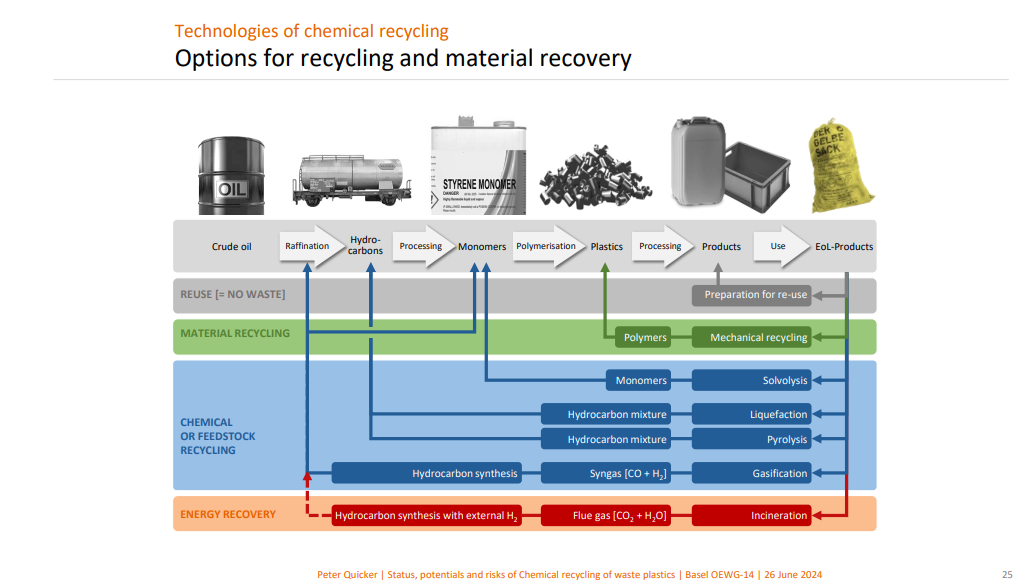
- The normal lifecycle of plastics goes through different processes and stages up to the end-of-life waste. There are different options for reuse, mechanical recycling, and chemical recycling.
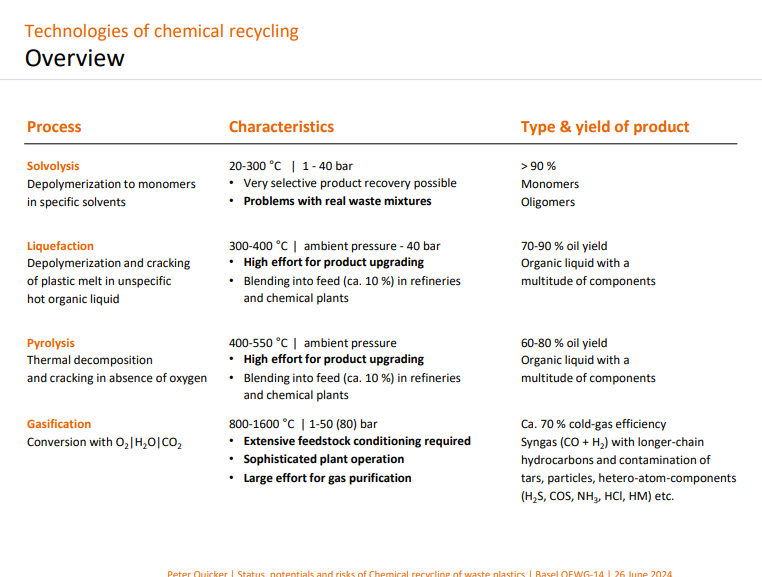
- There are four general approaches for chemical recycling, and while not included in the scope of the study the use of fuel gas of incineration and create hydrocarbons from this could be a fifth one. These four processes assessed in the study are solvolysis, liquefaction, pyrolysis, and gasification.
Solvolysis
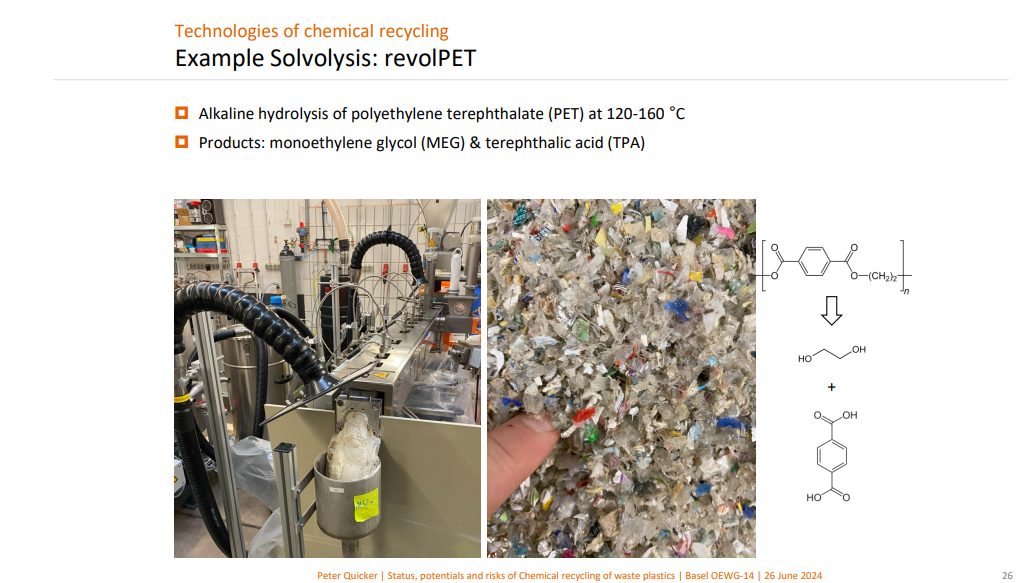
- The example of the revolPET facility addressing polyethylene terephthalate (PET), exemplifies processes tackling one single plastic. While there are contaminants and other plastics in the input feed, the process is relatively homogeneous.
- PET is broken down to monoethylene glycol and terephthalic acid, and in the best case, used again. We must get rid of all particles and contaminants when this material is dissolved in liquid. Then, filtering is necessary but often problematic because when there are too many contaminants, filters get blocked. What works very well in the laboratory with homogeneous material is difficult to transfer to waste mixtures in the industry.
Liquefaction
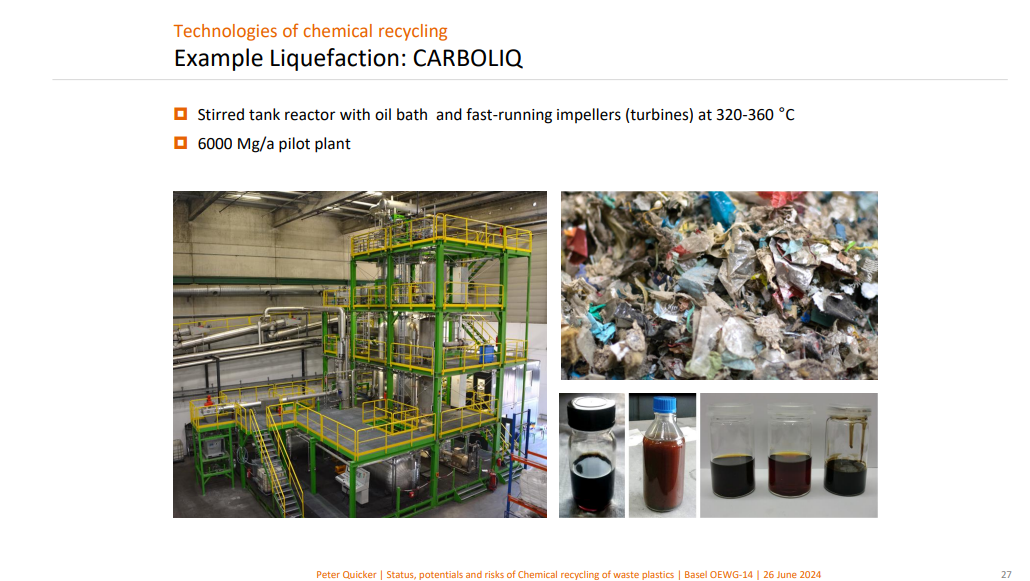
- Liquefaction means melting the plastic in an oil bath at temperatures of about 300 to 400 degrees.
- The example of CARBOLIQ, a pilot plant in Germany that operates by melting typical input materials, refuse-derived fuels and plastics, and taking out solid residuals.
- The resulting product requires significant effort to process and to bring it back into the circle. They have high sulfur content, metal acid content, water content, and particles, which all pose problems.
Pyrolysis
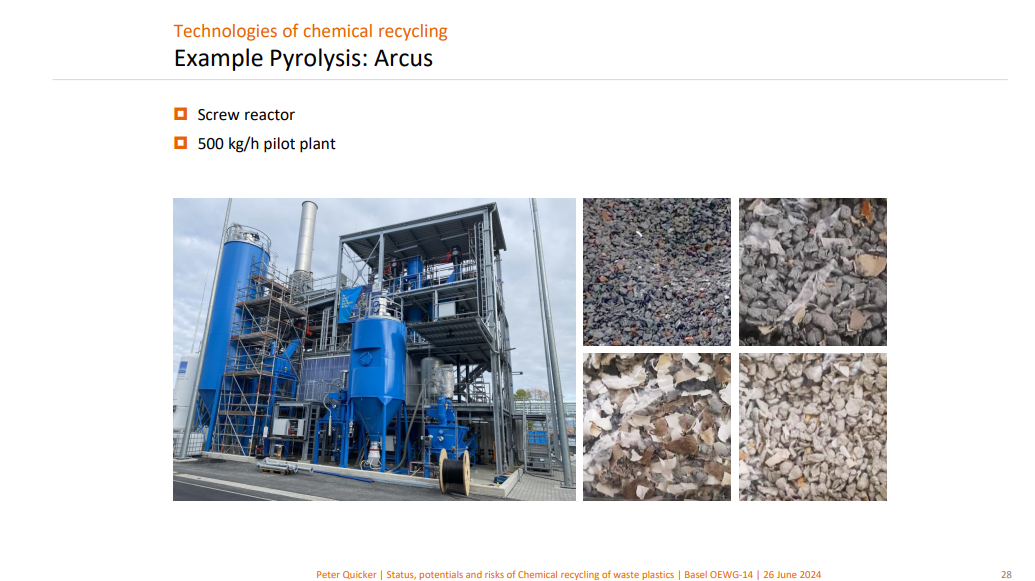
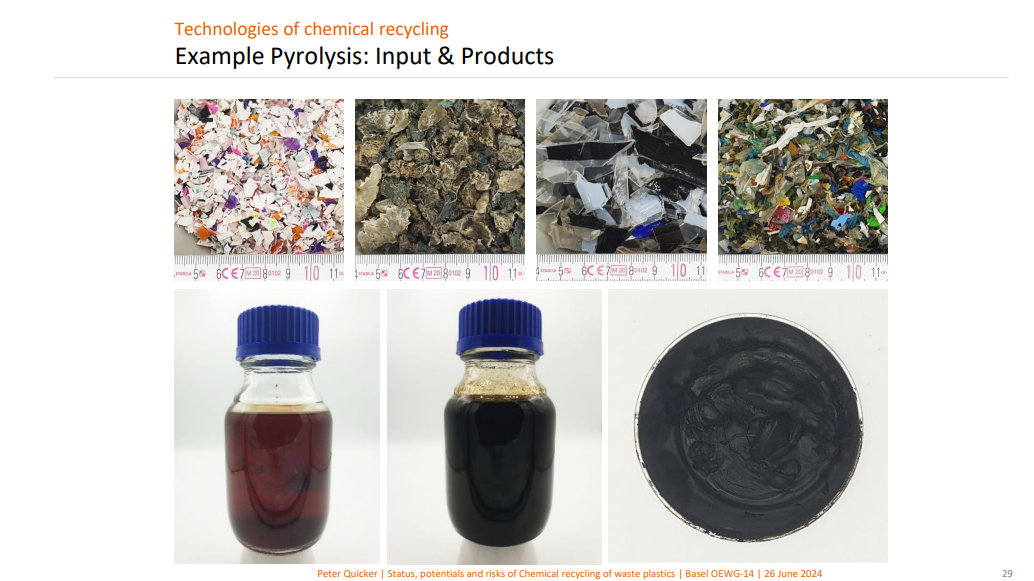
- There is a new pilot plant located in Frankfurt, that deals with 500 kilograms per hour. Typical input materials are mixed fractions, which is essential for pyrolysis and liquefaction as they can use mixed plastics, unlike solvolysis which requires homogeneous fractions.
Gasification
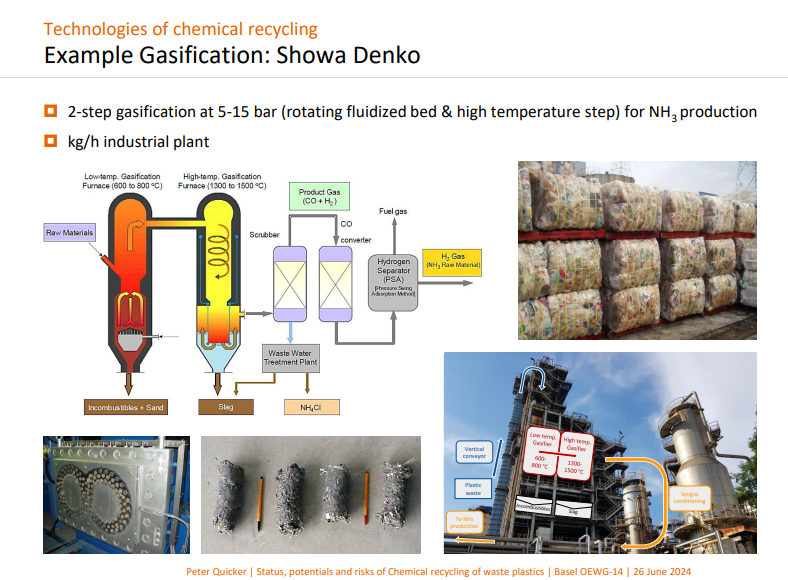
- Gasification is the harshest process and the only real industrial process that I can show for the chemical recycling of plastics. It involves gasification in a rotating fluidized bed followed by high-temperature gasification up to 1500 degrees, operated under pressure.
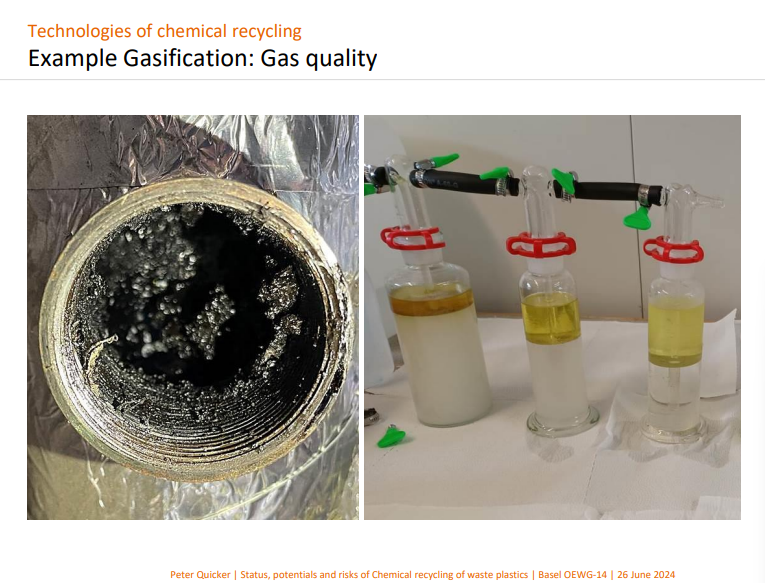
- The following phase, requiring a significant effort, is to clean the gas to produce ammonia. For an adequate preparation of the material, good quality is necessary to then proceed to extrusion and metal removal. These are then made into agglomerates or briquettes. The gas, hydrogen and carbon monoxide only, contain tar and organics. Cleaning the gas to achieve good quality is a significant problem.
Environmental Impact of Chemical Recycling
- Potential risks from chemical recycling plant operations can vary based on the strengths of environmental regulations. Where these are strong, these processes should pose no significant harm to the environment, comparable to other industrial plants. However, in countries with insufficient or uncontrolled waste management, this may cause problems due to uncontrolled contaminants, especially in small-scale installations.
- There are potential benefits and risks. Chemical recycling, especially thermochemical processes, in contrast with mechanical recycling, could remove pollutants during recycling processes, which could be significant in the future. However, no sufficient life cycle assessments (LCAs) or practical data is available right now to confirm these ecological advantages. The fate of residual materials is not fully discussed (20-50%), these residues must be incinerated or landfilled, which incurs costs and effort.
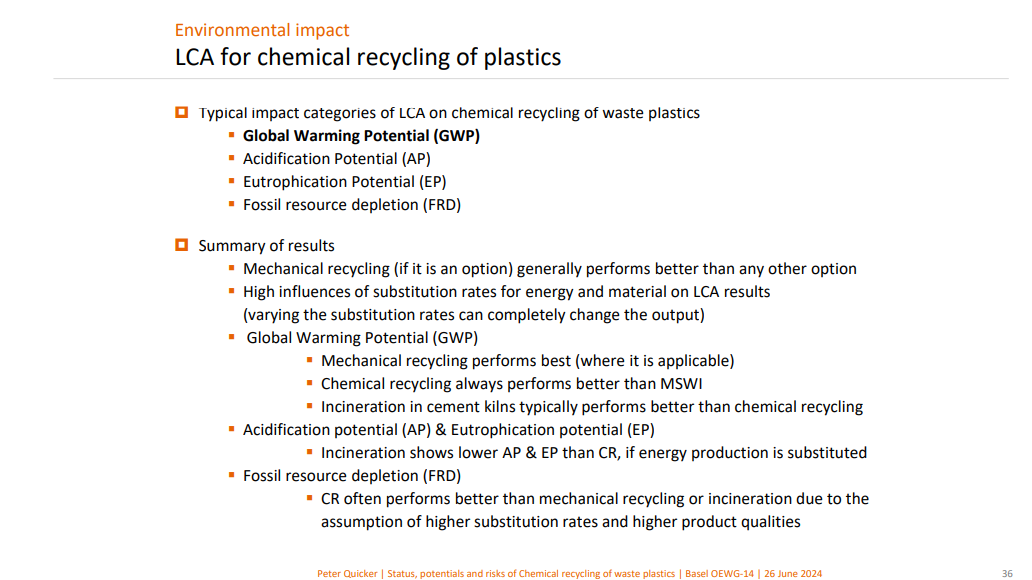
- Looking at LCAs, we consider four impact categories:
Governance
- Currently, no country has yet established specific legislation on chemical recycling. The chemical industry considers chemical recycling essential as part of the three pillars to reach climate neutrality. However, environmental NGOs are concerned about the impacts of chemical recycling and are expecting transparency, environmental downcycling, etc.
- Expected impact from chemical recycling at a large scale: if we have installations for several hundred thousand tons of plastics, there is a danger that chemical recycling may cannibalize mechanical recycling. As NGOs often say about waste incineration, “the beast has to be fed,” and the same could apply to chemical recycling.
- Chemical recycling is not recommended for countries with low or uncontrolled waste management. There is a risk of material ending up in improper disposal routes, as we have seen with plastics for mechanical recycling in South East Asia. Additionally, there is the risk of low environmental standards.
- We need to place chemical recycling within the waste hierarchy. If the products from processes like solvolysis, pyrolysis, or gasification are used for material, it is recycling, if they are used for fuel, it is energy recovery. The distinction between product usage is crucial because the processes are the same, but the outcomes are different.
- The mass balance approach is a significant discussion point. When chemicals or plastics are put into a chemical or petroleum refinery, it is impossible to follow the molecules. A mass balance approach must be used. For example, if you put 10% pyrolysis oil and 90% naphtha into the refinery, every product contains on average 10% recycled plastic and 90% naphtha. Industry prefers to say that all recycled material is located in the polymer and that in the rest when it is not interesting, there is naphtha.
- Other options include proportional allocation, where each product group contains, for instance, 10% recycled and 90% naphtha. The “polymers only” approach, discussed intensively now, suggests shifting everything within the polymers to special products. Finally, the fuel exemption allocates recycled content to the polymer, while 10% of the fuel is from recycling and the rest is naphtha.
- Regarding governance and legal frameworks for chemical recycling, we need legislation similar to waste incineration. This should be included in the BREF process when relevant plants and emissions are significant. Emissions from energy recovery of by-products should be treated like waste incineration with stringent limits.
- We urgently need an internationally recognized and legally binding definition of chemical recycling. Fuel use should be excluded, and end-of-waste criteria for processes like solvolysis and pyrolysis must be established. We also need to define the mass balance approach to be used.
Panel Discussion
Julia ROETTGERDING | Policy Officer, Directorate-General for Environment, European Commission
- The European Strategy for Plastics in the Circular Economy was adopted in 2018 to improve the economics and quality of recycling and to curb plastic littering. This strategy later fed into the EU Circular Economy Action Plan and the European Green Deal. It includes the goal of reaching 10 million tons of recycled plastics in the EU by 2025 and introducing recycled content requirements in key sectors such as packaging, construction materials, vehicles, and textiles. This aligns with a recent study highlighting packaging as a significant sector with potential for chemical recycling.
- Key to the implementation of the plastics strategy has been the Single-Use Plastics Directive, the first EU legislation setting mandatory targets for recycled content in plastic beverage bottles by 2025. Earlier this year, a preliminary agreement was reached on the upcoming Packaging and Packaging Waste Regulation, which will introduce recycled content requirements for all plastic packaging by 2030.
- Looking at chemical recycling, particularly feedstock recycling such as pyrolysis and gasification, several advantages and disadvantages are observed.
- Advantages include the potential to create recycled material of virgin-like quality, especially for polymers where mechanical recycling cannot achieve such quality, such as food contact applications (not authorized by EFSA). Chemical recycling can process mixed and contaminated plastic waste streams that cannot be mechanically recycled to sufficient quality and generally has lower environmental impacts than incineration.
- Disadvantages include lower yields compared to mechanical recycling, high energy consumption, greenhouse gas emissions, and the risk of cannibalizing mechanically recyclable waste. Therefore, the stance is that chemical recycling should complement mechanical recycling as long as it imposes less environmental burden than incineration and virgin plastic production. This is supported by a study from the Joint Research Centre, which found mechanical recycling preferable to chemical recycling, and chemical recycling better than incineration.
- We want chemical recycling to contribute to the EU circular economy goals as a supplement to mechanical recycling. It is reassuring to see that this line is coherent with the findings of the study that Professor Quicker presented.
- The Single-Use Plastics Directive will be the first to set mandatory recycled content targets and establish calculation rules for chemically recycled content through an implementing act planned for adoption soon. Importantly, free allocation of credits for recycled content among different outputs of chemical recycling will not be allowed, as processing waste into fuels is not considered recycling under the EU Waste Framework Directive.
- The proposed rules include a “fuel use excluded allocation rule”. We have been discussing this rule, along with the stricter polymers-only and proportional allocation rules, extensively with our member states and stakeholders over the past two years. The Commission has not yet endorsed its official position, but our latest draft of the implementing act proposes a fuel-use-excluded allocation rule combined with requirements on chemical traceability. This means that recycled content can only be allocated to outputs that can be obtained from the waste input based on the chemical reactions. If a specific output cannot be obtained from the waste input, it should not be allowed to have any recycled content attributed to it.
- It is also important to note that the transfer of credits for recycled content across different sites of companies or across companies is not considered admissible and will not be allowed.
- The upcoming Packaging Regulation will establish additional sustainability criteria for plastic recycling technologies and calculation rules for recycled content, considering factors such as output quality, input waste availability, energy consumption, greenhouse gas emissions, and other environmental impacts. These criteria and rules are foreseen for the end of 2026.
Santos VIRGILIO | Technical Advisor, Ministry of Environment, Angola
- The common narrative about chemical recycling is that it remains controversial and is not universally proven to be beneficial.
- In developing countries, which are often net importers of plastic products and sometimes used as dumping sites by developed countries, we face significant challenges. These include technological limitations, lack of technical expertise, and weak legal frameworks. Considering the socio-economic conditions, we focus on the consequences of chemical recycling and raise concerns similar to those expressed by experts who are still doubtful about its benefits and point out health issues.
- Reflecting on our continent’s reality, several incidents come to mind, such as the 2006 toxic waste dumping in Abidjan, in Nigeria, and similar incidents in Tunisia involving waste from Italy. These incidents are known, but there are undoubtedly others occurring across the continent.
- Even without definitive evidence of chemical recycling’s benefits, we already face significant problems. Lagos, Nigeria is home to the world’s largest electronic waste dumping site, exposing many people to dangerous products, including plastic waste from electronics. We do not see a clear path or guidance that suggests chemical recycling is a viable option.
- Governments in our regions are confronted daily with solving pressing socio-economic issues. Often, solutions from the developed world are attractive because they are well-conceptualized and promise job creation. But if we’re trying to solve the problem of plastic and we apply a technology or process that creates additional problems, it becomes highly challenging. Reports from the US indicate that even developed countries face challenges with chemical recycling plants. Given our legislative weaknesses, technological gaps, and lack of technical expertise, chemical recycling does not seem to be an advisable option for us.
- It is essential to stress that chemical recycling remains a highly challenging and potentially problematic solution for developing countries like Angola.
Lee BELL | Technical and Policy Advisor, IPEN
- Chemical recyling is significant for all delegates to consider, particularly in the context of the Plastics Treaty negotiations.
- IPEN with Beyond Plastics released a report on the same topic around the same time as Professor Quicker’s report. We share some views on chemical recycling while diverging partially on others. Particularly in the US context but also elsewhere, chemical recycling often serves as a marketing and public relations tool to avoid regulatory production cuts that might occur under the International Plastic Treaty.
- The process involves high levels of hazardous waste production and energy consumption, yielding very little useful material. These technologies have a very long history of failure; they have been around for decades, and used in different configurations and formats. Their application to mixed plastic waste has not been as successful as marketing information would suggest.
- The high commercial risk is combined with companies operating these facilities or trying to set them up by looking for high levels of public subsidies. In particular, pyrolysis, one of the main technologies being driven forward, has significantly contaminated outputs and a low yield. The hydrocarbon mix it produces often contains dioxins, polyaromatic hydrocarbons, and many other contaminants that are potentially a human health exposure threat. This also makes it very difficult, if not impossible, for it to be processed through steam crackers toward polymer production unless it is cleaned up significantly, which adds great costs and generates further hazardous waste.
- Therefore, it is necessary to blend small amounts of the pyrolysis output with large amounts of virgin naphtha to produce recycled plastic. This effectively eliminates any sense of circularity, as the chemical recycling output is highly dependent on further fossil fuel and chemical extraction and production. It’s not a pathway out of the linear model we currently have in relation to petrochemical and plastic production. Many solvolysis models also have a hazardous chemical additive waste stream because the nature of solvolysis is to purify waste plastics and separate the useful monomers and polymers from the plastic matrix. To do that, you must remove the hazardous chemical additives, which become a waste stream.
- There is a high risk of driving plastic waste exports to developing countries with poorer regulations, which may lead to emission impacts and hazardous waste risks to public health. Setting up these facilities in developing countries may lead to arguments that you can export under different aspects of the Basel Convention for recycling. We have seen no evidence that this represents environmentally sound management of plastic waste and a lot of evidence to the contrary.
- The technical details of our report and analysis, which was based on the 11 constructed chemical recycling facilities in the US, shows that our views on chemical recycling are supported by Lewis Freeman, the former vice president of government affairs for the Society of Plastics Industry, now called the Plastics Industry Association. He agrees that chemical recycling largely is a marketing deception, particularly in the US context.
IPEN’s view on the report
- It is a very important contribution to the field, as it explicitly raises critical issues about hazardous residues, the need for their treatment, and the lack of attention to this treatment in nearly all life cycle assessments of chemical recycling. Unverifiable LCAs claim an ecological advantage compared to other plastic waste management on existing practical data, which is very limited.
- There is a risk to countries with limited regulation, enforcement, and infrastructure of chemical recycling operating in a poorly controlled manner, leading to exposure and risk from emissions and waste. There is also a risk that countries will experience an increased flow of plastic waste trade for the purpose of recycling.
- The report raises critical issues about commercial viability, public subsidies, and mass balance accounting for recycled content: “The technical feasibility and economic viability is not proven, and the environmental assessment is ambiguous. No excessive subsidies should be provided for chemical recycling of plastics, as there is a risk to lock in on disadvantageous processes and infrastructure.”
- Chemical recycling has had a history of commercial failure. The plastics industry is seeking to externalize its costs through public subsidies while reducing environmental regulation of the technology, particularly in the US. They want to classify it as manufacturing technology and not waste management technology. The plastics industry is seeking public subsidies in a way that signals a lack of commercial confidence from themselves in the technology and its ability to contribute significantly to ending the plastics crisis.
- We agree that the polymer-only approach – recycling credits, should only be allocated to outputs of chemical recycling that go to plastic recycling and not to other chemicals or products, and certainly not to fuel. Even the polymer-only model does not resolve the issue of claims of inflated recycled content in products that contain little or no recycled content and the consequent threat to public confidence in recycling.
Jon KHOO | Environmental Policy Lead, the LEGO Group
- The LEGO Group is one of the largest toy manufacturers globally, which entails an extensive use of plastics. We have been tracking the UN Plastics Treaty and are a member of the Business Coalition for a Global Plastics Treaty. In our view, the treaty remains a once-in-a-lifetime opportunity to set a course to end plastic pollution and build on mechanisms such as the Basel Convention.
- As the LEGO Group, we are in the same position as any other manufacturer, trying to make responsible choices on the materials we use, the products we design, and what happens at the end of life. At the LEGO Group, we call that being part of our planet promise. Our ambition is that by 2032, we will make all of our products from more sustainable and circular materials.
- When it comes to chemical recycling, our current view is that it is not a magic bullet, but perhaps it does have a role to play in the circular economy if the right checks and balances are in place. We believe it may have a good application for materials that are either difficult to recycle or where using mechanical recycling leads to a loss of quality. An example for us would be ABS, what our bricks are often made of. We want to create durable products that can be used for many years, reused, and then only considered for recycling, for instance through chemical recycling when necessary. We are aware of the concerns and criticisms in relation to chemical recycling being used for greenwashing or circular washing, and we worry about this too. We are held accountable by our customer base and all the stakeholders we interact with.
- We welcome the study as a manufacturer because it helps further the debate, with the case studies particularly helpful and a good reality check on where chemical recycling currently stands. It is only in its early days and is not a developed field. That is why the LEGO Group cautions against viewing it as a magic bullet or solution—it certainly is not that. We agree with the report that there is a need for careful scrutiny and better data to allow manufacturers, producers, and countries to make better decisions.
- We agree that chemical recycling plant operations need to be very carefully considered when thinking about environmental health, human health, and the risk of dumping when circularity doesn’t work, especially in countries that do not have the infrastructure or monitoring. Perhaps there is something within the plastic treaty sections to ensure good knowledge transfer and awareness of this.
- The WWF position paper on chemical recycling implementation principles is an additional useful resource on the topic, which we use as a reference point in terms of how we think about it at the LEGO Group and how it changes our day-to-day decision-making. We think very much in terms of hierarchies when it comes to the circular economy. We know that designing a durable product is better than the next phase of having to reuse it, which is better than the next phase of having to recycle it. In the same way, with chemical recycling, we operate a similar hierarchy: for us, dissolution is better than depolymerization, which is better than pyrolysis. In agreement with many people today, we see incineration and waste-to-fuel as not desirable. They should be defined as energy recovery, not recycling.
- As a manufacturer, we want to make responsible choices. We want clarity via rules and regulations. Mass balance has been mentioned today, and we would want to see both physical and chemical connections to ensure authenticity and transparency. We are also keen to listen to scientists, NGOs, and innovators alongside chemical recyclers. We need critical friends on both sides of this debate. We see the complexity and navigate it alongside you all. We do feel chemical recycling has a role to play, but we need to be careful in assessing that, looking at the hierarchies we should follow, and making informed choices that work for both people and the planet. At the LEGO Group, we owe it to the next generation to build a better future.
Siddika SULTANA – Executive Director, Environment and Social Development Organization (ESDO)
- The report defines chemical recycling although an internationally recognized or legally defined chemical recycling has not yet been established but necessary to ensure the capability of different legal regulations. The report also stresses that the recycling of plastic as a whole cannot be described as a state-of-the-art technology.
- Chemical recycling turns plastic waste into chemicals or raw materials for the chemical industry. Unlike traditional recycling, it can handle plastics that are hard to process, breaking them down into basic components to create high-quality materials for new products.
- Our position at ESDO and GAIA is very clear about the chemical recycling procedure, and we are not in favor of current chemical recycling procedures such as gasification and pyrolysis. We face several challenges with these methods:
- Low Viability and Lack of Data: Chemical recycling is still being studied. For instance, converting plastic to fuel or oil needs significant improvement and emits more pollutants when tested.
- Toxins Inherent in Plastic: Plastic often contains harmful chemicals like bisphenol A and phthalates, which pose risks during disposal and recycling and are harmful to environmental health.
- Process Emissions and Byproducts: Methods like pyrolysis and gasification can release harmful substances, including toxic gases and compounds, that cause health issues. This focus highlights the health issues and environmental harm caused by these processes.
- Toxicity: The resultant gas, oil, from the pyrolysis of mixed plastics can contain harmful elements and compounds, increasing overall toxicity.
- We are concerned about the economic and environmental impact of chemical recycling. It is expensive due to the cost of preparing materials and cleaning products, and there are health risks from cleaning agents. Limited suitable materials and inadequate infrastructure in some countries can lead to environmental harm and the export of plastic waste for suboptimal recycling.
- Chemical recycling’s technical and economic feasibility is still uncertain. Mixed environmental assessments and high costs suggest that heavy investment without proven benefit may lead to ineffective technology and infrastructure.
- There are also false solutions we are dealing with, such as recycling clean-up initiatives, and bioplastic, and plastic-eating bacteria.
Additional Remarks
Walter SCHULDT
- In August, there will be an intersessional meeting of the open working group in the process of the INC treaty negotiation. For those unfamiliar with that process, we have already covered four sessions of the committee for the negotiation of the treaty. It was almost impossible to reach a consensus on the intersessional work, but we were able to achieve that in the last INC in Nairobi.
- One of the two groups mandated to meet in Bangkok in August has the task of identifying and analyzing criteria-based and non-criteria-based approaches regarding plastic products and chemicals of concern in plastic products. This includes product design focusing on recyclability and reusability of plastic products considering their uses and applications.
- This meeting will involve an in-depth technical discussion. I would like to flag that all delegations participating in these discussions should consider reports such as this one, as it aligns with the mandate of one of the two contact groups.
Q&A
Q: What are the comparisons in economic investment to chemical recycling plants in comparison with other ways of waste management such as mechanical recycling and reducing, and reusing? Is there any example of chemical recycling for municipal solid waste at a large scale, in both developed and developing countries?
Lee BELL: One of the few attempts was the Karlsruhe plant in Germany, in which the German government as well as private interests invested hundreds of millions of Euros. They couldn’t get it to work as the materials, even when shredded and pre-treated, were too heterogeneous and gasification wasn’t efficient. They suffered many operational problems, lost a lot of money, and eventually the facility was shut down. Another example was the VinylLoop process in Italy which ran for about 17 years using a process to handle PVC (non municipal) waste, but they had problems with their output being too heavily contaminated with phthalate materials and couldn’t meet EU regulations, leading to their closure. Those are the only two large-scale operations I’m aware of that used chemical recycling processes on municipal solid waste. There was a smaller-scale operation in Australia that also closed down due to excessive emissions.
Peter Quicker: Another large-scale plant in Germany worked between 2002 and 2005. This was the former brown coal gasification center of the German Democratic Republic and they transferred the gasification units to the gasification of processed municipal solid waste. However, it was four times more costly than other options for treating these input materials. I think it would never work to just put municipal solid waste in a gasifier or pyrolysis and make something sensible out of it. You always need preparation, and this worked in this plant to produce methanol from these input materials. But, it is important to mention that it was very costly.
Jon KHOO: From my old role working for flooring manufacturer Interface, we sourced nylon 6 yarn from a company called Aquafil using a depolymerization process. The carpet and fashion industries are taking that waste and doing quite a good job with large-scale fishing and some small-scale fishing. It is not municipal but if you were looking for an example of chemical recycling that is at scale and where the system works, that is one to look for.
Q: Regarding governance with large-scale application of chemical recycling, does it reduce the incentives to redesign plastic products to make them easier to recycle and to move to reuse/refill solutions instead of single-use?
Julia ROETTGERDING: I would like to come back to the first part of the question that has been raised regarding whether chemical recycling would replace or hamper efforts on design for recycling and improving the reusability of products. We are very much aware of the waste hierarchy, and it is preferable to reuse products and to use them as long as possible by repairing, reusing, refilling them. The Commission has put forward several important measures targeting this, like the Ecodesign for Sustainable Products Regulation and the Packaging and Packaging Waste Regulation, which includes refill and reuse targets. Recycling is just one piece of the puzzle when looking at the circular economy, and we are very much aware of it.
Take-Away Messages:
Siddika SULTANA: Regarding recycling and chemical recycling, in Bangladesh, we are still struggling with the waste management system. It is really hard because global plastic recycling remains low at 9%. The risk of burning and end up in the environment, including the sea, is high, and household plastic recycling rates are often below 50% in the most advanced countries. This is a challenge, and chemical recycling is seen as a false solution in Bangladesh.
Jon KHOO: Manufacturers are ready to listen to scientists and NGOs. We need to think about how we design products and how chemical recycling should be used for packaging, which is very different from how it should be used for more durable products.
Lee BELL: We must draw attention to whether these technologies represent environmentally sound management of plastic waste. Currently, there is no evidence to support that. Life cycle assessments have many problems addressing the outstanding issues. Cutting production is a key measure of recognizing the toxicity of plastics and plastic waste.
Santos VIRGILIO: There are still a lot of things that are not yet clear. Before jumping to quick solutions, it is better to be conscious of the difficulties and challenges we have in front of us. In Africa, we still have legacy waste issues from plastic, which is a challenge.
Julia ROETTGERDING: It is important to make the amount of plastic waste that can be recycled as big as possible. We are more interested in this than in discussing the exact share of what goes into mechanical versus chemical recycling, as long as chemical recycling complies with sustainability criteria and is better than incineration.
Peter Georg QUICKER: Plastics have necessary applications. Plastics are not the problem, the management of plastics is. We need mono-fractions, sorting systems, logistics systems and better utilization. Chemical recycling can cover a part of it, but it won’t solve the problem.
Elias REHMANN: We heard many views, it is a complicated issue, and we have to be cautious. It seems to depend on the context if it makes sense in some applications to use chemical recycling. We should not forget the big lever we have against plastic pollution, which is to look at the whole life cycle and reduce the production of primary plastic.
Walter SCHULDT: There is no silver bullet solution. Traditional mechanical recycling is not a solution because not everything can be recycled. Chemical recycling is not the silver bullet solution either. To regulate it, we need to know more about it and develop studies on its risks, impacts, effectiveness, and cost-effectiveness. The main part of the solution is to avoid having to deal with the problems we create every day.
Video
Photo Gallery


Documents
- Presentations made during the event
- Status, Potentials and Risks of Chemical Recycling of Waste Plastics | Study commissioned by the Swiss Federal Office for the Environment (FOEN) | Prepared by Prof. Dr. Peter Quicker | 31 October 2023
- Chemical Recycling: A Dangerous Deception | Beyond Plastics & International Pollutants Elimination Network | October 2023
- Environmental and economic assessment of plastic waste recycling | Garcia-Gutierrez, P., Amadei, A.M., Klenert, D., Nessi, S., | Publications Office of the European Union | 17 February 2023
- WWF Position: Chemical Recycling Implementation Principles | WWF | January 2022