
Event Conference
Peoples’ Climate Vote: What does the world want in terms of climate action?
27 Jun 2024
16:00 – 17:15
Venue: WMO Headquarters & Online
Organization: United Nations Development Programme Office in Geneva, World Meteorological Organization, Geneva Environment Network
This event, organized by the United Nations Development Programme (UNDP) Office in Geneva in partnership with the World Meteorological Organization (WMO) and the Geneva Environment Network (GEN), shared the findings of a global climate survey and explore climate policies which have helped move the needle in fulfilling the promise of the Paris Agreement.
About this Event
Building on the successful Weather Kids campaign launched last April, which reached millions of viewers worldwide, this event will unveil the results of UNDP’s Peoples’ Climate Vote (released on 20 June). This is the world’s largest public opinion survey on climate change: More than 75,000 people speaking 87 different languages across 77 countries were asked 15 questions on climate change for the survey. For some countries, this is the first time they have access to systematically gathered and analyzed information on public opinion on global warming, biodiversity loss and climate policies. For others, it is the first time ever they were surveyed on climate solutions.
This event intends to be an exploration of climate policies which have helped move the needle in fulfilling the promise of the Paris Agreement. Two case studies of national climate policies from developed and developing countries will kick off a conversation with the floor to better understand how climate policies can turn aspirations into action.
We also engaged with participants to understand how to best promote a narrative of hope while echoing the UN Secretary General’s global campaign to advocate for accelerated ambition to keep the 1.5° goal alive.
Climate Solutions to Keep 1.5° Alive | About the Series
The UN Development Programme (UNDP) Office in Geneva, in partnership with the Geneva Environment Network (GEN), has launched in April 2024 a series of events bringing together partners, comprised of UN agencies, member states, academics, CSO and activists, to discuss the progress society has made since 2015 towards achieving the objectives of the Paris Agreement.
The current narrative on climate often focuses on the doom and gloom and catastrophic impacts of the climate crisis. The series argues that humanity is making progress, albeit not at the pace and scale needed. Hope matters. It galvanizes energy and incentivizes commitment. It creates a positive dynamic for action. As we underscore the importance of planetary boundaries and the alarming trajectory, the goal of the series is to show that humanity can take meaningful actions that are forward looking and moving the needle. The series is an informative exercise to raise awareness on the climate crisis and to encourage everyone to take an active part in finding solutions while calling for ambitious climate policies.
The series is part of a wider advocacy effort to mobilize energy towards achieving the Paris Agreement and influencing climate policies to deliver ambitious nationally determined contributions (NDCs) by UN Climate Conference COP30. Altogether, the series of events in Geneva aims at contributing to the UN Secretary-General’s global campaign advocacy to deepen efforts to keep the 1.5° goal alive.
International Geneva being at the center of numerous debates and negotiations in the fields of science, health, human rights, development, trade and green finance, employment, peacebuilding and security, disaster risk reduction, humanitarian issues, as well as new technologies and innovation, has therefore a unique cross-disciplinary expertise to move forward climate action.
Speakers

H.E. Amb. Ib PETERSEN
Permanent Representative of Denmark to the United Nations Office and other international organizations in Geneva
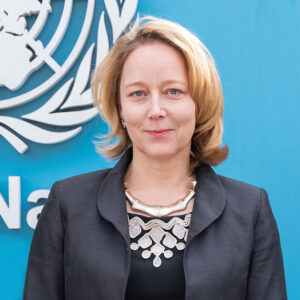
Agi VERES
Director, UNDP Office in Geneva

Stephen FISHER
Professor, Oxford University

Ko BARRETT
Deputy Secretary General, WMO

Laura BULLON-CASSIS
Researcher, IHEID

Cassie FLYNN
Global Director of Climate Change, UNDP

Claire RANSOM
Assistant Scientific Officer, Climate Monitoring, WMO
Highlights
Summary
Main Points
This event brought together representatives from member states, NGOs, civil society and academia to:
- Discuss the results of the UNDP Peoples’ Climate Vote survey, highlighting why global interest In climate action, green parties do not get voted by people around the world
- The importance of the next two years and ambitious NDCs in promoting climate action
- Case studies from Denmark and Indonesia to highlight policies which have worked successfully in renewable transition and climate action
- Engage in a conversation with representatives from NGOs, CSOs and academia about policies and case studies that they have been implementing and answer their questions about the People’s Climate Vote survey.
Introduction
Agi Veres | Director, UNDP Geneva
- Agi welcomed the audience to the second UNDP event in collaboration with WMO. She emphasized on interactive and meaningful conversations, not just panel talks, and called for the inclusion of diverse sectors (development, humanitarian, academia, science, and private sector) under Geneva’s unique ecosystem, in order to influence decision-makers and policy makers
- Introduction to the Peoples Climate Vote survey results & case studies of Denmark and Indonesia
- Key findings: people recognize climate impacts; they desire change and climate action.
- Call for realistic narratives based on scientific data and positive trends.
Presentation of the Peoples’ Climate Vote and Commentaries
Stephen FISHER | Professor, Oxford University
- Survey background
- The Peoples’ Climate Vote survey aimed to bring global citizens’ voices to the attention of leaders and policymakers on climate change.
- The survey was conducted from September 2023 to May 2024, covering 77 countries and 87% of the global population. It also included interviews from 19 least developed countries and 9 small island developing states, conducted in 87 different languages.
- Random sampling ensured fair representation, with special efforts to include marginalized groups, such as people with no formal education.
- Results of the Peoples’ Climate Vote survey
- Over half of the people globally think about climate change at least daily or weekly.
- Two-thirds report climate change impacts big decisions in their lives.
- Half of the respondents are more worried about climate change this year (2024) than last year (2023).
- Four out of five respondents said extreme weather events are as bad or worse than last year.
- Majority look to governments to address climate change.
- Around 80% want stronger commitments to climate change mitigation and more protection from extreme weather.
- 72% support a quick transition from fossil fuels to renewable energy.
- 86% favor international cooperation to tackle climate change (80% wants rich countries to help with poor countries).
- Overall message
- People of the world are united in wanting to see governments address climate change.
Ko Barrett, Deputy Secretary General, World Meteorological Organization
- Statistics that urge climate action
- 2023 was the warmest year on record; the trend continues in 2024
- A report from the UK Met Service predicts a high likelihood that the next five years will be the hottest on record and an 80% chance of temporarily exceeding 1.5 degrees above pre-industrial levels.
- Importance of clear scientific facts and international focus on climate
- Based on her own experience with the 2019 IPCC report on 1.5 degrees of warming, she noted its unprecedented impact and the powerful confluence of extreme weather events, scientific findings, and UN General Assembly focus on climate.
- Challenge of climate disinformation: the deliberate undermining of science is delaying climate action.
- Reliable science is needed at all levels to inspire action: annual climate reports with latest information.
- WMO Actions
- Including monitoring greenhouse gases and co-leading the early warning for all initiative with other UN agencies.
- Early warning is closely related to build resilience.
- The activities undertaken in the survey are tremendously valuable by showing that 86% of people want countries to put aside differences to fight climate change, underscoring the need for more ambitious climate policies.
Laura BULLON-CASSIS | Postdoctoral Researcher, Albert Hirschman Centre on Democracy, Geneva Graduate Institute
- Two puzzling trends
- Despite 80% of people wanting stronger climate commitments, this does not translate into votes for green parties, as seen in recent European elections.
- Climate worry is rising, yet climate movements are declining, with fewer protests in 2024 compared to 2019.
- Reasons for the lack of a green vote (especially in Europe)
- Voters focus on short-term issues (wars, immigration, inflation).
- Increasing polarization causes citizens to vote against parties rather than for climate issues
- Youth disenfranchisement and the fast turnaround in youth climate movements
- Young people, unable to be active in politics, feel the brunt of climate change and intergenerational injustice.
- Loss of faith in political elites and their ability to address climate challenges.
- Young activists are leaving movements like Fridays for Future due to frustration and tokenism.
- Many young people shift to civil disobedience movements like Extinction Rebellion or disengage from activism.
- Many young climate activists are not yet eligible to vote.
- Innovative response to youth disenfranchisement
- The Climate Academy in Paris provides a space for youth engagement, organizing, and training in green jobs, aiming to rebuild trust and turn anxiety into action.
Why are the next two years pivotal to keep the 1.5° alive? | Jim SKEA, Chair of the Intergovernmental Panel on Climate Change (IPCC)
- Urgency of Limiting Global Warming to 1.5°C
-
- IPCC has emphasized the rapidly closing window for effective climate action, describing the situation as a “Now or Never” challenge.
- In 2021, it was warned that warming of 1.5°C was likely even with immediate emission reductions.
- Continued high emissions mean the likelihood of staying below 1.5°C is vanishing.
- Social, Institutional, Economic, and Technical Barriers to Climate Action
-
- Initial IPCC reports identified social and institutional barriers as major obstacles.
- Now, economic and technical constraints are also significant hurdles.
- Overshooting 1.5°C necessitates carbon dioxide removal and introduces new risks and uncertainties.
- Global Commitments and Progress
-
- 90% of the global economy is under Net Zero emission targets.
- More than half of global emissions are covered by formal climate laws and institutions.
- A fifth of emissions are subject to carbon pricing mechanisms.
- 20 countries have seen sustained emissions reductions.
- The cost of renewable energy has significantly decreased, with renewables now making up around 10% of global electricity generation.
- Increasing Ambition and Widespread Action
- Existing measures need to expand beyond power generation to include urban transport, industrial systems, and land use.
- Current renewable energy advancements are concentrated in North America, Europe, and China.
- There is an urgent need for wider development, requiring investment in infrastructure and financial mechanisms to lower the cost of capital and boost private financial flows.
- Available Solutions and the Need for Implementation
- The tools and strategies for ambitious climate action are available.
- Without their implementation, limiting warming to 1.5°C, even by the end of the century, will become unattainable.
Cassie FLYNN | Director, Climate Hub, UNDP
- Importance of NDCs in limiting temperature rise to 1.5° C
- Next two years are humanity’s best opportunity to limit the impact of climate change
- A limiting the rise of temperatures to a 1.5° C in the third generation of NDCs in 2025 would be a game changer in controlling the climate crisis
- UNDP will continue working with countries to define their National Action Priorities and support a net zero future
Case Studies: What does it take to forge ambitious climate policies?
The case of Denmark: Transitioning to a renewable energy mix | H.E. Amb. Ib PETERSEN | Permanent Representative of Denmark to the UN in Geneva
- Denmark’s Energy Policy Evolution- Historical Context
- Denmark’s renewable energy initiatives began in the 1970s due to energy security concerns from the 1973 oil crisis.
- Initial focus was on developing fossil fuel resources in the North Sea and promoting renewable energy through tax incentives, particularly wind power, later expanding to solar power and biomass.
- Renewable Energy Achievements
- In the past year, renewable energy accounted for 45% of Denmark’s total energy consumption, excluding international aviation and shipping fuels.
- Wind and solar power provided 68% of the energy produced in Denmark.
- Denmark’s energy supply security is exceptionally high at 99.996%, equating to only 20 minutes of power outage per year.
- Advancements in Climate Negotiations
-
- Denmark has been active in international climate negotiations, including the 2009 Copenhagen Agreement and the 2015 Paris Agreement.
- The EU and Denmark have progressively adopted more ambitious carbon emission reduction targets.
- Inclusive Approach to Climate Policy
- Denmark’s approach to reducing carbon emissions has involved extensive stakeholder engagement, including industry, agriculture, and civil society.
- The agriculture sector, historically challenging in emission reductions, has recently made significant progress with increased biomass production and the introduction of a carbon tax on agricultural emissions.
- Agricultural Emission Reductions
-
- Denmark’s biomass production has increased to nearly 60%.
- A recent agreement established a carbon tax on agricultural emissions, aligning with Denmark’s national climate targets for 2030 and 2035.
- This agreement, a major step forward, included government ministries, businesses, agricultural representatives, and civil society organizations, emphasizing broad collaboration.
- Shift in Energy Policy
-
- Over the past 20 years, Denmark has shifted its energy policy, prioritizing renewable energy as the default option.
- On particularly windy days, Denmark can produce more wind power than it consumes, allowing for energy export.
- Long-term energy planning has integrated renewable energy extensively, with visible windmills throughout the countryside and offshore.
- Energy Efficiency Initiatives
- Denmark has focused on energy efficiency in both industry and residential sectors.
- New houses in Denmark are built to be zero-energy houses, and there is an emphasis on renovating older buildings for energy efficiency.
- District heating has played a crucial role in improving energy efficiency.
- Positive Examples and Technological Advances
-
- Demonstrating that substantial climate action is achievable gives hope.
- Despite geopolitical uncertainties, awareness of climate issues remains high.
- Changes in behavior, such as avoiding properties with basements due to increased flooding, reflect growing public awareness.
- The ongoing technological development in Denmark provides a model for further improvements and hope for global climate efforts.
- Strong commitment and a whole-of-society approach involving all stakeholders are essential for successful climate action.
The case of Indonesia: MET services contributing to enhanced climate policies | Prof. Dwikorita KARNAWATI, Director of the Indonesian Agency for Meteorology, Climatology and Geophysics and Permanent Representative of Indonesia to the WMO
- Role of Meteorological Services- Support for Science-Based Policies
- Data and science-based policies are essential for effective climate action.
- The Agency for Meteorology, Climatology, and Geophysics (BMKG) plays a crucial role by providing data, information, and services to support policy foundations and design.
- Clear Policy Framework
- Indonesia’s governance structure for climate change clearly delineates responsibilities among line ministries and agencies.
- Specific sectors are designated for mitigation actions and others for adaptation actions.
- Importance of Accurate Data
- Effective policies rely on accurate and relevant climate data and information.
- Long-term, sustained observational systems conducted by BMKG are critical for policy implementation.
- Support for Climate-Sensitive Sectors
-
- BMKG provides regular information products to support adaptation in climate-sensitive sectors.
- Climate change projections by BMKG inform various policy documents, including the National Adaptation Plan.
- Global Greenhouse Gas Monitoring
- Indonesia supports WMO programs on global greenhouse gas monitoring and the Integrated Global Greenhouse Gas Information System (IG3IS).
- Near real-time monitoring through IG3IS enhances the Nationally Determined Contributions (NDCs) by improving carbon emissions estimates and understanding the carbon cycle.
- This approach aids in improving national development planning through low-carbon pathways.
Q&A
Question: How can people at the local level hold their representatives accountable for climate action, considering that significant structural transformations are required which local representatives often lack the power to implement?
Laura BULLON-CASSIS
- The youth climate movement has been more active in high-emitting countries and has succeeded in putting climate issues on the political agenda in those regions.
- The local level provides a close, active, and tangible connection between citizens and the political space. Local decisions, though smaller in scale, can be significant and create important connections.
- Local governments have formed effective global alliances and are working together for climate action.
- Youth are increasingly using their activism to hold local governments accountable.
H.E. Amb. Ib PETERSEN
- India-Denmark Partnership:
- Denmark and India have a partnership focused on developing renewable energy.
- Denmark’s climate policy includes active international cooperation and development efforts, including climate-oriented projects.
- Local Engagement in Denmark:
- Local municipalities in Denmark align their development strategies with sustainable development goals, including climate action.
- Effective communication and information dissemination are crucial for holding local decision-makers accountable.
- People are motivated to hold local councils accountable when they see the direct impact of climate change (e.g., flooding).
- National and Local Coordination:
- Local actions need to be supported by coherent national strategies and international agreements.
- National governments must provide frameworks that local communities can follow to contribute effectively to climate action.
Q: Will the results be transmitted to UNDP and governments to amplify the climate voice?
Stephen Fisher
- The report is shared with governments and publicly available online. The goal is for global understanding and utilization of the report.
Question: Why does Peoples Climate Vote survey not include questions on people’s support for policies which might affect their standard of living negatively? Especially among citizens of developed countries
Stephen Fisher
- The survey focused on universally relevant questions. It did not address personal impacts. It is important to see that there are benefits of renewable transition including reduced costs, improved quality of life, and energy security. We should not look at the renewable transition necessarily as imposition of cost, despite financing challenge.
Closing Remarks
Agi VERES, Director, UNDP Geneva
- Integration and Implementation:
- UNDP is actively involved in helping countries prepare and implement their Nationally Determined Contributions (NDCs) through the Climate Promise initiative.
- This work integrates climate action with other areas such as public budgeting and national financing frameworks.
- Public Engagement and Political Challenges:
- There is a need to align national and local budgets to support climate policies.
- Public pushback on climate policies, especially from the most vulnerable populations, is a significant challenge even in developed countries.
- Politicians often face resistance when advancing climate policies, highlighting the need for an integrated approach that considers socioeconomic contexts.
- Global Negotiations and Political Polarization:
- Global negotiations on climate action must address the extreme political polarization present in many discussions.
- The importance of setting aside polarized approaches to advance climate actions was emphasized.
- Hope and Progress:
- Despite challenges, there are many examples of progress and good practices in achieving the Sustainable Development Goals (SDGs).
- It’s important to recognize and learn from these pockets of progress rather than focusing solely on aggregate outcomes.
- Next Steps and Collaboration:
- An upcoming event is planned for September 3rd, with a survey to collect more case studies on effective climate actions.
- The UNDP is open to partnering with various organizations across the public, private, and academic sectors to bring diverse perspectives and solutions to climate challenges.
- Sharing experiences and learning from what works and what doesn’t is crucial for advancing climate policies.
- The UNDP encourages contributions of case studies and examples from different sectors to enrich the collective understanding and approach to climate action.
Video
Live from WMO Headquarters
Links
- Peoples’ Climate Vote 2024
- 80 percent of people globally want stronger climate action by governments according to UN Development Programme survey | UNDP Press Release | 20 June 2024
Landmark public opinion research reveals overwhelming majority around the world support more ambitious efforts and want to overcome geopolitical differences to fight climate crisis - Mobilizing Climate Actors in International Geneva
- Weather Kids Campaign