Event Virtual
Preventing the Environmental Release of Pharmaceuticals: Solutions at the Source

16 Jul 2025
14:00 – 15:30
Venue: Online | Webex
Organization: UNEP Chemicals and Health Branch, World Health Organization, Geneva Environment Network
This event aimed to raise awareness and share practical, cost-effective strategies for preventing the release of pharmaceuticals to the environment from key sectors (healthcare, agriculture, industry) and municipal/household sources, focusing on upstream and preventive measures.

About this Event
This event aimed to raise awareness and share practical, cost-effective strategies for preventing the release of pharmaceuticals to the environment from key sectors (healthcare, agriculture, industry) and municipal/household sources, focusing on upstream and preventive measures.
The event is part of a series of events co-organized by the United Nations Environment Programme in cooperation with the World Health Organization, the Geneva Environment Network, and other key partners, aiming to raise awareness and share best practices, challenges and opportunities to address pharmaceuticals release into the environment.
Speakers
By order of intervention.

Stéphanie LARUELLE
Programme Management Officer, Chemicals and Health Branch, UN Environment Programme

Maggie MONTGOMERY
Technical Officer, Water, Sanitation, Hygiene and Health, World Health Organization
Alicia GALLARDO
Senior Advisor, World Organisation for Animal Health (WOAH) Centre on Antimicrobial Stewardship in Aquaculture, Universidad de Chile & President, WOAH Aquatic Animal Health Commission

Andreas HÄNER
Environmental Risk Assessor, F. Hoffmann-La Roche

Ingunn SOMMERSET
Department Director, Fish Health and Welfare, Norwegian Veterinary Institute

Isaac WAWERU
Global Pharmacy Advisor, International Rescue Committee, Kenya

Megha SHARMA
Associate Professor, Department of Pharmacology, R. D. Gardi Medical College, India & Affiliated Researcher, Health Systems and Policy: Medicines, focusing antibiotics, Karolinska Institutet, Sweden

Fernando Gastón ITURBURU
Pharmaceutical Lifecycle Expert, UN Environment Programme

Nada HANNA
Pharmaceutical and Antimicrobial Resistance (AMR) Expert, Chemicals and Health Branch, UN Environment Programme | Moderator
Highlights
Video
Summary
Opening Remarks
Stéphanie LARUELLE | Programme Management Officer, Chemicals and Health Branch, UN Environment Programme
- This event is part of a series being organized over the next year to cover key aspects, challenges, and opportunities related to pharmaceuticals in the environment. The goal is to raise awareness and share best practices to address this pressing issue.
- Pharmaceuticals are essential for human and animal health, and also play a key role in food security and economic development. However, during their production, use, and final disposal, pharmaceutical residues can enter the environment, posing important risks to humans, animals, and ecosystems.
- For instance, antimicrobial resistance is a major concern, with new estimates pointing to three deaths per minute. It also has devastating impacts on economies and livestock production.
- Pharmaceuticals in the environment can lead to adverse effects on wildlife and ecosystems, such as endocrine disruption and toxicity. Low-income countries are particularly affected by these impacts.
- In addition to environmental and health costs, pollution from pharmaceuticals can result in substantial financial losses, including costs related to waste and wastewater management. A key topic for discussion today is a core component of any strategy to address pharmaceuticals in the environment: prevention at the source.
- An assessment conducted by UNEP years ago on chemical issues of concern highlighted the need to step up global efforts to prevent pharmaceutical pollutants from entering waste streams.
- The life cycle of pharmaceuticals is influenced by a complex and interconnected network of stakeholders and sectors. These include the pharmaceutical industry, healthcare, agriculture, food production, municipalities, and waste and wastewater management. All of these sectors have a role to play.
- Opportunities for prevention exist across all sectors and include:
- disease prevention,
- responsible use of medicine,
- sustainable procurement,
- effective management of donations in the healthcare sector,
- biosecurity,
- alternative treatment methods,
- vaccinations in agriculture,
- marketplaces for redistribution to better match supply and demand and prevent wastage.
- From a production perspective, opportunities for pollution prevention innovations arise at the design stage. These include better dimensioning of packaging, product and supply chain innovations, as well as supply chain interventions that can prevent the disposal of unused medicines, such as reverse loop supply chain management.
- Comprehensive One Health policies that prioritize prevention are also essential. Furthermore, it is important to emphasize the role of education and the involvement of policymakers in implementing preventive measures at the source.
Pharmaceutical waste in health care facilities, a solvable problem
Maggie MONTGOMERY | Technical Officer, Water, Sanitation, Hygiene and Health, World Health Organization
- Pharmaceutical waste poses serious environmental and health risks, particularly in relation to antimicrobial resistance (AMR), with 4.7 million deaths linked to bacterial AMR in 2021 and projections rising to 10 million by 2050. Improper disposal methods, such as burning or allowing waste to leach into soil and water, as well as discharges from pharmaceutical manufacturing, contribute significantly to this problem.
- A major barrier to effective pharmaceutical waste management is the widespread lack of basic healthcare waste infrastructure. According to WHO and UNICEF, one in three healthcare facilities globally cannot even segregate waste, and in fragile contexts, up to 75% lack basic waste services. In countries like Sudan and Pakistan, over half of the facilities have no waste management systems in place, underscoring the urgent need for foundational improvements.
- WHO, in collaboration with UNEP and other partners, has published global guidance on the safe management of pharmaceutical waste from healthcare facilities. The guidance emphasizes prevention and minimization of waste at its source as the most effective approach. Reducing unnecessary pharmaceutical use is particularly crucial given the intersecting pressures of climate change, conflict, and AMR.
- Key solutions include establishing strong national policies and regulations that provide the framework and incentive for implementation. Proper classification of hazardous and controlled substances is essential, along with ensuring that infrastructure is in place and that healthcare and waste management workers are trained, protected, and recognized as integral to the health system.
- Waste tracking systems are also vital to identify where waste ends up and to close existing gaps in management. Real-world examples from countries like Nepal, Australia, and Ethiopia demonstrate successful grassroots engagement, enforcement of regulations, and development of comprehensive healthcare waste manuals that include pharmaceutical waste components.
- Sustainable procurement practices are emerging as a key strategy, with the UN adopting procurement indicators to guide purchases that minimize environmental impact. Measures include buying in smaller, more precise quantities, using medicines with longer shelf lives, reducing packaging volume, opting for sustainable packaging materials, and sourcing from manufacturers that meet safe discharge standards.
- Appropriate donation practices are another critical area, particularly in response to emergencies where large volumes of medical supplies are sent. Historical and recent events, including the COVID-19 pandemic, have shown that many donations are non-essential and create additional waste burdens. Donations should be based on explicit, documented needs, meet quality standards, and be governed by recipient-country procedures that allow for tracking and rejection of unsuitable contributions.
- To ensure sustainability, countries need not only the right supplies but also waste management plans, dedicated budgets, and trained personnel to handle the waste generated. International guidelines, such as those from WHO, support this by offering detailed frameworks for medicine donations and associated waste handling.
- Current efforts are increasingly integrating waste management with broader water, sanitation, and hygiene (WASH) initiatives. Global commitments, such as the World Health Assembly and UN General Assembly resolutions, are driving greater visibility and investment. Waste indicators are now embedded in major global health action plans and monitoring systems.
- Data collection and transparency are improving, with platforms like WHO/UNICEF Joint Monitoring Programme (JMP) and WASH in Healthcare Facilities providing up-to-date statistics on national waste management practices. WHO and UNICEF are preparing a global progress report set to be released in September, coinciding with a high-level UN event, which will further inform and guide policy development.
- Tools like the WASH FIT framework, which incorporates healthcare waste as a core component, offer countries and healthcare facilities a structured path to incremental improvements. By strategically linking the waste agenda with other global health and sustainability priorities, there is a greater opportunity to unlock investments and make meaningful progress on this critical issue.
WOAH Standards in Responsible and Prudent Use of Antimicrobials in Animals
Alicia GALLARDO | Senior Advisor, World Organisation for Animal Health (WOAH) Centre on Antimicrobial Stewardship in Aquaculture, Universidad de Chile & President, WOAH Aquatic Animal Health Commission
- The World Organisation for Animal Health (WOAH) developed standards, including on the prudent and responsible use of antimicrobials in animals. This aligns with the mandate set by the United Nations General Assembly for 2024, which aims to decrease the use of antimicrobials through best practices in management and responsible use.
- Since 2016, WOAH has implemented a strategy based on four key pillars:
- Increase awareness and understanding among all communities around the world.
- Strengthen surveillance and research, especially in exploring alternatives to antimicrobial use in animals.
- Support governance and build capacity, which is emphasized as a very important component.
- Encourage the implementation of standards.
- These efforts are part of the broader goal to reduce antimicrobial use and address antimicrobial resistance through international cooperation and best practices. In this context, WOAH has developed different standards covering diagnostics and vaccines for both terrestrial and aquatic animals:
- The Aquatic Animal Health Code contains a special chapter (Text 2), which is now being updated to align with the new version of the terrestrial chapter. In addition, there is a special Chapter H in the Terrestrial Manual, which complements these guidelines. These chapters and updates reflect WOAH’s ongoing efforts to standardize and improve the responsible use of antimicrobials across both terrestrial and aquatic animal health sectors.
- Regarding the four pillars of the WOAH strategy, a key focus of WOAH’s work is the “ANIMUSE” system. ANIMUSE is a global system for compiling data on antimicrobial use (AMU) in animals, and is used by various competent authorities, who send their information to a global AMU database. This data is very important for helping the global community understand trends in antimicrobial use and take informed action.
- In the most recent Report on Antimicrobial Agents Intended for Use in Animals there are three positive developments:
- Global antimicrobial use in animals is decreasing.
- Non-responsible practices, such as the use of antimicrobials as growth promoters, are declining.
- Transparency regarding antimicrobial use in animals is improving worldwide.
- A 5% decrease in the use of various antimicrobial products in animal production has been recently recorded.
- The new Chapter 6.10 of the Terrestrial Animal Health Code is closely aligned with the One Health approach and introduces several important updates. For the first time, it includes non-food-producing animals, such as pets. It excludes the use of antimicrobials for growth promotion. Additionally, it clearly defines the responsibilities of key stakeholders, including pet owners. This is particularly relevant for addressing the risk of MAR (microbial antimicrobial resistance) spillover into the environment, which is a key theme of this webinar.
- The chapter also emphasizes the risk of emergence and spread of MAR due to antimicrobial use, the promotion of good animal health and disease prevention practices to help reduce antimicrobial use and finally, the recognition that pharmaceutical companies are key stakeholders in this effort.
- This approach supports the global commitment to reducing antimicrobial use and MAR while enhancing cooperation among sectors through the One Health lens. Among the key stakeholders in the effort to reduce antimicrobial use are:
- Pharmaceutical companies
- Food producer companies
- Veterinarians
- Competent authorities
- One of WOAH’s research and innovation priorities is to develop new alternatives to antimicrobial use in both terrestrial and aquatic animals. The organization is actively promoting: vaccination, use of phages (e.g., in aquatic animal production), phytochemicals, probiotics and prebiotics and other innovative products. The aim is to reduce the need for antimicrobials by improving disease prevention and control practices in animal production.
- On the topic of vaccination, during the last General Assembly in May in Paris, WOAH held a two-day session dedicated to vaccination strategies in animals. This event focused on promoting vaccination as a tool for both the prevention and control of diseases in terrestrial and aquatic animals.
Preventing the environmental release of pharmaceuticals at the source – Industry perspectives
Andreas HÄNER | Environmental Risk Assessor, F. Hoffmann-La Roche
- The Eco-Pharmaco-Stewardship (EPS) Framework was developed by European pharmaceutical associations to address pharmaceuticals in the environment through an integrated approach. It encompasses responsible manufacturing management, enhancement of environmental risk assessments (ERAs) for both new and legacy substances, extended producer responsibility (EPR) debates, and coordinated research to prioritize older substances lacking sufficient environmental data due to their market entry prior to ERA requirements.
- Pharmaceuticals enter the environment through multiple pathways, including patient use, improper disposal of unused medicines and containers, and, to a lesser extent, manufacturing. Other contributors include treatments for livestock, companion animals, and aquaculture. While industrial production is not the dominant source globally, poorly controlled effluents in specific areas can lead to significant local environmental problems and must be addressed through targeted management.
- The EPS framework also emphasizes collaboration with the AMR Industry Alliance to strengthen antibiotic release controls through science-based assessments. Partnerships with the Pharmaceutical Supply Chain Initiative (PSCI) aim to elevate environmental standards throughout the supply chain, ensuring more responsible practices across both internal and supplier sites.
- Industry-led initiatives involve several working groups focused on improving environmental sustainability, particularly through responsible effluent management. Key efforts include the development of a maturity model for the pharmaceutical supply chain, a certification scheme for antibiotic manufacturing audited by an independent body (BSI), and a voluntary responsible manufacturing effluent management scheme developed by the European pharmaceutical associations’ task force.
- The AMR Industry Alliance operates under four core pillars of ensuring access to quality antibiotics and diagnostics in low- and middle-income countries; promoting the appropriate use of antibiotics to curb resistance; implementing responsible manufacturing to reduce environmental impact; and investing in research and innovation to develop new antibiotics, diagnostics; and treatments to meet pressing public health needs.
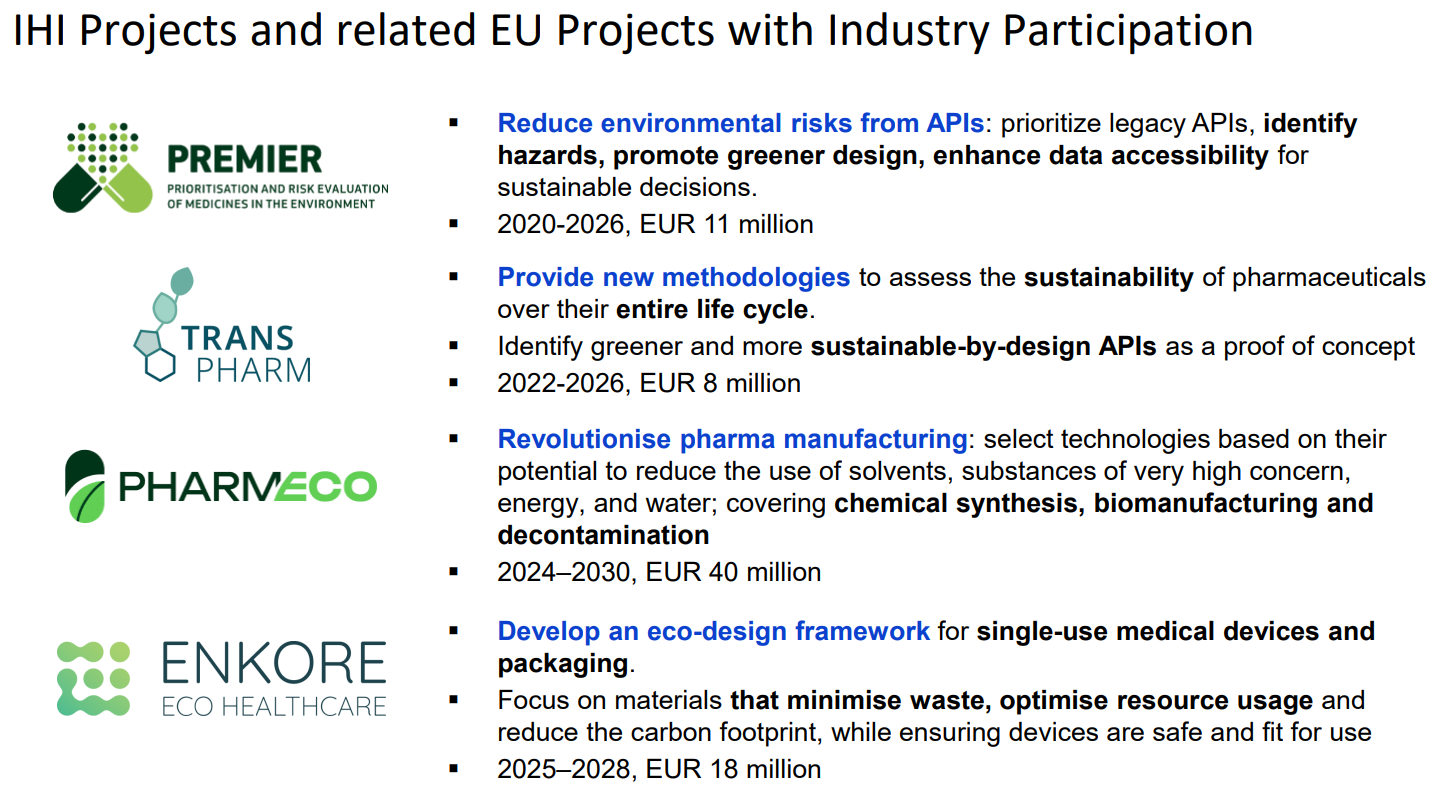
- A number of public-private research initiatives supported by the pharmaceutical industry and Horizon 2020 funding are underway to address pharmaceuticals at the source. The PREMIER project works to prioritize and assess environmental risks from the vast pool of 1,500 active pharmaceutical ingredients (APIs), estimating that around 5–6% may pose significant environmental threats, especially those lacking proper testing data.
- Additional projects include:
Vaccination of Farmed Salmon in Norway
Ingunn SOMMERSET | Department Director, Fish Health and Welfare, Norwegian Veterinary Institute
- The Norwegian Veterinary Institute works on animal health and welfare for both land and aquatic animals, including fish in aquaculture.
- Norway is the world’s largest producer of Atlantic salmon, with 1.55 million tons produced in 2024, equivalent to about 10 billion salmon meals. Other farmed species in Norway include rainbow trout (marine) and Atlantic cod. Despite high production volumes, aquaculture is still considered a relatively young industry in Norway.
- From the 1980s to 2023, salmon farming grew significantly while antibiotic use dropped sharply after 1993. Antibiotic usage, once high, has remained very low for over 30 years, even as production rose from 280,000 tons in 1995 to 1.6 million tons in 2023. Recent data shows consistently low volumes of antibiotics prescribed over the past six years.
- Rapid growth of salmon farming in Norway during the 1980s led to frequent bacterial disease outbreaks, including vibriosis and later cold-water vibriosis in 1987, which triggered the highest antibiotic use ever recorded in the sector.
- The introduction of targeted vaccines quickly reduced antibiotic reliance. However, furunculosis emerged in the late 1980s, and only the development of oil-adjuvanted vaccines in 1992 effectively controlled it, leading to a sustained drop in antibiotic use.
- In subsequent years, new viral and bacterial diseases appeared, such as BKD, but were managed through the implementation of mandatory biosecurity measures and increasingly sophisticated vaccination strategies.
- Today, salmon are vaccinated with a base of six components, plus additional vaccines given during the same operation, contributing to effective disease control with minimal antibiotic use.
- Large salmon farming sites in Norway (with over 1 million fish) are subject to monthly veterinary health checks, including reviews of mortality records, environmental parameters, and lice counts. While vaccination against three core diseases was once mandatory, it is now required to conduct a biosecurity risk assessment and vaccinate accordingly.
- Disease prevention also relies on strict biosecurity measures, including generation separation, the “all-in, all-out” farming principle, and mandatory fallowing (emptying) periods between production cycles.
- Geographical separation of sea sites and strict controls on fish relocation are enforced to minimize disease spread. Additional hygiene rules include mandatory disinfection of salmon eggs, water treatment for hatcheries, and cleaning of transport vessels.
- Vaccination is administered either manually or via automated machines, delivering intraperitoneal oil-based vaccines and DNA vaccines into muscle tissue. Fish are anesthetized, measured, vaccinated, and then moved to recovery tanks to allow immune response before being transferred to grow-out sea sites, where they are protected against up to 10 infectious diseases.
- Every salmon transferred from a land-based hatchery to sea cages, approximately 400 to 470 million fish annually, is vaccinated in Norway.
- While vaccines are highly effective, particularly against bacterial diseases, they do not provide sterile immunity, meaning biosecurity measures remain essential.
- The combination of vaccination and strict biosecurity has been key to maintaining minimal antibiotic use in Norwegian aquaculture, thereby significantly reducing environmental transmission of antimicrobial agents.
Data-Driven Forecasting and Procurement: A Preventive Strategy from Kenya’s Healthcare Sector
Isaac WAWERU | Global Pharmacy Advisor, International Rescue Committee, Kenya
- According to the Kenya Ministry of Health, the country is currently holding 700 million KES (~$4.6 million) worth of expired medicines across national medical stores, hospitals, and clinics.
- The expiry rate is alarmingly high at 32%, far above the WHO-recommended range of 3–5%. These expired drugs become hazardous waste, often ending up in landfills and water sources, posing serious threats to ecosystems and accelerating antimicrobial resistance.
- Oversupply of medicines is a symptom of deeper systemic issues in Kenya’s healthcare supply chain. Key root causes include weak inventory systems and a lack of real-time data, leading to inaccurate forecasting and procurement.
- Procurement is often reactive rather than demand-driven, resulting in the delivery of medicines that are already near expiry when they arrive at health facilities.
- This leads to irrational use, significant waste, and worsens antimicrobial resistance.
- A 2023 survey showed that only around half of public health facilities had a functional inventory system; most rely on manual records or Excel sheets.
- Expired medicines create a further burden due to the lack of adequate disposal infrastructure, leading to unsafe disposal practices. These practices allow toxic pharmaceutical waste to enter the environment, threatening human health, wildlife, and ecosystems.
- To address the high rate of pharmaceutical expiry, the Kenya Ministry of Health, through KEMSA (Kenya Medical Supplies Authority), is rolling out an integrated logistics information system across public health facilities.
- Currently, 55% of facilities are connected to this digital platform, which is being integrated with the national health data system DHIS2. This integration enables real-time visibility of stock levels from local clinics to national hospitals.
- With real-time data, stakeholders can track inventory, redistribute near-expiry drugs, and conduct accurate forecasting for procurement cycles.
- Pilot programs using this system have shown positive results, including:
- 20% reduction in expiry rates for reproductive health commodities in some counties.
- 18% reduction in expired malaria products in one region.
- Weak inventory systems, poor planning, and lack of data are key drivers behind the accumulation of expired medicines in Kenyan health facilities. A major lesson learned is that inventory data can act as a preventive tool, supporting the principle that “prevention is better than cure.”
- With robust digital systems, accurate forecasting and quantification become possible, ensuring medicines are supplied in the right quantities at the right time, significantly reducing waste.
- The call to action includes:
- Investing in digital infrastructure for inventory and logistics.
- Training healthcare workers and building local capacity, especially at the subnational level.
- Ensuring systems are user-friendly and reliable, including stable internet access.
- These digital strategies can support broader climate and antimicrobial resistance (AMR) goals.
- Kenya’s Pharmacy and Poisons Board now prohibits stocking drugs with less than 12 months of shelf life, helping to reduce waste.
- The focus must be on prevention, not management, of expired drugs, through the widespread adoption of smart, data-driven systems.
Strategies for the responsible use of Medicines (antibiotics) and Strengthening Infection Prevention in a LMIC
Megha SHARMA | Associate Professor, Department of Pharmacology, R. D. Gardi Medical College, India & Affiliated Researcher, Health Systems and Policy: Medicines, focusing on antibiotics, Karolinska Institutet, Sweden
- Challenges such as limited funding and infrastructure, inadequate training, and lack of awareness contribute to the unnecessary use of medicines in middle-income countries. To address this, the focus has been on reducing infections and antimicrobial resistance, which will in turn reduce the demand for treatment drugs. Improving hygiene and sanitation plays a critical role in slowing the spread of AMR and maintaining drug efficacy.
- The study was conducted in Madhya Pradesh state, specifically in the Ujan district. The healthcare facilities in this area include both public and private sectors. The study focused on a private tertiary care hospital. All individuals working or studying at the hospital during the study period were targeted.
- An alcohol-based hand rub has been developed, and the campaign has been personalized to the local context because national programs often fail to fully engage local stakeholders. Communication was conducted in Hindi, the local language, to ensure effective understanding.
- Training was repeated several times for each participant. Posters were prepared and meetings organized in Hindi as well as a two-way communication process to share observations and feedback.
- The focus was on two areas: infection prevention and control, and rationalizing antibiotic use. For this talk, the emphasis is on infection prevention and control. A qualitative study was done among stakeholders, including prescribers and nursing staff, to understand why hand hygiene was not properly maintained.
- The main issue identified was the lack of a proper sanitizer, or alcohol-based hand rub, which was commercially too costly. Using WHO formulation, an alcohol-based hand rub was prepared, but pilot testing showed the smell was too strong, leading to reluctance in use. After adding a mild fragrance, acceptance improved. The original name “alcohol-based hand rub” was considered too long, so the team created a new name, “Micro Kavach,” with “Micro” referring to microorganisms and “Kavach,” a Hindi word meaning shield. This product was trademarked by the institute.
- Training and communication were conducted in local and national languages to engage doctors, nurses, and other stakeholders. A multimodal hand hygiene improvement strategy was implemented and adapted according to the local context.
- The campaign included various activities to engage all stakeholders, including doctors, administrators, and staff, who acted as role models by participating, encouraging, and motivating others.
- Community members, such as patient family attendants, were also involved and educated on proper handwashing techniques. Posters in Hindi, displayed prominently in the hospital, helped communicate hand hygiene messages clearly to patients and families in the rural setting.
- The key takeaways from this work highlight the importance of understanding problems directly from those affected and filling knowledge gaps with practical solutions. Because commercially available alcohol-based hand rubs were expensive, the team used a cost-effective WHO formulation. Continuous communication was maintained with all stakeholders through one-on-one meetings, and a dedicated nursing team was formed to train colleagues and newcomers. Innovative approaches, such as giving the hand rub a local name and using the local language for feedback and training, helped ensure success.
- The team also shared their findings through publications and conducted a nationwide campaign, distributing videos and written materials to multiple sites marked on the map.
- Being a resource-constrained setting, the study did not have CCTV surveillance cameras to monitor hand hygiene compliance. Instead, observations were conducted manually following WHO guidelines, and feedback was provided accordingly. The hope is that in the future, CCTV surveillance can be implemented to help ensure wise use of antibiotics through improved hygiene practices.
- The most significant issues identified were fragmented governance and regulatory gaps, cited by 60% of respondents, followed by limited awareness and prioritization at 20%. Other challenges included economic constraints, low community engagement, and accountability concerns.
- Regarding opportunities at the national level, policy levers and sustainable procurement were seen as the most promising, along with international collaboration and public-private partnerships. Additional opportunities included digital transformation in supply chains, green and sustainable chemistry, and environmental monitoring, with the highest emphasis on policy-level actions and sustainable procurement.
Closing Remarks
Fernando Gastón | ITURBURU Pharmaceutical Lifecycle Expert, UN Environment Programme
- The public-private partnership is important to address environmental challenges and the Global Framework on Chemicals is a central umbrella framework that brings together stakeholders from government, civil society, and the private sector on equal footing. This framework addresses critical issues such as environmentally persistent pharmaceutical pollutants, and participants were encouraged to engage further within this platform.
- The event highlighted a variety of actions, tools, and initiatives focused on preventing pharmaceutical pollution. These included waste management strategies in healthcare facilities, with a strong emphasis on prevention, immunization, and responsible waste disposal. Solutions presented involved strengthening policies and regulations, sustainable procurement, responsible donations, and WHO’s role in initiatives related to WASH (Water, Sanitation, and Hygiene) and waste policies.
- The World Organisation for Animal Health shared its four-pillar strategy on AMR (Antimicrobial Resistance):
- Increasing awareness and understanding
- Strengthening surveillance and research
- Supporting governance and building capacity
- Promoting the implementation of standards
- The pharmaceutical industry’s perspective was also presented, showcasing collaborative efforts with stakeholders through public-private partnerships and voluntary initiatives, particularly in the manufacturing sector. Many of these initiatives focus on green and sustainable chemistry.
- Several success stories were shared:
- In Norway, the implementation of mandatory biosecurity and immunization strategies in aquaculture led to reduced antibacterial use and increased productivity.
- In Kenya, a smart procurement system and inventory tracking helped reduce expired medicines and pharmaceutical waste, while also saving costs.
- In India, a sector-specific strategy aimed at awareness, education, and capacity-building demonstrated effective approaches to responsible medicine use.
- The session concluded with key takeaways that can be applied in different contexts, especially from a preventive and community-based perspective. These included:
- Prioritizing prevention and minimization
- Raising awareness through sector-specific communication
- Involving communities in action
- Strengthening capacity-building and education
- Promoting smart and sustainable procurement
- Leveraging technology and data systems
- Enhancing policy frameworks and adopting voluntary standards
- Supporting innovation and green chemistry
Nada HANNA | Pharmaceutical and Antimicrobial Resistance (AMR) Expert, Chemicals and Health Branch, UN Environment Programme | Moderator
- There is an urgency and opportunity for prevention.
- Pharmaceutical waste in healthcare facilities is a solvable problem that can be tackled through regulation, sustainable procurement and the appropriate donation.
- There is a vital connection between animal health practices and environmental protection, highlighted by the recent reduction in antimicrobial use in animals.
- Responsibility, innovation and preventing environmental risk can go hand in hand.
- Disease prevention by implementing vaccination, biosecurity and regulation can reduce antimicrobial use and environmental risk.
- Digital systems and inventory tools can lead to better outcomes and reduce the expired medicine waste.
- Infection prevention, control and responsible use of medicine have a positive impact in reducing the use, but it is also important to understand the specific context and implement accordingly.
- Global national actions are critical but also depend on meaningful collaboration.
- Prevention is not only possible, it is practical, scalable and urgently needed. It is crucial to continue working together to apply upstream solutions and protect both environmental and public health.