
Event Virtual
Road to Busan | Prioritizing Principles of Accountability, Transparency and Justice in the Future Global Plastics Treaty

29 Oct 2024
14:00 – 15:30
Venue: Online | Webex
Organization: Center for International Environmental Law, University of Edinburgh, Global Center for Good Governance on Tobacco Control, Action on Smoking and Health, Geneva Environment Network
This event was organized within the framework of the Geneva Beat Plastic Pollution Dialogues Road to Busan event series ahead of the fifth session of the Intergovernmental Negotiating Committee to develop an international legally binding instrument on plastic pollution, including in the marine environment (INC-5), scheduled to take place from 25 November to 1 December 2024 in Busan, Republic of Korea.

About this Event
Prioritizing principles of accountability, transparency and justice are essential to enable the future global plastics treaty to succeed in its objective to end plastic pollution. With negotiations over the plastics treaty set to conclude at INC-5 this year, there is an opportunity for these principles to be included in the instrument.
The draft text of the international legally binding instrument emphasizes the need for equitable and inclusive distribution of costs and responsibilities in tackling the global plastics crisis. However, it lacks sufficient attention to procedures to ensure the meaningful participation of constituencies most affected and safeguard against undue economic or political influence. This event addressed these points, with these intended outcomes:
- Awareness of procedures and practices to facilitate civil society and rights-holder participation in the plastics treaty,
- Understanding conflicts of interest and the risk of undue influence on treaty negotiations,
- Identifying issue areas and modalities in the plastic treaty that could facilitate participation and be safeguarded against vested interests,
- Agreement to continue dialogue ahead of an in-person workshop in Busan.
Geneva Beat Plastic Pollution Dialogues

The world is facing a plastic crisis, the status quo is not an option. Plastic pollution is a serious issue of global concern which requires an urgent and international response involving all relevant actors at different levels. Many initiatives, projects and governance responses and options have been developed to tackle this major environmental problem, but we are still unable to cope with the amount of plastic we generate. In addition, there is a lack of coordination which can better lead to a more effective and efficient response.
Various actors in Geneva are engaged in rethinking the way we manufacture, use, trade and manage plastics. The Geneva Beat Plastic Pollution Dialogues aim at outreaching and creating synergies among these actors, highlighting efforts made by intergovernmental organizations, governments, businesses, the scientific community, civil society and individuals in the hope of informing and creating synergies and coordinated actions. The dialogues highlight what the different stakeholders in Geneva and beyond have achieved at all levels, and present the latest research and governance options.
Following the landmark resolution adopted at UNEA-5 to end plastic pollution and building on the outcomes of the first two series, the third series of dialogues will encourage increased engagement of the Geneva community with future negotiations on the matter.
Speakers
By order of intervention.

Grant ENNIS
Lecturer, Monash University & Author of "Dark PR: How Corporate Disinformation Harms Undermines Our Health and the Environment"

Anastasia GIADROSSI
Associate Legal Officer, Aarhus Convention Secretariat

Rob RALSTON
Lecturer in Public Policy, University of Edinburgh

Kritika KHANIJO
Technical Officer (Legal), Public Health Law and Policies Team, World Health Organization (WHO)

Deborah SY
Head, Global Public Policy and Strategy, Global Center for Good Governance in Tobacco Control (GGTC)

Ana Paula SOUZA
Human Rights Officer, Office of the United Nations High Commissioner for Human Rights (OHCHR)

Frankie ORONA
Executive Director, Society of Native Nations & UNEP Major Groups and Stakeholders Facilitator of Indigenous peoples and their communities

Rachel RADVANY
Environmental Health Campaigner, Center for International Environmental Law (CIEL)

Laurent HUBER
Executive Director, Action on Smoking and Health (ASH) | Moderator
Highlights
Video
Live on Webex.
Summary
Industry Influence in Public Policy – Corporate Capture Playbook
Grant ENNIS | Lecturer, Monash University & Author of “Dark PR: How Corporate Disinformation Harms Undermines Our Health and the Environment”
- The system is not broken, it is this way by design. Policies in place are profiting the fossil fuel industry, including government subsidies, as well as problems of financing and regulation, have shaped our mistaken beliefs that have prevented and limited political will for action. We need to unlearn a lot of things, and focus on demanding change.
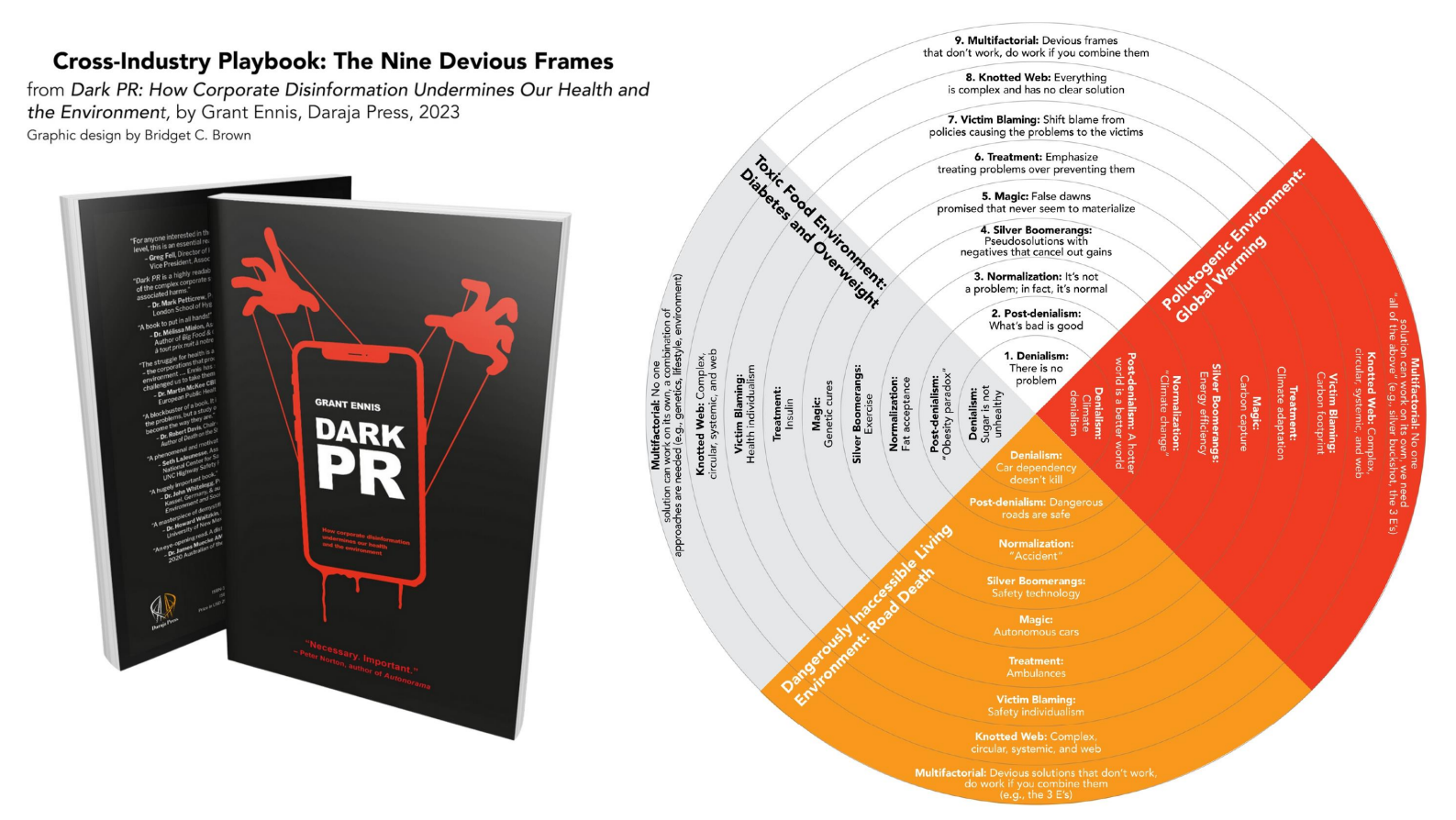
- The book I authored, “Dark PR: How Corporate Disinformation Harms Our Health and the Environment” covers the cross-industry playbook. The book presents 9 framing techniques that are often used by industries:
- Denialism
- Normalization frame
- Solution frame | Some think that it is possible to promote two frames at once, but political will is zero sum.
- Silver boomerang frame | The way of thinking that we can create wasteful products and reuse them. However, continuing to reuse and recycle at this scale would inevitably be toxic to our health.
- Magic frame | In the example of plastics, technologies and alternatives such as biodegradable plastics would not be a solution to the plastic crisis.
- Treatment frame | The idea of promoting adaptation and treatment over prevention leads to reduced effort on prevention.
- Victim blaming | Focusing on individuals instead of policy structure results in less support for policy interventions, hindering collective and efficient measures to tackle the plastic crisis.
- Knotted web frame | The complexity and systemicity of the issue make people reluctant to support policy change.
- Multifactorial | It is not always accurate to say that everything is multifactorial, meaning that a problem has many causes and requires a combination of solutions. This narrative has been weaponized by some industries.
Lessons from Aarhus Convention – Procedural Rights
Anastasia GIADROSSI | Associate Legal Officer, Aarhus Convention Secretariat
- The Convention on Access to information, public participation in decision-making and access to Justice in environmental matters (Aarhus Convention) is a legally binding instrument adopted in 1998 and entered into force in 2001. It builds on Principle 10 of the 1992 Rio Declaration on Environment and Development, setting obligations around three pillars: access to information, public participation in decision-making, and access to justice in environmental matters.
- The Convention has a Protocol on Pollutant Release and Transfer Registers (PRTRs), which is an independent instrument that reinforces access to environmental information. It contributes to the promotion of transparency and accountability by requiring parties to establish registers of pollutants that are released into the environment or transferred for disposal.
- Article 3 Paragraph 7 of the Convention calls on Parties to take proactive action towards guaranteeing public participation in all international forums related to the environment, including the negotiations of a legally binding instrument on plastic pollution. The Almaty Guidelines on Promoting the Application of the Principles of the Aarhus Convention in International Forums, adopted by the meeting of the Parties in 2005, provides guidance on the implementation of this provision.
- The Almaty Guidelines on Promoting the Application of the Principles of the Aarhus Convention in International Forums provide practical solutions to ensure effective and participatory international decision-making.
Key elements include:
- Processes and mechanisms should be designed to promote transparency, minimize inequality, avoid the exercise of undue economic and political influence, and facilitate participation of constituencies that are most directly affected and might not have means for participation.
- Development of a clear and transparent set of policies and procedures on access to environmental information.
- Relevant documents should be made promptly available in a timely manner.
- The right to participation should be extended to all the meetings of the forums.
- Accreditation or selection procedures should be as clear, transparent and simple as possible.
- International forums should have a review procedure to ensure the enforcement of the rules and practices.


- The UNEA Resolution 5/14 mandates the development of an international legally binding instrument on plastic pollution, taking into account the Rio Declaration, and calls for the widest and most effective participation possible.
- Aarhus Convention offers a model to improve transparency, inclusive public participation, accountability and justice for a future plastics treaty.
- The Almaty Guidelines provide practical solutions to ensuring effective and participatory international decision-making.
- The Working Group of the Parties in 2022 and 2023 recognized the importance of promoting the principles of the Convention, as well as processes related to the legally binding instrument on plastic pollution.
- Parties to the Aarhus Convention and Escazu Agreement both have the obligation to promote public participation in international forums.
Panel Discussion: Conflict of Interest in the Plastic Treaty
Rob RALSTON | Lecturer in Public Policy, University of Edinburgh
- While certain companies are leveraging their influence to push for a reduction in fossil fuel-based plastics, concerns remain around corporate influence over negotiations, as well as conflicting interests with the objectives of the plastics treaty to address the full lifecycle of plastics.
- Power imbalances in the Plastics Treaty negotiations have privileged corporate perspectives, excluding rights holders and civil society groups from negotiation rounds. Multi-stakeholder dialogues have often been dominated by industry representatives, which have significantly increased with intensified lobbying, and they are pursuing more aggressive strategies. Institutional practices of the treaty have been characterized by inequitable access and participation, in which corporate actors have often exerted disproportionate influence.
- An effective global plastics treaty requires procedural justice and safeguards to prevent undue political influence, and ensure equitable access and sustained participation of those affected by environmental justice in the decision-making process.
- Meaningful inclusion in the plastics treaty could start with the incorporation of text on equitable access and participation in decision-making, drawing precedents in the Aarhus Convention and the Escazu Agreement which recognize the threat of corporate interests.
Kritika KHANIJO | Technical Officer (Legal), Public Health Law and Policies Team, World Health Organization (WHO)
- At INC-4, WHO underscored in its statement the importance of transparency and management of potential conflicts of interest with public health and environmental objectives in the development of the Plastics Treaty.
- The conflict of interest policy embedded in WHO Handbook for Guideline Development is fundamental to WHO’s role as the leading authority on health. Unbiased decision in addressing pressing health issues is paramount.
- We have observed the interference of commercial vested interests, such as the tobacco industry, with the intention of subverting the role of governments and WHO in implementing public health policies.
- During the negotiation of the WHO Framework Convention on Tobacco Control, member states included a provision to protect tobacco control policies from commercial interests. WHO has a clear policy of not engaging with the tobacco industry.
- WHO’s Framework of Engagement with Non-State Actors (FENSA) is the backbone of the organization’s interaction with non-state actors, and it ensures that each engagement aligns with WHO’s mission to prioritize public health and maintain independence and neutrality. By fostering responsible and collaborative relationships, FENSA allows WHO to leverage the resources and expertise of non-state actors while upholding principles of transparency, accountability and trust.
- Conflict of interest policies, included in both the FENSA and WHO’s guideline, are structured to effectively identify, assess, and manage potential conflicts of interest.
- By clearly disclosing both conflicts and our methods in the guideline process, the WHO not only ensures the credibility of the guidelines, but also strengthens the trust member states place in our recommendations.
- FENSA is a multi-layered framework designed to provide WHO with clear parameters and procedures emphasizing the benefits and potential risks of engagement.
- Due diligence and transparency are not just ideals, but concrete processes that we require each non-state actor to provide information, regarding their operations, governance and sources of funding.
- The FENSA guideline development handbooks are not only administrative tools, but they are essential pillars that preserve WHO’s integrity and allow us to remain a trusted leader in global health. They are crucial for advancing public health and for achieving the objectives of the Plastics Treaty.
- It is imperative that the treaty prioritizes public interests over commercial ones, and a robust conflict of interest provision is essential in ensuring this.
Deborah SY | Head, Global Public Policy and Strategy, Global Center for Good Governance in Tobacco Control (GGTC)
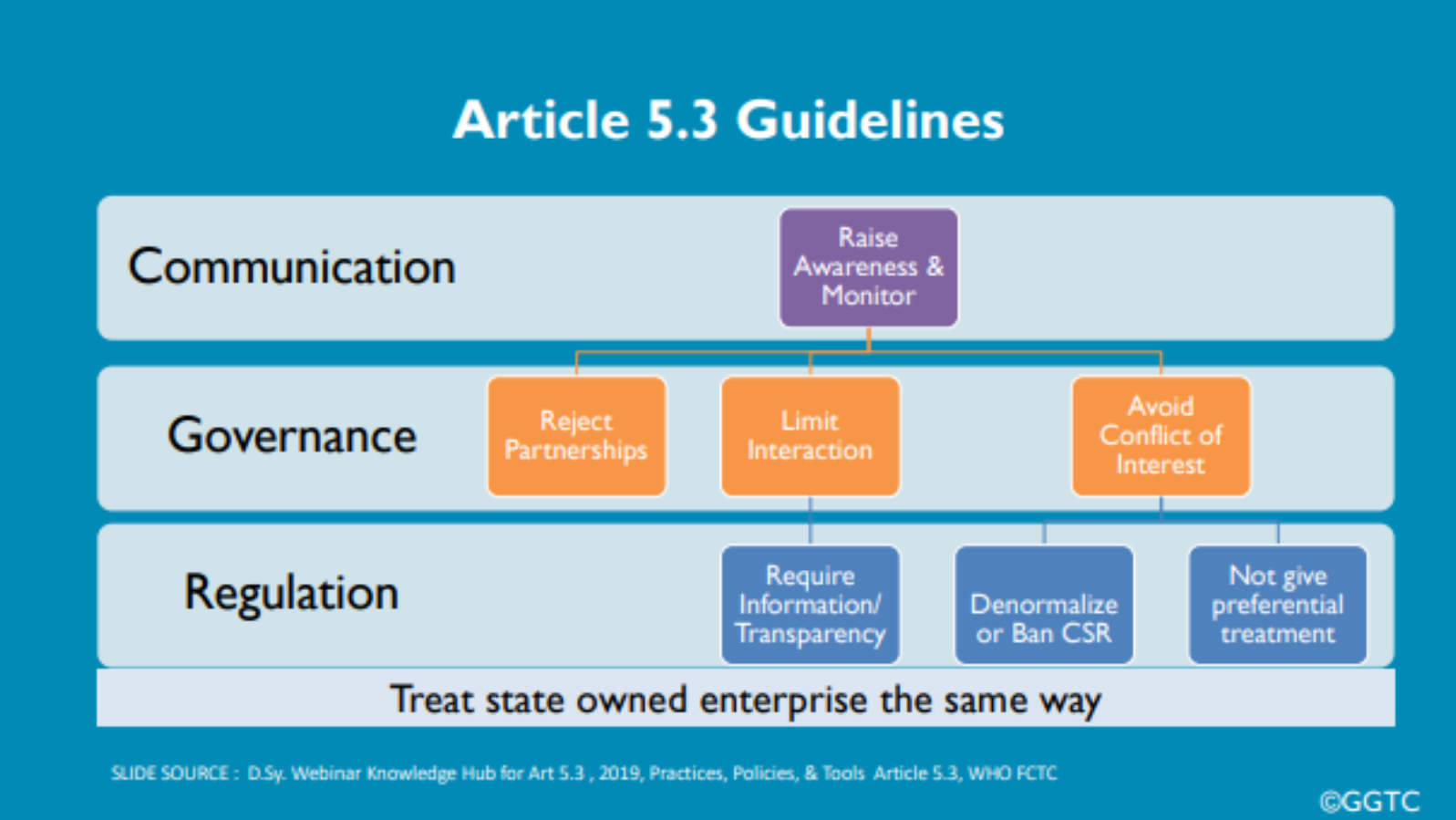
- There is a fundamental and irreconcilable conflict between the interests of the tobacco industry and public health policy. Article 5.3 of the WHO Framework Convention on Tobacco Control (WHO FCTC) is a treaty obligation in setting and implementing public health policies, which requires Parties to act to protect the policies from commercial and other vested interests of the tobacco industry.
- The eight recommendations in the guideline are divided into three parts:
- The tobacco industry has been present at INC-4, spreading messages about safe recycling of cigarette butts, which is actually not feasible. Any biodegradable substitute would remain hazardous, and undermine the prohibition on making tobacco products attractive.
- Other provisions in the Plastics Treaty that could conflict with the FTCT include product design incentives which are benefits prohibited under Article 5.3, and stakeholder participation that goes against rejecting tobacco funding. Partnerships and participation, extended producer responsibility could serve as a vehicle for CSR which should be banned.
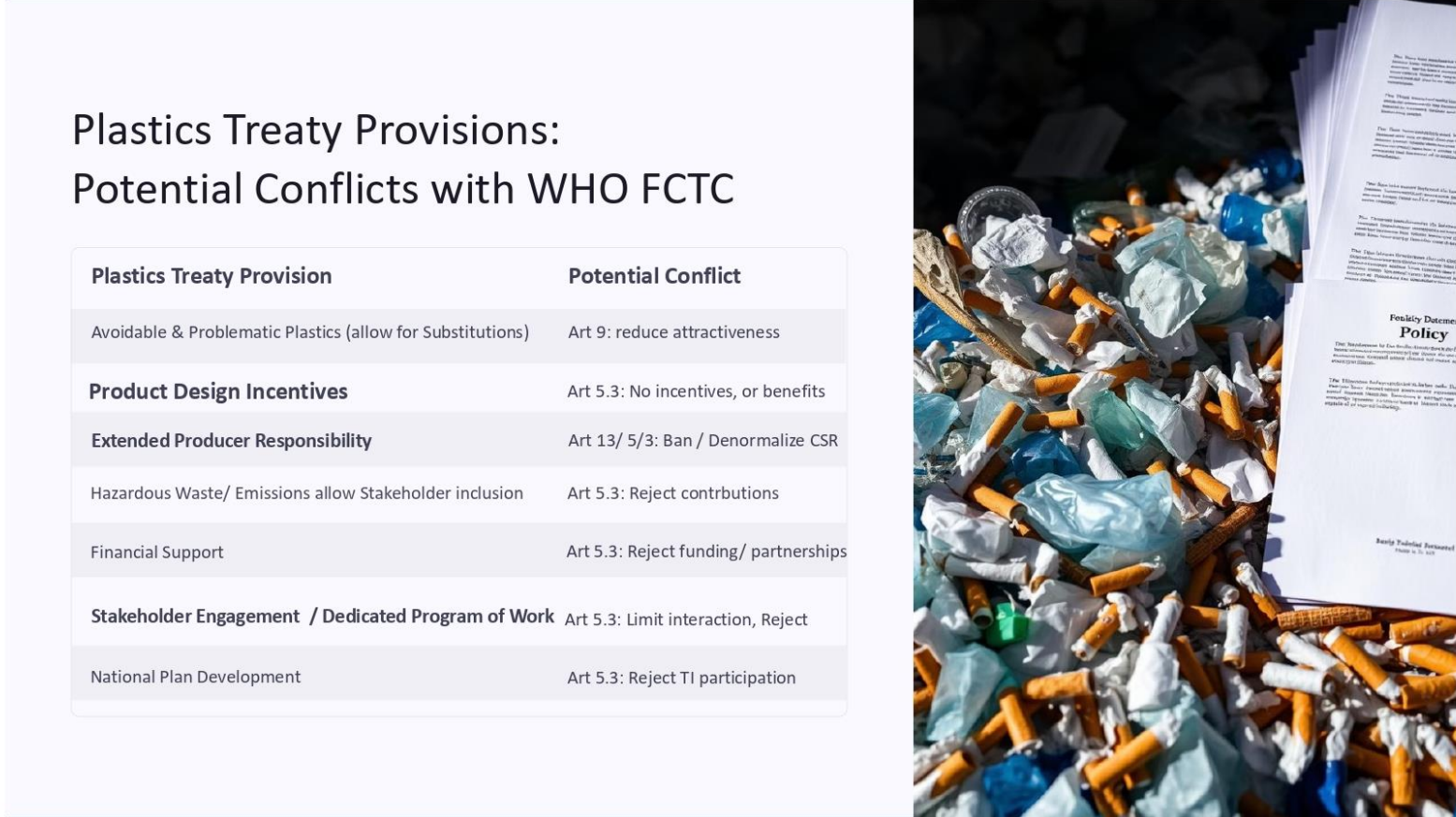
- Engaging with the tobacco industry also conflicts with UN norms, UN Sustainable Development Groups, and human rights principles and various treaties practices.
- To avoid undermining life-saving measures, the future Plastics Treaty must exclude the tobacco industry from stakeholder engagements, and explicitly recognize governance and regulatory policies for the industry.
Ana Paula SOUZA | Human Rights Officer, Office of the United Nations High Commissioner for Human Rights (OHCHR)
- When the right to science is compromised, individuals and communities may be exposed to harm. Everyone has the right to share in scientific advancement and its benefits, and this right has never been more critical and in jeopardy.
- Science has shown us that exposure to harmful chemicals in plastic can cause chronic and acute illness and even premature death. Plastic pollution is exceeding the planetary safe operating space and is touching every ecosystem on the planet.
- The right to science is under attack. Tactics such as corporate influence, attacks on scientific studies, and exploitation of scientific literacy are being employed for profit-driven motives, keeping the population blind to the consequences of crossing planetary boundaries and unaware of their choices.
- We need a Plastics Treaty that requires states to align policies and programs with the best available science, which protects the rights of indigenous people and historically marginalized populations to their knowledge, practice, and innovations.
- Governments must protect scientific inquiry from conflict of interest and provide adequate funding to research.
Key human rights to be grated in the future plastics treaty:
- The rights to access to information, participation, and access to justice, established in Principle 10 of the Rio Declaration as key pillars of sound environmental science, are mutually reinforced.
- Individuals have the right to know about known and potential harms and risks to health and environment, caused by chemicals used in and released throughout the plastic life cycle. Currently, lack of information and transparency are hampering the right of individuals to participate in developing plastic policies and the right to effective remedy.
- Right to participation: Decision-making must involve affected individuals and rights holders, ensuring their free, active, and informed participation at the national level and during periodic assessments of treaty implementation.
- Right to access to information: Accurate and accessible information on chemicals and waste is crucial for policy making, monitoring progress, and protecting people. It is essential to ensure full transparency related to health and safety that are free from industry interests. Transparency mechanisms on the production and release of chemical pollutants should be required. The treaty should allow only chemicals in plastics that have been tested for safety.
- Right to access to justice: Plastic and chemical producers should be held accountable for their actions. They should also support environmental remediation and provide effective remedies for those affected, including in cross-border cases.
Upholding human rights can ensure that environmental policy is driven by facts and evidence, rather than greed or profit.
Frankie ORONA | Executive Director, Society of Native Nations & UNEP Major Groups and Stakeholders Facilitator of Indigenous peoples and their communities
- For indigenous, frontline and fenceline communities, the impacts of plastic pollution are deeply personal. Our lands, waters, ways of life have disproportionately been affected for generations. Plastic pollution, from extraction to disposal, has eroded our cultures.
- Plastic pollution is a human rights crisis. Injustice is not accidental; it reflects centuries of disregard for indigenous voices, rights, and knowledge. The plastics treaty must address deep-rooted inequalities that have allowed marginalized communities to bear the brunt of environmental damage.
- Human rights and environmental justice must be at the core of this treaty. Environmental justice is not only about preventing pollution, but also about repairing the harm done. Financial support needs to be included to clean up efforts, health care, and reparative programs for Indigenous lands.
- Accountability must be a fundamental element of this treaty. Large corporations and petrochemical industries and governments must be held responsible, with clear commitments to reduce plastic pollution.
- Plastic accountability means enforcing strong legally binding mechanisms. We need international standards and legally enforceable action that track, penalize, and reduce harmful practices.
- The treaty needs to empower indigenous and frontline communities to participate meaningfully in decision-making and implementation processes. Many communities still struggle to access basic information about toxins. Indigenous voices are crucial in shaping this treaty because of our knowledge in the interconnection between people, land, air, and responsibility for the balance of all creation.
- Environmental justice also involves safeguarding the rights of Indigenous peoples and ensuring that future generations can thrive without facing consequences of an unsustainable plastic economy. Justice is preventative as well as reparative.
- Transparency also includes inclusive representation. The voices of indigenous and environmental justice communities must be heard and their knowledge must be incorporated as equal partners in designing true non-toxic solutions. All rights holders, including indigenous leaders, should sit at the decision-making tables.
A plastics treaty is not just an environmental document, but it is an opportunity to correct a legacy of human health and environmental harm inequity. A treaty that prioritizes accountability, transparency, and justice will create lasting and meaningful change, not only for the environment but also for the people who call it home.
Rachel RADVANY | Environmental Health Campaigner, Center for International Environmental Law (CIEL)
- The Plastics Treaty is facing issues of lack of meaningful participation and conflicts of interest between industries profiting from plastic and treaty goals. Opening up negotiation spaces to corporate actors led to the closing down of meaningful inclusion of civil society and rights holders.
- The treaty should ensure meaningful participation from those disproportionately affected by plastic pollution. Rights holders, such as indigenous peoples, youth, women, and frontline communities, have the right and a moral imperative to participate in these negotiations and push for an ambitious treaty that truly protects their communities.
- Plastics are a threat to the environment and human health. The goal of the treaty is to end plastic pollution.
- The current plastics treaty text makes little reference to upholding principles of public participation, access to information, and access to justice in international forums.
- It is of utmost importance to protect the science-policy interface to ensure that the treaty is informed by independent science.
- The means of implementation of the treaty should be protected from vested interests and corporate interests.
- National plans should also be developed in a participatory manner with safeguards against conflict of interest. Affiliations of those registered in the meeting should be publicly disclosed.
- The treaty must take a human rights-based approach, with human rights principles reflected throughout the text. Procedural rights, especially the right to information and participation, offer an opportunity to counter the negative impacts of vested commercial interests in the treaty implementation.
Q&A
Q: Should negotiators explicitly include language that prioritizes human rights, environmental justice, and health over commercial interests?
Q: How could conflict of interest and stakeholder engagement be addressed, particularly in areas like implementation and information exchange?
Q: What key recommendations would you give to governments?
Q: If you had a “magic wand”, what would you include in the treaty’s language to address these issues and ensure that the treaty is forward-thinking and protects future generations from plastic in a human rights-based and environmentally centered way?
Rachel RADVANY | If I had a “magic wand,” I would replicate Article 5.3 for the plastics industry, truly protecting against conflicts of interest not only treaty-based but also influencing national policies. A mention in the preamble is important, but cannot create obligations. Public participation, transparency, and conflict avoidance need to be integrated throughout the text to create actionable commitments.
Frankie ORONA | If I had a “magic wand,” I would start by restricting industry representatives from negotiations. Their influence, rooted in profit motives, worsens the crisis and endangers human health and the environment. Terms like “sustainable production” are misleading. The lifespans of Indigenous people are already cut short by 5 to 15 years. There is no “sustainable” harm in Indigenous communities. The negotiations have been inequitable, excluding indigenous and frontline communities, the true experts with generational knowledge and real solutions. We need to rehumanize the dehumanized conversation, by putting true life experiences in the center and excluding industries pushing false solutions that fuel dependence on petrochemicals and plastics.
Q: The overrepresentation of the fossil fuel industry in negotiations has been a concern in plastic treaty negotiations. Should industry representatives participate in negotiations at all?
Q: In plastics, unlike tobacco, some argue that plastics can be useful for the society. Is there a balanced way to address this?
Kritika KHANIJO | We have to make a distinction since industry is heterogeneous. The treaty’s preamble should clearly prioritize public health and environmental objectives over commercial interests. The treaty includes provisions for stakeholder participation, but stronger guidelines are needed to manage conflicts of interest, especially as healthcare and medical products are involved. A holistic approach is essential, building on Section 8 of Part 4, to ensure public health and environmental objectives as the priority.
Anastasia GIADROSSI | The Aarhus Convention doesn’t explicitly exclude specific stakeholders, but the Almaty Guidelines recommend processes to prevent undue economic and political influence. It is essential to support the participation of affected communities to integrate their perspectives. Article 3, Paragraph 7 of the Almaty Guidelines promotes public participation and ensures access for all, including subsidiary and expert bodies.
Rob RALSTON | The increasing involvement of business actors in global governance has led to conflicts of interest being displaced and minimized. A major issue is the failure to acknowledge the potential for diverging interests and the existence of conflict of interest.
Grant ENNIS | I support the zero-tolerance policy on conflicts of interest. We can apply lessons from tobacco regulation because it is the same concept. We need policies that prevent the participation of industry speakers in negotiations from the outset.
Deborah SY | There should be a terminology shift from “stakeholders” to “rights holders”, reframing industry actors as accountable “polluters” instead of “stakeholders” or “producers”. Industry actors and their contributions to the pollution must be identified to determine the required level of engagement. FCTC mentions liability in Article 19, but this concept is missing in the plastics treaty. For example, the clean-up cost of cigarette butts cause approximately $20 billion in marine ecosystem losses annually. The industries should pay in the form of taxes or charges, definitely not through EPR or allowing them to be part of solutions.
Documents
Links
- Fifth Session (INC-5) | UNEP
- Road to Busan | Plastics INC-5 | GEN
- Tobacco’s Toxic Plastics: A Global Outlook | GGTC | 2022