
Event Conference
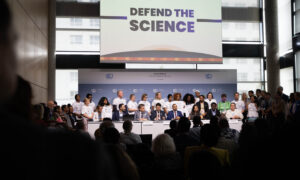
Science-Policy Day 2026 | Science is Not Negotiable: Strengthening Science-Policy Interfaces to Address the Triple Planetary Crisis
15 Dec 2026
09:00 – 14:00
Venue: International Environment House II
Organization: Geneva Environment Network
Building on the success of the inaugural edition, this second Science-Policy Day brings together scientists, policymakers, international organizations and other stakeholders to explore how science-policy interfaces can better support decision-making in the face of the triple planetary crisis. At a time when scientific integrity and evidence-based policymaking are under increasing pressure, the event will examine the pivotal role of independent science in environmental governance and discuss ways to further strengthen the connections between knowledge, policy and action for a sustainable future.
About this Event
Science-Policy Interfaces (SPIs) are critical for translating scientific knowledge into effective and actionable policy both at national and international levels. As the world confronts the triple planetary crisis—climate change, biodiversity loss, and pollution—the demand for robust, interdisciplinary, and inclusive SPIs has never been more important.
In response to each of these interconnected crises, independent, international, and intergovernmental bodies have been established to support policymakers in making informed, science-based decisions, such as:
- For the climate change crisis — the Intergovernmental Panel on Climate Change (or IPCC), established in 1988, with a secretariat in Geneva.
- For biodiversity loss crisis — the Intergovernmental Science-Policy Platform on Biodiversity and Ecosystem Services (or IPBES), established in 2012, with a secretariat in Bonn.
- For the pollution crisis — the Intergovernmental Science-Policy Panel on Chemicals, Waste and Pollution (or ISP-CWP), established in 2025.
Complementing these bodies, the UNEP Global Environment Outlook (GEO) reports provide the United Nations’ flagship integrated environmental assessments. Drawing on expertise from hundreds of scientists worldwide, GEO evaluates the state of the global environment, identifies emerging challenges, assesses policy effectiveness, and explores pathways towards achieving various internationally agreed environmental goals. By examining the interactions between climate change, biodiversity loss, pollution and broader socio-economic trends, the GEO process serves as a unique cross-cutting science-policy interface supporting environmental decision-making at global, regional and national levels.
These and other science-policy interfaces (SPIs), including the International Resource Panel (IRP), established to provide independent scientific assessments and policy guidance on the sustainable use of natural resources and the decoupling of economic growth, play an important role in supporting global environmental governance. They provide the scientific evidence needed to inform the implementation of Multilateral Environmental Agreements (MEAs) negotiated and agreed upon by Member States to promote international cooperation, including the United Nations Framework Convention on Climate Change (UNFCCC), the Convention on Biological Diversity (CBD), and the Basel, Minamata, Rotterdam and Stockholm Conventions. They also support the global frameworks and policy agendas that establish shared goals and targets to address the triple planetary crisis, including the Paris Agreement, the Kunming-Montreal Global Biodiversity Framework, and the Global Framework on Chemicals – For a Planet Free of Harm from Chemicals and Waste (GFC). By translating scientific knowledge into policy-relevant insights, SPIs help ensure that international commitments are reflected in national policies and implementation measures, and that environmental governance is informed by the best available scientific evidence.
At a time when scientific integrity and evidence-based policymaking are under increasing pressure, the Science-Policy Day will bring together the growing community of “Friends of Science” across multilateral environmental processes to champion evidence-based decision-making, strengthen science-policy interfaces, foster collaboration across environmental agendas, and advance understanding of how scientific assessments inform international negotiations and implementation.
This event provides opportunities to engage and exchange with leading experts, stakeholders and Members States working in the interface of science and policy, fostering collaboration to advance solutions for today’s environmental challenges.
- Doors Open | From 8:30 CET
- Welcome & Opening Remarks | 9:00–9:15 CET
- Fair / Science-Policy Marketplace | Until 9:45 CET
- High-Level Panel | Science is Not Negotiable: Safeguarding Scientific Integrity for the Next Phase of Planetary Action | 9:45–10:45 CET
- Spotlight Chat | Heating and Overshoot: Navigating the Next Phase of Climate Action | 10:50–11:30 CET
- Spotlight Chat | From Biodiversity Loss to Restoration: Navigating the Next Phase of Biodiversity Action | 11:35–12:15 CET
- Spotlight Chat | From Pollution to Prevention and Sound Management: Navigating the Next Phase of Pollution Action | 12:20–13:00 CET
- Closing | 13:00–13:10 CET
- Fair and Networking Reception | From 13:10 CET
Interactive Science-Policy Fair
The International Environment House II will open its doors for the Interactive Science-Policy Fair, showcasing how international Geneva is translating knowledge into effective and actionable policy. In the face of the triple planetary crisis of climate change, biodiversity loss, and pollution, many actors in Geneva, as a global center for multilateral diplomacy and environmental governance, are actively working in the interstices of science and policy to address the triple planetary crisis.
The Fair will be organized around thematic areas that reflect some of the most pressing environmental challenges and emerging opportunities of our time:
- Heating and Overshoot: Navigating the Next Phase of Climate Action
- From Biodiversity Loss to Restoration: Navigating the Next Phase of Biodiversity Action
- From Pollution to Prevention and Sound Management: Navigating the Next Phase of Pollution Action
Geneva-based organizations interested in sharing their work on science-policy by having a stand at the Fair, kindly use our contact form.
Registration
This event is taking place at the International Environment House II. To participate, kindly register on Eventbrite.
Fair Participants
Many actors in Geneva are actively working to translate knowledge into effective and actionable policy. Below is a list of stakeholders participating in the Interactive Science-Policy Fair. Additional participants to be confirmed.
Basel, Rotterdam and Stockholm Conventions | BRS Conventions
The Basel, Rotterdam and Stockholm conventions are multilateral environmental agreements, which share the common objective of protecting human health and the environment from hazardous chemicals and wastes.

Biovision Foundation
Biovision is promoting the implementation of Agenda 2030 at the international level and in Switzerland, networking and fostering dialogue with stakeholders from politics, science, the private sectors and civil society. In Switzerland, Biovision is organizing educational activities to raise awareness among the population, young people in particular, about the effect of our consumer behaviors on human, animal and environmental health and sharing tips to encourage sustainable consumption.

Group on Earth Observations (GEO)
The Group on Earth Observations (GEO) is a partnership of more than 100 national governments and in excess of 100 Participating Organizations that envisions a future where decisions and actions for the benefit of humankind are informed by coordinated, comprehensive and sustained Earth observations.

Geneva Human Rights, Biodiversity and Land Task Force (GeHRBiL)
GeHRBiL, the Geneva Human Rights, Biodiversity and Land Task Force, gathers civil society organizations working in Geneva to bring forward the human rights issues in relation to biodiversity and land and to introduce these issues in the work of the Geneva-based UN Human Rights Bodies.
Geneva Science-Policy Interface (GSPI)
GSPI an independent platform based at the University of Geneva with the mission to promote science-informed solutions to complex global challenges. We foster engagement between scientists and policy actors from Geneva-based international organisations.

Global Alliance on Health and Pollution (GAHP)
GAHP works across the globe, partnering with low- and middle-income countries in prioritising health outcomes by addressing pollution through its Health and Pollution Action Plans (HPAPs), solutions planning, and resource mobilisation. GAHP equally focuses on building public, technical, and financial support to increase awareness of pollution, promote scientific research, and track progress around it.
Global Cities Hub – Geneva
The Global Cities Hub connects cities and local and regional governments (LRGs) to International Geneva’s ecosystem, which includes the United Nations (UN), other international organizations, representatives of States, and a wide range of academic and civil society actors.
IEHRI-PIRSE
IEHRI-PIRSE is a Swiss think tank that brings together interdisciplinary expertise to understand and address complex interactions between human health and the environment. Facing contemporary health challenges with major societal implications, we develop a systemic approach that transcends disciplinary boundaries.
Intergovernmental Panel on Climate Change (IPCC)
The IPCC was created to provide policymakers with regular scientific assessments on climate change, its implications and potential future risks, as well as to put forward adaptation and mitigation options.
Through its assessments, the IPCC determines the state of knowledge on climate change. It identifies where there is agreement in the scientific community on topics related to climate change, and where further research is needed.
Intergovernmental Science-Policy Panel on Chemicals, Waste and Pollution
The ISP-CWP is a new, independent intergovernmental body established to strengthen the global science-policy interface.
The Panel will provide policymakers with authoritative, policy-relevant scientific advice to support the sound management of chemicals and waste and to prevent pollution, taking into account different national circumstances, development priorities, and capacities. Its goal is to help protect human health and safeguard the environment for present and future generations.

International Telecommunication Union (ITU)
ITU is the United Nations agency for digital technologies, working to harness innovation and connect everyone to ensure a better future for all.
Minamata Convention on Mercury
The Minamata Convention draws attention to a global and ubiquitous metal that, while naturally occurring, has broad uses in everyday objects and is released to the atmosphere, soil and water from a variety of sources. Controlling the anthropogenic releases of mercury throughout its lifecycle has been a key factor in shaping the obligations under the Convention.
Science Policy Action Network (SPAN) | EPFL
Science Policy Action Network (SPAN), aims to provide a community for early-career scientists to bridge the gap between science and policy! We aim to raise awareness of scientists’ roles for evidence-based policy, highlight relevant careers, train on transferable skills, generate policy recommendations as early-expert researchers, and open doors to a diverse networks of organizations, faculty, and policy-makers.
UNEP/GRID-Geneva
GRID-Geneva is part of the Early Warning and Assessment Division of the UN Environment Programme’s global group of environmental information centres, known as the Global Resource Information Database (GRID) network. GRIDs-Geneva and Nairobi were the first centres to be launched in mid-1985.
United Nations Institute for Training and Research (UNITAR)
UNITAR is the training and capacity-development arm of the United Nations. Its mission is to bridge the knowledge and skills gaps through impactful training, research and innovative learning solutions across peace, diplomacy, sustainable development, and effective governance.
WHO Framework Convention on Tobacco Control (WHO-FCTC)
WHO FCTC is the first international treaty negotiated under the auspices of WHO. It was adopted by the World Health Assembly on 21 May 2003 and entered into force on 27 February 2005. It has since become one of the most rapidly and widely embraced treaties in United Nations history. The WHO FCTC was developed in response to the globalization of the tobacco epidemic and is an evidence-based treaty that reaffirms the right of all people to the highest standard of health. The Convention represents a milestone for the promotion of public health and provides new legal dimensions for international health cooperation.
WIPO Green
WIPO GREEN is an online platform for technology exchange. It supports global efforts to address climate change by connecting providers and seekers of environmentally friendly technologies. Through its database, network and acceleration projects, it brings together key players to catalyze green technology innovation and diffusion.
WMO
WMO is the United Nations system’s authoritative voice on the state and behaviour of the Earth’s atmosphere, its interaction with the land and oceans, the weather and climate it produces and the resulting distribution of water resources.