
Update
International Geneva Tackling the Triple Planetary Crisis
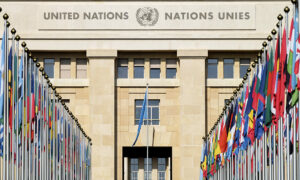
International Geneva is mobilized in tackling the interconnected triple planetary crisis of climate change, of nature, land and biodiversity loss and of pollution and waste that the Earth is facing, threatening the well-being and survival of millions of people around the world. Addressing these crises requires coordinated action.
The Triple Planetary Crisis
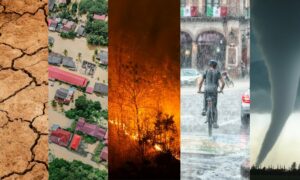
Our leaders today regularly refer to the triple planetary crisis that humanity currently faces — of climate change, nature, land and biodiversity loss, and pollution and waste. Each of these crisis has its own causes and effects, with interlinkages, and each needs to be resolved to have a viable future on this planet.
Our world environmental must-do list for decades into the future, as referred to by the executive director of UNEP, Inger Andersen, is to “slow and adapt to climate change, protect and restore nature and biodiversity, reverse land degradation and desertification, and end pollution and waste. Member states have adopted global deals that set agreed goals and targets.”
As the world capital for multilateralism, Geneva is at the center of numerous debates and negotiations in the fields of science, health, human rights, development, trade and green finance, employment, peacebuilding and security, disaster risk reduction, humanitarian response, climate, nature conservation, chemicals and pollution, as well as new technologies and innovation. This interdisciplinarity allows International Geneva to have unique cross-disciplinary expertise on the triple planetary crisis, on the agenda of numerous deliberations.
From Science to Policy
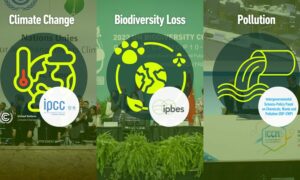
In the context of the triple planetary crisis that the earth is facing, independent, international, intergovernmental scientific bodies to help policy makers taking the right decisions have been set up for each of the crises:
- For the climate change crisis — the Intergovernmental Panel on Climate Change (or IPCC), established in 1988, with a secretariat in Geneva.
- For the biodiversity loss crisis — the Intergovernmental Science-Policy Platform on Biodiversity and Ecosystem Services (or IPBES), established in 2012, with a secretariat in Bonn.
- For the pollution crisis — the Intergovernmental Science-Policy Panel on Chemicals, Waste and Pollution (or ISP-CWP), established in 2025.
Agreed Goals and Targets
Member states have adopted global deals that set agreed goals and targets to tackle the triple planetary crisis:
- the Paris Agreement — agreed in Paris in December 2015
- the Kunming-Montreal Global Biodiversity Framework — agreed in Montreal in December 2022
- the Global Framework on Chemicals – For a Planet Free of Harm from Chemicals and Waste (GFC) — agreed in Bonn in September 2023
The Geneva multilateral system is highly engaged in implementing these plans. Geneva also hosts the secretariat of the Global Framework on Chemicals.

Geneva Multilateral Solutions to the Triple Planetary Crisis
Various important international environmental negotiations taking place in Geneva, present many opportunities to tackle the triple planetary crisis and advance the global environmental agenda.


Geneva Tackling Climate Change
When it comes to climate action in international Geneva, the secretariat of the Intergovernmental Panel on Climate Change (or IPCC) and the World Meteorological Organization, bringing us the scientific evidence of climate change and other important data and knowledge to mitigate and adapt to its impacts, are perhaps the two institutions most quoted on this matter. However, it is now well recognized that in addition to these two important bodies, the numerous international organizations, permanent missions, non-governmental organizations and other institutions based in Geneva place the climate issue at the heart of their work.



Geneva Tackling Nature, Land and Biodiversity Loss
Biodiversity and nature conservation are mainstreamed in the multilateral activities of international Geneva, home to some of the key institutions that actively contribute to setting the global agenda to tackle the biodiversity crisis.





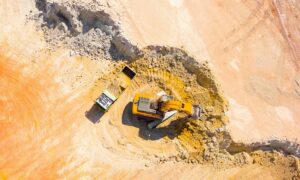
Desertification, land degradation, and drought (DLDD) are a silent and invisible crisis that affects people and the planet. As human life requires fertile and productive lands for many essential activities, desertification represents an important obstacle to sustainable development and an aggravator of poverty, poor health, lack of food security, biodiversity loss, water scarcity, forced migration, and lowered resilience to climate change or natural disasters.
As human life requires fertile and productive lands for many essential activities, halting degradation or rehabilitating degraded land through land restoration will be key to enhance biodiversity, restore ecosystem services, and mitigate climate change impacts.

Geneva Tackling Pollution and Waste
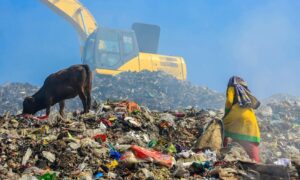
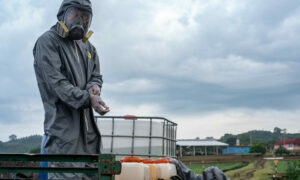
Chemicals are an integral part of everyday life and they are a major contributor to world economies. Yet many of these substances can also harm human health and the environment. Their sound management is essential to avoiding risks to human health and ecosystems and substantial costs to national economies. Home of several international organizations and multilateral environmental agreements on the topic, Geneva is a major global hub of the governance of hazardous substances.



GEN Events



Standards and the Triple Planetary Crisis
1 December 2022

The Environmental Agenda of International Geneva
1 September 2020