
Événement Conférence
Achieving Biodiversity Goals Through Trade: Building on Progress Made at UN Biodiversity Conference COP16
28 Jan 2025
14:30 – 17:00
Lieu: Palais des Nations | Room XXVII & Online
Organisation: Conférence des Nations Unies sur le commerce et le développement, Geneva Environment Network
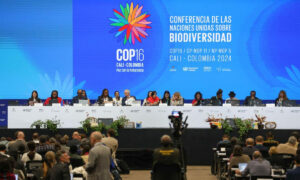
This event, organized by UN Trade and Development (UNCTAD) and the Geneva Environment Network reflected on the outcomes of the first segment of the UN Biodiversity Conference COP16, that took place in Cali, Colombia, in October 2024 and that will resume from 25 to 27 February 2025 in Rome, Italy, and on the importance of trade to achieve the biodiversity goals.
About this Event
This event builds on the outcomes of the UN Biodiversity Conference (CBD COP16), ahead of its resumed session, taking place in Rome, in February 2025. It offers a platform to explore opportunities for further collaboration in fostering sustainable trade within the Kunming-Montreal Global Biodiversity Framework (GBF).
While international trade has often been associated with environmental degradation, it also offers immense potential for conservation. With 55 per cent of global GDP — around USD$58 trillion — directly dependent on nature, trade policies must align with the Kunming-Montreal Global Biodiversity Framework to halt biodiversity loss, restore ecosystems, and support sustainable development.
One of the highlights of the conference was the inaugural « Trade Day » co-organized by UN Trade and Development, the World Trade Organization and the Convention of Biological Diversity Secretariats and United Nations Environment Programme, in collaboration with other partners on 26 October 2024. This thematic event spotlighted the transformative role sustainable trade can play in biodiversity conservation. It facilitated and advanced discussions among negotiators and stakeholders on best practices and solutions for trade and trade-related policies to address biodiversity loss and implement the goals and targets of the KMGBF to foster inclusive social development, its impact on terrestrial and aquatic ecosystems, including its ability to drive innovation and specialized markets.
The event opened with the high-level panel on progress made at COP16 and its importance in addressing the triple planetary crisis, as well as how trade policies and trade instruments can contribute to achieving global biodiversity goals.
The second panel, on the theme, « Focused Discussion on COP16 Outcomes and Opportunities to Foster Sustainable Trade » provided technical insights into the key outcomes of COP16. Panelists will explore the trade implications of these outcomes, identify potential opportunities to enhance sustainable trade practices, and outline actionable steps for the future.
The event will conclude with an interactive Q&A session, offering participants the chance to engage directly with the experts.
Speakers
By order of intervention.

Luz Maria DE LA MORA
Director, Division on International Trade and Commodities, UN Trade and Development
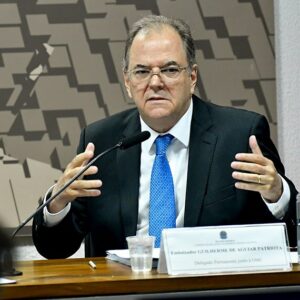
H.E. Amb. Guilherme DE AGUIAR PATRIOTA
Permanent Representative of Brazil to the World Trade Organization and other economic organizations in Geneva

Ludivine TAMIOTTI
Head, Environment Section, Trade and Environment Division, WTO

Asad NAQVI
Head, Economic and Trade Policy Unit, UNEP

Karen GAYNOR
Science Officer, CITES Secretariat

Chantal Line CARPENTIER
Head, Trade, Environment, Climate Change, and Sustainable Development, UN Trade and Development

Miguel Eduardo RUIZ BOTERO
Second Secretary, Permanent Mission of Colombia to the UN Office and other international organizations in Geneva

Hirotsugu TAKAHASHI
Junior Programme Officer, Convention on Biological Diversity Secretariat

Svetlana CHOBANOVA
Legal Officer, Trade and Environment Division, WTO

Beatriz FERNANDEZ
Programme Mangement Officer, Environment and Trade, UNEP

Andreas OBRECHT
Lead, Nature Policy, World Economic Forum

Michel MANE
President, MANE Flavor & Fragrance Manufacturer
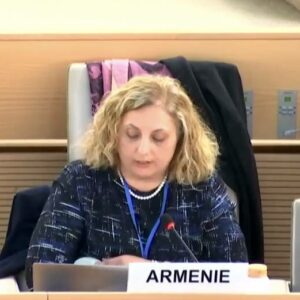
Elen HARUTYUNYAN
Counsellor, Permanent Mission of Armenia to the UN

Soledad LEAL CAMPOS
Senior Consultant Biotrade, UN Trade and Development | Moderator
Higlights
Video
Summary
Panel I: Setting the Scene – High-Level remarks
Chantal Line CARPENTIER | Head, Trade, Environment, Climate Change, and Sustainable Development, UN Trade and Development
- COP16 will resume its session in Rome, Italy from 25 to 27 February 2025. This briefing aims to build on progress made at COP16 in Cali, exploring opportunities to foster sustainable trade and create synergies with other international conferences and processes.
Luz Maria DE LA MORA | Director, Division on International Trade and Commodities, UN Trade and Development
- COP16 was held in Cali, Colombia in October 2024 and saw an unprecedented participation of 23,000 people, marking a critical milestone in global efforts to tackle biodiversity loss.
- Over 4.3 billion people rely on biodiversity for their livelihoods, with 80% of the world’s poorest and most vulnerable, living in rural areas, relying directly on it. Up to 40% of the world’s land has been degraded, and loss of biodiversity is accelerating.
- Biodiversity serves as a natural defense against climate change, being the most resilient infrastructure. However, this resilience is decreasing as the loss of biodiversity accelerates.
- COP16 focused on advancing the Kunming-Montreal Global Biodiversity Framework (KMGBF), which has the key goal of conserving 30% of the world’s land and oceans by 2030.
- As 55% of the global GDP depends on nature, aligning policies with the goals of KMGBF is crucial for halting biodiversity loss, restoring ecosystems, and advancing sustainable development.
- A key moment at COP16 was the inaugural trade day, co-organized by UNCTAD, WTO, Convention on Biological Diversity (CBD) Secretariat, UNEP, CITES Secretariat, and other partners. It provided a space for multi-stakeholder dialogue to share good practices and joint strategies for aligning trade policies with KMGBF, highlighting the transformative role sustainable trade can play in halting and reversing biodiversity loss, tackling climate change and achieving sustainable development.
- UNCTAD recognizes the role trade can play in advancing KMGBF, through promoting sustainable production, consumption, and socio-economic co-benefits. It can generate new opportunities in sustainable value chains for local communities and indigenous peoples, those whose livelihoods depend on biodiversity.
- The BioTrade Principles and Criteria developed by UNCTAD can contribute to supporting inclusiveness and sustainability objectives. These provide a set of guidelines to promote conservation, sustainable use, and fair and equitable benefit sharing across the entire higher value chain. The turnover of companies involved in BioTrade grew from 40 million to 40 billion between 2003 and 2023, with prospects for further expansion.
- UNCTAD adopts a whole-of-society approach, engaging with social and environmental entrepreneurs and social and solidarity sectors, including cooperatives, women, and indigenous communities.
- Technical assistance and multilateral collaboration are also crucial in the integration of biodiversity considerations into trade policies. UNCTAD remains committed to providing this support and calls on the trade and biodiversity communities to accelerate the implementation of the KMGBF in partnership with all relevant stakeholders.
H.E. Amb. Guilherme DE AGUIAR PATRIOTA | Permanent Representative of Brazil to the World Trade Organization and other economic organizations in Geneva
- There is a strong connection between the environment, biodiversity and trade. Target 18 of CBD aims to reduce harmful subsidies by at least $500 billion per year, and Brazil has proposed a dialogue on sustainable agriculture at the WTO, highlighting the importance of addressing food security and agricultural sustainability as an essential economic activity.
- Work was carried out in Cali to develop a metric for the target of KMGBF, which raised concerns among major agricultural exporters like Brazil and Argentina. There were concerns that the proposed metrics, which focused on measuring trade measures with positive environmental or biodiversity outcomes, could potentially change or invert the logic of the target, which aims to reduce environmentally harmful subsidies. The focus of Brazil’s proposal was ensuring agricultural sustainability, which could be undermined if trade negotiations reversed the objective by pairing environmental goals with trade measures intended to promote freer and fairer trade.
- While there is a subchapter to elaborate a specific target on environmentally harmful subsidies, focusing solely on the environmental aspect could hinder progress, leading to the conclusion that no subsidies should be allowed. Trade-distorting and environmentally harmful issues should be prioritized for reduction through binding WTO commitments. Conjugated approaches between environmental goals and trade distortion reduction, aligned with the KMGBF, could be a way to move forward.
- Brazil is deeply committed to advancing the bioeconomy concept, which focuses on the mutual support of three dimensions of sustainable development: social, economic and environmental dimensions. This approach has the potential to preserve the Amazon while ensuring that inhabitants can survive and prosper harmoniously with the environment. Indigenous communities who have lived in those areas would have valuable insights and teachings.
- Issues to be discussed at COP30 include finalizing adaptation targets of the Paris Agreement and moving from negotiation to implementation, advancing emission targets of developed countries, and addressing financial commitments.
Ludivine TAMIOTTI | Head, Environment Section, Trade and Environment Division, WTO
- COP16 was a pivotal moment in formally recognizing the intricate relationship between trade and biodiversity, as well as the importance of aligning trade policies with KMGBF targets. Discussions at trade day brought forward possible trade policies to promote sustainability, such as preferential tariffs for biodiversity-friendly products, voluntary sustainability standards, and green government procurement.
- WTO members have demonstrated an unprecedented momentum in exploring the role of trade policies in environmental protection. Members of the Committee on Trade and Environment have put forward concrete proposals to revitalize the work of the Committee, with the environment as one of the cores of the discussions. Thematic discussions have been newly organized, allowing more in-depth discussions covering topics such as energy transition and trade-related climate measures.
- Biodiversity is emerging as a key issue in WTO discussions, with a thematic discussion on sustainable agriculture to be organized in 2025.
- Biodiversity forms an integral part of the work at WTO, across different areas. According to our environmental database, over 1,800 measures relating to biodiversity have been notified since 2009.
- The WTO Environment Committee has been working on the nexus between trade and biodiversity, discussing issues like the patenting of biological resources outside origin countries, deforestation, illegal logging, and wildlife trade. This shows the potential for the committee to explore these topics in depth, if there is willingness of the members.
- WTO environmental initiatives are tackling key drivers of biodiversity loss, including climate change, pollution, and harmful subsidies. Delegations have identified trade-related actions to promote a circular economy, such as enhancing transparency and updating standards. The WTO Agreement on Fisheries Subsidies, adopted in 2022, represents a landmark achievement in directly addressing one of the key threats to marine biodiversity by prohibiting subsidies for illegal, unreported fishing.
- COP16 opened new avenues for integrating trade and biodiversity conservation by offering a foundation for concrete action WTO can take to accelerate the achievement of the KMGBF target through trade policies.
Trade cannot solve the biodiversity crisis alone; strengthening cooperation with stakeholders, including international organizations, private sector and civil society is essential. Bypassing silos and working in a cross-cutting way will enable us to make progress towards a future where economic growth and biodiversity conservation are not competing, but instead mutually reinforcing.
Asad NAQVI | Head, Economic and Trade Policy Unit, UNEP
- Given the complexity and interconnectedness of the global environment today, COP16 in Cali and the upcoming session in Rome will be different, requiring preparations accordingly.
- We need to focus on inequality and the role of biodiversity. The bottom 50% of the global population, around 3.5 billion people, contribute less than 5% to the global GDP, and a study revealed that 60 to 80% of this comes from biodiversity, nature, and ecosystems. Therefore, any harm to nature and ecosystem services directly and disproportionately impacts the poor, and any investment in biodiversity to improve the productive capacity of nature could be the most effective strategy for reducing poverty and increasing equality.
- The root cause of biodiversity loss is the misallocation of capital and trade incentives, with more money being used for harmful activities for the planet, nature, and climate rather than conservation. Despite work being done, these unsustainable practices persist because it generates higher returns, being more profitable for business.
- This practice is deeply rooted in national, economic and development planning, business strategies, and individual consumption choices. Changing incentive structures is crucial. One of UNEP’s focuses is on pricing mechanisms; there is a need to build a case where the governments can create employment, reduce poverty, and ensure economic growth, while repurposing their investments. Some countries are making progress toward this win-win solution, shifting away from traditional trade-offs.
- Private finance plays an important role in transitioning public finance. Instead of implementing measures that encourage further investment in harmful industries, we need regulations that make returns on the investment that are competitive and compatible, supported by strong implementation capacity.
- The current sustainability standard certification and labeling schemes are choking the sustainability world by imposing heavy burdens for those already making sustainable efforts, while those doing harm for nature can sell products without verification. The bar of regulation needs to be raised to the whole sector, making certification more efficient and accessible.
- Blended finance has a role to play in investing in a planet with a strong ecological foundation for a future with prosperity and equality.
Karen GAYNOR | Science Officer, CITES Secretariat
- CITES believes that well-regulated sustainable trade can contribute positively to biodiversity conservation. CITES regulates international trade of over 40.000 plant and animal species, ensuring that it does not threaten the survival of these species in the wild.
- One key outcome of COP16 is the recognition of the need for multilateral cooperation access conventions. Harmonizing trade policies with biodiversity objectives is essential in ensuring that global commerce operates within ecological limits.
- COP16 confirmed the global commitment to sustainable use and trade, as seen in the adoption of Decision 16/15 on Sustainable wildlife management and Decision 16/20 on Plant conservation. Wildlife and plant resources, when traded responsibly, can provide livelihood, generate revenue for conservation, and empower local communities.
- KMGBF underscored the importance of addressing trade as a possible diver of biodiversity loss, while harnessing its potential as a force for conservation.
- CITES, having a wide global reach of 185 Parties, addresses the sustainability of international trade which aligns with the KMGBF, by ensuring compliance with international and national laws. Exports should be based on non-detriment findings (NDFs), which are scientifically based assessments to determine the impact of trade on wild populations.
- To promote global efforts to combat illegal trade, CITES empowers parties to implement trade regulations – aligning with KMGBF Target 5 – through capacity building and fostering local action. We assist in the development of trade-regulating national legislations, the establishment of scientific and management authorities, and provision of tools and guidance for conducting NDFs. CITES is also committed to ensuring the benefits of Indigenous people and local communities from wildlife trade and harnessing the potential of information and communication technologies.
- Strong partnerships are essential in achieving objectives. For example, the partnership between CITES and UNCTAD through the BioTrade program contributes to the sustainable trade of marine species and brings benefits to people involved in the trade.
- CITES and UNCTAD have jointly developed the ASYCUDA eCITES Base Solution, which conducts feasibility studies for electronic permitting systems.
Panel II: Focused Discussion on COP16 Outcomes and Opportunities to Foster Sustainable Trade
Miguel Eduardo RUIZ BOTERO | Second Secretary, Permanent Mission of Colombia to the UN Office and other international organizations in Geneva
- COP16 was the first CBD COP to have the presence of heads of state and government, and it hosted over 1 million people in the Green Zone and 18,000 in the Blue Zone. The greatest achievement was raising the profile of biodiversity, highlighting its importance in international deliberations.
Major achievements:
- The launch of the World Coalition for Peace with Nature, which gained support from 31 countries and the EU. Under the conviction that development hostile to the environment is environmentally and economically unsustainable, the Coalition aims to reframe the relationship between nature and development.
- The developments on benefit sharing on the use of digital genetic resources. A multilateral mechanism was created to guarantee fair and equitable sharing of benefits derived from the use of digital sequence information (DSI), taking into account international obligations and rights of indigenous peoples and local communities.
- The Cali Fund has been created to support biodiversity conservation and scientific research in developing countries, as well as sharing monetary and non-monetary benefits to indigenous peoples and local communities. This contributes to ensuring that conservation sustainability efforts of developing megadiverse countries are protected from exploitation by profit-driven free riders and that the economic value of biodiversity is recognized.
- The Global Action Plan on Biodiversity and Health was adopted, which highlights the links between health and biodiversity in the framework of KMGBF and embraces the One Health approach to balance and optimize human, animal, and ecosystem health through stakeholder integration.
- A new subsidiary body was established in Colombia to facilitate the implementation of CBD Article 8J on the program of work for traditional knowledge. This marks a significant step towards protecting traditional knowledge and strengthening inclusive environmental management and conservation policies.
- COP16 also recognized the key role African descendant peoples play in the conservation of biodiversity. This links to trade through the new WIPO treaty on intellectual property, genetic resources and associated traditional knowledge which was adopted in 2024.
- The intrinsic relationship between climate change and biodiversity loss was also recognized. While recent multilateral processes have made progress, there is still divergence on discussions of nature-based solutions and ecosystem-based approaches, as well as the issue of double counting.
- Pending matters to be resolved include the monitoring framework of the KMGBF, resource mobilization for the financial mechanism, cooperation with other conventions, and the multi-year program of work of the COP.
Hirotsugu TAKAHASHI | Junior Programme Officer, Convention on Biological Diversity Secretariat
- COP16 is also referred to as the People’s COP or Implementation COP, since it assessed each country’s National Biodiversity Strategies and Action Plans (NBSAPs) to ensure alignment with KMGBF.
- Among the 29 decisions adopted at COP16, the four decisions that especially have implications on trade are:
- Digital sequence information (DSI) on genetic resources: Countries agreed that industries in specific sectors benefiting from digital data should contribute to the Cali Fund, which will be allocated to areas where it is needed.
- Mainstreaming of biodiversity within and across sectors, which includes a structured overview that highlights existing good practices, tools, mechanisms and guidance to integrate biodiversity conservation across sectors.
- The global guidance on sustainable wildlife management is to be prepared by the CBD Secretariat and CITES.
- Plant conservation: Countries reached ca onsensus on voluntary actions, including identifying plant species threatened by illegal trade, to support the implementation of the KMGBF.
- These agreements will enable us to value biodiversity not only ecologically but also as a cornerstone of sustainable economic growth.
- One important item that remains to be addressed at the resumed session is the monitoring framework for KMGBF. The Trade and Biodiversity (TraBio) database is expected to provide data and track progress on the indicators agreed upon by countries.
Chantal Line CARPENTIER | Head, Trade, Environment, Climate Change, and Sustainable Development, UN Trade and Development
- COP16 recognized that trade and trade policies can support the delivery of the KMGBF by incentivizing sustainable production and consumption, as well as promoting socio-economic co-benefits.
- In addition to the BioTrade initiative, UNCTAD also works on ocean economy and Blue BioTrade, as well as the Sustainable Manufacturing and Environmental Pollution (SMEP) programme. This programme tackles biodiversity loss by reducing pollution in key sectors in developing countries and measuring biodiversity benefits resulting from pollution reduction and resource efficiency.
- The TraBio database is a statistical tool that monitors bilateral and multilateral trade flows for 185 economies.
- Sustainable trade can contribute to the conservation of biodiversity and its ecosystem services while supporting local communities, including indigenous peoples, women and associations, by connecting them to the global value chain and offering economic opportunities for diversification.
- The BioTrade initiative was launched by UNCTAD with seven principles and 25 criteria to promote sustainable trade in biodiversity products. The initiative operates in over 80 countries worldwide, contributing to the social and economic development, biodiversity conservation, and increase in revenues and market share for its beneficiaries. For example, the BioTrade in South Africa led to the creation of over 3,700 permanent and seasonal jobs and an increase of 51% in local sales and 178% in export sales of the turnover of its beneficiary companies.
- UNCTAD collaborates with various partners, including trade and biodiversity stakeholders, local governments and communities. We work together to enhance the visibility of the positive role that sustainable trade can play in implementing the KMGBF and foster fair and equitable benefit sharing by encouraging Parties to adopt legislation and policies to tackle biodiversity loss.
- The work of the BioTrade initiative and its partners are directly linked to Goal B of the KMGBF: “Prosper with Nature”. For example, the TraBio ensures the sustainable use and management of nature by providing data on trends of legal trade of medicinal plants, which has been used in national targets of countries.
- In line with CBD Target 5 on sustainable harvesting and trade of wild species, UNCTAD supports best practices in wild species trade with CITES. However, only seven countries have reported on the complimentary indicator, trends of trade, and commercialization in biodiversity-based products.
- For CBD Target 8 on climate change, BioTrade helps companies and associations reduce emissions and enhance ecosystem resilience by implementing projects on drought-resistant crops, water and energy.
- To promote CBD Target 10 on sustainable agriculture, BioTrade facilitates biodiversity-friendly management action and contributes to reducing pressure on biodiversity.
- UNCTAD also supported the Lao People’s Democratic Republic in Peru in enabling a policy environment that supports the implementation of the Nagoya Protocol, Agreement on Access and Benefit Sharing (ABS) and the model contractual clauses, in line with CBD Target 13 on benefit sharing.
- In addition to designing and implementing national biodiversity strategies, UNCTAD also develops policy guides for decision makers to use trade and investment policies in their nationally determined contributions (NDCs). A similar approach could be taken for NBSAPs to enable the full potential of trade and investment policies, which remain unused due to lack of awareness and absence of guidance. Involving a trade minister in the design process could be a key step.
- More efforts are needed to enhance the implementation capacity of countries by addressing necessary trade-offs to design a coherent, pro-development policy framework, as they face the need to strengthen their domestic resource mobilization due to the plateauing of development aid.
Beatriz FERNANDEZ | Programme Management Officer, Environment and Trade, UNEP
- International trade is bound by nature and international cooperation. In 2024, international trade accounted for one-third of the global GDP, and nature was responsible for over 40% of the global GDP in 2020, highlighting the strong linkages of trade and nature.
- Issues related to nature also have impacts on social and economic development. Agriculture is a key sector since over 500 million smallholders depend on this sector for their livelihood and food security, and any disruptions on trade patterns threaten food security for a global population of 8 billion people and the global GDP which is estimated to be 4%.
- Trade is a double sword, having not only the potential to create hurdles to economic development and the global biodiversity agenda but also to become an engine for positive change.
- Trade policies can ensure access to genetic resources and associated traditional knowledge by establishing clear access and benefit-sharing regulations and verification requirements, contributing to sustainable development and the implementation of KMGBF. Promoting transparency is also important, including prior informed consent and fair contracts that outline benefit-sharing.
- Trade policies can preserve and enhance the role of indigenous peoples and local communities. Given that sustainable technologies critical for biodiversity protection are sometimes concentrated in advanced economies, it is important to ensure access of these communities to the technologies and genetic resources, as well as strengthen the protection of intellectual property rights.
- In order to meet the Rio Convention targets, financial flows to nature-based solutions will need to reach $ 540 billion per year, while the nature-negative public finance flows were approximately $ 1.7 trillion in 2022.
- The WTO agreement on fishery subsidies marks an important step for ocean sustainability, serving as an example of how trade can advance sustainability.
- While the mining sector is regarded as a key enabler of the green economy, it has potential impacts on biodiversity loss; it contributes to 84% of direct mining-related deforestation. Efforts are being made to address this, including the UN Secretary General’s Panel on Critical Energy Transition Minerals, to build trust between stakeholders and address transparency, equity, and human rights.
- Multidisciplinary cooperation between environment, trade, biodiversity and development communities is crucial in enabling transformative change.
Svetlana CHOBANOVA | Legal Officer, Trade and Environment Division, WTO
- The KMGBF presents a renewed opportunity to strengthen the linkages between trade and biodiversity through its concrete targets that provide pathways to integrate biodiversity considerations across sectors and policy areas.
- WTO and trade policies can play a vital role in preserving biodiversity and supporting the implementation of the KMGBF, especially in:
- Target 7, which highlights pollution reduction, specifically mentioning plastic pollution. 14 million tons of plastic end up in the ocean every year, and around 800 marine species are affected by plastic pollution. WTO environmental initiatives focus on increasing transparency in trade flows of plastic to reduce its negative environmental impacts and lay the groundwork for global coordinated efforts.
- Target 15 on biodiversity-related risks of businesses.
- Target 16 on sustainable consumption choices emphasizes sustainability and transparency along the value chain. WTO member Parties increasingly incorporate voluntary sustainability standards in their trade policies, and WTO contributes to this by providing regulations and standards.
- Circularity is key in achieving targets 15 and 16. The Trade and Environmental Sustainability Structured Discussions (TESSD) initiative has mapped trade aspects of the circular economy.
- Target 18, which aims to phase out or reform harmful subsidies, and WTO members are addressing critical sectors directly linked to biodiversity, such as fossil fuels, agriculture, and fisheries. While fossil fuel subsidies decreased from $ 1.6 trillion in 2022 to $ 1.1 trillion in 2023, a considerable amount remains, and these funds should be redirected towards sustainability. The WTO Fossil Fuel Subsidy Reform (FFSR) initiative is working to create priorities for this reform.
- Discussions at the WTO Committee on Agriculture focus on the trade impacts of agricultural subsidies, with increasing attention to the inseparable links with the environment and biodiversity. WTO members have expressed their determination to make progress on sustainable agriculture at the Ministerial Conference in 2022.
Andreas OBRECHT | Lead, Nature Policy, World Economic Forum
- COP16 hosted vibrant discussions on topics such as biodiversity credits, agricultural policies, and policy coherence. However, there was a separate conversation inside and outside of the conference halls. Companies are expecting legal certainty, progress toward a level playing field, and clear definitions that foster a common understanding from COP negotiations. There needs to be a reconnection of discussions held in the negotiation rooms and those in civil society and company spaces.
- UNCTAD and its partners have made significant progress in connecting and highlighting trade and biodiversity conversations. At the 2025 World Economic Forum Meeting, the European Free Trade Association (EFTA) and the Kingdom of Thailand signed a free trade agreement that includes mention of biodiversity.
- Progress must be made beyond official negotiations through strong partnerships and stakeholder dialogues between policymakers, companies, and civil society. One example of the implementation of CBD Target 7 in practice is the Global Plastic Action Partnership, which brings together various stakeholders, including the private sector, policy makers, governments and indigenous peoples and local communities to make plastic value chains more sustainable.
Michel MANE | President, MANE Flavor & Fragrance Manufacturer
- Conferences of the Parties enable different sectors to come together, exchange ideas, and envision a better future for the people and the planet, as well as set targets and lay the groundwork for operationalizing the goals in day-to-day businesses. Once the diagnosis is made, action must be taken immediately.
- There is an intricate link between climate and biodiversity, and no one party can address this challenge. The “how” aspect still needs to be discussed. Trade, with the existence of public-private partnerships, can be an effective instrument to contribute to the biodiversity plan. Strong leadership, governance, legal and regulatory frameworks are needed, as well as a level playing field to overcome conflicts of interest.
- The biodiversity plan should be translated into practical NBSAPs through industry sector strategies, ensuring full engagement and commitment from all parties. The focus should be on progress, instead of perfection, with efforts to expand the role of indigenous peoples and local communities by facilitating access to nature finance.
- Individuals can be a part of the solution through their purchasing choices. Making educated choices and choosing products that do not derive from environmentally harmful activities should be mainstreamed, which would require harmonized regulations and monitoring systems agreed upon by CBD Parties.
- For meaningful impact, companies must take action, learn through experience, and establish sectoral agreements that benefit indigenous peoples and local communities. The journey begins by securing clear property rights for people to take responsibility for renewable resources and concludes with complying with the BioTrade principles and criteria.
- Our industry’s supply chains and its resilience are heavily reliant on nature’s products and ecosystem health. Having a holistic understanding of land use and other interventions that impact biodiversity is crucial in engaging with stakeholders and local communities and ensuring sustainable practices.
- There are opportunities for adopting an inclusive process based on nature-based solutions that benefit nature conservation and restoration, climate, and people. By connecting the three pillars of sustainability, businesses can create more compelling cases by ensuring secure supplies, strengthening partnerships, and building resilience, while aligning with KMGBF agendas on biodiversity and pollution.
- When biodiversity is at the heart of the business, trade is the best vehicle to value it. Challenges remain in creating a level playing field, investing capital in value chains through public-private partnerships, blended finance or philanthropy, and directing it towards nature. Additionally, having strong governance and operating models are essential in effectively executing the mandate of shareholders.
Elen HARUTYUNYAN | Counsellor, Permanent Mission of Armenia to the UN
- As the triple planetary crisis is threatening the well-being and livelihoods of millions of people, biodiversity conservation is an urgent task that requires urgent and mobilized global effort.
- Although some decisions are pending, COP16 made remarkable achievements and elevated the profile of biodiversity in international environmental processes through the adoption of the Cali fund and recognition of African descendants and Indigenous peoples as key stewards in conservation efforts.
- One of the priority commitments for Armenia is ensuring the effective participation of all stakeholders, including governments, indigenous peoples and local communities, civil society, NGOs, youth, and women, making all voices heard and fostering a shared understanding of joint and shared responsibility for the future.
- COP17, which will take place in Yerevan, Armenia in 2026, will build on the achievements made at COP16, entailing the operationalization of key decisions including the adoption of a mechanism for sharing of benefits from the use of digital sequence information on genetic resources.
- Another important outcome of COP16 was the decision to conduct a methodological assessment on monitoring biodiversity and nature’s contributions to people by the Intergovernmental Science-Policy Panel on Biodiversity and Ecosystem Services (IPBES), which we aim to have meaningful collaboration with UNCTAD and other international organizations.
- The report of the Secretary-General to the UNCTAD16, to be held in Vietnam in 2025 mentions the triple planetary crisis, and we hope the issue of trade and biodiversity will be continued to be featured in UNCTAD 16.
- Organization of thematic sessions and other details on COP17 are still in progress, and will be updated to member states upon finalization. With the involvement and engagement of various stakeholders, Armenia looks forward to making COP17 a celebration of the collective wisdom of humanity in our efforts to preserve our nature and planet for future generations.
Closing remarks
Chantal Line CARPENTIER | Head, Trade, Environment, Climate Change, and Sustainable Development, UN Trade and Development
- Many key points and priorities were mentioned today, including mainstreaming biodiversity into different sectors, combining bottom-up and top-down approaches, and sharing best practices.
- UNCTAD will continue to bring together trade and biodiversity communities through the BioTrade initiative and key events, exploring new ways to strengthen collaboration at the trade-biodiversity nexus. We aim to address biodiversity loss alongside climate change and pollution by taking a holistic approach.
Photo Gallery


