
Update
From Geneva to Cali | International Geneva @ UN Biodiversity Conference

The 2024 UN Biodiversity Conference took place in Cali, Colombia, from 21 October to 2 November 2024. This major event, convened under the theme “Peace with Nature,” included concurrent meetings of the governing bodies of the Convention and its Protocols, including the 16th meeting of the Conference of the Parties to the Convention (COP16), the eleventh meeting of the Conference of the Parties serving as the Meeting of the Parties to the Cartagena Protocol on Biosafety (CP-MOP11), and the fifth meeting of the Conference of the Parties serving as the Meeting of the Parties to the Nagoya Protocol on Access to Genetic Resources and the Fair and Equitable Sharing of Benefits arising from their Utilization (NP-MOP5).
About the 2024 UN Biodiversity Conference
The UN Biodiversity Conference took place in Cali, Colombia, from 21 October to 2 November 2024. This major event, convened under the theme “Peace with Nature,” included concurrent meetings of the governing bodies of the Convention and its Protocols, including the 16th meeting of the Conference of the Parties to the Convention (COP16), the eleventh meeting of the Conference of the Parties serving as the Meeting of the Parties to the Cartagena Protocol on Biosafety (CP-MOP11), and the fifth meeting of the Conference of the Parties serving as the Meeting of the Parties to the Nagoya Protocol on Access to Genetic Resources and the Fair and Equitable Sharing of Benefits arising from their Utilization (NP-MOP5). It kicks off this year’s series of UN summits on Biodiversity, Climate and Land, advancing negotiations of the three global treaties that emerged from the 1992 Rio Earth Summit.
At COP16, participants reviewed the state of implementation of the Kunming-Montreal Global Biodiversity Framework (GBF), including through the alignment of National Biodiversity Strategies and Action Plans (NBSAPs) and resource mobilization.
COP16 Outcomes
The 16th meeting of the Conference of the Parties to the Convention on Biological Diversity (CBD COP 16) was suspended at 8.27 am of Saturday 2 November, after roughly 12 hours of meeting in the Plenary session. COP 16 lost quorum and was suspended before approval of a few last items. It will resume at a later date and venue to complete the agenda. Member States:
- agreed on an expanded role of Indigenous Peoples and local communities in biodiversity decision-making, establishing a subsidiary body on Article 8(j) and related provisions of the Convention,
- adopted a decision on the role of people of African descent in the implementation of the Convention,
- adopted an agreement on the operationalization of a new global mechanism to share benefits from digital genetic information.
- failed to establish a new wider biodiversity fund and to approve the Convention budget for the next two years.
With a record number of 23,000 pre-registered delegates, a High-level Segment attended by six Heads of States, more than 130 Ministers and Vice Ministers, and over 70 leaders of international organisations, what has been by far the largest CBD COP — the People’s COP — welcomed and allowed the participation of a broad set of stakeholders, with Indigenous Peoples at the centre stage. The results, built on a spirit of compromise, and dialogue, demonstrate that “multilateralism can still achieve results in a fractious time”.
COP16 decided Armenia will host the UN Biodiversity Conference COP17 in 2026.
→ Read more on the outcomes in the CBD press release and the Earth Negotiation Bulletin.
Reactions to the outcomes of the Cali meetings include:
- IUCN | IUCN Director General’s statement on COP16 of the Convention on Biological Diversity
- WWF | Some successes, but COP16 in Cali ends in disappointment, with crucial finance agreements delayed
- CIEL | UN Biodiversity Conference Reaffirms Geoengineering Moratorium but Falls Short on Fossil Fuel Phaseout
- IISD | COP 16 in Cali Delivers Key Outcomes for Nature but Questions Remain on Funding
- UNEP | UNEP Executive Director Video Statement on COP16 has delivered but critical tasks lie ahead
- GEF | GEF CEO Reflections on COP16 in Colombia
- UN News | COP16: Landmark biodiversity agreements adopted
- Historic decision at COP16 as Indigenous Peoples and local communities gain a permanent space in biodiversity policy | IIFB | 1 November 2024
Resumed Sessions of the UN Biodiversity Conference
This week, the resumed sessions of the UN Biodiversity Conference, including the sixteenth meeting of the Conference of the Parties to the Convention on Biological Diversity, the eleventh meeting of the Conference of the serving as the meeting of the Parties to the Cartagena Protocol and the fifth meeting of the Conference of the Parties serving as the meeting of the Parties to the Nagoya Protocol, will convene at the headquarters of the Food and Agriculture Organization of the United Nations in Rome, Italy, from 25 to 27 February 2025. The resumed sessions will address agenda items left unresolved following the suspension of the meeting due to loss of quorum in the early hours of 2 November 2024. → Follow the IISD Earth Negotiations Bulletin live coverage
Key issues for the resumed discussions will include:
- Mobilizing Financial Resources for Biodiversity
- Monitoring Framework
- Planning, Monitoring, Reporting, and Review (PMRR) Mechanism
- Financial Mechanism
- Decisions on cooperation with other conventions and international organizations, CBD’s multi-year programme of work, and the adoption of final reports from COP 16, COPMOP 11 (Cartagena Protocol), and COPMOP 5 (Nagoya Protocol).
Additional news include:
- IUCN calls for constructive negotiations ahead of the resumed sessions of CBD COP16 | IUCN | 25 February 2025
- COP16.2 | What Needs to Happen in Round 2 of the Talks | International Climate Politics Hub | 14 February 2025
International Geneva @ UN Biodiversity Conference
There was a strong multilateral Geneva presence at the UN Biodiversity Conference, providing contributions to the events and discussions ongoing in the various zones.
Thematic Days
- Biodiversity and Health Day | 24 October at the GBF Pavilion | Co-organized by Colombia, CBD, WHO and UNEP, the day aims at raising awareness about the interlinkages between biodiversity and health, and highlight the importance of biodiversity and health interlinkages for the implementation of the Kunming Montreal Global Biodiversity Framework.
- Forest and Water Day | 25 October at the GBF Pavilion | Co-organized by CBD, UNEP, Minanamata Convetion, Ramsar Convention, UN Water, IUCN, WWF and others, the day put a spotlight on the conservation, restoration and sustainable use of forests and water-related ecosystems for the successful implementation of the Kunming-Montreal Global Biodiversity Framework and numerous global commitments.
- Trade Day | 26 October at the GBF Pavilion | For the first time at a UN Biodiversity Conference, a thematic day on trade. Trade Day’ is co-organized by UNCTAD, WTO and the CBD Secretariats and UNEP, in collaboration with other partners to facilitate and advance discussions among negotiators and stakeholders on potential pathways, best practices and solutions for trade and trade-related policies to address biodiversity loss and implement the goals and targets of the GBF.
- Business and Biodiversity Forum | 27 October | Discussed how can business support the building blocks of implementation of the Global Biodiversity Framework, a topic of interest for the various business organizations based in Geneva.
- Nature and Culture Summit 2024 | 26 – 27 October | Addressed topics such as a Human Rights-based approaches to conserving biocultural diversity and the the role of indigenous and traditional territories in area-based conservation.
- Finance and Biodiversity Day | UNEP FI led the second Finance and Biodiversity Day to take place on 28 October 2024 aimed to support resource mobilization and alignment of financial flows with the vision and mission of the Global Biodiversity Framework.
Stakeholders Engagement
Business for Nature
Business for Nature and its partner organizations bring together leading businesses at COP16 who are ready to push for high ambition and accelerated government action, thus collectively demonstrate business leadership and action.
CIEL
CIEL experts are at COP16 to monitor topics such as fossil fuel phase-out, geoengineering and the plastics treaty and co-organized the side event Climate geoengineering and biodiversity – why the CBD needs to affirm precaution on 23 October.

CITES
CITES, as one of the conventions of the biodiversity cluster, was present in Cali and engage in various events.
Community of Practice on Environment, Climate, Conflict, and Peace (ECCP)
The Community of Practice on Environment, Climate, Conflict, and Peace (ECCP), as part of the Peace@CBD collective, will also be present at various peace-related activities at CBD, highlighting policy priorities for addressing peace and insecurity during implementation of the Global Biodiversity Framework.
Convention on Wetlands
The Convention on Wetlands is co-organizing and contributing to various side events and has provided important inputs with the preparation of a Brief on the Convention on Wetlands for CBD COP16; a Policy Brief on Upscaling wetland conservation, restoration and wise use through National Biodiversity Strategies and Action Plans (NBSAPs) and a Technical Report on scaling up wetland conservation and restoration to deliver the Kunming-Montreal Global Biodiversity Framework.
GEO
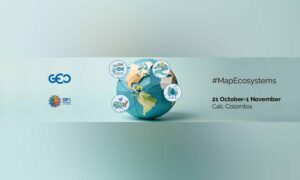
The Group on Earth Observation (GEO) together with GEOBON, Ai2 and Esri are hosting a pavilion on Earth observation and cutting-edge technology to support the implementation of the Kunming-Montreal Global Biodiversity Framework.
ILO
ILO was present with the aim of integrating biodiversity with the promotion of decent work. It organized a series of events in both the Blue Zone and the Green Zone.

ISO
ISO is at COP16 to showcase the importance of standards in supporting biodiversity and for the launch of ICONTEC’s Biodiversity Committee, with members from the ISO/TC 331 Biodiversity committee
IUCN
IUCN is hosting a pavilion under the banner “Unite for Nature, Home of Union” in the Blue Zone and host over 40 official side events. → Learn more about IUCN positions on COP16 priorities in IUCN Position Paper for CBD COP16 on scientific and technical issues and IUCN Position Paper for CBD COP16 on support mechanisms.

Minamata Convention on Mercury
The Minamata Convention on Mercury is participating to underscore the importance of coordinated action to protect global biodiversity, highlighting the Convention’s efforts in reducing mercury pollution, a major threat to both biodiversity and human health, with a special focus on vulnerable populations such as Indigenous Peoples and local communities.
OHCHR
The Office of the High Commissioner for Human Rights (OHCHR) is present in various areas, and hosted the side event Inclusive Conversations: Exploring the Role of a Human Rights-Based Approach for Biodiversity and Climate Action on 22 October.
TESS
As governments and stakeholders gather in Colombia for the 2024 UN Biodiversity Conference, TESS was be present supporting trade-related cooperation to protect and restore nature for sustainable development.
UN Trade and Development
UN Trade and Development is co-hosting the Trade Day and engaged in various events.
UNEP
UNEP is co-organizing, supporting and participating in various events.
UNEP FI
UNEP FI led the second Finance and Biodiversity Day to take place on 28 October 2024 aimed to support resource mobilization and alignment of financial flows with the vision and mission of the Global Biodiversity Framework.
WBCSD
WBCSD is at COP16 to bring the voice of the business community through various side events and focused on ensuring business is involved to speed up action on the NBSAPs working on headline indicators, targets and standards to demonstrate accountability and enable impactful action; contributing to defining and shaping a just transition agenda with an emphasis on the role business.
WHO
WHO is engaged in various events.

WIPO
WIPO is hosting two side events to present WIPO’s Work on Genetic Resources and Associated Traditional Knowledge: the WIPO Toolkit on Genetic Resources and Genetic Resources Data and the WIPO Community Entreprises Program (CEP)and the new WIPO Treaty on Intellectual Property, Genetic Resources and Associated Traditional Knowledge respectively on 22 and 30 October 2024.


WWF
WWF is at COP16 to push for urgent and ambitious action and is providing technical advice, research, and insights. WWF has launched a few documents ahead of COP16, including WWF expectations for CBD COP16, Global Roadmap for a Nature-Positive Economy, 2024 Living Planet Report, and actively engaged in various events.
Other events co-organized by Geneva actors include:
- Collaborative Action for Sustainable Wildlife Management – Highlights from Joint Initiatives of Collaborative Partnership on Sustainable Wildlife Management | The Collaborative Partnership on Sustainable Wildlife Management (CPW), a voluntary partnership between the CBD Secretariat, CIC, CIFOR, CITES Secretariat, CMS Secretariat, FAO, IIED, IIFB, IUCN, IUFRO, TRAFFIC, UNEP, and WOAH hosted a side event on 23 October 2024 to showcase progress made on selected joint initiatives within the Workplan.
- Contributions of the chemicals and waste agenda to support the Kunming-Montreal Global Biodiversity Framework | The BRS Conventions, the Minamata Convention, the Global Framework on Chemicals and UNEP hosted a side event on 24 October 2024 to present recent developments and outcomes under the chemicals and waste international agenda and explore ways on which this can be considered for supporting the implementation of the GBF. → Follow daily blogs by the Minamata Convention on Mercury and access related documents.
- Connecting the Dots: How International Cooperation on Trade and Trade Policies Can Support Action on the Global Biodiversity Framework | This opening session of the Trade and Biodiversity Hub, co-organized by UNCTAD, UNEP and TESS, taking place on 24 October 2024 provided an overview of the policy landscape, governance frameworks, and issues at the nexus of biodiversity, trade, and sustainable development, highlight the importance of international cooperation for an effective trade contribution to the global biodiversity agenda.
- Perspectives on the One Health approach, held within the framework of the Sixth Science-Policy Forum for Biodiversity and the Ninth International Conference on Sustainability Science, will see The Convention on Wetlands participating in the discussion on what is next in linking environmental, biodiversity, and human health sectors in the planetary crisis era on 27 October 2024.
- Mobilizing the biodiversity-related Conventions on the implementation of the Kunming-Montreal Global Biodiversity Framework | The Convention on Wetlands and CITES participated in this side event on 28 October 2024 to discuss tangible and actionable opportunities for biodiversity-related conventions to cooperate and build complementarity to support Parties’ efforts towards the implementation of the Kunming-Montreal Global Biodiversity Framework.
- How to include the private sector contributions in NBSAPs for an effective implementation of the GBF co-organized on 28 October 2024 by various actors including Business for Nature to present lessons learned from governments who started this process, discuss challenges and solutions as well as hearing directly from the business community on how engagement can be strengthened to reach an ambitious outcome.
- Ministerial Conference on Plastic Pollution including Marine Litter – Informal consultations addressing the mandates of UNEA 5/14 and the proceedings of the Intergovernmental Negotiating Committee | Canada, Colombia, Dominican Republic, Germany and Ghana with the support of UNEP hosted the Ministerial Conference as a follow-up of the one held in 2021 leading towards UNEA 5.2. The goal of the Conference is to build further momentum and political will to advance a coherent global strategy to end plastic pollution thus ensuring a future with clean environment. The conference took place on 28 October 2024 in the framework of COP16 at the Spiwak Hotel in Cali.
- Priority Actions for Insurance: Contributing to Nature-Positive and Resilient Future | As part of the Finance & Biodiversity Pavilion, during this event taking place on 29 October 2024, members of the PSI Working Group for Nature provided an update on the development of recommendations for priority actions to start embedding nature in insurance organisations and to contribute to the mission of the Global Biodiversity Framework to halt and reverse nature loss by 2030.
- Interoperable sustainable finance taxonomies: a key tool to mobilize private capital for the Global Biodiversity Framework implementation | UNEP FI, WWF and others explored how sustainable finance taxonomies can enhance private investment in biodiversity conservation and restoration, with a focus on the LAC Taxonomy Common Framework for Biodiversity in a side event held on 29 October 2024.
- UN Regional Commissions’ High-Level Side Event at CBD COP-16: Key Actions for Interregional and Regional Implementation of the Kunming-Montreal Global Biodiversity Framework | ECA, UNECE, ECLAC, ESCAP, CBD hosted a side event to launch the publication: “Mainstreaming Biodiversity and Investment Across Regions and Sectors: Key Messages, Good Practices, and Actions from United Nations Regional Commissions,” which supports the regional implementation of the Kunming-Montreal GBF on 30 October 2024
- Mapping Nature’s Footprint: The Global Ecosystems Atlas | GEO Secretariat launched the proof-of-concept of the Global Ecosystems Atlas during an official side event co-organized with CBD on 30 October 2024.
- The New WIPO Treaty on Intellectual Property, Genetic Resources and Associated Traditional Knowledge provided an introduction and overview of the WIPO Treaty agreed upon in May 2024. Join the side event taking place on 30 October 2024.
- Promoting the Joint CBD/Aarhus Convention Pocket Guide on Promoting Effective Access to Information and Public Participation regarding Living Modified Organisms/Genetically Modified Organisms (LMOs) | CBD and UNECE hosted a side event on 31 October 2024 to highlight different aspects from countries implementation on access to information and public participation regarding LMOs.
- Cooperation Day | Taking place on 31 October 2024, Cooperation Day emphasized the role of cooperation for efficient and effective implementation of the KMGBF and other biodiversity-related objectives.
Reports
- Global Ecosystems Atlas unveiled to transform ecosystems stewardship | The Group on Earth Observations (GEO) announced the launch of the proof-of-concept of the Global Ecosystems Atlas, the first harmonised resource dedicated to mapping and monitoring all the world’s ecosystems. The Global Ecosystems Atlas will serve as an essential tool to support the protection, restoration and sustainable management of ecosystems critical to addressing global environmental crises.
- Protected Planet Report | Launched by UNEP WCMC and IUCN, the report provides the first official global evaluation of progress towards one of the Framework’s 23 targets – Target 3 (the global commitment to protect and conserve 30% of the Earth’s lands and waters by 2030). Target 3 goes well beyond coverage, it requires that protected and conserved areas are effectively managed, equitably governed and recognized with respect for the rights of Indigenous Peoples and local communities. It also commits governments to conserve the most important natural spaces and to ensure that these areas are connected to each other. In short, the elements of the target call for in situ conservation to be scaled up in ways that benefit both nature and people.
- First Global Tree Assessment | According to the first Global Tree Assessment, published in the updated IUCN Red List of Threatened Species, thirty-eight % of the world’s trees are at risk of extinction. For the first time, the majority of the world’s trees have been listed on the IUCN Red List, revealing that at least 16,425 of the 47,282 species assessed are at risk of extinction. Trees now account for over one-quarter of species on the IUCN Red List, and the number of threatened trees is more than double the number of all threatened birds, mammals, reptiles and amphibians combined. Tree species are at risk of extinction in 192 countries around the world.
- Designing and managing protected and conserved areas to support inland water ecosystems and biodiversity | Motivated by the Kunming-Montreal Global Biodiversity Framework’s inclusion of inland waters in the target to conserve 30% of the planet by 2030, this IUCN report provides guidance in employing protected areas and other effective area-based conservation measures to benefit these ecosystems and the biodiversity they support. Through a series of case studies and synthesized research, it highlights how integrating the unique needs of inland waters into area-based strategies can improve conservation effectiveness across all realms, build climate resilience and sustain critical ecosystem services.
- What Are Nature Strategies and Nature Transition Plans? | Developed by Business for Nature, Glasgow Financial Alliance for Net Zer, Science Based Targets Network, Taskforce on Nature-related Financial Disclosures, WBCSD, WEF and WWF, this explainer document aims to help organizations articulate how they plan to respond and contribute to the transition implied by the GBF and support businesses and financial institutions drive accountability, and manage their nature-related dependencies, risks and opportunities.
- Exploring nature-positive buildings | WBCSD, in collaboration with its members and supported by global sustainable development consultancy Arup, has launched this research on how to measure and monitor the nature impacts of buildings across their whole lifecycle.
Latest News
- IUCN marks 60th anniversary of Red List with year-long campaign to accelerate species assessments | IUCN | 30 October 2024
- Global NGOs File Complaint with UN Program Over Support for “Corporate Greenwashing” Initiative | Friends of Earth | 24 October 2024
- Biodiversity declining even faster in ‘protected’ areas, scientists warn Cop16 | The Guardian | 24 October 2024
- The Global Children’s Declaration for Biodiversity was launched during a Press Conference on 23 October 2024.
- Colombia as the host country received the Declaration of the Rights of the Amazon, recognizing the Amazon as a subject of rights is essential for its protection and restoration.
- Closing Window of Opportunity: Mapping Threats to Important Areas for Conservation in the Pantropics | Earth Insight, International Indigenous Forum on Biodiversity (IIFB), the IUCN World Commission on Protected Areas (WCPA), Campaign for Nature, One Earth, and Wild Heritage | 21 October 2024
- Uncovering the Hidden Iceberg. A Global Perspective by the International Land Coalition presents a new global dataset shows alarming patterns of attacks against Indigenous Peoples, land and environmental defenders and exposes patterns of escalating and cyclical violence.
- Pollution is one of the top drivers of biodiversity loss. Why is no one talking about it at COP16? | EHN | 22 October 2024
- Informe sobre situación de violencia contra liderazgos ambientales en Colombia | PARES | 22 October 2024
- Time to mobilize and transform key sectors for biodiversity. A call to action | Multiple Organizations
- A ‘people’s COP’ to heal the planet: UN biodiversity summit opens in Colombia | UN News | 20 October 2024
- COP16 histórica: Con un gran acto inaugural Colombia recibe al mundo | CBD | 20 October 2024
- From Kunming-Montreal to Cali: Is the Financial System on Track? | UNEP FI | 18 October 2024
- WWF and partners deepen collaboration with TNFD on nature-related data initiatives | WWF | 18 October 2024
- Conservation policies must address an overlooked issue: how war affects the environment | Doug Weir, Sarah M. Durant, Henrike Schulte to Bühne et al. | Nature | 16 October 2024
- Experts urge States to fully integrate human rights at COP16 of the Convention on Biological Diversity | OHCHR | 15 October 2024
- COP16: More than 85% of countries miss UN deadline to submit nature pledges | Carbon Brief | 15 October 2024
- IUCN’s Grethel Aguilar: nature conservation must uphold Indigenous rights | Michelle Langrand | Geneva Solutions | 14 October 2024
- To “Make Peace with Nature,” CBD COP16 Must Address the Threat of Offshore Oil and Gas | CIEL
- Countdown to COP16: are businesses and government turning the tide on nature loss? | Business for Nature | October 2024
- Human Rights, Biodiversity, and the Role of Geneva | GEN
Biodiversity and human rights are closely interlinked. Without healthy, functioning ecosystems, which depend on healthy biodiversity, there would be no clean air to breathe, safe water to drink or nutritious food to eat. Learn how stakeholders and from international Geneva as a global hub for environmental governance are advancing a human rights-based approach in tackling biodiversity loss