
Événement Conférence
Bridging Commitments: Ending the Illicit Trade of End-Of-Life Ships: What Role for the Basel and Hong Kong Conventions? | 2025 BRS COPs Side Event

02 Mai 2025
18:15 – 19:45
Lieu: CICG, Room 2 & Online | Webex
Organisation: NGO Shipbreaking Platform, Basel Action Network
This side event to the 2025 meetings of the Conference of the Parties to the Basel, Rotterdam and Stockholm Conventions was organized by the NGO Shipbreaking Platform, in collaboration with the Basel Action Network (BAN) and the Geneva Environment Network (GEN).

About this Event
The Basel Convention’s restrictions on the trade of hazardous waste and its obligations for Environmentally Sound Management (ESM) are blatantly ignored by the shipping industry. Transboundary movements of end-of-life vessels are by large still conducted without obtaining Prior Informed Consent (PIC) from either exporting or importing countries. Modus Operandi for these environmental crimes is well documented, as are the negative environmental impacts of scrapping vessels without infrastructure to contain pollutants, ensure decent working conditions, and the safe disposal of all hazardous waste streams originating from ships.
Better enforcement of the Basel Convention is possible, and sustainable solutions can be scaled to ensure the safe and environmentally sound recycling of large ocean-going vessels. The Basel Convention’s ESM principles, PIC procedure and Ban Amendment are tools aimed at ensuring accountability, transparency, and environmental justice. They are also essential to effectively put an end to shipbreaking practices that harm human health, cause irreparable damage to sensitive coastal ecosystems, and put local livelihoods at risk.
With the participation of legal experts and the Government of Bangladesh – the main destination for the global end-of-life fleet – the side event will provide an updated legal analysis of the relationship between international laws applicable to ship recycling and outline why the Basel Convention cannot be replaced by the weak standards of the IMO’s soon-to-enter-into-force Hong Kong Convention.
Drawing upon recent case law holding ship owners liable for breaches of the Basel Convention, current trading patterns, and shipbreaking practices, the side event explored what actions Basel Parties can take to safeguard the environmental, social, and good governance principles that lay at the heart of the Basel Convention’s legal framework.
2025 Meetings of the Conference of the Parties to the Basel, Rotterdam and Stockholm Conventions
The seventeenth meeting of the Conference of the Parties to the Basel Convention (BC COP-17), the twelfth meeting of the Conference of the Parties to the Rotterdam Convention (RC COP-12) and the twelfth meeting of the Conference of the Parties to the Stockholm Convention (SC COP-12) will be held back-to-back in Geneva from 28 April to 9 May 2025. Side events to the 2025 meetings of the BRS COPs will serve as a platform for Parties and observers to share knowledge, build capacity, network and exchange on experience in the implementation of the BRS conventions. They also contribute to fostering discussions on specific issues under consideration at the COPs.
Geneva Toxic Free Talks
The Geneva Toxic Free Talks is an opportunity to reflect on the challenges posed by the production, use and dissemination of toxics. This series, taking place in the margins of the 2025 Meetings of the Conferences of the Parties to the Basel, Rotterdam and Stockholm Conventions (BRS COPs 2025), will highlight how Geneva, as a global hub for tackling toxic substances and waste, contributes to bringing together the actors working in reversing the toxic tide.
Speakers
By order of intervention.

Marcos ORELLANA
UN Special Rapporteur on toxics and human rights

Julia BLECKNER
Senior Researcher Asia Division and Global Health Initiative, Human Rights Watch

Ingvild JENSSEN
Director, NGO Shipbreaking Platform

Maria BACHE DAHL
Public Prosecutor, National Authority for Investigation and Prosecution of Economic and Environmental Crime (Økokrim), Norway

David AZOULAY
Director, Environmental Health/Managing Attorney, Centre for International Environmental Law

Rizwana HASAN
Adviser, Ministry of Environment, Forest and Climate Change, Government of Bangladesh

Jim PUCKETT
Founder/Chief of Strategic Direction, Basel Action Network | Moderator
Highlights
Video
Live from CICG.
Summary
Jim Puckett, Director of Basel Action Network and chair of the side event, shared concern with current efforts to undermine the Basel Parities’ obligations to address the problems of shipbreaking. He underscored that the side event would bring to the fore key legal aspects and on-the-ground realities necessitating effective enforcement of the Basel Convention.
UN Special Rapporteur, Marcos Orellana, shared his mandate’s longstanding engagement on shipbreaking, a sector that represents one of the largest sources of transfer of hazardous waste to developing countries. Exposure to toxic substances during shipbreaking can lead to a range of interferences with international protected human rights, he said, and stressed that for the shipbreaking sector to align with the right to a clean, healthy and sustainable environment facilities must ensure full containment of pollutants. He criticised the IMO’s Hong Kong Convention for allowing the beaching method which releases pollutants to the marine environment. He also stressed the importance of the Basel Ban Amendment in protecting developing countries and the need to clarify which state should be considered the “exporting state” in order to close existing loopholes and strengthen the implementation of the Basel Convention. Finally, on treaty parallelism, he argued that coexistence of conventions at the international level is common, and that in the case of the Basel and Hong Kong conventions conflict should not be presumed.
Julia Bleckner, from Human Rights Watch, shared findings of the report Trading Lives for Profits on the conditions at the shipbreaking yards in Chattogram, Bangladesh. The report unveils serious human rights violations, including life threatening working conditions and exposure to toxic fumes and substances without protection.
Ingvild Jenssen from the NGO Shipbreaking Platform, used an example from a shipbreaking yard in Alang, India, to showcase practices allowed under the Hong Kong Convention. She stressed that the scrapping of ships on beaches does not fulfil the obligations to ensure safe and environmentally sound management as required by the Basel Convention. She also gave examples of ship recycling facilities operating in major ship-owning countries where beaching is banned.
Public Prosecutor Maria Bache Dahl shared her experience on two successful cases involving the illegal export of end-of-life ships from Norway: the attempted export of the Harrier to Pakistan and the export of two Altera shuttle tankers to India. Highlighting criminal liability under the Basel Convention, she stressed that illegal exports of end-of-life vessels are economically motivated environmental crimes. In the Harrier case the scrap dealer Wirana received a fine, while the Norwegian ship owner received a six month prison sentence. In the shuttle tanker case, Altera accepted the fine issued and avoided with that a court hearing. In both cases the Public Prosecutor had argued that the “intention to discard” was clear.
David Azoulay, Director of CIEL, debunked claims that coexistence between the Basel and Hong Kong conventions is not possible and stressed that the Hong Kong Convention was adopted without prejudice to obligations under other international conventions. He shared the conclusions of Professor James Harris on why legal principles such as Lex Specialis and Lex Posteriori are not relevant to determining the relationship between the Basel and Hong Kong conventions, as both conventions already include conflict clauses. He highlighted that agreements under Article 11 of the Basel Convention need to provide an ‘equivalent level of control’ and showcased why it is clear this is not the case of the Hong Kong Convention. He said that the role of enforcement authorities under the Basel Convention could be facilitated by addressing existing challenges linked to determining the appropriate ‘exporting state’ for end-of-life vessels as well as clarification on when the ‘intent to dispose’ is materialised.
Jim Puckett, Director of Basel Action Network, ended the event in conversation with Rizwana Hasan, Adviser to the Bangladesh Ministry of Environment, Forest and Climate Change. Rizwana Hasan was asked to share her observations on the state of the shipbreaking sector in Bangladesh and also how Bangladesh would be moving forward with regards to regulating the sector. She stressed that the conditions at the yards remained inadequate and that mere compliance with the Hong Kong Convention would not provide sufficient protection. Yards in Bangladesh that claim to comply with the Hong Kong Convention would not be allowed to operate in western countries, she said, and questioned how the global community could accept such double standards. She maintained that there exists safer alternatives to both access steel and provide alternative livelihoods to the 20.000 shipbreaking workers, and highlighted the importance of the Basel Convention in terms of protecting developing countries from the dumping of hazardous wastes. She called on especially ship owning countries and the shipping sector to take responsibility and maintained that the IMO had failed to address concerns related to the use of flags of convenience at end-of-life and the production of unreliable documentation on hazardous wastes contained in the ships.
GEN @ 2025 BRS COPs


Gender, Toxics Exposures and the Right to a Clean, Safe, Healthy, and Sustainable Environment | 2025 BRS COPs Side Event
29 April 2025 | 18:15 – 19:45 CEST

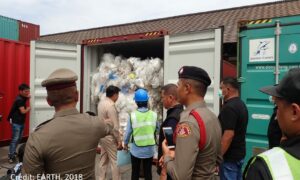
Preventing Plastic and E-Waste Trafficking: Lessons from the Frontlines | 2025 BRS COPs Side Event
4 May 2025 | 18:15 – 19:45 CEST

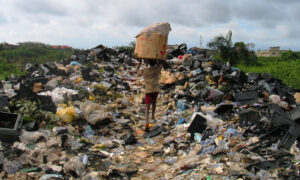
The Potential of the Bamako Convention in Furthering Implementation of the Basel Convention in Africa | 2025 BRS COPs Side Event
6 May 2025 | 18:15 – 19:45 CEST

One Health Approach to Addressing Pharmaceuticals in the Environment Across Key Sectors | 2025 BRS COPs Side Event
9 May 2025 | 13:15 – 14:45 CEST
Photo Gallery
More photos can be found on the BRS dedicated album.


Documents
Links
- Towards the 2025 Meetings of the Conference of the Parties to the Basel, Rotterdam and Stockholm Conventions
- Basel Parties Must Stand Firm Against Efforts to Deny Basel Competency over Waste Ships. Hong Kong Convention Cannot Replace Basel Convention Obligations | Basel Action Network | 24 April 2025
- Road to 2025 BRS COPs