
Event Conference
Spotlighting Approaches for a More Protective Stockholm Convention, With a Focus on Increasing Visibility of the Threats to Children’s Health | 2025 BRS COPs Side Event

01 May 2025
18:15 – 19:45
Venue: CICG, Room 11 & 12 | & Online, Webex
Organization: International Pollutants Elimination Network
This side event to the 2025 meetings of the Conference of the Parties to the Basel, Rotterdam and Stockholm Conventions is organized by the International Pollutant Elimination Network in partnership with the Alaska Community Action on Toxics (ACAT) and the United Firefighters Union of Australia with the support of the Geneva Environment Network.

About this Event
Persistent Organic Pollutants (POPs) cause harm to human health and the environment, not only where they are produced, used and disposed of but also in remote location such as the Arctic, contaminating traditional foods, water and the environment. Therefore, the Stockholm Convention acknowledges that Arctic ecosystems and indigenous communities are particularly at risk.
Children are especially vulnerable to exposure to POPs and other toxic chemicals. Harms to health may not be immediately visible, however early life exposures can have lifelong and irreversible consequences, including multiple diseases including neurodevelopmental harm, endocrine disruption, and other disorders. The seriousness of the current situation was underscored in a recent paper in the New England Journal of Medicine, where leading scientists in the field propose specific actions that need to be taken to protect kids
For the 2025 Stockholm Convention COP, the POPs Review Committee has recommended two large groups of chemicals and one pesticide for listing in Annex A for global elimination: medium-chain chlorinated paraffins (MCCPs); long-chain perfluorocarboxylic acids (LC-PFCAs), their salts and related compounds; and chlorpyrifos. All of these POPs are linked to endocrine disruption, and chlorpyrifos damages the developing brain in children.
The objective of this side event is therefore to increase awareness of the serious impact of POPs and other chemicals on children’s health, how the scientific evidence show that effective international measures are urgently needed, and highlight the importance of increased use of grouping approaches to enhance the effectiveness and health protectiveness of the Convention.
In addition, it provided evidence of why these groups of chemicals need listing with no or very limited, justified exemptions, as well as to present approaches and work done to find safer alternatives to these groups of chemicals to avoid regrettable substitution.
Finally, the side event discussed transparency and how the presence of these chemicals for any exempted uses must be made visible throughout the product lifecycle to ensure protection of human health and the environment.
2025 Meetings of the Conference of the Parties to the Basel, Rotterdam and Stockholm Conventions
The seventeenth meeting of the Conference of the Parties to the Basel Convention (BC COP-17), the twelfth meeting of the Conference of the Parties to the Rotterdam Convention (RC COP-12) and the twelfth meeting of the Conference of the Parties to the Stockholm Convention (SC COP-12) will be held back-to-back in Geneva from 28 April to 9 May 2025. Side events to the 2025 meetings of the BRS COPs will serve as a platform for Parties and observers to share knowledge, build capacity, network and exchange on experience in the implementation of the BRS conventions. They also contribute to fostering discussions on specific issues under consideration at the COPs.
Speakers
By order of intervention.

Jeanne CONRY
Immediate Past President, The International Federation of Gynecology and Obstetrics
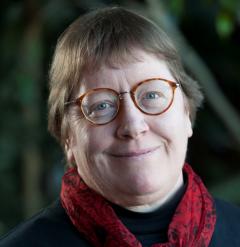
Pamela MILLER
Executive Director, Alaska Community Action on Toxics and Co-Chair, IPEN

Jasmine JEMEWOUK
Water Quality and Community Health Coordinator, ACAT & Indigenous leader, Inupiaq, Yupik and Cherokee from the village of Elim, Alaska

Gilbert KUEPOUO
Executive Director of Centre de Recherche et d’Education pour le Developement (CREPD)

Michael TISBURY
Assistant Chief Fire Officer at Fire Rescue Victoria & United Firefighters Union of Australia
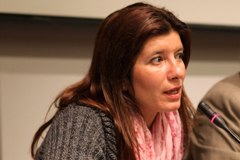
Gabriela MEDINA
Head, Basel Convention Coordinating Centre for Latin America and the Caribbean (BCCC), Uruguay
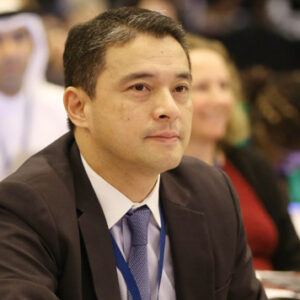
Juan Miguel CUNA
Undersecretary, Department of Environment and Natural Resources, Philippines

Bjorn BEELER
International Coordinator, IPEN | Moderator
Highlights
Video
Live from CICG.
Summary
The Scientific Evidence of the Magnitude of Impacts on Children’s Health Caused by Synthetic Chemicals
Jeanne CONRY | Immediate Past President, The International Federation of Gynecology and Obstetrics
- It is our most compelling role to invest in the health of women, children, families, and our futures by urgently reducing exposures to known and potential chemicals in our environment.
- Project Tender is an alliance of 50 leading scientists, health professionals, and advocates working to protect children from toxic chemicals and pollutants that harm brain development, with a focus on environmental impacts on preconception, pregnancy, and children’s health.
- Investing in women and empowering women is investing in our futures most effectively. Women are the best to optimize their health for future and existing pregnancies, to minimize any adverse health effects on a fetus, a child, or an adolescent, and to provide advice and counseling for friends and family. The speaker, as an obstetrician-gynecologist (OB-GYN), has seen women as caregivers, unifiers, the guiding force in many lives, and has become increasingly vocal about the environment while leading global organizations in the awareness of environmental health.
- Persistent organic pollutants (POPs) are toxic chemicals that adversely affect human health and the environment around the world. Because they can be transported by wind and water, most POPs generated in one country can and do affect people and wildlife far from where they’re used and released. They persist for long periods in time and can accumulate and pass from one species to the next through the food chain.
- The United States signed but is one of only four nations that failed to ratify, joining Israel, Haiti, and Malaysia. This does not prevent dedicated scientists and advocates in the United States from providing intensive involvement in research, research translation, education, and advocacy.
- Implementing decisions that wholly protect a mother and her fetus is implementing decisions that protect the entire population. Restricting chemicals that have the potential to harm the world’s most vulnerable is protecting all humankind.
- Exposures to toxic chemicals in air, water, food, soil, and consumer products are widespread, beginning in the uterus. The fetus, infant, and young children are especially vulnerable to harm because their bodies and brains develop rapidly, and chemicals can interfere with sensitive biological processes during these critical periods.
- It is before, during, and after pregnancy that we can have the most important impact on children’s health and maternal health.
- By controlling environmental toxicants, pregnancy losses, stillbirths, preterm births, birth defects, cancer, chronic diseases, and other complications can be prevented.
- A 2011 analysis of the US Centers for Disease Control and Prevention found that 90% of pregnant women in the United States had detectable levels of 62 chemicals in their bodies out of 163 that were assessed. These are chemicals like PFAS, PBDE, and phthalates. All of them are recognized by the US National Institute of Health to cause adverse pregnancy outcomes and birth defects.
- Recent research has shown that one item recommended for all pregnant women is almost always contaminated with toxins. Research on prenatal vitamins shows that almost every brand tested in every study that has taken place for the last several years shows mercury, arsenic, cadmium, and pesticides. Many of these chemicals cross the placenta and are found in the core blood and fetal tissues.
- The International Federation of Gynecology and Obstetrics (FIGO) released a series of statements.
- In 2015, FIGO adopted guidance on the reproductive health impacts of exposure to toxic environmental chemicals to protect women and children.
- In 2019, FIGO stated that global health should be a guiding light and recommended that glyphosate exposure to populations end with a full global phase-out.
- In 2023, FIGO stated that a formal global regulatory environment should be put in place with post-production testing programs that analyze, to begin with, vitamins but also other products too, to make sure that chemicals should not be found in products that are marketed or consumed during pregnancy and by all women.
- Project Tender stated that it is most timely that today, as an organization devoted to maternal and child health, we are in support of listing chlorpyrifos as a persistent organic pollutant. Chlorpyrifos is an organophosphate pesticide, a chemical class composed of nerve agents that inhibit neurodevelopmental processes and adversely impact later neurologic function.
- These pesticides are associated with symptoms or diagnoses of ADHD and autism. One study in California found children born to pregnant women living near agricultural fields where chlorpyrifos has been applied had a 60% greater likelihood of developing autism than children of pregnant women who were not so exposed. To effect change, we must first overcome massive global regulation hurdles in global chemical regulation and, second, encourage health care leadership to advocate for environmental health awareness and behavioral change.
- The global initiative P2I, preconception to infancy, focuses on environmental exposures across a lifespan and advocates for a world where products must be certified as safe and free of potentially toxic chemicals through post-production testing.
- Today, we rely on awareness of patients, on their self-advocacy, on manufacturers’ labeling that states whether a product has chemicals or toxicants in it, and not whether that label is in fact correct.
- Instead, products should undergo post-production analysis to know what clean truly is and that they are clean. We must look at proactive body burden measurements in patients to guide them. Advocacy is the first important step, and knowledge is power. Change relies on awareness of risk, ease of change, and the recognition of the need to change. Knowing risks and acting upon them can change this world.
The Vulnerability of Arctic Indigenous Children— Protecting the Health of Future Generations
Pamela MILLER | Executive Director, Alaska Community Action on Toxics and Co-Chair, IPEN; and Jasmine JEMEWOUK | Water Quality and Community Health Coordinator, ACAT & Indigenous leader, Inupiaq, Yupik, and Cherokee from the village of Elim, Alaska
- The health of children and future generations is not an abstract concern but a critical and urgent issue tied to chemical pollution, especially within the context of the BRS COP. Addressing this requires collective action grounded in the right to clean air, water, and food free from toxic substances, which guides the mission and work of the Alaska Community Action on Toxics. Their approach spans community-based research, outreach, education, and advocacy, targeting systemic policy change because toxic chemicals transcend political boundaries and disproportionately affect regions like the Arctic.
- The Arctic functions as a hemispheric sink for POPs, with contaminants arriving via ocean and atmospheric currents. These chemicals accumulate in local ecosystems, entering the bodies of fish, wildlife, and ultimately Indigenous Peoples, who register some of the highest concentrations of these toxic substances globally. The problem is compounded by Arctic warming occurring at four times the global average, accelerating chemical mobilization and transport into the region, and deepening health and environmental threats.
- Alaska is home to more than 2,000 toxic waste sites, many of which are remnants of military activities due to the state’s strategic Cold War positioning near Russia. These sites continue to contribute to health disparities in Indigenous communities, particularly through chemicals like PCBs. This legacy of contamination has had lasting effects on the health and well-being of generations, observed firsthand by local health workers.
- The presentation highlighted several key chemicals discussed throughout the BRS COP and their associated dangers. Chlorpyrifos is identified as a potent neurotoxicant with particular harm to developing children’s brains. Medium Chain Chlorinated Paraffins (MCCPs), found in common consumer products including children’s toys, are linked to developmental toxicity and broad health impacts. Long-chain Perfluorocarboxylic Acids (PFCAs) also pose developmental risks and are transmitted from mother to child through the placenta and breast milk. The call is made for a global ban on these substances with no exemptions, citing their profound threat to vulnerable populations.
- The personal and cultural story of Jasmine Jemewouk’s great-grandmother, Marian, is shared to underscore the human impact of systemic disruption. Forced relocation by the Bureau of Indian Affairs (BIA) uprooted her community, a pattern that erased language, culture, and autonomy. The trauma of colonization was internalized, leading to generational loss, evidenced in Marian forbidding her daughter from speaking Yupik after being punished for using it in school. This erasure is juxtaposed with the endurance of traditional foodways as a core part of identity and health.
- Traditional diets in the Arctic remain central to Indigenous health, with foods like beluga whale, king salmon, seal oil-soaked greens, and seasonal berries offering essential nutrients unavailable through store-bought alternatives. Due to isolation and transport delays, fresh produce is often spoiled or prohibitively expensive, reinforcing reliance on locally sourced, culturally significant foods. However, even these foods are no longer safe, as long-range transported contaminants infiltrate traditional diets, silently poisoning communities.
- Shaktoolik, Jasmine’s home village, is now among the top four Alaskan villages at imminent risk of destruction due to climate change. Once-protective sea ice has disappeared, exposing the land to intensified fall storms that erode the coastline and destroy infrastructure. Homes and historical sites are being claimed by the ocean, and hunting routes are rendered dangerous without ice cover. Climate change, coupled with contamination, is not only threatening survival but dismantling a way of life that has endured for generations.
- The compounded effects of environmental toxins and climate change are linked to broader social issues in Arctic communities. These include declining test scores among children, rising rates of youth suicide, substance abuse, and domestic violence, all part of a web of trauma exacerbated by systemic marginalization and environmental injustice. The community is now being forced to relocate again due to climate change, echoing the displacement from previous generations, illustrating a continuity of imposed upheaval.
- Permafrost thaw, driven by climate change, represents another irreversible threat. Once melted, permafrost cannot refreeze, and its loss destabilizes infrastructure such as schools, clinics, and travel routes, which are essential for community survival and connectivity. Entire chunks of land are collapsing into the ocean, and no technological solution currently exists to halt or reverse this process. This erosion of physical ground mirrors the erosion of cultural and community foundations.
- The speakers closed by referencing their ongoing community-based research in Sivuqaq (Saint Lawrence Island), reinforcing that scientific inquiry must be grounded in Indigenous knowledge and participation. Their research prioritizes the lived experiences of those most impacted by toxic exposure and aims to restore environmental justice through locally led solutions and global policy advocacy.
POPs in children’s products in Africa
Gilbert KUEPOUO | Executive Director of Centre de Recherche et d’Education pour le Developement (CREPD)
- IPEN provided blood lead testing in Cameroon, and the results revealed that 86% of the individuals tested had lead concentrations exceeding the then-recommended safety threshold of 5 micrograms per deciliter (now reduced to 3.5 µg/dL), highlighting a significant public health concern. This is through practical and technical measures that IPEN demonstrates how civil society and stakeholders can play a vital role in addressing chemical safety and environmental health challenges.
- IPEN led a cross-country sampling initiative across seven African nations (including Cameroon, Ethiopia, Gabon, Morocco, and Tunisia) to investigate the presence of POPs—specifically flame retardants—in recycled plastic consumer goods such as children’s toys. Sampling was conducted in environments frequented by children (e.g., schools, homes, markets) to assess potential exposure through direct contact with contaminated materials.
- The findings of the sampling initiative identified evidence of hazardous recycling practices, wherein plastics containing POPs from electronic and electrical waste were repurposed into sensitive applications, including children’s toys and school supplies. Laboratory analysis revealed POP concentrations well above the Low POP Content Level (LPCL) of 50 ppm, as defined under the Stockholm and Basel Conventions. In some samples, POP levels reached 400–650 ppm—up to 13 times the acceptable threshold—thereby qualifying the items as POP waste requiring specialized disposal under international guidelines. Consistent patterns were found across all countries studied, reinforcing the systemic nature of the issue.
- Scientific research (experts such as John from Mexico) highlights the severe health outcomes associated with POP exposure, including cancer and infertility, especially among children.
- These findings emphasized the urgent need for global regulatory action, warning that exemptions and weak enforcement in chemical listings render policy instruments ineffective.
- Unlike 50 years ago, today’s environment faces an escalating crisis due to the introduction of thousands of synthetic chemicals, many of which have no known antidote, mitigation strategy, or long-term safety data. These chemicals, often used in consumer products, electronics, and industrial processes, are invisible to the human eye and frequently overlooked in public health assessments. There is therefore a need to leverage advanced detection tools and analytical machines to uncover the presence of POPs and other toxic compounds in materials and products.
Reflections from a Country Perspective on How the Stockholm Convention Can Further be Utilized to Protect Children’s Health from POPs
Gabriela MEDINA | Head, Basel Convention Coordinating Centre for Latin America and the Caribbean (BCCC), Uruguay
- For countries with economies in transition like Uruguay, challenges persist around chemical safety and environmental health. Despite being a party to the Stockholm Convention for nearly 21 years, the high costs of chemical analysis and lack of equipment remain major barriers, particularly in developing countries. This affects the ability to monitor and control listed substances, especially at border customs where resources are limited.
- The Stockholm Convention has proven effective over time, particularly through programs like the Global Monitoring Plan (GMP), which has shown reductions in persistent organic pollutants such as pesticides in human breast milk, air, and water samples. These results demonstrate the utility of the convention as a key tool in addressing chemical contamination, even though progress can sometimes feel slow.
- The pressure from civil society has been instrumental in getting more chemicals listed under the convention, which remains essential despite the slow and consensus-based listing process. However, analyzing new substances is expensive, and alternatives are not always readily available or safer, raising concerns that rushed replacements could prove more harmful over time.
- A significant gap exists in considering the specific vulnerability of children to POPs, due to their developing systems and relatively higher exposure. The current monitoring frameworks under the convention do not sufficiently focus on child-specific health metrics, which limits understanding of the real impacts on this particularly at-risk group.
- National Implementation Plans (NIPs), required of all parties, must be strengthened by explicitly integrating child-specific exposure pathways and health risks. This includes better data collection on children’s exposure, especially in rural and urban environments, and targeting products and environments commonly associated with children, such as toys, schools, playgrounds, and household dust.
- In regions like Latin America, open dumpsites have historically been a major source of exposure, with entire families, including children, working and even living in these conditions. While some progress has been made in closing these sites and shifting to better waste management technologies, further effort is needed to eliminate these high-risk practices entirely.
- Enhancing the effectiveness of NIPs requires improved awareness and capacity building among key stakeholders, including health workers who are often unfamiliar with illnesses related to POPs. Medical professionals must be educated on identifying symptoms linked to chemical exposure, and national campaigns should promote public awareness on reducing exposures in homes, schools, and through food.
- Enforcement of regulations concerning imports and labelling of products containing POPs is often weak due to limited national capacity. Building stronger systems at customs and harmonizing regional standards and information sharing are crucial for identifying and blocking contaminated products before they reach consumers.
- Promoting safer alternatives and green chemistry is critical, especially in agriculture and manufacturing, where children are commonly exposed through pesticides, consumer products, and contaminated environments. Local research and innovation should be supported to develop non-toxic materials and practices, and the convention can play a larger role in facilitating this transition.
- Stronger global and regional cooperation is needed to support developing countries in building laboratory capacity, technical expertise, and sharing critical data. South-South cooperation should be expanded to promote technical training and facilitate the inclusion of child health indicators in monitoring frameworks.
- While breast milk is a useful matrix for assessing POP exposure in children, the current monitoring systems lack a direct focus on child health. There is an urgent need for the Convention and its governing Conference of the Parties to include child-specific health metrics in future monitoring plans, as current documentation does not reflect these concerns.
- Despite the complexity of chemical exposure and the difficulty in attributing specific health conditions to individual pollutants due to their mixed presence in products and food, stronger commitments and clearer child health priorities are needed. Civil society continues to be a driving force in pushing the convention forward, even if progress feels gradual.
- The Stockholm Convention remains a valuable tool for protecting human health, but it must evolve to explicitly integrate child health considerations. Clearer guidance, stronger monitoring, and more targeted policies are needed to ensure children are adequately protected in both the short and long term.
Juan Miguel CUNA | Undersecretary, Department of Environment and Natural Resources, Philippines
- The Department of Environment and Natural Resources in the Philippines led a project focusing on transforming informal e-waste recycling practices into a legally recognized and environmentally sound system by establishing a registered Treatment, Storage, and Disposal (TSD) facility.
- Prior to the project and government intervention, informal recycling of electronic waste (e-waste) was widespread, especially in highly urbanized areas. Informal waste recyclers collected waste electrical and electronic equipment (WEEE) from households and dumpsites, extracting reusable materials using unsafe and unregulated methods.
- Women and children in affected communities are highly exposed to POPs and other hazardous chemicals like lead. Many young people, often from low-income families, engage in informal e-waste collection at an early age to support household income. Discarded electronic equipment is frequently dumped in alleys and water bodies, leading to environmental contamination, particularly of local water sources.
- The government, with support from the Global Environment Facility (GEF) and UNIDO, partnered with the EcoWaste Coalition and local communities engaged in e-waste recycling. Recognizing the challenge of convincing these communities to join the program, the EccWaste Coalition played a key role in building trust and promoting participation. Together, they collaborated with Integrated Recycling Industries Philippines, a registered TSD facility, to design a facility for e-waste dismantling. Additionally, the partnership developed a training module to educate community dismantlers on safe and sustainable recycling practices.
- The project assisted the community in obtaining necessary government permits for registering as a TSD (Treatment, Storage, and Disposal) facility under the Environmental Management Bureau, ensuring that e-waste transport vehicles were properly inspected and certified. A business plan was developed, allowing recyclers to secure better value for recovered materials, promoting the facility’s sustainability.
- The project also ensured that children were no longer employed in dismantling activities and provided personal protective equipment and proper training to promote environmentally sound and safe practices. Guidance from the Stockholm Convention was instrumental in addressing health concerns related to women and children and improving the community’s approach to e-waste recycling.
- Thanks to this initiative, the model is now being replicated in other areas, extending the impact of the project beyond the four initial pilot sites.
Fluorine-Free Firefighting Foams: Effective, Safer Alternatives to PFAS, Protecting Firefighters and Children from Long-Term Harm
Michael TISBURY | Assistant Chief Fire Officer at Fire Rescue Victoria & United Firefighters Union of Australia
Long-term advocacy and frustration from inaction
- The Firefighters Union of Australia has been coming to the BRS COPs for 10 years, advocating for firefighter safety and community safety.
- Despite overwhelming evidence of PFAS harm, some countries have done nothing for decades. South Korea recently asked for an extension on PFAS containing firefighting foam, thus ignoring firefighters’ safety for another decade.
- For a quarter of a century, everybody has known the PFAS contained in firefighter foams kills people, kills firefighters, destroys communities. 24 years later, the same lies, misinformation, and myths are still widespread generally and perpetrated by vested interest of chemical companies.
Many myths and misinformation about fluorine free foam must be deconstructed
- Fluorine free foam is effective in turning down large fires, and not less effective than Aqueous Film Forming Foam (AFFF). To support this evidence, Assistant Chief Fire Officer (ACFO) Tisbury gives the example of a massive fire that was completely extinguished within 8 hours using fluorine free foam, which is a safer alternative to the PFAS containing foam.
- Firefighting foams cannot be contained, and firefighters are as adversely affected by toxic chemicals as every other person on the planet as firefighting environments don’t allow for safe containment or runoff. Because of the extensive water use to extinguish the fire and the resulting fire water runoff, chemicals contained in the foam are impossible to contain and spread in waters.
- Fluorine free farm does work with salt water. The fluorine free foam has certification from the International Maritime Organization, is used by Equinor and Exxon Mobile on all their offshore platforms, and on most major hazard facilities that Australian Firefighters respond to under emergency conditions as they are on a dock or a port and therefore suck water out of the dock or the ocean.
- Many fluorine free foams have MIL-SPEC (military specifications) certification, especially since the fluorine requirement has been removed from the states of the certification. Naval vessels don’t have any specific MIL-SPEC and can also use fluorine free foam.
- Fluorine free foam and fluorinated foam can be used together effectively, as has been tested in Australia during the transition from fluorine containing to fluorine free foams.
Call to pay attention to vested interests
- Some representatives of chemical or petrochemical companies pose as fire experts to spread disinformation, trying to outrank and undervalue the expertise of actual firefighters such as ACFO Tisbury and Commander Hamilton.
- ACFO Tisbury calls to not trust manufacturers, as chemical companies will pretend their products are fluorine free. Even A-class foam, not supposed to contain PFAS, was found contaminated.
Real-world harm to firefighters and communities & urgent need for government action
- Firefighters’ legal responsibilities are for the protection of life, property and the environment. Using fluorine containing foams poisons and contaminates the communities they are supposed to protect.
- Firms and governments lack concern and action. Achievements of Australian fire services in eliminating fluorinated foams are solely linked to firefighters’ persistence and hasn’t been supported by federal legislation.
- It is urgent to take action to protect lives of those whose duty is to protect lives. There are no reasons to do nothing, only excuses.
- Despite the absence of procedures for truck decontamination and in the face of evidence of blood contamination and PFAS contained in their bodies, firefighters developed a 32-stage process to decontaminate trucks, which they are willing to give out for free. All their trucks are now below 70 parts per trillion.
- They also came up with a blood PFAS treatment to try to undo the damage cause to them and to communities. It is now at the stage of station testing and remediation work. Partnering with Macquarie University, they also found that PFAS blood levels could be significantly lowered over a 12-month period with plasma or blood donating. It’s been published and peer reviewed and is now accessible and free of charge.
- There are unavoidable exposures and avoidable exposures to PFAS. PFAS exposures for firefighters is 100% avoidable. The other stuff is unavoidable.
- Lack of awareness in the medical community about PFAS is real. One can ask for a PFAS blood test at the doctor and try to interpret the results with them to inform them. Clinician advice now exist and can be shared for free with other doctors to be able to interpret that.
- PFAS is an endocrine disruptor and makes firefighters and communities more vulnerable to unavoidable toxins and dioxins that they’re exposed with every fire. It is also one of the few chemicals that biomagnifies, that increases as it goes up the food chain. It has been found in breast milk.
- Exposure to PFAS reduces firefighter’s and their kids’ life expectancy and response to vaccines, evidence has shown lower birth weights and increased levels of miscarriage.
Companies responsibility
- Chemical companies never get held to account for the chemicals they spread into nature.
- It would be best to test the chemicals to make sure they are safe before putting them on the market. It takes a long fight and many years to prove it is not safe and to withdraw it from the market.
Research
- Firefighters’ Personal Protective Clothing (PPC) is full of PFAS. It is unknown whether it gets into their body.
- There is no PFAS-free turnout gear at the moment.
- An ongoing study with Deakin University and Dr. Luana Main is seeking to establish how much PFAS from the turnout gear gets into firefighters’ bodies. Results of that study are expected to put pressure on manufacturers to produce turnout gear with the required thermal protection without lowering the standards.
- Processes and procedures are in place such that firefighters only wear the turnout gear when it is needed for the thermal protection. Their station wear or equipment for road rescue, industrial rescue or emergency medical response has no PFAS in it.
Advocacy
- After many years advocating for Parliament Inquiries, Federal Senate Committees, at the UN Stockholm Convention and not being heard, this is the last COP the Fire Rescue Victoria will attend.
- ACFO Tisbury finally calls to take action urgently and to adopt the safe alternatives that exist.
GEN @ 2025 BRS COPS

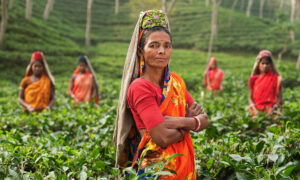
Gender, Toxics Exposures and the Right to a Clean, Safe, Healthy, and Sustainable Environment | 2025 BRS COPs Side Event
29 April 2025 | 18:15 – 19:45 CEST
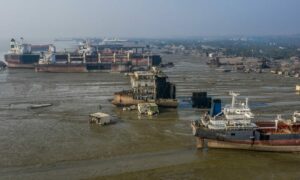
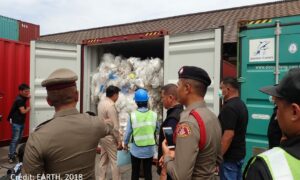
Preventing Plastic and E-Waste Trafficking: Lessons from the Frontlines | 2025 BRS COPs Side Event
4 May 2025 | 18:15 – 19:45 CEST
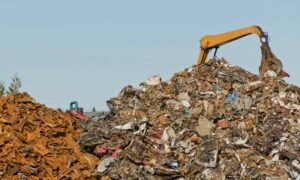
The Potential of the Bamako Convention in Furthering Implementation of the Basel Convention in Africa | 2025 BRS COPs Side Event
6 May 2025 | 18:15 – 19:45 CEST

One Health and the Role of Geneva
9 May 2025 | 13:15 – 14:45 CEST
Photo Gallery
More photos can be found on the BRS dedicated album.


