
Event Conference
The Potential of the Bamako Convention in Furthering Implementation of the Basel Convention in Africa | 2025 BRS COPs Side Event
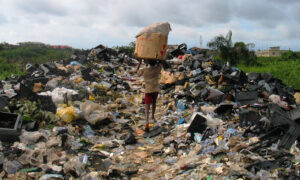
This side event to the 2025 meetings of the Conference of the Parties to the Basel, Rotterdam and Stockholm Convention is organized by the Republic of the Gambia in collaboration with the Secretariat of the Bamako Conventions, UNEP’s Africa Office, BRS Regional Centres in Africa (Nigeria, Senegal, South Africa, and Egypt), Mali, Republic of the Congo with the support of the Geneva Environment Network.

About this Event
This side event explores the potential of the Bamako Convention to support the implementation of the Basel Convention and the Basel Ban Amendment in Africa. The objectives are to educate stakeholders on the history and current status of the Bamako Convention, its potential to significantly strengthen protections in Africa from hazardous wastes, the steps needed for Bamako to reach its full potential as a strong protective mechanism against hazardous wastes, and key areas of cooperation and collaboration between Basel and Bamako in ways that would be mutually beneficial for both Conventions. The event contributed to the BRS theme by developing support for enhanced management of chemicals and waste across the entire continent of Africa.
2025 Meetings of the Conference of the Parties to the Basel, Rotterdam and Stockholm Conventions
The seventeenth meeting of the Conference of the Parties to the Basel Convention (BC COP-17), the twelfth meeting of the Conference of the Parties to the Rotterdam Convention (RC COP-12) and the twelfth meeting of the Conference of the Parties to the Stockholm Convention (SC COP-12) will be held back-to-back in Geneva from 28 April to 9 May 2025. Side events to the 2025 meetings of the BRS COPs will serve as a platform for Parties and observers to share knowledge, build capacity, network and exchange on experience in the implementation of the BRS conventions. They also contribute to fostering discussions on specific issues under consideration at the COPs.
Speakers

David OGDEN
Deputy Executive Secretary, Basel, Rotterdam and Stockholm Conventions

Alexander MANGWIRO
Regional Coordinator, Chemicals and Pollution Action Sub-Programme, Bamako Convention Secretariat

Jitendra SHARMA
Programme Management Officer, UN Environment Programme
Semia GHARBI
Chairperson, Association of Environmental Education for Future Generations | Réseau Tunisie Verte | Middle East and North Africa Coordinator, IPEN
Dawda BADGIE
Executive Director, National Environment Agency, The Gambia

Perine NKOSI KASONDE
Manager Licensing and Compliance Services, Basel Focal Point, Zambia
Joseph GANONGO
Focal Point Bamako Convention, Ministry of Environment, the Republic of the Congo

Balla SISSOKO
Deputy National Director of Sanitation and Pollution and Nuisance Control (DNACPN), Ministry of the Environment, Sanitation and Sustainable Development (MEADD), Mali

Oludayo DADA
African Expert on Chemicals and Waste-Related MEAs, Nigeria
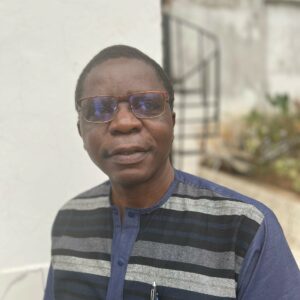
Gilbert KUEPOUO
Executive Director, Centre de Recherche et d’Education pour le Developpement (CREPD)

Lamin JAITEH
National Environment Agency, The Gambia | Moderator
Highlights
Video
Live from CICG.
Summary
Opening Statement | David OGDEN, Deputy Executive Secretary, Basel, Rotterdam and Stockholm Conventions
- The Basel and Bamako Conventions have worked hand in hand for many years to protect parties from receiving unwanted imports of waste they cannot manage. In doing so, they protect human health and the environment.
- Since its inception, the Bamako Convention has been inextricably linked with the Basel Convention. Developed by and for the African continent, the Bamako Convention was intended to build on global experiences and address problems specific to the African region.
- With 191 parties, the Basel Convention has near-universal coverage. Regional agreements, such as the Bamako Convention, reinforce national actions and demonstrate African commitment and solidarity toward sound waste management.
- The provisions of the two conventions are mutually reinforcing, including the right to prohibit the import of hazardous waste under Basel Convention Articles 4 and 13, and most notably, the Ban Amendment, which entered into force in 2019 and has been ratified by 25 African countries.
- This complementarity strengthens efforts to ensure that African states do not receive imports of waste they neither want nor can safely manage.
- The Ban Amendment and notifications on the Basel Convention website raise awareness of parties exercising their right to prohibit waste imports and place a corresponding obligation on exporting parties to prevent such movements.
- Full use of these Basel Convention provisions could significantly contribute to the Bamako Convention realizing its potential.
- Over the years, waste management efforts in Africa have evolved. Parties in the region are stepping forward and sharing their experiences as waste management champions.
- Representatives from the African region have engaged in various workstreams—inter-sessional working groups, expert groups, and other Basel Convention bodies—to enhance global waste management.
- This work is essential to voice the African perspective and ensure that guidance, projects, and activities reflect regional realities.
- Furthermore, this involvement builds bridges between regions, helping to prevent illegal traffic and supporting exporting states in ensuring such movements do not occur.
- It is a positive development that parties are increasingly aware of and using provisions such as take-back clauses and re-import obligations under the Basel Convention.
- The Secretariat has always stood ready to cooperate with the Bamako Convention Secretariat. For example, in September 2019, the BRS Secretariat organized a regional workshop in collaboration with the Bamako Secretariat, with participation from experts both within and outside the region.
- There is also mutual participation in each other’s meetings and conferences of the parties. This spirit of international cooperation is a strength and should be nurtured.
Bamako Implementation | Alexander MANGWIRO, Regional Coordinator, Chemicals and Pollution Action Sub-Programme, Bamako Convention Secretariat
- The Bamako Convention was designed to protect the African continent from illegal dumping and trafficking of hazardous waste. African countries found it necessary to adopt it by utilizing Article 11 of the Basel Convention, which encourages parties to enter into bilateral, multilateral, and regional agreements to help achieve the objectives of the Convention.
- The Bamako Convention was adopted in 1991 under the Organization of African Unity (OAU) – now African Union – and came into force in 1998. Currently, we have 35 signatories and 30 parties.
- Its primary aim is to ban the import of hazardous waste into Africa and to regulate its transboundary movement within the continent.
- We’ve documented several iconic cases of illegal dumping that necessitated the Bamako Convention. These include:
-
- Egypt (1975)
- Probo Koala incident in Côte d’Ivoire (2006)
- Tunisia (2020)
- Liberia (2020)
- Mombasa, Kenya (2020)
- Nigeria (1987)
- All these cases are documented on the Conventions’ website.
- The Bamako Convention bans the import of hazardous waste, including radioactive waste—unlike the Basel Convention, which does not cover radioactive materials.
- It promotes:
-
- Environmentally sound waste management
- Development of national action plans
- Prior informed consent procedures for transboundary movement
- Cleaner production technologies
- Research and innovation in waste reduction
- The Convention aligns well with the Basel Convention and the UN Sustainable Development Goals (SDGs). It contributes to:
-
- Pollution reduction
- Public health protection
- Economic benefits through green jobs and circular economy
- Empowerment of youth and women
- However, it faces several challenges:
-
- Weak enforcement due to limited resources and institutional capacity
- Poor border control
- Lack of financial and technical support
- Low public awareness—many citizens don’t even know what the Bamako Convention is
- Due to poor infrastructure, municipal solid waste, healthcare waste, and construction waste are often mismanaged. This creates loopholes for illegal dumping.
- Open dumping and burning of waste—including batteries, electronics, tires, and organic waste—contribute to pollution and climate change.
- To reduce the environmental and health impacts of hazardous waste, we must:
-
- Strengthen implementation mechanisms
- Enhance digital monitoring of waste movements
- Enforce penalties for illegal activities
- Provide ongoing training for stakeholders
- Promote public health and education campaigns
- Engage communities in whistleblowing and enforcement
- The Bamako Convention is a critical instrument for protecting Africa from hazardous waste. While challenges remain, there are many opportunities for sustainable development through better enforcement, investment in waste management, and regional cooperation.
- By strengthening implementation and engaging all stakeholders, member states can achieve a cleaner and healthier environment.
Why is Bamako a vital instrument for Africa, the issues of chemicals and wastes, and the Basel Convention?
Dawda BADGIE, Executive Director, National Environment Agency, The Gambia
- The Bamako Convention is essential. Remember the 2006 Probo Koala incident? Toxic waste was dumped in Africa, killing 17 people and affecting thousands. Pollution doesn’t need a visa—it crosses borders freely. This Convention is our tool to protect ourselves and future generations.
Jitendra SHARMA, Programme Management Officer, UN Environment Programme:
- The Convention helps manage hazardous waste generated within Africa and prevents imports from other regions. It promotes circularity, green jobs, and synergy with other conventions. For example, we’re launching an electronics waste project in six Southern African countries.
- The Bamako Convention will be key in ensuring environmentally sound management.
Semia GHARBI, Chairperson, Association of Environmental Education for Future Generations | Réseau Tunisie Verte | Middle East and North Africa Coordinator, IPEN (Tunisia)
- Tunisia recently faced illegal waste imports despite the Basel Convention. It took two years and civil society pressure to return the waste. The Bamako Convention must be strengthened to prevent such cases.
- It also addresses radioactive waste and low POPs content limits—issues Basel does not fully cover.
Gilbert KUEPOUO, Executive Director, Centre de Recherche et d’Education pour le Developpement (CREPD) (Cameroon):
- Think of Africa as living downstream from a polluted river. We can either build a dam or move the population—obviously, we must build the dam. The Bamako Convention is that dam. It also bans the import of banned or severely restricted chemicals, which Basel doesn’t.
Balla SISSOKO, Deputy National Director of Sanitation and Pollution and Nuisance Control (DNACPN), Ministry of the Environment, Sanitation and Sustainable Development (MEADD) (Mali)
- The Convention respects national definitions of waste. That’s crucial because definitions are often debated in negotiations.
Perine NKOSI KASONDE, Manager, Licensing and Compliance Services, Basel Focal Point (Zambia)
- Africa has unique vulnerabilities. Bamako addresses those by fostering regional solutions and preventing hazardous waste imports.
Oludayo DADA, African Expert on Chemicals and Waste-Related MEAs (Nigeria):
- The Cairo Guidelines of 1987 were drafted before the Basel Convention. Africa has always been proactive. We must own and strengthen Bamako. No one else will protect us unless we do it ourselves.
Joseph GANONGO, Focal Point Bamako Convention, Ministry of Environment (Republic of the Congo):
- The Convention is a model for environmental protection. It’s time we fully implement it to safeguard our communities.
What is preventing the Bamako Convention from realizing its potential and what steps can we take to empower the Bamako Convention and revitalize it?
Dawda BADGIE, Executive Director, National Environment Agency (The Gambia):
- We need to take ownership. We’re often seen as beggars, but we have the brains and capacity. If we’re not committed, others won’t support us. This is for our future generations.
Jitendra SHARMA, Programme Management Officer, UN Environment Programme:
- Ownership and political will are key. We need more countries to ratify the Convention and align it with existing initiatives. Capacity building is also essential.
Semia GHARBI, Chairperson, Association of Environmental Education for Future Generations | Réseau Tunisie Verte | Middle East and North Africa Coordinator, IPEN (Tunisia):
- We must mobilize African institutions—our banks, our AU, our experts. We have the capacity; we just need to use it.
Gilbert KUEPOUO, Executive Director, Centre de Recherche et d’Education pour le Developpement (CREPD) (Cameroon):
- We need a stable, functioning Secretariat. Communication is essential. We also need partnerships and political will.
Balla SISSOKO, Deputy National Director of Sanitation and Pollution and Nuisance Control (DNACPN), Ministry of the Environment, Sanitation and Sustainable Development (MEADD) (Mali):
- We lack resources. Without funding, we can’t implement anything. We need to prioritize resource mobilization.
Perine NKOSI KASONDE, Manager, Licensing and Compliance Services, Basel Focal Point (Zambia):
- Countries must ratify the Convention and integrate it into national legislation. We also need designated competent authorities to coordinate with the Secretariat.
Dawda BADGIE, Executive Director, National Environment Agency (The Gambia):
- Hosting a Secretariat isn’t enough—we need resources to run it. We’re working on a multistakeholder forum with the AU and AfDB to mobilize funds. Chemicals and waste get little funding compared to climate and biodiversity.
Joseph GANONGO, Focal Point Bamako Convention, Ministry of Environment (Republic of the Congo):
- We must hold regular Conferences of the Parties. The lack of consistent meetings weakens the Convention’s visibility and momentum.
Open Discussion
- UNEP Representative: Ratification is just the first step. We also need member states to contribute financially. Synergies with pollution, biodiversity loss, and climate frameworks can help mobilize resources. We also need to implement the BamakoConvention synergistically with the Global Framework on Chemicals and the Global Biodiversity Framework.
- Representative from Mauritius: We haven’t received a request for contributions in two years. Only six countries are contributing. Without funding, nothing will happen.
- Representative from Egypt: Let’s create an action plan with clear priorities, timelines, and indicators. The Bamako Convention is more powerful than Basel in some ways—it covers radioactive waste.
- Representative from Ethiopia: What can we do next? We have several upcoming meetings—AMCEN, GFC, the Plastics Treaty, and Minamata COP. Other meetings are AU and UNEA. Let’s use these platforms to push the Bamako agenda.
- Representative from Kenya: We ratified the Convention in 2023 and are working on depositing our instrument. We’re committed to paying our contributions and promoting synergy with other conventions. AMCEN is a key opportunity.
Representative from Sierra Leone: We need to organize ourselves. Ratification is important, but so is paying dues. Let’s increase the number of parties and show commitment.
Final Remarks and Closing
Lamin JAITEH, National Environment Agency (The Gambia) | Moderator
- Thank you all for your valuable contributions. It’s clear that the Bamako Convention has significant potential to strengthen waste and chemical governance in Africa—especially when aligned with Basel mechanisms. We’ve heard calls for:
-
- Stronger political will
- More ratifications
- A functioning Secretariat
- Financial contributions
- Regional ownership
- Synergies with other frameworks
- Let’s carry these action points forward to AMCEN and other upcoming meetings.
GEN @ 2025 BRS COPs

Gender, Toxics Exposures and the Right to a Clean, Safe, Healthy, and Sustainable Environment | 2025 BRS COPs Side Event
29 April 2025 | 18:15 – 19:45 CEST

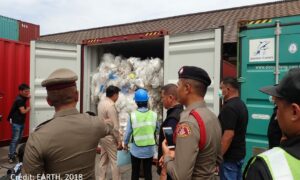
Preventing Plastic and E-Waste Trafficking: Lessons from the Frontlines | 2025 BRS COPs Side Event
4 May 2025 | 18:15 – 19:45 CEST

One Health Approach to Addressing Pharmaceuticals in the Environment Across Key Sectors | 2025 BRS COPs Side Event
9 May 2025 | 13:15 – 14:45 CEST
Photo Gallery
More photos can be found on the BRS dedicated album.


