
Event Conference
Preventing Plastic and E-Waste Trafficking: Lessons from the Frontlines | 2025 BRS COPs Side Event
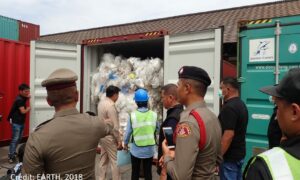
This side event to the 2025 meetings of the Conference of the Parties to the Basel, Rotterdam and Stockholm Conventions by the Basel Action Network (BAN), in collaboration with the Environmental Investigation Agency (EIA), Break Free From Plastic (BFFP), and the Geneva Environment Network (GEN).

About this Event
This side event aims to share information about the latest trends in waste trafficking and examine appropriate national responses. Recent amendments to the Basel Convention listings on plastic and electronic wastes were a major positive step forward, but waste trafficking undermines these advances and cause serious harm to the environment and human rights.
To combat these crimes, governments in both importing and exporting countries will need to tap into a range of tools – international cooperation, interagency cooperation, innovative techniques, and strong policies and laws. NGOs can serve as an important conduit of intelligence that can aid governments in this effort.
The 2025 BRS theme is “Make Visible the Invisible: sound management of chemicals and waste”. The trafficking of wastes, hidden in the opaque world of intermodal shipping and illegal operations, makes it virtually impossible to manage the waste soundly, bringing serious harm to unsuspecting countries. The complex nature of intermodal traffic and trade creates significant challenges for implementation and law enforcement; yet, the Basel Convention is only as effective as its enforcement is strong.
This panel discussion on real-world problems and solutions aims to improve the implementation and enforcement of the Basel Convention especially in the transboundary movement of plastic waste and electronic waste. Intelligence sharing, collaboration, enforcement, and strong legislation are crucial components to make visible the hidden toxic wastes that are currently being smuggled, undetected, and unmonitored, often ending up in unlicensed facilities and causing irreparable damage to environmental and human health in destination countries.
2025 Meetings of the Conference of the Parties to the Basel, Rotterdam and Stockholm Conventions
The seventeenth meeting of the Conference of the Parties to the Basel Convention (BC COP-17), the twelfth meeting of the Conference of the Parties to the Rotterdam Convention (RC COP-12) and the twelfth meeting of the Conference of the Parties to the Stockholm Convention (SC COP-12) will be held back-to-back in Geneva from 28 April to 9 May 2025. Side events to the 2025 meetings of the BRS COPs will serve as a platform for Parties and observers to share knowledge, build capacity, network and exchange on experience in the implementation of the BRS conventions. They also contribute to fostering discussions on specific issues under consideration at the COPs.
Speakers
By order of intervention.

Jim PUCKETT
Founder/Chief of Strategic Direction, Basel Action Network | Moderator

H.E. Nik Nazmi Nik AHMAD
Minister, Ministry of Natural Resources and Environmental Sustainability (NRES), Malaysia (video recording)

Azlan AHMAD
Director, Hazardous Substances Division, Department of Environment, Malaysia

Irvin CADAVONA
Officer-in-Charge, Hazardous Waste Management Section, Environmental Management Bureau (EMB), Department of Environment and Natural Resources (DENR), the Philippines

Jullapong THAVEESRI
Advisor to the Minister of Industry/Former Director-General of the Department of Industrial Works, Thailand

Pui Yi WONG
Researcher, Basel Action Network

Amy YOUNGMAN
Legal and Policy Specialist, Environmental Investigation Agency

Nicolas ENCAUSSE
Policy Officer, Directorate-General for Environment (DG ENVI), European Commission
Highlights
Video
Live from CICG.
Summary
Setting the Scene: The Promise of the Amendments and What the Data Says
Jim PUCKETT | Founder/Chief of Strategic Direction, Basel Action Network
- The promise of the Plastic Waste Amendments in 2019 was that, with stricter controls, plastic waste exports would be reduced globally with the most polluting exports eliminated.
- The three new plastic waste listings would cover all plastic waste, Basel Parties would enforce the new rules, and the export of plastic waste would be confined to operations that were environmentally sound.
- In 2022, the E-Waste Amendments put all e-waste under Basel controls, meaning:
- no trade to developing countries from the United States (US) because the US is a non-Party;
- no exports to developing countries from the European Union (EU) because the EU has adopted Annex II into its Basel Ban Amendment implementation; and
- no informal e-waste dump sites around the world.
- The Plastic Waste Transparency Project on BAN’s website tracks robust trade data on HS Code 3915 plastic scraps.
- With electronic waste, there is so much false declaration, with few using the e-waste custom codes, hence the trade data is not reliable.
- Globally, the top 10 exporters to non-OECD countries, Mexico, and Turkiye are Japan, Germany, US, Netherlands, UK, Spain, Belgium, Italy, Australia, and France. Together, 788 shipping containers of plastic waste are being shipped every day to non-OECD countries.
- Japan’s export of plastic waste to developing countries is 562 million kg/year (105,000 containers/year or 288 containers/day), more than their export of rice of 500 million kg/year.
- For the target countries, Malaysia tops the list, followed by Turkiye, Vietnam, Indonesia, Mexico, Thailand, India, and China.
- Global exports have decreased slightly from 2020 to 2024, since the plastic waste amendments came into force, and then largely flatlined, with no progress to reduce further.
- The recent increases in exports to non-OECD countries, Turkiye, and Mexico by OECD countries is very worrying. Global exports to Turkey since 2019 increased by 21%, to Indonesia by 24%, and to Latin America by 11%.
- Japanese exports to Vietnam, Malaysia, Indonesia and the Philippines have risen steadily since 2022.
- And after declining dramatically from 2020 to 2021, EU exports to non-OECD countries and Turkiye have climbed dramatically, almost at par with 2020 levels or more.
- The plastic and e-waste amendments have not resulted in serious reductions of waste exports, and the biggest issue is lack of enforcement.
- The most efficient, cost-effective, and ethical place to enforce the Basel Convention is in the exporting countries, to prevent illegal exports.
- One of the target ports – Port Klang, Malaysia – imports about 14 million 40-foot containers a year, more than 38,000 a day, among them falsely declared e-waste and plastic waste. Enforcement against illegal trafficking, to monitor countless shipments, is a huge burden.
- BAN, EIA, and BFFP recognise this challenge and wish to assist by creating awareness and also by providing intelligence on likely illegal shipments.
Leadership from Targeted Countries
H.E. Nik Nazmi bin NIK AHMAD, Minister, Ministry of Natural Resources and Environmental Sustainability, Malaysia
- Since 2018, Malaysia found itself on the front lines of the global waste crisis, becoming the world’s largest recipient of plastic waste exports.
- The latest concern is the growing trafficking of electronic waste into Malaysia, contributing to severe environmental degradation, contaminating soil and waterways, while exposing workers and nearby communities to hazardous conditions.
- Between 2024 and February 2025, Malaysian authorities intercepted 344 shipping containers of e-waste, a 10-fold increase from the 32 containers seized the year before.
- Addressing the illegal e-waste trade requires a whole-of-government response and, more importantly, sustained collaboration across borders and across sectors, including with NGOs, to ensure that enforcement efforts are robust, comprehensive, and proactive.
- In February 2025, Malaysia enforcement officers conducted a nationwide crackdown on 47 illegal e-waste processing facilities. Over 15,000 metric tons of e-waste, with an estimated value of 12.5 million US dollars were seized.
- These environmental crimes have placed a considerable strain on our enforcement institutions and public resources. These are shipments that should never have reached our shores in the first place.
- The burden of response, remediation, and restoration falls heavily on receiving countries, leading to economic losses, increased public expenditure on clean-up operations, and the erosion of our citizens’ right to live in a clean, safe and healthy environment.
- While the international waste trade is often presented under the guise of recycling, our experience has shown that much of this trade yields minimal material recovery, with large volumes of residual waste left unrecycled, improperly discarded, or incinerated.
- We fully support the provisions of the Basel Convention, particularly the principle of prior informed consent.
- We emphasize the responsibility of exporting countries to prevent illegal waste shipments, and welcome the EU’s recent legislative actions to strengthen controls on waste exports to non-OECD countries.
- We urge other exporting countries, particularly the developed OECD members, to follow this example by prioritizing waste minimization, improving domestic waste management, and exercising due diligence in preventing illegal exports.
- We call for streamlined procedures that enable the swift repatriation of trafficked waste to its country of origin, with the burden of clean-up rightly borne by the perpetrators, not the victims.
- In our capacity as Chair of ASEAN in 2025, Malaysia will be advancing a regional agenda on environmental sustainability, with a specific focus on strengthening regional and inter -regional cooperation to tackle waste trafficking.
Waste Trafficking: Malaysia’s Recent Efforts and Lessons Learned
Azlan Ahmad, Director, Hazardous Substances Division, Department of Environment, Malaysia
- In addressing the illicit transboundary movement of waste, particularly electronic and plastic waste originating from developed nations, Malaysia has adopted a strategic, data-driven approach: end-to-end mapping of transboundary waste flows.
- Involves the systematic tracking and analysis of waste movements, beginning at the point of export and continuing through transit routes and ports, right up to the final destination and handling processes.
- Relies on close collaboration with customs authorities, port operators, environmental regulators, and international partners to ensure transparency and accountability throughout the entire supply chain.
- This comprehensive mapping serves several vital purposes:
- uncovering patterns and routes of illegal trade
- identifying gaps in procedures, policies, and enforcement
- supporting legal and investigative action to trace shipments back to their source
- policy reform including on the anti-money laundering act and the prevention of crime act
- Major national operation was launched — Operation HAZARD:
- 44 illegal e-waste premises raided nationwide, 8 facilities forced to cease operations immediately
- Close inter-agency collaboration involved the Anti-Money Laundering Criminal Investigation Team, the General Operations Force, the Department of Environment, Local Authorities, and the Pahang State Enforcement Unit.
- Asset seizures from these premises totaled a staggering MYR43.10 million.
- Malaysia has a zero-tolerance policy towards environmental crime and the government is ready to deploy comprehensive and high-impact actions to disrupt waste trafficking networks.
- Malaysia strongly insists that those who generate and export waste must maintain full traceability and accountability throughout the entire lifecycle of the waste.
- Exporters must not only declare their shipments accurately but also ensure that their waste reaches authorized facilities, is properly treated.
- With end-to-end transparency, the loopholes that allow unscrupulous actors to reroute or disguise waste shipments could be closed – key to ensuring environmental justice and to dismantling the global systems that enable waste trafficking.
- Malaysia strongly supports the establishment of a coordinated ASEAN framework to combat waste trafficking:
- There must be harmonized enforcement protocols, shared intelligence systems, and aligned regulatory standards, to foster information exchange on suspicious shipments, blacklisted companies, and waste trafficking methods.
- Stronger regional legal and procedural coherence—especially in the implementation of the Basel Convention and related protocols—will empower ASEAN nations to act collectively.
- Joint training programmes, capacity building for frontline agencies, and shared digital monitoring tools are also important, as well as ASEAN-wide repatriation coordination mechanisms, to streamline the return of illegal waste shipments to origin countries.
- Malaysia remains firmly committed to combating transboundary waste trafficking. We are hopeful that through continued partnerships, we can build a future where waste is managed responsibly, borders are protected, and developing nations are no longer burdened by the pollution of others.
Illegal Waste Trafficking: Lessons from the Philippines
Irvin CADAVONA, Officer-in-Charge, Hazardous Waste Management Section, Environmental Management Bureau (EMB), Department of Environment and Natural Resources (DENR), the Philippines
- In the Philippines, we have a regulatory framework called Republic Act No. 6969 that governs the management of industrial chemicals and hazardous wastes, as embedded under the DAO – rules, guidelines, and procedures.
- For waste imports, we don’t use the term “waste”, but “recyclable material” because from that certain material we can recover other materials to produce another product.
- We allow the importation of scrap plastics and electronics as “solid plastic materials” and “electronic assemblies and scrap”, with definitions of the types of wastes in DAO 2013-22.
- We regularly update our policies depending on the need, with rigorous consultations with academics, CSOs, and other government agencies.
- We have ratified the Basel Convention in October 1993 and became a party in January 1994, with the Department of Environment and Natural Resources – Environmental Management Bureau (EMB) as Focal Point and Competent Authority.
- In Chapter 10 of the administrative order DAO 2013-22, to import a recyclable material to the Philippines, businesses must register as an importer and apply for an importation clearance. Once the application is submitted, DENR will conduct an inspection to the facility to check the capability to recycle the specific material, e.g. scrap plastic. There are also environmental permits and clearances that needs to be issued. No approval will be given to facilities that cannot comply.
- Each shipment should be covered by an importation clearance that should be applied for at least 30 working days prior to actual shipment through the online permitting and monitoring system, which the Bureau of Customs has access to. The exporter has the responsibility to retrieve or return the waste when denied entry into the Philippine territory.
- A shipment imported in September 2013 caused a lot of problems, even damaging diplomatic ties. 1003 containers of plastic waste were misdeclared. An inter-agency committee was developed – foreign affairs office, Bureau of Customs, Department of Justice and DENR. The case went on for six years and we were able to ship them back in 2019.
- We are developing a guideline on the environmentally sound management of e-waste related to Extended Producers Responsibility and based on that, we will determine if e-waste can or cannot be imported. E-waste beyond five years old cannot be imported.
- We are also in the process of accepting the Ban Amendment, pending the concurrences of other government agencies. As for the plastic waste amendment and e-waste amendment, we are conducting a regulatory impact assessment because we need to have a socioeconomic impact study on whether there will be negative impacts on our economy.
- Another case of illegal waste shipment was from another country, imported in 2018 to Mindanao. Bilateral meetings were held and the re-exportation of the imported waste was successful in January 2019, with a ceremonial sealing of 51 containers. The exporter was able to shoulder the cost immediately. In July 2020, the last batch of imported wastes were returned
- We have a good collaboration on managing the illegal importation of waste, among customs, environmental agencies, foreign affairs, law enforcement and intelligence units, port authorities, and the local government. The problem is misdeclaration. We heavily rely on the documents, and find them misdeclared upon joint inspection.
Lessons from Thailand
Jullapong THAVEESRI, former Director-General of the Department of Industrial Works (DIW), advisor to the Minister of Industry (MOI), Thailand
- I was from the Department of Industrial Works (DIW). We issue factory licenses and we are the Competent Authority for Basel Convention. We are the operator rather than the policy maker. It is our job to control and check for illegal import of plastics or e-waste into our country.
- Two years ago, I became the Director General of DIW. We are facing public complaints not only about the illegal import of plastic waste but also on the illegal dumping of industrial wastes by factories.
- With our officers and resources, we cannot arrest all the violators, so we work closely with the police. In March 2023, DIW worked with the Ministry of Industry and the Central Investigation Bureau (local police) to stop illegal dumping of industrial waste.
- We arrested many violators, more than 50 cases in two years. The police was always with us when we visited sites.
- One of the worst illegal dumping was placing industrial waste on the ground, contaminating the ground water, in more than five sites, discovered with the help of the police. It was difficult to carry out the excavations. We needed the arrest warrant from the court, and the support of the police.
- Another initiative is a Memorandum of Cooperation with the Ministry of Environment of Japan to control illegal dumping, smuggling of hazardous waste between Japan and Thailand, and develop e-waste recycling facilities.
- There used to be more than 1,000 cases of illegal dumping in Japan but at present it has reduced to below 100 cases per year. They advised us to work with the police.
- We also try to promote good factories that recycle industrial waste.
- Permits are required from DIW to dispose of industrial waste and we aimed to reduce the burden of good factories.
- Collaboration with the Customs Department is very important. I visited the Director General of Customs. As it is quite impossible to sue factories that accept illegal wastes once they’re released from the ports, we work with Customs and gate watchers to place more attention on waste, especially e-waste and plastic waste.
- We also receive good support from the NGO EARTH Thailand, and even the US EPA, who visited us and provided recommendations on how to rehabilitate contaminated sites.
- Importantly, is our collaboration with Pollution Control Department and the Department of Groundwater Resources. These two departments are under the Ministry of Natural Resources and Environment.
- As Ministry of Industry, we only have legal power over the factories. When pollution extends from the factory area or when there is illegal dumping in a public or private site, it is difficult for us to charge the violators.
- In one instance, when we asked the court to issue an arrest warrant, we were not successful, but once we had evidence and support from the two departments and EARTH, the court finally issued the warrant. That was the first time we saw that we could put violators in jail.
- Another important stakeholder is the Office of the Attorney General. They are the public prosecutors. I contacted this office to make them understand about environmental crimes. They have been familiar mainly with civil and criminal cases. It is useful to let them be involved and understand what we are trying to do, so that charging violators is more successful with the help of the public prosecutors.
- We discovered more than 10 contaminated sites and charged more than 50 factories. Violators were found to hide hazardous materials behind concrete walls.
- For waste regulations in Thailand, in 2023, we revised our regulation on industrial waste management. Before this, the liability of the waste generator ends when the waste processors receive the waste. We changed our rule so that the waste generator shall have full liability from the beginning until their waste is treated properly. Along the way, if anything happens, we will go back to the waste generator. This is really a big change since our first regulation on industrial waste management about 27 years ago.
- Before this, the liability of the waste generator ends when they give the waste to the waste processor. This led to much illegal dumping in public areas or storage of hazardous waste. This is a big change.
- We use the Hazardous Substances Act to control the import of wastes under the Basel Convention. We used to accept fly ash from coal-fired power plants from Japan, as a substitute material in our hydraulic cement production, but not anymore since accepting the Ban Amendment on 7 June 2023.
- Thailand banned all plastic waste imports effective 1 January 2025. And also, we have banned all imports of e-waste in 2020.
- In 2022, we imported about 0.178 million tons of plastic waste. This is not allowed anymore. 0.403 million tons of plastic scrap are from factories and under the control of DIW and it is 98% recycled. We have almost 500 plastic recycling factories in our country. 2.83 million tons of plastic waste are going into the sorting and separation process, and only about 710,000 tons out of 8 million tons are recycled. Others are going to the landfills. Now we allow the operators to to extract it and make it into RDF to feed to our 27 WTE power plants. The overall capacity of the WTE factory is about 1.7 million tons per year. We don’t allow the import of RDF.
- In many countries in Southeast Asia, we need collaboration and networking with other agencies, hence, I focused on collaborations, which I have been trying to do to make the enforcement of the rules effective and to educate enforcement agencies. We have limited resources but we will try our best to improve. We are trying to issue new regulations to control illegal dumping or trafficking of waste.
Citizen and NGO Investigations
Operation Can Opener: Importance of Information Sharing Between Governments and Civil Society Against Waste Trafficking
Pui Yi WONG, Researcher, Basel Action Network
- After the government crackdown on illegal plastic waste recycling factories in 2019, the headlines about illegal waste shipments began to change from being largely about plastic waste to e-waste.
- And as civil society and local communities, we were aware about the increase in e-waste processing, but we did not have access to much information, aside from news reports or news from the ground, where illegal facilities are sited.
- Local activities would scout suspicious factories in their areas, peek through fences, and try to capture evidence to make reports to the authorities, while investigative journalists went undercover to visit illegal factories. There’s a significant risk to doing all these investigations.
- Back in 2018, local communities found a lot of post-consumer plastic waste that had clear indication of which countries they were from. After the crackdowns and the Plastic Waste Amendments, the nature of the dumpsites changed to colourful microplastic scrap that looked like a mix of PVC cables, black plastic, and others.
- Back in 2020, we already found dumpsites full of microplastic scrap which we now know are from e-waste processing. These sites are always on fire, presenting a toxic hazard to residents living in the area, to the fire department, and to environmental officers.
- In 2023, local communities reported a mountain of such microplastic scrap, surrounded by banana trees, oil palm trees, cows, and goats, causing potential hazards to the food chain and water supplies.
- A sample of these microplastics was tested at Arnika’s booth at Basel COP-17, using an XRF machine, and findings indicated high levels of lead and bromine, which indicated the presence of brominated flame retardants found in electronics.
- In 2024, Basel Action Network (BAN) received some information about illegal e-waste exports. Based on risk assessments, trade data, and experience in the field, BAN put together lists of suspicious containers and sent them to the Malaysian government, together with data on the ports of departure and arrival, shipping lines, and estimated date of arrival.
- In the end of June 2024, the Malaysian government announced a seizure of 106 containers of e-waste, and followed the effort with subsequent seizures and raids on illegal facilities, involving multiple government agencies and taxing our limited resources.
- China banned the import of plastic waste and e-waste, together with several other types of waste, due to its inability to control the pollution from waste processing, in a statement to the World Trade Organization.
- These illegal activities are causing health problems to communities living in the vicinity, with young children susceptible to nose bleeds due to the constant air pollution. A local government officer was found to be checking on burning sites at 8pm, and responding to citizen complaints the night before his wedding. These are some of the burdens that target countries face from these illegal waste operations.
- Transboundary waste crimes not only cause environmental pollution, but also elevate the risks of corruption, crime, syndicates and threats to security and health. Exporting countries must take ownership of this responsibility. Waste is not wealth, waste is, first and foremost, a responsibility.
Investigating Illegal Plastic Waste Trade
Amy YOUNGMAN, Legal and Policy Specialist, Environmental Investigation Agency
- EIA conducted a two-year investigation into illegal plastic waste trade—work that has spanned multiple countries, used diverse investigative techniques, and led us to uncover serious fraud and illegality.
- Methodologies:
- We launched this investigation to understand how plastic waste moves across borders and where systems are failing.
- We used Freedom of Information requests, open-source intelligence, and human intelligence, including covert operations and insider sources from the waste industry.
- Our research focused on exporters mostly from the UK and Netherlands –tracing the trade chain from collection, through brokers and exporters, to end destinations, and the financial systems that support the trade.
- But when gathering our evidence, we noticed it became difficult to focus only on exports because there is so much domestic crime and widespread financial crime and fraud.
- Dirty Deals I: Financial Fraud – The UK’s Packaging Recovery Note/Packaging Export Recovery Note (PRN/PERN) systems allow accredited reprocessors and exporters to issue certificates confirming that a certain amount of packaging waste has been recycled or exported for recycling. Producers use these certificates or buy them to meet their legal recycling obligations. However, our investigation uncovered significant fraud within the system, with conservative estimates placing losses at around £50 million per year.
- We documented tactics including:
- Misdeclaring waste types to claim credits
- Using old plastic products like wheelie bins/trash cans, ground down and disguised as eligible packaging waste
- Even weighbridge fraud, where trucks were weighed twice to inflate volumes
- We noted that one stopped export of film rolls destined for India included an EPR number in its paperwork. This piqued our interest because in India, the Central Pollution Control Board audited a small number of companies and found extensive crime in their Extended Producer Responsibility system with over 600,000 fake credits, these were issued to companies that did not process any waste at all.
- We traced back four of these companies to see they imported plastic waste and secondary products like lumps and recyclate that fall outside what we consider waste under the Basel Convention, at the same time they were claiming to reprocess it, signaling it is likely cheaper to lie and import goods or waste, than comply with the EPR system establish domestic collection and recycling infrastructure or engage in that credit market.
- This – like the manipulation and fraud in the UK – undermines and steals from schemes meant to promote recycling – something for enforcement authorities to be aware of and work together to prevent this type of fraud.
- Dirty Deals II: Illegality in the Trade Chain – Part II looked deeper into the plastic waste global supply chain — what happens after waste is exported.
- Despite the plastic waste amendments and new controls under the Basel Convention, we found evidence of, among others:
- Misdeclarations of waste type and destination
- Lack of prior informed consent (PIC) from receiving countries
- Use of transshipment routes to obscure the real origin and end use
- In one case, Dutch authorities intercepted a shipment routed through four companies in four countries. Each claimed someone else was responsible. The documentation was incomplete, and the waste’s origin remained unclear — a textbook case of regulatory evasion.
- We also looked a bit deeper at UK plastic waste trade to Turkiye. We found that the largest exporter of plastic to Turkiye was not only ready to export a large quantity of waste to a Turkish facility that did not in fact exist, but they also told us they needed to substitute part of the order for construction waste – a tactic we found is used with misdeclaration and domestic financial fraud.
- This showed a complete lack of due diligence because Turkish facilities receiving UK waste have been proven to lack the capacity to handle it safely. Workers — including refugees and children — are exposed to unsafe conditions in poorly regulated recycling centres.
- This underscores the environmental justice dimension of the trade: those least responsible for plastic overproduction bear the brunt of its mismanagement.
- Example of use of data – Data was really critical for this investigation that sets the scene on how illegality happens. Using information accessed through freedom of information requests, we analysed the case studies from UK, Ireland and Netherlands to assess reasons why illegal plastic waste shipments were stopped and rejected in recent years.
- Customs agents have told us: because it’s so difficult to distinguish between polymer types and levels of contamination, they only stop shipments that raise red flags — and often rely on something as basic as a smell test to detect contamination – dirty nappies and food waste.
- This information unfortunately is not publicly available. Access to documents through FOI, trade data analysis, and leaks from within industry were essential. But access to reliable data is still extremely limited.
- Transparency and Accountability – Transparency is the cornerstone of accountability. This is an opaque waste trade and it adapts to new legislation and becomes more organized and sophisticated.
- We need governments to not only enforce existing rules but also open up their data — especially around transboundary shipments, inspection outcomes, and recycling declarations.
- And we need companies to be held accountable for their waste across the entire supply chain — not just the moment waste leaves their facility. Particularly because in over two-thirds of enforcement cases we analysed, intermediaries were involved. Brokers often obscure ownership and responsibility.
- To address this, we launched the latest site on EIA’s Global Environmental Crime Tracker, a public platform for tracking waste trade incidents and environmental crime more broadly.
- Collaboration – Illegal waste trade is a transboundary crime. Tackling it requires collaboration between governments, NGOs, journalists, and whistleblowers. We shared our findings with and continue to work closely with enforcement agencies in the UK and EU. We are able to use methodologies that police may not be able to and can provide them with leads.
- NGOs like EIA and BAN can do the investigative legwork — but we need enforcement authorities to act on the evidence. And we need policymakers to ensure that the system doesn’t just work in theory but is enforceable in practice.
- If you’re a government and want to highlight the shipments you’ve stopped, please be in touch and we can share this information on our public site. It is new and currently highlights governments most open in sharing information.
- Conclusion – This investigation reveals deep, structural flaws in the global plastic waste system:
- Oversight gaps allow exploitation.
- Transparency is lacking at nearly every stage.
- EIA calls for:
- Continued plastic waste exports bans from large waste generators
- A real time, accessible, digitalized online database for digital tracking
- And mandatory corporate due diligence to create real accountability
- These reforms can’t happen in isolation. This is a transboundary problem — and solving it will require transboundary collaboration.
Leadership from Exporting Countries: Setting the Stage for New Rules
New EU Regulation on shipment of waste
Nicolas ENCAUSSE, Policy Officer, Directorate-General for Environment (DG ENVI), European Commission (EC)
- New Regulation – EU – 2024/1157 – EN – EUR-Lex (WSR) was officially accepted after reaching a political agreement between the European Council and the European Parliament in November 2023. Initially, this text stemmed from a Commission proposal from 2021 that was accompanied by a communication called “our waste, our responsibility,” and as you can see in the name, the idea is really to not export our waste.
- Waste trade is important. In the EU, for 2023, 35.1 million tons were exported with a value of 18 billion Euros. What is more interesting is that the graph shows the imports to the EU for the past 20 years have been quite stable, but the exports have been doubling from before. The next chart shows where the EU waste is going, including to Asian countries, while the following chart shows the types of waste exported – steel, paper and cardboard, and also plastic.

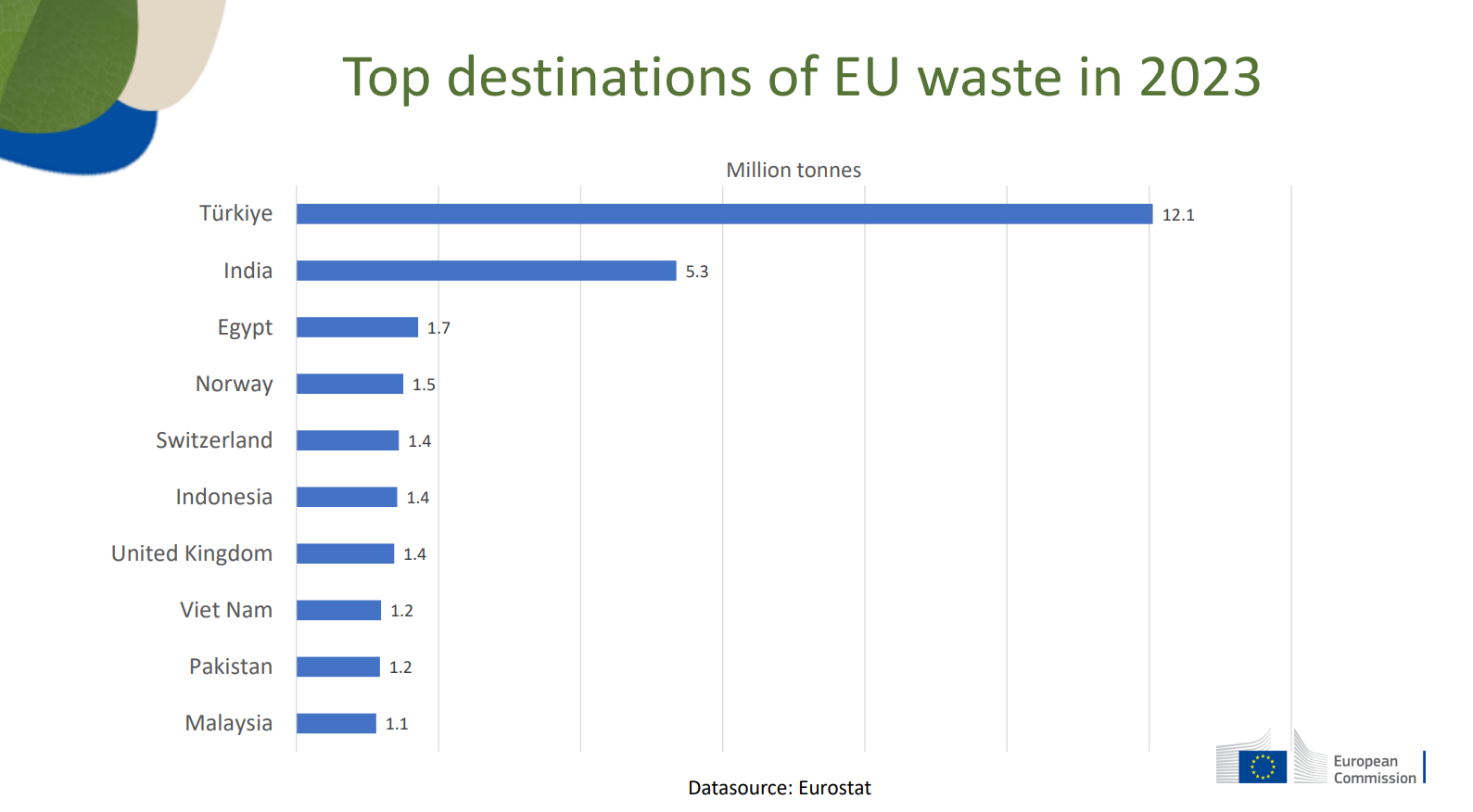

- The new regulation’s key objective is to ensure the protection of the environment in relation to waste and not to export our waste presents a challenge to other countries.
- The waste regulation’s scope is quite broad, almost all wastes are covered except some very specific waste, such as nuclear waste. It tackles all shipments inside the EU but also exports or import with third countries and also, and the WSR is the way for us to meet our international commitments to the Basel Convention and also the OECD decision.
- The first pillar of the regulation is intra-EU waste shipment control procedures. The idea was to improve the traceability but also make movement for recycling easier within member states.
- The second pillar is extra-EU trade, and this is where we implement the Ban Amendment. We already did it with our previous regulation, but we decided here with this new regulation to go a step further. When we talk about exports to non-OECD countries, in a normal case, it would be a ban on these exports but still with the possibility for non-OECD countries willing to notify their wish to import waste from the EU. In that case, on the basis of the regulation, we asked them to provide different elements that would show that they have the framework and the capacities to ensure the environmentally sound management of waste. The Commission will analyse all of that and draw a list of countries where this export will be possible on the side of the OECD countries.
- We also try to reinforce the provision, for example, the obligation for companies that are exporting to have audits in the destination countries. This requirement of auditing would also apply to those non-OECD countries that would be on the list.
- When a country is on the non-OECD list, it does not end there. There is still this obligation for exporters to have audits of the destination facilities to prove again that the ESM is possible.
- Regarding OECD countries, the Commission is mandated to monitor the movements and in case we notice, for example, a big increase to a specific OECD country, the Commission would be able to look into that and investigate further.
- The third pillar is to tackle illegal shipments. This is a question of stronger enforcement and what we can do to have better tools to address these. Within the EU, the enforcement is done by our member states at the national level but still with this regulation. The new regulation is providing a mandate to OLAF, which is our EU anti-fraud office to be able to look into waste trafficking, to provide support to member states to investigate possible issues related to that.
- The regulation is also establishing an EU-level group on enforcement. The idea was to create a forum where member states could meet, where relevant authorities (competent authority, customs) or member states could sit together.
- The regulation is also strengthening the provisions of enforcement, inspection and penalties, trying also to harmonise all of that at the level of the states.
- There are some specific restrictions regarding plastic waste. In our previous regulation, the Ban Amendment already included the white codes but here we’re going a step further with a ban that will start in November 2026. There will still be a possibility for non-OECD countries that wish to receive plastic waste to apply for it, but not before May 2029.
- The regulation also mandated the Commission to look at OECD countries regarding countries that import a large amount of plastic waste from the EU.
- Finally, the notification of the PIC procedure will apply to all authorised exports of plastic waste for OECD and non-OECD countries.
GEN @ 2025 BRS COPs


Gender, Toxics Exposures and the Right to a Clean, Safe, Healthy, and Sustainable Environment | 2025 BRS COPs Side Event
29 April 2025 | 18:15 – 19:45 CEST

The Potential of the Bamako Convention in Furthering Implementation of the Basel Convention in Africa | 2025 BRS COPs Side Event
6 May 2025 | 18:15 – 19:45 CEST

One Health Approach to Addressing Pharmaceuticals in the Environment Across Key Sectors | 2025 BRS COPs Side Event
9 May 2025 | 13:15 – 14:45 CEST
Photo Gallery
More photos can be found on the BRS dedicated album.


