
Événement Conférence
Human Rights and Biodiversity: Advancing Rights‑Based Action toward the UN Biodiversity Conference COP17 | Geneva Rights and Environment Talks 2026
10 Mar 2026
15:15 – 16:15
Lieu: Palais des Nations | Room A-286-1 & Online | Webex
Organisation: Procédures spéciales du Conseil des droits de l’homme, Geneva Human Rights, Biodiversity and Land Task Force, Earthjustice, Geneva Environment Network
In the margins of the 61st session of the Human Rights Council, the Geneva Rights and Environment Talks aimed to harness the opportunity of this moment of the year to reflect on the challenges posed by the rapid decline of nature and biodiversity, and on how Geneva contributes to bringing together the actors working towards ensuring the right to a clean, healthy, and sustainable environment is upheld for all.
About this Event
The Seventeenth meeting of the Conference of the Parties to the Convention on Biological Diversity (CBD COP17), the Twelfth meeting of the Conference of the Parties serving as the meeting of the Parties to the Cartagena Protocol on Biosafety, and the Sixth meeting of the Conference of the Parties serving as the meeting of the Parties to the Nagoya protocol on Access to Genetic Resources – also commonly referred to as the 2026 UN Biodiversity Conference – will convene in Yerevan, Armenia, from 19 to 30 October 2026.
In Yerevan, the Parties to the CBD will undertake the first global review of collective progress in the implementation of the Kunming-Montreal Global Biodiversity Framework (KMGBF). The global review is expected to drive enhanced implementation efforts.
“Taking action for nature” — the slogan unveiled alongside the logo — conveys Armenia’s aspirations for an action-oriented UN Biodiversity Conference. “Armenia’s vision for COP17 is a beautiful one. It aims to inspire us all to see that transformation is possible, that nature is worth protecting, that implementation is happening and that we all have an important and active role to play,” said Astrid Schomaker, the Executive Secretary of the CBD.
This event took stock of the outcomes of the previous CBD COP, assess progress achieved during the intersessional period, and look ahead to the human rights challenges and priorities for COP17. The talk also took place against the backdrop of the global analytical study conducted by the UN High Commissioner for Human Rights (A/HRC/61/36) providing an examination of the interlinkages between biodiversity and human rights and how these are reflected in the KMGBF and the outcomes of CBD COP16.
About the Geneva Rights and Environment Talks
In the face of the three interrelated environmental crises — climate change, loss of biodiversity, and pollution — the recognition of the right to a clean, healthy, and sustainable environment by the UN Human Rights Council and the UN General Assembly is an important milestone that puts environmental issues at the forefront of the human rights agenda.
The Special Rapporteur on the human right to a healthy environment reports to the Human Rights Council during its March session on issues related to their mandate. The Geneva Rights and Environment Talks aim to harness the opportunity of this moment of the year to reflect on the challenges posed by the rapid decline of nature and biodiversity and the intertwined human rights implications. The talks are also an opportunity to discuss how Geneva contributes to bringing together the actors working towards ensuring the right to a clean, healthy, and sustainable environment is upheld for all.

Speakers
By order of intervention.
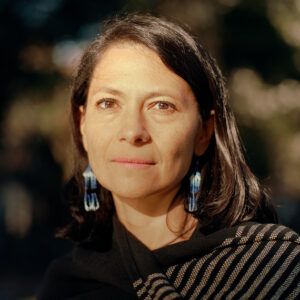
Astrid PUENTES RIAÑO
UN Special Rapporteur on the Right to a Healthy Environment
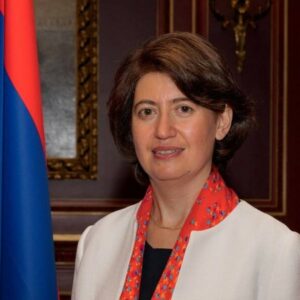
H.E. Amb. Hasmik TOLMAJIAN
Permanent Representative of the Republic of Armenia to the United Nations Office and other International Organizations in Geneva

Benjamin SCHACHTER
Coordinator, Environment and Climate Change Team, Office of the High Commissioner for Human Rights

Roberto CÉSPEDES GÓMEZ
Minister-Counsellor, Permanent Mission of the Republic of Costa Rica to the United Nations Office and other international organizations in Geneva
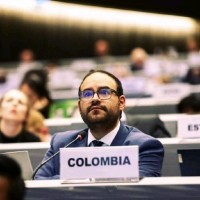
Miguel RUIZ BOTERO
Second Secretary, Permanent Mission of Colombia to the UN Office and other international organizations in Geneva

Flore GHETTI
Program Coordinator, Environment & Sustainability, and Youth, Soka Gakkai International | Geneva Human Rights, Biodiversity and Land Task Force

Ashanapuri HERTZ
Programme Officer, Swedbio | Working Group on Human Rights and Biodiversity
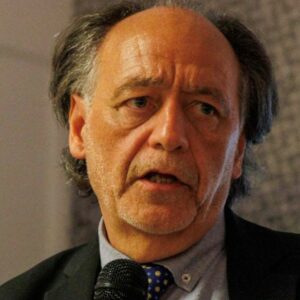
Yves LADOR
Representative to the United Nations in Geneva, Earthjustice | Moderator
Highlights
Video
Summary
Introduction
Astrid PUENTES RIAÑO | UN Special Rapporteur on the right to a healthy environment
- It is very important to advance and be able to address the huge opportunity we have this year. Of course, we have COP17, but it is also a year of three COPs, the three environmental COPs: climate, biodiversity, and desertification.
- The first key element I want to highlight is the importance of advancing synergies and coordination across all of these negotiations. I think this COP specifically will be a good opportunity, also because it is the first COP after the ICJ advisory opinion. While that opinion focused on climate, the International Court of Justice was very clear in identifying that climate is not only about technical aspects or emissions; it also has huge human rights impacts.
- The link to biodiversity was also very strong, both in terms of impacts and solutions. I think this will be a good opportunity to connect these issues.
- Of course, as we were discussing before, the participation of people will be key, as well as the opportunity to identify what opportunities are still missing and what opportunities states can implement in terms of decisions from Geneva.
- There are many resolutions, and I wanted to highlight one on the ocean and human rights from last year. That resolution, and others adopted in Geneva addressing biodiversity perspectives, helps us understand how important it is to coordinate efforts – not only advancing the specificities of each convention, but also finding ways to coordinate better and to advance the outcomes we expect to see under the Kunming–Montreal Global Biodiversity Framework.
- I will end by highlighting the opportunity and hope that this COP will show, as part of its outcomes, how the human right to a healthy environment has been useful and included in biodiversity plans for states. I think that will be key, because it provides important tools, including access to information, participation, and access to justice, but also a better understanding of the interconnection between different elements: healthy ecosystems, biodiversity, climate, non-toxic environments, and others.
Human Rights in COP17 Host Vision
H.E. Amb. Hasmik TOLMAJIAN | Permanent Representative of the Republic of Armenia to the United Nations Office and other International Organizations
- Armenia’s vision for COP is clear. We are committed to delivering an inclusive, participatory and action-oriented conference. From the outset, we have sought to ensure that COP brings together not only parties to the Convention, but also Indigenous peoples and local communities, women and youth, academia, environmental human rights defenders and civil society. We firmly believe that only through genuine multi-stakeholder engagement can we advance the transformative action needed to halt and reverse biodiversity loss.
- Throughout the preparatory process, we are promoting rights-based and gender-responsive implementation of the Kunming–Montreal Global Biodiversity Framework. We are working to ensure structured roles for youth, women, local communities and our high-level events on the margins of global conferences consistently include non-governmental stakeholders.
- During COP itself, we will pay particular attention to ensuring that observers have meaningful space within the official agenda to contribute their views and insights.
- The motto of the Armenian presidency, “Taking Action for Nature,” reflects our conviction that safeguarding the environment requires shared responsibility and collective effort. It is a call to unite in preserving the ecosystems we all depend on and in protecting nature for future generations.
- A human rights-based approach is embedded in the Global Biodiversity Framework, which recognizes that its implementation must promote, protect, respect and fulfill human rights. The rights of Indigenous peoples and local communities remain a central area of convergence between biodiversity and human rights.
- One of the Convention’s most significant achievements has been the establishment of the Subsidiary Body on Article 8(j), which institutionalized the meaningful participation of Indigenous peoples and local communities in conservation efforts. We appreciate the leadership of the Colombian presidency in this regard and stand ready to build on this momentum.
- As we reflect on the intersection of human rights and biodiversity, I would like to acknowledge the valuable contributions of human rights bodies and mechanisms. While mandates differ, the effective implementation of the Global Biodiversity Framework is deeply intertwined with both individual and collective rights.
- Fundamental rights; including the rights to life, to health, to food, to water and to a clean, healthy, and sustainable environment, depend on the sound stewardship of biodiversity.
- Special procedures and treaty bodies have provided important analysis on these linkages, including on the rights of specific groups such as Indigenous women. I would also like to highlight the work of OHCHR, including the joint CBD–OHCHR briefing note on applying a human rights-based approach in line with Section C of the framework, and the recent global analytical study on integrating human rights into its goals and targets. These resources offer essential guidance for parties as we move toward implementation.
- Let me also emphasize the centrality of gender equality. There is growing recognition that gender-responsive implementation of the framework is indispensable for addressing biodiversity loss and for achieving progress across all targets. The Gender Plan of Action for COP provides a strong foundation, and its recent midterm review highlights both progress and the need for greater leadership, capacity building, and financial support for women and girls.
- Armenia has already begun working closely with women’s organizations to ensure that gender equality is fully integrated into COP and that the voices of women and girls are amplified. One of the highlights of the conference will be the Women’s Forum, which will provide a high-profile platform for governments, UN agencies, civil society, and women’s organizations to advance gender-responsive biodiversity action.
- Our efforts extend beyond COP. The incoming Armenian presidency is committed to maintaining focus on gender and biodiversity across UN fora. In this period, Armenia will convene a high-level side event during the session of the Commission on the Status of Women in March. This event will explore how gender equality and the empowerment of women and girls can be integrated into sustainable development pathways linking biodiversity conservation with livelihoods, food security, health, and resilience.
- So dear friends and colleagues, as we look toward COP, Armenia’s ambition is to deliver a conference that is inclusive, participatory, and firmly grounded in human rights. We count on your partnership to ensure that the implementation of the Kunming–Montreal Global Biodiversity Framework is equitable, effective, and transformative.
- Together, let us take action for nature and for the rights and dignity of all people who depend on it.
High Commissioner Global Study on Biodiversity-Human Rights Connections
Benjamin SCHACHTER | Coordinator, Environment and Climate Change Team, Office of the High Commissioner for Human Rights
- The report that Yves has referenced is mandated by the Human Rights Council in that resolution. It is a study on the implementation of a human rights–based approach into the goals and targets of the Kunming-Montreal Global Biodiversity Framework, and it is in fact the first report of the High Commissioner on the subject of human rights and biodiversity.
- It will be presented to the Council, last I checked, on the 17th of March, so tomorrow, though sometimes the timing shifts. In any case, I’m very happy to say a few words about that report.
- I think the starting point should really be the idea of a human rights–based approach to biodiversity action, why we are talking about it and what it means. This could be a very long presentation, but I will try to keep it brief.
- First of all, the enjoyment of human rights (and a wide range of them) depends on biodiversity. The degradation and loss of biodiversity therefore have negative impacts on the ability of individuals and groups to fully enjoy their human rights. Biodiversity and healthy ecosystems are essential elements of the human right to a clean, healthy and sustainable environment, and earlier we heard from the Special Rapporteur on the right to a healthy environment about that connection.
- Respecting, protecting and fulfilling human rights in the context of biodiversity-related actions is therefore an obligation under international human rights law. It is also a crucial approach for achieving the best outcomes for both people and biodiversity. Human rights should be viewed as complementary to – and necessary for -environmental protection, as they offer the most effective, efficient and equitable path forward to safeguarding the planet.
- In the context of conservation and the sustainable use of biodiversity, a human rights–based approach means ensuring that biodiversity plans, policies, laws and processes seek the respect, protection and fulfillment of human rights as a core objective. It recognizes that the well-being of people is inherently linked to biodiversity. By anchoring biodiversity-related plans, policies, laws and processes in human rights, actions taken for the benefit of the planet will also benefit people, contributing to true harmony with nature; one of the objectives of the Kunming-Montreal Global Biodiversity Framework.
- This study explores that human rights–based approach and specifically analyzes states’ human rights obligations to protect biodiversity and to respect, protect and fulfill human rights when adopting conservation measures. It is important to note that while protecting the environment is a necessity and an obligation, the measures taken to protect it must themselves respect, protect and fulfill human rights.
- The report also examines the disproportionate impacts of environmental harm and sometimes even conservation actions on the rights of certain groups, including Indigenous peoples, peasants, local communities, people of African descent, women, children, youth, older persons and persons with disabilities.
- Another important point is that the human rights framework also entails responsibilities and duties for businesses. The right to a clean, healthy and sustainable environment and the responsibilities of businesses are therefore an important part of the report as well.
- Finally, the report highlights promising practices for implementing a human rights–based approach to biodiversity action. In preparing it, we consulted with a wide range of states and stakeholders. The contributions we received in response to a questionnaire are available online. Of course, the full body of information could not be fully captured in a relatively short report, so I would encourage further consideration of those inputs as well.
- Let me say a few words about the human rights aspects of Section C of the Kunming-Montreal Global Biodiversity Framework and its targets, and how these relate to ongoing biodiversity negotiations.
- Section C of the framework calls for a human rights–based approach that respects, protects, fulfills and promotes human rights. It emphasizes ensuring that the knowledge, innovations, worldviews, values and practices of Indigenous peoples and local communities, especially traditional knowledge associated with biodiversity are respected, documented and preserved with their free, prior and informed consent.
- It reaffirms the UN Declaration on the Rights of Indigenous Peoples, acknowledges the right to a clean, healthy and sustainable environment, and recognizes the right to development. It also highlights that successful implementation of the framework depends on gender equality and the empowerment of women and girls. The framework is to be understood, implemented, reported on and evaluated in a manner consistent with these principles.
- In fact, this human rights–based approach applies across the entire framework. When looking at the specific targets, many explicitly reference human rights, including the rights of Indigenous peoples and gender equality. But all targets are relevant to human rights, even where this is not explicitly stated. Section C makes it clear that human rights considerations should guide the interpretation and implementation of the entire framework.
- Regarding the Human Rights Council resolution itself, in addition to requesting this report, it also calls for regional technical assistance and support from OHCHR to states that request support in implementing human rights–based biodiversity action. It also encourages collaboration between OHCHR and the Secretariat of the Convention on Biological Diversity.
- On that collaboration, during biodiversity negotiations held in Panama toward the end of last year, we launched, together with the Secretariat of the Convention on Biological Diversity, a new tool on applying a human rights–based approach in line with Section C of the Kunming-Montreal Global Biodiversity Framework. We are also developing similar tools related to specific targets, starting with Target 3 on conservation and another target dealing with participation, access to information, access to justice, and the protection of environmental human rights defenders in the context of biodiversity action.
- We are also continuing to engage in the negotiations themselves. We are in regular contact with both the current presidency and the incoming presidency to explore how we can work together to better integrate human rights into the outcomes and make a real difference for people and the planet.
- One development worth highlighting is that several weeks ago in Rome there was a meeting of the Subsidiary Body on Implementation. Several texts were discussed there, including the Gender Plan of Action, resource mobilization and financial mechanisms.
- Within these discussions there are several entry points for human rights considerations. In many cases, there is bracketed text in potential COP decisions referencing human rights. In some instances, a general reference to Section C has replaced more specific references to human rights. That is something we are following closely, as it would ideally be important to maintain both the general reference and the specific ones.
- Finally, agenda item seven of the Subsidiary Body on Implementation deals with cooperation. Within that discussion there were references to both the Human Rights Council–mandated study and the tool developed jointly by OHCHR and the Secretariat of the Convention on Biological Diversity. These references are currently bracketed, but we would very much welcome their inclusion in the final outcome.
- It is actually quite unusual to have a CBD COP decision and a Human Rights Council resolution pointing in the same direction and requesting collaboration between two UN entities, and the work is being delivered.
- I think it’s very important to continue that work and acknowledging it.
Contributions by the Human Rights Council
Roberto CÉSPEDES GÓMEZ | Minister-Counsellor, Permanent Mission of the Republic of Costa Rica to the United Nations Office and other international organizations in Geneva
- Indeed, when we first together with Colombia decided to launch this initiative, one of the main objectives was to get the message out there that human rights is a an all-encompassing body of tools and law, also that has to do with the environment, not only with climate change, but it touches upon all aspects of our lives actually.
- Human rights and the environment is much broader than climate change, which is something we’ve always strongly fought for. And I know your section is called Climate Change and Environment, like it was perhaps two different things, but in the end it’s one thing with many legs.
- We talk often about the triple planetary crisis. Still, we’re not saying that climate change is not important. We’ve always advocated for more human rights there, but the need for human rights and biodiversity to link each other was something that we felt was necessary and was one of the reasons behind the initiative.
- Moving forward and also considering the state the world is in now, there are two main ideas that we can share:
- One is keeping the gains that we have: the Montreal resolution and the report are both strong bases, and we’ve talked about section C here, which is very clear and I would say one of the most advanced and forward-looking texts in international environmental agreements in terms of human rights – it shouldn’t be ignored.
- The other thing that shouldn’t be ignored is the fact that a lot of countries are signaling support; almost all countries are aligned, and so no one should be openly against what they already agreed at an international level.
- Implementation is also key. A lot of responsibility falls on the current COP presidency: there’s a huge responsibility to try and keep what is already there. Even though there’s bracketed text here and there, if there’s political will, those brackets can be lifted.
- One way we could facilitate this is precisely taking one of the paragraphs of the resolution on collaboration with OHCHR. Workshops, perhaps three, depending on time zones, for the experts that will go to Yerevan on what has been done could be a way for OHCHR to raise awareness, and of course we would support it. Especially if Armenia is willing to consider it, asking for OHCHR’s help with these workshops could be very effective.
- These kinds of events are very helpful, but we know that mainly colleagues from other parts of our governments, environmental or other departments, attend COP. It worked in Montreal, but there’s always a fear of backsliding, so this is just an idea I wanted to share.
- Finally, participation is critical. I’m really happy to hear about the women’s forum you’re organizing, which I think is essential for meaningful implementation.
- Participation and recognition of environmental human rights defenders and giving them space within the COP, recognizing their contributions and making this COP inclusive as it should be, is key.
- From international recognition stems more national recognition; the other way around is much more difficult.
- When people see their voices being heard and respected at international meetings, it empowers them at the national level to push forward change. Meaningful participation, especially of women and indigenous peoples, is therefore one of the keys to move forward.
Miguel RUIZ BOTERO | Second Secretary, Permanent Mission of Colombia to United Nations Office and other international organizations
- One point that I would like to emphasize, that I think is very important and that Roberto brought up, is the issue of participation and the issue of building action from the perspectives of the true stewards of biodiversity.
- I think one of the most important facts to acknowledge in the field of biodiversity is that those who are conserving biodiversity, the stewards of biodiversity, are generally some of the most vulnerable communities and some of the most vulnerable countries in the world. And yet, generally, biodiversity action is dictated from above and not necessarily built from those communities. In that sense, there is a disconnect that is important to begin to untangle.
- We very much thank Armenia for taking this initiative to try to get stakeholders involved and to find some balance between a top-down approach and a bottom-up approach.
- As for the motivations, I think my friend from Costa Rica expanded on them quite eloquently. I would simply add that from our perspective we very much wanted to not only make the point that environment is not exclusively climate change, but also that it is impossible to discuss international human rights law without discussing what we need to do when it comes to environmental action.
- From Colombia’s perspective, it is not possible to fulfill human rights obligations without fulfilling at the same time international environmental law obligations. That also applies to the interaction between environmental conventions. It is very difficult to fully implement the obligations of the Convention on Biological Diversity without also responsibly implementing the obligations of the climate regime and without implementing the obligations of chemicals and waste conventions.
- For example, in my region, the Amazonian region, one of the largest threats to biodiversity does not necessarily come from the traditional drivers of biodiversity loss, but from specific activities with chemicals, particularly coming from illegal gold mining with mercury amalgamation. It is very difficult to tackle those problems exclusively from the perspective of the Convention on Biological Diversity. It requires a holistic approach. That is very much what we were trying to push forward.
- Another point that was very important for us was the idea that silos cannot be an excuse for inaction. This has happened not only in biodiversity and climate change but also in other fields, for example in the field of drug policy and other completely unrelated issues.
- When we want to talk about biodiversity in the governing bodies or where those things are discussed, the message we get is that we should take that to the Human Rights Council. When we come to the Human Rights Council and want to talk about human rights in biodiversity, climate change, drug policy and other issues, we are told that we should go to the governing bodies of those issues.
- We have run out of patience to play that game in all fields, but particularly in the field of environment. We very much wanted to get the Human Rights Council and human rights institutions to establish a clear, sustained dialogue with environmental conventions and their secretariats so that action can be coordinated and synergies are effective.
- We are seeing that, and we think that it is a very large contribution that the Office of the High Commissioner is putting forward. We are also happy to see that the CBD Secretariat is committing to this approach of working together with the OHCHR to push these things forward.
- With regards to the future, we very much will of course welcome the analytical study that will be presented. We’ve put out a proposed joint statement that we are trying to get support for. We are very much looking forward to building upon what was put down in the resolution 57/28.
- The perspective that we had at that point was that we needed to lay a foundation for further work, and we think we did that quite well: the analytical study has provided us with many tools to carry forward the notion of a human rights-based approach to biodiversity action, both here and in biodiversity fora. We also think that capacity-building tools are going to be very important in carrying forward implementation.
- We would ideally like to see further resolutions from the Council that come in the same years as biodiversity COPs occur, so that the dialogue between the Human Rights Council and CBD COPs continues to flow. In the intersessional period, the Office of the High Commissioner and the CBD Secretariat could also build upon the work they have been doing.
- In the end, we would like to see this approach ensure that what we have agreed in the KMGBF, particularly in Section C, is actually built upon and not, as my friend Roberto was saying, pushed back by many delegations.
- We wish to see this move forward, and we are very happy to fight the good fight both here and in the CBD.
Benjamin SCHACHTER | Coordinator, Environment and Climate Change Team, Office of the High Commissioner for Human Rights
- I was very excited to hear the commitments from Armenia, Colombia, and Costa Rica about continuing this work, continuing to advance a human rights-based approach to biodiversity action, both at the Council and in the context of the work of the Convention on Biological Diversity.
- I really think that approach to breaking down silos and pushing for coherent action across different multilateral fora is absolutely critical. I also appreciate, and it’s a big part of how we talk about the right to a healthy environment, the work that Astrid is doing as well, and the references to the connections between different environmental crises, different elements of the environment, and their interconnectedness, and the fact that we need a coherent approach.
- Maybe the last thing I’ll say is that we’ve been doing a lot of work on a just transition to sustainable economies and societies, and that is really about ensuring that the way we do things in the future is truly different and transformative: that we seek harmony with nature.
- The CBD COP theme was “Peace with Nature,” and the upcoming theme will be “Taking Action for Nature.” Those things are really about our relationship with nature.
Perspectives from Civil Society
Flore GHETTI | Program Coordinator, Environment & Sustainability, and Youth, Soka Gakkai International | Geneva Human Rights, Biodiversity, and Land Task Force
- I thought it would be interesting to also go back a bit on the achievements we’ve had so far in terms of human rights through COPs and what we’re looking forward to with COPs, as well as the challenges we are facing.
- COP in Montreal saw the adoption of the KMGBF. It was mainly the most significant embedding of human rights in the biodiversity agreement for several reasons.
- First, there is an overarching human rights-based approach, including in Section C that Ben talked about. Implementation must respect, promote, and fulfill human rights.
- We also saw recognition of Indigenous peoples in traditional territories and the need for equitable governance in area-based conservation, embedded in Target 3.
- Third, there was commitment to full participation in decision-making, access to justice and information, and full protection of environmental human rights defenders.
- Fourth, there is a standalone target on gender equality, secured after sustained civil society advocacy. Finally, there was inclusion of indicators on land tenure, cultural vitality, and traditional knowledge; though they remain incomplete.
- Fast forward two years later at COP that happened in Cali, with very high ambitions, we still witnessed some key achievements. The historical establishment of the permanent CBD body on Indigenous peoples and local committees under Article AJ had its first subsidiary body meeting in Panama last October. Parties invited OHCHR to develop tools and guidance, which was a key achievement. Adoption of component indicators on tracking verified killings and attacks against environmental human rights defenders was another milestone.
- Formal recognition of people of African descent in CBD processes occurred for the first time, strongly advocated for by Colombia. Parties also requested the CBD Secretariat to enhance cooperation with human rights agreements on biodiversity. All of these have been achievements civil society advocated for and that we are happy to see reflected in decisions.
- Of course, we’re facing some challenges, and there is still a long way to go. One of the challenges for example is Target 3: if we pursue conservation of large percentages of land and water using the usual fortress conservation model – which has already caused human rights abuses – doubling protected areas without binding rights and safeguards could result in forced displacement of Indigenous peoples and local communities. The right language was secured but it remains aspirational rather than enforceable, so we need to deepen that further and make sure that its not just words but that it translates into real change in conservation models.
- Another challenge is around the monitoring framework, which remains incomplete. COP in Cali was suspended without agreeing to the full monitoring framework, so many human rights indicators were adopted only partially or without agreed methodologies, delaying accountability. The COP session in Rome finalized the framework but at a lower level of ambition than civil society had called for. This is something we will continue to monitor and advocate for.
- Two last points:
- Parties sometimes actively resist strong human rights-based language in operative decisions, resulting in key decisions lacking binding human rights content.
- Finally, and maybe one of the most important aspects is finance: there is no direct access or rights-sensitive governance. A dedicated biodiversity fund with direct access for Indigenous peoples and local communities, long demanded by civil society, has not been established.
- Developed nations have failed to meet the $10 billion per year target. Contributions for digital sequence information are only voluntary, which makes funding unpredictable.
- Finally, the gender plan of action and resource mobilization strategy remain unintegrated.
- So, as we can see, we can build on key milestones and achievements from the COPs, but we still have challenges to make what has been decided binding and accessible for people on the ground.
- We look forward to the next COP with hope and a lot of expectation, to continue advancing ambitions in decisions while making sure that those ambitions also bring accountability and enforcement, so that human rights are respected at every level.
Ashanapuri HERTZ | Programme Officer, Swedbio | Working Group on Human Rights and Biodiversity
- I’m working with Swedbio, and since before the CBD COP, Swedbio has been coordinating the Human Rights and Biodiversity Working Group. Together, we’ve been working to integrate a more explicit inclusion of human rights perspectives into the post-Global Biodiversity Framework, which became the Kunming-Montreal Global Biodiversity Framework (KMGBF).
- I’d like to note something I found interesting: someone commented on Ben’s point about climate change and environment as if they are two different things. Standing between the outcomes of the CBD COP and the road ahead, and against the backdrop of ongoing efforts to enhance policy coherence in the year of three COPs, I want to focus on synergies across the three conventions (biodiversity, climate, and land); and why a grounded operational human rights-based approach is essential.
- The consensus among science, policy and practice is clear: the impacts of biodiversity loss, climate change, and land degradation are mutually reinforcing. Their impacts exacerbate inequality and cannot be solved in isolation. A human rights lens provides a grounding perspective to examine these interconnected crises holistically.
- Moving forward, under the agenda item of biodiversity and climate change, there is a call for enhanced policy coherence, specifically for collaboration on technical information exchange to explore options to support implementation of the CBD and its KMGBF, as well as the UNFCCC, Paris Agreement, and UNCCD. One technical information exchange occurred at the margins of the UNFCCC subsidiary bodies meetings, collecting views submitted by parties and observers and generating eight headline options, or “building blocks.” These will feed into a multi-level roadmap with short-, medium-, and long-term actions across local, national, regional, and global scales.
- During the CBD subsidiary bodies on implementation, the sixth meeting in Rome briefed participants to prepare for these exchanges, which will include two online sessions and one in-person session. Together, a multi-level roadmap will be developed and reported during the COP.
- Some key messages from the first building block include alignment of national strategies: how to align national biodiversity strategies and action plans, nationally determined contributions, national adaptation plans, and land degradation neutrality targets. The three Rio conventions reference human rights in the preamble and across decisions. Alignment could lead to more efficient resource use, stronger cross-sectoral governance, better monitoring and reporting, and improved delivery. This must come with safeguards for the environment and society, including human rights, Indigenous knowledge, and governance. Aligning climate, land, and biodiversity action should ensure co-benefits for nature and human rights.
- The second building block is on nature-based solutions and ecosystem-based approaches. We need to prioritize approaches governed by people on the ground: indigenous peoples, local communities, women, and youth; and ensure they are rights-based, participatory, and socially just. Indigenous peoples and local communities must have a central role in design, governance, and benefit sharing. FPIC (free, prior, and informed consent) must be upheld. Traditional knowledge systems must be protected, and customary land tenure should be a key operational principle.
- The third building block concerns monitoring, reporting, and review. Rights-based indicators should not just exist on paper but be fully reflected in reporting, such as in CBD national reports. This allows for course correction, improved next steps, and full participation of rights holders. Their knowledge systems must be recognized equally and complement other knowledge systems.
- The fourth block is on knowledge management and capacity building. Existing tools are important, but institutional and human capacity must be built to apply this knowledge, particularly for synergistic biodiversity and climate action. Resource mobilization should be inclusive, equitable, accessible and rights-based with strong safeguards.
- The final building blocks focus on Indigenous peoples and local communities, and a whole-of-society approach. Policy coherence cannot be achieved through technical alignment alone; equity and intergenerational responsibility are indispensable for effective, inclusive biodiversity governance.
- Finally, a human rights-based approach is not optional, it is the only path to effective, just, and sustainable action as we move towards COP “Taking Action for Nature” in an equitable way.
Links
Other Geneva Rights and Environment Talks 2026
Keeping the Air We Breathe Safe | Geneva Rights and Environment Talks 2026
9 March 2026 | 14:30 – 15:30 CET
Palais des Nations | Room A-286-1 & Online | Webex
A “Poison Country” – The Impact of Deadly Asbestos Fibers and the Struggle of Indigenous Peoples for Their Right to a Clean, Healthy and Sustainable Environment | HRC61 Side Event | Geneva Rights and Environment Talks 2026
9 March 2026 |
16:00 – 17:00 CET
Palais des Nations | Room VIII
Towards Effective Environmental, Social, and Human Rights Impact Assessments | Geneva Rights and Environment Talks 2026
10 March 2026 | 12:30 – 13:30 CET
Palais des Nations | Room A-286-1 & Online | Webex