
Nouvelle
Sea-Level Rise and the Role of Geneva

Rising sea levels is one of the most severe consequences of climate change, with levels projected to rise as much in the next 30 years as they did in the past century. Driven by melting ice and warming oceans, this trend threatens ecosystems, fuels flooding and displacement, and endangers freshwater supplies. The Intergovernmental Panel on Climate Change (IPCC) Sixth Assessment Report and the Special Report on the Ocean and Cryosphere warn that sea-level rise is now unavoidable for centuries, with increases of 2–6 meters possible over the next 2,000 years, even if global warming is limited to 1.5–2°C. This page highlights the role International Geneva plays, with its unique cross-disciplinary expertise, in addressing sea-level rise and the fight against climate change.
What is Sea-Level Rise?
Sea-level change (sea-level rise / sea-level fall) refers to a change in the height of sea level, both globally and locally (relative sea-level change), at seasonal, annual, or longer time scales. It results from a change in ocean volume due to a change in the mass of water in the ocean (e.g. melting of glaciers and ice sheets), changes in ocean water density (e.g. expansion under warmer conditions), changes in the shape of ocean basins, changes in the Earth’s gravitational and rotational fields, and local land subsidence or uplift (IPCC, 2019).

Spatial distribution of global sea surface temperature anomalies between the annual mean of 2023 and the average for 1961 to 2020. (Liang, et. al, 2025)
According to the Special Report by the Intergovernmental Panel on Climate Change (IPCC) on the Ocean and Cryosphere (2019), the rise and the acceleration in the global mean sea level (GMSL) of the past decades have been mainly caused by the sum of glacier and ice sheet contributions. Extreme sea levels that have been historically rare will likely be experienced annually by 2050 in many low-lying cities and small islands, and will become common by 2100 due to projected global mean sea-level rise. The phenomenon is driven by two main factors:
- Thermal expansion, occurring as the oceans absorb excess heat from the atmosphere, causing seawater to expand. In fact, the oceans take up more than 90% of the excess heat trapped by greenhouse gases. As ocean temperatures rise, this absorbed heat leads to the expansion of water, contributing significantly to sea-level rise
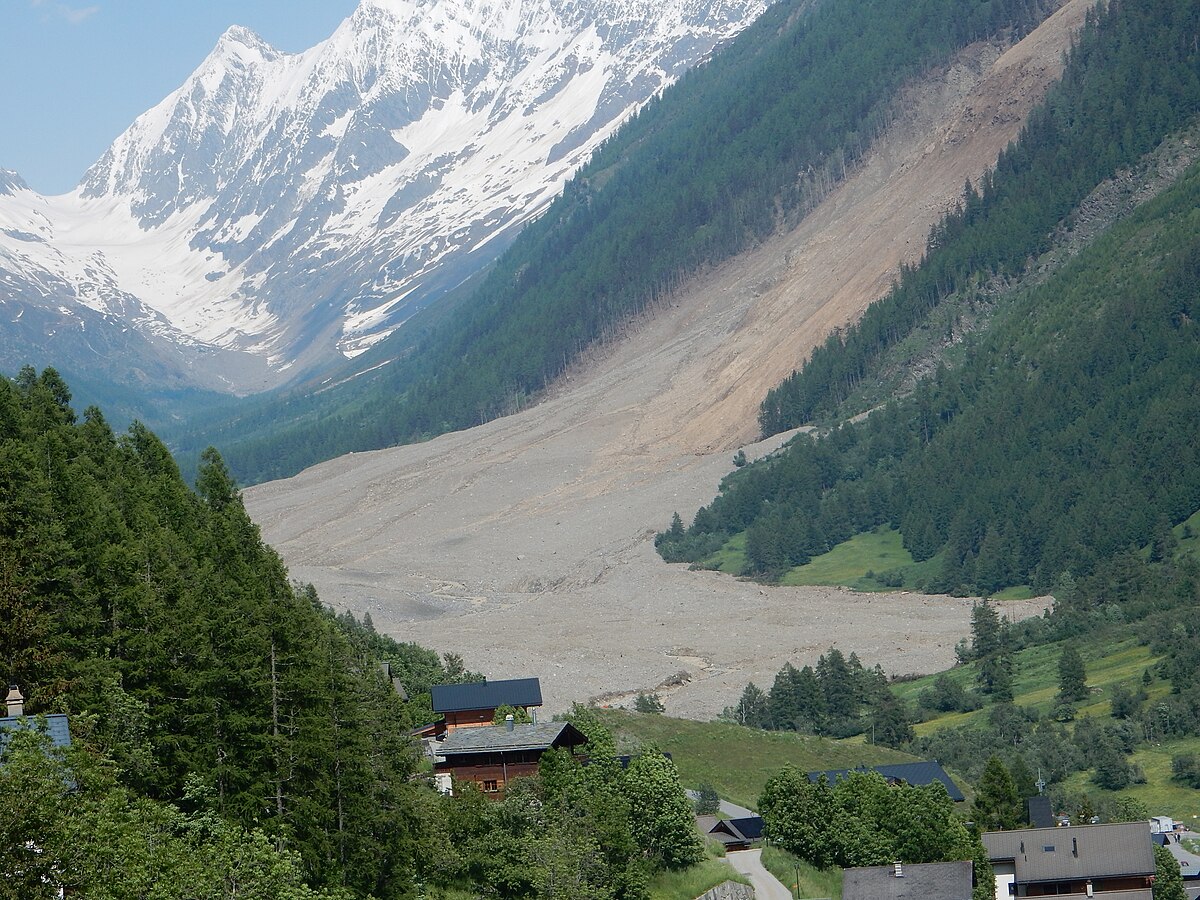
- Melting of glaciers and polar ice sheets, releasing freshwater into the sea. As the ice sheets continue to melt, scientists predict their meltwater will overtake natural causes as the most significant source of regional variations and the most significant contributor to overall sea-level rise.
.
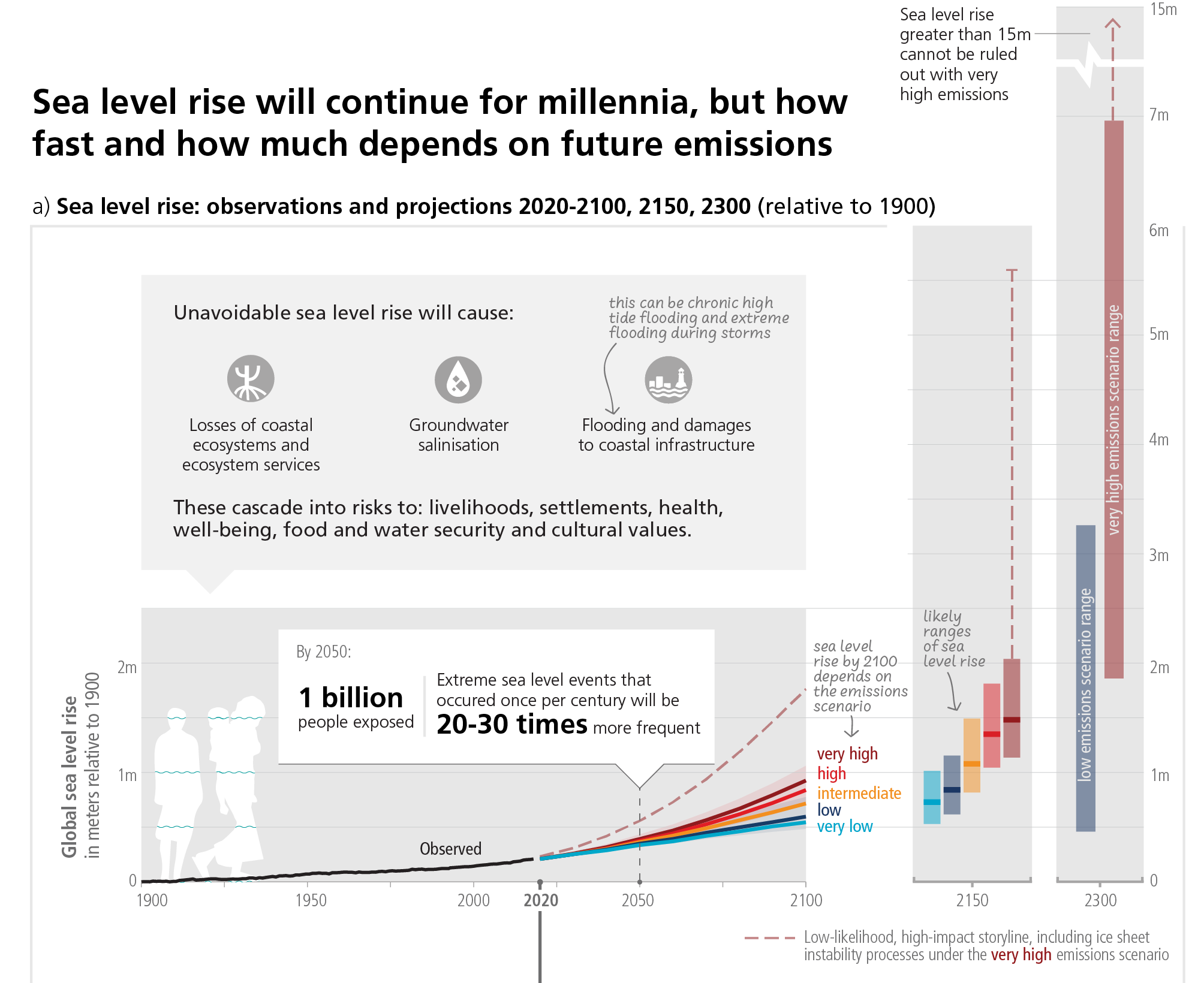
Even if the world successfully limits global warming to 1.5°C above pre-industrial levels, the target set by the Paris Agreement, sea levels are still expected to rise significantly. The World Meteorological Organization (WMO) reported that global sea levels reached a record high in 2023, rising about 20–23 cm since 1880. Alarmingly, the rate of rise has more than doubled in the last decade compared to the 1990s. Average sea levels could rise by up to 90 cm by 2100 under worst-case IPCC climate scenarios, and recent research suggests the increase could even surpass these projections. Regional differences also arise from ocean circulation patterns, such as the Gulf Stream, which are driven by a range of physical processes varying across space and time, and can cause significant departures from the long-term global mean rate of sea-level rise.
Consequences for People and Planet
Sea-level rise is not just an environmental concern, it is a global, multidimensional crisis that affects health, infrastructure, food security, and human rights. As UN Secretary-General António Guterres has stated, sea level rise is a “threat multiplier”, exacerbating existing inequalities and development challenges.
Flooding, Coastal Infrastructure Damage and Saltwater Intrusion
are among the most pressing threats facing coastal regions today. Saltwater intrusion, the inland movement of saline water into freshwater aquifers and surface systems, poses a particularly severe risk to homes, farmland, and essential infrastructure. This challenge is most acute in low-lying coastal areas under 10 meters above sea level, impacting more than 100 countries worldwide. In some of the world’s most fertile agricultural zones, such as the Nile and Mekong Deltas, projections suggest that 10–20% of arable land could be lost, with profound consequences for food security and livelihoods.
Erosion of Coastal Ecosystems, Ecosystems Services and Biodiversity Loss
Coral reefs and mangroves, vital for biodiversity and coastal protection, are among the most vulnerable ecosystems to climate change. These habitats support countless species and sustain intricate ecological relationships, functioning as biodiversity hotspots that provide food, shelter, and resources. However, rising seas, habitat degradation, and warming oceans are destabilizing these systems, pushing many species toward extinction. Organisms reliant on specific tidal zones face particularly high risks. Across many small islands in the Pacific and Indian Oceans, severe coral bleaching and declines in coral cover have already been documented. Climate models project that, under future warming and ocean acidification scenarios, annual severe bleaching could occur before 2040 in some regions. If global warming exceeds 1.5°C, an estimated 70–90% of reef-building corals are expected to be lost worldwide, including in small islands. At 2°C or more, losses could reach 99%, effectively wiping out coral reef ecosystems.
Loss of Natural Carbon Sinks
Mangroves loss, due to flooding, reduces the Earth’s ability to absorb CO₂. This leads to higher global temperatures, accelerating the melting of ice and further rising of seas. Blue carbon ecosystems, including mangroves, tidal marshes, salt marshes, and seagrasses, are among the most productive coastal habitats and play a critical role in climate regulation. They store vast amounts of carbon both in plant biomass and in the sediments beneath them. Scientific assessments reveal that these ecosystems can sequester two to four times more carbon than terrestrial forests, making them a vital component of nature-based solutions to climate change.
Contamination of Freshwater Supplies
increasing risks of waterborne diseases. In cities such as Philadelphia, where the Delaware River provides drinking water for millions, even minor increases in salinity can accelerate the corrosion of aging pipes, threatening infrastructure integrity and public health.
Forced Migration
from rising seas threatens cultural identity and social cohesion. Tuvalu, with nine atolls just 2 meters above sea level, is among the most at risk: sea levels have risen 15 cm in 30 years, and much of its land may be submerged by 2050. In 2024, Australia and Tuvalu launched a landmark visa scheme granting Tuvaluans the right to live, work, and study in Australia with full access to services. Yet, international law lacks a dedicated framework to protect those displaced by climate change.
Mental Health and Stress
Vulnerable coastal communities face heightened psychological impacts from climate change and sea-level rise. Older adults, women, and residents of remote areas are particularly at risk from climate-related environmental damage. Studies show these groups experience elevated levels of psychological distress, including anxiety, depression, and stress.
Disruption to Tourism
Tourism is a key economic sector in Small Island Developing States (SIDS), generating jobs and supporting livelihoods mostly in along coastlines. However, these coastal areas are increasingly affected by natural disasters. The Bahamas is a prime example, where rising sea levels and warming ocean temperatures are accelerating coral reef deterioration and fueling more powerful hurricanes.
Sustainable Development
Sea-level change presents a multifaceted challenge that intersects with various UN Sustainable Development Goals (SDGs). Though not directly linked with SDG indicators, sea-level rise directly affects the achievement of the SDGs., making addressing it critical for progress towards sustainable development:
Primarily, it aligns with SDG 13 (Climate Action), as sea level rise is a direct consequence of anthropogenic climate change resulting from increased greenhouse gas emissions. It underscores the urgency of mitigating climate change and implementing adaptive measures. Rising sea levels also impact SDG 14 (Life Below Water) by altering marine ecosystems, threatening biodiversity and the health of our oceans. Furthermore, it holds significant implications for SDG 11 (Sustainable Cities and Communities) and SDG 15 (Life on Land), as sea level rise can result in coastal erosion, increased flooding, and loss of land, disrupting human settlements and terrestrial ecosystems. Additionally, the associated displacement and resource scarcity can exacerbate social inequalities, intersecting with SDG 10 (Reduced Inequalities) and SDG 1 (No Poverty). (RELX SDG Resource Centre)
Human Rights Impacts of Rising Sea-levels
Who Are Most at Risk?
Sea-level rise is a clear, visible, and escalating impact of climate change. It challenges basic human rights, including the rights to housing, health, water, and cultural identity, especially for communities with limited resources and adaptive capacity. About 900 million people, nearly 1 in 10 globally, live in low-lying coastal zones. At heightened risk are:
- Densely populated countries like Bangladesh, India and the Netherlands.
- Major coastal megacities on all continents including, but not limited to, Buenos Aires, London, New York City, and Tokyo.
- Small island nations, where communities are already relocating due to rising seas. While developing States in the Western Pacific are facing sea-level rise up to four times the global average, in the Caribbean, rising seas have contributed to the devastation of local livelihoods in tourism and agriculture. The IPCC Sixth Assessment Report – Working Group II (2022) projects a rapid increase in flooding risks for small islands, despite considerable variation in exposure across ocean sub-regions. An additional 5–10 cm of sea-level rise, expected by 2030–2050, is likely to double the frequency of flooding across much of the Indian Ocean and Tropical Pacific. By contrast, in the Caribbean Sea and Southern Tropical Pacific, flooding will remain driven primarily by tropical cyclones, which occur less frequently but produce severe impacts.
Recognizing the Links between Sea-level Rise and Human Rights
At the 60th session of the Human Rights Council (HRC60), a resolution on » Sea-level rise and its effects on the full and effective enjoyment of human rights » (A/HRC/RES/60/20), tabled by Bahamas (The), Barbados, Cabo Verde, Cyprus, Dominica, Dominican Republic, Ecuador, Maldives, Malta, Peru and Suriname, was adopted without a vote. Building on the landmark advisory opinions of the International Court of Justice and the Inter-American Court of Human Rights, the resolution makes clear linkages between sea-level rise and human rights.
- Reaffirming the Rio Declaration on Environment and Development, the UN Framework Convention on Climate Change and the Paris Agreement, and the principles enshrined within including common but differentiated responsibilities and respective capabilities, the resolution notes with satisfaction that States have recognized that the ocean, seas and coastal areas form an integrated and essential component of the Earth’s ecosystem and are critical to ensure its sustainability, and that international law, as reflected in the UN Convention on the Law of the Sea and its implementing agreements, provides the legal framework for the conservation and sustainable use of the ocean and its resources, and stressed the importance of the conservation and sustainable use of the ocean and the seas and of their resources for sustainable development.
- Recalling the Convention on Biological Diversity and the Kunming-Montreal Global Biodiversity Framework, the resolution recognizes the guidance of the Advisory Opinion of the International Court of Justice on the Obligations of States in respect of Climate Change and the Advisory Opinion of the International Tribunal for the Law of the Sea on climate change and international law, while taking note of the final report of the International Law Commission Study Group on sea-level rise in relation to international law and the adoption by the Commission of the final report and of the Advisory Opinion of the Inter-American Court of Human Rights on climate emergency and human rights.
- Recognizing the severe impacts of sea level rise driven by climate change, the resolution also recognizes that sea-level rise poses a serious threat to the full enjoyment of human rights, including economic, social and cultural rights, and the right to a clean, healthy and sustainable environment, and that that sea-level rise poses a particular threat to the rights of children and future generations.
- The resolution affirms that climate change-related sea level rise constitutes a serious threat to the full and effective enjoyment of human rights. It recognizes that States bear the duty to protect, respect, promote and fulfil human rights, and continuity of statehood is consistent with the maintenance and fulfilment of that duty, and in this regard, acknowledges that the statehood and sovereignty of States remain unaffected.
- The resolution affirms that international human rights law provides a legal framework as a basis to address the promotion and protection of the human rights of all persons affected by sea-level rise, and that all measures to address sea-level rise impacts must be grounded in human rights principles.
- The resolution requests the Human Rights Council Advisory Committee to prepare, in close cooperation with the Special Rapporteur on the promotion and protection of human rights in the context of climate change, the Special Rapporteur on the human right to a clean, healthy and sustainable environment, as well as all other relevant Special Procedures mandate holders, an in-depth analytical study review on the implications of sea-level rise on the full enjoyment of human rights and to identify in the study its impacts, to be presented at the Council’s sixty-sixth session.

Human Rights, Climate Change, and the Role of Geneva
Learn how International Geneva as a global hub for environmental governance play in advancing a human rights-based approach in climate action.
Study on the implications of sea-level rise for the full enjoyment of human rights
In accordance with Council resolution 60/20, the Advisory Committee is preparing a study on the implications of sea-level rise for the full enjoyment of human rights, and in particular to identify its impact on, among others, Indigenous Peoples, persons of African descent, persons with disabilities, persons belonging to national and ethnic minorities, and coastal communities, while paying specific attention to the disproportionate impacts on women and girls, including in rural areas. The study will be presented to the Council at its 64th session. → Consult the submissions
Addressing the Challenge
Report of the UN Secretary-General | Challenges related to sea level rise and ways and approaches to address it
The General Assembly, in its decision 78/558, requested the Secretary-General to prepare a report, including by inviting contributions from Member States, to provide information on challenges related to sea level rise and on ways and approaches to address it.
Pursuant to that decision, the report of the Secretary-General (A/81/74) provides an assessment of the current context of sea level rise, key challenges and ongoing efforts by Member States and the United Nations system to address such challenges. The report builds on the September 2024 high-level plenary meeting on addressing the existential threats posed by sea level rise (see General Assembly decision 78/544 and resolution 78/319).
The report contains forward-looking recommendations recognizing the global multidimensional impacts of sea level rise and their implications for human rights and sustainable development. It contains calls for strengthened international cooperation to ensure equitable, just and sustainable solutions that uphold the rights of affected States and their populations, through international governance frameworks and action that safeguard dignity, stability and opportunities for those affected and future generations.
IPCC on Mitigation and Adaptation
The IPCC’s special report on the Ocean and Cryosphere in a Changing Climate reveals the benefits of ambitious mitigation and effective adaptation for sustainable development and, conversely, the escalating costs and risks of delayed action. However, the IPCC Sixth Assessment Report – Working Group II (2022) highlights that while urgent adaptation is needed especially in SIDS, progress is hindered by local governance, financial, and human resource constraints. Weak institutional and legal systems, limited data, and uncertainty in projections further restrict effective adaptation, including large-scale relocation. Although some island communities show resilience through social networks and local practices, evidence on their effectiveness and scalability remains limited. A deeper understanding of adaptation limits, resilience drivers, and sociopolitical contexts is essential to strengthen climate adaptation and advance climate-resilient development pathways.
Mitigation
Curbing greenhouse gas emissions to slow the pace of sea-level rise and limit further warming. Without mitigation, sea levels will continue to rise for centuries, reaching 2.3–5.4 m by 2300 (likely range) and much more beyond according to IPCC 2019 Special Report on the Ocean and Cryosphere in a Changing Climate.
Adaptation
IPCC presented 5 main solutions to prepare for and recover from major flooding or extreme storm events:
- Advance, involving the reclamation and fortification of land seaward to create new territory, an option that can be effective but is highly costly.
- Protection, blocking the intrusion of seawater and extreme winds into coastal areas through such means as dikes, seawalls, storm surge barriers,
breakwaters, and beach-dune systems. This method is widely used but can accelerate the erosion of beaches. - Retreat, by moving people, assets and human activities out of the exposed coastal area, reducing exposure to coastal hazards.
- Accommodation, that includes a diverse set of biophysical and institutional responses to reduce vulnerability of coastal residents, human activities, ecosystems, and the built environment by constructing buildings on sites subject to sea-level rise and periodic flooding such that storm surges can pass under buildings.
- Ecosystem-based Adaptation, combining the protect and advance strategies based on reefs and coastal vegetation restoration.

Complementing these, additional strategies draw on nature, technology, migration, and social systems:
- Restoring natural buffers such as mangroves, wetlands, and coral reefs, providing protection against storm surges, high waves and swells, trapping sediment and pollutants, preventing erosion and capturing carbon from the air.
- Strengthening disaster risk reduction and early warning systems. For example, UNEP supports Timor-Leste, an island nation highly vulnerable to extreme weather and slow-onset climate impacts such as sea-level rise, by helping government meteorologists improve weather forecasting and issue timely alerts.
- Implementing managed retreat, relocating vulnerable communities to safer areas. For instance, Louisiana’s Office of Community Development received in 2016 $48 million from the Department of Housing and Urban Development to resettle current and former residents of Isle de Jean Charles, who were facing sea-level rise and rapid erosion.
- Integrating psychosocial factors into hazard risk management and climate change adaptation strategies.
International Cooperation to Address Sea-level Rise
Declaration on Sea Level Rise
The General Assembly in its decision 78/558 of 1 August 2024 decided to hold a one-day high-level plenary meeting of the General Assembly, no later than the last day of the general debate of its 81st session, to further consider sea level rise which will result, without setting a precedent for similar meetings, in a concise, action-oriented and intergovernmentally negotiated declaration agreed by consensus. The President of the General Assembly appointed H.E. Amb. James Martin Larsen, Permanent Representative of Australia to the United Nations, and H.E. Amb. Ms. Tania Serafim Yvonne Romualdo, Permanent Representative of Cabo Verde to the United Nations, as co-facilitators to conduct the intergovernmental negotiations on the declaration.
UN Member States have finalized intergovernmental negotiations on a concise, action-oriented declaration on sea level rise. According to a letter from the co-facilitators dated 20 August 2026, informing about the completion of the negotiations, the draft declaration underwent a silence procedure and passed successfully. The declaration is expected to be adopted at the UN General Assembly’s (UNGA) high-level plenary meeting in September 2026.
The four-page declaration expresses deep concern about sea level rise and emphasizes the need to implement international law and to strengthen action to address it by protecting our shared environment. The declaration outlines four pillars of action: knowledge, data, and science; adaptation, finance, and resilience; livelihoods, socioeconomic challenges, culture, and heritage; and legal dimensions of sea level rise.
High-Level International Meeting on Sea-level Rise
Pursuant to the General Assembly decision 78/544 of 16 January 2024 and General Assembly resolution 78/319 of 1 August 2024, , the UN General Assembly convened a high-level plenary meeting on Addressing the existential threats posed by sea-level rise in September 2024, during the High-Level Week of the 79th session of the General Assembly. Taking place on the heels of the Summit of the Future, the high-level meeting focused on building common understanding, mobilizing political leadership, and promoting multisectoral, multi-stakeholder collaboration and international cooperation towards addressing the threats posed by sea-level rise. → Consult the Secretary-General’s summary.
Global Cooperation on Adaptation and Resilience-building
To strengthen resilience, the UN supports a wide range of initiatives, including the Peacebuilding Fund, which backs grassroots efforts to build climate resilience and reduce tensions in fragile contexts. In addition, the United Nations Office for Disaster Risk Reduction (UNDRR) promotes risk-informed development strategies, while agencies like UNDP and UNEP provide technical assistance to integrate adaptation into national development plans.
Climate Finance Mechanisms
The Green Climate Fund, created during the Paris Agreement, helps developing countries implement their Nationally Determined Contributions (NDCs) through mitigation and adaptation. At COP27 (2022), the Loss and Damage Fund was created to support countries already facing climate impacts. In 2023, UN Secretary-General António Guterres urged delivery on the $100 billion climate finance pledge, a doubling of adaptation finance, and greater mobilization of affordable private investment.
The Blue Carbon Initiative
The Blue Carbon Initiative (BCI), led by Intergovernmental Oceanographic Commission of UNESCO, Conservation International, and IUCN, develops management, policy, and financing approaches to conserve and restore coastal blue carbon ecosystems. It promotes methods for assessing blue carbon stocks and emissions through global demonstration projects. Since 2015, IOC has been a partner of the International Partnership for Blue Carbon (IPBC), which provides a global forum for governments, NGOs, and research institutions to collaborate on protecting and managing blue carbon ecosystems. Launched at COP21 in Paris (2015) with nine founding members, the Partnership grew to over 54 partners by 2022.
World Day for Glaciers and World Water Day
The 2025 global campaign marking the first World Day for Glaciers (21 March) and World Water Day (22 March) drew urgent attention to the accelerating retreat of glaciers. Melting glaciers not only disrupt freshwater supplies but also drive sea-level rise, threatening coastal communities and entire nations. To address these cascading risks, UN Water and UNESCO launched the UN World Water Development Report 2025, offering strategies to both mitigate and adapt to the rapid transformation of the world’s frozen water resources.
International Legal Frameworks Addressing Sea Level Rise
Role of International Law Commission
The increasing threat of sea-level rise raises complex questions under international law, particularly in relation to state responsibility, sovereignty, and the protection of human rights in the face of environmental changes. The work of the International Law Commission (ILC) provides crucial guidance on these issues, underscoring the need for comprehensive global cooperation. States, in turn, bear a duty to prevent harm, support vulnerable populations, and safeguard fundamental human rights.
Regarding migration, the International Law Commission (ILC) calls for new legal instruments and practical solutions to safeguard both those who remain and those forced to move. A UN expert urges states to uphold rights to housing, cultural identity, and non-discrimination, and to adopt national laws enabling humanitarian visas for climate-displaced populations.
State Responsibility and Environmental Harm
The Final report of the Study Group on sea-level rise in relation to international law adopted by the International Law Commission at its seventy-sixth session, in 2025, focuses on three main topics: the law of the sea, statehood, and the protection of persons affected by sea-level rise. The report supports:
- Legal stability of baselines and maritime zones: States are under no obligation to update their coastal baselines or maritime limits due to sea-level rise, preserving the rights and entitlements derived from them.
- Continuity of statehood: Even if overwhelmed by rising seas, territorial States should retain their legal status, sovereignty, and international personality. Statehood does not automatically vanish even if all land becomes submerged.
The Role of Geneva
Sea-level rise is one of the most severe and dangerous impacts of climate change, threatening the livelihoods, homes, and rights of millions worldwide. It is deeply connected to issues central to Geneva’s multilateral system, including human rights, migration, health, trade, disaster risk reduction, and biodiversity. Mobilized to tackle climate change, Geneva provides a unique platform where science, diplomacy, humanitarian response, and policy converge to foster international cooperation on this global challenge.
Organizations are listed in alphabetical order and include:
Center for International Environmental Law (CIEL)
CIEL plays a pivotal role in Geneva in addressing the legal dimensions of sea-level rise through its Climate & Energy Program. This initiative focuses on tackling the root causes of climate change by advancing a transition away from fossil fuels, safeguarding human rights, and ensuring environmental integrity in climate responses. CIEL’s Geneva office actively engages in advocacy, policy research, and capacity-building efforts aimed at strengthening international legal frameworks to better protect communities most vulnerable to the impacts of climate change, including those facing the threat of rising sea levels.
Geneva Climate Change Consultation Group (GeCCco)
GeCCco gathers civil society organizations in Geneva to advocate for stronger recognition of the human rights impacts of climate change, including those caused by sea-level rise. It brings evidence and testimonies of affected communities, such as small island developing states and low-lying coastal populations, into discussions at the UN Human Rights Council and other Geneva-based bodies.
Group on Earth Observations (GEO)
Earth observations relevant to climate action are not limited to weather or climate, but are much broader and include terrestrial and socio-economic variables. GEO makes available Earth observations in support of effective policy responses for climate change adaptation, mitigation and other specific provisions, working with partners to enhance global observation systems for climate action.
Intergovernmental Panel on Climate Change (IPCC)
The IPCC provides the leading scientific assessments on sea-level rise, offering projections under different emission scenarios and evaluating the risks to coastal ecosystems and communities. Its findings underscore the urgency of adaptation and resilience planning, while also highlighting critical connections to human rights, migration, and health. The 2019 Special Report on the Ocean and Cryosphere in a Changing Climate, particularly Chapter 4 on “Sea Level Rise and Implications for Low-Lying Islands, Coasts and Communities”, is a landmark reference that details both the scale of the threat and pathways for global response.
International Organization for Migration (IOM)
IOM’s Migration, Environment and Climate Change (MECC) Division leads global efforts to address the nexus between oceans, sea-level rise, and human mobility. In 2021, IOM launched its 10-year Institutional Strategy on Migration, Environment and Climate Change 2021-2030 to define how IOM can, over the next decade, develop and implement a comprehensive, evidence-based and rights-based approach to migration in the context of climate change. Another key resource is its “Infosheet on Oceans, Environment, Climate Change and Human Mobility” highlighting how rising seas and the degradation of marine ecosystems, driven by climate change, are increasingly forcing displacement and shaping migration patterns.
International Union for Conservation of Nature (IUCN)
The IUCN assesses the impacts of climate change on species and ecosystems. Through its work on ecosystem-based mitigation, adaptation and disaster risk reduction, it also highlights the important role of nature-based solutions to climate change. In the occasion of the High-level meeting of the United Nations General Assembly on addressing the existential threats posed by sea-level rise held in September 2024, IUCN developed a policy brief to guide its efforts with four priorities:
- Climate change mitigation and adaptation
- Protection and preservation of the marine environment
- Protection of the human rights of those affected by sea-level rise in particular those living in SIDS, low-lying developing countries and other particularly vulnerable countries
- Addressing the further legal dimensions of Sea-Level Rise
Office of the United Nations High Commissioner for Human Rights (OHCHR)
Sea-level rise poses direct threats to rights such as housing, water, health, and self-determination. OHCHR integrates these concerns into the Human Rights Council’s climate discussions and its analytical studies to provide guidance on states’ obligations to protect affected communities.
Office of the United Nations High Commissioner for Refugees (UNHCR)
As rising seas threaten to make parts of small island states and coastal regions uninhabitable, UNHCR engages in Geneva forums to advance protection for people displaced by climate impacts. While international refugee law does not yet formally cover climate displacement, UNHCR promotes legal innovation and stronger protection frameworks. Building on its Strategic Framework for Climate Action, the Strategic Plan for Climate Action 2024–2030 sets out a global roadmap to support governments and partners in achieving this goal.
Swiss Agency for Development and Cooperation (SDC)
The Swiss Agency for Development and Cooperation’s activities fall under the Blue Peace initiative. This was co-initiated by Switzerland and advocates for peaceful water management in various regions of the world. In Central Asia the SDC can benefit from a wide network of international and regional partners who are also active in the water sector.
United Nations Economic Commission for Europe (UNECE)
Through its legal instruments and policy support, UNECE contributes to regional resilience against climate impacts. While its core region is not the most exposed to sea level rise, UNECE’s conventions on water and environmental impact assessment provide tools for managing transboundary risks, including flooding and coastal changes linked to sea-level rise.
UNEP/ GRID-Geneva
GRID-Geneva specializes in turning environmental data into accessible knowledge for policymakers. It monitors ocean, coastal, and climate data to assess risks linked to sea-level rise and supports adaptation planning. UNEP more broadly helps countries secure climate finance for coastal resilience, restoration of ecosystems such as mangroves and reefs, and risk reduction in vulnerable regions.
United Nations Office for Disaster Risk Reduction (UNDRR)
UNDRR leads global efforts to reduce disaster risk and build resilience to ensure a sustainable future. It supports countries in implementing the Sendai Framework for Disaster Risk Reduction 2015–2030, which focuses on preventing new and reducing existing disaster risks through improved preparedness, governance, and resilience strategies.
University of Geneva (UNIGE)
The UNIGE conducts sea-level rise research through its Institut des Sciences de l’Environnement (SE) and Faculty of Geosciences and Environment (FGSE).
World Economic Forum (WEF)
WEF brings together governments, businesses, and civil society to address global risks and opportunities. In its Global Risks Report 2025, ‘Critical change to Earth systems’, which includes sea-level rise from collapsing ice sheets, is the third-biggest threat to the world in the coming decade.
World Health Organization (WHO)
WHO highlights the health impacts of sea level rise, such as water contamination, increased vector-borne diseases, and risks from displacement and flooding. WHO supports member states in strengthening health systems’ resilience to climate-related hazards, including those linked to coastal change.
World Meteorological Organization (WMO)
WMO tracks sea levels, ocean heat, and extreme weather through tide gauges, observation systems, and storm surge forecasting—essential tools for early warning and disaster risk reduction. Its State of the Climate in the South-West Pacific 2024 report notes record sea-surface temperatures, near-record ocean heat content, and marine heatwaves affecting over 10% of the global ocean. It also underscores the need for stronger early warning systems, highlighting success stories from the Philippines and Fiji, where anticipatory action and community-led responses have saved lives and safeguarded cultural heritage.
World Trade Organization (WTO)
Geneva-based trade negotiations increasingly take climate resilience into account. The WTO engages in Geneva discussions about the trade impacts of sea-level rise. Coastal flooding can disrupt ports, supply chains, and fisheries while rising sea levels and extreme weather conditions could also permanently damage tourism infrastructures with economies that are highly dependent on tourism, such as SIDS.
WWF
WWF works to tackle the climate crisis in a variety of ways. From encouraging governments to implement more ambitious climate policies, to supporting the shift to renewable energy, to working with cities, businesses and communities to create a climate-resilient, net-zero future.
In May 2024, the International Tribunal on the Law of the Sea (ITLOS) handed down a landmark advisory opinion on the responsibility of states in relation to the impacts of climate change on the marine environment. The request for an ITLOS advisory opinion was initiated by a coalition of small island states vulnerable to climate change, and supported by an amicus brief submitted by WWF.
Zoï Environment Network
Zoï Environment Network translates complex climate and environmental data into accessible knowledge for governments and communities. It raises awareness and fosters dialogue on sea-level rise, for example, through its 2016 brief on migration, which highlighted the links between climate change, rising seas, and human mobility, helping policymakers and civil society identify vulnerabilities and explore adaptation options.
Learning
Climate Change: From Learning to Action
UN CC:e-Learn

MOOC | Global Artic
EPFL
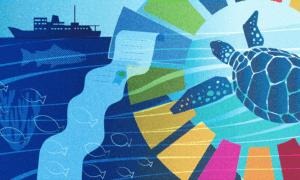
Introductory Course on SDG 14 and Ocean Governance | InforMEA Learning
InforMEA Learning
GEN Events
Events organized by the Geneva Environment Network that discussed sea-level rise can be found in this section.
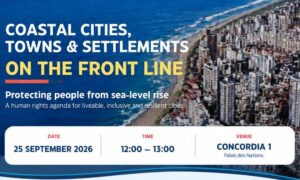

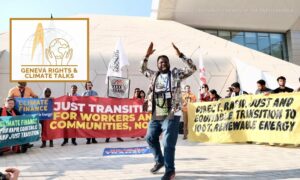
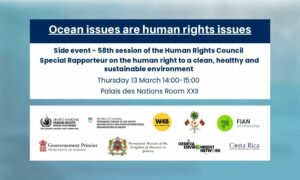
Ocean Issues are Human Rights Issues | HRC58 Side Event
13 March 2025

Briefing on the UN Climate Change Conference (COP28)
21 November 2023

News and Resources
- Sea level rise: an existential threat? | United Nations
- UN General Assembly adopts declaration on sea level rise | WMO | 25 September 2026
- World leaders approve new declaration to tackle rising sea levels | UN News | 24 September 2026
- With Highest Annual Sea Level Increase Recorded, States Approve Declaration Calling for Urgent Action to Address Existential Threat | UN Meetings Coverage and Press Releases | 24 September 2026
- ‘Rising seas are sinking futures’ | UN News | 24 September 2026
- When a country goes underwater: Island States fight for their future | UN News | 22 September 2026
- In Tanzania, the sea is moving inland – and taking livelihoods with it | UN News | 21 September 2026
- Sea Level Rise: Human Rights Impacts and Legal Obligations to Prevent and Repair Climate Harm | CIEL | 17 September 2026
- Surging seas in a warming world: the latest science on present-day impacts and future projections of sea-level rise | United Nations
- Rising seas, rising stakes: What increasing sea-levels mean to humanity | UN News | 29 August 2026
- What the ‘natural’ disasters of 2026 reveal about climate change | Greenpeace | 26 August 2026
- Sea level much higher than assumed in most coastal hazard assessments | Katharina Seeger & Philip S. J. Minderhoud | Nature | 4 March 2026
- Advisory Opinion of Inter-American Court of Human Rights | IACtHR | 29 May 2025
-
Advisory Opinion of ICJ | International Court of Justice | 23 July 2025
- Final report of the Study Group on sea-level rise in relation to international law | United Nations | 2025
- High-Level Meeting on Sea Level Rise | General Assembly of the United Nations | United Nations | 25 September 2024
- State of the Climate in Africa 2024 | WMO | 2024
- Victory for South Korean climate activists as government ordered to improve carbon cutting plans | Euronews | 29 August 2024
- The Caribbean island nation at the forefront of the climate litigation push | UNEP | 28 August 2024
- Climate change transforms Pacific Islands | WMO | 27 August 2024
- States’ Human Rights Obligations in the Context of Climate Change: Guidance Provided by the UN Human Rights Treaty Bodies | CIEL | 27 August 2024
- Chapter 9: Ocean, Cryosphere and Sea Level Change | Climate Change 2021: The Physical Science Basis | United Nations
- What is sea level rise and why does it matter to our future? | United Nations | 26 August 2024
- Climate Change-induced Sea-Level Rise Direct Threat to Millions| United Nations | 17 February 2023
- Sea-level rise and mental health among coastal communities
- Special Report on the Ocean and Cryosphere in a Changing Climate
- Accelerated Ocean thermal expansion and its contribution to Global Sea-level rise
- 2022 Technical Report | US Sea level Change | 2022
- Assessing the impact of rising sea levels on travel and tourism in APEC Economies| APEC | December 2023
- Belize National Climate Change Policy | Carribean Community Climate Change Centre
- Examples of regional and national legislation, policies and strategies on sea-level rise | United Nations | 2021
- National Physical Development Plan for the British Virgin Islands | Government of the Virgin Islands | 4 April 2019
- Thermal Expansion, Global Sea Level | NASA
- Warming Seas and Melting Ice Sheets | NASA | 2015
- Framework for a Pacific Oceanscape | FPO | 2010
- Global sea-level rise update | WMO | 2010