Newsletter 23 Sep 2024
Environment: What’s Up in GENeva | 23 – 29 September 2024
The Geneva Environment Network’s weekly newsletter includes the latest information on the global environmental agenda, main events, job vacancies, as well as other useful resources and updates. Stay tuned and follow us on X (Twitter), Facebook, LinkedIn, Instagram, and Youtube, or visit our website regularly for additional updates.
Celebrate with us and join our 25th Anniversary of the Geneva Environment Network call for video messages. To take part, record a 1 to 2 minutes video message on how the Geneva Environment Network has been GENerating participation and engagement for increased collaboration among stakeholders for stronger environmental governance in the fight against the triple planetary crisis. We’ll select 25 videos to use during our celebrations.
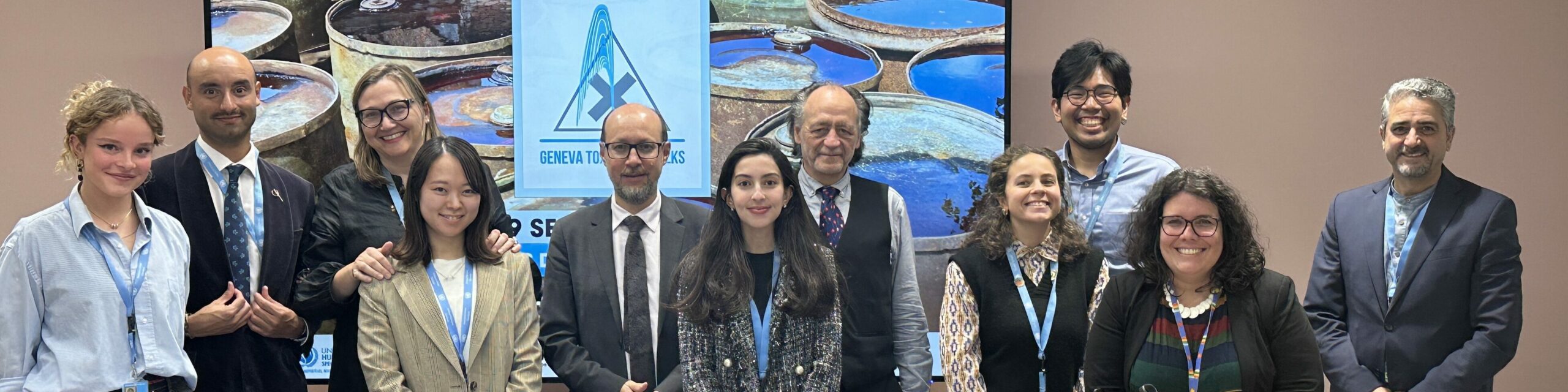
Image of the week | The UN Special Rapporteur on toxics and human rights surrounded by co-organizers and delegates at the closing of the 2024 edition of the Geneva Toxic Free Talks, on 19 September at Palais des Nations. The Talks took place during a week particularly busy at the Human Rights Council for who follows environmental and human rights issues.
Environment @ 57th Session of the Human Rights Council
The environment remains high on the agenda of the 57th session of the UN Human Rights Council (HRC57), as it continues this week in Geneva.
This week, the rights of Indigenous Peoples will feature prominently in the agenda of the Council.
- The UN Special Rapporteur on the rights of Indigenous Peoples, Francisco Cali Tzay, will present annual report to the Council on “Indigenous Persons with Disabilities”. An interactive dialogue with the Special Rapporteur is scheduled to take place from 26 September 2024, from 11:15 to 12:45 CEST onwards, at Palais des Nations, Room XX.
- The Expert Mechanism will also present their study on “Laws, legislation, policies, constitutions, judicial decisions and other mechanisms in which States had taken measures to achieve the ends of the United Nations Declaration on the Rights of Indigenous Peoples, in accordance with article 38 of the Declaration,” with an interactive dialogue scheduled to take place on 26 September 2024, 10:00-11:15 CEST, at Palais des Nations, Room XX.
- The annual half-day panel discussion on the rights of Indigenous Peoples on the same topic is also scheduled to take place 25 September 2024, 15:00-17:00 CEST, at Palais des Nations, Room XX.
- A side event to HRC57, organized by Earthjustice, the International Service for Human Rights and the Geneva Human Rights, Biodiversity and Land (GeHRBiL), with the support of the Geneva Environment Network, will also be discussing the Rights of Indigenous Peoples and the Environment on 23 September 2024, from 13:00 to 14:00 CEST, at Palais des Nations, Room XXV.
- Human Rights of Indigenous Peoples | HRC57 Side Event | 25 September 2024 | 11:00 – 12:00 CEST | Palais des Nations, Room XXV | Oidhaco, Bureau International des Droits Humains – Action Colombie
- Drug control policies and respect for the rights, needs and cultural characteristics of Indigenous Peoples, including their traditional medicine, science and ancestral practices: the case of the critical review of the coca leaf | HRC57 Side Event | 25 September 2024 | 14:00 – 15:00 CEST | Palais des Nations, Room XXIV | Bolivia and Colombia
- Informal consultations on the draft resolution on human rights and Indigenous Peoples | Mexico and Guatemala
- 23 September 2024 | 10:30 – 12:00 CEST & 15:00 – 16:30 CEST | Palais des Nations, Room XXII
- 24 September 2024 | 9:00 – 10:30 CEST & 12:00 – 13:30 CEST | Palais des Nations, Room XXV & XXII
- 26 September 2024 | 16:30 – 18:00 CEST | Palais des Nations, Room XXIV
- 27 September 2024 | 9:00 – 10:30 CEST & 16:30 – 18:00 CEST | Palais des Nations, Room XXII
Other notable events taking place this week include:
- Informal consultations on the draft resolution on the human rights to safe drinking water and sanitation | 25 September 2024 | 9:00 – 10:30 CEST | Palais des Nations, Room XXV | Germany and Spain
- Towards Enhancing Access to Clean Water and Sanitation to Achieve Sustainable Development Goals Nationally and Internationally | HRC57 Side Event | 25 September 2024 | 13:00 – 14:00 CEST | Palais des Nations, Room XXIII & Online | Kuwait
- Beyond Material Loss: Exploring Non-Economic Impacts of Climate Change through Community and Faith-Based Perspectives | 27 September 2024 | 16:00 – 17:30 CEST | Rue de Varembé, CAV | Geneva Interfaith Forum on Climate Change, Environment and Human Rights
- Nuclear Justice and Transitional Justice | HRC57 Side Event | 27 September 2024 | 14:00 – 15:00 CEST | Palais des Nations, Room XXII | Marshall Islands
→ Consult regular updates on key environmental issues at HRC57, side events, and further resources available on our dedicated HRC57 and the environment update.
Shaping the Future of Chemicals, Waste and Pollution Prevention with Scientists Engagement | Launching the Road to OEWG 3.2 & GEN @ 25 Events Series
In preparation for the resumed third session of the ad hoc open-ended working group on a Science-Policy Panel to Contribute Further to the Sound Management of Chemicals and Waste and to Prevent Pollution (OEWG 3.2), to take place in early 2025, the “Road to OEWG 3.2 Series“, co-organized by the Secretariat of the OEWG and the Geneva Environment Network, is kicking off this week. The session Strengthening Scientists Engagement: Shaping the Future of Chemicals, Waste, and Pollution Prevention aims to present the Science-Policy Panel to the wide scientific community, including scientists, scientific institutions, networks and journals, to raise awareness and get prepared to engage and involved in the panel’s activities once established. The event is directed to all scientific communities relevant to chemicals, waste, and the prevention of pollution, from all disciplines, including natural sciences, social sciences and humanities, particularly targeting those that are not yet familiar with international science-policy work. It will also present the current state of the negotiations as well as the different ways in which scientists across the world can take part in the work of the future Panel. → Register on Webex to join the webinar on 26 September 2024 from 14:00 to 15:30 CEST.
This session is organized also in the framework of the Geneva Environment Network’s 25th anniversary. The celebration of this important milestone for international Geneva’s pivotal platform dedicated to enhancing collaboration among stakeholders in the fight against the triple planetary crisis will include a series of events exploring and highlighting frameworks and partnerships that can strengthen environmental governance. It will conclude in December 2024 with a closing ceremony. This approach aims to create a meaningful and impactful celebration, inspiring renewed commitment to environmental governance and collaborative action. → Join the call for video messages.
Why Global Sustainability? | Launch of the Hoffmann Centre for Global Sustainability
The Geneva Graduate Institute will launch this week the Hoffmann Centre for Global Sustainability. The Centre aims to position itself as one of the leading research and policy hubs in Europe dedicated to integrated (nature positive and socially equitable) sustainability. Building on the rich legacy of the Geneva Graduate Institute Centre for International Environmental Studies (CIES), the new Centre will conduct cutting-edge academic research on the complex interactions between natural, economic, social, legal and political systems and inform, through research, expertise and outreach, decision-making and action on global sustainability for a peaceful and equitable world for current and future living communities. Alongside several research programs and platforms, a cross-cutting Data Lab for Climate and Nature will be launched, granting the Centre an integrated structure to explore all dimensions of sustainability in a systemic way and to focus on the interplay between nature, the economy, society and (geo)politics. → Register to attend the official launch on 23 September 2024 from 18:30 to 20:00 CEST in the Auditorium Ivan Pictet of Maison de la paix.
Climate Change and Hazardous Weather Impacts
Hazardous weather and climate change impacts have continued making the headings in the past days, while the international community in Geneva and beyond is preparing for the UN Climate Change Conference in Baku. Recent news include:
- Over the past weeks, hazardous weather has caused devastating impacts across the world.
- The Asian continent has been battered by typhoons, with Typhoon Bebinca being declared the strongest hitting Shanghai in 75 years and ‘Super Typhoon Yagi’ leaving a trail of destruction in multiple countries, with severe flooding, landslides, and widespread infrastructural damage.
- Central and Eastern Europe have been hit by Storm Boris since 11 September 2024, with countries receiving up to five times the average monthly rainfall for September in just a few days, while wildfires raging across northern Portugal have burned an area of more than 105,000 hectares and have a significant negative impact on air quality in the region.
- Glacier melting in Switzerland continues, with 4 meters of ice loss over the thickest ice of the European Alps in 2024, according to the Swiss glaciologist Matthias Huss. An upcoming publication to be released on 1 October 2024 will present the results of recent observations.
- Science is clear, climate change and hazardous weather impacts are reversing development gains and threatening the well-being of people and the planet, according to the 2024 edition of the “United in Science” report released by the World Meteorological Organization (WMO), the United Nations Office for Outer Space Affairs (UNOOSA), the International Science Council (ISC), the United Nations Environment Programme (UNEP), the Global Carbon Project (GCP), the European Centre for Medium-Range Weather Forecasts (ECMWF), the UK Met Office; International Telecommunication Union (ITU) and United Nations Convention to Combat Desertification (UNCCD). While sounding the alarm about the high likelihood of global warming of 3°C this century under current policies, the report emphasizes the potential of advances in natural and social sciences, new technologies and innovation to enhance our understanding of the Earth system for climate change adaptation, disaster risk reduction and sustainable development. → Learn more in WMO Press Release.
- Last week on World Ozone Day, the WMO provided updates on the status of the ozone layer with its annual Ozone and UV Bulletin. While reminding the success of the Montreal Protocol in phasing out damaging ozone-depleting substances, the Bulletin stresses the need for continued monitoring and to avoid complacency as under current policies, the ozone layer is expected to recover to 1980 values (before the appearance of the ozone hole) by around 2066 over the Antarctic, by 2045 over the Arctic and by 2040 for the rest of the world. Given that some ozone-depleting substances also function as greenhouse gases, their phaseout is an added bonus for the climate.
- The report “Forensic Insights for Future Resilience: Learning from Past Disasters” was released by UNDRR last week, ahead of the Summit of the Future, as a special edition of the UN’s flagship Global Assessment Report (GAR). Hazard events are becoming more intense and frequent in all regions of the world. When vulnerability and exposure levels are high, then these hazard events are much more likely to become disasters. By studying the relationship between hazards, risk, and disasters, we can better understand how to reduce disaster risk in a way that prevents the next hazards from becoming disastrous.
- “How the Finance Flows: Corporate capture of Public Finance fuelling the climate crisis in the Global South“, a report released by ActionAid on 18 September, examines the use of public funds in the Global South and finds that the same industries that are causing the climate crisis and harming communities are also successfully squeezing Global South governments for the lion’s share of public finance. The Global South countries are locked into harmful development pathways that destroy ecosystems, grab lands and compound the injustice of climate change.
International Geneva at the 79th Session of the UN General Assembly
Every September, the United Nations General Assembly gathers the world’s leaders and advocates to address, discuss, and debate the most pressing global issues. Numerous experts from International Geneva are this week in New York for the High-level Week of the 79th session of the UN General Assembly, taking place from 24 to 30 September 2024. The week is preceded by the Summit of the Future. UNGA79 marks a crucial milestone in the global effort to accelerate progress towards the 17 Sustainable Development Goals (SDGs), with the UN Secretary-General António Guterres convening the fourth SDG Moment to highlight inspiring examples of progress from around the world and emphasize the role of political leadership, SDG investment, and global partnerships in achieving food systems transformation, the renewable energy shift, and expanded digital connectivity.
Major events addressing environmental and sustainability issues taking place this week include:
- The Summit of the Future is concluding on 23 September 2024 at the UN Headquarters in New York. The Summit high-level event brings together world leaders to forge a new international consensus on how we deliver a better present and safeguard the future. As recently stated by the UN Secretary-General António Guterres, the summit is a “critical opportunity for a safer, more sustainable and equitable world”. One of the major outcomes is the adoption by consensus of an inter-governmentally negotiated, action-oriented Pact for the Future on Sunday 22 September 2024 – with a small group of just seven countries holding out, having failed to pass a last-minute amendment. The adopted document also includes a Global Digital Compact and a Declaration on Future Generations. The importance of building the future sustainably and the need to address the triple planetary crisis of climate change, biodiversity loss and pollution are recognized across the documents. Before officially closing the summit, participants will meet in plenary and participate to two Interactive Dialogues: Towards a Common Digital Future: strengthening inclusive innovation and cooperation to bridge the digital divides and The Future Starts Now: enhancing the global system for current and future generations → Access the links the live webcast and learn more about the Summit of the Future & the Role of Geneva.
- The General Debate of the 79th session of the General Assembly is held under the theme “Leaving no one behind: acting together for the advancement of peace, sustainable development and human dignity for present and future generations. It will open on Tuesday, 24 September, continue through Saturday, 28 September, and conclude on Monday, 30 September 2024.
- The High-level plenary meeting on addressing the existential threats posed by sea level rise is taking place on 25 September 2024 and will convene global leaders, experts, and stakeholders to address the urgent and escalating threat of rising sea levels. This meeting builds on the UNSG’s technical brief “Surging Seas in a Warming World: The Urgency of Action” and will focus on building common understanding, mobilizing political leadership, and promoting multisectoral and multi-stakeholder collaboration and international cooperation towards the objective of “addressing the threats posed by sea-level rise”. Participants will work towards developing comprehensive solutions and actionable commitments to combat sea-level rise, ensuring a resilient and sustainable future including for small island developing states and low-lying coastal areas.
- The High-Level Meeting on Antimicrobial Resistance AMR will take place on 26 September 2024 and presents an opportunity for countries and stakeholders to renew efforts and accelerate progress in combating the growing threat of AMR. This meeting will serve as the foundation for executing policies and ensuring accountability for strengthening health systems against AMR. Building on the momentum of previous declarations and commitments, participants will focus on enhancing international cooperation, promoting the responsible use of antimicrobials, and advancing the development of new treatments to safeguard global health. Moreover, a new Lancet analysis assessed the global burden of bacterial antimicrobial resistance from 1990–2021 and forecasts that without net improvements in healthcare, infection prevention, vaccination, minimization of inappropriate antibiotic use in farming and humans, and research into new antibiotics 1·91 million deaths attributable to AMR and 8·22 million deaths associated with AMR could occur globally in 2050.
- The High-level Plenary Meeting on the International Day for the Total Elimination of Nuclear Weapons annual event will take place on 26 September 2024 to commemorate and promote the International Day for the Total Elimination of Nuclear Weapons. Achieving global nuclear disarmament is the highest disarmament priority of the United Nations. It was the subject of the General Assembly’s first resolution in 1946, which established the Atomic Energy Commission (dissolved in 1952), with a mandate to make specific proposals for the control of nuclear energy and the elimination of atomic weapons and all other major weapons adaptable to mass destruction.
Enjoying a Green Autumn in Geneva
The Autumn has now arrived, the days will be getting shorter and nature will start changing colors. Geneva offers many opportunities to enjoy its landscapes around the lake and its numerous parks. Find suggestions of exhibitions, nature trails, shows, music and festivals for a Green Autumn in Geneva. Suggestions for this week include:
- À Table! Let’s eat local and sustainable! | For one month, various restaurants, are committed to more sustainable eating. It’s an opportunity for them to redouble their efforts to promote local, seasonal produce and creative recipes for high-quality, healthy food that respects our planet.
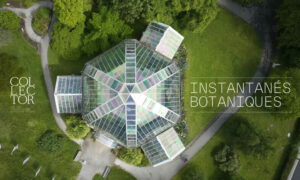
- Instantanés botaniques | Two talented photographers take an unusual look at the “Conservatoire Botanique” — an original artistic exploration of its heritage collections, a poetic glimpse into the research and conservation activities that have been driving the institution for two centuries. A look behind the scenes. → Visit the exhibition at Bains des Pâquis open until 31 December 2024 and join the opening vernissage on 24 September 2024 from 12:15 CEST.
- Bourse aux Vélos d’Uni-Mail | Organized by Pro Vélo in partnership with the University of Geneva on 26 September 2024 at Uni-Mail.
Happening Abroad
- Twentieth meeting of the Persistent Organic Pollutants Review Committee of the Stockholm Convention (POPRC-20) | POPRC-20 will take place from 23 to 27 September 2024 at the FAO Headquarters, in Rome, Italy, back-to-back with the twentieth meeting of the Chemical Review Committee of the Rotterdam Convention. The Committee will consider a proposal to list polyhalogenated dibenzo-p-dioxins and dibenzofurans (PXDD/PXDF) in Annex C to the Convention, as well as review the draft risk management evaluation for chlorpyrifos. The Committee will also discuss outcomes of the work of the intersessional working groups in assessing information provided by Parties and observers on long-chain perfluorocarboxylic acids and related compounds and medium-chain chlorinated paraffins – both industrial chemicals – to further strengthen the recommendations to be sent to the Conference of the Parties in 2025 on their listing in Annex A with specific exemptions, among other topics. → Follow the IISD Earth Negotiations Bulletin (ENB) live coverage.
- Climate Week NYC | Held every year in partnership with the UN General Assembly and is run in coordination with the United Nations and the City of New York, Climate Week NYC is the largest annual climate event of its kind, bringing together over 600 events and activities across the City of New York – in person, hybrid and online. Climate Week NYC is hosted by Climate Group, an international non-profit whose purpose is to drive climate action, fast. Climate Group hosts the official program during the week that brings together the most senior international figures from business, government, civil society and the climate sector. This year, Climate Week NYC is being held from 22 to 29 September 2024 and will feature the work of various Geneva actors, including the World Health Organization (WHO) & UNEP Finance Initiative (UNEP FI).
Upcoming Deadlines
- Draft IOMC discussion note on developing GFC implementation programs – calling for stakeholder input | Further to the “Global Stakeholder Dialogue on GFC Implementation Programmes” held on 3 July 2024, the IOMC has circulated the working draft of a discussion note on “Development of Global Framework on Chemicals (GFC) implementation programs to advance integrated chemicals and waste management: National systems, industry engagement, and sustainable development linkages”. The draft document aims to initiate consultations with stakeholders concerning the development of GFC implementation programmes. The intention is to develop proposals for such programs, together with interested stakeholders, for initial review at the 2025 meeting of the GFC Open-ended Working Group, and possible adoption at the next International Conference on the Global Framework on Chemicals (GFC) in 2026. IOMC encourages to provide comments by email (cwm@unitar.org) as soon as possible and not later than 30 September 2024.
- The Convention on Wetlands launched a call for nominations for the ninth edition of the Ramsar Wetland Conservation Awards and Evian Special Prize by Danone. Award recipients will each receive the Evian Special Prize of USD 10,000 provided by Danone to winners of the following award categories: The Ramsar Wetland Conservation Award for Innovation; The Ramsar Convention Award for Young Wetland Champions; and The Ramsar Wetland Indigenous Peoples Conservation and Wise Use Award. The deadline for submitting nominations through the nomination form is 30 September 2024.
What (Else) To Read Next?
- Compensation and Damages in Investor-State Dispute Settlement | International Institute for Sustainable Development | Josef Ostřanský, , | IISD | 19 September 2024
Damages awards in investor-state dispute settlement (ISDS) have been growing constantly, making it one of the most significant policy concerns within international investment agreements. This report proposes multiple policy options that policy-makers may adopt to reform ISDS practice on damages and curtail the trend of ever-increasing damages awards.
- Why a production cap on plastics makes financial sense | IEEFA | 19 September 2024
This paper articulates the economic and financial basis to establish a cap on global plastics production. The production cap, once adopted as part of the final legally binding agreement, is expected to serve as the linchpin to end plastics pollution. Combined with a host of demand and supply initiatives, the cap will serve as a tool to reduce the production of plastics, particularly primary plastic polymers that are used for unnecessary short-lived products. The production cap proposed in the final agreement should allow production of only necessary plastics. - Twenty years of microplastics pollution research—what have we learned? | Richard C. Thompson, Winnie Courtene-Jones, Julien Boucher | 19 September 2024
Twenty years after the first publication using the term microplastics, we review current understanding, refine definitions and consider future prospects.
- All action on critical energy transition minerals must respect human rights: UN experts | OHCHR | 18 September 2024
UN experts of the Special Procedures of the Human Rights Council welcomed the emphasis placed by the UN Secretary General’s Panel on Critical Energy Transition Minerals on ensuring human rights are at the core of all mineral value chains. - Au moins 3 601 produits chimiques présents dans notre corps proviennent d’emballages ou d’ustensiles de cuisine | LeMonde | 17 September 2024
Des scientifiques sont partis de la base de données des molécules entrant en contact avec les denrées alimentaires pour chercher leur présence dans nos organismes. Leur évaluation atteint le double des estimations précédentes. - Evidence for widespread human exposure to food contact chemicals | Birgit Geueke, Lindsey V. Parkinson, Ksenia J. Groh, Christopher D. Kassotis et al. | 17 September 2024
Over 1800 food contact chemicals (FCCs) are known to migrate from food contact articles used to store, process, package, and serve foodstuffs. Many of these FCCs have hazard properties of concern, and still others have never been tested for toxicity. Humans are known to be exposed to FCCs via foods, but the full extent of human exposure to all FCCs is unknown. - Air pollution from biomass combustion carries higher cancer potential, study finds | Medical Xpress | 16 September 2024
A new study from the Institute of Environmental Medicine (IMM), presents an alternative method for assessing the cancer potency of air pollution, focusing on mixtures of organic pollutants in particles. The research contributes to improved risk assessment by shifting from analyzing individual pollutants to whole mixtures, which can help establish safe exposure limits.
- Secretary-General Appoints Retno L.P. Marsudi of Indonesia Special Envoy on Water | UN Press Release | 13 September 2024
United Nations Secretary-General António Guterres announced today the appointment of Retno L.P. Marsudi of Indonesia as his Special Envoy on Water, aiming at galvanizing partnerships and concerted efforts to advance the water agenda, including the follow-up on the outcomes of the UN 2023 Water Conference. - A just world on a safe planet: a Lancet Planetary Health–Earth Commission report on Earth-system boundaries, translations, and transformations | Joyeeta Gupta, Xuemei Bai, Diana M Liverman et al. | The Lancet | 11 September 2024
The health of the planet and its people are at risk. The deterioration of the global commons—ie, the natural systems that support life on Earth—is exacerbating energy, food, and water insecurity, and increasing the risk of disease, disaster, displacement, and conflict.
Events
See all
Body Meeting
57th regular session of the Human Rights Council | HRC57
09 Sep – 11 Oct 2024
Palais des Nations
HRC

Conference
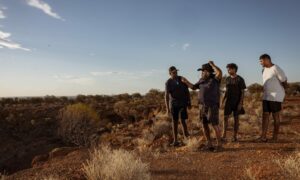
Rights of Indigenous Peoples & Environment | HRC57 Side Event
23 Sep 2024 | 13:00 – 14:00
Palais des Nations | Room XXV
Earthjustice, ISHR, GeHRBiL

Conference
Why Global Sustainability? | Launch of the Hoffmann Centre for Global Sustainability
23 Sep 2024 | 18:30 – 20:00
Auditorium Ivan Pictet | Maison de la paix
IHEID
Body Meeting
6th meeting of the Implementation and Compliance Committee
24 – 25 Sep 2024
Online | Webex
Minamata Convention
Virtual
Measuring and disclosing GHG emissions associated with financial activities: Insights for banks in Africa & Middle East
24 Sep 2024 | 12:00 – 13:00
Online | BrightTalk
UNEP FI
Exhibition
Instantanés botaniques | Vernissage
24 Sep 2024 | 12:15
Bains des Pâquis
Geneva Botanic Garden
Virtual
Youth Impact: Stories of Change
24 Sep 2024 | 17:00 – 18:30
Online | Webex
Kofi Annan Foundation, IHEID

Local
Table-ronde: Difficile de construire sainement… Vraiment?
24 Sep 2024 | 18:00 – 19:30
HEPIA
HEPIA
Virtual
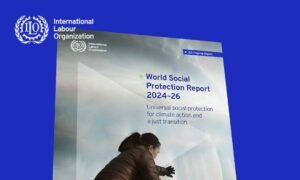
Global launch of the World Social Protection Report 2024-26: Universal Social Protection for Climate Action and a Just Transition
24 Sep 2024 | 19:15 – 20:30
Online | ILO Live
ILO
Virtual
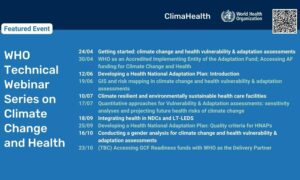
WHO Technical Webinar Series on Climate Change and Health | Developing a Health National Adaptation Plan: Quality criteria for HNAPs
25 Sep 2024 | 09:30
Online | Zoom
WHO
Virtual
Unlocking climate finance: A briefing for parliamentarians
25 Sep 2024 | 14:00 – 15:15
Online | Zoom
IPU
Virtual
We need to talk about biodiversity Series | Countdown to Cali. Private Sector Contributions to Resource Mobilization
25 Sep 2024 | 14:00 – 15:00
UNEP FI


Virtual
Strengthening Scientists Engagement: Shaping the Future of Chemicals, Waste, and Pollution Prevention | Road to OEWG 3.2 | GEN @ 25
26 Sep 2024 | 14:00 – 15:30
Online | Webex
OEWG SPP CWP, GEN
Jobs
See all


Updates
See all

22 Sep 2026
Food Loss and Waste and the Role of Geneva
22 Sep 2024
Summit of the Future & The Role of Geneva



23 Aug 2026