Event Conference
Rights of Indigenous Peoples & Environment | HRC57 Side Event
23 Sep 2024
13:00 – 14:00
Venue: Palais des Nations | Room XXV
Organization: Earthjustice, International Service for Human Rights, Geneva Human Rights, Biodiversity and Land Task Force
This side event to the 57th session of the Human Rights Council was organized by Earthjustice, the Geneva Human Rights, Biodiversity and Land Task Force (GeHRBiL) and the International Service for Human Rights, with the support of the Geneva Environment Network.

About this Session
If we just consider the question of biodiversity, Indigenous peoples help to preserve 80% of the world’s remaining biodiversity, even though they represent only 5 to 6% of the world’s population and occupy less than a quarter of the Earth’s surface.
The latest IPBES (the International Panel on Biodiversity, the climate equivalent of the IPCC) report states that deforestation is generally lower on Indigenous territories, especially when the rights of these peoples are preserved (rights to land, the possibility of maintaining knowledge, languages, alternative means of subsistence, etc.).
But this engagement comes at a dramatic cost for Indigenous peoples’ communities: between 2012 and 2022, nearly 2,000 people were murdered worldwide because they were defending their land, and more than a third of them were Indigenous peoples, according to the NGO Global Witness.
The role of Indigenous peoples in ecological terms is all too often neglected. The latest report from the IPBES recognises ‘the importance […] of ensuring the full and effective participation of Indigenous peoples and local communities in governance’.
The Convention on Biological Diversity (CBD) itself recognizes the dependency of Indigenous peoples and local communities on biological diversity and their unique role in conserving life on Earth. This recognition is enshrined in the preamble of the Convention and its provisions, in particular under Article 8(j), where “Each Contracting Party shall, as far as possible and as appropriate, respect, preserve and maintain the knowledge, innovations and practices of Indigenous peoples and local communities relevant for the conservation and sustainable use of biological diversity and promote their wider application with the approval of knowledge holders and to encourage equitable sharing of benefits arising from the use of such knowledge.”
Although some of the other international environmental instruments may also have references to Indigenous peoples (such as the Paris Agreement), they do not provide them the same explicit recognition.
Therefore, human rights instruments protecting the rights of Indigenous peoples, such as the 2007 UN Declaration and ILO Conventions 107 and 169, must also be seen as contributing to the protection of the environment and following the recognition of the right to a clean, healthy and sustainable environment by the Human Rights Council (48/13) and the UN General Assembly (76/300), this Council must take greater account of this link.
The aim of this side event was to bear witness to what is at stake for Indigenous peoples and to outline the perspectives that should be developed within the Council to this end.
Environment @ HRC57
The 57th regular session of the Human Rights Council (HRC57) is taking place in Geneva and online from 9 September to 11 October 2024. With the environment high on the agenda, consult regular updates on key environmental issues at HRC57, side events, and further resources available on our dedicated HRC57 and the environment update.

Speakers
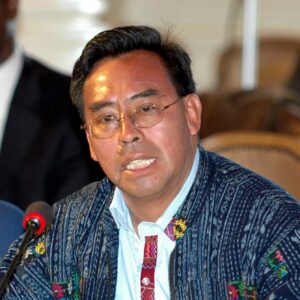
Juan LEON-ALVARADO
Biodiversity and Human Rights Coordinator & Head of Delegation for CBD COP16, International Indian Treaty Council
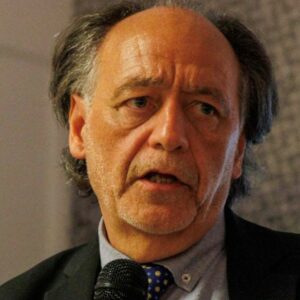
Yves LADOR
Representative to the United Nations in Geneva, Earthjustice | Geneva Human Rights, Biodiversity and Land Task Force
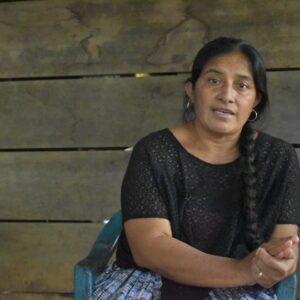
Olga CHE PONCE
Maya Q’eqchi’ Land and Rights Defender

Alexandra GOOSSENS-ISHII
Representative to the UN & Programme. Coordinator, Climate & Environment Advocacy, Soka Gakkai International | Geneva Human Rights, Biodiversity and Land Task Force | Moderator
Highlights
Video
Live from Palais des Nations.
Summary
Opening
Alexandra GOOSSENS-ISHII | Representative to the UN & Programme. Coordinator, Climate & Environment Advocacy, Soka Gakkai International | Geneva Human Rights, Biodiversity and Land Task Force | Moderator
- The event will look into the crucial role of Indigenous Peoples in protecting biodiversity and environmental protection, and the challenges they face.
- This side event also comes on the heels of draft resolutions being negotiated at the Human Rights Council: a new resolution introduced by Columbia and Costa Rica on biodiversity and human rights, and the resolution on the rights of Indigenous Peoples.
- As we move towards Biodiversity COP16 in Cali, Colombia, it’s important to bring and explore this topic together.
- Indigenous Peoples, while only comprising 5-6% of the world’s population, plays a large role in preserving the world’s remaining biodiversity. A 2018 report highlights that Indigenous Peoples stewarded or held tenure rights over more than a fourth of the Earth’s territorial surface, which intersects about 40% of all terrestrial protected areas and ecologically intact landscapes.
- However, this commitment often comes at great cost with Indigenous defenders losing their lives protecting their lands and our shared environment.
Panel Discussion
Olga CHE PONCE | Maya Q’eqchi’ Land and Rights Defender
(Interpreted from Spanish)
- I am an Indigenous woman, leader of the Maya Q’eqchi’ people in Guatemala, and am part of the Q’eqchi’ Fisherfolk Union in El Estor, located on the shores of Lake Izabal in Guatemala.
- 17 years ago, the UN Declaration on the Rights of Indigenous Peoples (UNDRIP) recognized the right to self-determination. This Declaration also set obligations of States to prevent and redress any impact that has the purpose to dispossess them with their lands, territories and resources.
- The UN Special Rapporteur on the right to food presented his report on fisheries and the right to food in the context of climate change. This report also addressed the rights of Indigenous Peoples who depend on fisheries.
- In my experience, the country does not respect our right to self-determination and the right to decide about our land and natural resources in our territories.
- In El Estor, a Swiss-registered mining company SMG, which extracts nickel, is operating without free, prior, and informed consent (FPIC). In 2017, fisherfolk families publicly denounced the mine after the waters of the lake turned red and many fish died.
- We were not heard. On the contrary, we have suffered violence, criminalization, and aggression by police, army, and private security elements. In 2021, they tried to carry out a consultation that was not prior because the mine was already in operation and was done during a state of emergency.
- The prosecutor in alliance with the court of judges and businessmen continue to control the State, favoring abuses, intolerance, exclusion, discrimination, and racism against our peoples.
- This corrupt alliance does not allow us to have legal certainty over our ancestral lands. Despite the fact that there is a new government in Guatemala, this year, there has been four evictions, causing the first displacement of more than 125 families who today are in a food crisis. There are at least 2,000 arrest warrants against Indigenous men and women for defending their lands.
- I would like to ask the UN mechanisms to remind the Guatemalan State of its international obligations towards Indigenous Peoples and verify by themselves the situation of poverty, healthy, housing, forced displacement and the contamination of our waters and land grabbing caused by businessmen using land for monoculture.
- I also call on UN mechanisms and these experts to speak about this because we are not allowed to speak freely and to make recommendations to Guatemala to guarantee the survival and dignified life of our peoples.
Juan LEON-ALVARADO | Biodiversity and Human Rights Coordinator & Head of Delegation for CBD COP16, International Indian Treaty Council
- In response to previous intervention. Guatemala is a small country at 800 km2 but have 300 protected areas established without FPIC. We have 350 mining companies working in this small area.
- Many of them are working illegally because they are not accomplished (familiar) with the rights of Indigenous Peoples and do not follow domestic laws, which are weak on this issue.
- The situation is difficult because the juridical and justice system are on the side of the mining and protected areas that collectively affecting rights, land, territories and natural resources. The main issue is the announcement of the new government that will build a new law on water. The government calls all sectors and civil society, but has not invited Indigenous Peoples, even if we are 70% of the population.
- IITC and the Mayan organizations have changed this situation. Last week, the Ministry of Environment changed the methodology, invited and established dialogue with authorities and Indigenous Peoples.
- On climate change and biodiversity. Indigenous Peoples already face a tough situation not only Guatemala but around the world because we are not participating in the policies. We are not participating actively in the establishment of rules about how to take care of biodiversity and natural resources, even though Indigenous Peoples have been doing so for thousands of years. Most of the countries are excluding Indigenous Peoples from this policy decision.
- Even if we are participating as Indigenous Peoples in discussions, such as the Biodiversity COP16, we are excluded in the decision-making. The most wrong decision taken in the Kunming-Montreal Global Biodiversity Framework is the political imposition of the 30×30 Target, where 30% of the world’s area will be “established as conservation areas”.
- Many Indigenous Peoples are suffering because some governments are establishing in Indigenous territories as protected areas without FPIC.
- At Biodiversity COP-16, some decisions have to be taken on how to create measures on what has been decided in Montreal. Now, we are doing the plan but as Indigenous Peoples, we are not participating in the decision-making.
- On conflating Indigenous Peoples with local communities. Another issue we’re facing now is the creation of a definition that conflates Indigenous Peoples with local communities. This is a huge problem as many countries don’t recognize the existence of Indigenous Peoples and they are assuming that local community is the same concept as Indigenous Peoples. It is not.
- In some countries in Latin America, we now have this problem because the groups or persons are requesting the same rights as Indigenous Peoples, from self-determination and self-government, to land, territories and natural resources. They are not. The only subject recognized with collective rights are Indigenous Peoples through UNDRIP.
- For this reason, the three mechanisms – the UN Special Rapporteur, the Expert Mechanism and the Permanent Forum on the rights of Indigenous Peoples – have requested to separate, not to conflate, the term Indigenous Peoples from local communities.
- Intentionally, States continue to practice this in negotiations, such as the Convention on Biological Diversity. Moreover, most agencies in the UN system are copying and moving this idea of conflating the two ideas.
- On ongoing resolution on rights of Indigenous Peoples. It’s important to have a very strong resolution at the Council. I participated in the informal consultation earlier, and it was a big surprise that States deny the existence of Indigenous Peoples in their countries. We’ve lost almost 30 years to build all these principles and making consensus with representatives of States, after the adoption of UNDRIP. Until now, States continue to say they don’t recognize Indigenous Peoples in their own countries. I hope we are all here to push and ask delegates to fulfill UNDRIP principles.
Yves LADOR | Representative to the United Nations in Geneva, Earthjustice | Geneva Human Rights, Biodiversity and Land Task Force
- Previous testimonies are only a glimpse into the struggles Indigenous Peoples face globally. Chief Seattle’s speech from 1854 illustrates the difficulty in interpreting Indigenous voices, especially when those voices are interpreted by dominant societies for their purposes.
- We should not conflate environmental issues with Indigenous rights. There is a need to address both comprehensively, particularly in international environmental law. The Montreal discussions on the Convention on Biological Diversity highlighted the challenge of recognizing Indigenous knowledge without fully recognizing their rights, an issue seen in many international agreements.
- States often attempt to escape obligations under the Declaration on the Rights of Indigenous Peoples by interpreting international conventions in ways that limit the recognition of those rights. The UN Framework Convention on Climate Change (UNFCCC) and the Paris Agreement include references to rights in the Preamble but struggle to include them in operative parts like Article 2.
- There are ongoing fights to include clear safeguards, such as free, prior, and informed consent, particularly in climate finance, but loopholes still exist, undermining full recognition of Indigenous rights.
- The field of toxics is even more fragmented than other two environmental fields mentioned. It’s not just a issue of spillovers of contaminated land: Indigenous Peoples disproportionately affected towards the North Pole such as in Siberia, Alaska, and Canada, are affected by pollutants from other regions, travelling through polar winds and ecosystems, affecting their health and food sources, impacting cultural rights as well.
- There is a clear need for a stronger articulation that is being done here and what is being done in the field of international environmental law. All efforts to have a stronger recognition to the right to a clean, healthy and sustainable environment.
- The right to a healthy and sustainable environment brings a coherent approach to fragmented instruments in the field environmental protection, as people experience these issues as interconnected with their lives at stake.
- A human rights-based approach can help provide coherence to different instruments, which are often much too partial to provide a full protection against environmental harm.
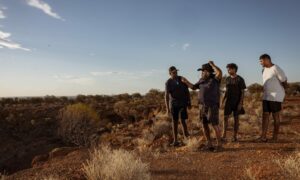
- An example of such a case is the asbestos contamination in Western Australia, which impacts both the health and cultural ties of Indigenous Peoples to their land. To date, more than 2,000 miners, residents and family members have died from asbestos-related diseases, including Banjima people.
- If you look at the number only in this way, you forget its effects on the Banjima people. To go into the area, you need to be fully protected. It is impossible to into their ancestral land.
- We have now opened a chapter to articulate better how to protect the rights of Indigenous Peoples, how we can use UNDRIP, and how here in the Human Rights Council, we can send a stronger message to the field of international environmental law to ensure a coherent, rights-based approach to different issues.
- We have seen and heard in negotiations of resolutions steps taken backwards as some try to undermine the mention of the right to a healthy environment in further discussions, despite its recognition in UNGA Resolution 76/300. We have also heard resistance to basic references to environmental defenders, in spite of significant repression against environmental defenders, especially Indigenous Peoples.
- We hope to underline that there is a turning point so that the right to a clean, healthy, and sustainable environment is more articulated with the rights of Indigenous Peoples.
Open Discussion | On free, prior, and informed consent (FPIC)
Olga CHE PONCE
(Interpreted from Spanish)
- It is very important to consult the communities.
- It’s essential for the Maya Q’eqchi’ because we have consistently seen our rights violated, suffered criminalization, and had people entering our homes. This is happening because of the work we are doing to defend our land, forests, and lakes.
- This work is for the children who are growing up and witnessing the destruction caused by companies in our territories. Ultimately, these children will suffer the consequences—not only from environmental degradation but also from eviction, as they will have no place to go or live.
- We humans live from the land and from water. Without these elements, we cannot survive.
Juan LEON-ALVARADO
- All States, members of the United Nations, must comply with the UN Declaration.
- This compliance includes free, prior, and informed consent as well as self-government, self-determination, the right to development, the right to land, and respect for our relationship with the land and territories. It is essential.
- Free, prior, and informed consent is just one part of the picture for Indigenous Peoples’ rights.
- Indigenous Peoples understand how to dialogue, to build peace, and to agree.
- On 23 September, according to the Mayan calendar, is the day of Mother Earth and the day of women. The day is celebrated every 20 days, not just once a year.
- Mother Earth is for everyone, not just the rich and powerful.
Yves LADOR
- The issues of Indigenous People’s rights can be dramatic – an issue of life or death, of the future of people and places, with strong cultural and conceptual implications.
- One legal point: free, prior, and informed consent (FPIC) has been recognized in environmental law.
- For example, the Rotterdam Convention regulates the exchange of toxic materials and waste based on this notion. However, the problem is that procedural rights are not well applied. Environmental impact assessments often become just box-ticking exercises, and sometimes companies even reuse pre-made studies, forgetting to update details.
- Progress has been made with legally binding obligations like the Aarhus Convention and the Escazú Agreement. Once ratified, these instruments establish strong legal obligations for public participation, requiring consultation to develop projects and clear rules to get out of the “ticking the box” exercise; it’s not just wishful thinking.
- When we talk about free, prior, and informed consent for Indigenous Peoples, it’s not just procedural. Project leaders have to answer to concerns raised in public consultation. For Indigenous rights, free, prior, and informed consent means recognizing their sovereignty over the land they inhabit.
- This concern ahs been raised by various compliance committees. The outcome of the public participation process stay in the hands authorities in charge, of the countries.
- The negotiations happen on equal terms with the community. It represents Indigenous sovereignty, and states must recognize and respect that.
- If Indigenous Peoples say no during participation, that must be respected. This is very different from traditional procedural rights.
- Free, prior, informed consent is absolutely fundamental for Indigenous rights. When we see FPIC in UNDRIP, we must see it as a binding procedural obligation.
Closing
Alexandra GOOSSENS-ISHII
- Various issues around the rights of Indigenous Peoples and the environment and their critical intersection were discussed.
- Some interesting developments show a strong push for better coherence between different forums. While it’s not an easy battle, it’s a dynamic process.
- Whether it’s around a human rights-based approach to biodiversity or how Indigenous rights are reflected in various forums, we are making progress.
- In the context of the climate COP, the biodiversity COP, and the desertification COP, GeHRBiL has concrete tools — national planning instruments around climate and biodiversity. These tools enable more participatory decision-making and consultation.