Newsletter 07 Jul 2025
Environment: What’s Up in GENeva | 7 – 20 July 2025
The Geneva Environment Network’s weekly newsletter includes the latest information on the global environmental agenda, main events, job vacancies, as well as other useful resources and updates. Stay tuned and follow us on X (Twitter), Facebook, LinkedIn, Instagram, Bluesky, and Youtube, or visit our website regularly for additional updates.
As the holiday season has begun for many, this newsletter exceptionally covers a period of two weeks. Consult our green summer in Geneva update for suggestions of activities.
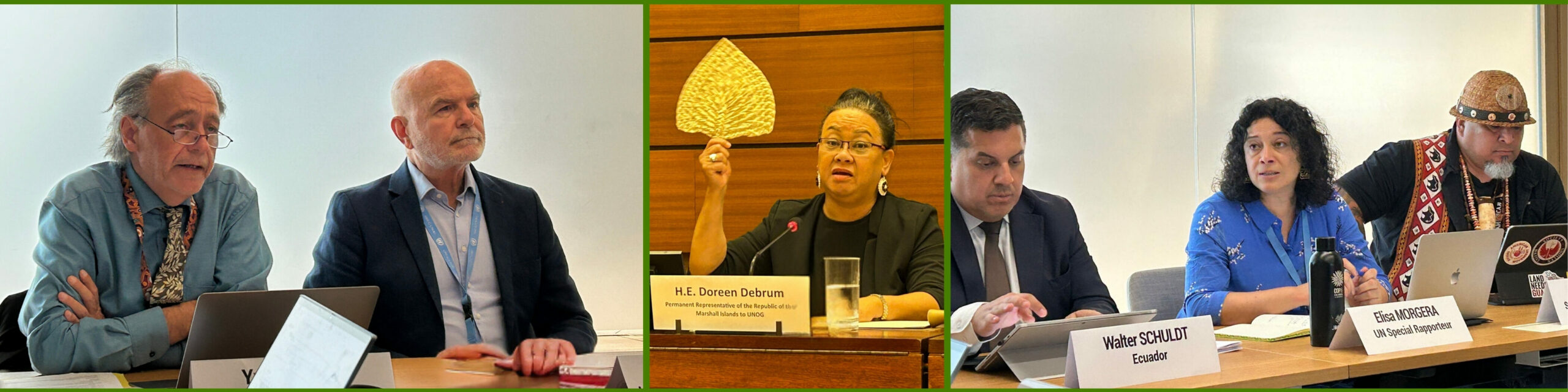
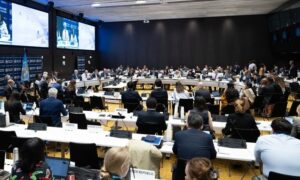
Image of the week | Snapshots of a “Climate Week” at the 59th Session of the Human Rights Council, where the UN Special Rapporteur on human rights and climate change spoke at the Annual panel discussion on the adverse impacts of climate change on human rights and presented her report on “The imperative of defossilizing our economies” at her interactive dialogue and in numerous parallel and sides events, convening numerous messages. → Environment @ 59th Session of the UN Human Rights Council
Environment @ 59th Session of the Human Rights Council
The 59th session of the Human Rights Council (HRC59) is expected to conclude in Geneva on 9 July 2025, with the final three days focusing on adopting decisions and conclusions. → Consult our dedicated HRC59 and the environment update
Key developments last week at the “Climate Week” include:
- The Marshall Islands has proposed an amendment (A/HRC/59/L.30) to the resolution on human rights and climate change (A/HRC/59/L.17). Sponsored by Colombia and open to sponsorship, the amendment seeks to strengthen the language in operative paragraph 6 to: “Call for deep and rapid cuts in global emissions, in line with 1.5 °C pathways – including by transitioning away from fossil fuels in energy systems, in a just, orderly and equitable manner – to avert, minimize and address loss and damage from extreme weather and slow-onset climate events that have an adverse impact on the enjoyment of human rights.”
- At the HRC59 side event, “Climate Induced Sea-Level Rise: Safeguarding Human Rights”, H.E. Amb. Ogando Lora announced that the Dominican Republic and Malta will present a resolution on sea level rise at HRC60, highlighting how climate-induced sea-level rise threatens human rights, with entire nations facing the real prospect of becoming uninhabitable. He urged the Council to act with solidarity & determination: “It is not a moral choice, but an urgent necessity.”
- At HRC59, UN Special Rapporteur on Climate Change and Human Rights, Elisa Morgera, amplified an urgent, clear message: phasing out fossil fuels within this decade is not optional but a human rights obligation, critical for a liveable, just, and equitable future. Her key messages included:
- Fossil Fuels as Systemic Drivers of Rights Violations | Morgera’s report, “The imperative of defossilizing our economies” (A/HRC/59/42), confirms that the fossil fuel lifecycle drives climate breakdown, toxic pollution, biodiversity loss, and entrenched global inequalities. During her interventions this week, Morgera emphasized that these are not abstract harms:
- Women, Indigenous Peoples, children, small-scale fishers, and local communities are already bearing the brunt of these impacts, experiencing threats to health, water, food, livelihoods, cultural rights, and lives.
- Fossil fuels permeate every aspect of daily life, including plastics and petrochemicals, in ways people cannot opt out of, violating the right to live free from foreseeable, preventable harm.
- Defossilization as a Human Rights Imperative | Across the interactive dialogue, annual panel, and side events, Morgera underscored:
- Defossilization is grounded in existing international human rights obligations, including the rights to life, health, food, water, a clean, healthy, and sustainable environment, and cultural rights.
- States and corporations must phase out fossil fuel production, cease subsidies, and remedy ongoing and historical harms caused by fossil fuel extraction and use.
- Investor-State Dispute Settlement (ISDS) regimes obstruct effective climate action, requiring urgent reform to align economic systems with defossilization imperatives.
- Climate Action Cannot Replicate Extractive Injustice | Morgera warned that the rush for critical minerals for energy transitions is reproducing human rights violations, particularly in Indigenous territories, reinforcing the same extractive models driving the climate crisis. She called for:
- Rights-based, gender-just, and participatory climate action, centering the leadership of women, Indigenous Peoples, youth, and local communities.
- Ensuring that climate solutions do not further entrench economic or racial injustices, patriarchy, or colonial patterns of extraction.
- Corporate Capture Threatens Climate and Democracy | The Special Rapporteur emphasized the urgent need to “defossilize” information systems, highlighting:
- Corporate capture of knowledge, science, and democratic debate undermines effective climate action, as highlighted by extensive documentation of the fossil fuel sector’s evolving strategies to keep the public uninformed about the severity of climate change and about the role of fossil fuels in causing it (“the playbook”).
- States have obligations to protect science, public information, and policymaking spaces from fossil fuel industry interference, ensuring accountability and transparency.
- A Just Transition Depends on Fossil Fuel Phaseout | Morgera made clear: A just, gender-responsive transition is impossible without prioritizing fossil fuel phaseout. Climate action must address systemic fossil fuel dependency, including its links to plastics and petrochemicals, while protecting human rights. “Priority, comprehensive, coherent action on the fossil fuel phaseout within this decade is necessary to ensure a liveable future for all, as an urgent precondition for a just transition and effective human rights protection in the context of current planetary crises.”
- Fossil Fuels as Systemic Drivers of Rights Violations | Morgera’s report, “The imperative of defossilizing our economies” (A/HRC/59/42), confirms that the fossil fuel lifecycle drives climate breakdown, toxic pollution, biodiversity loss, and entrenched global inequalities. During her interventions this week, Morgera emphasized that these are not abstract harms:
Read more at:
- U.N. Report Seeks To Outlaw Climate Skepticism, Punish Fossil Fuel Defenders | Climate Change Dispatch | 2 July 2025
- The Imperative of Dfossilizing our Economies | Summary of the Report of the Special Rapporteur on the promotion and protection of human rights in the context of climate change (A/HRC/59/42) | Elisa Morgera
- CIEL Welcomes Landmark UN Human Rights Report: The Imperative of Defossilizing Our Economies | CIEL | 30 June 2025
- De-fossilising economies key to course correction on climate change and human rights protection, says UN expert | OHCHR | 30 June 2025
- Human rights can be a ‘strong lever for progress’ in climate change, says UN rights chief | UN News | 30 June 2025
Impact and Future of Digital Technologies | AI for Good & WSIS+20 High-Level Event
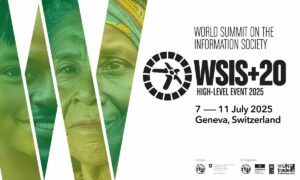
This week, digital governance, cooperation and artificial intelligence will be high on the agenda in Geneva with the convening of the World Summit on the Information Society (WSIS)+20 High-Level Event 2025 and the AI for Good Global Summit 2025.
- The WSIS+20 High-Level Event 2025, a United Nations multistakeholder forum on digital development and cooperation, will take place from 7 to 11 July 2025 at Palexpo in Geneva. Co-hosted by the International Telecommunication Union (ITU) and the Swiss Confederation, and co-organized by ITU, UNESCO, UNDP, and UNCTAD, the event marks 20 years of the World Summit on the Information Society (WSIS) process, a UN initiative aimed at promoting inclusive and people-centered digital societies. This year’s forum will bring together Ministers, regulators, UN leaders, industry executives, and civil society advocates from over 150 countries to help shape the vision for the next phase of the world’s digital transformation. Outcomes will contribute directly to the UN General Assembly’s 20-year review of WSIS, scheduled for December in New York. Discussions will tackle critical issues like the digital divide, AI governance, and sustainability, while exploring strategies for maximizing the social and economic benefits of digital technologies. → Consult our dedicated page
- The AI for Good Global Summit, organized by the International Telecommunication Union in partnership with 40 UN sister agencies and co-convened with the government of Switzerland, is the leading action-oriented United Nations platform promoting artificial intelligence (AI) to advance the Sustainable Development Goals and connect AI innovators with public and private sector decision-makers to help scale AI solutions globally. AI for Good is identifying innovative AI applications, building skills and standards, and advancing partnerships to solve global challenges. The 2025 edition will take place from 8 to 11 July 2025 and include various sessions of interest for the global environmental agenda.
Preventing the Environmental Release of Pharmaceuticals
Pharmaceuticals play a critical role in maintaining human and animal health, enhancing food production, and driving economic prosperity. However, their release into the environment — whether during manufacturing, use, or end of life — may pose significant risks. These include contributing to antimicrobial resistance, endocrine disruption, and toxic effects on ecosystems and public health.
The United Nations Environment Programme is organizing, in cooperation with the World Health Organization, the Geneva Environment Network and other key partners, the event series “Addressing Pharmaceuticals in the Environment through a Lifecycle Approach Event Series” to raise awareness and share best practices, challenges and opportunities to address this pressing issue. The series was launched at the 2025 Meetings of the Conference of the Parties to the Basel, Rotterdam and Stockholm Conventions with the side event on “One Health Approach to Addressing Pharmaceuticals in the Environment Across Key Sectors”. Events will bring together experts, decision makers and other relevant stakeholders from around the world to discuss innovative practices throughout the pharmaceutical lifecycle and across key sectors such as pharmaceutical manufacturing, healthcare facilities, agriculture, food production, and municipalities/households, shedding light on the benefits of action as well as existing tools.
On 16 July 2025, the event series will resume with a session “Preventing the Environmental Release of Pharmaceuticals: Solutions at the Source” aimed at raising awareness and share practical, cost-effective strategies for preventing the release of pharmaceuticals to the environment from key sectors — healthcare, agriculture, industry — and municipal/household sources, focusing on upstream and preventive measures. → Register and join on Webex on 16 July 2025 at 14:00 CEST.
18th Session of the Expert Mechanism on the Rights of Indigenous Peoples
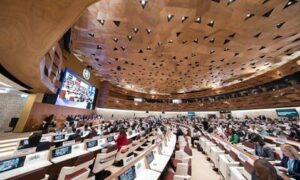
The 18th session of the Expert Mechanism on the rights of Indigenous Peoples (EMRIP) — a subsidiary body of the Human Rights Council, created through HRC resolution 6/36 adopted in 2007, meeting once a year to provide Indigenous-based expertise to the Council — will convene at Palais des Nations from 14 to 18 July 2025. At this session, the Expert Mechanism will present the draft study on “The right of Indigenous Peoples to data, including data collection and disaggregation” (A/HRC/EMRIP/2025/2). The Expert Mechanism will also focus on enhancing the participation of Indigenous Peoples in the United Nations, following up on the intersessional meetings of the Human Rights Council on concrete ways to enhance the participation of Indigenous Peoples in the work of the Council, held in July and October 2024.
Various side events held during the session will tackle the environment, including:
- Protecting Rights, Protecting Lands: Reflections on Indigenous Peoples and Protected Areas | Indigenous Peoples Law and Policy Program- University of Arizona | 16 July 2025 | 12:00 – 13:00 CEST | Palais des Nations, Room VIII
- Protecting the health of people and the planet: Indigenous Peoples, plastic pollution, and one health | WHO | 16 July 2025 | 15:00 – 16:00 CEST | Palais des Nations, Room XXII
- Key outcomes of the 16th meeting of the Conference of the Parties to the Convention on Biological Diversity relevant to the implementation of Article 8(j) and other provisions | Secretariat of the Convention on Biological Diversity | 17 July 2025 | 10:00 – 11:00 CEST | Palais des Nations, Room XXV
- Dialogue on the need and priorities of Indigenous Peoples about the effects of mercury pollution | Secretariat of the Minamata Convention on Mercury | 17 July 2025 | 13:00 – 14:00 CEST | Palais des Nations, Room XXVII
- Global impacts of industrial activities on Indigenous Peoples’ well-being in coastal zones, a biocultural rights concern | Rueda de Medicina A.C. and Universidad de Santiago de Compostela, Spain | 17 July 2025 | 13:00 – 14:00 CEST | Palais des Nations, Room XXII
Historic Ruling Declares Climate Change a Human Rights Emergency
Last week, the Inter-American Court of Human Rights issued a landmark ruling on States’ responsibilities to tackle the climate crisis in response to the request by the Republics of Colombia and Chile. In this major judicial ruling (known as Advisory Opinion 32), the Court sets out what human rights law demands of governments in the face of the climate emergency. The ruling draws on an unprecedented participatory process involving over 260 amicus briefs and 160 delegations of States, Indigenous and Afro-descendant Peoples, frontline communities, and civil society groups taking part in the oral hearings. Numerous organizations reacted to the ruling.
Armed with the Court’s guidance, and that of others, including the UN Human Rights Office, States should be in no doubt about the existence and scope of their human rights obligations in this area. There is an urgent need to take meaningful action — through legislation, policy change, resource mobilisation and international cooperation — to stop the climate crisis from worsening and ensure those affected have access to justice. I once again urge them to do so.
— Voker Türk, High Comissioner for Human Rights
The Advisory Opinion was publicly read by the President of the Inter-American Court of Human Rights (IACtHR), Judge Nancy Hernández López, at the Court’s seat in San Jose, Costa Rica, and was live on the Youtube channel of the Court. Read more at:
- Tras El Proceso Más Participativo en Su Historia, La Corte Interamericana Establece El Alcance De Las Obligaciones Estatales Para Proteger Los Derechos Humanos Ante La Emergencia Climática | IACtHR | 3 July 2025
- Türk hails stance by Inter-American Court of Human Rights on States’ obligations to tackle climate crisis | OHCHR | 4 July 2025
- Inter-American Court sets milestone in the global fight for climate justice | Amnesty international | 4 July 2025
- Top Latin American court upholds right to “healthy climate”, urges fossil fuel control | Climate Home News | 4 July 2025
- IUCN welcomes today’s Advisory Opinion on “Climate Emergency and Human Rights” by the Inter-American Court of Human Rights | IUCN | 3 July 2025
- Inter-American Court Declares Climate Crisis a Human Rights Emergency in Historic Ruling | CIEL | 3 July 2025
- Climate Emergency and Human Rights: The Inter-American Court of Human Rights Published a Historic Advisory Opinion | GI-ESCR | 3 July 2025
Glaciers Experiencing Unprecedented Mass Loss
Glaciers in Switzerland and around the world continue experiencing major losses following the collapse of the Birch Glacier on 28 May 2025. Recent news include:
- On 4 July 2025, Glacier Loss Day was reached in Switzerland. From the date onwards, all melt that occurs on glaciers until October is unsustainable. As documented by glaciologist Matthias Huss underscores Glacier Loss Day fell this early during the year only in the record-shattering year of 2022.
- The worrying status of Swiss Glaciers has been documented in a new paper by Geophysical Research Letters “Glaciers in Western Canada-Conterminous US and Switzerland Experience Unprecedented Mass Loss Over the Last Four Years (2021-2024).” It highlights that since 2020, total ice volume was depleted by 13%.
- 1400 glaciers. 1400 reasons to act | Switzerland’s 1400 glaciers are literally melting as a result of climate change. To give visibility to Swiss glaciers and protect climate, a community challenge by Protect Our Winters invites to visit a glacier or give it visibility in a creative way, order a flag and share your messages on the website.
- A 26-day period of exceptionally high temperatures ended on Sunday, 4 degrees above normal. Swiss glaciers have lost an enormous amount of water during this time: the equivalent of Switzerland’s total annual drinking water use, and more than twice the average of the last years.
Additional news on the heatwave that various regions faced include:
- UNEP on cooling and extreme heat
- Temperatures drop slightly in Europe as brutal heatwave nears end | Le Monde | 2 July 2025
- Extreme weather in a changing climate: Is Europe prepared? | European Environment Agency | 2 July 2025
- Northern hemisphere heatwave underscores value of early-warning alerts | UN News | 1 July 2025
Countdown to INC-5.2 in Geneva | Plastics Treaty Updates
With now four weeks to the second part of the fifth session of the Intergovernmental Negotiating Committee to develop an international legally binding instrument on plastic pollution, including in the marine environment (INC-5.2), to convene at Palais des Nations from 5 to 14 August 2025, updates include:
- “We need ambitious measures of implementation and financial obligations, both are important,” concluded panelists, referring to the upcoming plastics treaty text, at the Geneva Beat Plastic Pollution Dialogue on The Right to Break Free from the Carbon Lock-in of Plastics held on 4 July 2025.
- To ensure the smooth running of INC-5.2, the Swiss Federal Office for the Environment is looking for volunteers to be assigned either to daytime or evening sessions, depending on the event’s operational needs and will perform functions as described in the Volunteer recruitment notice. Interested candidates can apply by sending their CV and a short motivation letter by 7 July 2025.
- The artist Benjamin Von Wong will be building a giant sculpture on Place des Nations during the Plastics Treaty negotiation taking place in August. → If you want to get involved or support, . If you’re based in Geneva and can help collect plastics, check the Plastics Collection Guide. For more information, please consult the artist deck and see his past projects.
- A page dedicated to the activities organized in the margins of the Plastics Treaty INC-5.2, will provide an overview of the initiatives taking place outside of the Blue Zone of the formal conference and negotiations, as well as useful information for delegates.
Events on plastics taking place this month include:
- Virtual Informal Discussion – Article 9: ‘Existing Plastic Pollution’ and the AOSIS revised textual proposal | Alliance of Small Island States (AOSIS) | 8 July 2025 | 16:00 – 18:00 CEST | Zoom
- Towards a Meaningful Plastics Treaty: Priorities and Challenges Ahead of INC-5.2 | World Resources Forum 2025 Side Event | Group for Sustainability and Technology (SusTec) at ETH Zurich | 10 July 2025 | 15:30 – 17:00 CEST
- Webinar: Towards INC -5.2: A plastic pollution treaty including Subnational and Local Governments | Local and Subnational Governments Coalition | 15 July 2025 | 09:00 CEST or 17:00 CEST
- Key Enablers for Accelerating Investment in Plastics Circularity | Financing Coordination Group | 15 July 2025 | 15:00 CEST | Zoom
-
Addressing the Plastics Crisis from Geneva: Meeting on Activities in the Margins of Plastics Treaty INC-5.2 | Ahead INC-5.2, this event, featuring the Mayor of Geneva, the artist Benjamin Von Wong and other leading figures, will highlight activities taking place in the margins of the negotiations and showcase the engagement of Geneva in addressing the plastics crisis. → Join in person at Villa Rigot or online on Webex on 17 July 2025 from 15:00 CEST
Additional news include:
- Global Plastics Diplomacy Briefing | July 2025
- Microplastic pollution in aquatic environments : insights from the Geneva Summer School | UNIGE | 2 July 2025
- Malaysia strengthens plastic waste controls to close the door on ‘waste colonialism’ from other countries | Environmental Investigation Agency | 1 July 2025
- 5 things you should know about single-use plastics | European Commission | 1 July 2025
- Petrochemical Investor Statement Re-Opened to Sign | Planet Tracker
World Wildlife Treaty Half Century | CITES @ 50
The Convention on International Trade in Endangered Species of Wild Fauna and Flora (CITES) marked last week 50 years since it entered into force, celebrating five decades of protecting endangered wildlife from overexploitation through international trade. Secretary-General Ivonne Higuero reflected on the history and future of the Convention:
- Reflections on 50th Anniversary of Entry into Force of World Wildlife Treaty | IISD | 2 July 2025
- Reflections on the Fiftieth Anniversary of the Entry into Force of the World Wildlife Treaty by CITES Secretary-General Ivonne Higuero | CITES | 1 July 2025
- Reflections on the Fiftieth Anniversary of the Entry into Force of the World Wildlife Treaty | UN Chronicle | 30 June 2025
Additional reflections:
- Celebrating 50 Years of CITES: CIC Reflects on a Half Century of Cooperation and Conservation | CIC | 3 July 2025
- 50 years of CITES: Protecting wildlife from trade-driven extinction | UN News | 1 July 2025
It is also to be highlighted that the United Nations General Assembly adopted a new Resolution on ‘Tackling illicit trafficking in wildlife‘ (A/79/L.96) on 30 June 2025, ten years after adopting its first ever Resolution on the topic in 2015. With 157 votes in favour to 1 against (United States), with no abstentions, the resolution urges Member States to reinforce their efforts and adopt effective measures, as necessary, including by using special investigative techniques, consistent with article 20 of the United Nations Convention against Transnational Organized Crime, to prevent, investigate, prosecute and punish crimes that affect the environment, such as illicit trafficking in wildlife and wildlife products, which encompasses poaching and illegal harvesting of timber, including fauna and flora as protected by CITES.
Call for Submissions and Contests | Upcoming Deadlines
With the environment high on the agenda of International Geneva and beyond, international processes, negotiations, and fora regularly call for inputs in preparation for future reports and guidelines or for people to support their process. A dedicated update lists calls for submissions related to the environment. Additional updates also list those related to Human Rights Mechanisms and ongoing contests launched by our partners. Deadlines not to be missed during the coming weeks include:
- Displacement and Migration in Mountain Ecosystems Call for Abstracts | The Mountain Ecosystems Specialist Group of the IUCN Commission on Ecosystem Management is currently inviting abstracts for an upcoming publication titled “Displacement and migration in mountain ecosystems”. This publication seeks to explore diverse perspectives on displacement and migration in mountain ecosystems, including root causes, socio-ecological impacts, and policy or programmatic responses. Contributions from mountain regions in Africa, Asia, and Latin America, and in studies using participatory research, implementation insights, and policy analysis, are particularly encouraged. → The deadline for abstract submission is 15 July 2025. For any questions or further information, please contact mountainecosystemssg@gmail.com.
- Indigenous Peoples on pesticides use and the right to a Free, Prior and Informed Consent | FAO has disseminated a survey to collect evidence that will inform the ongoing process to amend the FAO/WHO International Code of Conduct on Pesticide Management (ICCPM) to better reflect Indigenous Peoples’ right to FPIC. More information about the background of this survey. This instrument is a space to ensure Indigenous Peoples’ views, concerns and considerations on pesticides management are included in the process to amend the International Code of Conduct on Pesticides Management (ICCPM). The decision to amend the ICCPM was adopted by governments at the FAO Committee on Agriculture (COAG 29), following a request from the UN Permanent Forum on Indigenous Issues, and seeks to ensure Indigenous Peoples’ rights to free, prior and informed consent (FPIC) and protection from harmful pesticide practices are respected and upheld. → Fill the survey by 16 July 2025.
- Call for Proposals for Minamata COP-6 Activities | The Secretariat of the Minamata Convention on Mercury is inviting proposals for pre-COP-6 online events, Knowledge Lab sessions, and exhibition booths ahead of the sixth meeting of the Conference of the Parties (COP-6), taking place from 3 to 7 November 2025 in Geneva. Pre-COP-6 online events will run from 13 to 17 October 2025, offering Parties and observers an informal platform to share knowledge on research, policies and technology advances. Knowledge Lab sessions will take place during COP-6 as 45-minute interactive presentations in an open space set-up, while exhibition booths will also be available at the venue (Geneva International Conference Centre). → Parties and accredited observers are invited to submit proposals by Friday, 25 July 2025, 17:00 CEST at the latest.
Enjoying a Green Summer in Geneva
With the schools closed in Geneva and many enjoying their holidays, suggestions for enjoying a safe, healthy and Green Summer in Geneva 2025 in the coming two weeks include:
- Ramène ta Pêche 2025 à La Jonction ! | From 7 to 11 July 2025 | Swiss Food Academy
In July, the Swiss Food Academy team is welcoming children to immerse them in the world of food. For one week, they’ll be taking part in a range of fun activities. In the kitchen, on a tour of the neighborhood, through team sports games and brainstorming sessions, the objectives are clear: to reconnect with your plate! - Eveils du Léman | 9 and 17 July 2025 | Association pour la Sauvegarde du Léman
Pause by the calm waters of Lake Geneva and explore its rich biodiversity. From birdwatching on the shore to snorkeling among aquatic plants, mollusks, and fish, this outing offers a peaceful dive into the lake’s living wonders. - Ciné Transat | From 10 July 2025 | Parc de la Perle du Lac
From 10 July to 17 August 2025, CinéTransat, active since 2009, will offer a program of free movie screenings in Perle du Lac. → Consult the full program - Les Aubes 2025 | From 14 July 2025 | Bain des Pâquis
For almost twenty years, this early-morning event has brought together late-night revelers, early-day families, the curious and the faithful. An experience to be enjoyed with eyes half-closed, soul wide open, between lake, light and suspended notes. - BOTANICA 2025 – Plantes pour notre avenir | Until 13 July 2025 | Conservatoire et Jardin botaniques
BOTANICA 2025 explores the future of food plants through more than 60 events across 26 botanical gardens in Switzerland. From exotic crop origins to their environmental impact and role in biodiversity, this national initiative invites curious minds to take part in guided tours, hands-on workshops, and excursions focused on conscious eating and sustainable agriculture. - Golf urbain | Until 18 August 2025 | Parc des Bastions
Grab a club and hit the greens, right in the heart of Geneva. Urban golf invites players of all ages to enjoy a playful six-hole course winding through some of the city’s most iconic landmarks. - Climate Fiction, un récit sur la collection du Fonds cantonal d’art contemporain | Until 31 August 2025 | Musée de Carouge
Through a bold curatorial lens, this exhibition dives into the environmental crises of our time by uncovering their roots in social, economic, and geopolitical inequalities. - Été 2025 au Théâtre de l’Orangerie | Until 6 September 2025 | Théâtre de l’Orangerie
Under the theme “La vie c’est sûrement autre chose,” the 2025 program features a dynamic mix of theatre, dance, visual arts, concerts, workshops, and family activities. - L’été au Jardin | Until 14 September 2025 | Jardin botanique alpin de Meyrin
This summer, the alpine garden transforms into a lively space for learning, creativity, and connection. With a mix of exhibitions, workshops, and outdoor activities, visitors of all ages are invited to celebrate nature, community, and seasonal joy. - Our Biodiversity | Conservatoire et Jardin botaniques
Explore biodiversity through an immersive outdoor exhibition inspired by Geneva’s new Municipal Biodiversity Strategy. - Un poisson, comment ça marche ? | Until 15 March 2026 | Maison de la Rivière
A fun and scientific exhibition for all ages to discover the surprising talents of Swiss freshwater fish—local swimmers often overlooked! - Le feu de la Terre, une aventure humaine | From 23 June to 28 September 2025 | UNIGE Exhibition Hall
An interactive exhibition on volcanoes—their power, mysteries, and how humans have observed and interpreted them throughout history. - Enjoy sun, warmth and many jumps in the lake at UN Beach!
- Check local resources to handle heatwaves and hot days in our summer suggestions
Happening Abroad
- ISA30 | The second part of the 30th Session of the International Seabed Authority (ISA30) Council takes place from 7 to 18 July 2025 in Kingston, Jamaica. Resuming the work of the first part concluded in March 2025, the Council will continue its work on the draft regulations for the exploitation of deep-sea mineral resources, diving into unresolved core elements such environmental safeguards, financial architecture and governance. Discussions are expected to address the polarized contrast between ISA members opposed to deep-seabed mining and those urging the finalization and adoption of the regulations without further delay. → Access working documents and other information and follow the IISD Earth Negotiations Bulletin Live Coverage
- FRLD 6th meeting | The Sixth Meeting of the Board of the Fund for responding to Loss and Damage will take place from 9 to 11 July 2025 in Cebu, Philippines. → Follow the discussions on the live webcast & read The Loss & Damage Collaboration key messages for the meeting & summary of what Happened on Loss and Damage at the 2025 June Climate Meetings?
- 2025 HLPF | The 2025 High-Level Political Forum takes place under the auspices of the Economic and Social Council from 14 to 23 July 2025, at the UN Headquarters in New York. Held under the theme “Advancing sustainable, inclusive, science- and evidence-based solutions for the 2030 Agenda for Sustainable Development and its Sustainable Development Goals for leaving no one behind”, the 2025 HLPF will conduct in-depth reviews of SDG 3 (Ensure healthy lives and promote well-being for all at all ages), SDG 5 (Achieve gender equality and empower all women and girls), SDG 8 (Promote sustained, inclusive and sustainable economic growth, full and productive employment and decent work for all, SDG 14 (Conserve and sustainably use the oceans, seas and marine resources for sustainable development) and SDG 17 (Strengthen the means of implementation and revitalize the Global Partnership for Sustainable Development). → Follow the IISD Earth Negotiations Bulletin Live Coverage
What (Else) to Read Next?
- ‘Tipping points’ experts issue urgent message to world leaders | University of Exeter | 3 July 2025
The Global Tipping Points Conference took place in Exeter last week, and almost 200 delegates have endorsed a statement calling for action from policymakers – especially leaders meeting at the COP30 climate summit in Brazil later this year. - Earthjustice Statement on House Passage of the Budget Reconciliation Bill | Earthjustice | 3 July 2025
The Republican reconciliation bill is a self-inflicted tragedy for our country. It will do enormous harm to millions of people who will lose access to the most basic necessities, including food and healthcare. It will accelerate climate and environmental crisis in the last years we have left to avoid their worst consequences. - Green Climate Fund and UNEP boost climate adaptation with USD 120 million for new projects | UNEP | 2 July 2025
The Green Climate Fund (GCF) has approved over USD 120 million in new funding to strengthen climate resilience in Ghana, the Maldives, and Mauritania. At the request of the three countries, UNEP developed these projects to help vulnerable communities anticipate and adapt to increasingly severe impacts of climate change through nature-based solutions, climate-resilient agriculture, early warning systems and improved water security. - Environmental mediation: promoting sustainable use of natural resources through community agreements | HD Centre | 30 June 2025
The HD Centre has developed an approach aimed at preventing and resolving local environmental conflicts through mediation. These efforts aim to mitigate the humanitarian consequences of armed conflict on civilians, secure access to basic services and/or strengthen the environmental resilience of communities. Since 2015, HD has facilitated more than 110 agreements in Francophone Africa, including 37 specifically preventing or addressing environmental challenges.
- To save northern Cameroon’s wildlife, you need to secure the people first | The New Humanitarian | 30 June 2025
Northern Cameroon is facing a crisis that epitomises the interconnected challenges of our time: climate change, armed conflict, and environmental degradation. This combined threat has forced hundreds of thousands of people to flee the semi-arid Far North Region for more fertile savannas further south. With little available land, many people have settled in the vast network of protected areas in the North Region – lands set aside by the state to conserve flora and fauna.
- 104 companies linked to 20% of global environmental conflicts, study finds | Mongabay | 30 June 2025
A recent study has found that just 104 companies, mostly multinational corporations from high-income countries, are involved in a fifth of the more than 3,000 environmental conflicts it analyzed.
- Environmental Lobbying at the United Nations: A Guide to Protecting Our Planet | Felix Dodds & Chris Spence | 29 June 2025
Environmental Lobbying at the United Nations provides a step-by-step, insiders’ guide on how to lobby and engage successfully at the United Nations. It reveals how the United Nations, which plays such a key role on issues from climate change to pollution of our air, land and sea, really works. - La pratique européenne consistant à fabriquer et exporter des pesticides interdits est une violation flagrante des droits fondamentaux | Le Monde | 28 June 2025
Les institutions européennes doivent mettre fin à cette politique du deux poids deux mesures aux conséquences dramatiques pour les individus et les communautés des pays en voie de développement, dénoncent Marcos A. Orellana et Olivier De Schutter, rapporteurs spéciaux des Nations unies, dans une tribune au « Monde ». - ‘The Caspian Sea is shrinking. It is visible with the naked eye’ | Al Jazeera | 27 June 2025
According to a study published in Nature magazine in April, the Caspian Sea level is likely to decline by up to 18 metres (59 feet) and could lose up to 34 percent of its surface by the end of the century. Water decline of even five to 10 metres may disrupt key ecosystems in the area, including habitats for endemic Caspian seals and sturgeon, the study says.
Events
See all
Body Meeting
59th regular session of the Human Rights Council | HRC59
16 Jun – 09 Jul 2025
Palais des Nations
HRC

Conference
9th United Nations Conference on Competition and Consumer Protection
07 – 11 Jul 2025
Palais des Nations | Room XIX
UNCTAD

Body Meeting
48th session of the ECOSOC Sub-Committee of Experts on the Globally Harmonized System of Classification and Labelling of Chemicals (AC.10/C.4)
07 – 09 Jul 2025
Palais des Nations | Room Tempus
UNECE

Virtual
Integrating Climate-Related Risks into Financial Regulation in APAC
08 Jul 2025 | 10:00 – 11:00
Online | BrightTalk
UNEP FI

Body Meeting
140th UNECE Executive Committee (EXCOM 140)
08 Jul 2025 | 15:00 – 18:00
Palais des Nations | Room VII
UNECE
Virtual
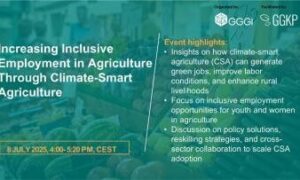
Webinar on Climate-smart Agriculture (CSA) for Increasing Inclusive Employment
08 Jul 2025 | 16:00 – 17:30
Online | Zoom
GGKP
Body Meeting
First meeting of the Intergovernmental Working Group (IGWG) on the WHO Pandemic Agreement
09 – 10 Jul 2025
WHO Headquarters & Online
WHO
Conference
Activités grand public : Eveils du Léman
09 Jul 2025 | 08:00 – 10:00
Saint-Sulpice (VD)
ASL
Virtual
WHA78 debriefing: Global Action Plan on Climate Change and Health
23 Jul 2025 | 14:00 – 16:00
Online | Zoom
WHO

Body Meeting
Second Informal Gathering of the Geneva Water Community
11 Jul 2025
Palais des Nations | Room IX
Bangladesh, Netherlands

Body Meeting
18th session of the Expert Mechanism on the rights of Indigenous Peoples
14 – 18 Jul 2025
Palais des Nations | Room XIX
OHCHR

Conference
The Power of the Right to Food to Achieve Better Nutrition for All
15 Jul 2025 | 10:00 – 11:30
Palais des Nations | Room H.307A & Online | Zoom
FAO
Virtual
An introduction to climate adaptation for financial institutions: part of the Climate Adaptation Innovation Learning series
15 Jul 2025 | 13:00 – 14:00
Online | BrightTalk
UNEP FI

Virtual
Preventing the Environmental Release of Pharmaceuticals: Solutions at the Source
16 Jul 2025 | 14:00 – 15:30
Online | Webex
UNEP Chemicals and Health Branch, WHO, GEN

Conference
Addressing the Plastics Crisis from Geneva: Meeting on Activities in the Margins of Plastics Treaty INC-5.2
17 Jul 2025 | 15:00 – 16:00
Villa Rigot & Online | Webex
GEN
Local
Activités grand public : Eveils du Léman
17 Jul 2025 | 07:00 – 09:00
Perle du Lac et quai Wilson
ASL
Conference
Trade and Environmental Sustainability Structured Discussions (TESSD)
18 Jul 2025 | 10:00
WTO
WTO
Jobs
See all