Newsletter 30 Mar 2026
Environment: What’s Up in GENeva | 30 March – 12 April 2026
The Geneva Environment Network’s weekly newsletter includes the latest information on the global environmental agenda, main events, job vacancies, as well as other useful resources and updates. The Geneva Environment Network is not responsible for the content of any linked site or any link contained in a linked site. Stay tuned and follow us on X (Twitter), Facebook, LinkedIn, Instagram, Bluesky, Youtube, and WhatsApp, or visit our website regularly for additional updates.
Due to the Easter holidays in Geneva, this edition of the newsletter exceptionally covers a two-week period.
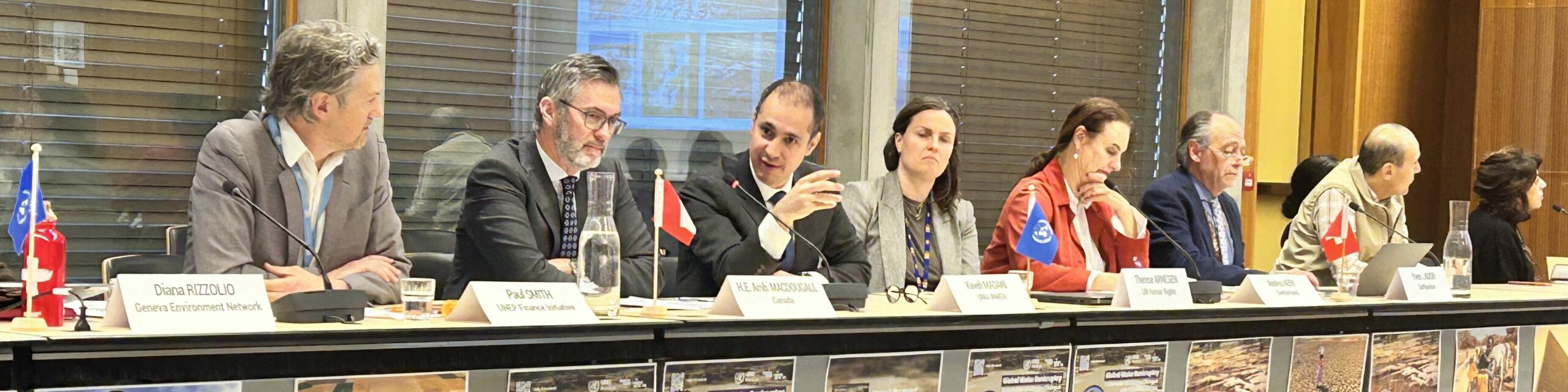
Image of the week | Stakeholder Briefing and Dialogue with Prof. Kaveh Madani, 2026 Stockholm Water Prize Laureate, discussing the report Global Water Bankruptcy that made the headlines earlier this year. The publication calls for more holistic and resilient approaches to water governance – resetting the global water agenda. © International Environment House, 26 March 2026.
Zero Waste Starts on Our Plates
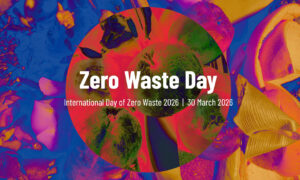
International Day of Zero Waste, celebrated on 30 March since 2023, underscores the importance of strengthening waste management globally and the need to promote sustainable consumption and production patterns to address the waste pollution crisis. The 2026 observance focuses on food waste, a critical yet preventable driver of environmental harm. The world is wasting food at an alarming scale, undermining food security and slowing progress toward a zero-waste, circular future. In 2022 alone, approximately 1 billion tonnes of food, nearly one-fifth of all food available to consumers, was wasted. Food loss and waste represent a major climate and environmental threat. They account for up to 10% of global greenhouse gas (GHG) emissions, nearly five times the emissions from the aviation sector, and up to 14 per cent of global methane emissions. Tackling food waste is among the most cost-effective and readily achievable climate solutions, aligned with zero-waste approaches that prioritize prevention, resource efficiency and systemic change. → Learn how Geneva is contributing to reducing food loss and waste and moving forward the achieving zero waste agenda.
To celebrate the 2026 edition of International Day of Zero Waste, the Permanent Mission of Türkiye and the Geneva Environment Network are hosting the traditional Geneva Celebration – Towards Zero Food Waste Through Multistakeholder Action – in partnership with UNEP and UN-Habitat and in collaboration with various Geneva-based institutions. Leading voices from Geneva and beyond joining the panel of this event will highlight steps taken to move forward the zero-waste agenda, how zero waste starts on our plates and key initiatives to reduce food waste. → Register on Indico to attend the event taking place on 30 March 2026 from 14:30 CEST at Palais des Nations, Room V.
Other events taking place in Geneva or online to celebrate Zero Waste Day include:
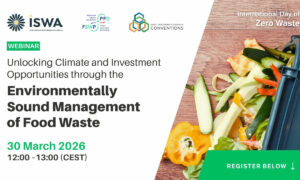
- Unlocking Climate and Investment Opportunities through the Environmentally Sound Management of Food Waste | 30 March 2026 | 12:00 – 13:00 CEST | Online, Zoom | Organized by International Solid Waste Association (ISWA) and the Basel, Rotterdam and Stockholm Conventions
- Food Waste Prevention in Practice: Learning, Policy, and Community Solutions | 2 April 2026 | 14:00 CEST | Online, Zoom | Organized by UNITAR
- Find additional events to celebrate the day on the Zero Waste Day website.
Recent publications and articles:
- What a Waste 3.0 – Global Snapshot of Solid Waste Management toward Circularity until 2050 | World Bank | March 2026
The third edition of the What a Waste report offers up-to date data and statistical analytics, drawing on the most recent publicly accessible data from 217 countries and economies and 262 cities, and provides a framework for understanding how different policy choices and levels of ambition could shape the future of global waste. The key message of the report: investing in more efficient, inclusive, and sustainable waste management systems, countries can unlock new avenues for economic growth, job creation, and innovation. - Beyond Waste: Towards a Plastic Pollution-Free Region | IUCN | 29 March 2026
- UN Advisory Board names 20 city leaders in zero waste | UNEP | 27 March 2026
- Behind food waste: The city and business solutions gaining ground | UNEP | 27 March 2026
- Seven ways to cut your food waste and support the planet | UNEP | 27 March 2026
State of the Global Climate | Spotlight on Strengthening the Climate – Health Agenda
Last week, on World Meteorological Day, the World Meteorological Organization released the State of the Global Climate report 2025. The report highlights that 2015-2025 are the hottest 11-years on record, with 2025 being the second or third hottest year at about 1.43 °C above the 1850-1900 average. It also underscored that extreme events around the world, including intense heat, heavy rainfall and tropical cyclones, caused disruption and devastation and highlighted the vulnerability of our interconnected economies and societies. For the first time, the report also includes the Earth’s energy imbalance as one of the key climate indicators, showing that it is more out of balance than at any time in observed history, as greenhouse gas concentrations drive continued warming of the atmosphere and ocean and melting of ice. As summarized by UN Secretary-General António Guterres, the report sends an unequivocal message: “The State of the Global Climate is in a state of emergency. Planet Earth is being pushed beyond its limits. Every key climate indicator is flashing red. It is a call to act… The way forward must be grounded in science, common sense, and the courage to act.” WMO Secretary-General Celeste Saulo recalled that “WMO’s State of the Global Climate report seeks to inform decision-making… When we observe today, we don’t just predict the weather, we protect tomorrow.” → Read more in the WMO press release and the UN News dedicated article.
The State of the Global Climate report 2025 also points to the growing risks climate change poses on health, with impacts ranging from heat-related mortality and air pollution to food insecurity, vector-borne diseases, and mental health risks, showing how climate change has become one of the defining public health challenges of the 21st century. While health received increased political attention in recent UN Climate Change Conferences, including at the 30th Conference of the Parties to the UN Framework Convention on Climate Change (COP30), important questions remain about how effectively health considerations are integrated into climate mitigation, adaptation, finance, and just transition frameworks. Ahead of the First Conference on Transitioning Away from Fossil Fuels in Santa Marta, Colombia, at the end of April, COP31 taking place at the end of the year in Türkiye, and the implementation of the World Health Organization’s Global Action Plan on Climate Change and Health, the evolving landscape of global climate governance raises important questions about how climate action can better advance health outcomes.
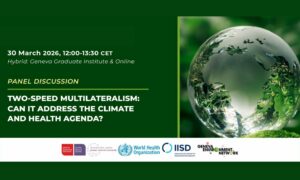
An hybrid event – Two-Speed Multilateralism: Can It Address the Climate & Health Agenda?, organized by the Geneva Graduate Institute Global Health Centre, the World Health Organization, the International Institute for Sustainable Development and the Geneva Environment Network, will bring together governments, international organizations, civil society, and academia to take stock of COP30 outcomes, explore opportunities to strengthen the climate–health agenda in the lead-up to COP31, and examine how new coalitions and political initiatives can accelerate action. → Register to join the event in-person at the Maison de la Paix, Auditorium A1B, on Monday 30 March 2026, from 12:00 – 13:30 CEST, or online via Webex.
Additional news on climate include:
- Commission releases new guidelines to future-proof Natura 2000 sites against climate change | EU Commission | 26 March 2026
- UNECE framework to help transport infrastructure owners and operators adapt to climate change risks | UNECE | 24 March 2026
- Global Seasonal Climate Update for April-May-June 2026 | WMO | 23 March 2026
Call for Action on Investor-State Dispute Settlement System
Last week, the Investor-State Dispute Settlement System (ISDS) gained heightened attention as President Gustavo Petro Urrego of Colombia announced that his country will withdraw from the international investment arbitration regime, citing the enormous risk the country faces by remaining in the system, currently calculated at 52 trillion pesos (approximately USD 14.15 billion). The announcement comes in response to a letter from a collective of 220 economists and legal scholars, including former UN Special Rapporteur on environment David Boyd, deeply concerned that “ISDS poses a serious obstacle to building prosperous, equitable, and sustainable societies [as it] allows foreign corporations to bypass domestic courts and bring legal claims against host governments before special international arbitration tribunals that routinely award vast sums for alleged harms to their investments.” While proponents argue ISDS can protect investors from unfair treatment, in practice it has become a tool that allows corporations to sue governments over lost “future profits” when the companies argue that regulations impede or prevent their planned projects. The letter also notes that Brazil, which no longer participates in ISDS, is “South America’s largest recipient of foreign investment.”
As Colombia prepares to co-host the First International Conference on Transitioning Away from Fossil Fuels in Santa Marta, from 24-29 April 2026, where discussions on ISDS are expected to take a central stage, the announcement is an opportunity to galvanize coordinated international action, and as suggested by the coaltion, launching a broader alliance of countries committed to unwinding ISDS. Colombia “has halted new fossil fuel exploration contracts and advanced an ambitious energy transition agenda. Yet, Colombia has 129 oil and gas projects that are covered by ISDS provisions, exposing the country to claims in the billions of dollars.”
Read more at:
- Colombia saldrá del régimen de arbitraje internacional de inversión: presidente Petro (Colombia Will Withdraw from the International Investment Arbitration System: President Petro) | Colombian Government | 25 March 2026
- CEPR Applauds Colombian Government’s Decision to Exit Investor-State Dispute Settlement System that Impedes Environmental Protection | CEPR | 26 March 2026
- Petro says Colombia will pull out of investor protection treaties | Adriaan Alsema/ ISDS platform | 25 March 2026
- Leading Economists and Legal Scholars Call for Urgent Action to Remove Policy Barrier to Climate Progress Ahead of Colombia’s Fossil-Fuel Phase Out Conference | CEPR | 23 March 2026
- Letter from 220 Economists and Legal Scholars to Colombian President Gustavo Petro Calling for Action on ISDS | Boston University Global Development Policy Center | 19 March 2026
- Various discussions addressing ISDS have taken place in the margins of various Human Rights Council sessions, including after the release of the former UN Special Rapporteur on human rights and the environment, David Boyd, report to the UN General Assembly in 2023 “Paying polluters: the catastrophic consequences of investor-State dispute settlement for climate and environment action and human rights” (A/78/168), on the devastating effects of ISDS on a wide range of human rights, environmental and climate consequences.
Advancing the Human Rights and Environment Agenda at HRC and Beyond
The 61st session of the UN Human Rights Council (HRC61) concludes this week in Geneva. Last week, various draft resolutions that address environmental issues, although not their primary focus, were submitted by their sponsors for deliberations. Last Friday, the Council has started adopting resolutions including:
- A/HRC/61/L.2 | The negative impact of unilateral coercive measures on the enjoyment of human rights | Uganda (on behalf of the Movement of Non-Aligned Countries) | Adopted by vote (28-17-1)
- Deeply disturbed by the negative impact of unilateral coercive measures on human rights, including the right to a clean, health (sic) and sustainable environment, the resolution expresses its deep concern over the increasing negative effects of unilateral coercive measures on the environment and natural resources, leading to serious violations of human rights of targeted populations, and strongly condemns the continued unilateral application of such measures, which result in various environmental transboundary and transgenerational implications for present and future generations.
Deliberations continue this week, as the Council is expected to tackle:
- A/HRC/61/L.13 | The right to food | Cuba
- A/HRC/61/L.18 | Promoting human rights and the Sustainable Development Goals through transparent, accountable and efficient public service delivery | Azerbaijan, Ecuador, Georgia, Kenya, Malaysia, Thailand, Türkiye
- A/HRC/61/L.21 | Adequate housing as a component of the right to an adequate standard of living, and the right to non-discrimination in this context | Germany, Brazil, Finland, Namibia
- A/HRC/61/L.26 | The human rights of persons in street situations | Brazil, Cabo Verde, Dominican Republic
- A/HRC/61/L.28 | Promotion and protection of human rights and the implementation of the 2030 Agenda for Sustainable Development | Ecuador, Azerbaijan, Brazil, Chile, Fiji, Luxembourg, Portugal, Rwanda, Sierra Leone, Thailand, Uruguay
- A/HRC/61/L.29 | Mandate of Special Rapporteur on the situation of human rights defenders | Norway
→ Consult regular updates on key environmental issues at HRC61, side events, and further resources available on our dedicated HRC61 and the environment update.
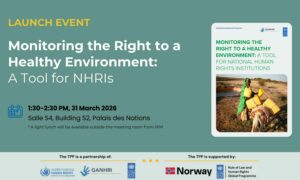
In the margins of HRC61, the 2026 Annual Meeting of the Global Alliance of National Human Rights Institutions (GANHRI) is taking place from 30 March to 1 April 2026, at Palais des Nations, bringing together National Human Rights Institutions (NHRIs) from across the globe. The GANHRI 2026 Annual Conference taking place on 1 April 2026 will focus on “The role of NHRIs in promoting and protecting human rights in the digital space”. In the sidelines of the annual meeting, the side event “Monitoring the Right to a Healthy Environment: A Tool for National Human Rights Institutions“, on 31 March, will present a Tool that will help NHRIs monitor the right to a clean, healthy and sustainable environment in national settings. Developed by UNDP, OHCHR, and GANHRI under the Tri Partite Partnership (TPP), the Tool aims to monitor elements of the right to a healthy environment, examine rules, enforcement and oversight, and actual environmental harms experienced on the ground, including safe climate, biodiversity, toxic free environment, safe and sufficient water and healthy food systems.
Various deadlines are fast approaching for calls for submissions relevant to the environment and human rights agenda, including:
- Planning and the right to a clean, healthy and sustainable environment | In her upcoming thematic report to the 81st session of the UN General Assembly, the UN Special Rapporteur on the right to a clean, healthy and sustainable environment, Astrid Puentes Riaño, aims to help States advance on the understanding of planning tools and processes, and how these can enable management of the environment, both related to land and marine ecosystems. → The deadline for submission is on 30 March 2026.
- Intimidation and reprisals | Each year the Secretary-General prepares and presents a report to the Human Rights Council entitled “Cooperation with the United Nations, its representatives and mechanisms in the field of human rights”. The upcoming report provides an update on the subject of intimidation and reprisals for cooperation with the UN. → The deadline for submission is on 15 April 2026.
- Participation in development | Active, free and meaningful participation in decision-making is a core element of the right to development. The UN Special Rapporteur on the right to development, in line with the model of “planet-centred participatory development” will provide practical guidance on ensuring active, free and meaningful participation in his 2026 report to the Human Rights Council. → The deadline for submission is on 17 April 2026.
- The governance of the high seas and international financial obligations | The upcoming thematic report of the Independent Expert on the effects of foreign debt and other international financial obligations on the full enjoyment of human rights will examine how the governance of areas beyond national jurisdiction, including the high seas water column, the deep seabed, and by extension outer space, affects States’ capacity to mobilize resources for human rights realization, and how international financial obligations generated within these spaces bear upon debt sustainability and fiscal legitimacy. → The deadline for submission is on 20 April 2026.
- Study on the implications of sea-level rise for the full enjoyment of human rights | The Advisory Committee of the Human Rights Council is preparing a study on the implications of sea-level rise for the full enjoyment of human rights, and in particular to identify its impact on, among others, Indigenous Peoples, persons of African descent, persons with disabilities, persons belonging to national and ethnic minorities, and coastal communities, while paying specific attention to the disproportionate impacts on women and girls, including in rural areas. The study will be presented to the Council at its 64th session. → The deadline for submission is 30 April 2026.
- Technologies related to climate change and their impacts on human rights | In her upcoming report to the UN General Assembly 81st session, the UN Special Rapporteur on climate change and human rights seeks to synthesize and analyze a varied body of evidence (from across the natural and social sciences, including Indigenous science and other knowledge systems) of the actual and potential, positive and negative impacts on human rights of technologies related to climate change mitigation, adaptation, and/or responses to loss and damage. → The deadline for submission is 30 April 2026.
- Country visit to Guatemala | During its visit to Guatemala, the Working Group on Business and Human Rights will examine business and human rights issues and identify current initiatives, practices, challenges and opportunities at the national and local level to implement the UN Guiding Principles on business and human rights and promote responsible business conduct. → The deadline for submission is 30 April 2026.
- Find a selection of additional call for submissions for Special Procedures of the Human Rights Council, Treaty Bodies, Subsidiary Bodies and Office of the High Commissioner in our dedicated update.
Additional news include:
- UN expert urges Mexico to promote environmental justice actions on toxic substances and wastes | UN Human Rights Special Procedures | 24 March 2026
- Multilateralism Under Strain: Why the Human Rights Council Matters for Environmental Justice | Francesca Mingrone, CIEL | 23 March 2026
A Month into the War in the Middle East | Impacts on the Environment
The conflict in the Middle East continues to escalate, with ongoing attacks causing widespread fear, civilian suffering and further deepening the humanitarian crisis across the region. In response, the United Nations has announced the establishment of a task force to help address the growing and urgent needs. While UN efforts to support affected civilians and de-escalate the conflict are ongoing, the Secretary-General has stressed the need to take immediate action to mitigate its consequences, and named veteran French diplomat Jean Arnault as his Personal Envoy to lead UN efforts on the Middle East conflict and its consequences. Read more on how the UN and partners are advancing mediation efforts, monitoring environmental harm, promoting energy efficiency and renewable transitions, and calling for impartial investigations into violations amid growing concerns over toxic emissions, infrastructure attacks, and the broader global implications of the crisis:
- Kaveh Madani, expert iranien de l’eau: «La guerre est le pire des cauchemars pour quelqu’un qui se bat pour l’environnement» | Le Temps | 29 March 2026
Un temps vice-ministre de l’Environnement en Iran, Kaveh Madani travaille désormais à l’ONU, et vient de recevoir le prestigieux Prix de l’eau de Stockholm. De passage à Genève, il fait le point sur les menaces que la guerre au Moyen-Orient fait peser sur l’or bleu - Middle East war: UN initiatives support mediation efforts, ‘lifesaving’ fertiliser shipments | UN News | 28 March 2026
- Iran War: Environmental risk overview as of 27th March | CEOBS | 27 March 2026
- MIDDLE EAST LIVE 27 March: Humanitarian crisis deepens across the region | UN News | 27 March 2026
- The UN and the crisis in the Middle East: What you need to know | UN News | 26 March 2026
- Middle East Escalation of Conflict, Global external situation report #1 | WHO | 26 March 2026
- FAO Chief Economist warns of severe global food security risks from disruption to Strait of Hormuz trade corridor | FAO | 26 March 2026
- Iran war’s environmental toll could leave damage and health risks for decades, experts say | Tammy Webber/AP | 26 March 2026
- Middle East Conflict: Coordinated, Comprehensive and Impartial Approach to All Violations Needed | Human Rights Watch | 25 March 2026
- UN chief says Middle East conflict should accelerate shift to renewables, and other climate and nature news | Tom Crowfoot/WEF | 25 March 2026
- From Middle East Energy Shock to Efficiency Action | UNECE | 24 March 2026
- War’s Environmental Damage: How Conflicts Accelerate Global Warming | Climate Fact Checks | 24 March 2026
- The Strait of Hormuz Trade Tracker, developed jointly by AXSMarine (Signal Group) and WTO, offers a range of indicators for shipments of key commodities – crude oil, natural gas, fertilizer-related products including sulphur and ammonia, and agricultural products – through the Strait of Hormuz.
- Tehran’s toxic cloud: satellite images show oily fires burned for days | Oliver Holmes, Damien Gayle and Tural Ahmedzade/The Guardian | 23 March 2026
- Greenpeace warns Trump’s threat to bomb Iran’s power grid risks humanitarian and nuclear disaster | Greenpeace | 23 March 2026
World Health Day 2026 | Spotlight on One Health
World Health Day, observed on 7 April, marking the founding of the World Health Organization in 1948, calls this year on people everywhere to stand with science. Under the theme “Together for health. Stand with science”, this year’s observance launches a year‑long campaign celebrating the power of scientific collaboration to protect the health of people, animals, plants, and the planet. The campaign spotlights both scientific achievements and the multilateral cooperation needed to turn evidence into action – through a strong focus on the One Health approach.
To kick-start the 2026 campaign, two major global moments will take place:
- The One Health Summit, hosted by WHO and the Government of France under the French G7 Presidency, will take place from 5 to 7 April 2026 in Lyon, France. The Summit will bring together Heads of State and Government from around the world, Heads of International and Regional Organizations, parliamentarians, representatives of the scientific and academic community, the private sector, civil society, local authorities and youth to accelerate the implementation of the “One Health” approach, which is based on a long-held belief that human health, animal health, and ecosystem health are closely interdependent.
- The inaugural Global Forum of WHO Collaborating Centres will be held on the sidelines of the One Health Summit 2026 from 7 to 9 April 2026 in Lyon. With the theme “Collaborating for a Healthier Future”, the First Global Forum of WHO Collaborating Centres (WHOCC) will bring together global experts from hundreds of institutions designated as WHO Collaborating Centres across more than 80 countries, alongside WHO leadership and technical focal points to strengthen scientific and technical collaboration, providing a platform for dialogue, reflection, and forward-looking collaboration. Collaborating Centres provide strategic, scientific and technical support to WHO’s programmes at global, regional and country levels. Through these partnerships, WHO strengthens multilateral collaboration, advances evidence-informed health policies, and promotes coordinated action across countries and regions to address global health priorities. The Forum will be conducted in a hybrid format, with participants attending both in person and virtually (registrations are currently closed).
- On 1 April, a webinar “Quadripartite One Health collaboration in Europe and Central Asia“, organized by the Regional One Health Coordination Mechanism for Europe and Central Asia (ROHCM), brings together the Quadripartite organizations (FAO, UNEP, WHO, WOAH) to highlight their collaboration to address complex and emerging health challenges. The event will showcase the role of the ROHCM in supporting countries to operationalize the One Health approach through coordinated governance, harmonized technical assistance and joint investments, aligned with the One Health Joint Plan of Action (2022–2026).
It is to be noted that the new public website of the Global Early Warning System (GLEWS+) – a flagship One Health intelligence mechanism jointly established by FAO, WHO and WOAH to strengthen collaboration across sectors and improve the early detection of health threats – was launched last week. GLEWS+ supports the identification of signals, the joint assessment of potential risks, and the timely communication of information to guide action.
Save the date for the launch event of a new UNEP global guidance “Safe Disposal of Unused Medicines – A One Health Approach for National Systems” to be held as part of the Addressing Pharmaceuticals in the Environment through a Lifecycle Approach Event Series on 6 May 2026. → Register on Indico to participate in person or on Webex to attend online.
Outcomes of Negotiations and Intergovernmental Meetings
A series of major multilateral processes across the UN system and international organizations convened around the globe in late March 2026, reflecting the global momentum in environmental governance — from water management and sustainable trade to biodiversity protection, climate action, high‑seas conservation, and beyond.
The sixth meeting of the Intergovernmental Working Group (IGWG) on the WHO Pandemic Agreement convened on 23–28 March 2026. WHO Member States have agreed to extend negotiations on the Pathogen Access and Benefit Sharing (PABS) annex to the WHO Pandemic Agreement, with discussions to resume from 27 April–1 May, ahead of its scheduled consideration by the World Health Assembly (WHA) in May. Read more at:
- WHO Member States agree to extend negotiations on key annex to the Pandemic Agreement | WHO | 28 March 2026
- Talks Deadlock: Should Pandemic Agreement Annex Go to a Vote? | Health Policy Watch | 25 March 2026
The Sixth Advisory Board meeting of the Santiago Network (SNAB 6) concluded in Geneva on 26 March 2026. The meeting focused on strengthening the Network’s results framework, advancing a clear pathway toward the development of the terms of reference for the regular report on loss and damage, deepening collaboration within the loss and damage ecosystem, encouraging the continuation of its inclusive approach to observer participation, and preparing for the next meeting of the Advisory Board. Read more at:
- Scaling delivery and complementarity: key outcomes of the sixth meeting of the Santiago Network Advisory Board | Santiago Network | 27 March 2026
- Daily policy updates for the sixth meeting of the Advisory Board of the Santiago Network (SNAB 6) | The Loss & Damage Collaboration
- Statement from the new Co-Chairs of the Santiago Network Advisory Board | 24 March 2026
- Statement from the outgoing Co‑Chairs of the Santiago Network Advisory Board | 24 March 2026
The 64th Session of the IPCC (IPCC-64) concluded in Bangkok on 27 March 2026. The session was the last one for the IPCC Secretary Abdalah Mokssit, who led the IPCC Secretariat for the past decade, and will soon retire. Read more at:
- IPCC wraps up 64th plenary session in Bangkok | IPCC | 27 March 2026
- Earth Negotiations Bulletin Summary Report
The 43rd UN-Water meeting, held on 24-25 March in Rome, Italy, was the largest-ever such gathering of UN-Water Members and Partners, country representatives and senior leaders. The meeting focused primarily on the ongoing implementation of the UN System-wide Strategy for Water and Sanitation and preparations for the 2026 UN Water Conference, with the Conference co-hosts, the Governments of Senegal and the United Arab Emirates, and the Interactive Dialogue co-chairs and co-conveners providing updates. Read more at:
- 43rd UN-Water meeting | UN Water
- Read more in the Earth Negotiations Bulletin Summary Report
The World Trade Organization’s 14th Ministerial Conference (MC14), convened from 26-29 March in Yaoundé, Cameroon, and concluded in the early hours of Monday 30 March, with progress in several areas and good attendance despite the ongoing war in the Middle East, as highlighted by WTO Director-General at the closing Press Conference. Ministers adopted a number of decisions as well as making a commitment to continue work in Geneva on key outstanding issues. Read more at:
- MC14 concludes with adopted decisions, progress on key outstanding issues | WTO | 30 March 2026
- At the Ministerial Session on Fisheries Subsidies, WTO members praised the entry into force of the WTO Agreement on Fisheries Subsidies and welcomed the deposit of instruments of acceptance by Paraguay, Samoa, and Saint Vincent and the Grenadines on 26 March. To date, 119 WTO members have formally accepted the Agreement.
- On 26 March, the coordinators of the Dialogue on Plastics Pollution and Environmentally Sustainable Plastics Trade (DPP) presented the MC14 ministerial statement on Plastic Pollution and Environmentally Sustainable Plastics Trade complemented by a technical outcome package.
- On 26 March, the 48 WTO members co-sponsoring the Fossil Fuel Subsidy Reform initiative released a joint ministerial statement highlighting progress made since MC13 towards the rationalization, phase-out or elimination of harmful fossil fuel subsidies. The statement sets out guidelines for designing transparent, targeted and temporary fossil fuel subsidy measures in response to energy crises. A non-exhaustive list of sample questions for use in WTO Trade Policy Reviews was also adopted alongside the statement, contributing to enhanced transparency on fossil fuel subsidies and their reform. New Zealand also released its coordinator’s progress report summarizing the main areas of work under the initiative during 2024-2025.
- The Trade and Environmental Sustainability Structured Discussions (TESSD) unveiled on 19 March 2026 a package of outcome documents showcasing progress achieved over the past five years and highlighting the group’s substantive analytical work across several workstreams since MC13. Members also expressed their readiness to shift towards priority areas and deliver concrete actions after MC14.
- Analyses and opinions on the MC14 include:
- Five Years On – Reflections and the Road Ahead for the Trade and Environmental Sustainability Structured Discussions at the WTO | Carolyn Deere Birkbeck, Forum on Trade, Environment, & the SDGs (TESS) | 26 March 2026
- MC14: La Via Campesina Calls for an End to WTO-Led Trade System and Urgent Shift to Food Sovereignty | La Via Campesina | 26 March 2026
The fifteenth Meeting of the Conference of the Parties to the Convention on the Conservation of Migratory Species of Wild Animals (CMS COP15) concluded on 29 March in Campo Grande, Brazil, adopting several measures to strengthen global or regional conservation efforts of such iconic species as the cheetah, striped hyena, snowy owl, giant otter, great hammerhead shark, and several shorebird species facing steep population declines. Read more at:
- 40 Migratory Animal Species Receive New or Upgraded Protection at Close of UN Meeting in Brazil | CMS | 29 March 2026
- CMS COP15 delivers progress for migratory species, including jaguars, sharks, marine turtles, and birds | WWF | 29 March 2026
- Earth Negotiations Bulletin Summary Report
- The week-long CMS COP15 opened with new findings that key indicators for many treaty-protected species continue to trend downward, reinforcing warnings that habitat loss, overexploitation, and infrastructure barriers are accelerating declines across species that traverse national borders. Key publications and tools released at CMS COP15 include:
- New UN-backed Atlas Maps Migratory Lifelines of Highly Vulnerable Bird Species Across the Americas | CMS | 26 March 2026
- Global Assessment of Migratory Freshwater Fishes | CMS | 24 March 2026
- State of the World’s Migratory Species: Interim Report (2026) | CMS | 23 March 2026
- Migratory species connect our world, now we must act to protect them | Birdlife | 23 March 2026
The 7th Global Meeting of the Mountain Partnership concluded on 28 March 2026 in the Principality of Andorra. The meeting adopted “The Andorra Declaration Elevating Mountain Action Beyond 2030”. Key outcomes include:
- Compromís internacional des d’Andorra per accelerar l’acció climàtica i la resiliència a les muntanyes | Government of Andorra | 28 March 2026
- International commitment from Andorra to accelerate climate action and resilience in mountain regions | Mountain Partnership | 28 March 2026
- Earth Negotiations Bulletin Summary Report
The third and expected final session of the Preparatory Commission for the Entry into Force of the BBNJ Agreement and the Convening of the 1st Meeting of the Conference of the Parties to the Agreement (BBNJ PrepCom III) continues this week in New York and is expected to conclude on 2 April 2026. In the first week of deliberations, key analyses include:
- Earth Negotiations Bulletin Live Coverage
- From entry – into force – into action: why this moment for the High Seas cannot be missed | Minna Epps, IUCN | 24 March 2026
- BBNJ Agreement: PrepCom 3 Hoists the Sails for High Seas Action | OceanCare | 23 March 2026
Upcoming Deadlines Relevant for the Environment
With the environment high on the agenda of International Geneva and beyond, international processes, negotiations, and fora regularly issue calls for inputs in preparation of future reports, in support of ongoing processes, for awarding who champion for our planet, or for registering to attend upcoming sessions. A dedicated update lists calls for submissions related to the environment. Additional updates list those related to Human Rights Mechanisms, ongoing contests and environmental awards and prizes. Upcoming deadlines not to be missed in the coming weeks include:
- UNEP Young Champions on the Earth | Launched in 2017, the UNEP Young Champions on the Earth Award is the UNEP flagship youth engagement initiative. The award is given annually to ambitious young people from around the world with outstanding ideas to protect and restore the environment, and since 2024 it has been implemented with the support of Chris Kemper and in partnership with Planet A. → The application deadline for the 2026 awards is 31 March 2026.
- WIPO Global Awards | The World Intellectual Property Organization’s (WIPO) Global Awards recognize exceptional startups and SMEs from all sectors who use Intellectual Property (IP) to drive business growth and societal impact. The WIPO Global Awards Program grants 10 awards in 5 categories: health, environment, creative industries, food and agriculture and ICT. They also give 2 special mentions to the best woman entrepreneur and best youth entrepreneur. → The application deadline for the 2026 awards is 31 March 2026. The winners will be announced in July 2026 during the WIPO General Assemblies.
- ECCP Fund: Proposal Submission | The purpose of the ECCP Community Fund is to provide financial support to specific projects within the Community of Practice initiated by community members. The projects supported by the fund should align with the mission of the ECCP: learning, connecting, and taking action together. For more information on the ECCP Community Fund, including selection criteria, please visit the website. → The deadline for applications is 31 March 2026.
- Health Diplomacy House | Call for Sessions | On the sidelines of the 79th World Health Assembly, the Health Diplomacy Alliance will convene the Health Diplomacy House, a full-day multi-event space taking place on Thursday, 21 May 2026, in Geneva. The House will provide a shared venue for dialogue, reflection, and exchange on topics such as One Health, global health security, antimicrobial resistance, climate change and health, and more. If your organization would like to co-create the program by hosting a session, roundtable, or dialogue, please indicate your interest via this form by 12 April 2026.
- UNEP Champions of the Earth Award | The Champions of the Earth award is the UN’s highest environmental honor and celebrates individuals and organizations whose actions have a transformative impact on the environment. In 2026, the award focuses on Ocean Health. UNEP is seeking nominations of individuals and organizations whose work delivers solutions to restore marine and coastal ecosystems, reduce climate risks, and create sustainable livelihoods. → Nominations can be submitted via this form by 15 April 2026
- Declaration on Sea Level Rise Global Online Stakeholder Consultation | The General Assembly, in its decision 78/558 of 1 August 2024, decided to hold a one-day high-level plenary meeting of the General Assembly, no later than the last day of the general debate of its eighty-first session, to further consider sea level rise. In order to support an open, inclusive and transparent process, a global online stakeholder consultation will be organized to gather inputs from stakeholders, including civil society organizations, academic institutions, the scientific community, the private sector, philanthropic organizations, Indigenous Peoples and local communities, and other relevant actors. Inputs received through this consultation will be compiled and shared with the co-facilitators to inform the intergovernmental consultations on the declaration. → The deadline to submit responses is 15 April 2026.
- 2026 Global Framework on Chemicals (GFC) Baseline Data Collection Survey | The Global Framework on Chemicals measures its progress under the Framework through a measurability structure comprising different types of indicators. To collect baseline data for a selected set of draft indicators currently being considered by the intersessional Open-ended Ad Hoc Working Group on measurability and indicators, a survey has been developed by the GFC Secretariat. Information collected from multiple stakeholders through this survey will support tracking progress toward achieving the targets and strategic objectives of the Framework. → This survey will be open until 24 April 2026.
- Basel Convention OEWG 15 Call for Side Events | At OEWG-15, side events will be held on major issues related to the implementation of the Basel Convention. Side events provide a platform for Parties (including subsidiary bodies) and observers to share knowledge, build capacity, network and exchange experiences related to the implementation of the Convention. They also contribute to discussions on specific issues under consideration at OEWG-15. Opportunities to hold side events of 60 minutes are available during lunch breaks and in the evenings of the meeting. Side events are held in person, with the possibility of online participation for panelists and attendees. Applications for side events may be submitted by Parties (including subsidiary bodies) and observers via the online application form by 30 April 2026.
Enjoying a Green Easter Break in Geneva
This Easter, whether you are enjoying some days off or remain busy with your everyday activities, we invite you to explore our selection of activities to enjoy a green spring in Geneva. From exhibitions and conferences to guided tours or workshops, you will find interesting opportunities to learn about and act for the environment, including for the next two weeks:
- De sa source au lac du Bourget, le Rhône joue à cache-cache, part Jean Sesiano | 30 March 2026 | Société de Géographie de Genève | Université Ouvrière de Genève
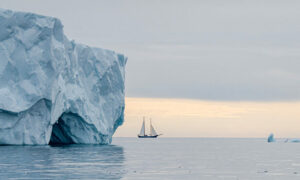
A conference on the twists and turns of the Rhône River’s course between Switzerland and France, as told by the passionate Geneva-born geophysicist, Jean Sesiano. We will follow the upper reaches of the Rhône River, stopping at specific points along its course. - Horizons Arctiques : récit d’une expédition suisse inédite | 31 March 2026 | University of Geneva | Uni Dufour
A preview screening of the documentary, followed by a panel discussion to explore the scientific, environmental, and geopolitical dimensions of this region on the front lines of climate change. - Festival du Film Vert | Until 1 April 2026 | Various Locations
The Green Film Festival is the main documentary festival in French-speaking Switzerland dedicated to ecology and the environment. - Poisson d’avril du Léman – « Des Glaciers au Bains des Pâquis » | 1 April 2026 | Bains des Pâquis
The Lac Léman is home to a rich variety of wild aquatic life, including at the Bains des Pâquis. Join these family activities focusing on aquatic biodiversity in urban environments and a guided tour of the exhibition “Des Glaciers au Bains des Pâquis”. - Apidae – Sensibilisation sur le déclin de la biodiversité | 1 April 2026 | Societé des Arts de Genéve | Palais de l’Athénée
APIDAE is a Geneva-based non-profit organization dedicated to protecting bees and preserving biodiversity in the Greater Geneva area. Join this conference with Tanguy Coustaline, a beekeeper and the president of APIDAE association. - Halte aux Renouées! | 1 April – 31 October 2026 | ASL | Various Locations
Are you keen to get involved and help us in this long-term effort to combat the scourge of invasive plants? It’s also an opportunity for an outdoor activity, good for your health, and for meeting and sharing with others. - Marcher La Ville – Début de printemps en villle et au potager | 1 April 2026 | La Libellule | Meeting in front of the Museum of Natural History
Join this walk through the neighborhoods to discover the first signs of spring, micro-forests, and charming old courtyards before arriving at the Parc de la Grange. Once at the Théâtre de l’Orangerie, a workshop will teach you how to grow plants in an urban setting. - Comment être parent dans un monde en transition? | 2 April 2026 | Arcade Mère et Terre
A moment for parents to share and explore together how to parent in the era of ecological crisis and exceeding planetary boundaries. We will start with your environmental concerns and then search for solutions. - Entre la nature et moi | 2 & 9 April 2026 | Parents d’avenir | Espace de quartier Jonction
Activity organized every Thursday for seniors by Claudia Osorio, a Jonction resident, involving the artistic creation of objects using recycled materials. - Chasse aux œufs, atelier créatif et dégustation de vins à Satigny | 3 & 4 April 2026 | Leman Experience | Domaine de Champvigny
Come celebrate Easter at the Domaine de Champvigny! Between egg hunts in the vineyards, creative workshops for children and wine tasting for adults, there is something for the whole family to enjoy. - Chasse aux oeufs aux Evaux “Pak’alapin et le peuple des Mystères” | 3 -6 April 2026 | Leman Experience | Parc des Evaux
Take off on a fun-filled egg hunt in the beautiful Parc des Evaux! From orienteering to adventure games, this egg hunt will focus on biodiversity and let them discover the park’s green heritage, beehives, insect hotels, and the Evaux vegetable garden. - Marcher La Ville – Bain de forêt – Bois de la Bâtie | 5 April 2026 | City of Geneva | Meeting in front of the Maison de quartier de la Jonction
This guided walk creates a seamless transition between the city’s paved urban spaces and its parks. Scientifically proven, forest bathing – which involves slow walks, moments of meditation, and sensory activities – helps reduce stress, strengthen the immune system, and support cardiovascular health. - Dimanche Solidaire – Atelier de tissage et crochet | 5 April 2026 | International Museum of the Red Cross and Red Crescent
Join this two-hour workshop on weaving and assembly techniques and learn how to create objects from recycled textiles. - Atelier Vivarium Fantastique | 7 April 2026 | Bibliothèques municipales de la Ville de Genève | Bibliothèque de la Cité
From 3D to a living display: imaging, craft, and animate your own fantastical insect! Based on real insects from the rainforests of Borneo, design your own 3D model. You can then print it, paint it, and decorate. - Swiss Landscapes – Eric Eriston Winarto | 7-19 April 2026 | Usine Kugler | Espace Kugler Gallery
The exhibition “Swiss Landscapes” evokes the panoramas encountered while traveling along the roads of the cantons of Geneva and Vaud. This project seeks to capture the essence of the mountainous landscape through a variety of settings: changing weather conditions, daylight and nighttime lighting, and shifting atmospheres. - Atelier cosmétique pour enfant : fabrication parfum fruité de Pâques | 8 April 2026 | L’Art du Cosmétique au Naturel | Espace de quartier Eaux-Vives
During this Easter-themed workshop, children will create their own springtime perfume with sweet, zesty notes of red berries that leave the skin pleasantly scented. - Easter Chocolate Workshop for Children | 8 April 2026 | La Bonbonnière | La Bonbonnière Chocolaterie – L’École du Chocolat
A workshop including the history of chocolate, a tasting, and an introduction to artisanal chocolate. After putting on their chef’s hate and aprons, participants will be guided by professionals to create their own Easter-themed chocolate creations, giving free rein to their imagination. - Marcher La Ville – Bain de forêt – Parc La Grange | 12 April 2026 | City of Geneva | Meeting at Espace de quartier des Eaux-Vives
This guided walk creates a seamless transition between the city’s paved urban spaces and its parks. Scientifically proven, forest bathing – which involves slow walks, moments of meditation, and sensory activities – helps reduce stress, strengthen the immune system, and support cardiovascular health. - « Des glaciers aux Bains des Pâquis » | Until 15 April 2026 | Bains des Pâquis
Photography exhibition by Michel Roggo which invites the public to discover the journey of a drop of water, from the Lac Léman to the harbor of Geneva. Discover how water shapes territories, creates remarkable aquatic landscapes, and provides an essential habitat for flora and fauna. - Biodiversité en péril | Until 29 April 2026 | Bibliothèques municipales de la Ville de Genève | Bibliothèque de Saint-Jean
Public Eye’s regional groups, supported by the NGOs Public Eye and Swissaid, organized a traveling exhibition offering an overview of the evolution of seeds over the centuries, their importance in various local cultures, and the threats posed to them by the seed industry. - Exhibition – 40 Trees in the City of Geneva Through the Seasons | Until 31 May 2026 | Colladon Residence
A photo exhibit dedicated to the trees of Geneva, produced by the City of Geneva’s Parks and Recreation Department, that takes you on a journey through the city and helps you get to know the trees around us better. - Exhibition “Quel froid!” | Until 30 August 2026 | MAH | Maison Tavel
This exhibition explores the theme of winter in Geneva and beyond, bringing together traditions, artists’ perspectives, and visual archives. Visitors are guided through popular practices, urban scenes, and majestic landscapes, from Lake Geneva to the Alps. - Temporary Exhibition – « Jamais la nature ne nous trompe » | Until 23 December 2026 | Jardin botanique de Genève
Come and discover a scientific and aesthetic object that bears witness to Jean-Jacques Rousseau’s passion for nature and botany: one of his rare portable herbariums, designed to deepen knowledge of plants and awaken an interest in botany.
What (Else) to Read Next?
- Why Environmental Boards Can’t Afford to Ignore AI | Adel Farid Abdel-Kader, Ph.D. | 27 March 2026
This article explores the current state of environmental boards, how AI is transforming governance, and what directors need to do to lead responsibly in an AI-enabled world. - The Global Framework on Chemicals: A World of Work Priority | ILO | 26 March 2026
This policy brief underscores the central importance of the labour dimension in advancing the GFC, recognizing that chemicals are primarily produced, handled and used in workplaces. Occupational safety and health (OSH) is positioned as a foundational element of effective chemicals governance and of efforts to protect workers, communities and the environment. The brief examines the strong alignment between the GFC and the ILO’s mandate, highlighting their coherence and complementarity. - New report finds The Metals Company own analysis shows project “cannot be profitable” | Deep Sea Mining Campaign | 26 March 2026
A new independent analysis of the pre-feasibility study (PFS) produced by The Metals Company (TMC) has found that on its own numbers, this project makes zero profit then collapses, raising serious questions about the project’s financial and technical credibility.
- Backing environmental multilateralism in complex times | Inger Andersen | UNEP | 24 March 2026
UNEP Executive Director Briefing to Member States in NYC – Bringing the world together to tackle global environmental challenges: UN Environment Assembly outcomes, 2026 milestones and the latest UNEP science.
- IQAir’s 2025 World Air Quality Report Finds Only 14% of Cities Meet WHO Air Pollution Guideline | IQAIR | 24 March 2026
IQAir announced the release of its 8th annual World Air Quality Report, offering a comprehensive analysis of 2025 global air pollution data and highlighting persistent health risks, emerging regional trends and critical monitoring gaps worldwide. IQAir analyzed data from monitoring stations across 9,446 cities in 143 countries, regions and territories. The report adds 12 countries and territories not included last year, seven of which appear in the dataset for the very first time, marking continued expansion of global air quality monitoring coverage. - Op-Ed: “Do EU Law and the Precautionary Principle Have Anything to Say on Deep-Sea Mining in the Area? A Potential Additional Normative Layer for the EU and its Member States” | Cédric Henet & Arthur Meeùs | EU Law Live | 24 March 2026
‘Brussels should move quickly to agree on an international rule book on the extraction of critical minerals in international waters.’ These words, addressed in February 2026 to European decision-makers by the Secretary-General of the International Seabed Authority (‘ISA’), raise a fundamental legal question: can the European Union (‘EU’) and Member States be involved in deep-sea mining (‘DSM’) exploitation in the seabed beyond national jurisdiction (‘the Area’) in light of the EU’s environmental standards, and in particular the precautionary principle?
- Major Banks Backing Risky US Petrochemical Expansion Despite Mounting Legal and Financial Warnings | CIEL | 24 March 2026
Major US and global banks have provided US $133 billion in financing to companies expanding petrochemical production in the United States since 2019 — despite growing evidence that the sector is environmentally destructive, financially unstable, and increasingly exposed to legal liability — according to a new report released today by the Center for International Environmental Law (CIEL), Break Free From Plastic US (BFFP), Friends of the Earth US, the Gulf South Fossil Finance Hub, Texas Campaign for the Environment (TCE), and the People Over Petro Coalition (POPCO). - Mining Industry Wants to Pollute Your Drinking Water. Will the EU Let Them? | Diego Francesco Marin | New Leaf | 23 March 2026
How much is water worth? The United Nations has warned that the world faces a looming “water bankruptcy”. Europe is not exempt. Water stress is intensifying across the continent, yet at the very moment protections should be strengthened, a concerted industry push to weaken EU water legislation is gaining ground. This tension is visible in southern Sweden, where for sixteen years, farmers, residents, and environmental groups around Lake Vättern have been resisting a mine that would put both their water and their future at risk. The project, Norra Kärr, is being promoted in the name of the green transition. But the real question is whether Europe’s rush for “strategic” raw materials will override the ecological limits that any genuine transition is supposed to respect. - Is any country truly food-secure in the climate change era? | IIED | 23 March 2026
Most governments now accept climate change will likely cause significant disruption to food supplies, and that in many places it is already leading to failed harvests or lower crop yields.The new IIED Food Security Index gives ministers and officials the granular data they need to identify weaknesses in their systems of food supply, making them fit to withstand increasingly unpredictable and extreme weather.
Events
See all
Body Meeting
61st session of the Human Rights Council | HRC61
23 Feb – 31 Mar 2026
Palais des Nations, Assembly Hall
HRC



Conference
Two-Speed Multilateralism: Can It Address the Climate & Health Agenda?
30 Mar 2026 | 12:00 – 13:30
Maison de la Paix | Auditorium A1B
IHEID, WHO, IISD, GEN
Virtual
Unlocking Climate and Investment Opportunities through the Environmentally Sound Management of Food Waste
30 Mar 2026 | 12:00 – 13:00
Online | Zoom
ISWA, BRS
Conference
The Green Transition: Evidence from Corporate Green Revenues
30 Mar 2026 | 14:15 – 15:30
Uni Mail
UNIGE
Conference
International Day of Zero Waste Celebration | Towards Zero Food Waste Through Multistakeholder Action
30 Mar 2026 | 14:30 – 15:30
Palais des Nations, Room V
Türkiye, GEN, UNEP Europe Office, UN-Habitat
Virtual
Towards coupled data-driven Earth system prediction | AI For Good
30 Mar 2026 | 17:00 – 18:00
Online | AI for Good Neural Network
ITU
Conference
Monitoring the Right to a Healthy Environment: A Tool for NHRIs | GANHRI 2026 Annual Meeting Side Event
31 Mar 2026 | 13:30 – 14:30
Palais des Nations | Room S4
UNDP, OHCHR, GANHRI
Body Meeting
8th meeting of the open-ended ad hoc group on measurability and indicators
31 Mar 2026 | 14:00 – 16:00
Online
GFC
Conference
Horizons Arctiques | Récit d’une expédition suisse inédite
31 Mar 2026 | 18:30 – 20:30
Uni Dufour
UNIGE
Virtual
Quadripartite One Health collaboration in Europe and Central Asia
01 Apr 2026 | 10:00 – 11:00
Online | Zoom
FAO, UNEP, WHO, WOAH

Conference
War in the Middle East: What Future for the Global Order?
01 Apr 2026 | 12:30 – 14:00
Maison de la paix, Auditorium Ivan Pictet
IHEID
Virtual
The Climate Pathways Navigator Tool: Making climate scenarios work for finance
01 Apr 2026 | 14:00 – 15:00
Online | BrightTalk
UNEP FI
Virtual
Technologies to reduce the use of mercury in ASGM
01 Apr 2026 | 14:00 – 15:30
Online | Teams
World Bank Group, UNITAR
Conference
Journée Internationale de la Conscience 2026 | Réinventer la paix avec les jeunes
02 Apr 2026 | 10:00 – 18:00
Place des Nations | Tempus & Online
International Alliance for the Sustaianble Development Goals
Virtual
Advancing the Just Transition: Insights from emerging practice in banking and insurance
02 Apr 2026 | 11:00 – 12:00
Online | BrightTalk
UNEP FI
Virtual
Food Waste Prevention in Practice: Learning, Policy, and Community Solutions
02 Apr 2026 | 14:00
Online | Zoom
UNITAR

Virtual
Environment, Climate, Conflict and Peacebuilding (ECCP): Environment, Peacebuilding, and Security Policy Working Group
07 Apr 2026 | 16:00 – 17:00
Online | Zoom
ECCP
Virtual
Implementation of Sustainability Reporting Standards in Asia Pacific
08 Apr 2026 | 09:00 – 10:00
Online | BrightTalk
UNEP FI
Virtual
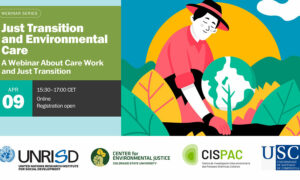
Environment, Climate, Conflict and Peacebuilding (ECCP): Green Transition Policy Working Group
08 Apr 2026 | 15:00 – 16:00
Online | Zoom
ECCP
Jobs
See all




Professional
Medical Advisor: Tropical & Infectious Diseases; Climate, Environment & Health
05 Apr 2026
MSF

Updates
See all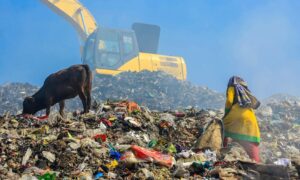
27 Mar 2026
Achieving Zero Waste and the Role of Geneva

22 Sep 2026
Food Loss and Waste and the Role of Geneva


09 Apr 2026
One Health and the Role of Geneva


23 Aug 2026