
Event Conference
Asbestos Impacts on Indigenous Australians | Geneva Toxic Free Talks 2024
19 Sep 2024
11:00 – 12:00
Venue: Palais des Nations | H-307.2 & Online | Webex
Organization: Special Procedures of the UN Human Rights Council, Earthjustice, Center for International Environmental Law, Geneva Environment Network
On the sidelines of 57th Session of the Human Rights Council (HRC57), this event was part of the 2024 edition of the Toxic Free Talks, highlighting the work of the UN Special Rapporteur on toxics and human rights, and of organizations in the struggle for the right to live in a toxic-free environment.

About this Event
The UN Special Rapporteur on toxics and human rights, Marcos Orellana, visited Australia from 28 August to 8 September 2023.
He met with Maitland Parker, a Banjima elder who’s mob have lived around the area now known as Wittenoom for tens of thousands of years, which is now blanketed in the deadliest type of asbestos, crocidolite.
Exposure to crocidolite can cause mesothelioma, a terminal asbestos cancer. In fact crocidolite is considered the worst asbestos fiber as it is more highly associated with incidences of mesothelioma than other types of asbestos fiber. This has earned the area the unwanted accolade of being the “largest contaminated site in the southern hemisphere”.[i]
To date it is estimated 2,000 people have died from asbestos disease related deaths directly attributed to exposure to asbestos at Wittenoom. The true figure may never be known.[ii] Among these people are miners who worked in the mine, people who have lived and visited the township and the Banjima People.
The UN Special Rapporteur welcomed Australia’s total ban on asbestos in December 2003.[iii] However, the legacy of asbestos persists. It is evident in the continuous contamination and loss of life due to mesothelioma from asbestos exposure, particularly in Wittenoom, in Western Australia.
Asbestos mining ended in Wittenoom in 1966. According to the West Australian Government’s 1994 Report of the Select Committee into Wittenoom, legal ownership of the estimated three million tonnes of carcinogenic mining waste resides with the state.[iv] The government has also commissioned engineering reports that if not stabilized, these mining tailings piled at least 40m high into the nearby gorges like amalgam in a filled tooth will continue to spread ‘for hundreds of years’.[v] This prediction has been realised with contamination now detected outside the 46,000 hectare exclusion zone.[vii]
“My people were never consulted about the asbestos mine’s existence in the first place and now no one will talk to us about cleanup either,” Parker says.
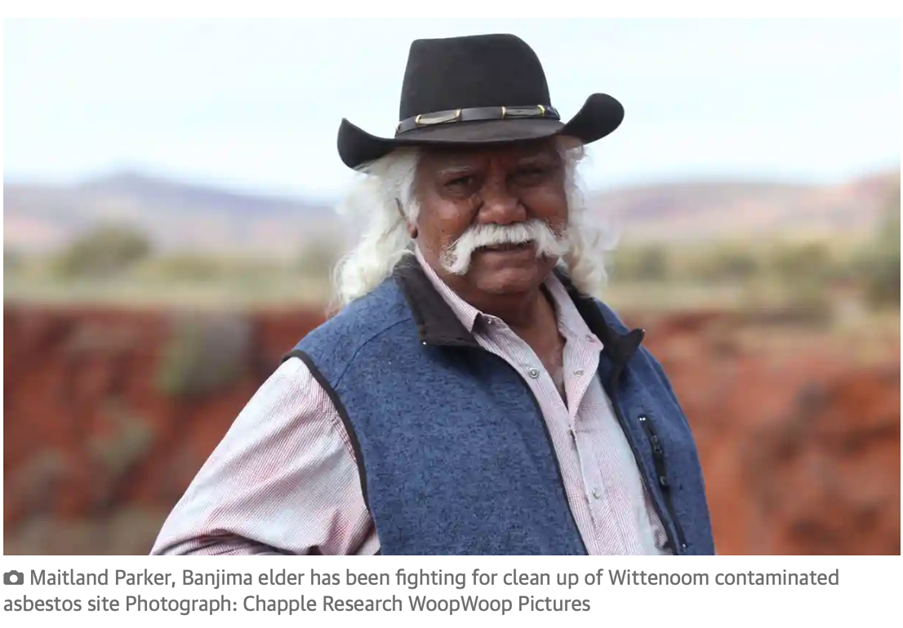
The loss of lives and songlines resulting from exposure of Indigenous peoples from asbestos exposure in Wittenoom in Western Australia, and from the radioactive contamination following nuclear weapons testing South Australia, are all open wounds. “Alignment of regulations with the UN Declaration on the Rights of Indigenous Peoples is a critical step in the path towards healing open wounds of past environmental injustices,” Orellana said.
Mr Maitland Parker passed away before the presentation of the Special Rapporteur’s report to the Human Rights Council, planned for Tuesday 17 September. This Talk paid tribute to his struggle for the Rights of the Banjima people and discussed how to restore all human rights when facing such a toxic legacy.
Environment @ HRC57
The 57th regular session of the Human Rights Council (HRC57) is taking place in Geneva and online from 9 September to 11 October 2024. With the environment high on the agenda, consult regular updates on key environmental issues at HRC57, side events, and further resources available on our dedicated HRC57 and the environment update.

Geneva Toxic-Free Talks
The Special Rapporteur on toxics and human rights reports every fall to the Council and to the UN General Assembly on issues related to his mandate. The Geneva Toxic Free Talks aim to harness the opportunity of this moment of the year to reflect on the challenges posed by the production, use, and dissemination of toxics and on how Geneva contributes to bringing together the actors working in reversing the toxic tide.
On the sidelines of HRC57, the 2024 edition of the Toxic Free Talks will take place on 19 September 2024, with conferences and discussions, highlighting the work of the Special Rapporteur and of organizations in the struggle for the right to live in a toxic-free environment.

Speakers
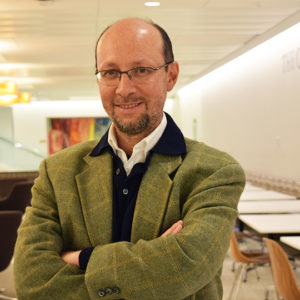
Marcos ORELLANA
UN Special Rapporteur on toxics and human rights

Yaara Bou MELHEM
Director/Producer, Illuminate Films
Representatives of the Banjima People
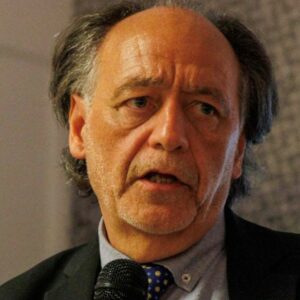
Yves LADOR
Representative of Earthjustice to UN Geneva | Moderator
Highlights
Summary
Yves LADOR | Earthjustice
- The role of the Special Rapporteur includes examining general issues, producing thematic reports, and conducting country visits to assess human rights situations and provide recommendations for improvement.
- During his recent visit to Australia, the Special Rapporteur met with communities in Western Australia, notably with Mr. Maitland Parker, an Elder of the Banjima community, who has since passed away. (Report of the visit – A/HRC/57/52/Add.2)
- In Western Australia, studies estimate up to 2,000 victims are affected by asbestos, with ongoing repercussions for the community.
- The Australian government welcomed the findings and stressed the recommendations are useful and relevant and is beginning to address them.
Marcos ORELLANA | UN Special Rapporteur on toxics and human rights
- The Australian Federal Government and various states and territories have been open to building a constructive dialogue that informed the report of the visit.
- Australia is already acting upon several recommendations, including addressing the long-standing issue of methyl bromide and progress on the Stockholm Convention on Persistent Organic Pollutants (POPs).
- The report finds a stark divide in narratives between government authorities, who emphasize their efforts to protect people and the environment, and civil society, particularly Indigenous peoples, who perceive government actions as corrupted by corporate interests.
- The divide, especially pronounced among Indigenous peoples, stems from historical experiences of denial, invisibility, and discrimination, with examples including uranium mining impacts and hazardous waste management decisions.
- The legacy of UK nuclear testing in Australia, often conducted without Indigenous peoples’ notice, has led to severe health impacts, including blindness and loss of life, leaving deep scars in memory across Commonwealth territories.
- Asbestos was identified as a critical issue due to its known health impacts, and dealing with its legacy is challenging, as the problems can worsen without action. The severity of the asbestos issue in Australia was emphasized, despite significant government efforts.
- Positive practices were mentioned, such as prioritizing asbestos removal from schools in some states, although challenges remain, particularly in developing countries where such measures may not be feasible.
- Maitland Parker’s advocacy illuminated the impacts of asbestos on Indigenous peoples and raised awareness of their broader struggles in Australia.
Yaara Bou MELHEM | Illuminate Films
- Researching archives, newsreels, and government reports revealed that the perspectives of the Banjima people regarding Wittenoom had long been ignored and invisibilized.
- The first documented perspective from the Banjima people about their country and contamination issues appeared in a 2021 news report on Indigenous television in Australia.
- The Banjima people’s voices were only acknowledged in government reports after they advocated for inclusion on a steering committee addressing the contamination issue, gaining representation in recent years.
- The significant representation of Banjima individuals in the discussion was underscored, as their voices had historically been marginalized.
- Having the SR on toxics and Waste Marcos Orellana interviewing Maitland Parker was a pivotal moment, as few ever had consulted the Banjima about one of the Southern Hemisphere’s most contaminated sites.
Testimonies from Coreen, Renira and Carel Parker (Daughters of late Maitland Parker)
- The documentary evoked strong emotions and highlighted their father’s unwavering focus on the cleanup of Wittenoom.
- Maitland Parker became ill in 2016 due to asbestos exposure from living on Country, particularly from the tailings still present in Wittenoom.
- Cleanup of Wittenoom is crucial for the healing of the land and future generations’ ability to return.
- The dangers posed by Wittenoom were underscored, especially for those connected to the land, known as Country people.
- The Banjima people suffered the loss of various family members due to asbestos-related illnesses and the health impacts continue to be a source of concern.
- Cleaning up is urgent for everyone’s safety.
Yves LADOR
- The prolonged duration of the issues faced and the transformation of the area into a “sacrifice zone,” rendered it uninhabitable.
- The dramatic loss of land bears an impact on both the physical territory and the sovereignty of the affected communities.
- Maitland Parker’s struggle was instrumental in bringing visibility and understanding to the issues surrounding Wittenoom, facilitating discussions from Geneva with participants in Australia and the Special Rapporteur.
- Discussions with Australian authorities regarding the situation will continue as advocacy efforts from Geneva.
Banjima Leaders – Timmy Parker, Senior Banjima Elde, lives in Karijini
- Timmy Parker recalled the formation of a committee in the early 2000s to address issues related to Wittenoom, noting numerous attempts to engage in discussions prior to the loss of community members.
- He mentioned the passing of his mother, emphasizing the deep connection of the Banjima people to their Country over many years.
- The discussion extended beyond Wittenoom, highlighting concerns about contamination across various places in the region.
- Timmy Parker advocated for the identification of contaminated areas in collaboration with traditional landowners, allowing visitors to understand the significance of these places.
- He emphasized the difficulty of discussing Country when one is not physically present on it, stressing the importance of this connection for conveying heritage and knowledge.
- The loss of family members to disease, including his mother and great uncle, underscored the urgency of the issue, as many young people who lived and worked on Country in the past have also passed away.
- Timmy Parker called for global awareness and government accountability regarding the cleanup, stressing the necessity of taking action to address the current contamination.
- He expressed concerns about losing rights to access significant areas, which are vital for sharing stories and cultural heritage with future generations.
- The importance of organizing on-the-ground initiatives to showcase the situation to international audiences was emphasized, mentioning a friend from Austria who had lived in Wittenoom and could share his experiences.
- Timmy Parker concluded by expressing gratitude for the opportunity to speak and acknowledged the need for ongoing dialogue and action.
Banjima Leaders – Johnnell Parker
- The most significant takeaway from the film was witnessing my uncle’s reflections on Country and the stories shared by elders about their experiences in Wittenoom.
- It is important to highlight the historical removal of families from their homelands into places like Wittenoom, where they had to work in tailings.
- This issue affects not only the Banjima community but also other traditional owners in the surrounding area.
- Families share a common sentiment of dispair in discovering health issues linked to Wittenoom, noting the phrase, “I got a little bit of Wittenoom in me,” which symbolizes their deep connection to their Country and family history.
- We must maintain these connections as the physical remnants may be buried, but the legacies of pain and suffering endured by families persist.
- We are concerned about the future, particularly regarding the next elders who will not be present to share vital stories about the significant environmental impacts on Banjima Country and its ongoing effects.
Hannah McGlade | UN Permanent Forum on Indigenous Issues
- We need to bring the voices of the Banjima people to the UN Permanent Forum on Indigenous Issues, which meets annually in New York every April.The theme for next year’s session will be the implementation of the UN Declaration on the Rights of Indigenous Peoples (UNDRIP).
- Article 29 of the United Nations Declaration on the Rights of Indigenous Peoples (UNDRIP) addresses the toxic effects on Indigenous lands and mandates states to develop and implement health monitoring and restoration programs for affected Indigenous peoples.
- The Australian government’s acceptance of some recommendations from the Special Rapporteur’s report, which specifically addresses the severe and ongoing situation faced by the Banjima people is a very positive development
- A Senate inquiry led by retired Senator Pat Dodson already investigated the implementation of the UN Declaration in Australia and recommends the development of a national action plan.
- Australia is not in the same situation as Canada, which has legislation requiring governmental reporting on UN Declaration implementation.
- The Banjima people previously communicated with the UN Committee on Race Discrimination concerning the WA Heritage Act, which denied the right to free, prior, informed consent and allowed for the destruction of Aboriginal cultural sites.
- A commitment was made to hold Australia accountable and ensure ongoing participation in UN mechanisms, both in-person and remotely.
- We must continue advocating and putting pressure on the issues highlighted in the film and offer to promote it through the Human Rights Commission and Indigenous media.
- The appointment of an Indigenous Ambassador and Indigenous staff within the Australian Department of Foreign Affairs and Trade to address these issues but acknowledged ongoing human rights abuses across Australia is a positive development.
Mark Gregson | Banjima Native Title Aboriginal Corporation
- Beyond significant health concerns, there is a crucial aspect of deprivation of access to their Country, which holds cultural and spiritual significance.
- The inability to visit their ancestral lands due to the risks of asbestosis prevents the Banjima people from practicing their traditional law and culture.
- This situation poses a significant risk of losing cultural knowledge and heritage, particularly the transmission of this knowledge to younger generations.
Yves Lador, Earth Justice
- No area, regardless of size, should be sacrificed, as doing so would mean sacrificing people, culture, and tradition, which is unacceptable.
- This is hopefully the beginning of a discussion, the Special Rapporteur’s report, and subsequent follow-ups will generate increased momentum for cleaning up the contaminated site.
Closing
Marcos ORELLANA | UN Special Rapporteur on toxics and human rights
- Australia has a history of exporting asbestos to other countries, thus asbestos remains a global issue despite its known health risks.
- Failures in international regulatory frameworks, specifically the Rotterdam Convention, which has not classified asbestos as a controlled substance, has prevented it from being subject to essential safety measures.
- At the latest Conference of the Parties, Australia’s proposal to amend the Convention to include asbestos was defeated by chemical lobby interests prioritizing economic gain over public health.
- Environmental law is limited as acceptable risk assessments often overlook human impacts and rights. A human rights-based approach to ensure that economic projects do not sacrifice human health and rights must be applied everywhere.
Video
Live from Palais des Nations.
Photo Gallery


Documents
Links
- Geneva Toxic Free Talks | GEN
- Human Rights, Hazardous Substances, and the Role of Geneva | GEN
- Human Rights and the Environment | GEN
- Indigenous Peoples and the Role of Geneva | GEN
Photo Credit
Banjima elder Maitland Parker stands amidst the carcinogenic mining waste in Ngambigunha Wittenoom Gorge. Photograph Illuminate Films.
References
[i] ABC Radio – AUSTRALIA WIDE, Thu 12 Aug 2021 at 10:00am. Presented by Sinéad Mangan
[ii] The Asbestos Diseases Society of Australia says data collection on the number of deaths from Wittenoom asbestos related diseases stopped in the early 2000’s.
[iii] A/HRC/57/52/Add.2, § 72
[iv] 1994 Report of the Select Committee into Wittenoom, Chairman’s Foreword (ii)
“Mining in the gorges has left contamination that can only be described as disgraceful, even by the standards of the day. It is almost unbelievable that ownership of the tailings dumps has transferred, by default, to the State Government.” (The last owner of the tailings sites simply stopped paying the rent on their leases. The leases were then forfeited, and as a result, the leases, along with the millions of tonnes (between 3 to 4 million) of asbestos tailings, were returned to the State).
[v] 2006 GHD/PB Non-technical Summary Report, Management of Asbestos Contamination in Wittenoom- commissioned by the WA Department of Industry and Resources & Department of Local Government and Regional Development p. 6
[vi] 2021 Contaminated Sites Act 2003 Basic Summary of Records Search Response ID 78799. Shows asbestos contamination spread outside of the Wittenoom Asbestos Management Area.