Event Conference
Human Rights in a Plastic Age: Challenges and Solutions | HRC57 Side Event
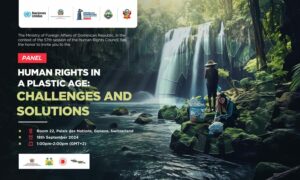
18 Sep 2024
13:00 – 14:00
Venue: Palais des Nations | Room XXII
Organization: Dominican Republic, Costa Rica, Peru, Geneva Environment Network
This side event, organized by the Dominican Republic, Costa Rica and Peru together with the Geneva Environment Network and held in the margins of the 57th session session of the Human Rights Council, will convene government representatives, human rights experts and organizations involved in the ongoing efforts to address plastic pollution in an effort to explore the key challenges regarding plastic pollution's impact on human rights. The event is co-sponsored by the Republic of Trinidad and Tobago, Sierra Leone, the Republic of Türkiye and the Bahamas.

About this Event
Plastic pollution poses a dual threat to both environmental sustainability and human rights, significantly threatening the rights to health, water, food and a clean, healthy and sustainable environment. According to the OECD, ‘plastic pollution’ encompasses “all emissions and risks resulting from plastics production, use, waste management and leakage.”
One of the most visible sources of pollution in all ecosystems is accumulation of plastic in oceans, rivers, and ecosystems. With over 400 million tons of plastic being produced annually, and 91% of it not being recycled, plastic pollution has infiltrated every corner of the planet.
This pollutes food and water sources directly impacting human health through, among others, ingestion of microplastics and exposure to toxic chemicals related to the whole life cycle of plastics, disproportionately affecting persons and groups in vulnerable situations, including workers, children and those living in poverty. At a global level, small island developing states are by far the most affected regions, given their dependence on the ocean and the plastic pollution impact on marine ecosystems and biodiversity.
Furthermore, ineffective prevention and control of plastic pollution negatively impact the rights to equality and non-discrimination; the failure to uphold procedural environmental human rights, such as access to information, participations and the ability to seek effective remedies are other human rights derived from this kind of pollution.
Addressing plastic pollution through its whole life cycle is thus integral to ensuring that everyone can enjoy their fundamental rights to health, a clean healthy and sustainable environment and an adequate standard of living.
International initiatives, such as the United Nations Environmental Assembly’s adoption of Resolution 5/14, which marked a significant step towards creating an internationally legally binding instrument on plastic pollution, including in the marine environment, as well as the recent request to the Human Rights Council’s Advisory Committee to prepare a comprehensive study on the implications of plastic pollution for the full enjoyment of human rights for the Council’s 66th Session on September 2027, will play a crucial role in raising awareness and advocating for policies that protect these essential human rights amidst the global plastic crisis. These international efforts highlight the importance of collaboration, coordination, and complementarity among relevant regional and international agreements, while respecting the unique mandates, to tackle the risks plastic pollution poses to human health, well-being and the environment.
With this in mind, the Dominican Republic would like to contribute to the debate, nourishing the exchange of information on the impact of plastic pollution on the enjoyment of human rights and identifying the implications derived from this kind of pollution.
This event, in the margins of the 57th session of the Human Rights Council, will convene government representatives, human rights experts and organizations involved in the ongoing efforts to address plastic pollution in an effort to explore the key challenges regarding plastic pollution’s impact on human rights.
Speakers
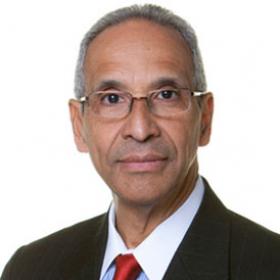
H.E. Amb. Virgilio ALCANTARA
Permanent Representative of the Dominican Republic to the UN Office and other international organizations in Geneva

H.E. Amb. Christian GUILLERMET FERNÁNDEZ
Permanent Representative of Costa Rica to the UN Office and other international organizations in Geneva

Marcos ORELLANA
UN Special Rapporteur toxics and human rights
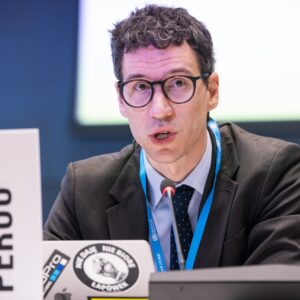
Bernardo ROCA-REY ROSS
Minister-Counsellor and Deputy Permanent Representative of Peru to the UN Office and other international organizations in Geneva

Ana Paula DE SOUZA
Human Rights Officer, UN Office of the High Commissioner for Human Rights

Jane MUNCKE
Chief Scientific Officer and Managing Director at the Food Packaging Forum

Andres DEL CASTILLO
Senior Attorney, Environmental Health Program, Center for International Environmental Law

Kritika KHANIJO
Technical Officer (Legal), Public Health Law and Policies Team, World Health Organization

Claudia TABOADA
INC Focal Point, Director for Science, Technology and Environment, Ministry of Foreign Affairs, Dominican Republic | Moderator
Environment @ HRC57
The 57th regular session of the Human Rights Council (HRC57) is taking place in Geneva and online from 9 September to 11 October 2024. With the environment high on the agenda, consult regular updates on key environmental issues at HRC57, side events, and further resources available on our dedicated HRC57 and the environment update.

Highlights
Summary
Opening
H.E. Amb. Virgilio ALCANTARA | Dominican Republic
- The invention of plastic first saved the lives of many animals, such as elephants and some species of turtles.
- Then, it made life easier for all of us. And, in the same way that there is nothing as a free lunch, plastic is now taking a heavy toll on us.
- The reality that this represents is telling us that the pervasive presence of plastic in our daily lives will have to be reevaluated. And, at the same time, find effective remedies to the harmful pollution that the waste of that material is already representing.
- As we are now in the age of consequences, the celebration of this side event on the topic of Human Rights in the Age of Plastic: Challenges and Solutions, is relevant.
- The first problem is that in our lives, we have plastic everywhere. Or as we, Dominicans, say: We even have it in the soup. Literally, it’s almost like that. Because in our beds we use plastic-filled pillows, we brush our teeth with plastic toothbrushes. I typed this intervention on a plastic keyboard. And we drink beverages and eat food in plastic containers.
- The waste from all that plastic is now generally accepted as contaminating our environment. The oceans. The air. And even our bodies. Microplastics have been found in lungs. And I have read that even in the heart of a person who was undergoing a cardiovascular surgery.
- Microplastics not only appear polluting the oceans, where they represent more than 80 percent of marine waste.
- There is already plastic pollution in the atmosphere. And in areas as remote as high altitude glaciers, the Arctic and Antarctic. The poles are affected by plastic pollution. And even the highest mountains on our planet, like Mount Everest.
- If we calculate that most of the plastic particles are fibers from the synthetic fabrics of the clothes we wear, we can already imagine how easily microplastics reach the oceans via sewage water.
- A researcher at the Scripps Institution of Oceanography at the University of California, San Diego, outlined what she thinks is the new big frontier: What are we doing about our wastewater treatment, and what we make our clothes out of, because clearly the plastic is washing straight into the ocean?
- Let’s take these two examples as samples. Humans are believed to consume at least 50,000 microplastic particles a year through food and water and a 2016 study showed that a single wash of clothes can release 700,000 microplastic fibers.
- With plastic, we have made the journey from human comfort to the impact on human rights to a healthy environment. And to represent a threat to the health of the food we eat, the water we drink, and even the air we breathe.
- Since I am not an expert on the subject, the task that I set for myself when writing these words was the easy task: Briefly outlining the reality that we already have in front of our eyes. A gigantic problem, whose solution represents a monumental challenge for humanity.
- Luckily, there are expert people on the panel, dedicated to studying the problem in greater depth than mine. Perhaps they can open up paths for us that could lead to answers to the multiple problems that plastic pollution is posing to the world.
Rounde of Experts
Marcos ORELLANA | UN Special Rapporteur toxics and human rights
- It has become clear that plastics pollution has become a global threat to the enjoyment of human rights. It is a global environmental justice issue. Countries that are not plastics producers become inundated with plastic pollution from the marine environment and beyond.
- Given the threats to human rights from the whole lifecycle of plastics, human rights principles are essential for an equitable, effective and legitimate response. A human rights-based approach building on scientific evidence and on the principles of transparency, accountability, public participation and non-discrimination is essential.
- Explicit human rights language in the treaty under negotiation is key in the preamble, objective and in regards to chemicals of concern, just transition and means of implementation. The rights to information, to development and to a clean, healthy and sustainable environment should find explicit mentions in the treaty. Principles of prevention should be reflected in provisions about capping plastic production or for reducing toxic additives in virgin plastics; the polluter pays principles; the principle of transparency – key to disclosing volumes of production and of chemicals added to plastics or released form plastics – as well as just transition should all be included for a ensuring a just treaty and to protect persons in vulnerable situations.
Negotiating dynamics:
- Delaying tactics: it is no secret that because of the climate emergency and the phase out of fossil fuels, the industry is switching to petrochemicals and the petrochemicals industry is trying very hard to avoid controls in terms of volume of production or type of added chemicals. That is where it become visible that a number of countries are not negotiating in good faith, and delaying tactics are a tool to run out the clock leaving little time at the end to take robust decision.
- Tension on unanimity or voting: had it not been for the possible for voting in key human rights covenant, we would not have the possibility of voting. The emphasis on unanimity is going to a paralysis and prevent the creation of an effective instrument.
- A framework convention to be developed by COPs would not work. The treaty has to be right from the start, it cannot be dealt with through COP resolutions. Framework conventions for MEAs have been used where the science has been inadequate and when science becomes more tangible, moving to more concrete obligations. Here the science is very clear: plastics pose a threat to the enjoyment of human rights.
- Explicit human rights language has been included in the Paris Agreement, in the Kunming-Montreal Global Biodiversity Framework and the Global Framework on Chemicals and the Plastics Treaty is an additional opportunity to further the work and to solve the global plastics problem at its root.
Bernardo ROCA-REY ROSS | Peru
- Peru has a longstanding commitment with ending plastic pollution, including in multilateral fora. Rwanda and Peru, with the support of a large group of countries, presented the historic UNEA resolution 5/14 that launched the process to develop a legally binding instrument to end plastic pollution, under the framework of the Intergovernmental Negotiating Committee (INC). Peru also had the honor of chairing the first three INC sessions and is still part of the Bureau. In this sense, Peru’s commitment to prioritizing multilateral efforts to reduce and eliminate plastic pollution is nothing new.
- It is important to understand that, in working to effectively eliminate plastic pollution and mitigate the diverse effects of plastic production and pollution on the environment and human health, States will invariable and intrinsically have to take measures that promote and protect human rights, such as the human right to a clean and sustainable environment and the highest attainable standard of health.
- In this sense, incorporating a human rights perspective into the treaty on plastics doesn´t just mean including it in the list of principles or incorporating an article in the text itself. To truly conceive of the plastics treaty in a way that is sensitive to a broad range of relevant human rights, we will need to rethink the full life cycle of plastics from a human rights perspective.
- Plastic pollution is a transboundary problem that cannot be addressed by a single country’s efforts. As such, it is important that, on a multilateral scale, the adverse effects of plastic pollution be widely informed, with the ultimate goal of creating a global consensus on the fact that pollution, biodiversity loss, and climate change are mutually reinforcing and harm not only the environment, but the ability of all persons to fully enjoy a broad range of human rights, including the right to a clean, healthy and sustainable environment, access to safe and clean drinking water and sanitation, adequate housing, and the highest attainable standard of physical and mental health.
- Pollution across the full life cycle of plastics disproportionately impacts those living in vulnerable settings, aggravating existing inequalities. The impacts on indigenous peoples, who have preserved and sustainably used ecosystems for millennia, are particularly apparent and drastic. Pollution, specifically plastic pollution, is a disproportionate threat for certain countries that rely on their oceans or ecotourism to fuel their economies. Similarly, pollution takes on dangerous dimensions in the case of frontline communities and workers at heightened risk of occupational exposure like waste pickers, whose livelihood depends on the recycling of plastic, often in unsafe and/or toxic conditions.
- Pollution, specifically plastic pollution, must be considered from a human rights lens particularly when analyzing its impact on women’s and girls’ rights. Numerous studies carried out by the UN Environment Program concluded that women and girls are particularly exposed to toxic smoke created by unsafe practices, such as burning plastic waste, and are overrepresented in vulnerable and frontline communities such as waste pickers or urban poor.
- In part, the decision to commence negotiations leading to a global, legally binding instrument to end plastic pollution is a recognition of the need to address the international governance gaps that exist across the full life cycle of plastics and associated chemicals to prevent impacts on human health and the environment, which is in essence, impacts on human rights.
- To this end, we need to understand how and to what extent plastics and their associated chemicals adversely affect human rights, and rethink how the new plastic pollution instrument can address plastics starting from a molecular level, then as a material and a product, and finally as waste. With tangible and updated research on the linkages between human rights and pollution, States can counter efforts to weaken the human rights approach to the treaty with updated and reliable data during negotiations. This is why Peru was part of the core group that drafted the decision to task the HRC Advisory Committee with studying the human rights implications of the life cycle of plastics.
Ana Paula DE SOUZA | UN Office of the High Commissioner for Human Rights
- Petrochemicals are expected to become the largest driver of global oil demand growth, by 2030 it is expected that this growth drive is going to come from plastics because the world transitioning away from fossil fuels.
- Currently, the total weight of plastic and plastic chemicals exceeds the overall mass of all land and marine animals.
- Ensuring safety of plastics is impossible as the rate of appearance in the environment exceeds government capacities to assess risks and control problems.
- Much plastic waste that is exported from the North to the South, making it a global environmental justice issue.
- Plastic pollution touches on every ecosystem in the planet.
- Externalities are larger than the economic earnings of the plastic industries. A recent study calculated that in 2015, health related costs of plastic production exceeded 150 billion USD globally. This is not including waste management related costs which are particularly high for low-income countries, which despite consuming less plastics, incur a total lifetime plastic cost that is 10 times higher than developed countries.
- We are facing huge issues in terms of industry interests and attempts to undermine science.
- Having scientists speaking out during and about the negotiations is critical because of the constant attempts to undermine what science is saying: plastics is accumulating in food chains, water, soil, air.
- Plastics is so intricated in our daily lives that it would be virtually impossible to succeed one day without being exposed to it.
- This is also impacting our rights as consumers to know what we have been exposed
- We need to rethink the whole life cycle of plastics through a human rights-based approach because every stage of the plastics lifecycle will have implications on human and planetary health.
- While we all bear the cost of plastics, there are groups of people that are disproportionately impacted. Indigenous peoples and the environmental justice movement have been very active at the INC. We hope their voices will be the ones informing the discussions rather than those that are informed by greed and want to benefit from the status quo.
Jane MUNCKE | Food Packaging Forum
- The Scientists Coalition for an Effective Plastics Treaty is adamant that our role is not to make policy prescriptive statements as policymakers are the experts on the matter.
- Speaking from the perspective of a scientist who has been working on plastics and specifically chemicals in plastics for more than 20 years, I can say we know enough. Facts are actually very clear: plastic is ubiquitous.
- The way in which fossil carbon is currently extracted from the ground to produce plastics and using plastic is very cheap and does not account for the true cost of the material and its detrimental impact on human and environmental health.
- Data gaps or scientific uncertainty should not be used as an excuse for delayed action. We need ambitious and very clear decision making when we move forward.
Key Aspects to Keep in Mind:
- Avoid regrettable substitutions and resist the urge to jump to the quick-fix solutions to solve a wicked problem.
- Despite waste being a huge aspect of the plastics problem, overfocus on solving waste by investing in technologies to improve waste management may create rebound effects and lead to an expensive technological lock-in.
- We need to have a clear understanding all aspects of the plastics lifecycle and their exposure effects on people’s enjoyment of human rights.
- Exposure during the use of plastics through consumption of food and beverages that are processed with plastic equipment is particularly dangerous as plastic can leach chemicals into those. A recent study has shown that there are at least 1347 plastic chemicals known to be associated with plastic food packaging. These are carcinogenic mutogenic or toxic, meaning that the entire human population is subjected to food chemicals on a daily basis consumption of packaged stuff.
- Plastics violates many of the human rights mentioned in the 1948 Universal Declaration of Human Rights, including the right to family as chemicals affect the endocrine system and fertility and fetus health.
Kritika KHANIJO | World Health Organization
- When the INC process started, health was referenced in the resolution but was not really being talked about.
- In the past months, progress has been made and the revised treaty mentions health and WHO participation has increased as the scope of the treaty intersects with the work of WHO programs.
- My personal involvement in the negotiations is related to my work on tobacco. A WHO campaign uncovered that cigarette filters are one of the most littering products leaching into the environment and spreading heavy metals and impacting the right to livelihood of fishing communities.
- Plastics is in extremely important material for many uses of the healthcare system such as syringes, IV bags, personal protective equipment, but it is oftentimes the overuse of this material that has led to a lot of plastic waste.
- Healthcare generates substantial waste with 85%, which despite being non-hazardous still requires proper management. The healthcare sector must consider its contribution to plastic waste and balance it out with ways to reduce its footprint.
- In 2023, Peru and other member states pushed a World Health Assembly resolution on the impact of chemical waste (WHA76.17) and we have been working to fill the existing scientific gaps.
- We do not need to wait for evidence to take action on this treaty, examples from other treaties like the Cartagena Protocol and the very established principle of environment law being the precautionary principle.
- A lot must be done. We want to see the protection of human health as a core objective of this treaty.
Andres DEL CASTILLO | Center for International Environmental Law
- This is a very timely event because the last round of negotiation of the plastics treaty is approaching and these reflections will be very important to inform negotiators and the human rights community.
- Plastics are a runabout of many problems, including health, environment as well as climate.
- Climate change has risen on the Human Rights Council agenda because of the specific direct impacts and its exacerbation of human rights abuses and violations.
- The Lawrence Berkley Laboratory predicts that at current trends of plastic production, by 2050 plastic production will consume up to 31% of the remaining carbon budget.
- Information on how climate affects human rights directly is already out there and this dimension is very important and shows that already existing solutions can be adopted. Examples at the national level include a US-specific law on forced labor prevention for the Uygur communities in China which since July 2024 has included PVC among the sectors, they need to look into to ensure imported products do not use forced labor.
- Procedural rights for environmental democracy governance involve information, participation, access to remedy, and justice. In terms of participation, it is fundamental to include those stakeholders and rightsholders whose livelihood is directly affected by the changes in the plastic lifecycle to allow them to be part of the shaping of the global governance of plastics.
- The development of Extended Producers Responsibility (EPR) policies at the national level should involve waste pickers as a side effect of EPR can be the privatization of waste management, showing how without a human-rights-based approach already existing issues could be exacerbated.
Closing
Claudia TABOADA | Dominican Republic
This not just an environmental agreement, it has a multi-dimensional aspect and it touches upon so many critical issues.
H.E. Amb. Christian GUILLERMET FERNÁNDEZ | Costa Rica
- There is an interconnection of two vital and interconnected crises the plastic pollution on one side and the erosion of human rights, or in the words of United Nations High Commissioner for Human Rights Volker Türk, the erosion as of the political leadership to implement human rights.
- This conversation is a reminder of the gravity of the situation and the urgency with which we must act.
- The human right to a clean, healthy and sustainable environment is not just an abstract principle is a fundamental right, one that plastic pollution has systematically undermined impacting the most vulnerable among us.
- As we look ahead to the upcoming fifth session of the INC on Plastic Pollution, it is critical that we integrate human rights at the core of the forthcoming international legally binding instrument on plastic pollution.
- Doing so is not only a moral obligation, but also an essential tool for achieving a sustainable solution for the plastic crisis. For that, we need to push together.
- Including human rights explicitly in the outcomes of INC 5 will strengthen the international accountability mechanism and ensure that the instrument is not only environmentally sound but also socially just.
- The negotiations should only focus on the technical approach and solutions but
- also on how to empower communities and safeguard the most vulnerable populations, ensuring their voice and those of the most affected are heard in the decision-making process.
- By framing the plastic pollution problem to a human rights-based approach we can introduce a powerful framework of accountability and action. We need to implement all the agreements that were tied in Geneva and beyond and include them in the treaty.
- The integration of human rights within the INC negotiation is not a luxury, it is a necessity and it will bring clarity, purpose and urgency to our efforts ensuring that the future instrument will not only protect our environment but also our dignity and human rights.
- As we continue on this path, let us also remember that by respecting the right to a clean, healthy and sustainable environment we are safeguarding in the future for us and generations to come.
Video
Live from Palais des Nations.
Photo Gallery


