
Event Conference
Ocean Defenders and Communities at Risk | Geneva Rights and Environment Talks
17 Mar 2025
15:00 – 16:00
Venue: Palais des Nations | Room H-307-2 & Online | Webex
Organization: Special Procedures of the UN Human Rights Council, Geneva Human Rights, Biodiversity and Land Task Force, Geneva Environment Network, Earthjustice, Geneva Roadmap 40/11 for Environmental Human Rights Defenders
On the sidelines of the 58th session of the Human Rights Council, the Geneva Rights and Environment Talks harnessed the opportunity of this moment of the year to reflect on the challenges posed by the rapid decline of nature and biodiversity, and on how Geneva contributes to bringing together the actors working towards ensuring the right to a clean, healthy, and sustainable environment is upheld for all.

About this Event
The progress made in protecting ocean spaces has been largely due to the commitment of so-called “ocean defenders”. Ocean defenders are also environmental human rights defenders, and their work is critical to protecting the rights to food, water, health, culture, livelihoods and a healthy environment.
However, human rights violations against ocean defenders and coastal and marine communities are increasing with the expansion of harmful activities in marine and coastal environments, alongside inadequate preventive and protective measures from States and businesses. As highlighted in the UN Special Rapporteur on the right to a healthy environment in her report to the Human Rights Council (A/HRC/58/59), ocean defenders are reported to often suffer from harassment, intimidation, marginalization, criminalization, attacks and assassination.
Indigenous Peoples and coastal communities, particularly women and girls, children and young people are often the most vulnerable to reprisals, as they are at the forefront of advocacy efforts to safeguard their livelihoods and cultures against the extractive industrialization of the ocean.
Often, as transnational corporations operating on the ocean are not properly regulated or monitored, they can be responsible for large-scale environmental harm and human rights abuses from various business activities including shipping, overfishing, pollution and offshore oil and gas extraction.
This Geneva Rights and Environment Talk highlighted the various challenges that ocean defenders and communities most at risk face, identified what they are up against and available protections they have, and understood what they do to defend themselves. In identifying State obligations and business responsibilities to protect ocean defenders and communities, the talk explored what kind of support ocean defenders need so that they can enjoy a safe environment and keep performing their role.
The discussion was also relevant in the context of Human Rights Council resolution 40/11 – Recognizing the contribution of environmental human rights defenders to the enjoyment of human rights, environmental protection and sustainable development–adopted by the Human Rights Council by consensus on 21 March 2019.
About the Geneva Rights and Environment Talks
In the face of the three interrelated environmental crises — climate change, loss of biodiversity, and pollution — the recognition of the right to a clean, healthy, and sustainable environment by the UN Human Rights Council and the UN General Assembly is an important milestone that puts environmental issues at the forefront of the human rights agenda.
The Special Rapporteur on the human right to a healthy environment reports to the Human Rights Council during its March session on issues related to their mandate. The Geneva Rights and Environment Talks aim to harness the opportunity of this moment of the year to reflect on the challenges posed by the rapid decline of nature and biodiversity and the intertwined human rights implications. The talks are also an opportunity to discuss how Geneva contributes to bringing together the actors working towards ensuring the right to a clean, healthy, and sustainable environment is upheld for all.

Speakers
By order of intervention.

Astrid PUENTES RIAÑO
UN Special Rapporteur on the human right to a clean, healthy and sustainable environment

Ulises QUERO
Programme Manager, Business, Land & Environment, ISHR
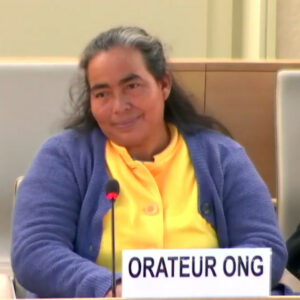
Doris RAMIREZ
Fisherfolk collective in Champerico, Guatemala
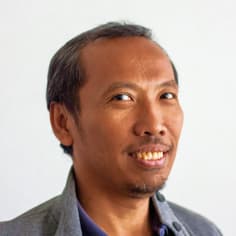
Budi TJAHJONO
International Advocacy Director, Franciscans International

Nathan BENNETT
Chair of the People and the Ocean Specialist Group, IUCN CEESP & The Ocean Defenders Project

Soo Young HWANG
Legal Officer, UN Environment Programme

Yves LADOR
Representative to the UN in Geneva, Earthjustice | Moderator
Highlights
Video
Live from Palais des Nations.
Summary
Opening
Astrid PUENTES RIAÑO UN Special Rapporteur on the human right to a clean, healthy and sustainable environment
- The concept of Ocean Defenders can sometimes trigger complex conversations, but the intention of highlighting it in the event and in the report is not to redefine the understanding of environmental human rights defenders, but to broaden it to ensure that ocean and coastal communities are recognized within it.
- Environmental human rights defenders are often primarily associated with land-based struggles, particularly forests like the Amazon, and this focus overlooks those who defend ocean and coastal environments, including Indigenous Peoples and small-scale fishers, who also play crucial roles as defenders.
- The inclusion of a chapter on Ocean Defenders aims to remind states and stakeholders that environmental defense encompasses marine spaces as well, emphasizing that coastal and ocean communities must be recognized and protected as integral parts of human rights and environmental protection efforts.
- Growing initiatives in climate action, ocean conservation, and environmental protection, while important, can sometimes increase the risks faced by coastal communities, especially with the expansion of extractive industries such as fossil fuels, oil and gas extraction, industrial fisheries, and even the establishment of marine protected areas.
- A holistic and comprehensive approach is critical to adequately address the challenges faced by Ocean Defenders, and failing to include them in the discussion would leave a significant gap in the understanding and protection of environmental human rights defenders.
- Recognizing Ocean Defenders requires an awareness of the intersectional and differentiated impacts of environmental threats, acknowledging that existing inequalities and power imbalances particularly affect women, children, indigenous peoples, people of African descent, and small-scale fisher communities.
- It is essential not only to address the vulnerabilities faced by these groups but also to value the vital contributions they make to conservation, fisheries, and local economies, shifting the perspective from viewing them solely as victims to recognizing their active and invaluable roles.
Panel Discussion
Ulises QUERO | Programme Manager, Business, Land & Environment, ISHR
- The Business and Human Rights Resource Center, collecting data on attacks against human right defenders related to business activities, recorded more than 600 attacks on defenders in 2023 only. Environmental defenders are the most targeted, and the most dangerous sectors at the moment are fossil fuels, renewable energies and agribusinesses.
- This year will be the 27th anniversary of the UN Declaration on Human Right Defenders. Many states still do not recognize the important role of human right defenders and, instead, are implementing actions targeting them.
- This number of attacks does not represent the whole number of attacks happening due to the lack of documentation in some regions to exactly know what’s the real number. Many Defenders do not identify themselves as human right defenders for many reasons, including fear: they don’t want to be associated with the term human right defender or activist because it’s like a death sentence, they know that once identified as such they are immediately being attacked. Therefore we need to be conscious that these numbers don’t represent reality.
- One of the priorities of NGOs and International NGOs is environmental Defenders working against business activities.
- The two resolutions from the Human Rights Council and from the United Nations General Assembly, both recognizing the right to a clean, healthy and sustainable environment, as well as the substantive and procedural elements of this right, make it possible to identify who is an environmental human right defender.
- There are some specific obligations that States should implement looking at these two documents:
- They should recognize environmental human rights defenders in their policies or in their legislation, by looking at legislations that include the right to a clean, healthy and sustainable environment.
- States should adopt policies that really provide the maximum available resources to their protection.
- The term of defenders should be broader. Many people are pushing for the development of a human rights law and protection of the ocean like scientists, journalists, engineers. They may not be associated as human right, environmental or ocean defenders, but they are contributing to their protection and conservation a lot, and therefore they should also be protected.
- States have obligations but businesses also have responsibilities and notably the responsibility to protect human right defenders, although it’s also very limited. Many companies and businesses have adopted policies aiming to protect defenders. They should also incorporate the protection of environmental human rights defenders in their policies, and be aware that their activities directly or indirectly impact the activities environmental defenders are doing.
- There is currently a clear international legislation that includes environmental defenders but there are also other policies aiming to also make sure that businesses are implementing policies in that direction.
- The Directive (EU) 2024/1760 of the European Parliament and of the Council on corporate sustainability due diligence and amending Directive (EU) 2019/1937 and Regulation (EU) 2023/2859 expressly recognized human right defenders and should be read to include measures protecting environmental human right defenders not only within their territory but also in other territories where companies are operating.
- When we talk about ocean Defenders, we need to look at the whole context. Many things could be applicable in this area and we have seen where the gaps are. The already existing international human rights law should help fill the gaps.
Doris RAMIREZ | Fisherfolk collective in Champerico, Guatemala
Delivered in Spanish
- Doris Ramirez is a fisherwoman from a community on the southern coast of Guatemala. 30 years ago, shrimp companies started arriving and started bringing issues to the community. There was a case of six fisher people who complained and denounced issues they had with companies, particularly the shrimps brought by the company had a crustacean with them which was eating the shrimps and fish in the community. As a result of them denouncing this, they were legally persecuted by the company. They have been sued and one of them is asking for asylum in the US and is not sure if they will get it or not.
- Beyond this, her community has been gravely affected by climate change and the destruction of the mangroves, which has led to a rise of temperature of the estuaries. The amount of fish and other marine life that they can fish safely has declined. This also threatens food security.
- A law on the use of water is about to be passed without consultation to Indigenous communities and even less to fisher communities. This law will end up affecting the smaller communities and people using water while benefiting companies. With this law, someone having a water well on their land would still have to pay for the water they use from that well. This only applies to small wells that people have in their land, affecting Indigenous and fishing communities a lot, and this law is about to pass.
Budi TJAHJONO | International Advocacy Director, Franciscans International
- The Sea Nomads, also known as Sea Gypsies, are communities in Southeast Asia and the Pacific that live in a nomadic or semi-nomadic way on or near the ocean. Their way of life is deeply tied to the sea, with many living entirely on boats that serve as both home and workplace, often for multiple generations. Others adopt a semi-nomadic lifestyle, alternating between coastal settlements and the open sea depending on the season, while some have become sedentary yet retain a strong cultural and economic attachment to the marine environment.
- These communities depend entirely on the sea for their livelihoods, using it as a source of food, culture, and ceremony. Their activities include sustainable fishing and marine resource gathering, practices rooted in their deep respect for the ocean as their home and livelihood. Sustainability is central to their practices, as the sea is considered their “garden.” Despite their reliance on marine resources, they frequently interact with land-based communities through economic exchange.
- A major challenge faced by Sea Nomads stems from their mobility and lack of recognition by state systems. Their nomadic movement across maritime borders—between Indonesia, Malaysia, the Philippines, Thailand, Myanmar, Australia, and other Pacific nations—means they often lack legal identity or citizenship in any country. As a result, they are frequently undocumented and denied access to basic rights and services such as education, healthcare, and legal protection.
- This legal invisibility leaves them vulnerable to criminalization and stereotyping. Due to their non-understanding of imposed territorial or conservation boundaries, they may enter protected areas unaware of their legal status and face arrest, fines, or imprisonment. They are often labeled as illegal migrants or even pirates, despite their historical and cultural patterns of movement across the region predating modern state borders.
- The Sea Nomads are known by various names across the region, including Bajo, Bajau, Sama, Orang Laut, Moken, Moklen, Urak Lawoi, and Chao Lay, reflecting their widespread presence and cultural diversity. The largest of these groups is the Bajau community, particularly prevalent in Indonesia but also found in neighboring countries. Their territories span a vast maritime region they consider home, rather than being defined by national borders.
- The environmental pressures on these communities are increasing due to both offshore and onshore developments, as well as the expansion of marine protected areas. These changes force them to move farther away from traditional fishing zones, making survival increasingly difficult and further compounding their social marginalization.
- Regional associations and academic circles have begun advocating for the rights and recognition of the Sea Nomads. Current efforts involve exploring international legal frameworks such as the United Nations Declaration on the Rights of Peasants and Other People Working in Rural Areas (UNDROP), which includes references to nomadic and semi-nomadic peoples. Ongoing academic work seeks to interpret these terms in the context of Sea Nomads to better support their recognition.
- Discussions and collaborations at both academic and policy levels are ongoing within the region. These include the production of scholarly articles, the formation of dedicated groups such as the Sea Nomads contact group, and engagement with international initiatives like the upcoming ocean conference. These steps are seen as crucial in pushing for recognition, legal status, and protection of the Sea Nomads’ rights within international forums.
Nathan BENNETT | Chair of the People and the Ocean Specialist Group, IUCN CEESP & The Ocean Defenders Project
- The Ocean Defenders Project was launched in response to the widespread neglect of defenders of marine and coastal environments in definitions, policies, research, and advocacy concerning environmental defenders, with the aim to increase knowledge of, raise the profile of, and bring greater support to ocean defenders by working with over 40 collaborators to amplify their visibility and resistance efforts.
- Ocean defenders are defined as individuals, groups, or communities who mobilise, advocate, or take action to protect marine environments, coastal territories, and associated human rights against existential threats, differing from local stewards by being thrust reactively into defense due to exclusionary or poorly implemented development or management initiatives.
- Human rights violations linked to ocean economy development are increasing as the ocean economy rapidly expands through intensified activities, geographical expansion, and new industries, resulting in many coastal communities experiencing serious environmental and social impacts, including violations of rights to a healthy ocean, food, livelihoods, health, security, and the collective tenure and access rights of Indigenous peoples and small-scale fishers, often without proper consultation or consent.
- Across the globe, ocean defenders are actively mobilising to protect marine environments and human rights against threats posed by ocean economy projects, using diverse strategies such as legal interventions, organizational development, public awareness campaigns, protests, research and documentation, joining social movements, and engaging in disruptive activities, with an increasing number of case studies illustrating these efforts.
- Despite operating in diverse governance contexts, ocean defenders face widespread repression, including non-lethal attacks such as political marginalisation, threats, harassment, silencing, arrests, imprisonment, violence, economic marginalisation, lawsuits, property damage, and the creation of social division, along with a concerning number of assassinations where perpetrators often act with impunity.
- Research on ocean defenders remains at an early stage, and there is a critical need to deepen understanding of the drivers behind threatening ocean development activities, the impact of ocean governance frameworks on human rights and defenders, the degree of defender recognition within governance systems, and how national contexts ensure safety and compliance with human rights obligations by governments and businesses.
- Significant gaps persist in data collection regarding attacks on ocean defenders, as existing efforts have mostly focused on terrestrial and freshwater defenders, leaving lethal and non-lethal attacks against those protecting marine environments under-documented and highlighting an urgent need for broader and more systematic data gathering.
- Governments and private sector actors are failing to meet their international obligations and responsibilities to protect human rights, including the rights of ocean defenders, as states must ensure a clean, healthy, and sustainable environment while maintaining civic space for advocacy, and there is a pressing need for a human rights-based approach to guide ocean development, accountability for violators, and protection for those defending these rights.
- Ocean defenders urgently require more direct support and safe spaces to sustain their efforts, with key needs identified as solidarity networks, capacity development, legal aid, advocacy facilitation, financial support, visibility initiatives, and spaces for research and peer learning without the threat of harassment or violence.
- Allied organisations such as grassroots networks, funders, legal non-profits, human rights institutions, NGOs, academic researchers, and media outlets play a crucial role in supporting and safeguarding ocean defenders, and the involvement of these allies often represents a significant turning point in the ability of defenders to continue their work safely and effectively.
- Efforts to support ocean defenders must be context-specific and must center the voices and needs of the defenders themselves, requiring actions that are led by defenders’ decisions on timing, manner, and form of support, careful collaborations, trust-building, risk assessments, and a commitment to minimizing additional risks for defenders, their families, and communities.
- Ocean defenders are on the frontlines of protecting marine environments but are being marginalised, criminalised, threatened, and assassinated, and there is an urgent collective responsibility to ensure they are encouraged, supported, kept safe, and celebrated for their vital work.
Soo Young HWANG | Legal Officer, UN Environment Programme
- The upcoming Environmental Human Rights Defenders Forum in Asia-Pacific, organized by UNEP and OHCHR, will focus on biodiversity, and issues discussed at the current event—particularly those related to ocean defenders and the earlier presentation on relevant local concerns—will be brought to the attention of colleagues to be reflected in that forum’s agenda.
- A new set of core human rights principles for private conservation organizations and funders has been developed in collaboration with experts, Indigenous Peoples, local communities, and environmental defenders. These principles respond to an increasing number of human rights abuses emerging from private conservation efforts, which often go overlooked in favor of focusing solely on violations by states.
- One of the root causes of ongoing abuses in private conservation is the lack of standardized understanding and guidance on how to prevent and address human rights violations. The newly launched core principles aim to fill this gap by promoting a human rights-based approach to conservation and providing a practical tool for both organizations and funders to adopt better practices.
- The principles were launched in December, with support from over 70 organizations and individuals, including Indigenous groups and conservation stakeholders. The framework is grounded in existing human rights law but adapted specifically to the conservation context, where such a standard did not previously exist.
- The 10 core principles cover all stages of conservation activities, from the design and designation of protected areas to management, response to violations, effective remedies, due diligence processes, and regular public reporting on human rights performance. Key foundational principles include respect for human rights in general, for Indigenous Peoples, and for all affected communities and individuals.
- These principles are designed not only to address past abuses but also to prevent future harm and increase protections for environmental defenders. They emphasize accountability, transparency, and continuous improvement through monitoring and reporting mechanisms.
- A major goal of this initiative is to catalyze cultural and structural change within the conservation sector. The development process revealed deep-rooted colonial dynamics and systemic disempowerment of Indigenous Peoples, necessitating a shift away from top-down management towards inclusive, community-driven governance models.
- These principles also aim to improve environmental governance and ensure that conservation efforts do not result in human rights abuses. By embedding respect for rights into the core of conservation work, the goal is to transform the way protected areas are conceived, designated, and managed.
- The initiative is directly aligned with the Kunming-Montreal Global Biodiversity Framework, particularly Target 22 on environmental human rights defenders and the broader goal to protect 30% of land and ocean areas by 2030. Meeting this target without repeating harmful, exclusionary conservation practices requires fundamentally different approaches, making these principles a timely and essential resource for those on the front lines, including ocean defenders.
Photo Gallery


Links
Photo Credit
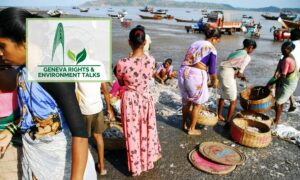
Fisherwomen of Vasai. Photo by lecercle.