Event Virtual
Road to Busan | Biodiversity in the Future Global Plastics Treaty
16 Oct 2024
13:00 – 14:30
Venue: Online | Webex
Organization: International Union for Conservation of Nature, IUCN World Commission on Environmental Law, Zoological Society of London, Fauna & Flora, Geneva Environment Network
This event, is co-organized by the International Union for Conservation of Nature (IUCN), the IUCN World Commission on Environmental Law (IUCN WCEL), Fauna & Flora, the Zoological Society of London (ZSL) and the Geneva Environment Network within the framework of the Geneva Beat Plastic Pollution Dialogues Road to Busan event series ahead of the fifth session of the Intergovernmental Negotiating Committee to develop an international legally binding instrument on plastic pollution, including in the marine environment (INC-5), scheduled to take place from 25 November to 1 December 2024 in Busan, Republic of Korea.

About this Event
Throughout the Intergovernmental Negotiating Committee (INC) process, States have emphasised the connections between criteria for the regulation of plastic products, chemicals of concern and product design and biodiversity protection, including the need for financing mechanisms that support biodiversity and address legacy plastic pollution to prevent further harm to biodiversity or communities most at risk.
The future Plastics Treaty regulates plastic pollution and related topics which are also touched upon by several other Multilateral Environmental Agreements (MEAs). Thus, language supporting coherence and authorising international cooperation between the Treaty’s governance system and those of other treaty regimes, especially the Convention on Biological Diversity (CBD) and the Kunming-Montreal Global Biodiversity Framework (GBF) or Biodiversity Plan, will be critical for biodiversity, people and plastic pollution synergies. In this regard, options for entry points within the future Plastics Treaty, separately or in combination, would be beneficial for future Conference of the Parties (COPs) decisions:
- Maintain specific language in articles to draw out biodiversity protection and community inclusion, and mainstream the term “Biodiversity” and/or “Ecosystems” across a number of relevant articles in the future Plastics Treat;
- Add specific biodiversity language in the “International Cooperation” Article;
- Insert a dedicated, new article on “Biodiversity Aspects” that promotes implementation and compliance in a way that advances nature positive approaches under international and national laws
The inclusion of this type of language would directly align with both the terms of the CBD and the associated GBF in a way that is mutually supportive and ensures that international law relating to biodiversity can be flexible and adaptable to current and future challenges. This would ensure the future Treaty can be implemented in a coherent manner.
At this event, IUCN, IUCN WCEL, Fauna & Flora, and ZSL are joined by speakers from other organizations and national governments to discuss options to ensure that biodiversity and nature-positive circular economy approaches are included in the future Plastics Treaty. The discussion will include ocean and climate aspects as well as how an effective disaster risk reduction rely on healthy biodiversity and upon ending plastic pollution.
Geneva Beat Plastic Pollution Dialogues

The world is facing a plastic crisis, the status quo is not an option. Plastic pollution is a serious issue of global concern which requires an urgent and international response involving all relevant actors at different levels. Many initiatives, projects and governance responses and options have been developed to tackle this major environmental problem, but we are still unable to cope with the amount of plastic we generate. In addition, there is a lack of coordination which can better lead to a more effective and efficient response.
Various actors in Geneva are engaged in rethinking the way we manufacture, use, trade and manage plastics. The Geneva Beat Plastic Pollution Dialogues aim at outreaching and creating synergies among these actors, highlighting efforts made by intergovernmental organizations, governments, businesses, the scientific community, civil society and individuals in the hope of informing and creating synergies and coordinated actions. The dialogues highlight what the different stakeholders in Geneva and beyond have achieved at all levels, and present the latest research and governance options.
Following the landmark resolution adopted at UNEA-5 to end plastic pollution and building on the outcomes of the first two series, the third series of dialogues will encourage increased engagement of the Geneva community with future negotiations on the matter.
Speakers
By order of intervention.
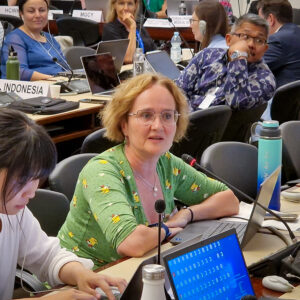
Karine SIEGWART
Senior Policy Advisor, IUCN

Alexandra HARRINGTON
Chair, Plastic Pollution Task Force, IUCN WCEL

Falco MARTIN
Programme Officer, Marine Plastics, Fauna & Flora

Tobias CAPEL
Marine Plastics Project Manager, St. Helena National Trust (Video message)

Anna VON REBAY
Founder, Ocean Vision Legal & Advisor, Gallifrey Foundation

Martina MÜLLER
Programme Manager, United Nations Office for Disaster Risk Reduction | UNDRR's Focal Point for the INC Process
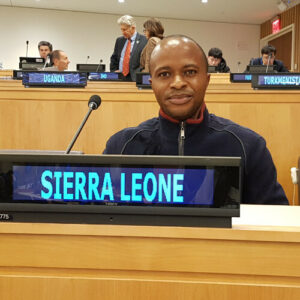
Paul LAMIN
Environmental Protection Agency, Sierra Leone | INC Focal Point

Matthew GOLLOCK
Programme Lead, Aquatic Species and Policy Conservation Programmes, ZSL
Highlights
Summary
Welcome and Introduction
Karine SIEGWART | Senior Policy Advisor, IUCN
- As major conferences approach—the UN Biodiversity COP, the UN Climate Change COP, and the Desertification COP— it is important to consider how the future Global Plastics Treaty could align with ongoing discussions on biodiversity, climate change, and desertification, as well as how the treaty can address the triple planetary crisis.
- IUCN is particularly interested in how the treaty could align with the Convention on Biological Diversity (CBD) and, more specifically, the Global Biodiversity Framework.
- Flora and Fauna International, the Zoological Society of London, and IUCN have developed an information brief analyzing how biodiversity could be more explicitly addressed in the future plastics treaty. This alignment is crucial for the treaty to fit within the broader framework of multilateral environmental agreements.
- It’s essential to consider biodiversity and plastic pollution together, not in isolation, as biodiversity impacts climate change, oceans, disaster risk reduction, and other global challenges.
Options to Ensure that Biodiversity and Nature-based Circular Economy Approaches are Included in the Future Plastics Treaty
Alexandra Harrington | Chair, Plastic Pollution Task Force, IUCN WCEL
- This event builds on work done ahead INC-4 as presented in a previous Geneva Beat Plastic Pollution Dialogue.
- The Compilation Document (UNEP/PP/INC.5/4) provided by the INC Secretariat to guide negotiations at INC-5 contains multiple proposed entry points for biodiversity in the Plastics Treaty which need be included in the final text.
Options for Including Biodiversity in the Future Plastics Treaty
1. Option One focuses on the compilation document, a large, heavily bracketed document with various options. Within these options, there are several references to biodiversity, ecosystems, and the protection of natural resources. These resources are essential for meeting global commitments like those under the CBD and UNFCCC, and they are critical in addressing plastic pollution.
- The recommendation is to include these references to biodiversity in the final version of the Plastics Treaty text. These references are part of the outcome of INC-4 in Ottawa and have been requested by the INC process. The goal is for these references to form the foundation for the negotiations during INC-5 in Busan.
- Maintaining these references to biodiversity in the ILBI is crucial for several reasons. Legally, it ensures that addressing biodiversity aligns with other multilateral environmental agreements (MEAs), creating convergence between different treaty regimes. This convergence will allow obligations under various treaties to reinforce each other, rather than conflict, and work together to protect and preserve biodiversity while preventing its loss.
- Including biodiversity in the ILBI would give the future Conference of the Parties (COP) the authority to address biodiversity throughout the treaty’s implementation. This approach has already been seen in other treaty regimes, such as the Montreal Global Biodiversity Framework, the Minamata Convention, and the UNFCCC, which have all empowered their COPs to address related issues.
2. Option Two proposes incorporating biodiversity language directly into the treaty text as it is currently proposed in the compilation document. It suggests expanding on sections four or five of the document, which focus on International Cooperation, to include explicit references to the Convention on Biological Diversity and the Global Biodiversity Framework.
- This approach would allow the COP to develop a broader and deeper understanding of the intersection between plastic pollution and biodiversity. It would also give the COP the authority to authorize work on biodiversity within the ILBI’s implementation and coordinate with other treaty regimes, which will be essential in the coming years.
- Additionally, this option proposes coordination with international organizations, enabling a more integrated and cooperative approach in addressing both plastic pollution and biodiversity loss.
3. Option Three: This is a more aspirational approach that builds upon Options One and Two. It proposes a dedicated biodiversity article in the treaty, potentially in Part Four, Section 8. This article would ensure legal and scientific connections between plastic pollution, the circular economy, and innovation across all stages of the plastics life cycle, while explicitly accounting for the protection of biodiversity.
- The article would be grounded in existing international law obligations, which state parties to the ILBI are likely already committed to. It would also require that these protections be reflected in national laws and address various aspects such as risk assessment, reporting, and the facilitation of exchanges with intergovernmental organizations, stakeholders, and other treaty regimes.
- The three options aim to ensure that biodiversity remains a strong and integral part of the ILBI. They also support the convergence of treaty regimes, reinforcing the importance of international laws related to biodiversity.
- These options would facilitate future COP decisions, create space within the treaty text for ongoing engagement, and enable the Secretariat and other MEAs to work more closely with actors in the biodiversity sphere.
- For these reasons, it is strongly recommended that at the very least, the biodiversity elements as proposed in Option One, which are already included in the compilation document, be maintained. It is hoped that these elements can be expanded upon with the ideas from Options Two and Three.
Why Biodiversity Matters – From a Scientific and Communities Perspective
Falco MARTIN | Programme Officer, Marine Plastics, Fauna & Flora
- Plastic pollution is a pervasive, transboundary issue affecting all environments, both land and sea. The exponential increase in plastic production, the addition of toxic chemicals, and multiple pathways for plastics to enter the environment have led to pollution that exceeds safe planetary boundaries.
- Overproduction, poor design, and unsustainable linear economies for plastics, along with limited end-of-life management, have contributed to this crisis, threatening the right to a clean, healthy, and sustainable environment. The United Nations has recognized that humanity is facing a triple planetary crisis, which includes climate change, pollution, and biodiversity loss, with plastic pollution being a major driver.
- Plastic pollution impacts air, land, and water across its entire life cycle, from raw material extraction to disposal. The process releases greenhouse gases, chemicals, and other pollutants. Plastics, which are made from fossil fuels, are highly energy-intensive, and scientific literature has shown that plastics accounted for 4.5% of global greenhouse gas emissions in 2015. This share is expected to grow.
- Plastics are closely linked to climate change and also harm biodiversity. Exposure to plastic pollution has negatively impacted over 2,000 species and ecosystems. Plastics smother seagrass beds, damage coral reefs, and harm ecosystems vital for biodiversity. The ingestion of plastic by organisms can lead to reduced energy stores, growth and fertility reduction, reproductive impairment, weakened immune systems, and species death.
- Entanglement and suffocation of marine species by plastic debris, including single-use items and fishing gear, is a major threat to biodiversity. Plastics also have toxic chemical impacts. They leach harmful substances into the environment and absorb other toxic chemicals. These chemicals can be transferred to organisms, contaminating the food web and affecting humans.
- Scientific research has shown that plastic pollution threatens species and ecosystems through both physical and chemical impacts. Biodiversity protection requires the Plastics Treaty to address these impacts through a full life-cycle approach, including alternatives and substitutes, while reducing primary plastic production instead of focusing solely on waste management.
- Fauna & Flora believes it is essential for the treaty to include provisions that protect biodiversity, ensuring that implementation does not have negative trade-offs. Biodiversity loss is accelerating, which emphasizes the need for language in the treaty that bridges gaps and creates synergies with other treaties related to plastic pollution and its impacts on biodiversity and communities.
- International law must be flexible to address current and future challenges. Legal and regulatory measures to combat plastic pollution must consider biodiversity loss, plastic pollution, and climate change together.
- The health, resilience, and productivity of coastal and marine habitats, such as coral reefs, seagrass beds, and mangrove forests, are significantly reduced by plastic pollution. These ecosystems are vital for human health, livelihoods, and economies, and their degradation exacerbates the triple planetary crisis. Marginalized communities dependent on these ecosystems are disproportionately impacted by plastic pollution.
- Communities most reliant on healthy ecosystems, including Indigenous peoples and local communities, suffer the most from plastic pollution. Plastic pollution impacts key economic sectors, such as fishing, with decreasing fish stocks and contamination of organisms that local communities depend on for food security and health.
- The tourism sector is also negatively impacted, with beaches covered in plastic or microplastics, deterring tourists. The treaty presents a unique opportunity to address this issue.
- Communities worldwide are calling for upstream solutions to eliminate the drivers of plastic pollution, following waste hierarchy principles. Current pollution levels jeopardize the right of communities to a clean, healthy, and sustainable environment.
- Aligning the Plastics Treaty with existing multilateral environmental agreements will promote convergence and coherence in international legal frameworks, improving governance to address biodiversity loss, climate change, pollution, and poverty. The treaty must enhance the safeguarding, protection, and restoration of biodiversity impacted by plastic pollution.
- The treaty must ensure equitable development and implementation, considering diverse local contexts and challenges. Collaboration between developed and developing countries, particularly with communities disproportionately affected by plastic pollution, is essential to ensure that commitments address local impacts. Core obligations and implementation mechanisms must be adapted to different socioeconomic contexts.
Working to Address Plastic Pollution on St. Helena
Tobias CAPEL | Marine Plastics Project Manager, St. Helena National Trust
- St. Helena is an island in the South Atlantic Ocean, located 1,200 miles from Africa and 2,500 miles from Brazil. It is a UK Overseas Territory with a population of around 4,000. The island is renowned for its rich biodiversity, including many endemic species.
- In 2016, St. Helena’s entire exclusive economic zone was designated a Marine Protected Area under the Blue Belt Program, and 14 national conservation areas were created to protect biodiversity.
- St. Helena faces challenges, including its geographical remoteness, dependence on imports, a small economy, and limited resources. The island relies on UK financial aid.
- In terms of plastic pollution, St. Helena is downstream of systemic market solutions. Its small economy limits its influence on upstream actors. Ethical consumerism is costly due to high import and living costs, along with low incomes.
- Managing plastic waste is another challenge, as the small population limits the economies of scale for recycling. Some plastic is segregated and used as landfill bunting to reduce landfill space, but exporting waste is costly and recycled plastic has low value.
- St. Helena is also affected by international plastic pollution carried by ocean currents. The Benguela Current brings significant amounts of plastic debris to its shores, including fragments, nurdles, single-use bottles, and other waste.
- The South Atlantic Plastics Project addresses these issues with three key objectives:
- Single-use plastic system mapping: Improve the island’s relationship with single-use plastics by reducing them and improving waste management. Engagement with stakeholders helps identify opportunities for change.
- Investigating environmental impacts: Study the local and international impacts of plastic pollution on the environment.
- Plastic pollution network: Create a network for UK Overseas Territories and Crown Dependencies to share learnings and best practices on plastic pollution.
Key Achievements
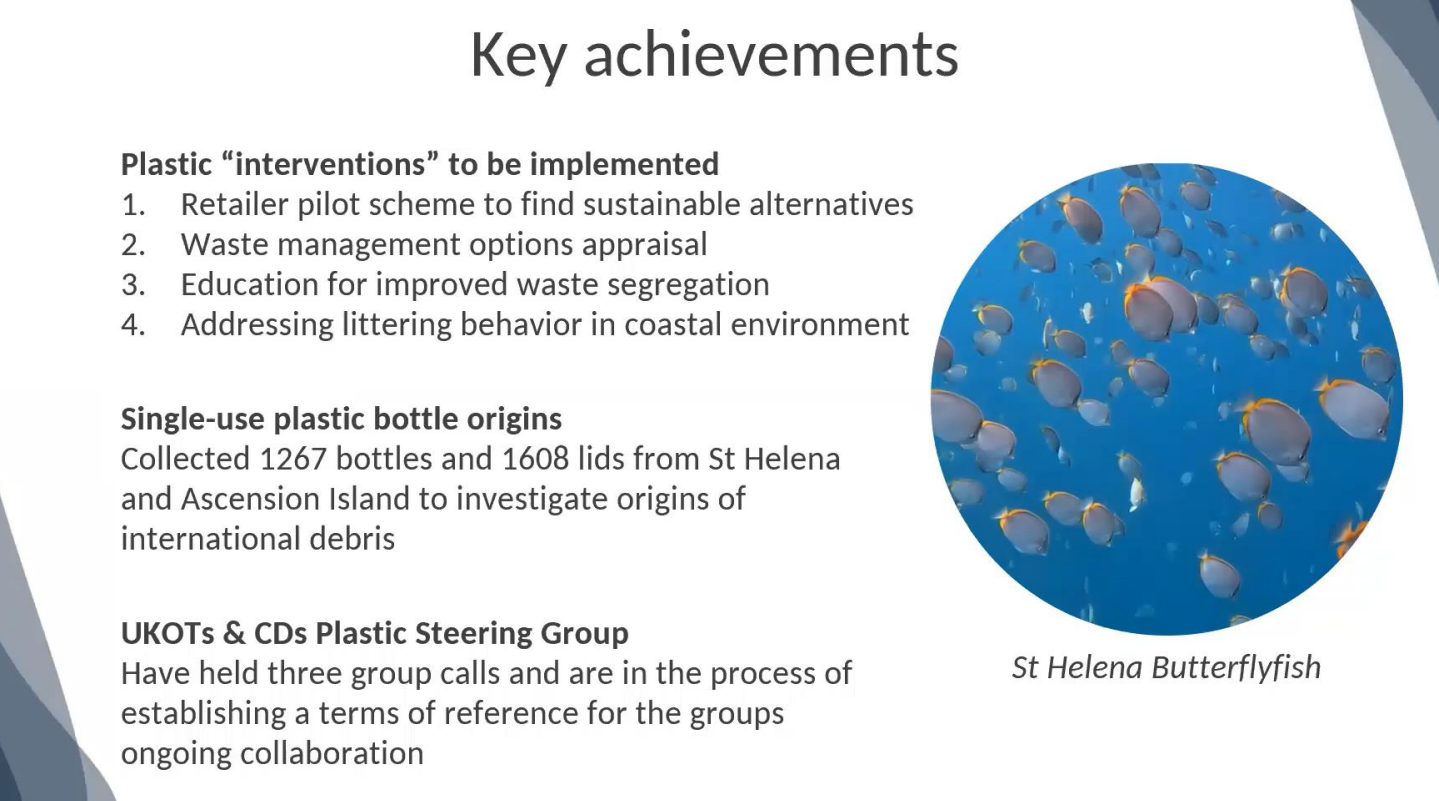
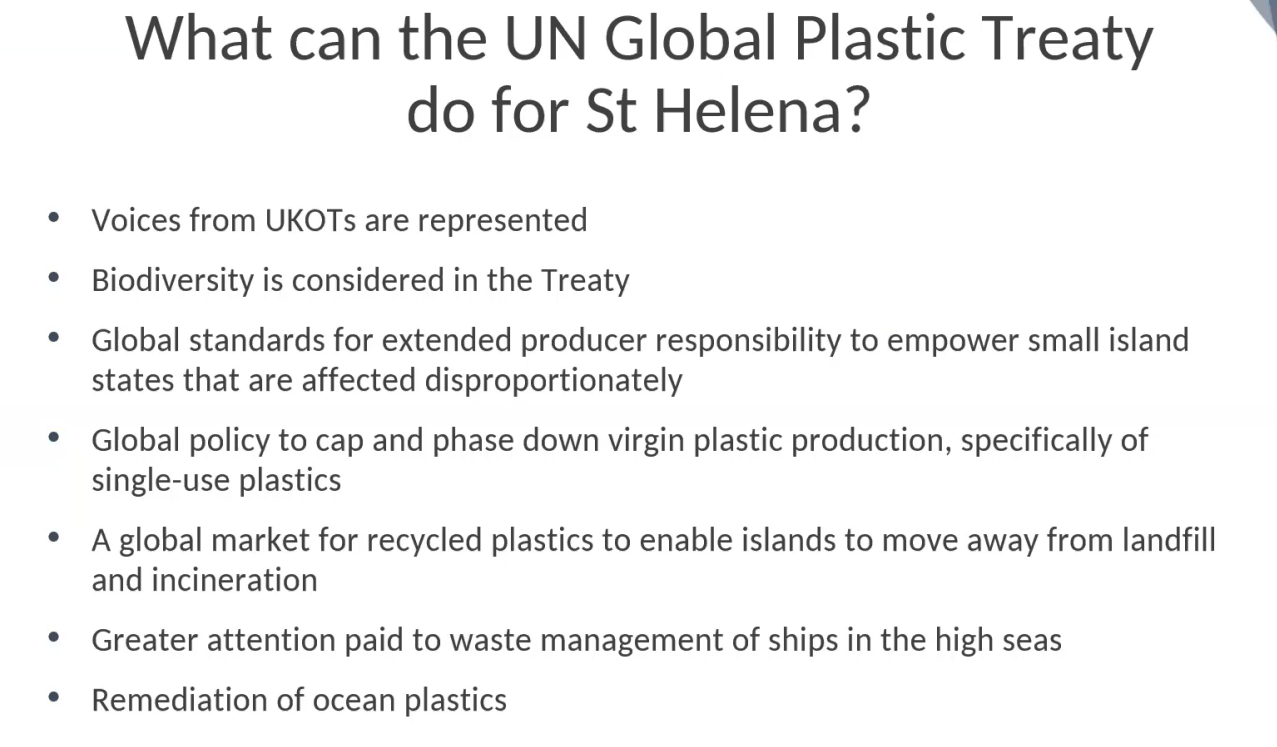
- St. Helena’s participation in the UN Global Plastics Treaty is crucial, as small island states face unique challenges and are home to globally important biodiversity that is impacted by plastic pollution.
- St. Helena supports global standards for extended producer responsibility to empower small island states and a reduction in virgin plastic production, particularly single-use plastics. A global market for recycled plastics would enable a shift toward circular economy practices instead of relying on landfill and incineration.
- Waste management on ships in the high seas is a significant source of plastic pollution that needs more attention. The island also advocates for remediation of ocean plastics, especially for small island states that face financial challenges and severe impacts from international debris.
Obligations of States to Prevent, Reduce and Control Plastic Pollution in the Ocean
Anna VON REBAY | Founder, Ocean Vision Legal & Advisor, Gallifrey Foundation
- This year, the International Tribunal for the Law of the Sea (ITLOS) delivered a landmark advisory opinion, requested by the Commission of Small Island States. This COSIS Advisory Opinion addresses the obligations of states under the law of the sea regarding climate change, specifically concerning marine pollution.
- As plastic is a pollution of the marine environment (Art. 1 (1) (4) UNCLOS), findings of COSIS advisory opinion apply and therefore “States shall take, individually or jointly as appropriate, all measures consistent with this Convention that are necessary to prevent, reduce and control marine environment pollution from any source”.
- One key regulation referenced by ITLOS in the advisory opinion is Article 194, paragraph 1 of the United Nations Convention on the Law of the Sea (UNCLOS), which requires states to take measures, individually or jointly, to prevent, reduce, and control marine pollution from any source.
- States are not only required to control but also to prevent and reduce pollution. This means states are legally obligated to reduce plastic production.
- Article 194, paragraph 3 emphasizes the need for measures that minimize the release of toxic, harmful, or obnoxious substances, particularly persistent ones. These mitigation measures are critical to addressing plastic pollution.
- ITLOS clarified that “necessary measures to prevent, reduce, and control pollution” do not require states to guarantee a specific result but obligates them to make the best efforts to achieve these goals. This is an obligation of conduct, requiring measures based on due diligence, scientific evidence, and objective standards.
- The due diligence standard becomes more stringent when the risk of pollution increases, especially in cases of transboundary pollution. Plastic pollution is transboundary by nature, as it spreads globally through ocean currents, and poses a high risk of severe and irreversible harm to the marine environment and human health.
- ITLOS stressed that due diligence must be based on the best scientific evidence available. The tribunal emphasized international regulations, resolutions, and guidelines adopted by member states, such as UN General Assembly resolutions that recognize the threat of plastic pollution and the importance of a circular economy to reduce plastic production.
- These resolutions directly inform what measures states must adopt, including implementing a circular economy to reduce plastic production.
- In cases of scientific uncertainty, the precautionary principle must be applied, meaning states must address potential risks to the marine environment even without full scientific certainty. Failure to do so incurs international liability.
- ITLOS defined necessary measures as those that must be the best practical means at a state’s disposal, considering its capabilities and resources. However, this does not justify postponing or exempting states from taking necessary actions. States with greater capacity must provide technical assistance to those with fewer resources.
- ITLOS also based its findings on other UNCLOS provisions, including Article 192, which states that “States have the obligation to protect and preserve the marine environment.” When the marine environment is damaged, states are required to restore marine habitats and ecosystems.
- Sections 5 and 6 of Part 12 of UNCLOS require states to adopt and enforce national legislation to prevent, reduce, and control pollution, particularly when private sector involvement is present. States must also engage in international cooperation to establish rules for the protection and preservation of the marine environment.
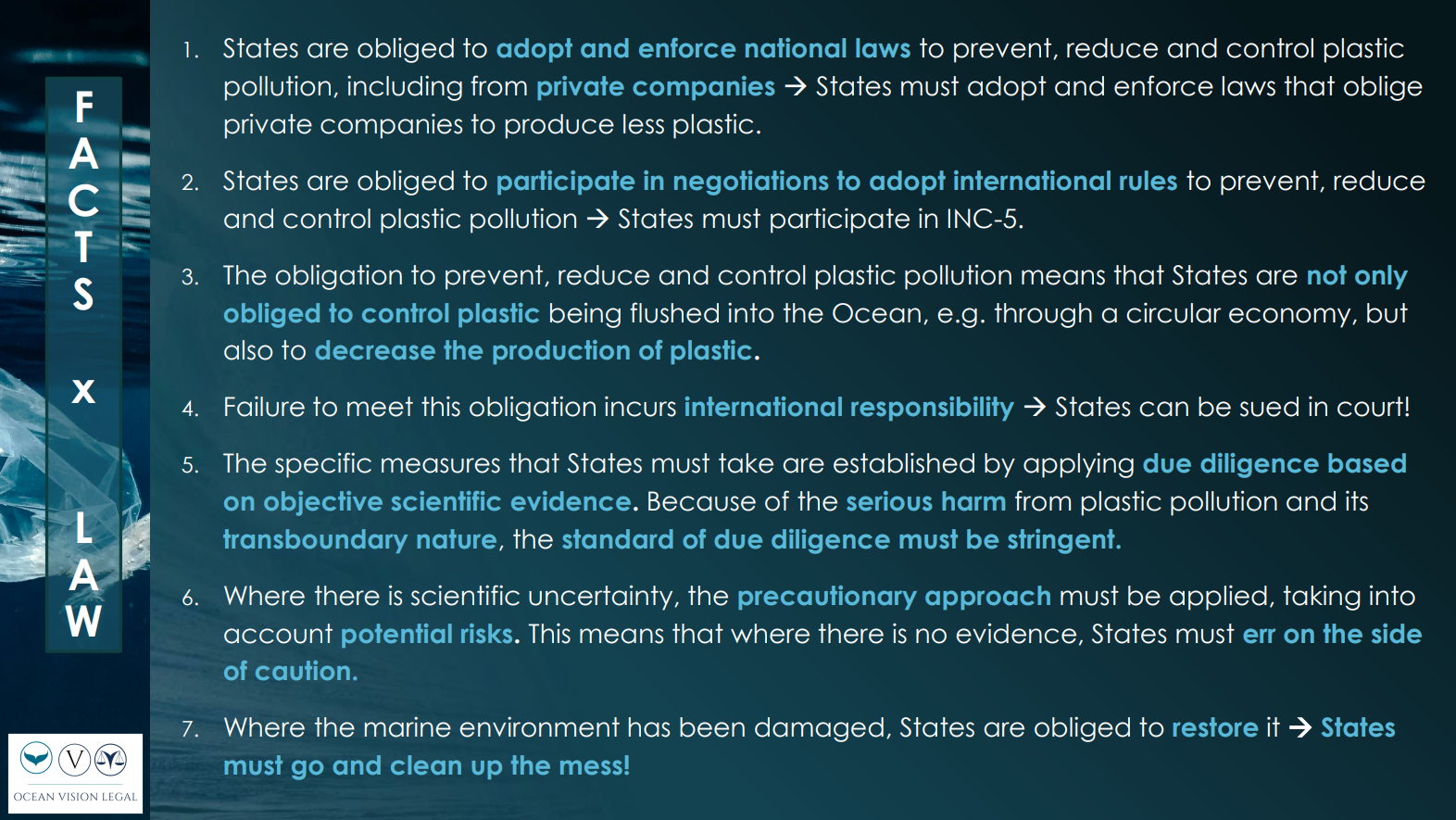
- States have a legal duty to clean up plastic pollution and take proactive measures to prevent further harm.
How Effective Disaster Risk Reduction Depends on Healthy Biodiversity and Ending Plastic Pollution
Martina MÜLLER | Programme Manager, United Nations Office for Disaster Risk Reduction | UNDRR’s Focal Point for the INC Process
- Nature is the first line of defense against many disasters. When ecosystems are kept healthy, conserved, and sustainably used, they perform vital functions and provide services, including those that help mitigate hazards, buffer disaster impacts, and increase climate resilience.
- A recent UNDRR guidance document “Strengthening disaster risk reduction in national biodiversity strategies and action plans: Recommendations and guidance for governments” aims to help governments strengthen disaster risk reduction elements in national biodiversity strategies and action plans. The connection between disaster risk reduction and biodiversity conservation is also included in the Kunming-Montreal Global Biodiversity Framework.
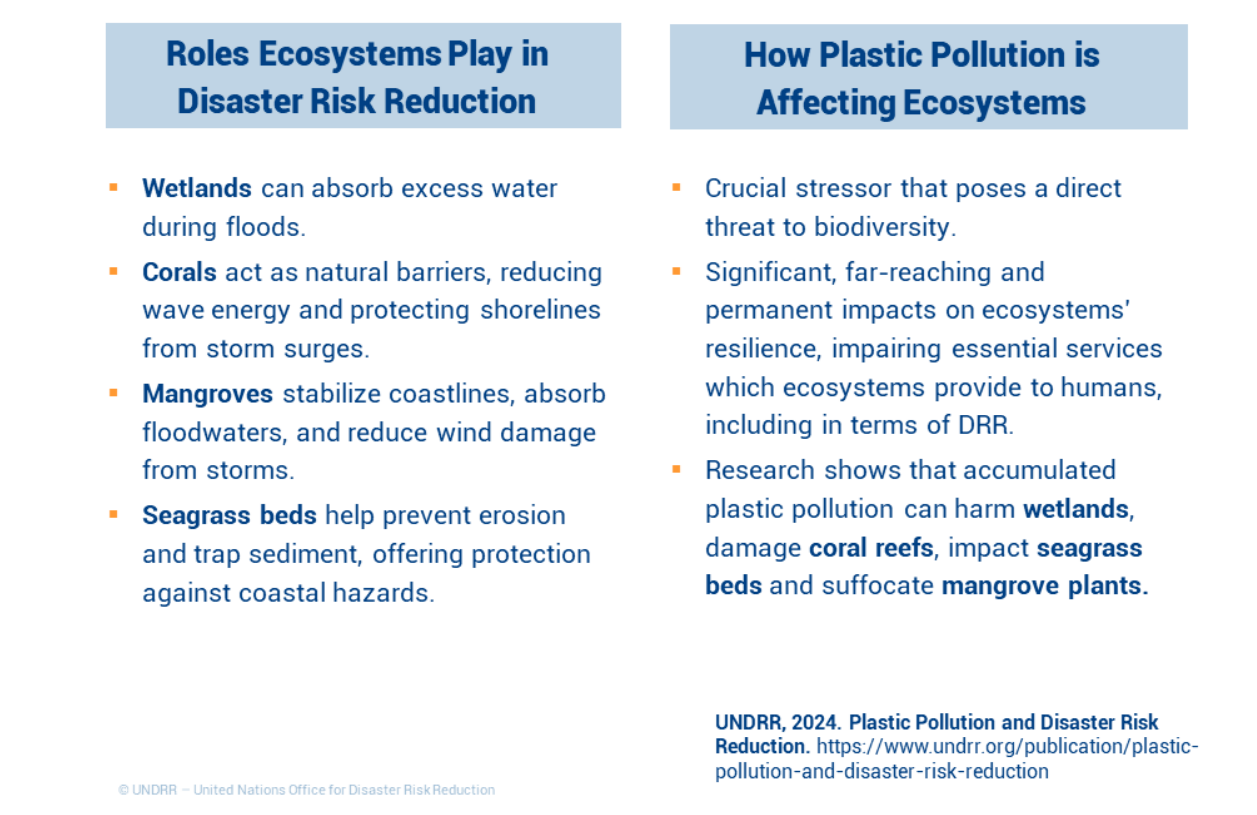
- The impact of plastic pollution on ecosystem services is a key concern. Healthy ecosystems with thriving biodiversity are critical for preventing and reducing disaster risks.
- UN member states are aware of the risks that degraded ecosystems pose to disaster risk reduction. The political declaration of the midterm review of the Sendai Framework, adopted by the General Assembly, emphasizes the need to restore, preserve, and enhance ecosystem functions and services to protect communities from natural hazards and increase resilience.
- The INC process, which is working towards an international legally binding instrument on plastic pollution, must consider these biodiversity and ecosystem services in disaster risk reduction efforts.
- UNDRR developed an infographic showing how plastic pollution interacts with disaster risk. The infographic illustrates several feedback loops that exacerbate the effects of disasters:
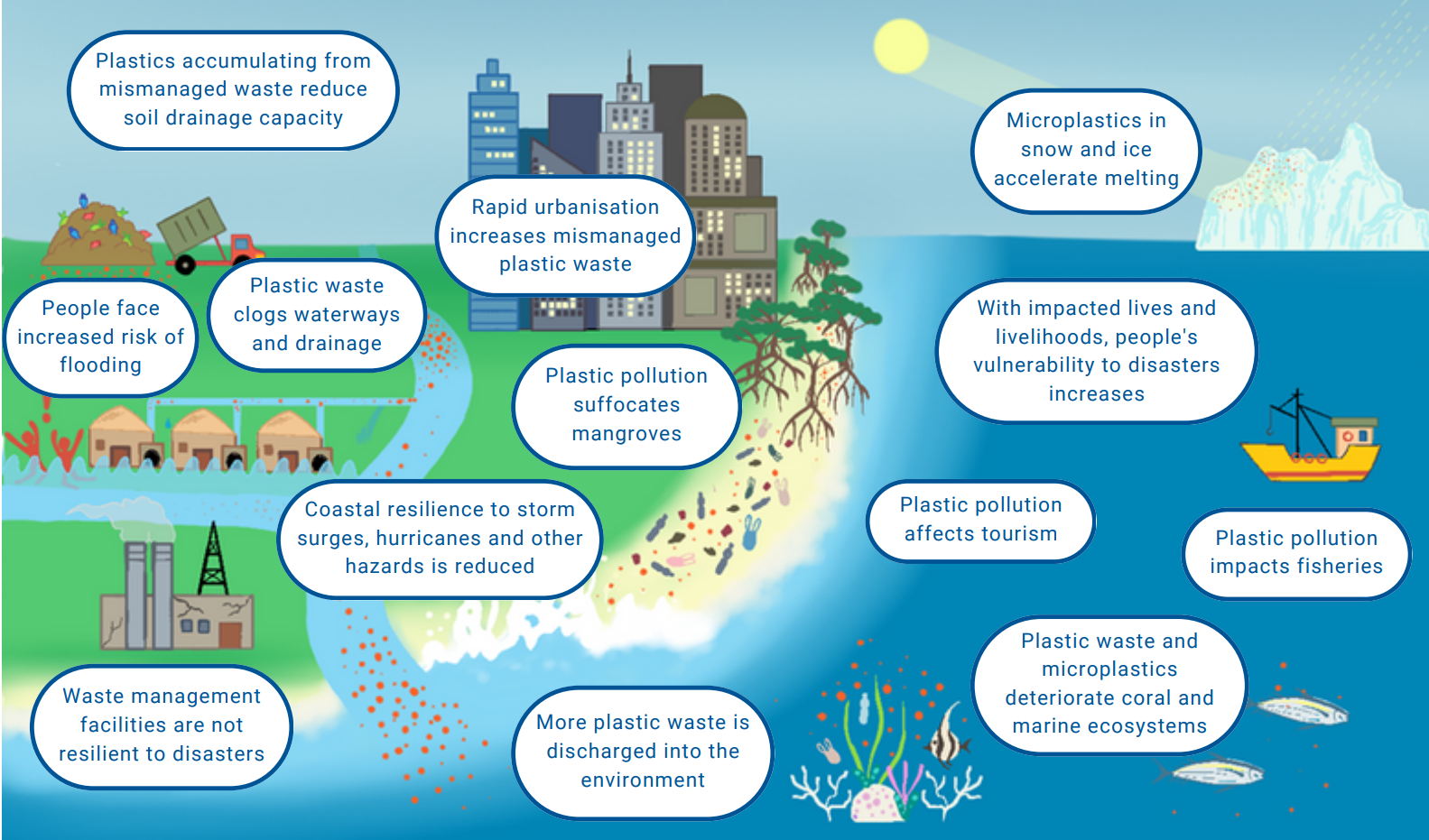
- Another recent UNDRR publication Plastic pollution and disaster risk reduction highlights two key concerns:
- The risk of plastic pollution leakage caused by disasters and the need for member states to address this in the treaty.
- The importance of resilient infrastructure, particularly waste management systems, in addressing downstream elements of the treaty.
- UNDRR defines resilience as the ability of a system, community, or society exposed to hazards to resist, absorb, accommodate, adapt, transform, and recover from the effects of a hazard in a timely and efficient manner. Biodiversity plays a crucial role in supporting resilience.
- UNDRR will release materials in the coming weeks on reducing plastic pollution linked to disaster response and relief efforts, which often involve significant use of single-use plastics.
National Views of Sierra Leone Moving Towards INC-5 and the Importance of Biodiversity and Nature-Positive Approaches in a Global Plastics Treaty
Paul LAMIN | Environmental Protection Agency, Sierra Leone | INC Focal Point
- In 2019, it was estimated that around 140 million kilograms (130,000 tons) of plastic were imported into Sierra Leone’s domestic market. Only 10% of this plastic was locally produced, while the rest, including single-use plastics, was imported. The recycling industry in Sierra Leone is still in its infancy, with only about 7,200 tons of plastic waste recycled out of the 130,000 tons generated.
- A baseline study on plastic beach litter, conducted in 2021 and 2022 in collaboration with GRID-Arendal, revealed that 70% of the litter by count and 49% by weight consisted of plastic, highlighting the gravity of the situation.
- Plastic waste management is a major challenge in Sierra Leone. The country lacks engineered landfills, and sustainable consumption patterns are not prioritized in any sector.
- There is significant demand for single-use plastics, largely due to the country’s water supply issues. People rely on bottled or sachet water for drinking, even though the Ministry of Water provides water that is often not trusted by the public. Multiple companies produce bottled water, exacerbating the plastic pollution problem.
- Sierra Leone’s national views towards INC5 reflect ongoing discussions with various stakeholders. There is a consensus that the plastic treaty should adopt a comprehensive approach, addressing the entire lifecycle of plastics, not just downstream measures.
- Non-governmental organizations (NGOs) advocate for a complete plastic ban, but there is also recognition of the dependency on plastics in Sierra Leone. Some argue that the plastic treaty must balance reducing plastic use with meeting public demand for plastic products.
- There are trade concerns related to the plastic industry in Sierra Leone, where many companies are involved in the plastic trade. With no alternatives available, the potential for market disruption and shortages of essential plastic-based goods is a concern.
- Low-income countries like Sierra Leone often have to prioritize critical issues. There is a need for support to implement the plastic treaty and address urgent issues. Some suggest prioritizing the most harmful chemicals in plastic products and addressing less toxic ones later.
- The success of implementation will depend on access to financial resources, technology, and capacity building. Financial mechanisms to reduce barriers are essential, especially as bureaucratic procedures often delay progress in countries like Sierra Leone.
- The integration of biodiversity into the plastics treaty can address existing gaps, particularly in Sierra Leone, where wetlands designated as Ramsar sites have shrunk over time due to human encroachment and plastic pollution.
- Sierra Leone, as a party to the Ramsar Convention, has designated 295,000 hectares of wetlands as Ramsar sites. However, these areas continue to shrink due to human encroachment, and plastic waste impacts, particularly on wetlands, are often overlooked.
- Incorporating biodiversity aspects into the plastic treaty could complement other frameworks, such as those addressing lost and abandoned fishing gear. Despite a ban on monofilament nets in Sierra Leone, illegal imports of such nets continue. Introducing biodiversity considerations into the treaty could help address such issues.
- Integrating biodiversity can enhance ecosystem resilience. The Abidjan Convention’s protocol requires state members to address plastic pollution from land-based sources, aligning with the goals of the future international plastic treaty. This can promote socio-economic benefits in sectors such as fisheries and tourism.
Q&A
Q: What is your opinion about plastics alternatives and their potential to have harmful impact, whether similar to the impacts of plastics or creating new issues?
Falco Martin: Fauna & Flora has looked into alternative plastics—like bioplastics and biodegradable plastics. There is no silver bullet at the moment in terms of alternative plastics. There is quite a lot of attention around it, and it requires caution. Any alternative, whether it’s plastics or non-plastic materials, like paper or steel, takes a lifecycle approach to assess the potential long-term impacts of these materials.
Regional partners of Fauna and Flora have been working on this. For example, there is a team looking at using banana leaves instead of single-use plates. Going back to these basic solutions could sometimes be a clear path forward in very specific cases. Fauna and Flora’s recommendation from a treaty perspective is that any material explored or looked into should really be assessed holistically to ensure that any consequences on communities and biodiversity, in the long run, are avoided.
Alexandra Harrington: There is a need for a cross-sectional understanding of where biodiversity fits in with plastic pollution and the ILBI. It’s crucial to empower future COPs and the future Secretariat to coordinate and generate more information on biodiversity. The common understanding of plastics is evolving and will become even more nuanced when talking about alternatives and substitutes. Including these in the treaty and how they might look in annexes is crucial. It’s important to keep a strong focus on biodiversity intersections within the treaty, so the inclusion of substitutes and alternatives in the plastic discussion can be addressed.
Q: How can we handle the cleanup of existing plastics, especially in the Ocean or those already affecting SIDS such as St Helena, through the treaty?
Martina Muller: Member states are discussing what to do with so-called legacy plastic —plastics already in the environment, particularly in specific hotspots. From UNDRR’s perspective, it would be important to consider which areas of plastic pollution accumulation are most critical to address. Specific accumulation in certain areas can lead to an increase in disasters—such as flooding caused by plastic-blocking drainage systems in urban and rural areas. Research by Tearfund detected that at least 200 million people are already exposed to flooding aggravated by plastic pollution. These types of considerations are essential for member states when deciding how to address legacy plastic pollution.
Karina Siegwart: Negotiators and countries are well aware that this is a huge problem to address in parallel with the future treaty’s means of implementation. This was discussed when discussing financing and the need for financing. I think the treaty will address legacy plastic pollution on the financing front, not only through financial mechanisms but also through private sector involvement and partnerships.
Falco Martin: When we tackle legacy plastics, it’s important to ensure the measures taken are locally appropriate and ecologically sensitive to prevent further harm to biodiversity and communities at risk. Looking at what’s already out there and taking lessons from the science is critical to ensuring the environment isn’t inadvertently harmed while trying to clean up.
Neil Thorp | St. Helena National Trust: Most plastic arriving on the St. Helena comes from external sources. Financing the cleanup is critical, especially on the island where resources are limited. Having that addressed in the plastic treaty is really important.
Q: What are the risks of having ambiguous or no references to biodiversity in the treaty?
Alexandra Harrington: The risk of not having any references to biodiversity is that there would be very little legal support for including biodiversity in future actions of the COP. This includes things like what might go into annexes, future work plans, and reporting requirements. Limiting biodiversity references would reduce the ability of the COP and the Secretariat to work with other relevant MEAs like the Convention on Biological Diversity, the Convention on Migratory Species, or aspects of the chemicals and pollution treaties. Leaving out biodiversity creates a significant gap in how the treaty can move forward, particularly when thinking about reducing plastic pollution not just for human health, but for biodiversity too. Ambiguity is risky because it can lead to negative interpretations that exclude biodiversity or ecosystems, which are critical to understanding the relationship between biodiversity and plastic pollution.
Karine Siegwart: On a national and local level, it will be the future treaty’s job to ensure that biodiversity is treated as a cross-cutting issue. Future national action plans under the treaty must take into account obligations under the biodiversity convention to avoid overburdening countries with conflicting reporting and monitoring requirements.
Q: How will the increased participation of the business and finance sectors impact the biodiversity goals in the treaty?
Karine Siegwart: From the IUCN leaders forum, we saw that nature positivity in the business and finance sectors is gaining traction. There is also a business coalition supporting the outcome of the global plastic treaty. Nature positivity is not just greenwashing—it’s a genuine responsibility. Businesses, especially in the finance sector, must be held accountable for the promises they’ve made through sustainable finance plans. Their business models depend on a healthy biodiversity, not one that’s collapsing. We should remain optimistic about this.
- Alexandra Harrington: Many of the future reporting requirements will impact businesses as well. These reporting mechanisms will involve public and private sectors, so there’s potential for a positive dialogue about how they can contribute to biodiversity. If biodiversity language remains in the treaty, there could be a powerful force for biodiversity, with both private and public sectors working together.
Video
Live from Webex.
Documents
- Presentations made during the event
- Reinforcing Commitments to Nature and Communities: Options to include Biodiversity in the future Global Plastics Treaty | IUCN, IUCN World Commission on Environmental Law (IUCN WCEL), Fauna & Flora, the Zoological Society of London (ZSL) | 15 October 2024
- Strengthening disaster risk reduction in national biodiversity strategies and action plans: Recommendations and guidance for governments | UNDRR | September 2024
- Plastic pollution and disaster risk reduction | UNDRR | March 2024
Links
- Biodiversity in the Future Global Plastics Treaty | IUCN | 23 October 2024
- Road to Busan | Plastics INC-5 | GEN
- Compilation of draft text of the international legally binding instrument on plastic pollution, including in the marine environment (UNEP/PP/INC.5/4)
Photo Credits
Photo by IISD/ENB – Kiara Worth