
Event Virtual
Road to Busan | Plastics Treaty Talks: Updates and the View to the Finish Line

04 Oct 2024
16:00 – 17:30
Venue: Online | Webex
Organization: International Institute for Sustainable Development, Geneva Environment Network
This event, co-organized by the International Institute for Sustainable Development Earth Negotiations Bulletin and the Geneva Environment Network within the framework of the Geneva Beat Plastic Pollution Dialogues provided an overview on the upcoming fifth session of the Intergovernmental Negotiating Committee to develop an international legally binding instrument on plastic pollution, including in the marine environment (INC-5), scheduled to take place from 25 November to 1 December 2024 in Busan, Republic of Korea.

About this Event
As governments and stakeholders prepare for the final negotiating session of the Intergovernmental Negotiating Committee to develop an international legally binding instrument on plastic pollution, including in the marine environment, this panel aims to review and update on the state of play, the latest developments on the process and substance, and priorities and key challenges for ongoing efforts to forge convergence.
Since the INC-4 in Ottawa in April 2024, major intersessional work has been taking place, including the ad hoc intersessional open-ended expert groups online and in-person meeting and the Heads of Delegations meetings to prepare for Busan. This event will therefore be an opportunity to review these recent developments and allow governments and stakeholders to revisit what they view as key priorities for an ambitious and effective treaty text. The dialogue aims to highlight what the negotiations must focus on, as well as thoughts on key challenges and how to address them.
This event will explore what to expect on the remaining road to INC-5 and in Busan especially:
- Updates from intersessional work
- Key priorities for the treaty text and key elements on which negotiations need to focus most on achieving convergence? What are the key challenges to convergence and how to address them?
- Options and appetite for addressing upstream parts of the plastic lifecycle
- State of play on finance for implementation
Geneva Beat Plastic Pollution Dialogues

The world is facing a plastic crisis, the status quo is not an option. Plastic pollution is a serious issue of global concern which requires an urgent and international response involving all relevant actors at different levels. Many initiatives, projects and governance responses and options have been developed to tackle this major environmental problem, but we are still unable to cope with the amount of plastic we generate. In addition, there is a lack of coordination which can better lead to a more effective and efficient response.
Various actors in Geneva are engaged in rethinking the way we manufacture, use, trade and manage plastics. The Geneva Beat Plastic Pollution Dialogues aim at outreaching and creating synergies among these actors, highlighting efforts made by intergovernmental organizations, governments, businesses, the scientific community, civil society and individuals in the hope of informing and creating synergies and coordinated actions. The dialogues highlight what the different stakeholders in Geneva and beyond have achieved at all levels, and present the latest research and governance options.
Following the landmark resolution adopted at UNEA-5 to end plastic pollution and building on the outcomes of the first two series, the third series of dialogues will encourage increased engagement of the Geneva community with future negotiations on the matter.
Speakers
By order of intervention.

H.E. Amb. Luis VAYAS VALDIVIESO
Chair, INC Plastic Pollution, Ecuador

David AZOULAY
Director of the Geneva Office and of the Environmental Health Program, Center for International Environmental Law (CIEL)

Bethanie CARNEY ALMROTH
Professor at Gothenburg University | Member of the Steering Committee of the Scientists’ Coalition for an Effective Plastics Treaty

Robert HEARTY
Policy Advisor, Department for Environment, Food and Rural Affairs, United Kingdom | INC Focal Point | Member of the High Ambition Coalition to End Plastic Pollution
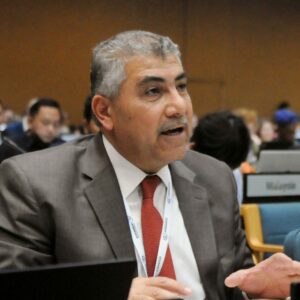
Mohammed KHASHASHNEH
Former Secretary-General, Ministry of Environment, Jordan | Retired, engaged on his personal capacity

Albert MAGALANG
Chief Environmental Management Specialist, Climate Change service, DENR Central Office, Philippines

Allison LIN
Global Vice President of Packaging Sustainability and Chief Circularity Officer, Mars Inc and Member, Business Coalition for a Global Plastics Treaty

Tallash KANTAI
Team Leader/Writer, IISD Earth Negotiations Bulletin

Carolyn DEERE BIRKBECK
Executive Director, Forum on Trade, Environment & SDGs (TESS)
Highlights
Summary
Opening Remarks
H.E. Amb. Luis VAYAS VALDIVIESO | Chair, INC Plastic Pollution, Ecuador
- The fourth session of the Intergovernmental Negotiating Committee to develop an international legally binding instrument on plastic pollution, including in the marine environment (INC4) took two important decisions: establishing an Open-ended Legal Drafting Group and initiating formal intersessional work to restart textual negotiations, resulting in a compiled text as the outcome.
- On the road to the fifth session of the INC, to take place in Busan, Republic of Korea in November 2024, my proposal is to work with heads of delegations and experts to identify specific elements that will facilitate the negotiation and develop an effective international legally binding instrument with credible rules and effective implementation mechanisms to end plastic pollution.
- Few meetings have been held with heads of delegations, where we exchanged views based on the non-paper in which I identified some elements for discussion. While more work is needed, the meetings provided an opportunity to seek common understanding and areas for negotiation in Busan.
- I am currently working on a scenario note with the organization of work, to be released in October. In addition to identifying elements for negotiation in Busan, gaining trust from members is crucial for preparing a third non-paper.
- In Busan, we need to formalize our formal and informal intersessional work in a constructive and efficient way. We are on the same side to combat and end plastic pollution.
Perspectives from Governments and Stakeholders on Key Points to Align on
David AZOULAY | Center for International Environmental Law
- Production controls are essential to successfully addressing the plastic crisis; they are the enablers of all measures to be adopted in the future treaty. Such controls also makes economic sense in a world facing a production glut for some polymers, with production facilities operating at historically low rates and below profitability.
- Without effective measures and clear obligations to limit the current production rate and expected growth, this treaty will fail to dent our plastic crisis.
- Plastics are a complex mixture of approximately 16,000 substances, including toxic materials, and every stage of its life cycle has real, massive impacts on human health and the environment. Established scientific facts show that effective measures to globally phase out problematic and toxic chemicals are crucial in preventing the circularity of harm.
- It is also necessary to establish a functional, feasible, and innovative funding mechanism. A just transition to an economy that respects human health and human rights will require the mobilization of finance beyond the usual methods used by businesses. Therefore, Official development assistance will be the key, and we will be setting up a fair and equitable mechanism to collect, disburse and allocate funds.
- Financial mechanisms in the treaty need to be connected to actual obligations. Because the issue is global, we need global answers that establish a global playing field, while allowing flexibility to take national circumstances into consideration. Creating only incentives or voluntary approaches is insufficient for mobilizing adequate financial resources.
- Negotiations to tackle one of the greatest challenges of our time cannot be successful without active and effective involvement of all. While the problem is urgent, we need to build a solid foundation for action.
- The Conference of the Parties will not be able to adopt any decision that would fundamentally alter the rights and obligations of the parties. Therefore, obligations must be clearly established in the treaty itself.
Bethanie CARNEY ALMROTH | Professor at Gothenburg University | Member of the Steering Committee of the Scientists’ Coalition for an Effective Plastics Treaty
- Science can be used to understand the scale of the global problem of plastics. We define plastic pollution across its entire life cycle, as starting with resource extraction and production of monomers and polymers, followed by product manufacturing, transportation, trade, consumption, and waste management. The pollution and emissions can be traced as they move through our ecosystems.
- Science helps us understand the harm caused by emissions on the environment, climate, human health, human rights, and in the economy. Plastics can be placed at the center of the triple planetary crisis, and science enables us to see how these crises are interconnected.
- Plastic pollution is disrupting Earth’s systems and posing a threat to all three pillars of sustainability, beyond what societies and human health can tolerate. The problem cannot be addressed by focusing only on waste management, and the entire life cycle needs to be addressed.
Key elements to be included in the treaty
- Establishment of ambitious, legally binding global and national reduction targets, along with incentives, to reduce primary plastic pollution. Including production reduction is crucial to achieving the goal of ending plastic pollution.
- Gobally mandated regulatory provisions for hazardous chemicals found in plastics. A hazard-based approach would be the most effective way to regulate these chemicals, and grouping and listing of chemicals should be included in the treaty.
- Global and national phase-out of non-essential use of plastic chemicals, polymers, and products. In addition to single-use products, chemicals and polymers used to make them should also be addressed. We need to determine whether plastics, chemicals and polymers are critical for the safety and functioning of society, and whether acceptable alternatives exist, from environmental and health standpoints.
- Establishment of transparency criteria, along with mandatory monitoring and reporting of the obligations throughout the entire supply chain. This is critical in providing data and information on the reduction and simplification of plastics, as well as the number and types of chemicals and products in the market. Harmonized standards and mechanisms should be developed to ensure compliance and enforcement of these obligations.
- Inclusion of micro- and nano-plastics. Given that one-third of plastics pollution is attributed to micro- and nano-plastics and that they cannot be effectively removed from the environment once released, mechanisms to prevent their formation and release are necessary.
- A scientific body mandated by the treaty would be critical in guiding its future. This body should be composed of scientists and other plastic pollution experts who are free from financial or other conflicts of interest, ensuring that targets remain scientifically informed and adaptive over time.
Robert HEARTY | Policy Advisor, Department for Environment, Food and Rural Affairs, United Kingdom | INC Focal Point | Member of the High Ambition Coalition to End Plastic Pollution
- Our current policy trajectory is unsustainable. The recently launched OECD report “Policy Scenarios for Eliminating Plastic Pollution by 2040” shows that plastic production will increase by almost 70% by 2040 and that there will be a 50% rise in mismanaged plastic waste. We need urgent action to tackle plastic pollution and its contribution to the climate crisis, by promoting sustainable production and consumption of primary plastic polymers.
- The treaty needs to be effective, implementable, credible, and capable of ending plastic pollution. It should include upstream, midstream and downstream measures.
- Plastic pollution impacts all society and a broad range of actors, and only globally coordinated action with global common rules that address the full life cycle of plastic can end plastic pollution. This should include reducing the production and consumption of primary plastic polymers to a sustainable level, phasing out and restricting problematic and avoidable products, and designing products to be circular from their inception.
- It necessary to mobilize support for the implementation of the treaty’s objectives. Some countries, especially Sub-Saharan African countries, are disproportionately impacted, facing unevenly distributed costs. A mechanism to mobilize support from the widest possible variety of sources to where it is most needed would be crucial in closing the funding gap, which is estimated to be between $350 and $500 billion.
- Setting a clear policy trajectory with common global rules and harmonized taxonomies can incentivize businesses and financial actors to invest in a circular economy.
Mohammed KHASHASHNEH | Former Secretary-General, Ministry of Environment, Jordan | On his personal capcity
- Scientific evidence shows that plastic pollution negatively impacts human health. Ministries of the environment and health should collaborate to support each other in the negotiation process.
- We are not against plastic, we are against plastic pollution. As we approach the end of the INC process, we need to finalize a balanced convention that covers the entire life cycle and supply chain of plastic, with strong articles on hazardous chemicals and product design.
- The social and economic aspects of Extended Producer Responsibility (EPR) should be highlighted; it contributes to sustainable production and consumption, creates new investment opportunities and green jobs, and enhances circularity.
Albert MAGALANG | Chief Environmental Management Specialist, Climate Change service, DENR Central Office, Philippines
- It is important for the Philippines, as a developing country, to participate in dialogues that shape the position of member states in environmental agreements.
- On the road to Busan, it is important to reflect and build on lessons drawn from the intersessional work.
- The Philippines supports a three-step process to consolidate Conference Room Papers (CRPs):
- Identification of problematic products using a dedicated committee science-based criteria;
- Assessment of control measures and potential exemptions; and
- A decision by the COP on the committee’s recommendations for inclusion in a periodically reviewed annex.
- Product design plays a significant role in combating plastic pollution. The global treaty should include provisions for product design, combining globally harmonized design criteria and global design requirements for specific sectors or products, alongside national standards. The criteria should reflect the waste hierarchy, principles of equity and common but differentiated responsibilities, and prioritize efficiency, material simplicity, and sustainability.
- Specific design requirements could be developed in the packaging, textiles, and agricultural plastics sectors. However, there are differences among member states on whether to adopt voluntary or mandatory measures, and whether these measures would be global or national.
- The Philippines supports upstream measures to reduce primary plastic polymers, as outlined in the UNEA 5/14 resolution, aiming to prevent a tripling of plastic waste by 2050.
- EPR should be viewed as more than just waste recovery. EPR is a scheme for producers to internalize all environmental and human risk costs of products. The Philippines’ EPR law promotes reusable product adoption and product redesign for reusability.
- We support a hybrid financing mechanism, including a dedicated fund, to support early action and implementation, and to align financial flows with the treaty’s objectives.
Allison LIN | Global Vice President of Packaging Sustainability and Chief Circularity Officer, Mars Inc and Member, Business Coalition for a Global Plastics Treaty
- There is significant convergence among presenters and the Business Coalition on what is necessary for an ambitious and effective global treaty on plastics.
- The Business Coalition advocates for a legally binding global treaty that addresses the full life cycle of plastics, considering its social and environmental impacts. This includes plastics from production and use to waste management and legacy pollution. It is critical to start with strong provisions, such as the restriction and phase-out of chemicals of concern and problematic plastic products, and improvement in product design.
- The Business Coalition has developed a “Treaty on a Page” document, outlining specific actions that can be adopted now and strengthened over time.
- The treaty must include mechanisms for a just transition throughout the plastic life cycle, ensuring fairness for workers, communities, and businesses. Global harmonization is required to achieve change at scale, with clear criteria identifying chemicals of concern and problematic and avoidable plastics.
- The processes need to ensure transparency and reporting throughout the supply chain.
- The treaty requires countries to establish targets for collection, reuse, and recycling. These systems must be based on EPR, which funds waste management systems through fees paid by producers, as well as deposit return systems (DRS), which incentivize proper waste management.
- Not all EPR systems are equally effective. The treaty should harmonize EPR systems across countries through a minimum level of harmonization that benefits both large corporations and small-to-medium enterprises.
- Annexes with common principles and minimum requirements should be included in the treaty to guide the establishment of EPR systems and provide a clear framework for implementation across different nations.
- A comprehensive implementation package is required to support the treaty. This package should align financial flows with the treaty’s objectives and mobilize public and private financial support for a fair transition to a circular economy.
- An ambitious and effective global treaty has the potential to create economic opportunities at global and local levels while delivering social and environmental benefits.
Tallash KANTAI | Team Leader/Writer, IISD Earth Negotiations Bulletin
- To create a strong and effective treaty, few outstanding issues need to be addressed:
- the scope of plastic pollution: pollution does not begin with waste management, and we need to clarify how far up the life cycle it extends.
- which measures of the future treaty will be mandatory and which will be voluntary.
- the approach for eliminating problematic plastics and chemicals of concern, whether uniform or staggered, needs to be determined.
- There has been insufficient discussion on key definitions, such as what constitutes plastic pollution. While discussions around chemicals of concern have been broader during the intersessional period, clear definitions will be needed as the treaty progresses.
- The treaty must also include measures for global accountability for plastic producers and manufacturers. There is a dichotomy between developed and developing countries, where accountability for plastic producers is often lacking in the latter. EPR is crucial and must be implemented globally in a holistic manner.
- There is a need for inter-ministerial collaboration because plastic pollution is a health and food security matter. Recent studies have shown the presence of microplastics in the human brain, and chemicals leak into soils, rivers, and oceans. The treaty should intersect with other international agreements, such as the Basel Convention, to halt the practice of developed countries sending plastic waste to developing nations; the Stockholm Convention, to address the environmental and health impacts of persistent organic pollutants; and ILO standards related to labor rights for waste pickers.
- The success of this treaty depends on coordination, cooperation, and partnership with existing Multilateral Environmental Agreements (MEAs) and other agencies.
Carolyn DEERE BIRKBECK | Executive Director, Forum on Trade, Environment & SDGs (TESS)
- Some key questions for the final stage of negotiations are:
- Where do our collective efforts need to focus to address the urgency, scale, and complexity of the plastic pollution challenge?
- What should we have in the treaty to drive the necessary changes and to catalyze international cooperation?
- What is needed to ensure that we recognize and address wider socioeconomic considerations, as well as the effectiveness and progress of the treaty over time?
- There is no shortage of data and knowledge about the scale and impacts of plastic pollution across its life cycle. Without global intervention, plastic pollution, caused by unsustainable production levels, a lack of global rules for products and chemicals, inadequate waste management, and insufficient financial resources, will continue to increase, leading to exacerbated environmental and health impacts.
- Everyone interacts with many plastic products harmful to the environment and human health. Women, children, and vulnerable communities, especially in developing countries, are particularly affected.
- The current trajectory of plastic production is unsustainable and exceeds waste management capacities, thereby undermining countries’ efforts to address plastic pollution and aggravating the climate crisis.
- We cannot continue business as usual, and we need global rules and approaches to tackle the full lifecycle of plastics. No single country or policy can adequately address the complex and transboundary nature of plastic pollution in isolation.
- A holistic financing approach is necessary, aligning public and private funding with the treaty’s goals. Leveraging various financial sources, including overseas development assistance, is critical for effective interventions across the life cycle of plastics.
- The clear objective is to end plastic pollution to protect human health and the environment. An effective treaty requires integrity in discussions, grounded in scientific evidence, and a recognition of the urgency of the crisis. The treaty must address the real human health and environmental impacts affecting millions worldwide, and respond to the economic and commercial decisions that can either hinder or catalyze necessary transformations.