
Événement Conférence
From Evidence to Policy Action: Establishing a Science-Policy Panel to Promote the Sound Management of Chemicals and Waste and the Prevention of Pollution | 2025 BRS COPs Side Event
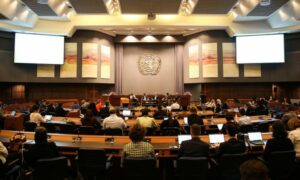
29 Avr 2025
18:30 – 20:00
Lieu: CICG | Exhibition Area & Online | Webex
Organisation: Groupe de travail spécial à composition non limitée chargé d’examiner la création d’un groupe d’experts sur l’interface science-politiques au service de la gestion rationnelle des produits chimiques et des déchets et de la prévention de la pollution, Conventions de Bâle, Rotterdam et Stockholm, Royaume-Uni, Geneva Environment Network
This side event to the 2025 meetings of the Conference of the Parties to the Basel, Rotterdam and Stockholm Conventions, was part of the "Road to OEWG 3.2 Series", co-organized by the Secretariat of the ad hoc open-ended working group (OEWG) on a Science-Policy Panel to Contribute Further to the Sound Management of Chemicals and Waste and to Prevent Pollution, the BRS Conventions, the United Kingdom and the Geneva Environment Network.

About this Event
Chemicals are all around us – in the product we use, in the food we eat and in the buildings we work and live in. Some chemicals are harmful to human health and the environment, and legally binding multilateral environmental agreements seek to regulate, eliminate, or otherwise manage the risk associated with these harmful chemicals and wastes. Solutions to many of these problems exist, but remain invisible to policy makers, stakeholders, and citizens due to a lack of information sharing, a lack of capacity, and a lack of awareness raising. Currently, the science-policy interface on chemicals, waste and pollution is generally insufficient, contributing to the lack of information sharing and thus awareness on many issues, and duplication of efforts and overlap on some others. Making visible the sound management of chemicals and waste requires a strong science-policy interface.
The event focused on the process for the establishment of an independent, intergovernmental science-policy panel to contribute further to the sound management of chemicals and waste and to prevent pollution. The event emphasized that such a panel can support international efforts to take action, including via the implementation of multilateral environmental agreements such as the BRS conventions, and other relevant international instruments, to promote the sound management of chemicals and waste, and the prevention of pollution by providing policy-relevant scientific advice on these issues. The event also highlighted how such a panel could further support the work of other relevant stakeholders including academia, NGOs, the private sector and others by making visible the invisible. Finally, the event provided an update on the state of play of the ongoing process to establish such a science-policy panel.
Road to OEWG 3.2 Series
In the lead-up to the establishment of a science-policy panel (SPP) to contribute further to the sound management of chemicals and waste and to prevent pollution, a series of webinars and events are being organized by the OEWG Secretariat and Geneva Environment Network to build bridges and promote collaboration and knowledge sharing between and among stakeholders, and to raise public awareness about the ad hoc open-ended working group (OEWG) preparing proposals for the scope, shape and functions of the panel.
2025 Meetings of the Conference of the Parties to the Basel, Rotterdam and Stockholm Conventions
The seventeenth meeting of the Conference of the Parties to the Basel Convention (BC COP-17), the twelfth meeting of the Conference of the Parties to the Rotterdam Convention (RC COP-12) and the twelfth meeting of the Conference of the Parties to the Stockholm Convention (SC COP-12) will be held back-to-back in Geneva from 28 April to 9 May 2025. Side events to the 2025 meetings of the BRS COPs will serve as a platform for Parties and observers to share knowledge, build capacity, network and exchange on experience in the implementation of the BRS conventions. They also contribute to fostering discussions on specific issues under consideration at the COPs.
Speakers
By order of intervention.

Inger ANDERSEN
Executive Director, UN Environment Programme

Rolph PAYET
Executive Secretary, Basel, Rotterdam and Stockholm Conventions
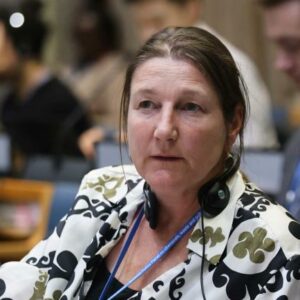
Tessa GOVERSE
Principal Coordinator, Secretariat of the ad hoc open-ended working group on a science-policy panel to contribute further to the sound management of chemicals and waste and to prevent pollution
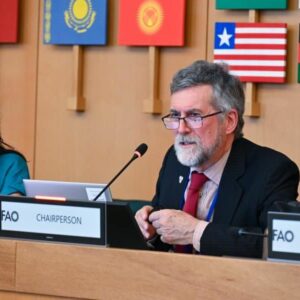
Peter DAWSON
Chair, Persistent Organic Pollutants Review Committee and Principal Scientist, Hazardous Substances and New Organisms Group, Environmental Protection Authority, New Zealand
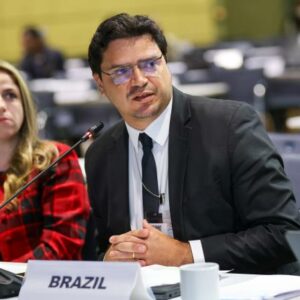
Adalberto MALUF
National Secretary of Urban Environment and Environmental Quality, Ministry of Environment and Climate Change, Brazil

Monika STANKIEWICZ
Executive Secretary, Minamata Convention on Mercury

Gudi ALKEMADE
Chair, Bureau of the ad hoc open-ended working group on a science-policy panel to contribute further to the sound management of chemicals and waste and to prevent pollution
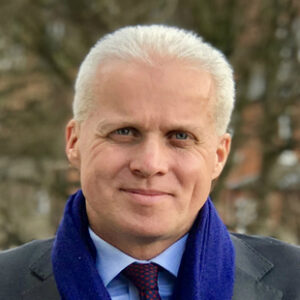
Andrew JACKSON
Economic Ambassador and Deputy Permanent Representative of the United Kingdom to the United Nations & WTO
Highlights
Video
Live from CICG.
Summary
Inger Andersen, Executive Director, UN Environment Programme, underscored that for UNEP, and the collection of MEAs it hosts, science underpins everything we understand and do. She explained that UNEP hosts 17 conventions, and that while each has its scientific body, these committees may not provide science to stakeholders beyond the universe and scope of each convention.
She explained the SPP is a baby without a name yet, that is yet to be borne, but when it produces good science (like the IPCC, independent of UNFCC and IPBES independent of CBD and CITES etc), will be up to varied COPs to decide what/how to use it.
Done right, the SPP will support more information, more coordination, and more science-based decision making. It is critical that the panel be credible, inclusive and able to evolve and adapt. She noted that science will be policy relevant, notably by considering national contexts, further explaining that when good science comes out, it leads to strengthening of national frameworks, sustainable practices and innovation.
Looking to the final negotiation round, she stressed we have to land this thing. She cautioned if we don’t take the first step of establishing the panel then won’t take second step, reminding participants we won’t have it all on day one.
Rolph Payet, Executive Secretary, Basel, Rotterdam and Stockholm Conventions, underscored that the BRS COPs are the right place to discuss the SPP, noting that the SPP is the missing piece in the jigsaw puzzle of chemicals and waste. He focused on three key messages. First, noting that there is a rich body of scientific and technical work, he emphasized that there is not enough science in the Global South, and a SPP will incentivize science in the Global South. Second, he highlighted the BRS Conventions have invaluable experience in convening inclusive and balanced scientific bodies and have been lending their expertise to the OEWG process, and will continue to share that expertise to the panel as soon as it is established. Third, he highlighted the BRS Conventions’ roadmap on science-policy engagement, “From Science to Action” and underscored the potential for science to impact policy, for rational, coherent and effective policies that stimulate a good economy, with healthy workers and a healthy environment.
Tessa Goverse provided an update on the OEWG process, and then invited panellists to join the podium: Peter Dawson, Chair, Persistent Organic Pollutants Review Committee and Principal Scientist, Hazardous Substances and New Organisms Group, Environmental Protection Authority, New Zealand; Adalberto Maluf, National Secretary of Urban Environment and Environmental Quality, Ministry of Environment and Climate Change, Brazil; and Monika Stankiewicz, Executive Secretary, Minamata Convention on Mercury. The panel discussion centred on the promise of the SPP, and its work, in a variety of settings.
Asked to elaborate on the mechanisms through which the Minamata Convention facilitates information sharing and the adoption of policy options for effective chemicals and waste management, Monika Stankiewicz explained how the Minamata Convention generates information and knowledge to support its work, highlighting the Convention’s first Effectiveness Evaluation currently under way, and successes in meeting the need for information on alternatives to mercury in products. She also highlighted the benefits arising from the International Conference on Mercury as a Global Pollutant (ICMGP), even if there is no formal association with this scientific community.
Asked for specific examples of how the BRS Conventions have facilitated the sharing of scientific information in Brazil, Adalberto Maluf explained the BRS and other conventions help in understanding where to prioritize work, including by supporting the process of undertaking and funding an inventory. He spoke of the importance of having access to studies that reflect the reality of a country like Brazil, noting that impacts and exposure are different in tropical countries.
On previously overlooked areas of work made visible by the BRS and Minamata conventions, Peter Dawson pointed to emerging topics: the question of whether the movement of plastic is a vector for the long-range transport of additives in plastic; the interaction between climate change and exposure to pollutants; and the challenge of identifying when persistent organic pollutants (POPs) are present in articles.
Tessa Goverse then asked panellists to reflect on which chemicals and waste management issues need more robust science-policy infrastructure to raise awareness and drive action. Noting that the Minamata Convention has yet to undertake scoping of where the greatest benefit would arise, Monika Stankiewicz pointed to impacts on environment and biodiversity, notably on cumulative impacts on the environment. Recalling the Minamata Convention’s emphasis on vulnerable populations, she flagged this area as one where more science is needed to support policymaking. Reporting that Brazil is the world’s biggest consumer of pesticides, Adalberto Maluf highlighted the need for monitoring as well as for scientific insights on how to reverse contamination. Peter Dawson also underscored the need to better understand linkages between chemicals and biodiversity.
Asked about ways in which the Minamata Convention might benefit from the SPP, Monika Stankiewicz reflected that she has never seen an assessment that has not benefitted an MEA, underscoring that impacts are far more reaching than being taken up by the conference of the parties. She stressed the importance of the Minamata Convention parties indicating where more research is needed, so that a responsive science-policy panel can take on priorities.
Asked about how science and technical bodies of MEAs might engage with the SPP, Peter Dawson underscored that bodies like the Stockholm Convention’s POPs Review Committee and the Rotterdam Convention’s Chemical Review Committee are very short on resources, notably of time and expertise, especially for taking on bigger, cross-cutting issues.
Asked about specific benefits for his country that might arise from the SPP, Adalberto Maluf stressed: the benefits of having access to the best independent science that can be trusted; the importance of guidance for prioritising national efforts; and the prospects of capacity building to develop scientists locally.
The panellists then engaged with the audience.
Linroy Christian, member of the Bureau of the OEWG for the SPP and co-Chair of the Effectiveness Evaluation Group of the Minamata Convention, spoke on the basis of his involvement in the effectiveness evaluation of the Minamata and Stockholm conventions, stressed the need to overcome data gaps, especially in certain regions. He underscored the need for the panel to provide data and science that can support policymaking at a national level.
A participant from Kenya asked panellists about the potential role of novel and agile technologies to support the work of the panel. A participant from the International Panel on Chemical Pollution (IPCP), noting that the panel cannot be policy prescriptive, asked about the potential for the panel to undertake policy-oriented assessments.
In response, Monika Stankiewicz pointed to experience gained relating to artisanal and small-scale gold mining (ASGM), where over time, knowledge has been gained about which solutions are more effective, taking into account the technology deployed as well as societal factors. Adalberto Maluf underscored the importance of a process for policymaking to be evidence-based, that takes into account economic impacts as well as social and environmental impacts, noting that novel technologies can help in addressing such large challenges. Peter Dawson highlighted, as an example, how remote delivery and machine learning can make pesticide application safer for humans and more precise, and also underscored the need for novel destruction technologies.
Thanking the panellists, Tessa Goverse then turned to the closing speakers for the event.
Echoing the message that each region has different realities, Alejandro Nario, National Director of Quality and Environmental Assessment, stressed the need for all regions to be present at OEWG 3.2 when it convenes in Uruguay in June 2025. He underscored the panel is an opportunity to strengthen and foster a more inclusive science-policy interface, and encouraged participants to come and be part of the important discussions in Uruguay.
Gudi Alkemade, Chair of the OEWG for the SPP, thanked panellists for their contributions, and, referring to the side event being held in the midst of the “Making Visible the Invisible” fair, highlighted they had made the potential of the science-policy panel visible. She expressed confidence that the panel can deliver on the promise of better information actions and cooperation. She urged participants that it is in their hands to lay a solid foundation for the panel, stressed the need to focus on the essential elements of the panel, notably a panel that responds to identified needs, that has the right expertise and knowledge base, and that through its functions is relevant and works for all, and noted that only teamwork will make this dream work.
In closing, Andrew Jackson, Economic Ambassador and Deputy Permanent Representative to the World Trade Organisation, United Kingdom, reflected that institutions work better when making linkages and using available knowledge, and stressed the importance of science for policymaking at the national and international level. He congratulated the OEWG on progress already made and encouraged all to “go for the prize” in Uruguay.
Photo Gallery
More photos can be found on the BRS dedicated album.


GEN @ 2025 BRS COPs

How Far Have the Basel, Rotterdam and Stockholm Conventions Gone in Advancing a Rights-based Approach and Environmental Justice?
28 April 2025 | 19:00 – 20:30 CEST

Gender, Toxics Exposures and the Right to a Clean, Safe, Healthy, and Sustainable Environment
29 April 2025 | 18:15 – 19:45 CEST


Bridging Commitments: Ending the Illicit Trade of End-Of-Life Ships: What Role for the Basel and Hong Kong Conventions?
2 May 2025 | 18:15 – 19:15 CEST
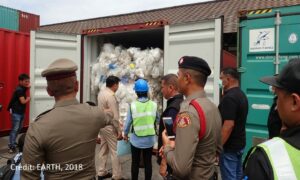
Preventing Plastic and E-Waste Trafficking: Lessons from the Frontlines
4 May 2025 | 18:15 – 19:15 CEST
The Potential of the Bamako Convention in Furthering Implementation of the Basel Convention in Africa
6 May 2025 | 18:15 – 19:15 CEST

One Health Approach to Addressing Pharmaceuticals in the Environment Across Key Sectors
9 May 2025 | 13:15 – 14:45 CEST
Links
- Ad hoc open-ended working group on a science-policy panel on chemicals, waste and pollution prevention
- Resumed third session of the ad hoc open-ended working group to prepare proposals for a science-policy panel to contribute further to the sound management of chemicals and waste and to prevent pollution (OEWG 3.2)
- Developing a Global Science-Policy Panel on Chemicals, Waste and Pollution Prevention | GEN
- Towards the 2025 Meetings of the Conference of the Parties to the Basel, Rotterdam and Stockholm Conventions
- Triple science-policy panels for a triple planetary crisis | UNEP | 30 April 2025