
Nouvelle
Climate Change, Health and the Role of Geneva
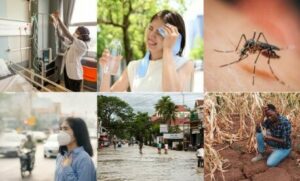
Climate change is increasingly recognized as a major global public health challenge, affecting both human and planetary health as well as the functioning of health systems. Its impacts, from heat-related mortality and infectious diseases to food insecurity and mental health challenges, are wide-ranging and disproportionately affect vulnerable populations. This update explores the climate-health nexus, highlights global initiatives, and examines the role of International Geneva in advancing evidence- and human rights-based responses.
Why Tackling Climate Change Matters for Health
Climate change is increasingly recognized as a major global public health challenge. The World Health Organization (WHO) has identified climate change as a fundamental threat to human health, affecting environmental conditions as well as the social and economic determinants of health, including clean air, safe water, food security and livelihoods. In addition to affecting individual health outcomes, the WHO stresses that climate change is placing increasing pressure on health systems, challenging their capacity to respond to growing and evolving health risks. Research suggests that 1 in 12 hospitals globally could face a high risk of partial or total shutdown due to climate hazards, highlighting the scale of vulnerability of health systems to climate impacts.
The scale of exposure to climate-related health risks is already significant. The Intergovernmental Panel on Climate Change (IPCC) estimates that 3.6 billion people already live in areas highly susceptible to climate change, reflecting the scale of populations exposed to these climate-related health risks. Scientific evidence shows that climate change is contributing to increased illness and mortality worldwide. The Lancet Countdown highlights how climate change is intensifying health risks across multiple dimensions, from heat exposure and extreme weather events to the spread of infectious diseases.
Without urgent action, research by the WHO estimates that climate change is expected to cause approximately 250,000 additional deaths per year between 2030 and 2050, linked to malnutrition, malaria, diarrhoeal diseases and heat stress. Climate change therefore acts as a “threat multiplier”, undermining decades of progress in global health and development while placing additional pressure on already strained health systems.
Climate change is an unavoidable reality that challenges public health, threatens historic health achievements, and adds pressure on already overwhelmed systems. Protecting lives, reducing inequalities, and bolstering the resilience of health systems are no longer just goals – they have become ethical and democratic imperatives
– COP30 Special Report on Health and Climate Change by the Ministry of Health of Brazil and the WHO
Climate Change & Health: Key Impacts
Climate change affects health through multiple, interconnected pathways, influencing both direct health outcomes and the underlying determinants of health:
- Heat and extreme weather: Rising temperatures and more frequent and intense heatwaves, floods, storms and wildfires are increasing mortality, injuries and health emergencies. Heat stress is a leading cause of climate-related deaths, particularly among older populations, while extreme events can overwhelm health services and disrupt essential care.
- Air pollution: Climate change, fossil fuel combustion and increased wildfires contribute to worsening air quality, increasing the incidence of respiratory diseases, cardiovascular conditions, and certain cancers. Air pollution is also a major risk factor for premature mortality, with climate mitigation measures offering significant health co-benefits through cleaner air.
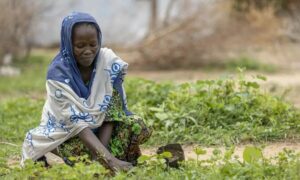
- Food and water security: Climate-related disruptions to agriculture, ecosystems and water systems are affecting food availability, quality and diversity, contributing to malnutrition and food insecurity. At the same time, changing rainfall patterns and extreme events increase the risk of water scarcity and waterborne diseases.
- Infectious diseases: Changes in temperature, precipitation and ecosystems are altering the distribution and transmission patterns of vector-borne and waterborne diseases such as malaria, dengue and cholera. These shifts can expose new populations to health risks and challenge existing disease prevention and control systems.
- Mental health: Climate-related disasters, displacement and environmental degradation are increasingly associated with anxiety, post-traumatic stress and other long-term mental health impacts. These effects are often compounded by loss of livelihoods, social disruption, displacement, and uncertainty about the future.
These impacts are interconnected and often reinforce one another, creating complex and overlapping risks for individuals and health systems.

Source: WHO
Impacts on Health Systems
Climate change not only affects individual health outcomes but also places increasing strain on health systems. Extreme weather events can damage health infrastructure, disrupt essential services and interrupt supply chains for medicines and equipment. At the same time, increased demand for healthcare, driven by climate-related diseases and emergencies, can overwhelm already stretched systems. Research from the Centre for Economic Policy Research finds that extreme heat can lead to hospital overcrowding and negatively affect patient outcomes, including for those not directly affected by heat-related conditions. Climate change also affects the health workforce, reducing productivity and increasing occupational risks. The WHO warns that these pressures threaten progress towards universal health coverage (UHC) and highlight the need to strengthen climate-resilient and sustainable health infrastructure.
Uneven Distribution of Impacts: Inequality & Vulnerability
While all regions are affected by climate change, the health impacts are unevenly distributed and often fall disproportionately on those least responsible for greenhouse gas emissions.
- Low-income countries, small island developing States and fragile contexts face the greatest risks, often due to limited resources and weaker health infrastructure. Climate change exacerbates existing inequalities, including those related to income, gender, age and geography. The WHO estimates that one billion people in low-and lower-middle-income countries rely on healthcare facilities with either unreliable or no access to electricity.
- Vulnerable populations such as children, elderly people, migrants and those with pre-existing health conditions, are particularly exposed to climate-sensitive health risks. These disparities highlight the importance of integrating equity and climate justice considerations into health and climate policy responses.
Factors Shaping Vulnerability and Risk
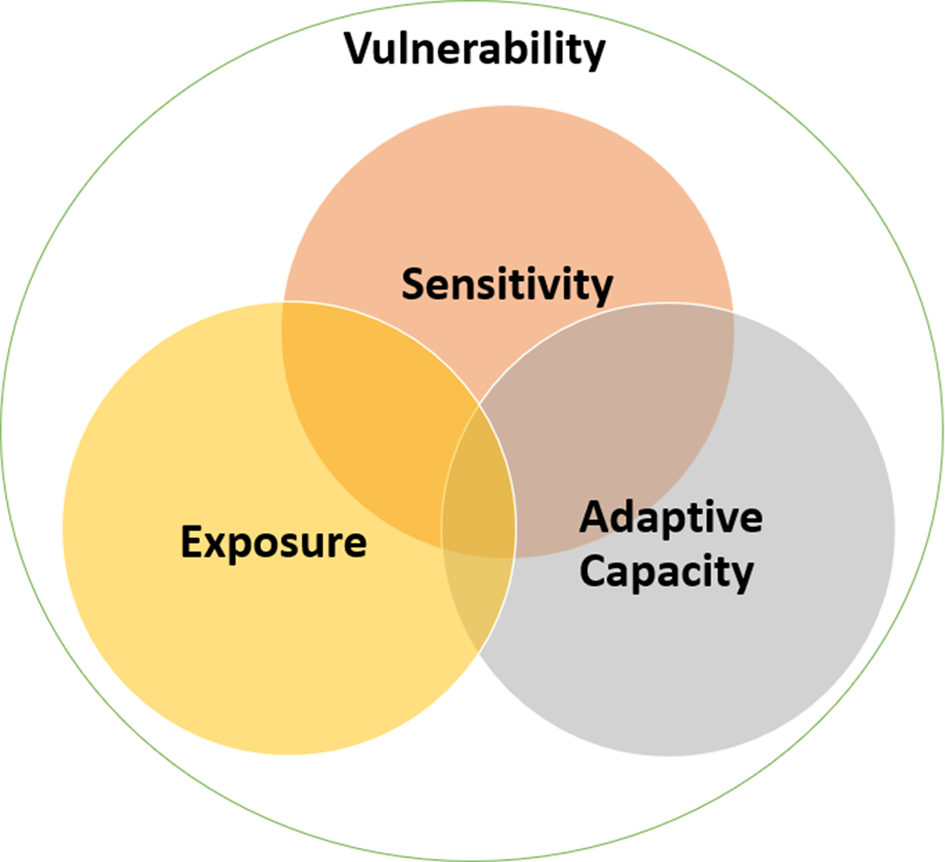
Source: Adapted from Springer Nature Article on Climate Vulnerability (2026)
Vulnerability to climate-related health risks is shaped by three key factors: the degree of exposure to climate hazards, the sensitivity of populations and systems to those hazards, and their capacity to adapt and respond. These factors help explain why similar climate events can lead to very different health outcomes across regions and populations.
Human Rights-Based Approach to Climate Change and Health
Climate change is not only an environmental and public health challenge – it is also a human rights issue. The impacts of the triple planetary crisis affect the enjoyment of a wide range of rights, including the right to health, as well as rights to life, food, water, housing, development and the right to a clean, healthy and sustainable environment.
Recognizing these links, the UN Human Rights Council and the UN General Assembly have affirmed the importance of a clean, healthy and sustainable environment for the full enjoyment of human rights. These developments have strengthened the normative framework connecting environmental protection, human health and human rights.
A human rights-based approach to climate and health highlights several key dimensions:
- Right to health and its underlying conditions
The right to health extends beyond access to healthcare to include the underlying conditions necessary for health, such as clean air, safe water, adequate food and a healthy environment, all of which are directly affected by climate change. Climate change affects both physical and mental health, including through impacts on well-being, displacement and environmental degradation. It is increasingly associated with anxiety, trauma and other forms of psychological distress, particularly in the context of climate-related disasters and uncertainty about the future. In addition, disruptions to ecosystems and supply chains can affect access to medicines, vaccines and essential health services, with implications for the functioning of health systems. - Access to participation, information, and justice
Human rights frameworks emphasize the importance of access to information, public participation in decision-making, and access to justice. Ensuring that communities can engage in climate and health policies is essential for effective, inclusive and equitable responses. - Translating commitments to implementation
Protecting the right to health in the context of climate change also requires translating human rights obligations into policies, planning and investment decisions. States have obligations to respect, protect and fulfil the right to health. This includes taking effective mitigation and adaptation measures, ensuring access to information, enabling meaningful participation in decision-making, and strengthening accountability mechanisms. It also requires allocating resources, strengthening data and monitoring systems, and ensuring that responses reach those most in need.
A human rights-based approach to climate and health therefore emphasizes equity, participation, accountability and non-discrimination, while ensuring the protection of the right to health and its underlying determinants, including access to clean air, safe water, adequate food and a healthy environment.
Addressing Climate Change and Health by Human Rights Instruments
The various human rights mechanisms and instruments present in Geneva, such as the Human Rights Council, Special Procedures, and Human Rights Treaty Bodies, play an increasingly pivotal role in addressing the human rights impacts of climate change. This can be seen in how Human Rights Council took on resolutions and discussions on specific aspects of climate change, while Special Rapporteurs contributed with reports on specific thematic angles within their mandates. Not only do they identify the rights and the specific groups affected by climate change, including from the perspective of protecting human health, they also help clarify the relevant obligations of States to advance human rights while addressing the triple planetary crisis.
Human Rights Treaty Bodies
The human rights treaty bodies are committees of independent experts that monitor implementation of the core international human rights treaties. The treaty bodies have addressed climate change and human rights in a number of statements, decisions, concluding observations, General Comments and General Recommendations. Treaty bodies that have addressed human rights, climate change and health include:
- The Committee on Economic, Social and Cultural Rights published General Comment No. 27 (2025) on economic, social and cultural rights and the environmental dimension of sustainable development, where it affirmed that a clean, healthy and sustainable environment is an essential precondition for the enjoyment of economic, social and cultural rights.
- The Committee on the Rights of the Child published General comment No. 26 (2023) on children’s rights and the environment with a special focus on climate change, which emphasizes the urgent need to address the adverse effects of environmental degradation, with a special focus on climate change, on the enjoyment of children’s rights, and clarifies the obligations of States to address environmental harm and climate change. The Committee also published General comment No. 15 (2013) on the right of the child to the enjoyment of the highest attainable standard of health (art. 24).
Office of the High Commissioner for Human Rights
The Office of the High Commissioner for Human Rights (OHCHR) has highlighted that climate change « poses one of the most profound and systematic contemporary threats to the full enjoyment of the right to physical and mental health », underscoring the need to address climate change not only as an environmental or health issue, but also through a human rights lens. In 2016, OHCHR presented the Human Rights Council an analytical study on the relationship between climate change and the human right of everyone to the enjoyment of the highest attainable standard of physical and mental health (A/HRC/32/23), pursuant to Human Rights Council resolution 29/15. The study examines the impacts of climate change on human rights, particularly the right to health; related human rights obligations and responsibilities of States and other actors; and the elements and benefits of a rights-based approach to addressing climate change. A panel discussion on the impacts of climate change on the right to health during the 31st session of the Human Rights Council.
The negative health impacts of climate change will increase exponentially with every incremental increase in warming. Limiting warming to the greatest extent possible and achieving the target of 1.5oC above pre-industrial levels should therefore be the objective of all climate action. Beyond setting and achieving an ambitious goal, protecting the right to health from climate change will require climate mitigation and adaptation measures that are rights-based, effective and participatory and benefit the vulnerable.
– Analytical study on the relationship between climate change and the human right of everyone to the enjoyment of the highest attainable standard of physical and mental health (A/HRC/32/23)
Special Procedures of the Human Rights Council
As independent human rights experts with mandates to report and advise on human rights from a thematic or country-specific perspective, the Special Procedures of the Human Rights Council make links with their own mandates with issues on climate change and human rights. Though not an exhaustive list, the following are reports produced by UN Special Procedures mandate holders who have elaborated on these issues:
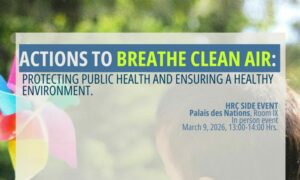
- A/HRC/61/47 | Priority actions towards breathing clean air, protecting public health and ensuring a healthy environment | UN Special Rapporteur on the human right to a clean, healthy and sustainable environment
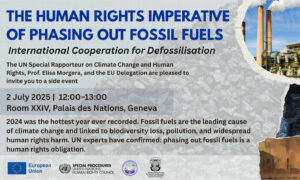
Highlights that air pollution (much of which is driven by fossil fuel combustion and climate-related factors) constitutes a major public health and human rights crisis. Emphasizes that access to clean air is a fundamental component of the right to a clean, healthy and sustainable environment, and is essential for protecting the right to health in the context of climate change. - A/HRC/59/42 | The imperative of defossilizing our economies | UN Special Rapporteur on human rights and climate change
Underscores that the fossil fuel lifecycle is a primary driver of climate change, with far-reaching impacts on human health through air pollution, environmental degradation and climate-related hazards. Affirms that phasing out fossil fuels is a legal obligation for States to protect human rights, including the right to health. - A/HRC/40/55 | Clean air and human rights | UN Special Rapporteur on environment and human rights
Focuses on the right to breathe clean air as one of its component and describes the negative impact of air pollution on the enjoyment of many human rights, in particular the right to life and the right to health, in particular by vulnerable groups. - A/71/304 | Report on the right to health and agenda 2030 | UN Special Rapporteur on the right to health
Highlights the mutually reinforcing complementarities between the Goals and the right to health. Looks at various issues to illustrate how the right to health can help to address critical implementation gaps within the Sustainable Development Goals framework, including SDG 13 on climate action.
Climate Action as a Health Opportunity
While climate change poses significant risks to health, climate action also presents important opportunities to improve public health and well-being while generating economic benefits. Many mitigation and adaptation measures deliver substantial health co-benefits, meaning they can simultaneously improve health outcomes. These include:
- Improving air quality: Reducing greenhouse gas emissions, particularly through cleaner energy systems, can significantly improve air quality, which the WHO estimates is responsible for around 7 million premature deaths each year worldwide, therefore lowering the burden of respiratory and cardiovascular diseases.
- Promoting healthier diets: Sustainable food systems can support improved nutrition while reducing environmental pressures.
- Encouraging active mobility: Urban and transport policies that promote walking and cycling can both reduce emissions and improve physical and mental health outcomes.
- Strengthening health systems: Investments in climate-resilient and sustainable health systems can improve preparedness and ensure continuity of care in the face of climate-related risks.
These co-benefits also have important economic implications, with reduced healthcare costs and increased productivity contributing to broader societal gains. Research finds that the health benefits of mitigation measures can equal or even exceed the costs of climate action, particularly through avoided mortality, reduced healthcare expenditure and increased productivity. A recent study by the Economist Impact in partnership with UNICEF further highlights the value of investing in resilient and sustainable energy systems for essential services. Their study, « Powering Progress: measuring the benefits of investing in energy resilience for healthcare, education and water » finds that improved access to resilient energy in healthcare facilities could avert an estimated 175,000 deaths in Pakistan and 111,000 in Tanzania. The study also highlights strong economic returns: in Tanzania, such investments could generate an average annual return of around $18 million between 2024 and 2044, driven by reduced mortality and lower disease burden.
These findings highlight that climate action is not only an environmental necessity but also a public health opportunity. Realizing these benefits requires integrated approaches that place health at the center of climate policy, while ensuring that actions are equitable, inclusive and aligned with human rights principles.
Global Initiatives Addressing Climate Change and Health
Global attention to the links between climate change and health has grown significantly in recent years. A range of international initiatives, partnerships and policy processes are advancing action at this intersection, focusing on strengthening health systems, mobilizing finance, generating evidence and integrating health into climate governance. Listed by alphabetical order:
1. Alliance for Transformative Action on Climate and Health (ATACH)
The Alliance for Transformative Action on Climate and Health, is a global platform established to support countries in building climate-resilient and low-carbon sustainable health systems. It was launched in 2022 to help deliver on the commitments made under the COP26 Health Programme and to translate these into concrete action. ATACH brings together over 100 countries and more than 90 partners, including governments, international organisations, research institutions and civil society, to advance implementation of climate and health priorities at scale.
The Alliance plays a key role in:
- Supporting countries to develop national adaptation plans for health and conduct vulnerability assessments
- Facilitating access to climate finance for health systems
- Promoting the integration of climate and health into national and global policy frameworks
It is made up of five thematic working groups to address common issues:
- Financing the health commitments on climate resilience and sustainable low carbon health systems
- Climate resilient health systems
- Low carbon sustainable health systems
- Supply chains
- Climate action and nutrition
Through these mechanisms, ATACH serves as a platform for coordination, knowledge exchange and technical support, helping countries move from commitments to implementation and accelerate progress on the climate-health agenda.
2. Belém Health Action Plan (BHAP) at COP30
Launched at COP30, the Belém Health Action Plan (BHAP) places health at the centre of global climate adaptation efforts. It provides a framework to advance climate action by strengthening health systems, surveillance, capacity-building and evidence-based policymaking, while addressing inequalities and scaling up climate-health finance.
The Plan is supported by the Climate and Health Funders Coalition, a group of over 35 philanthropic organisations that has mobilised an initial USD 300 million to accelerate research, innovation and solutions targeting key risks such as extreme heat, air pollution, and climate-sensitive infectious diseases.
As the first international climate adaptation framework focused specifically on health, the BHAP reflects growing recognition of health as a key entry point for accelerating climate action and strengthening resilience.
The accompanying COP30 Special Report on Climate Change and Health provides the evidence base underpinning the Plan and outlines practical actions for governments and health systems. Key priorities include:
- strengthening system flexibility and resilience
- advancing health equity
- scaling up climate and health finance
- investing in systems to evaluate and guide adaptation measures
- accelerating mitigation as a critical intervention for protecting health
Through these elements, the BHAP supports countries in translating political commitments into concrete, health-centred climate action.
3. Children’s Environmental Health Collaborative
Launched in 2023 by UNICEF in partnership with the United Nations Environment Programme and the World Bank, the Children’s Environmental Health Collaborative is a global, multi-stakeholder initiative aimed at protecting children’s health and development from the impacts of climate change and environmental degradation.
The Collaborative seeks to elevate children’s environmental health as a global priority, recognising that children are among the most vulnerable to risks such as air pollution, unsafe water and climate-related hazards. It works to mobilise action across sectors by:
- Advocating for policy change, to ensure children’s environmental health is prioritised at national and global levels
- Strengthening the evidence base, by sharing data, tools and knowledge for informed decision-making
- Catalysing implementation, by linking global dialogue with country-level action and partnerships
Through these efforts, the Collaborative helps bridge the gap between science, policy and practice, supporting coordinated and child-centred responses to the climate and health crisis.
4. COP28 Declaration on Climate and Health
Adopted at COP28, the COP28 Declaration on Climate and Health marked a significant political milestone, with more than 120 countries committing to strengthen climate-resilient health systems, reduce emissions from the health sector and integrate health into climate policies.The Declaration commits governments to strengthen climate-resilient health systems, integrate health into climate policies and reduce emissions from the health sector, while improving preparedness for climate-related health risks such as extreme heat and infectious diseases. It was launched alongside the first-ever Health Day at a COP, reflecting growing recognition of the links between climate change and public health. The Declaration also helped mobilise over $1 billion in commitments for climate and health action, highlighting increasing momentum to align health, climate and development agendas.
The COP28 Declaration laid important groundwork for subsequent initiatives, including the Belém Health Action Plan, and signalled a shift towards embedding health more systematically within global climate governance.
5. Healthy Environments for Healthy Children (UNICEF)
The UNICEF Healthy Environments for Healthy Children initiative focuses on protecting children from environmental and climate-related risks. An estimated 26% of deaths in children under five years old can be prevented by addressing environmental risks. The initiative supports countries in integrating climate considerations into health systems, education and community programmes, while promoting child participation and addressing the disproportionate impacts of environmental hazards on children’s health and development.
UNICEF’s Health Environments for Healthy Children Global Programme Framework outlines five major actions to support UNICEF country programme implementation:
- Mobilizing collective action
- Enhancing primary health care
- Improving resilience in health care facilities
- Integrating climate and environmental education into school programmes
- Empowering children and young people to be agents of change
Through these efforts, the initiative supports more integrated and preventive approaches to safeguarding children’s health in the context of climate change and environmental degradation.
6. Global Action Plan on Climate Change and Health for 2025-2028
At the 77th World Health Assembly (WHA), Member States adopted resolution WHA77.14, calling for the development of a global WHO action plan on climate change and health. The global action plan, presented to the 78th WHA, was developed through a consultative process involving Member States, civil society organizations, technical experts, partners and WHO staff.
It outlines key priorities to strengthen action at the intersection of climate change and health, including:
- Integrating health into climate policies, at both national and international levels
- Strengthening the evidence base, ensuring that data and research inform policy, implementation and monitoring
- Advancing adaptation and mitigation, with a focus on addressing health risks and maximising health co-benefits
- Ensuring climate-resilient and sustainable health systems, including low-carbon and environmentally sustainable healthcare facilities
Through these priorities, the Action Plan provides a framework to support countries in aligning health and climate agendas and accelerating implementation.
7. Global Climate and Health Alliance
Founded in 2011, the Global Climate and Health Alliance is a worldwide network of over 200 organisations representing more than 46 million health professionals. It mobilises the health community to advocate for stronger climate action and raise awareness of the health impacts of climate change.
Bringing together civil society organisations, health professionals and researchers, the Alliance plays a key role in linking science, policy and public engagement, helping to elevate health within climate discussions at national and international levels.
Its work focuses on:
- Mobilising the climate and health community to strengthen collective action
- Influencing policy and legal frameworks to support health-centred climate action
- Advocating for an equitable phase-out of fossil fuels
- Strengthening research and evidence on climate and health
- Engaging and informing the public on climate-related health risks
Through these efforts, the Alliance contributes to advancing evidence-based, equitable and health-driven climate policies.
8. World Economic Forum (WEF) Climate and Health Initiative
The World Economic Forum Climate and Health Initiative brings together public and private sector actors to address the systemic impacts of climate change on health across economies and supply chains. It places a particular focus on workforce health and business resilience, recognising that climate-related health risks can affect productivity, labour supply and economic stability.
The initiative highlights that climate-driven health impacts are not only a public health challenge but also a material driver of economic risk, with implications for supply chains, healthcare costs and long-term growth.
Its work focuses on:
- Strengthening workforce resilience, including protecting workers from climate-related health risks such as heat stress and disease exposure
- Generating evidence on the economic and health impacts of climate change across sectors
- Assessing adaptation strategies and supporting their implementation in both public and private systems
- Mobilising finance and partnerships, including through emerging workstreams such as “Investing in Resilient Health”, to unlock investment in climate and health solutions
- Facilitating multi-stakeholder collaboration to align business, policy and health priorities
Through these efforts, the initiative helps position climate and health as a shared priority across governments, businesses and investors, supporting more integrated and economically informed responses.
Role of Geneva
International Geneva
International Geneva plays a central role in advancing global responses to the interconnected challenges of climate change and health. Bringing together United Nations entities, international organisations, research institutions and civil society, Geneva provides a unique platform for norm-setting, scientific assessment, policy coordination and multi-stakeholder dialogue.
Food and Agriculture Organization (FAO) Liaison Office
The FAO addresses the links between climate change and health through its work on agrifood systems, food security and nutrition. Climate change is increasing risks to food safety, agricultural production, and the spread of pests and diseases, with direct implications for human health. FAO is a key actor in the Quadripartite collaboration on One Health, alongside the WHO, UNEP and the World Organization for Animal Health, working to address risks at the human- animal-plant-environment interface, including zoonotic diseases and antimicrobial resistance. Through its support to countries, it promotes more resilient, sustainable and health-sensitive agrifood systems in a changing climate.
Global Fund to Fight AIDS, Tuberculosis and Malaria
The Global Fund to Fight AIDS, Tuberculosis and Malaria is increasingly integrating climate considerations into its health programmes, recognising climate change as a growing threat to progress against diseases such as malaria. It supports countries in strengthening climate-resilient health systems, including surveillance, supply chains and service delivery. Recent initiatives such as their Climate and Health Catalytic Fund aims to accelerate action in the most climate-vulnerable countries by supporting country-led solutions, resilient health systems and access to additional financing. Through its financing role, the Global Fund helps ensure that health gains are sustained in the face of climate-related risks
International Committee of the Red Cross (ICRC)
The ICRC highlights the “triple threat” posed by the combined impacts of climate change, armed conflict and health emergencies, particularly in fragile and conflict-affected settings. Climate shocks such as droughts, floods and extreme weather can disrupt health services, damage infrastructure and increase the spread of diseases, while conflict limits access to care. Through its humanitarian operations and policy engagement, the ICRC works to strengthen resilience and ensure that climate-vulnerable and conflict-affected populations are not left behind in climate and health responses.
Intergovernmental Panel on Climate Change (IPCC)
The IPCC provides the global scientific evidence base on climate change, including its impacts on human health. In its Sixth Assessment Report, the IPCC concludes with very high confidence that climate change is already harming physical and mental health, through impacts such as extreme heat, infectious diseases and environmental degradation. Its assessments also highlight that climate change acts as a risk multiplier, exacerbating existing vulnerabilities and inequalities, and underscore the need for integrated approaches linking climate, health and development
International Labour Organization (ILO)
The ILO addresses the impacts of climate change on occupational safety and health, highlighting how rising temperatures and environmental changes are increasing health risks for workers. Its research shows that climate change creates a “cocktail of hazards” – including extreme heat, air pollution and infectious diseases – affecting around 70% of the global workforce. Through its standards, research and policy guidance, the ILO supports the integration of climate risks into labour policies and promotes safe, healthy and climate-resilient working environments.
Médecins Sans Frontières (MSF)
MSF provides frontline medical assistance in contexts where climate change is exacerbating health risks, including extreme weather events, food insecurity and the spread of climate-sensitive diseases such as cholera, malaria and dengue. Drawing on its field experience, MSF highlights how climate change is intensifying humanitarian crises and placing additional strain on already fragile health systems. It also works to adapt its medical operations and advocate for greater attention to the health impacts of climate change in vulnerable settings.
Office of the High Commissioner for Human Rights (OHCHR)
The OHCHR advances a human rights-based approach to climate change and health, emphasising that climate impacts affect the enjoyment of the right to health and related rights, including access to clean air, water and a healthy environment. It contributes to norm-setting, analytical work and policy guidance, helping integrate human rights considerations into climate and health responses and promoting accountability, participation and equity.
United Nations Development Programme (UNDP) Geneva Office
UNDP supports countries in integrating climate change and health into development planning, adaptation strategies, and national climate policies. Its work focuses on strengthening climate-resilient health systems, reducing emissions from the health sector, and addressing the social and environmental determinants of health. Through country-level programmes, UNDP supports practical solutions such as renewable energy for health facilities, climate-informed health planning and adaptation projects, helping to protect vulnerable populations and improve health outcomes in the face of climate change.
United Nations Environment Programme (UNEP) Chemicals and Health Branch
UNEP plays a central role in advancing the environmental dimensions of health, including climate change, pollution and ecosystem degradation. It supports countries through science, policy development, and international cooperation, helping to address environmental risks to human health such as air, water and chemical pollution. UNEP is also a part of the Quadripartite collaboration on One Health, contributing to integrated approaches linking environment, climate, and health. Through this work as well as the work of the Chemicals and Health Branch, it helps integrate environmental sustainability into climate and health responses.
United Nations Children’s Fund (UNICEF)
UNICEF works to address the disproportionate impacts of climate change on children’s health and development. It supports countries in integrating climate considerations into health, water, sanitation, and education systems, while advocating for child-centered approaches to climate and health. Through its initiatives like « Healthy Environments for Healthy Children » and partnerships, UNICEF also contributes to building the evidence base for investment in climate and health, including research with Economist Impact highlighting the socioeconomic benefits of strengthening resilient health systems.
World Economic Forum (WEF)
WEF brings a private sector and economic perspective to the climate-health nexus, highlighting how climate-related health risks affect workforce productivity, supply chains, and economic resilience. Through its Climate and Health Initiative, linked to its broader work on climate and nature, WEF works with governments, businesses, and partners to generate evidence, mobilise investment and promote cross-sector collaboration, helping position climate and health as a shared priority across economic and policy agendas
World Health Organization (WHO)
The WHO plays a central role in advancing the global climate and health agenda, providing normative guidance, scientific leadership and support to countries. It works to integrate health into climate policy and strengthen climate-resilient and sustainable health systems, including through its leadership of global initiatives and partnerships. The WHO Global Strategy on Health, Environment and Climate Change provides a comprehensive framework to address environmental determinants of health, guiding action on climate change, pollution and other risks.
WHO-WMO Joint Climate and Health Programme
The WHO-WMO joint Climate and Health Programme aims to strengthen the use of climate, weather, and environmental data in public health decision-making. It supports countries in developing climate-informed health systems, including early warning systems for risks such as extreme heat and infectious diseases. By linking meteorological services with health authorities, the programme helps translate “climate intelligence into health intelligence”, improving preparedness and response to climate-related health threats, including through initiatives such as their Global Heat Health Information Network.
Swiss and Geneva-based Initiatives
In addition to global initiatives, Switzerland and Geneva host a range of academic, policy and research actors contributing to the climate-health agenda through research, dialogue, and capacity building.
Climate Action Accelerator (CAA)
The Climate Action Accelerator, based in Geneva, supports organisations in transitioning towards low-carbon and sustainable practices, including within the health sector. Through its health programme, it develops and pilots climate-smart healthcare models in countries such as Chad, Bangladesh and South Africa, and provides tools such as climate vulnerability and capacity assessments to support implementation. It also works with partners across the humanitarian and health sectors, such as MSF, to support decarbonisation roadmaps and scalable solutions, helping translate climate commitments into operational practice.
Geneva Graduate Institute
The Geneva Graduate Institute contributes to the climate-health agenda through research, policy analysis and dialogue at the intersection of climate change, health and development. Its Global Health Centre focuses on global health governance and the links between climate change and health systems. The Institute also hosts the Hoffmann Centre for Global Sustainability, which advances research on the interconnections between climate, environment, economy and society. Through policy platforms, events, and initiatives such as the Geneva Policy Outlook, it helps bridge academic research and multilateral policymaking.
Swiss Tropical and Public Health Institute (Swiss TPH)
The Swiss Tropical and Public Health Institute conducts research on the health impacts of climate change and environmental exposures, including air pollution, heat and climate-sensitive infectious diseases. Its interdisciplinary work combines epidemiology, environmental science, and public health to better understand and respond to climate-related health risks. Through global research programmes and partnerships, Swiss TPH supports disease modelling, surveillance and adaptation strategies, including work on vector-borne diseases such as malaria and on heat-related health impacts in both Switzerland and low- and middle-income countries.
University of Geneva
The University of Geneva contributes to the climate-health agenda through interdisciplinary research and education linking climate science, public health and environmental governance. Its programmes include courses on planetary health and climate-health linkages, equipping professionals to analyse health risks and design responses to climate-related challenges. Through research and training initiatives, including summer programmes for health and humanitarian professionals on integrated approaches to climate and health, the University helps advance understanding of the interconnected nature of climate, environmental and health risks, supporting more integrated policy approaches.
GEN Events
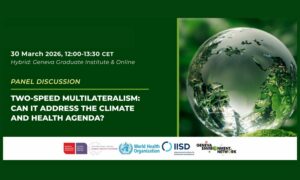




Learning

Santé environnementale: Changement climatique et enjeux sanitaires
16 June -23 June 2026
From Climate Crisis to Health Transformation: A Planetary Approach
28 September 2026 – 9 October 2026
Links and Resources
- Heatwaves and the Role of Geneva | GEN
- Belém Health Action Library | Alliance for Transformative Action on Climate and Health (ATACH)
This living library showcases diverse and cross-cutting actions that health systems around the world are taking to adapt, build resilience, and protect communities in the face of climate change. - Linking Health and Climate Action: Five recommendations for the 31st United Nations Climate Change Conference from Santa Marta | IISD | 14 May 2026
- 2026 Lancet Countdown Europe Report on health and climate change | Lancet Countdown | 21 April 2026
- Two-Speed Multilateralism: Breaking the Deadlock on Climate and Health | Health Policy Watch | 30 March 2026
- COP30 Special Report on Health and Climate Change | WHO | 14 November 2025
- COP30 Special Report on Social Participation in Health and Climate | WHO | 14 November 2025
- Alliance for Transformative Action on Climate and Health (ATACH)