
Nouvelle
From Geneva to Yerevan | International Geneva @ UN Biodiversity Conference
The 2026 UN Biodiversity Conference will take place in Yerevan, Armenia from 19 to 30 October 2026. This major event, convened under the theme “Taking Action for Nature” includes concurrent meetings of the governing bodies of the Convention and its Protocols: the 17th meeting of the Conference of the Parties to the Convention (COP17), the twelfth meeting of the Conference of the Parties serving as the Meeting of the Parties to the Cartagena Protocol on Biosafety (CP-MOP12), and the sixth meeting of the Conference of the Parties serving as the Meeting of the Parties to the Nagoya Protocol on Access to Genetic Resources and the Fair and Equitable Sharing of Benefits arising from their Utilization (NP-MOP6).
About the 2026 UN Biodiversity Conference
The 2026 UN Biodiversity Conference will take place in Yerevan, Armenia, from 19 to 30 October 2026. This major event, convened under the theme “Taking Action for Nature” included concurrent meetings of the governing bodies of the Convention and its Protocols, including the 17th meeting of the Conference of the Parties to the Convention (COP17), the twelfth meeting of the Conference of the Parties serving as the Meeting of the Parties to the Cartagena Protocol on Biosafety (CP-MOP12), and the sixth meeting of the Conference of the Parties serving as the Meeting of the Parties to the Nagoya Protocol on Access to Genetic Resources and the Fair and Equitable Sharing of Benefits arising from their Utilization (NP-MOP6).
The Government of Armenia will convene the High Level Segment of the UN Biodiversity Conference 2026 on 27 and 28 October 2026 to galvanize leadership and political momentum in support for the effective implementation of the Kunming-Montreal Global Biodiversity Framework and other decisions expected to be adopted at the Conference.
The Leaders’ Summit on Biodiversity
The year 2026 provides a decisive moment to take stock of progress in implementing the Kunming-Montreal Global Biodiversity Framework (KMGBF), renew political leadership, and accelerate action. Against this backdrop, the incoming Armenian Presidency of COP 17 and its concurrent meetings hosted a one-day, by invitation, Leaders’ Summit on Biodiversity, under the motto “Leaders’ for Nature” on 16 October 2026 in Yerevan, Armenia.
The Summit provided an opportunity to review progress in implementing the Kunming-Montreal Global Biodiversity Framework, renew political leadership, and mobilize greater ambition and coordinated global action ahead of COP 17. It concluded with “Yerevan Declaration – Taking Action for Nature” reaffirming commitment to the implementation of the Framework, including the mission to halt and reverse biodiversity loss by 2030 and achieve the vision of living in harmony with nature by 2050. → Read more at:
- Press Release – Yerevan Declaration – Taking Action for Nature | Armenia | 16 October 2026
- Secretary-General’s remarks to the Leaders’ Summit on Biodiversity at COP 17 | UN SG | 16 October 2026
- Guterres urges faster action and financing to stop biodiversity loss | UN News | 16 October 2026
- Yerevan Declaration recognises not enough biodiversity action but leaves key commitments unresolved | WWF | 16 October 2026
- IUCN President delivers statement at the Leaders’ Summit on Biodiversity ahead of CBD COP17 | IUCN | 16 October 2026
State of Biodiversity Action Report on Progress in the Implementation of the Kunming-Montreal Global Biodiversity Framework
The State of Biodiversity Action report on progress in the implementation of the Kunming-Montreal Global Biodiversity Framework, released on 15 October 2026, provides the first comprehensive global stocktake of progress towards the Framework’s 2030 targets and 2050 vision.
Drawing on national reports, updated biodiversity strategies, scientific assessments and diverse sources of knowledge, it assesses progress across all 23 targets, identifying achievements, implementation gaps and barriers. The final report brings together evidence from countries and stakeholders worldwide to examine where progress is advancing and where efforts must accelerate. It highlights the need for stronger implementation, coordinated action and increased ambition to translate global commitments into tangible outcomes for nature. As a key input to the Global Review at COP 17, the report provides an evidence base to guide decision-making and help Parties and stakeholders accelerate action to halt and reverse biodiversity loss.
Read more:
- Guterres urges faster action and financing to stop biodiversity loss | UN News | 16 October 2026
- UN Report Finds Growing Global Commitment to Biodiversity Goals, Highlights Urgent Need to Accelerate Action Through 2030 | CBD | 15 October 2026
- ED press statement – launch of the State of Biodiversity Report, COP17 Leaders’ Summit | UNEP | 15 October 2026
- The world is waging a ‘war on nature’ as progress on biodiversity targets lags | UN News | 15 October 2026
- Press Conference – Launch of Global Report “State of Biodiversity Action” – Conference of the Parties (COP 17) | UN | 15 October 2026
- COP17: Developed countries ‘fall far short’ of UN targets for nature finance | Carbon Brief | 15 October 2026
Leveraging Local and Global Action for Nature Towards UN Biodiversity Conference COP17 | From Geneva to Yerevan | International Day for Biological Diversity
In preparation for the 2026 UN Biodiversity Conference, leading experts from key Geneva-based UN institutions and processes speaking at the Geneva Celebration of the International Day for Biological Diversity provided updates on preparations for this major milestone. They also reflected on the need for inclusive, participatory and impactful whole-of-society action for nature.
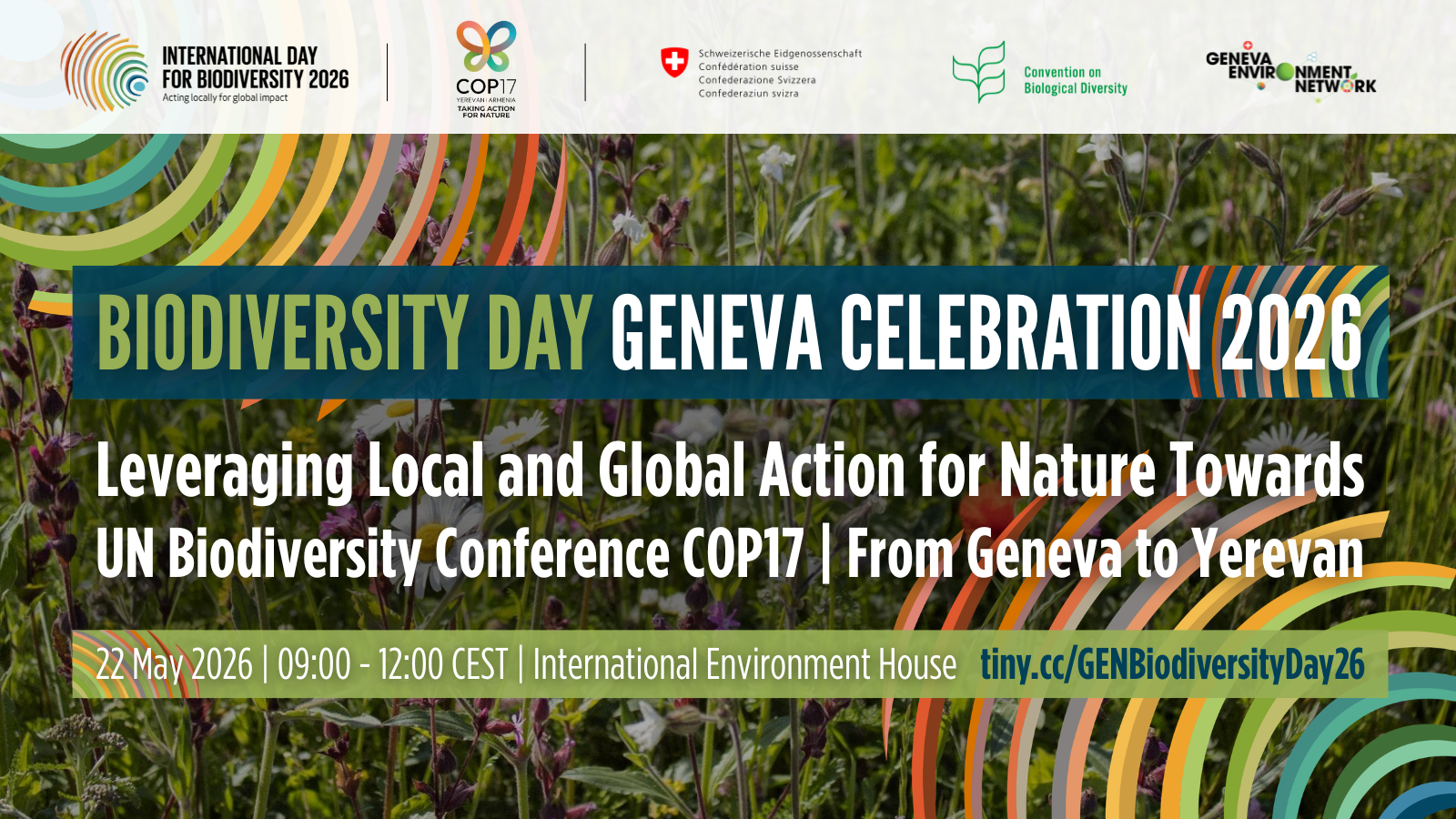
Events in Geneva
In preparation for the 2026 UN Biodiversity Conference, various actors in Geneva, including the Geneva Environment Network and its partners, have organized multiple events.





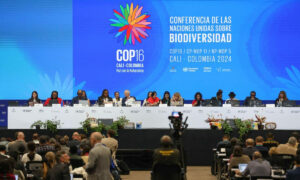
Geneva Stakeholders Engagement
As a global hub for biodiversity governance, there will be a strong multilateral Geneva presence at the UN Biodiversity Conference, providing contributions to the events and discussions. Additional organizations will be included as the Conference approaches.

Basel, Rotterdam and Stockholm Conventions (BRS Conventions)
The Basel, Rotterdam and Stockholm Conventions will participate to underscore the role of the chemicals, pollution and waste cluster supports the biodiversity and health nexus to discuss how their work contributes to the work done under the CBD,
Biovision Foundation
Biovision is committed to building sustainable food systems – from farm to fork. We promote agroecological approaches, socially equitable value chains, and food security, and agricultural production that is in harmony with nature. By supporting focused research and projects in sub-Saharan Africa and in Switzerland, we develop solutions for the future – through initiatives led by us or together with partner organizations.
Business for Nature
Nature loss is a real business risk, yet businesses cannot halt nature loss on their own. Without strong policies and clear rules of the game, corporate action remains fragmented and limited in scale. Multilateral processes like the COP are essential to set ambition, align expectations, and create the pressure and accountability governments need to act, unlocking the conditions for business to invest, innovate and contribute meaningfully to protecting and restoring nature. Business participation at COP17 will be critical because: implementation is currently too slow, private sector action is essential, voluntary action isn’t enough and business voices shape ambition.

Convention on International Trade in Endangered Species of Wild Fauna and Flora (CITES)
At COP17, the CITES Secretariat will follow the negotiations closely and engage stakeholders on how CITES supports the goals and targets of the KMGBF.
Convention on Wetlands
The Convention on Wetlands is the intergovernmental treaty that provides the framework for the conservation and wise use of wetlands and their resources.
Community of Practice on Environment, Climate, Conflict, and Peace (ECCP)
The Community of Practice on Environment, Climate, Conflict, and Peace (ECCP), as part of the Peace@CBD collective, will also be present at various peace-related activities at CBD, highlighting policy priorities for addressing peace and insecurity during implementation of the Global Biodiversity Framework.

Food and Agriculture Organization (FAO)
FAO supports its Members in advancing the objectives of the CBD, including the KMGBF. At COP17, the Organization will advocate for more efficient, inclusive, sustainable and resilient agrifood systems as an essential solution to the biodiversity crisis, in line with its Strategy on Mainstreaming Biodiversity across Agricultural Sectors and Action Plan 2024-2027.

Geneva Human Rights, Biodiversity and Land Task Force (GeHRBiL)
GeHRBiL gathers civil society organizations working in Geneva to bring forward the human rights issues in relation to biodiversity and land and to introduce these issues in the work of the Geneva-based UN Human Rights Bodies
Group on Earth Observations (GEO)
GEO will have a strong presence at COP17, with the Global Ecosystems Atlas, GEO Biodiversity Observation Network (GEO BON), and GEO Members and partners working to strengthen the science, data and knowledge systems needed for biodiversity monitoring, reporting and decision-making.
GEO is a co-convenor of the Data to Action Pavilion at COP17, alongside GEO BON, the Global Biodiversity Information Facility (GBIF), the Smithsonian Institution and the University of Zurich.
International Institute for Sustainable Development
IISD will be at COP17, co-organizing various side events and providing analysis of the negotiations.
International Labour Organization (ILO)
ILO supports the integration of biodiversity with the promotion of decent work.

International Organization for Standardization (ISO)
Governments, scientists, businesses and biodiversity organizations are setting ambitious goals to halt and reverse biodiversity loss. The next challenge is implementation. International Standards can help translate biodiversity commitments, scientific knowledge and policy frameworks into practical, measurable approaches that organizations can use across sectors and borders.
International Union for Conservation of Nature (IUCN)
IUCN is a membership Union of government and civil society organisations. It works to advance sustainable development and create a just world that values and conserves nature.

Minamata Convention on Mercury
The Minamata Convention on Mercury is participating to underscore the importance of coordinated action to protect global biodiversity, highlighting the Convention’s efforts in reducing mercury pollution, a major threat to both biodiversity and human health, with a special focus on vulnerable populations such as Indigenous Peoples and local communities.
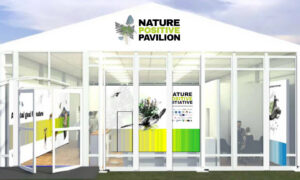
Nature Positive Pavilion at COP17
The Pavilion creates a platform within the blue zone for a wide range of voices to come together to ensure that nature-positive outcomes are secured and on track. It offers a vibrant and welcoming space for a diversity of voices to engage and collaborate, identifying and scaling the solutions needed to halt and reverse nature loss.
Office of the High Commissioner for Human Rights (OHCHR)
A safe, clean, healthy, and sustainable environment is essential to the full enjoyment of a wide range of human rights, including the rights to health, food, water and sanitation.

UNECE
UNECE will co-organize and contribute to several events.
UN Environment Programme (UNEP) Europe Office
UNEP delivers science-based solutions to prevent, halt and reverse the decline of nature and foster sustainable development, maintaining nature’s contributions to people and sustaining a healthy planet.
UNEP Finance Initiative
At COP17, UNEP FI will mobilize its network of members and partners to highlight the critical role of finance in protecting and restoring nature. Throughout the conference, UNEP FI will showcase progress on biodiversity finance since the adoption of the GBF, spotlight leading initiatives, commitments and innovations from across the finance sector, and advance dialogue on what is still needed to align global financial flows with biodiversity goals.

UN Trade and Development (UNCTAD)
The 2026 UN Biodiversity Conference offers a timely opportunity to translate this agenda into concrete commitments and consider how trade can support global biodiversity goals while advancing sustainable and inclusive development – an alignment that UNCTAD argues is both necessary and achievable.
World Health Organization (WHO)
WHO develops biodiversity-informed public health plans, global evidence summaries on biodiversity and health, assists countries in assessing health vulnerabilities from biodiversity loss and monitors biodiversity-informed health policies to ensure human rights, equity, and Health for All are upheld.
WBCSD
WBCSD’s Nature Action Imperative supports members in incorporating nature into decision-making, while developing credible and impactful nature strategies aligned with leading voluntary and regulatory frameworks.

WWF
WWF works to help local communities conserve the natural resources they depend upon; transform markets and policies toward sustainability; and protect and restore species and their habitats. Its efforts ensure that the value of nature is reflected in decision-making from a local to a global scale.
Parallel and Side Events in which Geneva Stakeholders will be Active
- The Global Action Plan on Biodiversity and Health: Advancing Coherence and Co-Benefits Across Global Environmental and Health Governance Mechanisms | Organized by
CBD, BRS Conventions, CITES, CMS, Ramsar convention on wetlands, WOAH and Minamata | 21 October 2026, 11:15 CEST | Lastiver – Youth Group meeting room - Taking Action for Nature, Taking Action for Health: Prevention at Source | Organized by CBD, UNDP, UNEP, UNEP/BPLU/BLB, IUCN, SCBD, SCBD, WHO, WOAH, BMUV, BMUV | 22 October 2026, 11:15 CEST | Shaki – Marie Khan Women’s Caucus meeting room
- MEA Synergies for KMGBF Implementation: Taking Forward the Global Review through the Bern Process | UNEP, UNEP-WCMC, CBD, Sweden, Switzerland, Mexico | 22 October 2026, 14:30 CEST | Spitak – Side-event Room 2
- Critical energy transition minerals and Biodiversity: managing trade-offs for a Just Transition | Organized by UNDP, UNEP, IISD | 22 October 2026, 16:15 CEST | Spitak – Side-event Room 2
- Making Indigenous and Community Conservation Visible: Strengthening KMGBF Reporting through Existing Global Platforms | Organized by ICCA Consortium, IIFB, FPP, IUCN, UNEP-WCMC, IUCN CEESP, WCPA, ILC, WRI, Indigenous Navigator | 22 October 2026, 16:15 CEST | Bjini – Indigenous Peoples and Local Communities Group meeting room
- Scaling up action on invasive alien species: the need to take a strategic approach to meet Target 6 | IUCN, IUCN-ISSG, FFI, SCBD, IPBES, TNFD, GBIF, WOAH | 23 October 2026, 11:30 CEST | Spitak – Side-event Room 2
- Advancing Sustainable Wildlife Management through Partnerships, Knowledge and Implementation | Organized by CBD, CIC, CMS, CITES, FAO, IIED, IIFB, IUCN, IUFRO, TRAFFIC, UNEP, WOAH CIFOR-ICRAF | 23 October 2026, 11:15 CEST | Aparan – JUSCANZ meeting room
- Scaling up business action for biodiversity | Organized by ISO, MOEJ, NPI, TNFD, WBCSD, Business for Nature, IUCN | 23 October 2026, 11:15 CEST | Ljevan – GRULAC meeting room
- Strengthening democratic resilience through the Bern Convention case-file system | Organized by Council of Europe, Ramsar convention on wetlands and Armenia | 23 October 2026, 14:30 CEST | Spitak – Side-event Room 2
- Nature-based Solutions for Central Asia: Scaling up action for biodiversity, climate resilience and transboundary water cooperation | Organized by UNECE | 23 October 2026, 16:15 CEST | Lastiver – Youth Group meeting room
- Trade and Biodiversity in Focus: policy pathways to delivering the KMGBF targets | Organized by UNCTAD, CBD, OECD | 23 October 2026, 16:15 CEST | Talin – Side-event Room 1
- Indigenous Peoples Ambassadors for Primary Forests: Celebrating Indigenous Leadership in Forest Conservation and Stewardship | Organized by IUCN, IUCN Forests and Grasslands, UNFFS, GEF | 22 October 2026, 11:15 CEST | Bjini – Indigenous Peoples and Local Communities Group meeting room
- Advancing the energy sector’s actions and contributions to the Kunming-Montreal Global Biodiversity Framework: Navigating NBSAPs and national targets | Organized by IPIECA, FFI, IUCN, USCIB , CBD | 26 October 2026, 11:15 CEST | Shaki – Marie Khan Women’s Caucus meeting room
- Wild Plants that Sustain Lives: Scaling Sustainable Use and Trade of Medicinal and Aromatic Plants for GBF Implementation | CITES, Nepal, WHO, TRAFFIC, BGCI, CONABIO, Mexico | 26 October 2026, 16:15 CEST | Kapan – Asia-Pacific meeting room
- Nature as the Foundation for Health: Aligning Biodiversity, Climate and Health Systems, Global Launch of the WHO-TNC Policy Brief Series | Organized by WHO and TNC | 27 October 2026, 16:15 CEST | Shaki – Marie Khan Women’s Caucus meeting room
- From the Global Review to National Action: Closing the Ecosystem Mapping Gap with the Global Ecosystems Atlas | Organized by GEO, CBD, IUCN | 27 October 2026, 16:15 CEST | Kapan – Asia-Pacific meeting room
- Strengthening Cooperation through Target 7 for Nature and Health: Women’s Roles in Addressing Pollution, Biodiversity and Well-being | Organized by Women4Biodiversity and Vital Voices. Partners: Women’s Caucus for Minamata on Mercury (WC-MC), the Secretariat of the Minamata Convention, UN Women, WHO, and GYBN | 28 October 2026, 11:30 CEST | Spitak
- Securing Landscapes for Nature, People and Climate | Organized by DE, LLF, IUCN | 28 October 2026, 13:15 CEST | Bjini – Indigenous Peoples and Local Communities Group meeting room
- Advancing KMGBF Implementation through Partnerships and Investments to Combat Illegal Wildlife Trade and Promote Sustainable Use | Organized by UNDP, UNEP, UNODC, UNDESA, BECC, CITES, CMS, WB and GEF | 28 October 2026, 16:15 CEST | Komitas – Business and Industry Organizations Group room
- Trade, biodiversity and climate in a changing world order: unlocking competitiveness, regional integration, and market access for biobased products and services | Organized by MMA, UNCTAD, WTO, NF, SEI, EMF | 28 October 2026, 16:15 CEST | Spitak
Positions and Messages
- OHCHR | Ahead of COP17, UN experts urge States to speed up implementation of biodiversity framework targets and centre human rights | 16 October 2026
- UN EMG and OHCHR | Advancing a Human Rights-Based Approach to the implementation of the Kunming-Montreal Global Biodiversity Framework | 15 October 2026
- IUCN | IUCN Position paper for CBD COP17 on scientific and technical issues | IUCN Position paper for CBD COP17 on implementation support mechanisms | IUCN Common Messages to the 2026 Rio Convention Conference of the Parties (COPs)
- IUCN Commission on Education and Communication Citizen Science Task Force | Citizen Science and the Global Biodiversity Framework
- Analysis of education initiatives in the 7th national reports to the Convention on Biological Diversity | Chester Zoo,WWF, the Canadian Centre for Nature Based Education, Canadian Wildlife Federation, Global Youth Biodiversity Network (GYBN), the Centre for Global Education and the IUCN Commission on Education and Communication
- UNEP FI | COP17 Call to Action on High-Integrity Nature Markets Mobilising Private Investment for Nature and People
Reports Launched at COP17
- Red List of Coral Reef Ecosystems | IUCN | 22 October 2026
- Ecosystem Restoration with Indigenous Peoples and Local Communities: A Practical Guide | IUCN WCPA, Re: Wild, Mansourian.org, UNIL, Penn State University, University of East Anglia and University of Pernambuco | 21 October 2026
- Local Biodiversity Outlooks 3 | Forest Peoples Programme | 20 October 2026
- IUCN Global Standard for Effective and Equitable Protected and Conserved Areas | IUCN | 20 October 2026
- Beyond the Percentage: Delivering 30×30 in the ocean | WWF | 19 October 2026
- Well Connected: Protecting the Atlantic High Seas through an ocean-wide sanctuary network | Guillermo Ortuño Crespo, Greenpeace International | 19 October 2026
- BMCG Flagship report: Mainstreaming in Practice: Pathways to Accelerate Progress | Biodiversity Mainstreaming Champions Group | October 2026
- Making Compensatory Conservation Investable: What Institutional Investors Need to Invest in Market-based Compensatory Conservation Schemes | UNEP FI, Environmental Policy Innovation Center, Green Finance Institute, TERRASOS, UNDP Biofin, WCS | October 2026
News at COP17
- EU4Biodiversity in Sevan Project Officially Launched | COP17 Armenian Presidency | 23 October 2026
- Global Strategy for Fungal Conservation | Global Fungal Transformation | 21 October 2026
- Making 30×30 count for nature and people: IUCN launches the Global Standard for Effective and Equitable Protected and Conserved Areas | IUCN | 20 October 2026
- Official Opening of the Pavilion Dedicated to the International Forum on the Underlying Causes of Biodiversity Loss | COP17 Armenian Presidency | 23 October 2026
- Virtually all coral reef ecosystems face high risk of collapse in 50 years – IUCN Red List of Ecosystems | IUCN | 22 October 2026
- Hambardzum Matevosyan Met with CITES Secretary-General | COP17 Armenian Presidency | 22 October 2026
- New guide putting Indigenous Peoples, local communities and rights at the heart of ecosystem restoration released | IUCN | 21 October 2026
- From Yerevan to Antalya: What COP 17 and COP 31 can do for climate, nature, and land | IISD | 20 October 2026
- From global ambition to local action: IUCN President sets priorities ahead of COP17 | IUCN | 19 October 2026
- Four finance shifts needed on the road to COP17Four finance shifts needed on the road to COP17 | UNEP FI | 19 October 2026
- Protecting Earth’s fragile biodiversity takes spotlight at Armenia talks | UN News | 19 October 2026
- New Greenpeace report: Ocean sanctuary network could protect over a third of danger zones for vulnerable leatherback turtles in the Atlantic high seas | Greenpeace International | 19 October 2026
Links
- Addressing Biodiversity Loss and the Role of Geneva
- International Day for Biological Diversity | GEN
- CBD COP 17 Roundup Newsletter | UN Biodiversity
- What to Expect at the UN Biodiversity Conference (CBD COP 17) | IISD | 7 October 2026
News Ahead of COP17
- Here’s what to expect at a “pivotal” UN conference on biodiversity | UNEP | 16 October 2026
- CITES at CBD COP17: “Taking action for nature” through sustainable, legal and traceable trade in wild species | CITES | 15 October 2026
- Global Trade Update (October 2026): Can developing countries unlock the potential of biodiversity? | UN Trade and Development | 14 October 2026
- How can developing countries benefit more from biodiversity-based trade? | UN Trade and Development | 14 October 2026
- The road to Yerevan: Accelerating action on global biodiversity goals | WWF | 14 October 2026
- COP17 must deliver results, not more promises, says WWF, as analysis reveals how to unblock progress for 2030 nature goals | WWF | 14 October 2026
- Landmark universal State of Nature Indicators and Metrics equip businesses and investors in understanding their nature-related dependencies, impacts, risks and opportunities | Nature Positive Initiative | 13 October 2026
- New Framework Aims To Make Nature Risk Less Complicated For Businesses | Forbes | 13 October 2026
- CBD COP17: What does it really mean to protect 30% of the planet? | Greenpeace | 13 October 2026
- Science-Based Targets for Nature 2.0: a practical route to credible action on nature | Science-Based Targets Network | 12 October 2026
- The trillion-dollar opportunity: An open letter from businesses and financial institutions to governments on incentive reform | Business for Nature
- In Nairobi an informal dialogue seeks common ground on the functioning of the Subsidiary Body dedicated to Article 8(j) of the CBD | Astrid Schomaker, Executive Secretary, CBD | 14 August 2026
- Parties recognize the world is not on track to achieve biodiversity targets; Nairobi meetings pave the way for pivotal 2026 UN Biodiversity Conference in Yerevan | CBD | 12 August 2026
- Statement by the Executive Secretary of the Convention on Biological Diversity, Astrid Schomaker, at the closing of the seventh meeting of the Subsidiary Body on Implementation | CBD | 12 August 2026
- ICCWC expands coordinated global action against wildlife crime in 2025 | CITES | 4 August 2026
- Progress achieved on crucial scientific and technical issues ahead of COP 17 | CBD | 3 August 2026
- Amid concurrence and disagreement over various issues, SBSTTA28 ends in Nairobi ahead of CBD COP17 in Yerevan | Down to Earth | 2 August 2026
- CITES Plants Committee renews momentum for strengthening conservation and trade regulation for brazilwood, edible orchids, and aromatic plants | CITES | 30 July 2026
- From guidance to action: What will it take to implement Sustainable Wildlife Management under the GBF? | Earthmind | 30 July 2026
- World falling short on 22 of 23 nature targets for 2030, says draft UN report | Carbon Brief | 29 July 2026
- Draft global report on collective progress in the implementation of the Kunming-Montreal Global Biodiversity Framework | CBD | 26 July 2026
- Reptiles, eels, sharks and corals selected for CITES review process for ensuring trade sustainability and species survival | CITES | 22 July 202
- Summary, conclusions and key messages of the global review of collective progress in the implementation of the Kunming-Montreal Global Biodiversity Framework | CBD | 22 July 2026
- On the road to COP17: A conversation with Astrid Schomaker, Executive Secretary of the Convention on Biological Diversity | UNEP FI | 7 July 2026
- High-level roadmap: Aligning financial flows with the Kunming-Montreal Global Biodiversity Framework | UNEP FI | 2023