
Event Conference
The Rights of Nature: Intersections with the Right to a Healthy Environment | HRC62 Side Event
02 Jul 2026
11:00 – 12:00
Venue: Palais des Nations, Room Concordia 1
Organization: Office of the High Commissioner for Human Rights, Panama, Geneva Environment Network
This side event to the 62th session of the Human Rights Council was organized by the Office of the UN High Commissioner for Human Rights (OHCHR) and the Permanent Mission of Panama, with the support of the Geneva Environment Network. It raised awareness of and fostered an exchange about the links between human rights and the rights of Nature.

About this Event
Panama recently announced its intention to initiate an intergovernmental negotiation process towards a proposed Universal Declaration of the Rights of Nature within the UN General Assembly. In most countries, laws classify Nature as property. This allows wetlands, forests, and other ecosystems to be managed in ways that may harm the environment. However, for thousands of years, Indigenous Peoples, Afro-descendant Peoples, and local communities have recognized that human life is inseparable from the rivers, forests, species, and territories that sustain us. This ancestral knowledge is now increasingly reflected in legal frameworks, international resolutions, court decisions, and public policies. The Rights of Nature framework recognizes ecosystems and natural communities as entities with independent and inalienable rights to exist and flourish. This redefines them as rights-bearing entities.
By allowing ecosystems to thrive without interference, this approach strengthens environmental protection and is often linked to human rights, especially the human right to a clean, healthy, and sustainable environment. The Kunming-Montreal Global Biodiversity Framework acknowledges that the rights of Nature are vital to its successful implementation. The UN General Assembly has adopted a series of resolutions on Harmony with Nature, and the Inter-American Court of Human Rights, one of the most progressive human rights courts in the world, has issued advisory opinions stating that the human right to a clean, healthy, and sustainable environment protects environmental components as legal interests in their own right. Recently, through its Advisory Opinion AO-32/25 on the climate emergency and human rights, the Inter-American Court affirmed that recognizing Nature’s right to conserve its essential ecological processes strengthens a sustainable development model that respects planetary limits and secures vital resources for current and future generations. Protecting Nature as a collective interest offers a framework for States and other stakeholders to build a global legal system for sustainable development. This system is essential for preserving life-supporting conditions and guaranteeing a clean, healthy, and sustainable environment, which is fundamental to realizing human rights. Recognizing Nature as a subject of rights aligns with the Inter-American corpus iuris and reflects the principle of interdependence between human rights and the environment.
Panama is one of the States that recognizes Nature as a legal subject with enforceable rights. These rights are recognized at different levels of governance in Bolivia, Spain, Uganda, New Zealand, Peru, Canada, and the United States of America. In Ecuador, the rights of Nature are recognized in its constitution.
In various countries, certain rivers, lakes, mountains, and land of significance to Indigenous Peoples and others have been endowed with rights of their own. Many of the countries at the forefront of recognizing the rights of Nature have strong and active Indigenous Peoples, for whom the rights of Nature are a given, part of their worldview, cultural practices, religions, and traditional laws. This event explored how protecting Nature and its rights could reinforce human rights – particularly the human right to a clean, healthy, and sustainable environment and advance harmony with Nature.
Environment @ HRC62
The 62nd regular session of the Human Rights Council (HRC62) will take place in Geneva from 15 June to 7 July 2026. Consult this regularly-updated page that highlighted the environmental-related activities of this session.
Speakers
By order of intervention.
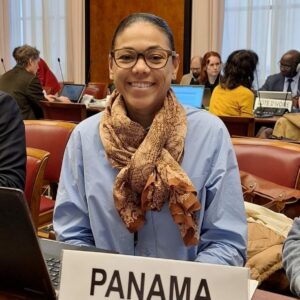
Cecilia ATHERTON REVILLARD
Attaché, Permanent Mission of Panama to the United Nations Office and other international organizations in Geneva
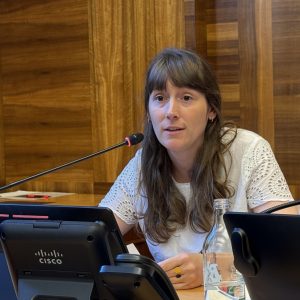
Harriet HIRST
Human Rights Officer, Environment and Climate Change Unit, UN Office of the High Commissioner for Human Rights

Budi TJAHJONO
International Advocacy Director, Franciscans International

Natalia GREENE
Global Director, Global Alliance for the Rights of Nature (GARN) | Video message
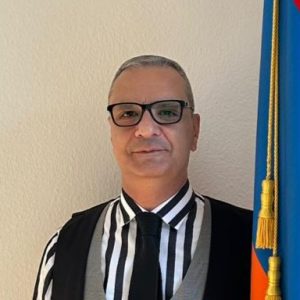
Hambik MINASYAN
First Secretary, Permanent Mission of Armenia to the United Nations Office and other international organizations in Geneva

Diana RIZZOLIO
Coordinator, Geneva Environment Network | Moderator
Highlights
Video
Summary
Opening
Cecilia ATHERTON REVILLARD | Attaché, Permanent Mission of Panama to the United Nations Office and other international organizations in Geneva
- I want to start with a question that may seem philosophical but is legal.
- When a river is poisoned, a forest is destroyed, or a reef becomes silent, who has been harmed?
- Throughout most of legal history, the answer has been humans, but only when the ecosystem in question clearly benefited us. In many places, Nature is treated as property. The law has allowed owners to use, damage, or even destroy it. Wetlands, forests, and entire living systems have often been reduced to entries in a ledger, subject to human will. This profound disconnection from the natural world has been one reason behind the triple planetary crises we face today.
- However, for thousands of years, Indigenous Peoples, Afro-descendant Peoples, and local communities have understood something deeper: human life is closely connected to the rivers, forests, species, and lands that sustain us. We do not own Nature. We are part of it.
- For a long time, this wisdom was not part of the law. Today, it is increasingly recognized, and in 2025, one of the highest legal authorities in the Americas strongly supported this change.
- In its 2025 Advisory Opinion on the climate emergency and human rights, the Inter-American Court of Human Rights recognized ecosystems as complex, interdependent systems in which the degradation of one part can affect other species and human beings, who are themselves part of those systems.
- “Based on this understanding, the Court called for a major shift in thinking. It said that recognizing Nature’s right to maintain its essential ecological processes helps create a development model that respects the planet’s limits and protects important resources for future generations. The Court stated that moving toward recognizing the rights of ecosystems is key to keeping them healthy in the long term. This approach gives us strong legal tools to address the triple planetary crisis and prevent serious harm before it is too late. The Court also noted that this recognition lets us move beyond old legal ideas that saw Nature only as property or a resource, and it gives more power to Indigenous Peoples and local communities who have always protected these ecosystems.
- The Court also ensured that this idea was grounded in solid evidence. It explained that this approach is not new to our legal tradition. Instead, it is a modern expression of a principle we already accept, namely that human rights and a healthy environment go hand in hand, in line with the pro natura and pro persona principles.”
- Excellencies, Colleagues, Panama comes to this podium not just with ideas, but with real achievements.
- In 2022, Panama recognized the rights of Nature in our national law. In 2023, we became the first country in the world to recognize the rights of a marine species. Today, more than thirty-two percent of our land and over half of our seas are protected. For us, this is not just a goal. It is the law, a legal precedent, and our policy.
- So, let me return to my opening question: who has been wronged? Panama’s answer is that increasingly, it is Nature itself, irrespective of whether we can measure its direct benefits to us. When the law recognizes this truth, it can better protect Nature because it shifts protection standards towards a recognition of real planetary limits that must be respected, ensuring a sound balancing of human needs and Nature’s needs and limits.
- The Inter-American Court has said that protecting rights of Nature, as a shared interest, provides countries with a basis for creating a global legal system for sustainable development. We believe the time has come to build that foundation worldwide.
- This is why Panama is working within the United Nations General Assembly to launch an inclusive, State-led process to create a Universal Declaration of the Rights of Nature. We ask the General Assembly to approve the start of this effort. Seventy decades ago, after World War II, humanity declared that every person is born with inherent rights that cannot be taken away. Now it is time to extend that logic to the living world that makes those rights possible.
- This journey will take time. It will be grounded in agreement and will respect the many legal and cultural traditions represented here. Let me be clear: the Universal Declaration of the Rights of Nature is not intended to conflict with existing treaties and frameworks. Instead, it is meant to complement and strengthen them, providing an additional tool to protect our shared environment, while respecting countries’ current obligations. Every long journey starts with a single step, and that step is to agree to begin.
- Panama is ready to take that step. We invite you, Excellencies and friends, to join us on this path.
Panel Discussion
Harriet HIRST | Human Rights Officer, Environment and Climate Change Unit, UN Office of the High Commissioner for Human Rights
- Let me begin by expressing appreciation to Panama for their efforts to start a discussion on a Universal Declaration on the Rights of Nature at the UN General Assembly.
- If the current heatwave has made one thing clear, it is that our wellbeing and survival as a species are inseparable from the health of our planet and our environment. We are part of nature, and our fate is inextricably linked to it. If we fuel the climate crisis and do not protect the earth’s biodiversity, we will feel the dire consequences.
- This raises an important question: if healthy ecosystems are indispensable for the enjoyment of human rights, can recognizing and protecting the Rights of Nature strengthen the protection of human rights, particularly the right to a clean, healthy and sustainable environment?
- Rather than viewing nature as property or a resource useful to human beings, the Rights of Nature framework recognizes ecosystems as worthy of protection in their own right. Nature is not only valuable because of the benefits it brings to people; it has intrinsic value that merits recognition and protection.
- For many Indigenous Peoples, the inherent value of nature to exist and thrive is part of their worldviews, cultural practices, governance systems and traditional laws. It is thus not a coincidence that large parts of the earth’s remaining biodiversity is found in Indigenous Peoples territories.
- However, it is essential that any recognition of the Rights of Nature goes hand in hand with the full respect of the rights of Indigenous Peoples. This includes their right to self-determination, their knowledge systems and their governance institutions. Implementation must be grounded in meaningful participation and free, prior and informed consent. Such safeguards are essential to ensure that Rights of Nature are not invoked to justify exclusionary conservation approaches or restrictions on Indigenous Peoples’ rights.
- Increasingly, elements of this understanding are also being reflected in international environmental governance. The Kunming-Montreal Global Biodiversity Framework has highlighted that both nature and humans are interlinked. Nature possesses intrinsic value and should be regarded as more than a resource for human use, maintaining its integrity, functioning, and regeneration.
- Similarly, the UN General Assembly has issued a series of resolutions titled “Harmony with Nature”, recognizing the intrinsic value of nature and encouraging more harmonious relationships between humanity and the natural world.
- The right to a healthy environment guarantees all people the right to live in conditions that support their health, well-being, and dignity free from environmental degradation. The Inter-American Court of Human Rights, in its advisory opinion on the Environment and Human Rights, held that the right to a healthy environment also protects the components of the environment such as forests, rivers and seas, as legal interests in themselves. This means that it protects nature and the environment, not only because of the benefits they provide to humanity but because of their importance to other living systems that also merit protection in their own rights.
- Human rights are universal, inherent, and inalienable. The human rights framework is therefore an avenue to protect the environment because environmental degradation directly undermines the enjoyment of human rights. We know that nature’s contributions to people are vital for our existence. Recognizing nature as a rights-bearing entity is inherently linked to the strengthening of human rights, as it affirms that ecosystems, species, and natural processes deserve protection because they possess intrinsic value. This recognition can be advanced through a rights-based ecosystem approach that promotes the conservation, restoration, and sustainable management of ecosystems as interconnected living systems, while ensuring participatory decision-making and governance mechanisms that safeguard both ecological integrity and human well-being for present and future generations.
- In conclusion, the human rights and the Rights of Nature frameworks can be complementary. Proponents of both share a common objective: to protect the environment. In this sense, the Rights of Nature and human rights should not be viewed as competing paradigms, but as mutually reinforcing, complementary approaches to addressing the environmental challenges of our time.
Budi TJAHJONO | International Advocacy Director, Franciscans International
- The Rights of Nature (RoN) movement represents a profound shift in thinking, moving away from treating nature as property and toward recognizing ecosystems as rights-bearing entities. This approach responds to the triple planetary crisis of climate change, pollution, and biodiversity loss by granting rivers, forests, and species legal personhood, enabling guardians to defend them in court. Such frameworks have already been adopted in some countries such Ecuador, Bolivia, and New Zealand, and some others where ecosystems are recognized as legal persons with enforceable rights. This legal innovation resonates deeply with spiritual traditions and human rights law, offering a holistic framework for ecological justice.
Some key examples of the recognition of Right of Nature:
- Currently, we have some examples on the recognition of right of nature, such as in Ecuadeor where the Right of Nature is recognized in the Constitution; in 2010, Bolivia adopted the Law of the Rights of Mother Earth; New Zealand (2014 and 2017) adopted a legislation Te Urewera Act and Te Awa Tupua Act, which grant legal persons to national park and river rights, powers, duties, and liabilities of a legal person. Spanish legislation recognizes the legal personality of the Mar Menor Lagoon in 2022,
- We also welcome the efforts by the Government of Panama which work on the Universal Declaration: the Rights of Nature – which will be presented at the UN General Assembly this year.
Relevant processes at the international and regional levels (non-exhaustive)
- At the UN, the General Assembly has adopted several resolutions on Harmony with Nature including the one in 2024 (A/RES/79/210). While the UN Human Rights Council in 2021 adopted a resolution on the Global Recognition on Rights to a clean, healthy and sustainable environment which was confirmed by the UN General Assembly in 2022. In the same year, the UN Secretary-General’s report on Harmony with Nature that recognizes global advances in Earth jurisprudence—particularly the rights of Nature and ecological economics.
- The COP15 the Convention on Biodiversity (CBD) in Montreal in 2022 adopted Kunming-Montreal Global Biodiversity Framework, which provides a vision of a world living in harmony with nature by 2050, and urges the member states to implement it.
- Most importantly, in 2025 the Inter-American Court of Human Rights issued its Advisory Opinion (OC‑32/25, July 3, 2025) declaring for the first time that States have clear obligations under human rights law to confront the climate emergency. The Court affirmed that Nature and its components (ecosystems, rivers, forests) can bear legal rights, breaking with traditional anthropocentric legal frameworks.
- We also welcome the efforts by the Government of Panama which work on the Universal Declaration: Rights of Nature – which will be presented at the UN General Assembly this year.
Perspectives on the Right of Nature (RoN)
- The discussion on the Right of nature is not something started only recently. Many indigenous communities across the globe share a cosmovision, which consider Earth as a living-being, as a mother /or mother nature, as a source of life – where the living being and non-being are interconnected. This perspective confers intrinsic value on nature—that is, inherent worth independent of any utilitarian benefits to humans—while also emphasizing relational and instrumental values through principles requiring harmony among the human, nature (sometimes called as creation), other living being such as animal, plants as well as non-living beings such mountains, desert, etc. Indigenous cosmovision positions humans within ecological families where all beings possess agency and dignity deserving respect regardless of their economic usefulness.
- Similarly, centuries before the modern Rights of Nature movement, St. Francis of Assisi, in the 12th century, articulated a vision of creation strikingly resonant with its core premise: that nature is not mere property to be exploited, but a community of kin entitled to reverence in its own right. Composed near the end of his life, Francis’s Canticle of the Creatures praises God through the elements of creation, addressing the sun, moon, wind, water, fire, and earth as “Brother” and “Sister,” and inviting each to join in praising their Creator. Rather than positioning humanity above or apart from the natural world, Francis described himself as a companion and kin to other creatures – a relationship of fraternity rather than dominion”. He became the patron saint of ecology, and as such, Franciscans, and the organization I work for, focus on environmental justice as a core principle.
- Accordingly, in the eve of the Paris Agreement on Climate change in 2015, then Pope Francis issued his encyclical called Laudato Si, which insists that the environment is not an external resource but our “common home.” This affirms that harm to nature is harm to humanity, emphasizing the intrinsic value of all creatures and builds on the vision of St. Francis of Assisi, who saw all creation as kin, “Brother Sun, Sister Moon”, and called for reciprocity and reverence toward the natural world.
- Importantly, this notion has not been shared by the more dominant culture. The Western or Judeo-Christian cosmovision has the anthropocentric approach. It looks at nature and its resources as the object that provides services to human beings. Nature is often considered as property or resources for extraction.
- This derives from Christian’s scriptural interpretation, particularly Genesis 1:28, which grants humanity “dominion over the fish of the sea, over the birds of the air, and over every living thing that moves upon the earth.” This leads to the on-going understanding that human being are above nature. Thus they have the “right” to exploit and dominate nature rather than having the responsibility of “stewardship” or “guardianship”.
- Under this worldview, nature is reduced to resources and services serving human needs: orests exist only for timber, rivers for irrigation, minerals for industry, with no intrinsic value beyond what humans can derive from them. This stands in sharp contrast to Indigenous cosmologies that recognize humans as kin to non-human beings with reciprocal responsibilities.
- The result is a system where environmental laws protect corporate rights and enable continued ecological degradation, treating the Earth as disposable property rather than a living entity deserving respect and care, even as mounting climate and environmental crises reveal the unsustainability of separating ourselves from the natural world we depend on.
- And even as we begin discussions on a ‘just transition’, there is not a full recognition or reckoning of these past practices that have brought us these harms including overconsumption, and mining and other business activities destruction of the environment and overexploitation without accountability. There needs to be a new approach moving forward, and one that aligns with ecological limits and social equity, the one that centers on justice for communities which have been affected by extractive economy.
Where we are now and the way forward
- There needs to be a new approach moving forward, one that dismantle systems that reduce nature to objects and property—structures that generate poverty and ecological decline by prioritizing profit over life, whether human or non-human.
- The examples coming from several countries show us that it is possible and it urgent in the face of the current crises we are experiencing. The Rights of Nature represents more than policy reform. It confronts a fundamental disconnect from the planet, from our Mother Earth that lies at the heart of the planetary crisis. The recognition of Rights of Nature also means that we are addressing the root causes of the situation we have today. It means also that we shift our paradigm from the anthropocentric, with the utilitarian and hierarchical approach where human beings are above nature, into eco-centric, where the sustainable ecosystem is at the center.
- While we understand the challenges on the recognition and implementation of the Rights of Nature, we can see some examples of the use of RoN in the court or legislation:
- Ecuador: In the case of Yasuní-ITT Oil Project (2023), the Ecuador Constitutional Court ruled that oil extraction violated nature’s constitutional rights, ordering halt to new drilling and mandating remediation plans. In 2024, on the case of Churute Reserve Mining, the Ecuador Supreme Court struck down proposed mining concessions in Amazon reserve, reinforcing forest protections
- Colombia: In 2024 Court declared the Amazon rainforest in Putumayo and Caquetá departments enjoys enforceable rights, forcing government suspension of illegal logging and mining permits affecting 7 million hectares
- Spain: Following 2022 recognition of Mar Menor lagoon as legal person, courts are adjudicating whether agricultural runoff violates its constitutionalized rights—a test case for European implementation.
- India: Bombay High Court granted legal standing to Gulf of Khambhat mangroves (Mangrove Ecosystems), ordering remediation of polluting industries affecting these critical coastal buffers.
Key challenges on the recognition and implementation of Rights of Nature:
- Guardianship and legal representation: A core structural problem emerges when ecosystems gain legal personhood but lack autonomous agency to exercise rights. As documented in implementation studies, courts declaring rivers or forests as “juridical persons” typically require appointment of human guardians to represent these entities.
- Human interest vs nature interests: This tension represents perhaps the most philosophically contentious dimension of Rights of Nature law. Critics argue that granting ecosystems standing comparable to humans forces impossible trade-offs where conservation goals restrict economic development, employment opportunities, and livelihoods dependent on natural resource extraction.
- Government interest’s vs community vs nature: Implementation exposes divergences between state-level policy objectives, grassroots aspirations, and ecosystem protections. National constitutional provisions like Ecuador’s 2008 recognition or recent Panamanian legislation pledge robust legal status for nature yet states simultaneously pursue extractive development projects contradicting those commitments.
Conclusion:
- Changing our relationship with nature becomes not optional but essential, paving the way for legal, economic, and cultural transformations that recognize nature’s inherent worth independent of human utility, and enabling societies to address planetary emergencies at their source rather than treating only surface-level manifestations.
- By asserting the Rights of Nature, communities can articulate that the current system itself is problematic—not simply malfunctioning but operating according to premises incompatible with ecological sustainability and intergenerational justice.
- It is timely and important for the international community, in particular the UN and its UN Human Rights Council to continue the discussion on the Rights of Nature. It should include a comprehensive analysis on the existing legal framework at the national and regional levels, including its implementations, challenges and opportunities. We have the existing jurisprudences from national courts which can inspire us to see that the Rights of Nature has been part of the legal system in several countries, and we can further explore its global recognition.
Natalia GREENE | Global Director, Global Alliance for the Rights of Nature (GARN) | Video message
- For decades, environmental law has sought to regulate how much harm we can do to nature. Yet, despite thousands of environmental law and international agreements, biodiversity continues to collapse, ecosystems are disappearing and climate crisis is accelerating.
- Perhaps, the problem is not simply we need more environmental laws, but perhaps the problem is that our legal system treats nature primarily as property, as an object. The rights of nature offers a completely different paradigm, it recognizes that rivers, forests, wetlands, mountains, oceans and entire ecosystems are not objects to be owned or exploited, but living communities with their own intrinsic rights to exist, flourish, regenerate, thrive and evolve.
- Over 400 legal developments recognize rights of nature have emerged across over 40 countries, 22 with legal jurisprudence and 18 with projects of civil society. International law is beginning to evolve. KMGBF recognizes that rights of nature can contribute to its goal. The UNGA also has the Interactive Dialogues of the General Assembly on Harmony with Nature.
- The IACtHR underscores that recognizing rights of nature strengthens a model of sustainable development that respects planetary boundaries while protecting both present and future generations. This is a profound legal evolution. It recognizes that protecting nature is not only instrumental for humans’ well-being. Nature itself deserves protection because of it is the foundation of all life.
- As GARN, we see RoN not simply as legal innovation, but as a global movement for cultural transformation on how we relate to nature, how humanity needs to stop eco-apartheid, stop treating nature as an object to exploit, but to start treating nature as a subject to protect.
- Law is only one tool. Communities are another. Indigenous leadership is essential. Youth, science, local governments, artists, judges and civil society have a role to play in building a new relationship bet humanity and living earth. However, gov’ts have power to accelerate this needed paradigm shift.
- On Panama Declaration: such a declaration will not replace human rights, but strengthen them. Because there cannot be lasting human rights on a dying planet. Human rights and RoN are not competing frameworks. On the contrary, they are mutually reinforcing expressions of justice, dignity and our shared future.
- The question before us is no longer whether this movement will continue to grow, but whether our institutions will evolve quickly enough to respond to ecological realities of 21st century. RoN framework invites us to rethink our relationship with the earth, not as owners, but as members of a larger natural community of life
- As Victor Hugo has said, there is nothing more powerful than an idea whose time has come. This is the time for the rights of nature.
Closing Remarks
Hambik MINASYAN | First Secretary, Permanent Mission of Armenia to the United Nations Office and other international organizations in Geneva
- Armenia extends its gratitude to the Permanent Mission of Panama as well as to the Office of the High Commissioner for Human Rights and Geneva Environment Network for organizing today’s discussion. We appreciate the fact that side event provided the opportunity to hear the voices and perspectives of civil society.
- The positions of the member states, as well as legal, conceptual frameworks around environmental rights and rights of nature are certainly divergent. What unites us, though, is the sober understanding that, if not coherently addressed, the triple planetary crises of climate change, biodiversity loss and land degradation will create the most profound global risks across national borders and legal systems, causing irreparable harm to humanity as a whole.
- The Kunming-Montreal Global Biodiversity Framework recognizes diversity of value systems, and states that for those countries that recognize them, rights of nature and rights of Mother Earth are an integral part of successful implementation of KMGBF. At the same time, I am convinced that regardless of whether our constitutions and laws explicitly recognize the rights of nature, its preservation, conservation, restoration and sustainable use are overarching obligations which must be translated into concrete actions for countering environmental crimes, reversing biodiversity loss, restoring land and establishing rigid regulatory frameworks that promote ecosystem-based approaches to achieve harmony with nature.
- This year Armenia is taking over the Presidency of the 17th Meeting of the Conference of the Parties to the Convention on Biological Diversity. The motto of the Armenian COP Presidency is “Taking action for nature”. Broadly interpreted, it reflects our common endeavor to join efforts in preserving environment that we all share, mitigating risks that stretch beyond boundaries and safeguarding nature for future generations. Nature preservation relies on scientific research, traditional knowledge, the whole system of values and even their spiritual interpretation, activities by individuals, communities and corporations, as well as the obligations and duties by states. Our aim will be to make sure that all voices are heard and all perspectives are valued.
- I would also like to underscore that Armenia is a proponent of rights-based approach, which is embedded in Kunming-Montreal Global Biodiversity Framework. KMGBF recognizes that implementation efforts should respect cultures and rights of indigenous peoples and local communities over lands, territories, resources and traditional knowledge, as well as by women and girls, children and youth, and persons with disabilities.
- The rights of indigenous peoples and local communities are the major area of convergence when we speak of intersection of biodiversity and human rights as well as rights of nature. One of the most tangible achievements of the CBD has been the establishment of the Subsidiary Body on Article 8 (j), which was crucial to further institutionalize the meaningful participation of IPLCs in conservation efforts.
- Armenia stands ready to further this momentum and to achieve agreement on modus operandi of the SB on Article 8j. We will work to ensure that IPLCs’ participation is full and meaningful. Indigenous Peoples are the original stewards of Earth’s biodiversity, custodians of sacred knowledge systems and vital partners in maintaining the balance between humanity and nature. Scientific evidence confirms that biodiversity is preserved more effectively on lands cared for by Indigenous Peoples, a testament to the irreplaceable value of traditional practices and cultural perspectives in fulfilling the Convention’s goals.
- Let me conclude by once again thanking all organizers and speakers of today’s side event. We look forward to welcome you all in Yerevan.
Photos


