Newsletter 13 Apr 2026
Environment: What’s Up in GENeva | 13 – 19 April 2026
The Geneva Environment Network’s weekly newsletter includes the latest information on the global environmental agenda, main events, job vacancies, as well as other useful resources and updates. The Geneva Environment Network is not responsible for the content of any linked site or any link contained in a linked site. Stay tuned and follow us on X (Twitter), Facebook, LinkedIn, Instagram, Bluesky, Youtube, and WhatsApp, or visit our website regularly for additional updates.
Image of the week | At the event “Two-Speed Multilateralism: Can It Address the Climate & Health Agenda?“, panelists, joined online by representatives from Türkiye, President of the upcoming UN Climate Change Conference COP31, discussed how climate action can better advance health outcomes, following the launch of the Belém Health Action Plan at COP30, and as the world moves towards the 79th World Health Assembly and COP31. The discussion considered the implementation of the World Health Organization’s Global Action Plan on Climate Change and Health and the evolving governance landscape with coalitions of willing countries and non-state actors moving forward practical initiatives and voluntary roadmaps. © Diana Jalea, Communications and Platform Associate, Global Health Center, Geneva Graduate Institute | Maison de la Paix, 30 March 2026
Road to Santa Marta | Transition Away from Fossil Fuels
At the end of next week, the First Conference on Transitioning Away from Fossil Fuels, convened by Colombia and the Netherlands, will kick off in Santa Marta, Colombia. It will be a solutions-focused forum, the start of a new high-ambition diplomatic pathway. The Conference is designed as a space for countries, subnational governments and other stakeholders that recognize the need to implement a transition away from fossil fuels in a just, orderly and equitable manner, in line with climate goals and the best available science. At the end of March, Colombia announced that 45 other countries from different regions of the world are ready to meet in Santa Marta to launch an international coalition to jointly implement the transition away from fossil fuels. It is also to be highlighted that 2,608 organizations and communities, including from International Geneva, have joined this call, participating as of now in the Virtual Dialogues organized by sector and population group. The UN system is also mobilized to attend the Conference, including the UN Environment Programme (UNEP), the Office of the High Commissioner for Human Rights (OHCHR), and the International Labour Organization (ILO). The outcomes of the summit are also expected to inform discussions at the next UN Climate Change Conference COP31, where an informal COP30 Presidency Roadmap for Transitioning Away from Fossil Fuels drafted by the team is expected to be delivered.
→ The Conference and its outcomes are relevant for discussions in Geneva’s multilateral processes. Consult our dedicated update on Climate Action from Geneva to Santa Marta putting a spotlight on Geneva-based organizations and their engagement in preparation for and at the Santa Marta Conference.
Additional news on the Conference and on fossil fuels include:
- Letter to Colombia and Netherlands as Co-Hosts of the Santa Marta Conference | The Climate Reality Project, Center for International Environmental Law (CIEL), Earth4All, Global Witness, Transparency International | 9 April 2026
- The road to Santa Marta: Transitioning away from fossil fuels require credible corporate transition plans | World Benchmarking Alliance | 9 April 2026
- Why COP31 must break free from fossil fuel influence | Transparency International | 9 April 2026
- A new economic superpower could spark a global retreat from fossil fuels | Mark Hertsgaard and Kyle Pope, Covering Climate Now | The Guardian | 7 April 2026
- Securing a Global Framework to End the Fossil Fuel Era | Youth Concern on Environment and Development YCED | 6 April 2026
- The Beginning Of The End For Fossil Fuels Can Start In Colombia | Catarina Rolfsdotter-Jansson, We Don’t Have Time | Forbes | 2 April 2026
- How fossil fuel companies and their financiers avoid criticism on X | Global Witness | 2 April 2026
- The beginning of the end of fossil fuels | We don’t have time | 2 April 2026
- 25 Countries and 27 Subnational Jurisdictions Already have Fossil Fuel Production Restrictions—and Many Have Held Firm Through Recent Energy Shocks | IISD | 1 April 2026
- Drawing the Line and Holding It: What existing moratoria, bans, and restrictions reveal about transitioning away from fossil fuels | IISD | 1 April 2026
- Catholic Actors’ Statement for Santa Marta: A Moral Moment to Deliver Action for Our Common Home | CIDSE, on behalf of Catholic faith leaders and organizations | 1 April 2026
- Developing an International Regime to Advance the Transition Away from Fossil Fuels: Three Tracks for a Just Transition | Fossil Fuel Treaty | April 2026
- Major oil producers among 46 nations joining fossil fuel phase-out summit | Climate Home News | 31 March 2026
- From the Santa Marta Conference to COP31, a fossil fuel phaseout must be brought about – and with human rights at its core | International Federation for Human Rights | 31 March 2026
- The Santa Marta 2026 Conference: Filling the Silence on Fossil Fuels from COP 30 | EcoJesuit | 31 March 2026
- Two-Speed Multilateralism: Breaking the Deadlock on Climate and Health | Health Policy Watch | 30 March 2026
- Inside the emerging roadmap away from fossil fuels | UNSW | 27 March 2026
- Policy Briefing: Expectations towards the Santa Marta Conference on Just Transitioning Away from Fossil Fuels | CAN Europe | 18 March 2026
Escalation of the War in the Middle East | Environmental Risks, Humanitarian Fallout, and Energy Insecurity
In the past two weeks, fighting has continued across parts of the Middle East, even as a temporary cease-fire was reached on 7 April. As stressed by the United Nations and stakeholders, this has included strikes affecting nuclear sites, which carry risks of long-term environmental and public health consequences. Humanitarian needs have been deepening, with rising civilian casualties, mounting displacement and growing strain on services. The ongoing crisis is also exposing a central vulnerability in the global economy: the dependence on fossil fuels flowing through regions affected by conflict, a situation which is strengthening the UN’s case for a faster transition to cheaper, more resilient renewable power. Leading experts who have been exposing the environmental impacts of the war include Kaveh Madani, UNU-INWEH Director, who called for wider popular resistance to the long-term environmental harms of global warfare: “All the weapons that have been produced have had carbon footprints — the missiles that fly, the jets, the tanks that are burned, the oil fields that are being attacked and the gas fields that are being burned. All of these are producing a lot of greenhouse gas emissions.” Read more at:
- Iran Fact-Finding Mission calls on parties to the devastating regional conflict to end hostilities and investigate alleged violations, and strongly condemns violent rhetoric | Human Rights Council’s Investigative Bodies | 10 April 2025
- Iran’s Black Rain and the Health Shadow of Oil Wars | Think Global Health | 10 April 2026
- The due regard principle in IHL: Protecting the environment amid armed conflict | CEOBS | 9 April 2026
- Middle East Escalation of Conflict, Global external situation report #3 | WHO | 9 April 2026
- Türk condemns deadly wave of Israeli strikes on Lebanon | OHCHR | 8 April 2026
- Questions and Answers: US, Israel, Iran, and the Laws of War | Human Rights Watch | 8 April 2026
- Türk deplores incendiary rhetoric in Middle East war | OHCHR | 7 April 2026
- UN nuclear agency chief ‘deeply concerned’ by reports of latest attack on Iran power plant | UN News | 4 April 2026
- FAO Food Price Index rises in March as Near East conflict raises energy costs | FAO | 3 April 2026
- Middle East crisis exposes global energy fault line as UN urges shift to renewables | UN News | 2 April 2026
- Middle East war: UN’s Türk decries ‘severe restrictions’ on free speech | UN News | 1 April 2026
- War’s Environmental Fallout: U.N. Expert Decries Targeting of Oil Sites & Desalination Plants | Democracy Now! | 1 April 2026
- The Strait of Hormuz crisis affects more than just oil. Here are 9 other commodities | WEF | 1 April 2026
- A Silent Casualty of War: The Rising Risk of Ecocide in the Gulf | Arab Gulf States Institute | 1 April 2026
- Ending war between USA-Israel and Iran must focus on human rights of Iranians: UN experts | OHCHR | 30 March 2026
- “Military Escalation in the Middle East: Economic and Social Implications for the Arab States region” Assessment | UNDP | 30 March 2026
- How the War in the Middle East Is Affecting Energy, Trade, and Finance | IMF | 30 March 2026
- From gas to grain: Fertilizer disruptions raise risks for food security and trade | UNCTAD | 30 March 2026
- How the Energy Shock Could Deepen Debt Risks in Developing Economies | IISD | 26 March 2026
- The true price of the Iran war for oil, people and the environment | Global Witness | 9 March 2026
States’ Climate Obligations and Responsibilities in the African Context
In the previous weeks, various organizations from International Geneva and beyond have filed amicus briefs and written observations to the African Court on Human and Peoples’ Rights in its proceedings on its advisory opinion on the obligations of States with respect to the climate change crisis, following a request from the Pan African Lawyers Union (PALU) together with a coalition of African NGOs in May 2025. The petition argues that climate change poses a significant threat to numerous rights protected under these instruments, including the right to a clean, healthy and sustainable environment, and emphasizes the disproportionate impact of climate change on Africa, despite the continent’s minimal contribution to historical greenhouse gas emissions. It calls on the Court to affirm that African states have an obligation to protect their populations from climate-related harms and to ensure human rights are safeguarded in all climate action. This would be the fourth advisory opinion on State obligations in relation to climate change, after earlier advisory opinions from the International Tribunal for the Law of the Sea (2024), the Inter-American Court of Human Rights (2025), and the International Court of Justice (2025). Submissions to the proceedings include:
- Amicus filed by Astrid Puentes Riaño, United Nations Special Rapporteur on the human right to a clean, healthy and sustainable environment | UN Special Rapporteur on the right to a healthy environment | 30 March 2026
- Defining States’ Climate Obligations and Responsibilities in the African Context | CIEL | 30 March 2026
- Protecting biodiversity is a human rights obligation in the climate crisis, says WWF in submission to African court | WWF | 30 March 2026
- World’s Youth for Climate Justice’s Amicus Curiae Submission | WYCJ | 30 March 2026
- Human Rights Watch Submission for the African Court Advisory Opinion on State Obligations Related to the Climate Crisis | Human Rights Watch | 30 March 2026
Outcomes of the 61st Session of the Human Rights Council
The 61st session of the UN Human Rights Council (HRC61) came to a conclusion in Geneva on 31 March, with the adoption of resolutions that address environmental issues, although not their primary focus:
- A/HRC/61/L.13 | The right to food | Cuba | Adopted without a vote
- Recognizing the importance of giving due consideration to the adverse impact of climate change on the full realization of the right to food, the resolution reiterates that improving access to productive resources and responsible public investment in rural development… is essential for eradicating hunger and poverty, in particular in developing countries, including through… sustainable agriculture practices and climate-resilient food systems, appropriate small-scale irrigation and water management technologies in order to reduce vulnerability to and recover from droughts, tackle water scarcity and ensure the preservation and sustainable use of ecosystems.
- A/HRC/61/L.18 | Promoting human rights and the Sustainable Development Goals through transparent, accountable and efficient public service delivery | Azerbaijan, Ecuador, Georgia, Kenya, Malaysia, Thailand, Türkiye | Adopted without a vote
- The resolution emphasizes that resilient, inclusive and accountable public institutions constitute one of the primary means through which States implement their human rights obligations in natural disaster contexts, and recognizes, in this regard, the importance of early warning and early action mechanisms, including initiatives such as the United Nations “Early Warnings for All” (EW4ALL).
- A/HRC/61/L.21 | Adequate housing as a component of the right to an adequate standard of living, and the right to non-discrimination in this context | Germany, Brazil, Finland, Namibia | Adopted without a vote
- Calling upon States to take the right to adequate housing into account in strategies for adaptation to and mitigation of climate change, and to develop and promote environmentally sustainable and sound housing design, construction and maintenance, energy efficiency, and climate resilience, the resolution extends, for a period of three years, the mandate of the Special Rapporteur on adequate housing as a component of the right to an adequate standard of living, and on the right to non-discrimination in this context.
- A/HRC/61/L.26 | The human rights of persons in street situations | Brazil, Cabo Verde, Dominican Republic | Adopted without a vote
- Noting that factors leading to street situations are complex and multidimensional, including drivers such as displacements induced by extreme weather events, environmental degradation or conflicts, the resolution encourages States to integrate persons in street situations into national policies on disaster risk reduction, climate resilience and housing reconstruction strategies, particularly in disaster-prone and climate-vulnerable regions
- A/HRC/61/L.28 | Promotion and protection of human rights and the implementation of the 2030 Agenda for Sustainable Development | Ecuador, Azerbaijan, Brazil, Chile, Fiji, Luxembourg, Portugal, Rwanda, Sierra Leone, Thailand, Uruguay | Adopted as orally revised without a vote
- Recognizing that sustainable development and the protection of the environment, including ecosystems, contribute to and promote human well-being and the full enjoyment of all human rights, for present and future generations, the resolution decides to organize two full-day intersessional meetings for dialogue and cooperation on human rights and the 2030 Agenda for Sustainable Development, to be held in advance of the 2027 and 2029 meetings of the high-level political forum on sustainable development, under the theme of the aforementioned meetings.
- A/HRC/61/L.29 | Mandate of Special Rapporteur on the situation of human rights defenders | Mandate of Special Rapporteur on the situation of human rights defenders | Norway | Adopted without a vote
- The resolution decides to extend the mandate of Special Rapporteur on the situation of human rights defenders for a period of three years.
During the general debates at HRC61, statements from groups of countries that advanced linkages between protecting the environment and promoting human rights included:
- Following the presentation of the Global analytical study on the implementation of a human-rights based approach into the goals and targets of the Kunming-Montreal Global Biodiversity Framework (A/HRC/61/36), a statement by Colombia, on behalf of a cross-regional group of countries, including Costa Rica, Guatemala, Marshall Islands, Germany, Malaysia, Portugal, Slovenia, Spain, Cyprus, Chile, Ukraine, Dominican Republic, Switzerland, Mexico, Belgium, Netherlands, Estonia, and Armenia, underscored that “a rights-based approach to biodiversity issues and environmental problems in general is vital to responding adequately to the novel challenges posed by the triple planetary crisis”. → Watch the statement on UN Web TV.
- On behalf of the Community of Portuguese-Speaking Countries (CPLP), Cabo Verde delivered a statement during the General Debate under Item 3, focusing on climate and environmental justice. As climate change directly threatens human rights—particularly those of the most vulnerable groups—as well as territorial integrity, access to water, agriculture, and economic stability,” the statement urges all States to “reaffirm their commitments under the UN Framework Convention on Climate Change (UNFCCC) and its Paris Agreement, in particular by intensifying mitigation efforts to limit the global temperature increase to 1.5°C.” This includes the “Global Mutirão,” one of the key decisions of COP30, recognizing the importance of ensuring that States’ climate action respects, promotes, and takes into account their human rights obligations. The statement also calls on States to take into account the landmark advisory opinion of the International Court of Justice. → Read the full statement or watch on UN Web TV.
In this session, numerous parallel and side events have also tackled various environmental issues. → Consult key environment-related moments and issues tackled at HRC61, side events, and further resources available on our dedicated HRC61 and the environment update.
Read more on HRC61 in the summary produced by the United Nations Information Service in Geneva for use of the information media → Human Rights Council Concludes Sixty-First Regular Session after Adopting 38 Resolutions | 1 April 2026
Outcomes of the One Health Summit | Turning One Health Approach into Action
The One Health Summit, hosted by the World Health Organization (WHO) and the Government of France under the French G7 Presidency, concluded last week in Lyon, France, with commitments to turn the One Health approach into real-world action. As underscored by the World Health Day Campaign 2026, improving our understanding of the animal–human–environment connection is essential to prevent future pandemics and hinges on collaboration, coordination, communication and capacity-building. Recognizing this interconnectedness, the Summit highlighted how coordinated efforts strengthen international dialogue and mobilize public and private partners for the common goal of One Health. It concluded with renewed efforts from governments and agencies to improve the global health architecture and to advance the integration of the One Health approach across climate action, as highlighted in two signed declarations:
- The One Health & Beyond: A Multi-Stakeholder Declaration recognizes that climate change increasingly affects human, animal and ecosystem health, and that strengthening health resilience enhances climate ambition, social stability and sustainable development. The signatories affirm a shared commitment to advancing the integration of the One Health approach across climate action, including within Nationally Determined Contributions (NDCs), National Adaptation Plans (NAPs) and relevant national climate, development and sectoral strategies. To ensure continuity and coherence across future Climate Change COPs, the signatories launched a voluntary Health & Climate Integration Cycle for the period 2026–2028, aiming to enhance coherence without altering the mandate of the UNFCCC or creating new institutional structures. The declaration also presents a roadmap to monitor progress, including a ministerial event at COP31 in 2026 and the development of consolidated recommendations to further strengthen the integration of climate-related health, zoonotic and vector-borne considerations within existing climate architecture and instruments ahead of COP32 and the 2028 Global Stocktake. The signatories include France, Cambodia, Botswana, Cyprus, Kenya, Armenia, Egypt, Brazil, Singapore, Thailand, United Arab Emirates, Democratic Republic of Congo, Mexico, Tunisia, WHO, Africa CDC, CGIAR, FAO, and WOAH.
- The Joint political declaration on the reform of the global health architecture reaffirms the importance of multilateralism to achieve global health outcomes and the need to overcome fragmentation of the global health architecture to emerging health needs and challenges, including climate impacts. It further commits to promoting advances in science, in a reformed global health architecture, that are increasingly accessible globally to ensure health for all, rooted in an evidence-based approach and to continue working towards the goal of universal health coverage and the protection of the right to health, among others. It was adopted in the margins of the One Health Summit on 7 April 2026 by the representatives or Heads of State and Government of Armenia, Australia, Botswana, Cambodia, Canada, Cyprus, France, Germany, Ghana, Guinea, Japan, Kenya, Norway, Singapore, South Africa, Spain, Sweden, Tunisia, United-Kingdom and by various agencies, including Gavi, UNDP, UNICEF, Unitaid and WHO.
The Summit also resulted in major steps forward for the One Health Agenda, including:
- A new global network of institutions on One Health, led by the One Health Quadripartite partners (FAO, UNEP, WHO, and WOAH), aims to deliver the objectives of the One Health Joint Plan of Action.
- Stronger science to guide global action to be delivered through the extension and expansion of the One Health High-Level Expert Panel (OHHLEP), reinforcing its role in three priority areas: in shaping the global research agenda, supporting the One Health Joint Plan of Action, and driving high-level advocacy grounded in science and evidence.
- A unified strategy to tackle avian influenza threats with a framework strengthening coordination on surveillance, risk assessment, preparedness and response, helping countries shift from fragmented actions to a unified One Health strategy, addressing wider impacts of avian influenza on public health, food security, livelihoods and biodiversity.
- FAO also announced three initiatives to help enterprising youth in the field of One Health, and outlined the three pillars undergirding the integrated approach that aims to sustainably balance and optimize the health of people, animals and ecosystems. → FAO press release
Ahead of the 79th World Health Assembly taking place in Geneva from 18 to 23 May 2026, and the G7 Summit taking place in neighboring Evian-les-Bains, France from 15 to 17 June 2026, the outcomes of the One Health Summit will inform ongoing international discussions on preparedness and coordinated responses to health threats at the human, animal and ecosystem interface. → WHO press release
Additional news include:
- On occasion of hosting the One Health Summit, France has also launched key initiatives: a national strategy for a health-promoting environment to reduce exposure to environmental risks linked to chemicals and pollution; two dedicated programmes for the transition to healthy and sustainable eating and food systems; and a public consultation towards expanding its national strategy on endocrine disruptors toward the goal of “zero exposure to EDs”.
- Joint Statement FAO/WHO/WOAH Joint One Health Learning Taskforce | WHO | 9 April 2026
- G7 One Health Summit launches global diagnostics initiative, and other health stories | WEF | 9 April 2026
- Strengthening One Health through coordinated action on implementation, science, policy and financing | WHO | 8 April 2026
- How ‘One World, One Health’ can move beyond a slogan to become a shared reality | WEF | 5 April 2026
Outcomes of High Seas Treaty PrepCom III
Two months after the entry into force of the Agreement, the third session of the Preparatory Commission for the Entry into Force of the BBNJ Agreement and the Convening of the 1st Meeting of the Conference of the Parties to the Agreement (BBNJ PrepCom III) gathered over 200 representatives of governments, civil society and intergovernmental bodies at the UN Headquarters in New York. The meeting concluded on 2 April 2026, after two intensive weeks of negotiations, where:
- Discussions delivered meaningful progress in key areas, including the structure and functioning of most subsidiary bodies, draft terms of reference for the voluntary trust fund, the establishment of the future BBNJ Secretariat, and on building a prototype for the Clearing-House Mechanism–the Agreement’s data portal and central nervous system.
- Proposals to host the BBNJ Secretariat, were put forward by Belgium (Brussels), Chile (Valparaíso) and China (Xiamen) and the final selection will take place during COP1
- BBNJ COP1 is now scheduled to be held in New York from 11 to 22 January 2027.
- The Dominican Republic and Austria ratified the BBNJ Agreement, bringing the total number of Parties to 88
Read more at:
- Earth Negotiations Bulletin Live Coverage
- Reflections in BBNJ PrepCom3 and the Road to COP1 | Marine Conservation Institute | 7 April 2026
- At high seas treaty summit, a dispute over fisheries managers’ role in conservation | Edward Carver, Mongabay | 7 April 2026
- Progress made, but critical gaps remain as High Seas Treaty PrepCom Talks Conclude | High Sea Alliance | 3 April 2026
- High Seas Treaty Implementation Takes Shape: PrepCom Prepares Ground for COP1 and Implementation | OceanCare | 3 April 2026
- Up to a third of national delegations to key fishing governance meetings are fishing industry representatives, Greenpeace report finds | Greenpeace | 2 April 2026
Updates on UN80 Reform
The UN80 Initiative — the UN’s system-wide reform effort launched to make the organization more effective “for people and planet” — continues to move forward as the United Nations General Assembly adopted on 31 March 2026 a resolution introducing a more structured approach across the full mandate lifecycle, to strengthen how mandates for UN organizations are created, implemented and reviewed. The resolution builds on the work of the General Assembly’s Informal Ad Hoc Working Group on the Mandate Implementation Review, co-chaired by Ambassador Brian Wallace of Jamaica and Ambassador Carolyn Schwalger of New Zealand. The UN Secretary-General welcomed the adoption as a “historic resolution” and “a major step,” highlighting it as “an important step to make the UN more agile, more efficient, more effective, and fit for the future, so it can better deliver.”
Last week, the UNGA held an informal meeting to receive the latest update on the UN80 Initiative Action Plan. Guy Ryder, Under-Secretary-General for Policy, said at the meeting that the broader reform effort is now moving into a new stage. “We are now entering the delivery-focused phase of our work, building on the momentum generated by recent achievements”. Progress under the UN80 Initiative can be tracked through a public dashboard, which provides an overview of actions, timelines and implementation across the system. The General Assembly continues to hold monthly informal briefings on the Initiative, with the next scheduled for 29 April.
Next week, UNEP Committee of Permanent Representatives will convene a briefing on Work Package 27 (WP27) of the UN80 Initiative, at its headquarters in Nairobi, on Thursday 23 April 2026, from 15:00-17:00 EAT (14:00-16:00 CEST). Work package 27 of the Action Plan, led by Inger Andersen, UNEP Executive Director, and Simon Stiell, Executive Secretary of UNFCCC, is to “undertake a thorough assessment of current arrangements and make proposals on possible structural changes and programme realignments on environmental issues.”
Additional news include:
- UN General Assembly Hears Briefing on UN80 Initiative | IISD Knowledge Hub | 8 April 2026
- UN80 Initiative enters ‘delivery phase’, as Member States review progress on key work areas | UN News | 6 April 2026
- UN80: Member States agree on modalities for review of UN mandates | ISHR | 1 April 2026
- UN General Assembly adopts landmark resolution to strengthen the work of the UN system | UN News | 31 March 2026
- → Read more in our UN80 update
Upcoming Deadlines Relevant for the Environment
With the environment high on the agenda of International Geneva and beyond, international processes, negotiations, and fora regularly issue calls for inputs in preparation of future reports, in support of ongoing processes, for awarding those who champion for our planet, or for registering to attend upcoming sessions. A dedicated update lists calls for submissions related to the environment. Additional updates list those related to Human Rights Mechanisms, ongoing contests and environmental awards and prizes. Upcoming deadlines of interest not to be missed in the coming weeks include:
- UNEP Champions of the Earth Award | The Champions of the Earth award is the UN’s highest environmental honor and celebrates individuals and organizations whose actions have a transformative impact on the environment. In 2026, the award focuses on Ocean Health. UNEP is seeking nominations of individuals and organizations whose work delivers solutions to restore marine and coastal ecosystems, reduce climate risks, and create sustainable livelihoods. → Nominations can be submitted via this form by 15 April 2026.
- Declaration on Sea Level Rise Global Online Stakeholder Consultation | The General Assembly, in its decision 78/558 of 1 August 2024, decided to hold a one-day high-level plenary meeting of the General Assembly, no later than the last day of the general debate of its eighty-first session, to further consider sea level rise. In order to support an open, inclusive and transparent process, a global online stakeholder consultation will be organized to gather inputs from stakeholders. Inputs received through this consultation will be compiled and shared with the co-facilitators to inform the intergovernmental consultations on the declaration. → The deadline to submit responses is 15 April 2026.
- Health Diplomacy House | Call for Sessions | On the sidelines of the 79th World Health Assembly, the Health Diplomacy Alliance will convene the Health Diplomacy House, a full-day multi-event space taking place on Thursday, 21 May 2026, in Geneva. The House will provide a shared venue for dialogue, reflection, and exchange on topics such as One Health, global health security, antimicrobial resistance, climate change and health, and more. → If your organization would like to co-create the program by hosting a session, roundtable, or dialogue, please indicate your interest via this form by 18 April 2026.
- 2026 Global Framework on Chemicals (GFC) Baseline Data Collection Survey | The Global Framework on Chemicals measures its progress under the Framework through a measurability structure comprising different types of indicators. To collect baseline data for a selected set of draft indicators currently being considered by the intersessional Open-ended Ad Hoc Working Group on measurability and indicators, a survey has been developed by the GFC Secretariat. → This survey is open until 24 April 2026.
- Basel Convention OEWG 15 Call for Side Events | At OEWG-15, taking place in Geneva from 23 to 26 June 2026, side events will be held on major issues related to the implementation of the Basel Convention. Opportunities to hold side events of 60 minutes are available during lunch breaks and in the evenings of the meeting. → Applications for side events may be submitted by Parties (including subsidiary bodies) and observers via the online application form by 30 April 2026.
- First European Forum for EHRDs | The First European Forum on Environmental Human Rights Defenders (EHRDs), taking place from 3 to 4 June 2026, at the Council of Europe’s Headquarters in Strasbourg, France, will aim to enhance the collaboration between EHRDs, civil society organizations (CSOs), grassroot movements, Indigenous Peoples, government representatives and national, regional and international institutions and mechanisms, as well as other relevant actors to address challenges, share experiences, and promote stronger protections for EHRDs. The Forum, the first of its kind in the region, will enable defenders to connect and strategize with peers engaged in environmental action and engage with policymakers, regional and UN-level organizations and procedures as well as National Human Rights Institutions. → EHRDs and individuals supporting their work across the 46 member States of the Council of Europe are kindly asked to express their interest in the Forum and pre-register via the Expression of Interest Form, preferably no later than 10 May 2026.
Learning opportunities on key environmental aspects for which deadlines are approaching:
- Microplastics: From Environmental Impact to Policy, Innovation, and Public Awareness | 15 – 19 June 2026 | University of Geneva | Application deadline: 15 April 2026
- Sustainability Practices & Indigenous Knowledge | 15 – 19 June 2026 | University of Geneva | Application deadline: 15 April 2026
- Leadership for Sustainability Transition | Geneva Summer School 2026 | 15 – 19 June 2026 | University of Geneva | Application Deadline: 15 April 2026
- Science & Policy for Environmental Action | 22 – 26 June 2026 | University of Geneva | Application Deadline: 15 April 2026
- Education in Emergencies | 22 – 26 June 2026 | UNIGE, Save the Children, IHEID, Geneva Global Hub for Education in Emergencies | Application Deadline: 15 April 2026
- International Law & International Humanitarian Law | 22 June – 10 July 2026 | University of Geneva | Application Deadline: 15 April 2026
- Strategic Foresight Summer School: Navigating Uncertainty for Decision-Makers | 29 June – 3 July 2026 | University of Geneva | Application Deadline: 15 April 2026
- Global Health: Advocacy and Diplomacy in Action | 29 June – 3 July 2026 | University of Geneva | Application deadline: 15 April 2026
- Harnessing trade to advance national climate and development goals | 27 April 2026 – 8 June 2026 | United Nations Trade and Development | Registration Deadline: 20 April 2026
- Water Governance: Frameworks and Negotiations | 22 June – 3 July 2026 | Institute for Environmental Sciences of the University of Geneva, Geneva Water Hub | Registration Deadline: 21 April 2026
- Mobiliser la pensée systémique pour devenir acteur et actrice de la transition – Écologie, société, économie: Comprendre les changements en cours pour mieux y trouver sa place | 10 – 12 June 2026 | Uni Carl-Vogt | Institute for Environmental Sciences of the University of Geneva | Application Deadline: 30 April 2026
Upcoming GEN Events
In the coming weeks, the Geneva Environment Network will co-organize various events on key environmental issues shaping our global agenda. Upcoming events include:
- Next week, the Geneva Environment Network and various partners will host two side events to the Regional Forum for Sustainable Development 2026 for the ECE Region, taking place at Palais des Nations from 21 to 22 April 2026:
- Innovative Action for the SDGs through Education for Sustainable Development | 20 April 2026 | Palais des Nations, S-225-4 & Online, Webex | 10:00 – 11:15 CEST
Due to space constraints, in-person participation in this event is open to UN badge-holders only. To attend this event online, kindly register on Webex. - Education for Biodiversity: Accelerating Delivery of the Global Biodiversity Framework | 20 April 2026 | Palais des Nations, S-225-4 & Online, Webex | 11:45 – 13:00 CEST
Due to space constraints, in-person participation in this event is open to UN badge-holders only. To attend this event online, kindly register on Webex.
- Innovative Action for the SDGs through Education for Sustainable Development | 20 April 2026 | Palais des Nations, S-225-4 & Online, Webex | 10:00 – 11:15 CEST
- Implementing Pollutant Release and Transfer Registers (PRTRs) for Fulfilling International and National Commitments to Mitigate Pollution | 22 April 2026 | Online, Webex | 15:00 – 16:30 CEST
Held as a virtual side event to the fourth meeting of the Conference of the Parties (COP4), convening from 21 to 24 April 2026, in Nassau, Bahamas. → To attend the online, kindly register on Webex. - Navigating Global Sustainability Standards in the Mining Sector | 30 April 2026 | Palais des Nations, Room XVI | 13:40 – 14:45 CEST
Organized within the framework of the Geneva Dialogues on Minerals and Metals. → To participate in person to this event taking place on 30 April 2026, non-UN badge holders are required to kindly register on Indico. - Launch | Safe disposal of unused medicines — A One Health Approach for National Systems | 6 May 2026 | Online, Webex | 14:00 – 15:30 CEST
Launching a new UNEP guidance “Safe Disposal of Unused Medicines – A One Health Approach for National Systems” providing a systematic, comprehensive and multisectoral framework to support countries in strengthening national systems for the safe disposal of unused human and veterinary medicines. → To attend this event, kindly register on Webex. - Sand and Sustainability: An Essential Resource for Nature and Development | Report Launch | 13 May 2026 | Palais des Nations, Room XII | 15:00 – 17:00 CEST
Organized within the framework of the Geneva Dialogues on Minerals and Metals.→ To participate, kindly register on Indico - Consult the full list of upcoming GEN events.
Enjoying a Green Spring in Geneva
While school holidays are still ongoing in Geneva this week, to enjoy a blooming spring our suggestions this week include:
- Zéro déchet 2.0 par Cédric Liardet | 14 April 2026 | The Shifters Switzerland | 3DD Geneva
Cédric Liardet, architect pioneer of sustainable living, will share his “Zero Waste 2.0” approach, demonstrating how he reduces his daily waste. The waste that ends up in his bin but also the less visible and more distant waste such as when we browse the internet. He recounts his successes and setbacks in a world that pushes us to overconsume. - Un object, un son, une histoire : à la rencontre du garçon saumon | 15 April 2026 | Musée d’Ethnographie de Genève
Family visit to discover the story of the boy who was kidnapped by salmon because he had disrespected them. After observing the mask of the salmon chief, let’s listen to the story of Shanyaak’utlaax in the library music room by indigenous sounds from Alaska - « Des glaciers aux Bains des Pâquis » | Until 15 April 2026 | Bains des Pâquis
As part of the exhibition “From Glaciers to the Bains des Pâquis,” the City of Geneva is organizing two workshops in collaboration with the curator of the Maison de la rivière. - Pâques au jardin | 15, 17 & 18 April 2026 | Grande Place, Balexert
Spring is here, and with it comes the desire to create, explore, and enjoy nature. To celebrate Easter, Balexert is offering a special program for children and families: fun gardening workshops designed to spark curiosity, foster creativity, and celebrate this season of renewal. - Entre la nature et moi | 16 April 2026 | City of Geneva | Espace de quartier Jonction
Activity organized every Thursday for seniors by Claudia Osorio, a Jonction resident, involving the artistic creation of objects using recycled materials. - Atelier du Management Durable de Genève | 16 April 2026 | Objectif Sciences International | Maison de l’Avenir
The objective of these monthly workshops is to advance Global Impact Projects – cross-cutting, cross-sectoral initiatives – from initial concept through structures design to deliverables robust enough to trigger commitments at various public and private levels (partnerships, funding, mandates). These projects aim to contribute to the revitalization of International Geneva. - Festival Archipel – Musique et art sonore | From 17 to 26 April 2026 | Salle communale de Plainpalais
Archipel is Switzerland’s leading international festival for contemporary music, experimental sound art, and musical creation founded in Geneva in 1992. It promotes all forms of musical research and sound art, helping to give them recognition and sustained visibility in Swiss cultural life. - D’arbre en arbre – Balade avec le Service des Espace Verts | 18 April 2026 | Service des Espaces Verts | Bibliothèque de la Cité
Come discover the trees of the Old Town and Parc des Bastions. During this walk, you’ll be guided by professionals from the City of Geneva’s Parks and Recreation Department, who will share their knowledge of this exceptional heritage. - La symphonie des arbres : atelier-balade pour une écoute créative | 18 April 2026 | Hors-Murs | Parc de la Grange
What sounds lie hidden beneath the surface of trees and soil? What noise does grass make when you walk on it? Take advantage of this walk to discover the unusual musical instrument Subterraneum and record the vibrant sounds of Parc de la Grange for yourself. - Marcher La Ville – Rivières urbaines, des corridors pour la faune et la flore | 19 April 2026 | La libellule | Meeting point: Plaine de Plainpalais
A walk along the banks of the Arve and Rhône rivers to rediscover urban rivers and their ecological role in the city. We’ll be on the lookout for animals that use these waterways as their habitat and the plants that colonize them, giving them their natural appearance. - Deep Time Walk. Marche du Temps Profond, Earth Day 2026 | 19 April 2026 | Deep Time Walk | Centre Nature du Vallon de l’Allondon
The Deep Time Walk is a powerful, immersive experience that takes through the vast story of our planet’s 4.6-billion-year history—step by step. Over the course of a 4.6 km walk, each meter represents one million years, allowing us to journey from Earth’s fiery origins through the emergence of life, mass extinctions, and evolutionary breakthroughs—right up to the present moment. It is a walk that shifts perspectives, deepens connection to the planet, and invites reflection on our place in this unfolding story. - Swiss Landscapes – Eric Eriston Winarto | Until 19 April 2026 | Fédération des artistes de Kugler | Espace Kugler Gallery
The exhibition “Swiss Landscapes” evokes the panoramas encountered while traveling along the roads of the cantons of Geneva and Vaud. This project seeks to capture the essence of the mountainous landscape through a variety of settings: changing weather conditions, daylight and nighttime lighting, and shifting atmospheres. - Biodiversité en péril | Until 29 April 2026 | Bibliothèque de Saint-Jean
Public Eye’s regional groups, supported by the NGOs Public Eye and Swissaid, organized a traveling exhibition offering an overview of the evolution of seeds over the centuries, their importance in various local cultures, and the threats posed to them by the seed industry. - Exhibition – 40 Trees in the City of Geneva Through the Seasons | Until 31 May 2026 | Colladon Residence
A photo exhibit dedicated to the trees of Geneva, produced by the City of Geneva’s Parks and Recreation Department, that takes you on a journey through the city and helps you get to know the trees around us better. - Exhibition “Quel froid!” | Until 30 August 2026 | Maison Tavel
This exhibition explores the theme of winter in Geneva and beyond, bringing together traditions, artists’ perspectives, and visual archives. Visitors are guided through popular practices, urban scenes, and majestic landscapes, from Lake Geneva to the Alps. - Temporary Exhibition – « Jamais la nature ne nous trompe » | Until 23 December 2026 | Conservatoire et Jardin botaniques
Come and discover a scientific and aesthetic object that bears witness to Jean-Jacques Rousseau’s passion for nature and botany: one of his rare portable herbariums, designed to deepen knowledge of plants and awaken an interest in botany.
What (Else) to Read Next?
- Emperor penguin and Antarctic fur seal now Endangered due to climate change – IUCN Red List | IUCN | 9 April 2026
The emperor penguin and Antarctic fur seal are now both Endangered, according to The IUCN Red List of Threatened Species™. Climate change in Antarctica is leading to changes in sea-ice that are projected to cause the emperor penguin population to halve by the 2080s, while reduced food availability has already driven a 50% reduction in the Antarctic fur seal population since 2000. The southern elephant seal is also now at risk of extinction due to disease. - India withdraws bid to host COP33 climate talks | Climate Home News | 8 April 2026
The Indian government has quietly withdrawn its offer to host the COP33 climate summit in 2028, Climate Home News has learned. An Indian official informed other nations of the decision on 2 April, saying the offer – first made by Prime Minister Narendra Modi in December 2023 – was being withdrawn “following a review of its commitments for the year 2028”. No additional explanation has been provided. - More Food, Fewer Emissions: Stopping Food Waste Before It Starts | Kaveh Zahedi, FAO | IISD | 8 April 2026
Reducing food loss and waste is one of the fastest, most cost-effective ways to cut emissions, strengthen food security, and deliver on the ambition of the COP 31 Presidency. → This was also elaborated upon at the Geneva celebration of International Day of Zero Waste. - Crafting Pathways for Delivery on Trade and Sustainability after MC14 | TESS Forum | 2 April 2026
In the wake of MC14, the instinct is to highlight the stark challenges facing the multilateral trading system and the limited progress on either concrete outcomes or the WTO reform agenda. For those focused on a more sustainable future, however, this is a time to think afresh and collaboratively about how the trading system can deliver concrete, fair, and effective progress on sustainability.
- States that champion human rights defenders must consider candidacy for ECOSOC NGO Committee: UN experts | OHCHR | 2 April 2026
Independent human rights experts urged Member States that are committed to prioritizing human rights defenders and civil society space to stand in the upcoming elections for the Committee of Non-Governmental Organisations (the “NGO Committee”), a body of the UN Economic and Social Council (ECOSOC).
- IPCC: ‘Frustrating and disappointing’ meeting leaves AR7 timeline in deadlock | Carbon Brief | 1 April 2026
Governments are still at loggerheads over the timeline for publishing the Intergovernmental Panel on Climate Change’s (IPCC) next three-part report, after countries doubled down on existing positions at a meeting in Bangkok. - UNEP FI makes climate scenario data accessible and actionable for financial institutions | UNEP FI | 1 April 2026
UNEP FI released its Climate Pathways Navigator, a unique tool that gives financial institutions direct access to the climate scenario data they need to make informed, science-based decisions on their decarbonization pathways. - World reaches milestone for nature: 10% of ocean now officially protected | IUCN & UNECP-WCMC | 1 April 2026
This achievement reflects huge effort at national level to designate vast areas of ocean, but is an urgent reminder that protected and conserved areas at sea need to triple by 2030. An area approximately the size of the Indian Ocean still needs to be designated by 2030 if international ambitions for ocean protection are to be achieved. - Just transition finance: Case studies from banking and insurance | UNEP FI | April 2026
This report draws on a yearlong initiative that convened over a dozen banks and insurers for peer exchange and expert input to document how just transition considerations are being integrated across banking and insurance and highlight emerging practices. The report concludes with ten recommendations for financial institutions. - Amid Financial Pressures, IPCC Unable to Find Common Ground on AR7 Timeline | IISD SDG Knowledge Lab | 1 April 2026
Much like at every session in the seventh assessment cycle, positions remained fixed at the 64th session of the Intergovernmental Panel on Climate Change (IPCC-64). The Panel was unable to find common ground on a timeline for the production of the Seventh Assessment Report (AR7). During the meeting, many delegates expressed their appreciation for, and good wishes to, IPCC Secretary Abdalah Mokssit who is due to retire later this year. - Expert Group Meeting Prepares for SDG 7 Review by 2026 HLPF | IISD SDG Knowledge Hub | 1 April 2026
The Expert Group Meeting (EGM) explored practical pathways to accelerate equitable energy transitions. Discussions focused on, among other areas, expanding energy access and affordability, scaling renewable energy and energy efficiency, mobilizing finance and strengthening investment environments, and enhancing cooperation, technology transfer, and capacity development. Participants also reflected on how integrated approaches can generate co-benefits across other SDGs. - Artisanal Miners in Western Kenya Move Away From Mercury | Inter Press Service | 1 April 2026
For years, the risks associated with using mercury in mining went largely unrecognized. Now, Bushiangala is trying something different. In the same processing sites where women crush ore and wash gold by hand, miners are forming cooperatives and introducing methods that can recover gold without the toxic metal. Miners say the shift gathered momentum after training initiatives reached the area through the planetGOLD programme to reduce mercury use in artisanal and small-scale gold mining. - Women Ocean Guardians Initiative Gained Momentum at UN Event Hosted by Germany | WCS | 31 March 2026
With each signing, governments send a signal that sustainable ocean management must include the people most dependent on healthy seas – and that women, who make up the majority of small-scale fishing communities worldwide, must have an equal seat at the table where decisions are made. → Consult the summary and rewatch the event. - The Future of Materials Systems: Cooperation Opportunities in a Multipolar World | WEF | 31 March 2026
Geostrategic shifts, rapid technological change and mounting environmental pressures are placing increasing strain on the materials systems that underpin the next wave of industrial transformation. Stronger collaboration between countries and industries on materials is now essential to maintaining resilience, productivity and sustainability. Business leaders are clear on the stakes: more than 90% identify international cooperation on materials as critical to their long-term success. - Uneven progress towards the Sustainable Development Goals observed in the UNECE region with new insights from programme countries | UNECE | 31 March 2026
New data available for this year’s report on SDG progress in the UNECE region reveals the adverse impacts of these events on the prospects of achieving the SDGs. The region – spanning across Europe, North America, the Caucasus and Central Asia – is on track to achieve only 19 targets (15% of the 127 measurable targets) by 2030. This is a decline compared to 21 targets in 2025, and 20 targets in 2024. In the region overall, progress on 82 targets needs to accelerate, while 26 targets require a reversal of current trends, an increase from 20 last year. - World Trade Organization 14th Ministerial Conference Outcomes: Small wins, progress on reform, and digital trade as deal-breaker | IISD | 30 March 2026
Expectations going into the World Trade Organization’s (WTO’s) 14th Ministerial Conference (MC14) were light. The outcomes were even lighter. Members did manage to get some small but significant decisions over the line—in particular, on continuing the fisheries subsidies negotiations and improving treatment of developing countries under trade rules on food safety and product standards. However, disagreement on digital trade policy blocked agreement on the big-ticket items. - UNECE seed potato standard facilitates trade and supports increased productivity in potato value chains | UNECE | 27 March 2026
At a time of growing pressure on global food systems, the work of the UNECE Specialized Section on Standardization of Seed Potatoes (GE.6) is delivering practical solutions: strengthened certification systems that protect agricultural production and enable trade.
- Climat : des militants baissent les bras sous pression de la justice | Off Investigation | 24 March 2026
Since 2019, there have been more than 320 processes of environmental defenders. Off Investigation has investigated on this covert crackdown.
Events
See all

Conference
Global Atmosphere Watch (GAW) Symposium 2026
13 – 17 Apr 2026
WMO Headquarters & Online
WMO

Body Meeting
12th session of the Multi-Year Expert Meeting on Transport, Trade Logistics and Trade Facilitation
13 – 14 Apr 2026
Palais des Nations | Room Tempus
UNCTAD

Virtual
Embedding Just Transitions into Long-Term Climate Strategies
13 Apr 2026 | 09:00 – 10:30
Online | Zoom
GGKP, GGGI
Virtual
Strengthening Capacities for Implementing the Rotterdam Convention and Advancing Sustainable Alternatives to Hazardous Chemicals and Pesticides in the NENA Region
14 Apr 2026 | 09:00 – 13:00
Online | Zoom
BRS

Virtual
The Next Generation of the Carbon Markets – Delivering Integrity, Accessibility, and Scalability
14 Apr 2026 | 14:00 – 15:00
Online | Zoom
Gold Standard Foundation
Virtual
Turning climate adaptation investments into real-world impact in Africa and the Middle East
14 Apr 2026 | 14:00 – 15:00
UNEP FI, GEF, UNIDO
Conference
Standards, Trade and Sustainable Development: Translating the World Development Report 2025 into Action
15 Apr 2026 | 14:00 – 17:00
Palais des Nations | H-207-208-209 & Online
UNECE
Virtual
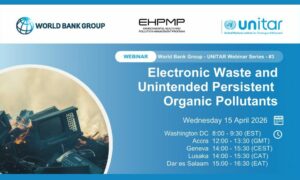
Electronic Waste and Unintended Persistent Organic Pollutants
15 Apr 2026 | 14:00 – 15:30
Online | Teams
World Bank Group, UNITAR
Virtual
UNECE Urban Forest Questionnaire: Technical Workshop
15 Apr 2026 | 15:00 – 16:00
Online | Teams
UNECE
Conference
Durban+25: Women and Youth of African Descent for Climate Justice | 5th Session of the Permanent Forum on People of African Descent Side Event
15 Apr 2026 | 18:00 – 19:00
Maison Internationale des Associations
AstroNoir
Local
Ateliers du Management Durable à Genève | Démarrage et production de l’esquisse des Global Impact Projects
16 Apr 2026 | 09:30 – 18:00
Maison de l'Avenir
OSI
Virtual
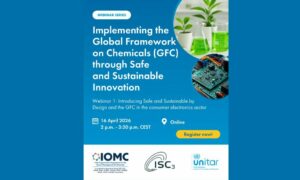
Introducing Safe and Sustainable by Design (SSbD) and the Global Framework on Chemicals (GFC) in the consumer electronics sector
16 Apr 2026 | 14:00 – 15:30
Online | Zoom
IOMC, UNITAR
Virtual
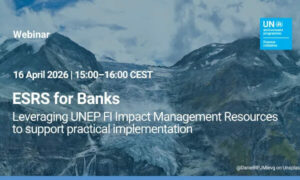
ESRS for Banks: Leveraging UNEP FI Impact Management Resources to support practical implementation
16 Apr 2026 | 15:00 – 16:00
Online
UNEP FI
Virtual
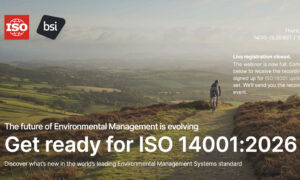
The future of Environmental Management is evolving | Get ready for ISO 14001:2026
16 Apr 2026 | 15:00 – 16:30
ISO

Workshop
How to Measure and Reduce Greenhouse Gas Emissions
16 Apr 2026 | 17:15 – 19:15
SDG Solution Space
UNIGE, 2050Today
Conference
145th Session of the Executive Committee (EXCOM 145)
17 Apr 2026 | 15:00 – 18:00
Palais des Nations, Room XII
UNECE
Jobs
See all
Consultant
Pharmaceuticals in the Environment Specialist
15 Apr 2026
UNEP Chemicals and Health Branch