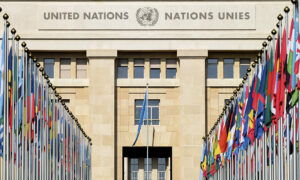
Newsletter 16 Jun 2025
Environment: What’s Up in GENeva | 16 – 22 June 2025

The Geneva Environment Network’s weekly newsletter includes the latest information on the global environmental agenda, main events, job vacancies, as well as other useful resources and updates. Stay tuned and follow us on X (Twitter), Facebook, LinkedIn, Instagram, Bluesky, and Youtube, or visit our website regularly for additional updates.
Image of the week | A fresh spot under the trees of the Conservatory and Botanical Garden of Geneva, during the heatwave of last week. The Swiss Confederation, the Canton and the City of Geneva have developed plans and resources to protect the population during these heatwaves. With temperatures on the rise, we encourage you to consult the links under our Green Summer resources. It is also to be highlighted that the Conservatory and Botanical Garden announced that their greenhouses will henceforth close at 5pm, instead of 9pm, in response to a significant increase in plant thefts, to protect their living collections. © UNEP/GEN, Emme Perreve
Environment @ 59th Session of the Human Rights Council
The 59th session of the UN Human Rights Council (HRC59), kicks off this week in Geneva with an opening addressed by the UN High Commissioner for Human Rights, Volker Türk, who will present his annual report. HRC59 will consider various topics related to the environment over six weeks of deliberations. Contributions to the global environmental agenda will include:
- The UN Special Rapporteur on climate change and human rights, Elisa Morgera, will present her annual report to the Council, “The imperative of defossilizing our economies” (A/HRC/59/42), which clarifies States’ international human rights obligations and businesses’ responsibilities to phase out fossil fuels and related subsidies within the current decade. She highlights that the interlinked, intergenerational, severe and widespread human rights impacts of the fossil fuel life cycle, coupled with six decades of climate obstruction, compel urgent defossilization of our whole economies, for a just transition that is effective, human rights-based and transformative in protecting the climate, nature, water and food on which life and health for present and future generations depend. Tackled as well in the report are the need to address the locking in of economies through plastics and petrochemicals production, to tackle climate disinformation and obstruction by the fossil fuel industry, and to ensure just transition that puts human rights at the center.
- In this light, the second edition of the Geneva Rights and Climate Talks, taking place at Palais des Nations and online in parallel to HRC59, will reflect on the challenges posed by climate change and the intertwined human rights implications, and on how Geneva contributes towards ensuring that human rights are at the heart of climate action. Topics that this edition of the talks aim to tackle include: just transition (organized within the framework of the Geneva Dialogues on Mineral and Metal Resources), right to science, climate and environmental human rights defenders, youth litigation, migration, plastics as fossil fuel (organized within the framework of the Geneva Beat Plastic Pollution Dialogues).
- The UN Special Rapporteur on extreme poverty and human rights, Olivier De Schutter, in his report, “Weathering the storm: poverty, climate change and social protection” (A/HRC/59/51), argues for a move from an ad hoc humanitarian approach to protecting people in poverty from climate disasters, towards establishing, strengthening and financing rights-based social protection.
- As displacement driven by organized criminal activity often overlaps or interacts with other drivers of forced displacement, including disasters, the adverse effects of climate change, and poor governance, the report (A/HRC/59/46) of the UN Special Rapporteur on the human rights of internally displaced persons, Paula Gaviria Betancur, will focus on internal displacement in the context of organized criminal activity.
- The report of the Independent Expert on human rights and international solidarity, Cecilia M. Bailliet, (A/HRC/59/40) will aim to understand Indigenous concepts and practices of solidarity and to what extent they enjoy the right to express solidarity with other tribes and groups, as well as with the environment.
- The annual panel discussion on the adverse impacts of climate change on human rights will take place during this session, and will focus on facilitating just transitions in the context of addressing adverse impacts of climate change on the full realization of human rights for all people.
- In light of the upcoming 2026 United Nations Water Conference, the Human Rights Council will also hold a panel discussion on the realization of the human rights to safe drinking water and sanitation, with a particular focus on mainstreaming the human rights of safe drinking water and sanitation into the upcoming Conference, taking place in United Arab Emirates from 2 to 4 December 2026.
- Various resolutions that address the environment are expected to be tabled at this session of the Council including a draft resolution on climate change and human rights, with a focus on climate finance, a draft resolution on the safety of journalists, and a draft resolution on civil society space.
Events of particular interest this week include:
- Opening of the session and Annual report by the High Commissioner | 16 June 2025 | 10:00 – 10:45 CEST | Palais des Nations, Room XX & Online
- No one left adrift: Seafarers at the cross currents of commerce, conflict, and change | HRC59 Side Event | 19 June 2025 | 14:00 – 15:00 CEST | Palais des Nations, Room XXVII & Online | Philippines
- Interactive Dialogue with SR on internally displaced persons | 20 & 23 June 2025 | 16:45 CEST onwards | Palais des Nations, Room XX & Online
- Informal consultations on various draft resolutions also begin this week:
- Draft resolution on human rights and climate change | Bangladesh, Philippines and Viet Nam
- Draft resolution on the safety of journalists | Austria, Brazil, France, Greece, Morocco, Qatar and Tunisia
- Draft resolution on the civil society space | Ireland, Chile, Japan, Sierra Leone and Tunisia
→ Consult regular updates on key environmental issues at HRC59, side events, and further resources available on our dedicated HRC59 and the environment update.
Relevant news, updates and upcoming deadlines include:
- Call for Submissions | Best practices, challenges and lessons learned concerning integrated approaches to the promotion and protection of human rights and the implementation of the 2030 Agenda at the global level | OHCHR | Deadline: 18 June 2025
The Office of the High Commissioner for Human Rights is preparing a report on best practices, challenges and lessons learned concerning integrated approaches to the promotion and protection of human rights and the implementation of the 2030 Agenda at the global level pursuant to the Human Rights Council resolution A/HRC/RES/52/14, adopted on 3 April 2023. These include Efforts to integrate the right to a clean, healthy and sustainable environment and related human rights in the endeavours to implement the 2030 Agenda. - Human Rights Council to Hold its Fifty-Ninth Regular Session from 16 June to 9 July 2025 | OHCHR | 11 June 2025
- Brazil must abandon “Marco Temporal” doctrine once and for all, says UN expert | OHCHR | 11 June 2025
Albert Kwokwo Barume, UN Special Rapporteur on the rights of Indigenous Peoples, expressed grave concern about Brazil’s continued use of the controversial “Marco Temporal” legal interpretation to revoke the legal foundation for indigenous land demarcation and annul the demarcation of indigenous territories in Santa Catarina. He calls it a “deeply regressive step that undermines Indigenous Peoples’ rights, environmental protection, and climate action”. - Global land grab highlights growing inequality and need for reform | FIAN International | 3 June 2025
The accumulation of vast amounts of land by a small group of global corporate landowners is fueling inequality and accelerating the climate crisis, according to a new report which calls for land redistribution and global tax reforms to reverse this dangerous trend. - HC Türk: Climate emergency is a clarion call for a new politics | OHCHR | 3 June 2025
“Even then, in the 1970s, the implications of burning fossil fuels were clear, and troubled me deeply. Somehow, more than fifty years later, we are still in denial about a fundamental fact: our wellbeing and survival as a species are inseparable from the health of our planet and our environment. We are part of nature, and our fate is inextricably bound up with nature.” - Biodiversity, health science, and the human right to a healthy environment | Liz Willetts, Lora E Fleming, Elisa Morgera | The Lancet Planetary Health | June 2025
Both public health and the human right to a clean, healthy, and sustainable environment depend on biodiversity, ecosystems, and a healthy biosphere. The report introduces a biodiversity–health roadmap to the UN Framework Principles on Human Rights and the Environment.
Advancing Science and Policy Action to Address the Pollution Crisis | All Eyes on Punta Del Este
In the context of the triple planetary crisis that the earth is facing — of climate change, nature, land and biodiversity loss, and pollution and waste, two independent, international, intergovernmental science-policy bodies to help policy makers taking the right decisions have been set up for two of these crise: for climate change crisis — the Intergovernmental Panel on Climate Change (or IPCC), and for biodiversity loss crisis — the Intergovernmental Science-Policy Platform on Biodiversity and Ecosystem Services (or IPBES). A resolution adopted at the United Nations Environment Assembly in 2022 aims to set up a science-policy panel on chemicals, waste, and pollution prevention, the science-policy interface to tackle the pollution pillar of the triple planetary crisis. Member States are meeting this week in Punta del Este, Uruguay to decide on the establishment of this panel.
The resumed third session of the Ad hoc open-ended working group on a science-policy panel on chemicals, waste and pollution prevention (OEWG 3.2) kicked off in Punta del Este on Sunday 15 June 2025 and is expected to conclude on 18 June 2025. The meeting aims to finalize the foundational document, setting out key elements for the panel’s establishment and the rules of procedure to be adopted at the panel once established. The meeting will take place back-to-back with the Intergovernmental Meeting for the purpose of considering the establishment of the science-policy panel (19 to 20 June). → Follow the plenaries through the webcast and the IISD Earth Negotiations Bulletin live coverage
Member states have also adopted global deals that set agreed goals and targets to tackle the triple planetary crisis: the Paris Agreement — agreed in Paris in December 2015 — for the Climate crisis, the Kunming-Montreal Global Biodiversity Framework — agreed in Montreal in December 2022 — for the biodiversity loss crisis, and the Global Framework on Chemicals – For a Planet Free of Harm from Chemicals and Waste (GFC) — agreed in Bonn in September 2023 — for the pollution crisis. The first meeting of the Open-Ended Working Group for the GFC is also convening in Punta del Este, next week, from 24 to 27 June 2025, and is preceded from 22 to 23 June by the IOMC multi-stakeholder Workshop “Strengthening National Chemicals Legislation and Institutional Capacities”, and on 23 June by Technical Briefings.
Additional news and resources include:
- Punta del Este Briefings (OEWG 3.2 Preparatory Meetings) | IPCP | 14 June 2025
- Scientists’ Statement on the Chemical Definition of PFASs | Gabriel Sigmund, Marta Venier, Marlene Ågerstrand et al. | Environmental Science & Technology Letters | 10 June 2025
- Why the Science-Policy Panel for Chemicals and Waste Must Get It Right | CIEL | 6 June 2025
- Quick Views: Science-Policy Panel OEWG3.2 | IPEN | May 2025
2025 International Labour Conference Made History
The 113th Session of the International Labour Conference — the supreme deliberative and decision-making body of the International Labour Organization (ILO) concluded on Friday 13 June at Palais des Nations. Over the last two weeks, delegates from governments, workers’ and employers’ organizations around the world gathered in Geneva to address some of the most pressing issues shaping the world of work. Outcomes of relevant to advancing the global environmental agenda include:
- Protection against biological hazards in the working environment (standard-setting, second discussion) | Adoption of Convention No. 192 and Recommendation No. 209 — the first international labour standards to protect workers from biological hazards in the working environment, setting a global standard to safeguard workers’ health, now and in the future. This historical outcome reaffirms the fundamental right to a safe and healthy working environment and reflects a shared global commitment to safeguarding workers from invisible and evolving threats.
- Decent work in the platform economy (standard-setting, first discussion, to be pursued next year)
- General discussion on innovative approaches to tackling informality and promoting transitions towards formality to promote decent work, resulted in conclusions and recommendations
- ILO’s tripartite input to the Second World Summit for Social Development in November 2025
- Annual Forum of the Global Coalition for Social Justice, including a Partners Conversation on Fostering a Just Transition through social dialogue (with discussions on energy transition, nationally determined contributions NDCs, labour and social policies)
79th Session of the WMO Executive Council | Weathering the Change
The seventy-ninth session of the Executive Council (EC-79) of the World Meteorological Organization — the executive body of the WMO responsible for implementing the decisions made by Congress — is convening in Geneva from 16 to 20 June 2025. It coordinates programmes, manages the budget, and considers and acts upon resolutions and recommendations from regional associations and technical commissions. Additionally, it studies and makes recommendations on issues that affect international meteorology and related activities. It was preceded by the forty-fifth session of the WMO Financial Advisory Committee (FINAC-45) from 12 to 13 June 2025. → More info in the WMO Secretary General briefing to WMO Members
WMO Secretary-General Celeste Saulo stressed that she is “confident that the spirit of collaboration which has been the hallmark of the World Meteorological Organization for the past 75 years will be evident at WMO annual Executive Council meeting. It has a packed agenda and will help chart our future strategic direction. WMO will continue to Weather the Change“.
Outcomes of UN Ocean Conference | Our Ocean, Our Future
The 2025 UN Ocean Conference — the high-level 2025 United Nations Conference to Support the Implementation of Sustainable Development Goal 14: Conserve and sustainably use the oceans, seas and marine resources for sustainable development — concluded in Nice, France, on 13 June. Co-hosted by France and Costa Rica under the theme “Accelerating action and mobilizing all actors to conserve and sustainably use the ocean,” the Conference brought 15,000 participants, including more than 60 Heads of State and Government, and:
- Adopted the Nice Ocean Action Plan, a two-part framework that comprises a political declaration “Our ocean, our future: united for urgent action”, stressing that the ocean plays an essential role in mitigating the adverse effects of climate change. and over 800 voluntary commitments by governments, scientists, UN agencies, and civil society since the previous conference.
- Generated momentum for the entry into force of the High Seas Treaty with nineteen countries ratifying the instrument, bringing the total to 51 ratifications, just 9 short of the 60 needed for the treaty to take legal effect.
- Latvia, Cyprus, Slovenia and the Marshall Islands joined the growing list of nations calling for a moratorium or precautionary pause on deep-sea mining, bringing the total to 37.
- Launched, under the leadership of French Minister of Ecological Transition Agnès Pannier-Runacher, the Global Coalition to Halt the Extinction of Threatened Sharks and Rays calling on countries around the world to step up and support the initiative aimed at halting these declines and secure the future of these vital and iconic species. → Read reactions from CITES and WWF
- UNEP and the Food and Agriculture Organization announced World Restoration Flagships winning initiatives. The three new flagships comprise restoration initiatives in the coral-rich Northern Mozambique Channel Region, more than 60 of Mexico’s islands and the Mar Menor in Spain, Europe’s first ecosystem with legal personhood.
- The Nice-Abu Dhabi Roadmap has been signed by the International Union for Conservation of Nature (IUCN) and the French government, renewing their commitments to global ocean conservation and bridging outcomes from UNOC3 with the upcoming IUCN World Conservation Congress (Abu Dhabi, October 2025), the UN Climate Change Conference in (Belem, Brazil, November 2025) and the UN Water Conference (UAE, December 2026).
- Released the “Nice Wake Up Call” for an ambitious Plastics Treaty (see more below under plastics treaty section)
- A 37-country coalition led by Panama and Canada launched the High Ambition Coalition for a Quiet Ocean to tackle underwater noise pollution.
It is also to be highlighted that on 12 June, WTO Director-General Ngozi Okonjo-Iweala received Panama’s instrument of acceptance of the Agreement on Fisheries Subsidies from Panama’s Minister of Trade and Industry Julio Moltó. Just nine more acceptances are needed for the Agreement to enter into force.
Additional news and reactions to UNOC outcomes include:
- UN ocean summit in Nice closes with wave of commitments | UN News | 13 June 2025
- IUCN welcomes renewed global resolve for ocean action as third UN Ocean Conference closes | IUCN | 13 June 2025
- UN Ocean Conference puts ‘wind in the sails’ of ocean action | WWF | 13 June 2025
- At UN Ocean Conference, World Leaders Fail to Protect the Ocean from Fossil Fuel Threats | CIEL | 13 June 2025
- Media Release: UN Ocean Conference Shines a Light on the Deep Sea: Now, Time for Action | Deep Sea Conservation Coalition | 13 June 2025
- No Ocean Declaration without small islands’: Delegates push for inclusion as UN summit nears end | UN News | 12 June 2025
- ‘Plenty of fish in the sea’? Not anymore, say UN experts in Nice | UN News | 11 June 2025
- Tuna Turner: Investors Must Turn Up Transparency in the Tuna Industry | Planet Tracker | 11 June 2025
- The battle to quiet the sea: Can the shipping industry turn down the volume? | UN News | 10 June 2025
- UNOC3: Close to 100 countries sign Nice wake-up call for ambitious plastics treaty | Down to Earth | 10 June 2025
- 2025 UN Ocean Conference: Turn the Tide | WMO | 9 June 2025
- Major breakthrough in marine conservation unveiled at UN Ocean Conference | IUCN | 9 June 2025
- Bringing the Protection Principle into Action: Making Ocean Protection the Norm in Global Governance | Varda Group | June 2025
Plastics Treaty Updates | Road to INC-5.2 in Geneva
Last week, the plastics treaty was high on the international environment agenda, with various high-level and informal meetings organized in the framework of the 2025 UN Ocean Conference. Momentum was generated with 95 countries signing the “Nice Wake Up Call” for an ambitious Plastics Treaty, reaffirming their commitment to adopt a treaty that reflects scientific findings and citizens’ demands. Reactions include:
- Campaigners Welcome ‘Wake-Up Call’ For Global Plastics Treaty | Forbes | 11 June 2025
- UNOC-3 : 95 pays signent l’Appel de Nice pour un Traité ambitieux sur les plastiques | France | 10 June 2025
- “Nice Declaration” for an ambitious plastics treaty: the wake up call the world needs | Greenpeace International | 10 June 2025
- France’s “wake up call” for an ambitious global plastic pollution treaty is welcome but it can only be realised by moving beyond consensus | WWF International | 10 June 2025
- Don’t Back Down | Civil Society and Rights-Holders Coalition for a Plastics Treaty | 10 June 2025
- Countries Recommit to Red Lines Ahead of Upcoming Global Plastics Treaty Talks: A Nice Wake Up Call for an Ambitious Plastics Treaty provides more granular detail on how countries will deliver an ambitious Global Plastics Treaty | CIEL | 10 June 2025
With less than two months before the second part of the fifth session of the Intergovernmental Negotiating Committee to develop an international legally binding instrument on plastic pollution, including in the marine environment (INC-5.2), convenes at Palais des Nations from 5 to 14 August 2025, updates and upcoming events include:
- The deadline for registration to attend INC-5.2 for Members of the Committee and Media has been extended to 30 June 2025, 23:59 EAT (22:59 CEST). The deadline for observer organizations was on 6 June 2025. The INC Secretariat has announced that there will be no on-site registration.
- As part of the webinar series “Advancing the Transition to a Pollution-Free Agrifood Industry through Circular, Regenerative, and Bioeconomy Approaches” organised by UNEP in collaboration with the One Planet Network, International Ecosystem Management Partnership, Green Growth Knowledge Partnership and FARM programme, the session “Tackling Agricultural Plastics for a Circular Future” will explore the urgent impacts of agricultural plastics and actionable solutions. → Register to attend online on 17 June 2025 from 14:00 CEST.
- FAO Liaison Office in Geneva is organizing in collaboration with FAO’s Office of Climate Change and Biodiversity, a briefing on agri-plastics management “Cultivating change: Agri-plastics and the global policy response“. → Register to attend in person or online on 19 June 2025 from 15:00 CEST.
- The artist Benjamin Von Wong will be building a giant sculpture on Place des Nations during the Plastics Treaty negotiation taking place in August. → If you want to get involved or support, . If you’re based in Geneva and can help collect plastics, check the Plastics Collection Guide. For more information, please consult the artist deck and see his past projects.
Road to 7th United Nations Environment Assembly
The seventh session of the United Nations Environment Assembly (UNEA-7) will take place from 8 to 12 December 2025 at the UNEP headquarters in Nairobi, Kenya, under the presidency of the Sultanate of Oman. UNEA-7 will reflect on the theme “Advancing sustainable solutions for a resilient planet”, sending a strong message to accelerate sustainable solutions and effective responses for a safer and more resilient planet, and mark a key moment in the future of environmental governance. → Major highlights include:
- UNEA-7 is open for participation of 193 States Members of the United Nations and observers.
- Member states and other accredited entities are invited to submit their proposals to host official side events at UNEA-7, which will serve to address relevant areas, share experiences, find solutions, and inspire partnerships. Read the guidelines for event organizers and consult the side events venue brochure and apply by 15 July 2025.
- Last month, UNEP Executive Director Inger Anderson issued the first part of her report to UNEA-7, looking at emerging and urgent environmental issues that the Assembly may want to discuss and that can reinforce the collective determination of the international community to ensure that the environment remains vibrant and in balance to support humanity’s march towards more peaceful, prosperous and thriving economies and societies.
June Solstice Marks Start of Summer
This week, the June solstice – when the sun travels the longest path through the sky — occurring on 21 June this year, will mark the start of summer in the Northern Hemisphere. The day is widely celebrated around the world. Mindful that the solstices and equinoxes symbolize the fertility of the land, agricultural and food production systems, cultural heritage, and their millenary traditions, the UN General Assembly acknowledged that the celebration of those events is an embodiment of the unity of the cultural heritage and centuries-long traditions, and further play a significant role in strengthening the ties among peoples on the basis of mutual respect and the ideals of peace and good-neighborliness. It, therefore, recognized 21 June as the International Day of the Celebration of the Solstice.
To celebrate the Summer solstice in music, the Musée d’ethnographie de Genève is organizing an immersive open-air concert in the Museum’s garden, on 17 June. Sound artist Amandine Casadamont and ethnomusicologist Madeleine Leclair unite their vinyl collections, spanning global musical traditions, experimental sounds, and ambient compositions, for a unique live performance.
Suggestions to enjoy a green summer in Geneva this week include:
- Les mardis des tout.es petit.es | 17 June 2025 | La Libellule
Through sensory and motor activities, children can explore local plants and animals while developing awareness and respect for the living world. - Les plantes comestibles en montagne | 18 June 2025 | Conservatoire et Jardin botaniques
Explore the edible wonders of the mountains in this guided tour of the Jardin Alpin de La Linnaea, nestled in the heart of Bourg-Saint-Pierre. Accompanied by a botanical gardener, visitors will discover alpine plant species traditionally used for food. - Visite immersive à Hermance | 18 June 2025 | ma-terre / Maison de l’alimentation du territoire de Genève
Discover the bold viticultural shift led by Raphaël Piuz, who for ten years has been cultivating over 70 disease-resistant grape varieties to minimize chemical treatments. - Lunchtime conference: Summer 2025, what to do in Geneva? | 19 June 2025 | International Geneva Welcome Centre
Join the lunchtime conference on “Summer 2025, what to do in Geneva? mainly dedicated to employees of International Geneva. - BOTANICA 2025 – Plantes pour notre avenir | Until 13 July 2025 | Conservatoire et Jardin botaniques
BOTANICA 2025 explores the future of food plants through more than 60 events across 26 botanical gardens in Switzerland. From exotic crop origins to their environmental impact and role in biodiversity, this national initiative invites curious minds to take part in guided tours, hands-on workshops, and excursions focused on conscious eating and sustainable agriculture. - Cauchemar anthropocénique du rêveur | 18 June 2025 | Quartier Libre SIG
Through three hauntingly poetic ceramic installations, Jean-Louis Puivif explores the scars of the Anthropocene, an era defined by deep human impact on Earth’s ecosystems. - De la cueillette sauvage à l’agriculture moderne: l’évolution fascinante des légumes | 18 June 2025 | Conservatoire et Jardin botaniques
Take a journey through time to discover how ancient gathering practices led to the rich diversity of vegetables we eat today. - Atelier p’tits chefs – Petits potagers, grandes idées | 18 June 2025 | Swiss Food Academy
In this workshop, children explore how to grow thriving city gardens filled with heirloom vegetables, aromatic herbs, and blooming flowers. Through hands-on activities, they’ll discover which plant species make great neighbors and why, all while learning the basics of permaculture and urban cultivation in a fun, community-driven setting. - Nature en ville: espaces verts et béton | 19 June 2025 | Bibiothéque de Genève
How has the idea of nature in urban settings evolved over time? This engaging talk explores shifting perceptions of green spaces within the fabric of city life, from the industrial era to today’s climate-challenged world. - En radeau, mamie sur l’eau | 20 June 2025 | Barrage de Verbois
After observing these remarkable birds, the walk continues through the fields of Aire-la-Ville. The evening concludes with a shared picnic by the water’s edge, just as twilight brings the local birdlife to life. - Fête de la musique | 20 – 22 June 2025 | Musée d’art et d’histoire
Let your voice soar in this joyful group singing experience led by two acclaimed vocal professionals, Raphaëlle Farman and Jacques Gay. Whether you’re a fan of opera, jazz, musicals or French chanson, this 45-minute workshop invites everyone to belt out timeless hits, from Verdi to Piaf to Goldman. - Forum hirondelles et martinets: cohabiter avec les oiseaux en ville | 21 June 2025 | Musée d’histoire des sciences
Swifts and swallows, cherished residents of urban skies, rely on buildings for nesting, but ongoing renovations and demolitions increasingly threaten their habitats. In celebration of World Swift Day, this special event brings together experts, citizens, and decision-makers to explore how we can better coexist with these aerial acrobats. - Week-end de vie sauvage | 21 – 22 June 2025 | La Libellule
Immerse yourself in a forest adventure weekend with a night under the stars. Learn essential wilderness skills such as cooking over a wood fire, building a shelter, making fire without matches, identifying edible plants, and crafting a natural object. - Dialogues Insolites – Petites histoires BioDivertissantes | Until 21 June 2025 | Bibliothèques municipales de Genève
In collaboration with the Natural History Museum and the École supérieure de bande dessinée et d’illustration, first-year students present 15 original illustrated tales inspired by local animal species. - Visite descriptive et tactile | 22 June 2025 | Musée d’art et d’histoire
Explore Geneva’s rich history through a unique sensory journey designed for blind and visually impaired visitors. From prehistoric tools to medieval armor and contemporary art by Sylvie Fleury, this tactile tour of the La Genevoise exhibition invites participants to experience key moments in the city’s timeline through touch and descriptive narration. - Les petits détectives nature | 22 June 2025 | Parc des Evaux
Magnifying glasses in hand, children aged 4 to 6 will become little nature detectives on a playful adventure through Parc des Evaux. Along the way, they’ll uncover hidden treasures and meet the tiny creatures that call the park home. - Exposition : L’eau dans tous ses états ! | Until 28 June 2025 | Divonne-les-Bains
Dive into the multifaceted world of water in this thought-provoking exhibition, where seven doctoral researchers share how this vital element intersects with their cutting-edge work. - Dialogues insolites entre le Muséum d’histoire naturelle de Genève et le Conservatoire botanique de Genève | Until 29 June 2025 | Conservatoire et Jardin botaniques
Discover the fascinating interactions between the plant and animal worlds through a unique exhibition showcasing historical specimens and scientific connections. - Ici, le lac ressemble à la mer. Chansons pour le Léman | Until 29 June 2025 | Quartier Libre SIG
Discover the musical soul of Lake Geneva in this poetic, immersive exhibition presented by SIG and the Musée du Léman. - Climate Fiction, un récit sur la collection du Fonds cantonal d’art contemporain | Until 31 August 2025 | Musée de Carouge
Through a bold curatorial lens, this exhibition dives into the environmental crises of our time by uncovering their roots in social, economic, and geopolitical inequalities. - Été 2025 au Théâtre de l’Orangerie | Until 6 September 2025 | Théâtre de l’Orangerie
Under the theme “La vie c’est sûrement autre chose,” the 2025 program features a dynamic mix of theatre, dance, visual arts, concerts, workshops, and family activities. - Notre Biodiversité | Conservatoire et Jardin botaniques
Explore biodiversity through an immersive outdoor exhibition inspired by Geneva’s new Municipal Biodiversity Strategy. Along a contemplative garden trail, discover short texts displayed on flowing fabric panels that invite reflection on the essential role of biodiversity in our health, food systems, and planetary wellbeing. - Enjoy sun, warmth and many jumps in the lake at UN Beach.
More Happening Abroad
- Bonn Climate Change Conference | The Bonn Climate Change Conference is scheduled from 16 to 26 June 2025 at the World Conference Center in Bonn, Germany. Marking a milestone moment ahead COP30 to be held in Belém, Brazil in November 2025, delegates are expected to continue negotiations on issues on which no agreement was reached at COP29, including: modalities for a new dialogue aimed at supporting the implementation of the outcome of the first Global Stocktake (GST) under the Paris Agreement, procedural and logistical elements of the GST process; the review of the Warsaw International Mechanism for Loss and Damage (WIM), the joint annual report of the WIM Executive Committee and the Santiago Network, and progress in the formulation and implementation of national adaptation plans. → Follow the IISD Earth Negotiations Bulletin live coverage and read What to Expect at the Bonn Climate Change Conference 2025
Other resources include:- Bonn climate talks are a critical test for international cooperation ahead of COP30 | WWF | 12 June 2025
- Briefing for UN Climate Change Conference, SB62 | CAN International | June 2025
- Loss and Damage at the 2025 Bonn Climate Conference
- G7 Summit 2025 | The G7 Summit 2025, is taking place from 15 to 17 June 2025 in Kananaskis, Alberta, under the Presidency of Canada and marking the 50th anniversary of the first G7 Summit. With priorities as Protecting our communities and the world, Building energy security and accelerating the digital transition, and Securing the partnerships of the future, the environment will be prominently featured in the discussions. → Read Canada’s Presidency press release
What (Else) to Read Next?
- NGOs challenge EU Commission backing of controversial lithium mine in Portugal | Client Earth | 12 May 2025
UDCB, MiningWatch Portugal and ClientEarth filed a complaint challenging the European Commission’s decision to grant preferential status to the controversial Mina do Barroso lithium project in northern Portugal. The proposal for an open-pit mine was designated a ‘strategic project’ under the Critical Raw Materials Act (CRMA). This status allows it to enjoy preferential treatment in permitting, assessment of environmental impacts, and for financing. - Acting Ahead to Protect Education Investments – Why the need for proactive approaches to crises is more urgent than ever | Geneva Global Hub for Education in Emergencies | 12 June 2025
The flagship report sets out how the right investments ahead of crises can save both lives and resources, while protecting the education and futures of millions of children and youth. Crises may be unavoidable, but their worst impacts are not.
- Global Fire Management Hub takes place as wildfires rage | WMO | 11 June 2025
WMO Task Team on Fire Weather Services will start work on a global strategy for fire early warning and advisory services. WMO, FAO and the EU’s Joint Research Centre will present fire data and early warning services to inform this strategy. The strategy to be developed will provide a coordinated framework for delivering consistent, science-based fire weather forecasts and advisories globally. - Monitoring online illegal wildlife trade: Focus on the maritime and marine dimensions | 11 June 2025
The last decade and a half have seen an alarming surge in illegal wildlife trade (IWT) on the internet. However, a dearth of data regarding the scale of the market, its dynamics, operations and ramifications, especially on a global scale, is a significant hindrance to combating this crime. - The silent killer: We need better risk governance to beat extreme heat | GP 2025 | UNDRR | 11 June 2025
Extreme heat is no longer a seasonal inconvenience. It’s a systemic, cross-cutting threat, silently claiming lives, stressing economies, overwhelming cities, and widening inequalities. Yet it remains one of the least governed climate hazards.
- Predictive Water Modelling: From reactive regulation to proactive environmental leadership | Intergovernmental Forum on Mining, Minerals, Metals and Sustainable Development | 11 June 2025
Predictive water modelling has been used in the mining sector for at least 30 years. The practice involves using hydrology and geochemistry to forecast how water quality may fluctuate under changing conditions, such as decreasing precipitation or increasing mine production on site. These models are commonly developed by mine operators, and many countries include water quality prediction as part of the impact assessment process in the sector. - Linking Climate and Weather Data with Health: WMO-WHO Initiative Aims to Reach 80 Countries | Health Policy Watch | 10 June 2025
A recent Geneva event launched a big expansion in a collaboration between the World Health Organization and the World Meteorological Organization, which aims to better harness climate and weather information to protect people’s health. The initiative, supported by $11.5 million in new investments from the Rockefeller Foundation and Wellcome Trust, aims to foster more effective linkage between national meteorological agencies and ministries of health in at least 80 low and middle-income countries in Africa, Latin America and Asia. - Tech sector emissions, energy use grow with rise of AI | ITU | 5 June 2025
Tech sector carbon emissions continued their rise in recent years, fueled by rapid advances in artificial intelligence (AI) and data infrastructure, according to Greening Digital Companies 2025. The report, produced by the International Telecommunication Union (ITU) and the World Benchmarking Alliance (WBA), tracks the greenhouse gas (GHG) emissions, energy use, and climate commitments of 200 leading digital companies as of 2023, the most recent year for which full data is available.
Events
See all
Body Meeting
59th regular session of the Human Rights Council | HRC59
16 Jun – 09 Jul 2025
Palais des Nations
HRC
Body Meeting
Global workshop on ecosystems conservation and restoration in transboundary basins
16 – 17 Jun 2025
Palais des Nations | Room XXVI
UNECE, Water Convention, Slovenia, France, Zambia

Local
20e édition du Concours Romand Environnement Jeunesse, Mission Transition ! Ateliers et remise des prix
17 Jun 2025 | 08:30 – 15:15
Forum Meyrin
Republic and State of Geneva

Body Meeting
SPS Committee Thematic Session | Addressing Antimicrobial Resistance through SPS Measures in International Trade
17 Jun 2025 | 10:00 – 17:00
WTO | Room W & Online | Zoom
WTO
Conference
Global Health, Local Action: Understanding the New Pandemic Treaty
17 Jun 2025 | 12:15 – 13:15
Villa Rigot & Online | Zoom
Global Cities Hub - Geneva

Conference
Building on Success: Insights, Reflections and next steps for the Pandemic Agreement
17 Jun 2025 | 12:30 – 14:00
Maison de la Paix | Auditorium A1B
IHEID
Tackling Agricultural Plastics for a Circular Future
17 Jun 2025 | 14:00 – 15:00
Online | Zoom
UNEP, GGKP

Body Meeting
Espoo Convention Bureau Meeting
18 – 19 Jun 2025
Palais des Nations | Room H.379 & Online
Espoo Convention and the Protocol on SEA
Virtual

Committing to clean air: next steps after WHO’s 2nd global conference on air pollution and health – the way forward for implementation
18 Jun 2025 | 09:30
Online | Zoom
WHO
Body Meeting
9th meeting of the Task Force on the Water-Food-Energy-Ecosystems Nexus
18 Jun 2025 | 10:00 – 18:00
Palais des Nations | Room XXVI
Water Convention
Body Meeting
Energy Efficiency Bimonthly Open Discussion Forum
18 Jun 2025 | 14:00 – 16:00
Online
UNECE

Conference
Cultivating Change: Agri-Plastics and the Global Policy Response
19 Jun 2025 | 15:00 – 16:30
Palais des Nations | Room H.307.1 & Online | Zoom
FAO
Virtual
What to expect at the Financing for Development Conference and beyond?
19 Jun 2025 | 15:00 – 16:00
Online | Zoom
Global Cities Hub - Geneva

Conference
Cultivating Fields of Progress: Agriculture and the International Labour Organization, 1920s–1950s
19 Jun 2025 | 15:30 – 16:30
ILO | Room Jura & Online
ILO
Demonstration
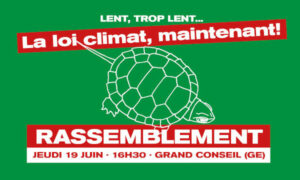
Rassemblement | La loi climat, maintenant!
19 Jun 2025 | 16:30
Grand Conseil
Association Climat Genève

Jobs
See all


Consultant
Consultant to support the Assessment of Costs of Inaction for Chemicals Management
17 Jun 2025
UNEP Chemicals and Health Branch

Learning
See all
Course in Geneva
Microplastics: From Environmental Impact to Policy, Innovation, and Public Awareness| Geneva Summer School
16 – 20 Jun 2025
University of Geneva
UNIGE
Course in Geneva
Science & Policy for Environmental Action | Geneva Summer School
23 – 27 Jun 2025
University of Geneva
UNIGE
Course in Geneva
Water Governance: Frameworks and Negotiations | Geneva Summer School
23 Jun – 04 Jul 2025
University of Geneva
UNIGE, Geneva Water Hub