
Newsletter 05 May 2025
Environment: What’s Up in GENeva | 5 – 11 May 2025
The Geneva Environment Network’s weekly newsletter includes the latest information on the global environmental agenda, main events, job vacancies, as well as other useful resources and updates. Stay tuned and follow us on X (Twitter), Facebook, LinkedIn, Instagram, Bluesky, and Youtube, or visit our website regularly for additional updates.
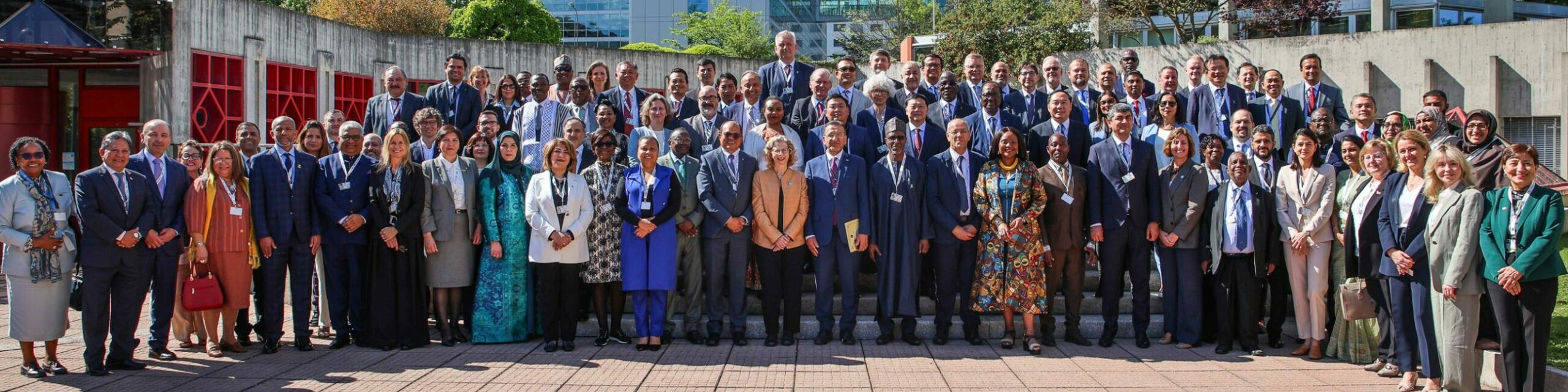
Image of the week | High-level segment family photo at the 2025 meetings of the Conference of Parties to the Basel, Rotterdam and Stockholm Conventions. Over 70 Ministers gathered in Geneva to strengthen global cooperation on the sound management of chemicals and waste through the Basel, Rotterdam and Stockholm conventions. © IISD/ENB | Mike Muzurakis | 30 April 2025
Largest Chemicals and Waste COPs Meetings Convene in Geneva
The 2025 meetings of the Conference of Parties to the Basel, Rotterdam and Stockholm Conventions (2025 BRS COPs), held under the theme “Make visible the invisible: sound management of chemicals and wastes”, will conclude this week in Geneva. Close to 2,000 delegates are in Geneva attending the two-week-long meetings. Many of the 21 side events taking place this week can be followed online. → Read the BRS Media Advisory, follow the live coverage from the Earth Negotiation Bulletin and other useful information in our update on the meetings.
The high-level segment of the COPs, held on 30 April and 1 May brought together global leaders, including over 70 Ministers, to explore integrated solutions to the triple planetary crisis of pollution, climate change, and biodiversity loss. The event fostered constructive dialogue and strong political engagement, as ministers and senior officials shared national experiences and reaffirmed their commitment to scaling up action on chemicals and waste. → Read BRS Press Release
Last week, the plenary gaveled agreeing to eliminate two POPs, chlorpyrifos – a widely used pesticide – and LC-PFCAs – a group of forever chemicals.
With International Cooperation and Coordination among the joint issues being considered at the 2025 BRS COPs, links with other international organizations and Multilateral Environment Agreements (MEAs) have been part of plenary, contact groups and side events discussions:
- Hong Kong Convention for the Safe and Environmentally Sound Recycling of Ships (HKC): Member States and observers have been discussing the International Maritime Organization’s provisional guidance on its interplay with the Basel Convention (referred to in Basel Convention Document UNEP/CHW.17/INF/60). Discussions highlighted the need for legal clarity because the Hong Kong Convention provides a legal framework for ship recycling, while ships could be hazardous waste under the Basel Convention, with the possibility of ships following one convention could be found breaching the other. Points discussed in plenary have been reiterated and expanded in side events, including on 2 May where observers NGOs, legal experts and representatives of Bangladesh, the main destination for ship recycling, reaffirmed the Hong Kong Convention does not provide an equivalent level of protection as the Basel Convention, with dangers including the shipping sector evading the true cost of sustainable ship recycling and ultimately requesting Basel Convention parties to ignore their obligations, ultimately breaking the Convention’s Article 11 which only allows for other agreements to substitute for Basel Convention only when “such agreements or arrangements stipulate provisions which are not less environmentally sound than those provided for by this Convention in particular taking into account the interests of developing countries.” Read more at:
- BAN Shipbreaking Intervention | Basel Action Network | 30 April 2025
- Basel Parties Must Stand Firm Against Efforts to Deny Basel Competency over Waste Ships | Basel Action Network | 24 April 2025
- Relationship between the Basel Convention and the Hong Kong Convention on Ship Recycling
- Shipbreaking and the Basel Convention: Analysis of the Level of Control Established under the Hong Kong Convention | CIEL | April 2011
- Bamako Convention Against Illegal Dumping of Hazardous Waste: The Gambia on behalf of Congo, Mali, Mauritius and Zambia introduced a Conference Room Paper (UNEP/CHW.17/CRP.1, UNEP/FAO/RC/COP.12/CRP.1, UNEP/POPS/COP.12/CRP.2) reiterating the importance of strengthening cooperation, coordination with the BRS Conventions and other bodies and resource mobilization with and for the Bamako Convention. Discussions will continue during the side event on 6 May 2025 from 13:15 CEST in Room C.
- A contact group, co-chaired by Norway & Armenia, has been set up and met on the evening of 2 May to discuss the draft decision in document BC/22-RC/21-SC/24 on International cooperation and coordination with other organizations and the Conference Room Paper.
- Synergies and interlinkages with other Multilateral Environmental Agreements and processes, including the Montreal Protocol, the Minamata Convention on Mercury, the Global Framework on Chemicals, the Kunming-Montreal Global Biodiversity Framework, the Open-ended Working Group on a science-policy panel to contribute further to the sound management of chemicals and waste and to prevent pollution, as well as how the Conventions and their Secretariat can help inform the ongoing plastics treaty negotiations, were also on the agenda.
The Geneva Environment Network is taking part in the 2025 Meetings of the BRS COPs with a booth featuring multilateral Geneva making visible the invisible crisis of chemical, waste and pollution and organizing, co-organizing and supporting various side events. The team is also supporting the secretariat on specific activities. This week, join the team at:
-
Role of Basel, Rotterdam and Stockholm Conventions in Sustainable Circular Models for Minerals and Metals | Geneva Dialogues on Mineral and Metal Resources | 5 May 2025, 13:15 – 14:45 CEST at CICG, Room B & Online
Organized within the framework of the Geneva Dialogues on Mineral and Metal Resources, this event will discuss the role of the Conventions in circular models for mineral and metal resources, including the environmentally sound secondary extraction of minerals and metals from e-waste and waste batteries, their reuse or their life extension. It will highlight how policy policymakers, businesses and other stakeholders are working on policy reforms, new guidances and standards to take forward a circular digital economy approach, drawing examples from the Basel Convention Partnership for Action on Challenges relating to E-waste (PACE II), the International Telecommunication Union Telecommunication Standardization Sector’s (ITU-T) Study Group 5, “EMF, Environment, Climate Action, Sustainable Digitalization, and Circular Economy” (SG5) and others. → Non-registered participants can join on Webex. - The Potential of the Bamako Convention in Furthering Implementation of the Basel Convention in Africa | 6 May 2025, 13:15–14:45 CEST at CICG, Room C & Online
Organized with the Republic of the Gambia in collaboration with the Secretariat of the Bamako Convention, UNEP’s Africa Office, BRS Regional Centres in Africa (Nigeria, Senegal, South Africa, and Egypt), Mali, and the Republic of the Congo, this side event explores the potential of the Bamako Convention to support the implementation of the Basel Convention and the Basel Ban Amendment in Africa. The event will discuss the Bamako Convention potential to significantly strengthen protections in Africa from hazardous wastes, steps needed for Bamako to reach its full potential as a strong protective mechanism, and key areas of cooperation and collaboration in ways that would be mutually beneficial for both Conventions. → Non-registered participants can join on Webex.
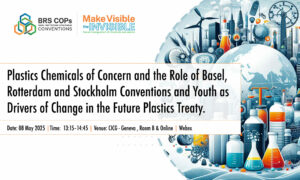
- Plastics Chemicals of Concern and the Role of Basel, Rotterdam and Stockholm Conventions and Youth as Drivers of Change in the Future Plastics Treaty | 8 May 2025, 13:15–14:45 CEST at CICG, Room B & Online
This side event, organized with AKO Foundation with Environment Youth Action Network (EYAN), Environmental Protection Agency- Ghana, African Youth Alliance for Chemicals and waste (AYACW), Global Environment Facility (GEF), International Pollutants Elimination Network (IPEN Youth), will explore the intersection between the Conventions and the future Plastics Treaty, focusing on how BRS mechanisms can contribute to the sound management of hazardous chemicals in plastics. It will highlight how youth can be drivers of change in advocating for chemical transparency and stronger policy frameworks. → Non-registered participants can join on Webex. - One Health Approach to Addressing Pharmaceuticals in the Environment Across Key Sectors | 9 May 2025, 13:15–14:45 CEST at CICG, Room C & Online
Organized with UNEP Chemicals and Health Branch, the World Health Organization and BRS, this side event will highlight challenges and opportunities of the sound management of pharmaceuticals, considering priority areas for action. It will also explore innovative practices throughout the pharmaceutical lifecycle and across key sectors such as pharmaceutical manufacturing, healthcare facilities, agriculture, food production, and municipalities/households, shedding light on the benefits of action as well as existing tools. → Non-registered participants can join on Webex.
Resources on outcomes and issues discussed at the BRS COPs include:
- Toxic Pesticide Chlorpyrifos and Large Chemical Group Set for Global Bans | IPEN | 2 May 2025
- Making visible the invisible: the role of IUCN and WCEL in the sound management of chemicals and wastes at the Basel, Rotterdam and Stockholm Conventions Conference of the Parties 2025 | IUCN | 1 May 2025
- Triple science-policy panels for a triple planetary crisis | UNEP | 30 April 2025
- Submission on behalf of IPEN and ACAT regarding the Proposal to amend Annex A of the Stockholm Convention to be considered at the 12th meeting of the Conference of the Parties | IPEN & ACAT | April 2025
- A graphical guide on Persistent Organic Pollutants and how to cut ties with them | UNEP
- Key Considerations for Basel COP17 | BAN | 23 April 2025
Spotlight on the PFAS Forever Chemicals
The PFAS (per- and polyfluoroalkyl substances) – a group of synthetic chemicals known for their water-resistant, non-stick, and stain-repellent properties – have been widely used in consumer products like non-stick cookware, waterproof clothing, food packaging, and firefighting foams since the 1940s. However, their persistence in the environment has earned them the nickname “forever chemicals”, as they do not break down easily and can accumulate in soil, water, and living organisms. PFAS exposure has been linked to various health risks, including cancer, liver damage, thyroid disorders, and reproductive issues. Studies show that PFAS can be found in drinking water, food, and even human blood. Due to their widespread presence, regulatory agencies worldwide are working to limit their use and reduce contamination. Read more on UNEP dedicated webpage.
PFHxS, PFOA and PFOS are the three subgroups of PFASs currently listed under the Stockholm Convention as industrial POPs. Last week, a side event to the 2025 BRS COPs, underscored global challenges of short-chain PFASs, highlighting the widespread lack of monitoring capacities and data and the importance of undertaking persistence as a key indicator in forever chemicals. Panelists stressed the role of the Stockholm Convention in addressing the issue in a global manner as pollution knows no borders. At another side event, Michael Tisbury of the United Firefighters Union of Australia highlighted myths and facts on fluorine-free firefighting foams as effective, safer alternatives to PFAS, and underscored the need for immediate action to protect both firefighters and all those at the frontlines of exposure.
Recent studies have unveiled new impacts of PFAS contamination, including:
- A Pesticide Action Network Europe (PAN Europe) investigation “Message from the bottle – The Rapid Rise of TFA Contamination Across the EU” has revealed the trifluoroacetic acid (TFA) contamination in wine across ten European wine-producing EU countries. TFA is a highly persistent breakdown product of certain fluorinated chemicals, including PFAS pesticides, increasingly used in agriculture. While TFA was long thought to be a toxicological ‘non-relevant’ pesticide metabolite, it is now suspected to be toxic to reproduction. As a forever chemical with no viable removal technologies, the report calls for an immediate ban on PFAS pesticides and F-gases, a comprehensive monitoring programme for TFA in food products, a precautionary regulatory approach that acknowledges the significant toxicological data gaps and potential risks to public health, including children.
- A recent briefing by the European Environment Agency, “PFAS polymers in focus: supporting Europe’s zero pollution, low-carbon and circular economy ambitions” provides the latest knowledge about the potential impacts on health, the environment and climate and provides background context to EU proposals to clarify the use of PFAS in Europe. → Learn more in the EEA Press Release.
Additional articles on PFAS include:
- Global analysis and prediction of the occurrence and fate of PFASs in dumpsites | Rui Xiang, Guangyuan Yao, Can Qian et al. | Resources, Conservation and Recycling | April 2025
- Risk assessment of PFAS through consumption of home-produced eggs in the Netherlands | Dutch National Public Health Institute | 15 April 2025
- Review on the need for inventories and management of reservoirs of POPs and other persistent, bioaccumulating and toxic substances (PBTs) in the face of climate change | Roland Weber, Lautaro Girones, Ulrich Förstner | Environmental Sciences Europe | 22 March 2025
- The Critical Role of Commercial Analytical Reference Standards in the Control of Chemical Risks: The Case of PFAS and Ways Forward | Xenia Trier, Stefan P.J. van-Leeuwen, Gianfranco Brambilla, Roland Weber et al. | Environmental Health Perspectives | 29 January 2025
Spotlight on Sustainable Fashion / Fashion Waste
The textile industry casts a long environmental and health shadow, with 92 million tonnes of textile waste being produced yearly and less than 1% of textiles being recycled into new garments. The majority of this waste ends up in landfills or is incinerated. Furthermore, an estimated 15,000 chemicals are used in textile production, whether based on natural or synthetic polymers. Many of these chemicals are hazardous, persistent and poorly regulated across supply chains. For example, cotton cultivation often relies heavily on pesticides, while water-resistant gear is treated with PFAS. According to the European Environmental Agency, in Europe, the textile industry is one of the largest sources of PFAS pollution. Synthetic phthalates, widely used plasticizers, are also found in clothing and other textile items. These substances not only expose factory workers and nearby communities but persist long after garments leave the retail shelf, travelling across borders and generations. A knowledge brief to be released by the Plastic Waste Partnership under the Basel Convention, in collaboration with GRID-Arenda will provide more insights into the environmentally sound management of textile waste. A recent publication by EIA “Falling Apart at the Seams. Addressing the hidden impacts of the textiles waste trade“, released on 23 April 2025, also highlights that the textile industry has a significant environmental impact across its lifecycle.
The Basel, Rotterdam and Stockholm Conventions provide a powerful legal and institutional framework to address this crisis. Each Convention plays a unique and complementary role, as highlighted by the Executive Secretary, Rolph Payet at a Side Event, on Sunday 4 May. In this context, discussions on used textiles and textile wastes have been ongoing at the BRS COPs, with the European Union and its Member States and Chile submitting a Conference Room Paper (UNEP/CHW.17/CRP.3) highlighting the need for the Basel Convention to be able to deal with emerging challenges such as textile wastes. Side events have also underscored the importance of exploring possibilities to use the Basel Convention to help improve oversight and avoid halting the trade in reusable goods.
Countdown to World Environment Day and Plastics Treaty Negotiation | Beat Plastic Pollution
The countdown for World Environment Day has now begun, with a month to go ahead of the biggest annual rallying moment for communities across the globe to implement and advocate for lasting solutions to protect our planet. The 2025 edition, calling for collective action to tackle plastic pollution, takes place exactly two months before delegates resume negotiations towards a global treaty to end plastic pollution.
To kick off this year’s Geneva World Environment Day Celebration key moments will take place at the International Environment House on the morning of 5 June 2025:
- World Environment Day Breakfast offered by the host country | 9:00-10:30 CEST
- GENeva World Environment Day Forum showcasing how international Geneva is advancing the Beat Plastic Pollution agenda | 9:00-10:30 CEST
- World Environment Day High-Level Dialogue building momentum towards the resumed fifth session of the Intergovernmental Negotiating Committee to develop an international legally binding instrument on plastic pollution, including in the marine environment to take place in Geneva in August 2025 | 10:30-12:00 CEST
- → Stay tuned for upcoming information and register to attend in person.
Plastic pollution and the upcoming resumed fifth session of the Intergovernmental Negotiating Committee to develop an international legally binding instrument on plastic pollution, including in the marine environment (INC-5.2) are on the agenda during discussions at the 2025 BRS COPs this week:
- Chemical transparency information and its traceability in products and articles, with a focus on POPs and chemicals in plastics | Health and Environment Justice Support | 7 May 2025 | 18:15 – 19:45 CEST | CICG, Room 2 & Online
- New strategies for dealing with microplastics as a potential threat to humans and the natural environment | Russian Federation | 7 May 2025 | 18:15 – 19:45 CEST | CICG, Room 14 & Online
- Plastics Chemicals of Concern and the Role of Basel, Rotterdam and Stockholm Conventions and Youth as Drivers of Change in the Future Plastics Treaty | AKO Foundation with Environment Youth Action Network (EYAN), Environmental Protection Agency- Ghana, African Youth Alliance for Chemicals and waste (AYACW), Global Environment Facility (GEF), International Pollutants Elimination Network (IPEN Youth) and GEN | 8 May 2025 | 13:15–14:45 CEST | CICG, Room B & Online
Last week, an event organized by Mexico, Switzerland and the Forum on Trade, Environment & the SDGs (TESS) reiterated the importance of addressing chemicals of concern in the plastics treaty. At INC-5.1, 94 INC Members had emphasized that the future plastics treaty text must include a clear, legally binding obligation to phase out the most harmful plastic products and chemicals of concern in plastics. A group of 58 member states had submitted a concrete proposal for Article 3 that is functional and ambitious, including an initial list of plastic products and chemicals of concern in plastic products to be globally eliminated. In preparation of INC-5.2, an informal Core Group co-chaired by Mexico and Switzerland has been exploring options on global legally binding control measures, the inclusion of chemicals of concern, provisions to include new products and initial list of products, as core text proposal for Article 3 on the basis of the Chair’s Text. → Consult highlights of the event.
Nota bene that the deadline for registration to attend INC-5.2 is 6 June 2025, 23:59 East African Time. The INC Secretariat has announced that there will be no on-site registration.
Road to the 7th Session of the UN Environment Assembly | UNEA-7
The seventh session of the United Nations Environment Assembly (UNEA-7) will take place from 8 to 12 December 2025 at the UNEP headquarters in Nairobi, Kenya, under the presidency of the Sultanate of Oman. UNEA-7 will reflect on the theme “Advancing sustainable solutions for a resilient planet”, sending a strong message to accelerate sustainable solutions and effective responses for a safer and more resilient planet, and mark a key moment in the future of environmental governance. In preparation for UNEA-7:
- Inputs and comments from Member States on the zero draft ministerial declaration are available online.
- UNEP Executive Director, Inger Andersen, released the first part of her report on UNEA-7 “Priorities for advancing sustainable solutions for a resilient planet” (UNEP/EA.7/2), suggesting possible areas for UNEA-7 resolutions for the consideration of Member States, such as:
- Addressing the global hydrological cycle
- Tackling nutrient pollution
- Critical energy and digital transition minerals
- Protecting the stratosphere
- Deploying and scaling environmentally sustainable artificial intelligence
Switzerland Overshoot Day 2025
Every year, Earth Overshoot Day marks the day when humanity has used all the biological resources that Earth can renew during the entire year. The date is announced on 5 June as we celebrate World Environment Day.
Additionally, a country’s overshoot day marks the date when Earth Overshoot Day would fall if all of humanity consumed at the same level as the people in that country. This year’s Switzerland Overshoot Day, reflecting the ecological footprint by comparing its population’s demand and the nation’s biocapacity for this year, falls this year on 7 May 2025. From this date onwards, Switzerland will be living on credit at the expense of future generations. The day is a reminder of the need to reduce the pressure on the environment and its resources in order to #MoveTheDate. → Learn more about this observation and how to reduce your own ecological footprint.
Migratory Bird Day 2025
World Migratory Bird Day – celebrated on the second Saturday in May and October – to reflect on the cyclical nature of bird migration with varying migration periods in the northern and southern hemispheres, is an annual global campaign highlighting the need for the conservation of migratory birds and their habitats.
World Migratory Bird Day 2025, observed on 10 May 2025 and 11 October 2025, is dedicated to creating bird-friendly cities and communities, emphasizing that every community – urban to rural – can play a significant role in supporting migratory birds. Through good city planning, and by adopting bird-friendly practices like creating healthy habitats, reducing pollution, and preventing collisions with glass windows and other built objects, communities can significantly contribute to the well-being of migratory birds.
Activities taking place in Geneva and its surroundings include the counting of birds in garden, balcony or public park for an hour – Oiseaux de nos jardins – organized by BirdLife Suisse from 7 to 11 May 2025.
Enjoying a Green Spring in Geneva
Suggestions to enjoy a Green Spring in Geneva include this week:
- Semaine de la Durabilité 2025 | 5 – 9 May 2025 | University of Geneva
The 2025 initiative of the University of Geneva Sustainability week is organized around the theme of sustainable and sensory transition. Activities include hands-on workshops on lacto-fermentation and natural laundry, aimed at promoting ecological practices in everyday life. There are also events such as the Soirée Biolocale at La Datcha, featuring local and organic products. Several sensory days are organized at Uni Mail and Uni Science III, focusing on taste, touch, smell and hearing. Finally, an Eco-Slam will be held at Uni Dufour for an opening evening focusing on ecology and slam. - Envers du décor – les pollutions qui menacent le Léman | 6 May 2025 | Association pour la Sauvegarde du Léman
Despite its stunning natural beauty, Lake Geneva is under threat from various forms of pollution, especially plastics. Join this interactive event to explore the hidden impacts of pollution on the lake’s ecosystem, including its water quality, flora, and fauna. Through discussions and hands-on activities, gain a deeper understanding of these challenges and discover actions you can take to help protect this vital environment. - Pourquoi aller fouiner dans les Sapotaceae de Madagascar? | 7 May 2025 | Conservatoire et Jardin botaniques
Dive into the world of tropical botany through this engaging talk on the Sapotaceae of Madagascar. From discovering new species to conserving biodiversity and passing on knowledge, explore the many facets of a major taxonomic research project. Join scientists as they discuss the goals and challenges of studying biodiversity in tropical regions, where conservation, capacity-building, and science come together. - Quand les plantes font de la géometrie: spirales et symétries! | 7 May 2025 | Conservatoire et Jardin botaniquesJoin the Conservatoire et Jardin botaniques to share their passion for the world of plants and botany in a fun and educational way! Explore the surprisingly regular shapes of leaves, flowers and fruit! The natural beauty of plants is also expressed in the regularity of their shapes and the rhythms of their symmetries. You will discover these shapes in the Botanical Garden before creating a paper forest.
- Atelier p’tits chefs: Une recette végétale géniale | 7 May 2025 | Swiss Food Academy
Victor will introduce the spring brigade of young chefs to sustainable fast food. Have you ever tasted a vegetable kebab? Yes, fast food can go hand in hand with healthy food, and the children will be discovering this alongside the Chef of the Month for May. Fresh, crunchy seasonal vegetables and flavourful pickled vegetables will make up the veggie kebab. - Détection de seuils critiques pour le climat grâce à la modélisation par réseaux climatiques | 8 May 2025 | Uni Carl-Vogt
Explore how climate network modelling can help identify critical tipping points in the Earth system. As part of the 2024–2025 Energy-Environment Seminar Series, this public lecture delves into innovative approaches to understanding climate dynamics. - Formation naturaliste – Botanique | 8 May to 9 June 2025 | Conservatoire et Jardin botaniques
A hands-on botanical training course aimed at adults keen to master plant identification tools such as Flora Helvetica, the field guide, and the “Binz”. Taught by Laurent Burgisser and Dylan Tatti, the course combines in-class sessions at the Conservatoire et Jardin botaniques de Genève with excursions across Geneva, Neuchâtel, Jura, and Valais. Topics range from pollination mechanisms to the floral anatomy of pizza toppings.
- Climat décodé : Voyage dans les coulisses de notre planète | 8 May 2025 | UNIGE
Premiere of Climat décodé, a documentary exploring climate mechanisms and their impact on Switzerland from a geological and societal perspective. The film highlights Alpine landscape changes and local adaptation efforts. Followed by a roundtable on climate risks and solutions in Switzerland. - Découvrir la nature de nuit | 9 May 2025 | Centre Nature du Vallon de l’Allondon
A night-time forest exploration for families, inviting participants to experience nature after dark, without relying on flashlights. Through heightened senses, participants discover which creatures awaken at night and how nocturnal nature sounds differ from daytime ones. The walk encourages sensory immersion and curiosity. - La Laire | 10 May 2025 | Centre Nature de la Libellule
The Laire river is a little jewel in the western Geneva countryside. Join this tour in a valley full of natural surprises and enjoy a picnic by the water. - De l’épi de blé au pain | 10 May 2025 | Sézenove
Join this event to discover where the flour you eat every day comes from, and how it’s produced at the fabulous Sézenove rolling farm. You will then head to the Vallon de l’Allondon Nature Centre, have a picnic lunch and use the flour to make delicious bread rolls to eat there or take home to share. - Incroyables orchidées genevoises | 11 May 2025 | Centre Nature du Vallon de l’Allondon
Did you know that you can observe around 35 species of wild orchids in Geneva? Come and explore the Vallon de l’Allondon on a guided tour and discover these fascinating flowers in their natural habitat. - Bombes à fleurs | 11 May 2025 | Parc des Evaux
Join this afternoon to learn how to make flower bombs, real little concentrates of nature. You will be able to redouble your imagination to bring flowers to our countryside and encourage biodiversity in the region, and go home with little bombs to throw in the spring in your garden, on a piece of land in town, wherever you like… - Tout le monde au potager! | 11 May 2025 | Centre Nature de la Pointe à la Bise
Come and help bring the vegetable garden at the Pointe à la Bise Nature Centre back to life! Come and discover the aromatic plants, vegetables and fruit that populate it. You’ll also learn how to plant and care for the plants and observe nature as it returns to life.
Happening Abroad
- The 20th session of the UN Forum on Forests (UNFF20) will take place from 5 to 9 May 2025 at the United Nations headquarters in New York, USA. Discussions will pivot around the implementation of the UN Strategic Plan for Forests 2017–2030 and priorities of reversing the loss of forest cover worldwide through sustainable forest management, increasing the area of protected forests worldwide, and promoting governance frameworks to implement sustainable forest management.→ Follow the live coverage of the IISD Earth Negotiations Bulletin.
- The inaugural GEO Global Forum in 2025, taking place from 5 to 9 May in Rome, Italy, will feature a GEO-20 Plenary, including a Ministerial Segment where the GEO community will mark three key milestones as the launch of the first GEO Global Forum, the celebration of the GEO’s 20th anniversary, and adoption of the Post-2025 Strategy Implementation Plan that must deliver the ambitious goals of GEO’s Post-2025 Strategy
- The World Bank Land Conference 2025 will be held from 5 to 8 May 2025 in Washington, DC. The Conference brings together over 1,000 participants from governments, development partners, civil society, academia, and the private sector to showcase policy-relevant research, discuss technical issues and sector good practice.
What (Else) to Read Next?
- ‘Deeply collaborative’: African Court asked to give its opinion on climate change | The Wave | 2 May 2025
The African Court on Human and People’s Rights has been asked for its expert view on climate change, making it the fourth major international court likely to weigh in on the unfolding crisis. - Deep-sea mining interests cannot shape research | Sebastian Losada, Mengjiao Wang, David Santillo | Science | 1 May 2025
Much of the research underway in proposed deep-sea mining areas is geared toward testing mining equipment and assessing its impacts. Too little research has been devoted to a fundamental understanding of the structure and function of those deep-sea ecosystems, including the services that they provide and how to best protect them from disruption. Policy decisions should be delayed until more evidence is available. - Trump’s first 100 days shredded millions in funding for Indigenous peoples | GRIST | 1 May 2025
Over the course of the first 100 days of his second term, President Donald Trump has been slashing millions of dollars in federal funding that supports Indigenous peoples and their environmental work. He has changed policies to make it easier for developers to fast-track energy projects and eliminated numerous federal jobs in agencies like Indian Health Services and the Bureau of Indian Affairs. - Online registration for CITES CoP20 officially opens | CITES | 1 May 2025
Online registration is now officially open for the 20th meeting of the Conference of the Parties to the Convention on International Trade in Endangered Species of Wild Fauna and Flora (CITES CoP20). The meeting will be the first CITES CoP to be held in the Central Asia region and will take place from 24 November-5 December 2025 at the Silk Road Samarkand Congress Center in historic Samarkand, Uzbekistan.
- Tracing radiation through the Marshall Islands: Reflections from a Greenpeace nuclear specialist | Greenpeace | 30 April 2025
With the permission and support of the Marshallese government, a group of Greenpeace science and radiation experts, together with independent scientists, are in the island nation to assess, investigate, and document the long-term environmental and radiological consequences of nuclear weapons testing in the Marshall Islands. - U.N. Orders Agencies to Find Budget Cuts, Including via Staff Relocations | New York Times | 29 April 2025
The instructions from the office of Secretary General António Guterres were reviewed by The New York Times and came after President Trump ordered a review of U.S. funding to the agency. - What caused the blackout in Spain and Portugal and did renewable energy play a part? | The Guardian | 29 April 2025
Some commentators speculated that the grid could have been overloaded by the amount of wind and sun available, as renewables are more intermittent than other forms of energy and sudden fluctuations in sunshine or wind can cause problems. However, this does not appear to be the case. - Spain and Portugal’s Blackout Reveals the Achilles’ Heel of Electricity Grids Dominated by Wind and Solar | The Daily Sceptic | 29 April 2025
While a comprehensive investigation will take weeks to complete, last week’s massive power outages across Spain and Portugal present compelling evidence of the inherent vulnerability in renewable-heavy grids and likely offer a stark lesson in the dangers of sacrificing grid stability on the altar of green energy. - Global Antimicrobial Resistance and Use Surveillance System (GLASS) report: antibiotic use data for 2022 | WHO | 29 April 2025
Antibiotic use varies by a factor of 10 between the highest-using and the lowest-using CTA. While these variations need to be better understood, they suggest patterns of both overuse and low access to antibiotics. Use of Watch antibiotics remains relatively high in many settings, with many countries not meeting the UN target calling for 70% of antibiotics to be from the Access category. - Now, Earthjustice’s lawyers are going to court to keep moving us forward | Earthjustice | 28 April 2025
The Trump administration is trying to take the country back to an era when cities were choking on smog and rivers caught on fire. As the administration hits the 100-day mark, Americans are increasingly unhappy with this direction. Our 200+ attorneys have filed some of the first major environmental lawsuits against the administration, and we’ve never been stronger or more prepared to continue making progress on today’s most pressing challenges.
- Warming Stripes spark climate conversations: from the ocean to the stratosphere| Ed Hawkins, Richard G. Williams, Paul Young, Jeff Berardelli et al. | American Meteorological Society | 2 Apr 2025
The ‘warming stripes’ are an iconic climate data visualization, adopted globally as a symbol of our warming world. The stripes concept is being extended to explore observed temperature variations throughout the climate system, revealing coherent warming for the troposphere and upper ocean, and cooling in the stratosphere, consistent with our understanding of human influences on our climate.
Events
See all
Body Meeting
Meetings of the Conferences of the Parties to the Basel, Rotterdam and Stockholm Conventions in 2025
28 Apr – 09 May 2025
CICG
BRS
Body Meeting
Meeting of experts to adopt policy guidelines for the promotion of decent work in recycling
05 – 09 May 2025
ILO
ILO

Conference
Role of Basel, Rotterdam and Stockholm Conventions in Sustainable Circular Models for Minerals and Metals | Geneva Dialogues on Mineral and Metal Resources | 2025 BRS COPs Side Event
05 May 2025 | 13:15 – 14:45
CICG | Room B & Online | Webex
GEN, BRS

Body Meeting
39th Expert Group Meeting on Environmental Performance Review (EPR)
06 – 08 May 2025
Palais des Nations | Room H/2-207
UNECE
Local
Forum d’Entreprendre pour Régénérer
06 May 2025 | 08:30
Salle communale de Plainpalais
Entreprendre pour Régénérer
Conference
Briefing on the High-Level International Conference on Glaciers’ Preservation
06 May 2025 | 10:00 – 11:00
WMO Headquarter
WMO
Conference
The Potential of the Bamako Convention in Furthering Implementation of the Basel Convention in Africa | 2025 BRS COPs Side Event
06 May 2025 | 13:15 – 14:45
CICG | Room 4 & Online | Webex
Gambia
Virtual
WRRC Webinar: Paving the Way: Optimizing Governance Mechanisms for Resilient Recovery
06 May 2025 | 13:30 – 14:30
Online | Zoom
UNDRR
Virtual
Climate Resilient and Environmentally Sustainable Health Supply Chains
06 May 2025 | 14:00 – 15:30
Online | Zoom
WHO, Unitaid
Conference
European gas markets: building resilience amidst transition
07 May 2025 | 10:00 – 14:00
Palais des Nations | Room H-207,
ECOSOC

Conference
Plastics Chemicals of Concern and the Role of Basel, Rotterdam and Stockholm Conventions and Youth as Drivers of Change in the Future Plastics Treaty | 2025 BRS COPs Side Event
08 May 2025 | 13:15 – 14:45
CICG, Exhibition Area & Online | Webex
AKO Foundation

Conference
See the Unseen: Leveraging MEAs and Digital Tools for SDG Progress on Chemicals and Waste | 2025 BRS COPs Side Event
08 May 2025 | 13:15 – 14:45
InforMEA
Virtual
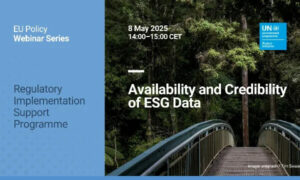
Availability and Credibility of ESG Data
08 May 2025 | 14:00 – 15:00
Online | BrightTalk
UNEP FI
Cinema
Climat décodé. Voyage dans les coulisses de notre planète
08 May 2025 | 18:00
Uni Dufour
UNIGE

Conference
Deadly exports – pesticide poisoning and corporate accountability
08 May 2025 | 18:00 – 19:30
Maison de la Paix | Auditorium Ivan Pictet
IHEID

Conference
One Health Approach to Addressing Pharmaceuticals in the Environment Across Key Sectors | 2025 BRS COPs Side Event
09 May 2025 | 13:15 – 14:45
CICG, Room C & Online | Webex
UNEP, WHO, BRS

Jobs
See all



Consultant
Association of Southeast Asian Nations (ASEAN) adaptation taxonomy coordinator
08 May 2025
UNEP FI


Updates
See all
25 Aug 2025
Road to Geneva | Plastic Pollution INC-5.2

07 May 2026
Switzerland Overshoot Day

28 Sep 2026
World Migratory Bird Day


23 Aug 2026