Update
Human Rights, Biodiversity, and the Role of Geneva
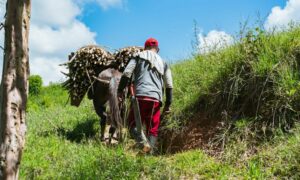
Biodiversity and human rights are closely interlinked. Without healthy, functioning ecosystems, which depend on healthy biodiversity, there would be no clean air to breathe, safe water to drink or nutritious food to eat. The loss of biodiversity has severe consequences for human well-being and human rights. This page highlights the role stakeholders from International Geneva as a global hub for environmental governance play in advancing a human rights-based approach in tackling biodiversity loss.
Human Rights Depend on a Healthy Biosphere
Biodiversity and human rights are closely interlinked. Without healthy, functioning ecosystems, which depend on healthy biodiversity, there would be no clean air to breathe, safe water to drink or nutritious food to eat.
A healthy biodiversity and functioning ecosystems are essential for human societies:
- About half of the world’s GDP – about USD 44 trillion – is dependent on natural resources, while nature provides at least USD 125 trillion worth of services annually.
- Nature also “underpins all dimensions of human health and contributes to non-material aspects of quality of life”, as indicated by the report, Global Assessment Report on Biodiversity and Ecosystem Services, by the Intergovernmental Science-Policy Platform on Biodiversity and Ecosystem Services (IPBES, 2019). As the COVID-19 pandemic has shown, the increasing negative impact of human activities on the environment severely threatens human and ecosystem health.
In October 2020, the former Special Rapporteur on the issue of human rights obligations relating to the enjoyment of a safe, clean, healthy and sustainable environment, David Boyd, (now known as the UN Special Rapporteur on the human right to a clean, healthy and sustainable environment) underscored in a report to the UN General Assembly (UNGA):
“All human rights ultimately depend on a healthy biosphere. Without healthy, functioning ecosystems, which depend on healthy biodiversity, there would be no clean air to breathe, safe water to drink or nutritious food to eat.”
— Human rights depend on a healthy biosphere (A/75/161)
Human Rights-based Approach in Addressing Biodiversity Loss
In the same manner, the loss of biodiversity has severe consequences for human well-being and human rights. Disruptions in the stability and continuity of ecosystems and the goods and services they provide can negatively impact the full enjoyment of human rights, including the right to life, food, water and sanitation, health and to a clean, healthy and sustainable environment (A/HRC/34/49).
The recognition of the human right to clean, healthy and sustainable environment by the Human Rights Council (A/HRC/Res/48/13) and the UN General Assembly (A/Res/76/300) is crucial to tackling the unprecedented biodiversity crisis that is threatening human well-being, human rights and the future of life on Earth, even three decades after the adoption of the Convention on Biological Diversity (CBD).It recognizes that the protection of the environment is equally important for the enjoyment of human rights, and that our action to protect biodiversity and ecosystems is critical. As biodiversity loss is caused by human activity, it has enormous implications for human rights and human well-being.
As such, healthy ecosystem services and biodiversity are necessary for the full enjoyment of human rights, showing the importance of fulfilling human rights obligations to biodiversity-related actions. Biodiversity around the world is rapidly being degraded and destroyed, with grave and far-reaching implications for human well-being. A human rights perspective on biodiversity is important because it:
- Helps clarify that the loss of biodiversity also undermines the full enjoyment of human rights;
- Heightens the urgent need to protect biodiversity;
- Helps promote policy coherence and legitimacy in the conservation and sustainable use of biodiversity.
Ocean and Human Rights
The ocean is the largest biome on Earth, covering 70 percent of its surface. However, it is not only a a vast, renewable resource, it is also essential to human well-being as one third of the human population (2.4 billion people) live within 100 km of an ocean coast. Its declining health directly threatens the health and well-being of people globally. Historically, the ocean has provided coastal communities with livelihood services such as food, clean air, and a healthy living environment, has protected humanity from the adverse impacts of climate change, and has played a key role protecting marine biodiversity, ensuring healthy fish stocks, thus food security and economic resilience. The threats over the ocean’s health jeopardizes both the environment and human survival.
A healthy ocean is fundamental to robust biodiversity and thriving ecosystems, as well as the full enjoyment of human rights, including the human right to a clean, healthy and sustainable environment.
Addressing the ocean’s health is not only a matter of managing natural resources. It also requires understanding the interdependence and interconnectedness of humans and the ocean and that any impact on the ocean affects human rights, even for those living inland. This is especially so as the negative effects of ocean degradation are disproportionately felt by vulnerable communities such as Indigenous Peoples, coastal communities, small scale fishers, ship workers and persons with disabilities. Mainstreaming a human rights-based approach to ocean governance enables the incorporation of ancestral knowledge and the rights of present and future generations, integrating a long-term vision, which is currently missing and which is crucial to solving the current planetary crises.
The Kunming-Montreal Global Biodiversity Framework (GBF) and Human Rights
The Kunming-Montreal Global Biodiversity Framework (KM GBF) was adopted during the fifteenth meeting of the Conference of the Parties (COP-15) of the Convention on Biological Diversity following a four-year consultation and negotiation process. This historic Framework, which supports the achievement of the Sustainable Development Goals and builds on the Convention’s previous Strategic Plans, sets out an ambitious pathway to reach the global vision of a world living in harmony with nature by 2050.
The adoption of the GBF under the CBD has also marked a significant advance in integrating human rights into environmental policy and actions. Parties have agreed that the “implementation of the Framework should follow a human rights-based approach, respecting, protecting, promoting and fulfilling human rights”, including the acknowledgement of the human right to a clean, healthy and sustainable environment (Section C).
The Framework calls for:
- all to respect the rights of Indigenous Peoples and local communities, including their rights over their traditional knowledge, lands, territories and resources;
- access to justice and information related to biodiversity;
- the full participation of women and girls (as set out in its Gender Plan of Action), children and youth, and persons with disabilities in decision making; and
- to ensure the full protection of human rights defenders.
Integrating Human Rights-Based Approach in GBF Implementation
As Parties to the Convention are expected to fulfill this commitment to setting national targets to implement it, it will be important that the implementation is guided by the human rights-based approach (HRBA). Various guides have been published to help ensure this:
- The Office of the UN High Commissioner for Human Rights (OHCHR, UN Human Rights) has published a Guidance on integrating human rights in National Biodiversity Strategy and Action Plans (NBSAPs) to support UN Country Teams, States, policymakers and stakeholders in integrating human rights into their NBSAPs under the CBD.
Under Article 6 of the CBD, Parties to the Convention commit to developing, implementing and reporting on NBSAPs, and to integrating the conservation and sustainable use of biological diversity into relevant sectoral or cross-sectoral plans, programmes, and policies. By having a rights-based approach in NBSAPs, biodiversity planning and NBSAPs are expected to be integrated into a conceptual framework based on international human rights standards.
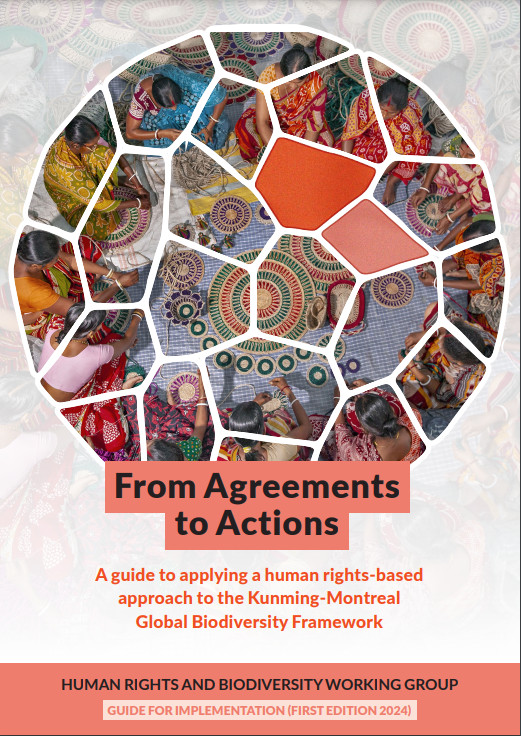
- The Human Rights and Biodiversity Group has published a guide, From Agreements to Actions: A guide to applying a human rights-based approach to the Kunming-Montreal Global Biodiversity Framework. The guide aims to provide additional support and concrete examples for Parties and decision-makers, non-state actors, and for rights holders, on how to meet this commitment to embed HRBA in the implementation and monitoring of the GBF at national and sub-national levels.
Addressing Biodiversity Loss in Human Rights Instruments
The various human rights mechanisms and instruments present in Geneva, such as the Human Rights Council, Special Procedures, and Human Rights Treaty Bodies, play an increasingly pivotal role in addressing the human rights impacts of biodiversity loss. As the links between biodiversity loss, nature protection and human rights continue to increase, they can help identify the rights and the specific groups affected by biodiversity loss and also help clarify the relevant obligations of States to advance human rights while addressing the triple planetary crisis.
Human Rights Treaty Bodies
The human rights treaty bodies are committees of independent experts that monitor implementation of the core international human rights treaties. The treaty bodies have addressed human rights and the environment in a number of statements, decisions, concluding observations, General Comments and General Recommendations. This body of work provides guidelines for the interpretation and application of State party obligations deriving from the respective Covenants and Conventions in relation to human rights and the environment and constitutes part of the evolving international human rights law framework that is increasingly addressing the human rights and the environment.
While the current classification does not directly address “biodiversity loss”, various Human Rights Themes and SDGs can provide insight into related human rights obligations arising from biodiversity and nature issues.
UN Declaration on the Rights of Indigenous Peoples (UNDRIP)
Traditional Indigenous territories encompass around 22 per cent of the world’s land surface and they coincide with areas that hold over 80 per cent of the planet’s biodiversity. Studies have demonstrated that the territories of Indigenous Peoples who have been given land rights have been significantly better conserved than adjacent lands.
The UNDRIP makes specific reference to conservation in article 29, affirming that Indigenous Peoples have the right to the conservation and protection of the environment and their lands, territories and resources. The loss of biodiversity not only poses a grave threat to Indigenous Peoples’ natural resources and livelihoods, but also to their cultural identity and survival.
UN Declaration on the Rights of Peasants and Other People Working in Rural Areas (UNDROP)
While small-scale farmers and peasants feed around 70-80 per cent of the world, they represent 80 per cent of the world’s hungry and 70 per cent of those living in extreme poverty. UNDROP provides a framework to enable a just and sustainable transition to a food system where biodiversity and human rights flourish.
The UNDROP, adopted by the Human Rights Council and the UN General Assembly in 2018, recognizes the past, present and future contributions of peasants and other people working in rural areas in all regions of the world to development and to conserving and improving biodiversity, which constitute the basis of food and agricultural production throughout the world, and their contribution in ensuring the right to adequate food and food security.
It also calls on States to take appropriate measures, in accordance with their relevant international obligations, to prevent the depletion and ensure the conservation and sustainable use of biodiversity in order to promote and protect the full enjoyment of the rights of peasants and other people working in rural areas.
Human Rights Council
The Human Rights Council (HRC) has contributed to raising awareness of the links between human rights and biodiversity including the adoption of a resolution that highlights the link between human rights and biodiversity (A/HRC/57/28) and one that provides the mandate of the UN Special Rapporteur on the right to a clean, healthy and sustainable environment (A/HRC/Res/55/2).
Universal Periodic Review
The Universal Periodic Review (UPR) of the Human Rights Council — a periodic review of the human rights records of all 193 United Nations Member States — is increasingly addressing the links between biodiversity and human rights through the recommendations made by Member States to the State concerned.
UN Special Rapporteur on the human right to a clean, healthy and sustainable environment
The mandate on the UN Special Rapporteur on the right to a healthy environment, currently held by Astrid Puentes, exists to examine the human rights obligations relating to the enjoyment of a safe, clean, healthy and sustainable environment and to promote best practices of the use of human rights in environmental policymaking, especially in the area of environmental protection.
The Special Rapporteur also presents thematic reports to both the Human Rights Council and the UN General Assembly, highlighting relevant issues on human rights and the environment, including aspects on addressing biodiversity loss.
Special Procedures of the Human Rights Council
As independent human rights experts with mandates to report and advise on human rights from a thematic or country-specific perspective other special procedures of the Human Rights Council also make links with their own mandates with issues of biodiversity and human rights. This includes the work achieved when they undertake country visits; act on individual cases and concerns of a broader, structural nature by sending communications to States and others in which they bring alleged violations or abuses to their attention; conduct thematic studies and convene expert consultations, contribute to the development of international human rights standards, engage in advocacy, raise public awareness, and provide advice for technical cooperation.
Office of the UN High Commissioner for Human Rights
As the leading UN entity on human rights, the Office of the UN High Commissioner for Human Rights (OHCHR, UN Human Rights) aims to provide guidance that encourages policy coherence and ensures that efforts to address the issues related to human rights and biodiversity are adequate, sufficiently ambitious, non-discriminatory and compliant with human rights obligations.
Guided by principles and standards derived from international human rights law, especially the Universal Declaration of Human Rights and the core universal human rights treaties, as well as the 2030 Agenda, UN Human Rights aim to help States, businesses and other duty-bearers meet this expectation.The OHCHR and UNEP have published a joint Key Messages on human rights and biodiversity that provide an outline on how this is possible, where participation, non-discrimination, and equality are critical.
Key Messages
- Address biodiversity and habitat loss and prevent their negative impacts on human rights
- Guarantee equality and non-discrimination
- Protect the rights of Indigenous Peoples
- Protect environmental human rights defenders
- Ensure equity in actions to address biodiversity loss and in the use of the benefits of biodiversity
- Ensure meaningful and informed participation including in land and resource governance
- Ensure accountability and effective remedy for human rights harms caused by biodiversity and habitat loss
- Protect against business-related human rights harms from biodiversity loss
- Ensure regional and international cooperation
- Effectively mobilize adequate resources to prevent human rights harms caused by biodiversity loss
- Guarantee that everyone enjoys the benefits of science and its applications
- Ensure education with respect for nature
- Respect and protect nature for all its value
Ahead of the adoption of the GBF, OHCHR, as part of the UN Environment Management Group (EMG) Issue Management Group on Human Rights and the Environment, has also developed the Key Messages on “Advancing a Human Rights-Based Approach to the Global Biodiversity Framework” to integrate the human right to a healthy environment into the work of the UN to ensure a coherent and human rights-based approach to environmental action.
International Instruments and Standards Tackling Biodiversity Loss
With the recognition of the right to a clean, healthy, and sustainable environment, this section aims to show the growing links between the environment and human rights agenda, and also identifies the various international and regional processes that clarify the relevant obligations of States to advance human rights in addressing environmental harm and biodiversity loss.
Protecting Environment Human Rights Defenders in Multilateral Agreements
Environmental human rights defenders (EHRDs) are those who strive to protect and promote human rights relating to the environment, “including water, air, land, flora and fauna“. In response to the growing threats towards environmental defenders, instruments at the global and regional level already exist, and a growing number of States have put national responses mechanisms in place to protect those engaged in protecting our environmental rights. Learn how different multilateral mechanisms aim to protect EHRDs.
Indigenous Peoples, Biodiversity and Human Rights
Despite awareness of the importance of respecting the rights of Indigenous Peoples and other rights-holders in conservation, recognized most recently in the GBF, the creation and administration of protected areas and other conservation initiatives have often violated their human rights. An important part of the problem appears to be the lack of widespread understanding of the relevant human rights norms by conservation organizations and conservation funders.
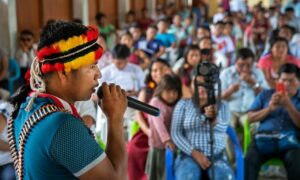
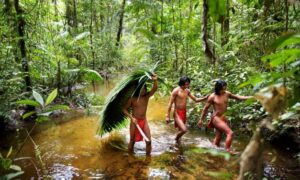
Efforts to conserve nature must respect and protect the rights of those already working to defend it. Studies have shown that protecting Indigenous rights in their ancestral homes can do more than governmental control to conserve natural ecosystems (IPBES, 2019 & FAO and FILAC 2021). However, the international conservation movement historically treated Indigenous Peoples with some degrees of hostility or indifference. Governments and conservation organizations often developed national parks and other protected areas with the goal of excluding human presence, and Indigenous Peoples were violently dispossessed of their land (A/71/229). The crisis of biodiversity is therefore also a crisis of human rights. Learn how various UN bodies are upholding the rights of Indigenous Peoples.
Nature Conservation and Human Rights
The international community is facing a global loss of biological diversity on a scale unprecedented in human history. The biodiversity crisis is also a crisis of human rights. The loss of biodiversity undermines the ability of everyone, everywhere, to enjoy their human rights, but it is especially disastrous for the Indigenous Peoples and others who depend most directly on natural ecosystems for their material, cultural, and spiritual well-being. To be successful, efforts to conserve nature must recognize the rights and contributions of those whose ways of life contribute to its protection. In particular, the rights and methods of managing and conserving nature of Indigenous Peoples, Afro-descendant and other tribal communities, and peasants should be prioritized.
Although it is far from the entire problem, an important factor is the lack of clear understanding of how human rights standards apply to private conservation actors. These standards include those found in the International Bill of Rights, the UN Declaration on the Rights of Indigenous Peoples, and other relevant human rights instruments, including the UNGP. States are the primary duty-bearers under international human rights law, but private actors such as conservation organizations and funders also have responsibilities to respect human rights.
Core Human Rights Principles for Private Conservation Organizations and Funders
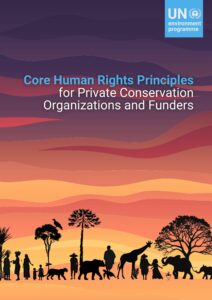
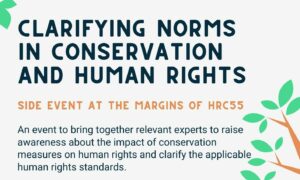
From 2022 to 2024, the United Nations Environment Programme oversaw a multistakeholder process to clarify how existing human rights norms and standards apply to private conservation organizations and funders. The process resulted in the Core Human Rights Principles for Private Conservation Organizations and Funders. The principles were the subject of extensive consultations with rightsholders, including Indigenous Peoples, rights-based organizations, experts, private conservation organizations, and funders. Rather than creating new rights or duties, or superseding existing norms and standards, the principles reflect and clarify the existing human rights norms and standards applicable to conservation. Overall, adherence to these principles fosters a more responsible, rights-based and gender-inclusive approach to conservation, which ultimately benefits all of us who share this beautiful planet.
A launch event, aimed at diverse stakeholders committed to advancing human rights and conservation, will take place on 13 December 2024 in two webinars for different time zones, at 9:00 CET and 18:00 CET.
The 10 Core Human Rights Principles for Private Conservation Organizations and Funders:
- Principle One: Respect Human Rights
- Principle Two: Respect the Rights of Indigenous Peoples
- Principle Three: Respect the Rights of All Communities, Groups, and Individuals
- Principle Four: Undertake Human Rights Due Diligence
- Principle Five: Engage in Good Faith Consultation
- Principle Six: Prevent Human Rights Abuses
- Principle Seven: Provide for Effective Remedies
- Principle Eight: Protect Against Human Rights Violations and Abuses in Relationships
- Principle Nine: Protect Against Human Rights Violations in Law Enforcement
- Principle Ten: Report Regularly on Human Rights
Geneva Rights and Environment Talks
The Special Rapporteur on the right to a clean, healthy and sustainable environment reports to the Human Rights Council during its March session on issues related to his mandate. The Geneva Rights and Environment Talks aim to harness the opportunity of this moment of the year to reflect on the challenges posed by the rapid decline of nature and biodiversity, and on how Geneva contributes to bringing together the actors working towards ensuring the right to a clean, healthy, and sustainable environment is upheld for all.

Role of International Geneva
Organizations are listed in alphabetical order
Business for Nature
Business for Nature is a global coalition that brings together companies and conservation organizations with the aim to provide a credible business voice on nature calling for governments to adopt policies to reverse nature loss in this decade. The coalition works with more than 70 international and national partners and a diverse group of businesses from all sectors, sizes and geographies. It encourages companies to commit and act to reverse nature loss, and advocate for greater policy ambition.
In the implementation of the GBF, Business for Nature calls on ensuring business and financial actors to protect nature and restore degraded ecosystems, following a rights-based approach consistent with international human rights law.
Center for International Environmental Law (CIEL)
CIEL is a non-profit organization dedicated to strengthening and using international law and institutions to protect the environment, promote human health, and ensure a just and sustainable society. In addition to their work in ensuring environmental law can effectively tackle biodiversity loss, climate change, and toxic pollution, CIEL’s work on forests aims to strengthen implementation and enforcement of laws and safeguards to protect communities and the forests they live in.
Convention on International Trade in Endangered Species (CITES)
CITES is an multilateral agreement aiming to ensure that international trade in specimens of wild animals and plants does not threaten the survival of the species. The convention currently forbids international commercial trade of 161 bird species (listed on Appendix I) and regulates trade for another 1,300 more species under specific controlled circumstances (listed on Appendix II).
CITES has recognized and promoted the engagement of Indigenous Peoples and local communities (including rural communities) in its various decisions since its 17th Conference of the Parties (CoP17).
Convention on Wetlands of International Importance (Ramsar Convention)
The Ramsar Convention aims to ensure the conservation and wise use of all wetlands through local and national actions and international cooperation, as a contribution towards achieving sustainable development throughout the world. In the Convention’s adoption in 1971, in its preamble the signatories affirmed their conviction ‘…that wetlands constitute a resource of great economic, cultural, scientific and recreational value, the loss of which would be irreparable.’
Earthjustice
Earthjustice is a nonprofit public interest environmental law organization that wields the power of law and the strength of partnership to protect people’s health, to preserve magnificent places and wildlife, to advance clean energy, and to combat climate change. Earthjustice’s Oceans Program uses the power of the law to safeguard imperiled marine life, reform fisheries management, stop the expansion of offshore oil and gas drilling, and increase the resiliency of ocean ecosystems to climate change.
Franciscans International
Franciscans International addresses the root causes of injustices by bringing cases of discrimination and violence, including threats of environmental damage to human rights, committed against individuals and groups living on the margins to the attention of the international community.
Geneva Human Rights, Biodiversity and Land Task Force (GeHRBiL)
GeHRBiL gathers civil society organizations working in Geneva to bring forward the human rights issues in relation to biodiversity and land and to introduce these issues in the work of the Geneva-based UN Human Rights Bodies.
International Union for Conservation of Nature (IUCN)
IUCN is the world’s largest conservation network with the mission to influence, encourage and assist societies throughout the world to conserve the integrity and diversity of nature. Environmental law, social justice, equity, Human Rights, transparency and inclusion are fundamental to their vision of a just world that values and conserves nature. Rights-based and inclusive approaches to conservation and its legal frameworks support the good governance of natural resources and guarantee conservation’s contribution to human wellbeing.
International Trade Centre (ITC)
ITC is a development agency dedicated to supporting the internationalization of small and medium-sized enterprises (SMEs). The agency enables SMEs in developing and transition economies to become more competitive and connect to international markets for trade and investment, thus raising incomes and creating job opportunities. Within the framework of the new legislations on Environmental and Human Rights Due Diligence, ITC works with businesses and policy makers around the globe and offers tools, guidance and methodologies for enterprises to respect and monitor for human rights in their businesses.
Minamata Convention on Mercury
At the fifth meeting of the Conference of the Parties to the Convention (COP-5), in November 2023, Parties adopted decision MC-5/17, Mercury and the Kunming-Montreal Global Biodiversity Framework, recognizing the potential for generating co-benefits through coherent implementation of both the Minamata Convention and the Kunming-Montreal Global Biodiversity Framework to protect human health and the environment. This landmark decision underscores the importance of addressing mercury pollution in the context of global biodiversity and charts a tangible course for advancing the objectives of the Minamata Convention, the Convention on Biological Diversity, and other biodiversity-related conventions as collectively reflected in the Kunming-Montreal Global Biodiversity Framework.
United Nations Trade and Development (UNCTAD)
Since its launch by UNCTAD in 1996, the BioTrade Initiative has been promoting sustainable BioTrade in support of the objectives of the Convention on Biological Diversity. UNCTAD is currently implementing the Global BioTrade Programme: Linking trade, biodiversity and sustainable development with the support of the Swiss State Secretariat for Economic Affairs SECO. The objective of this four-year programme is to provide key stakeholders with the ability to size and capitalize on trade opportunities from linking biodiversity and sustainable development, thereby advancing the implementation of the SDGs, as well as the Aichi Targets and the Post Aichi framework.
Unearthodox
Unearthodox, launched in March 2023 out of the legacy of the Luc Hoffmann Institute, is an independent foundation fostering the commitment to innovate for diverse, equitable societies that value nature and actively regenerate all life on Earth. One of their projects, the Future of Conservation NGOs project, brings together a diverse set of voices to reflect on these systemic patterns and their impacts on conservation effectiveness, in the face of the conservation agenda – traditionally determined by environmental drivers – now being confronted by the human and social rights agenda.
United Nations Economic Commission for Europe (UNECE)
UNECE promotes sustainable use and preservation of ecosystems by supporting the development of biodiversity conservation policies in the region, and the integration of nature conservation in sectoral policies. UNECE contributes to the work of the CBD through information and expertise, notably on forestry and environmental economic accounting.
United Nations Environment Programme (UNEP)
UNEP’s Europe Office is helping countries to build back better from COVID-19, to be more resilient to future crises and to green economies by working with nature. Together with FAO, UNEP also leads the UN Decade for Restoration. Alongside OHCHR, they have drafted Human Rights and Biodiversity: Key Messages to help guide States, businesses, international organizations, and other actors in their obligations and responsibilities to address biodiversity and habitat loss, prevent its negative impacts on human rights, and ensure that actions to address biodiversity loss are equitable, non-retrogressive, non-discriminatory and sustainable.
United Nations Environment Programme Finance Initiative (UNEP FI)
The UNEP FI works with members and partners to integrate sustainable decision-making into mainstream financial systems. To support and facilitate the implementation of the GBF, UNEP FI has published a number of resources to help various actors within the financial landscape gain an thorough understanding of the Framework, and identify ways to integrate nature action in their policies and decision-making processes. It has also created the Human Rights Guidance Tool for the Financial Sector, to guide financial actors in ensuring human rights safeguards in their policies.
United Nations Programme on Reducing Emissions from Deforestation and Forest Degradation (UN-REDD)
The UN-REDD Programme was launched in 2008 and builds on the convening role and technical expertise of the FAO, UNDP and UNEP. The Programme supports nationally led REDD+ processes and promotes the informed and meaningful involvement of all stakeholders, including Indigenous Peoples and other forest-dependent communities, in national and international REDD+ implementation, including from a human rights-based approach. Additionally, the programme supports national REDD+ readiness efforts in 65 partner countries, spanning Africa, Asia-Pacific and Latin America.
World Business Council for Sustainable Development (WBCSD)
WBCSD’s Vision 2050 provides nine clear pathways for action, and nature underpins all of them. COVID-19 has also highlighted the planetary emergency and the close connections between economies, human health, wellbeing, and nature. The Nature Program brings together all WBCSD work on protecting and sustainably managing ecosystems and builds on over 20 years of WBCSD and member experience in business and biodiversity and corporate ecosystem service assessment and valuation. Through their Human Rights and Business Gateway, they aim to provide insight into how companies are meeting the corporate responsibility to respect human rights, and share actions business leaders are taking to get ahead, and stay ahead, in this crucial space.
WWF International
For wildlife to thrive, WWF works with many partners to to protect plant and animal species by tackling the root causes of the many serious threats. With human rights guiding the core of their work, WWF collaborates with local people and government agencies to increase the coverage of protected areas and helps to strengthen the way protected areas are managed, and improving connections between them so wildlife can move more freely. It also tackles the illegal trade and over-exploitation of wildlife by strengthening regulations and making sure they’re properly enforced. In addition, WWF influences markets and consumer choices that drive demand for wildlife products. WWF also publishes the Living Planet Report, a scientific study of biodiversity and the health of our planet.
GEN Events

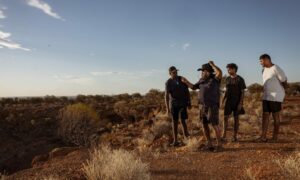
Rights of Indigenous Peoples & Environment | HRC57 Side Event
23 September 2024

HRC46 | Human Rights Depend on a Healthy Biosphere
5 March 2021
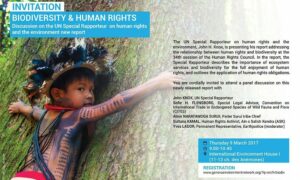
Biodiversity and Human Rights
9 March 2017
Resources
- Biodiversity and the Role of Geneva | GEN
- Experts urge States to fully integrate human rights at COP16 of the Convention on Biological Diversity | OHCHR | 15 October 2024
- From Agreements to Actions: A guide to applying a human rights-based approach to the Kunming-Montreal Global Biodiversity Framework | Human Rights and Biodiversity Working Group | 2024
- Policy Brief No. 1 | Human rights-based approaches to conserving biodiversity: equitable, effective and imperative | UN Special Rapporteur on the right to a healthy environment | 2021