
Update
Weather and Climate Extreme Events in a Changing Climate and the Role of Geneva

In recent years, rare and extreme weather and climate events such as heavy rain and snow, droughts, heatwaves, storms and cyclones, have changed and become more frequent as a result of human-induced climate change. This page collects the latest science and evidence of such changes on weather and extreme events and lists relevant information, research, data and/or press releases issued by our partners in Geneva and other institutions around the world.
Weather and Climate Extreme Events in a Changing Climate
Chapter 11 of the Intergovernmental Panel on Climate Change’s (IPCC) Sixth Assessment Report of Working Group 1: The Physical Science Basis (2021) defines an extreme weather event as ‘an event that is rare at a particular place and time of year’, and an extreme climate event as “a pattern of extreme weather that persists for some time, such as a season’. Other definitions consider unprecedented events as extremes and/or focus on the determination of relative or absolute thresholds above which conditions are considered extremes.
In recent years, rare weather and climate events have become more frequent due to human-induced climate change. The Sixth Assessment Report (AR6) Synthesis Report: Climate Change 2023 finalized by the IPCC in March 2023 finds that observed changes in extremes such as heatwaves, heavy precipitation, droughts, and tropical cyclones, can be attributed to human influence with greater confidence. This is since the previous Assessment Report (AR5) of 2014, with a high confidence interval that human activity, particularly Greenhouse Gas Emissions (GHGs), is the main driver of increases in hot extremes and decreases in cold extremes.
Extreme weather events have been ranking among the top 10 short-term and long-term risks in past years’ editions of the World Economic Forum Global Risks Report series, indicating the magnitude of their environmental, humanitarian and socio-economic breadth.

Source: IPCC AR6 Technical Summary | Table TS.2 | Summary table on observed changes in extremes, their attribution since 1950 (except where stated otherwise), and projected changes at +1.5°C, +2°C and +4°C of global warming, on global and continental scales.
GHGs contribute to planet-warming by trapping heat in the atmosphere, which in turn can alter atmospheric circulation and heat distribution across the surface of the Earth. These changes can bring extreme weather events and, over time, alter regional climates (University of California Museum of Paleontology). Rising temperatures simultaneously cause more atmospheric water retention, causing heavier and stronger precipitation, as well as increased water evaporation and decreased soil moisture, resulting in droughts.

Credit: Understanding Global Change © 2018 University of California Museum of Paleontology
During the 2023 UN Climate Change Conference (COP28), the World Meteorological Organization released its 2011-2020 Decadal State of the Climate report (Global Climate 2011-2020: A Decade of Acceleration). Key outcomes indicated that:
- 2011-2020 was the warmest decade on record for both land and ocean;
- glaciers around the world thinned by approximately 1m per year on average;
- sea level rose at an annual rate of 4.5mm/yr;
- approximately 60% of the surface of the ocean experienced a heatwave;
- ocean warming rates for the upper 2000m depth reached rates of 1.0 ± 0.1 Wm-2 over the period 2006-2020;
- The decadal global average CO2 rose to 402.0 ppm;
- Greenland and Antarctica lost 38% more ice between 2011-2020 than during the 2001-2010 period;
- Arctic sea ice extent seasonal mean minimum was 30% below average;
While extreme events had a heavy toll on food security and human mobility, with weather and climate-related events responsible for nearly 94% of all disaster displacement recorded over the last decade, the number of casualties from extreme events has declined, associated with improved early warning systems, but economic losses have increased.
- The State of the Global Climate report 2025, released in March 2026, finds that on a day-to-day basis, our weather has become more extreme. The dedicated supplement on extreme events highlights their cascading impacts, including on food insecurity and displacement. Extreme weather has cascading impacts on agricultural production. Climate-driven food insecurity is now seen as a risk, with cascading effects on social stability, migration and biosecurity through the spread of plant pests and animal diseases. It also continues to drive new, onward and protracted displacement of people globally, with particularly severe consequences in fragile and conflict-affected regions. The cascading and compounding impacts of multiple disasters severely limit the ability of vulnerable communities to prepare for, recover from and adapt to shocks. The chapter on climate and health discusses how rising temperatures, shifting rainfall patterns and changes in extremes are affecting where and when health risks emerge, how severe they become and who is most exposed.
- The State of the Global Climate 2024 released in March 2025 finds that extreme weather events in 2024 led to the highest number of new displacements recorded in a year since 2008, yet Early warning systems have proved to be efficient systems that governments can use to move communities out of harm’s way before a disaster or manage the event in situ. Reliable data and effective disaster risk reduction policies are crucial to saving lives. Disaggregated data – showing the frequency, triggers and sequence of displacement – can help response and development planners mitigate impacts on displaced people and host communities.
Extreme Temperatures
The IPCC Sixth Assessment Report (AR6) estimates with virtual certainty that hot extremes (including heatwaves) have become more frequent and more intense across most land regions since the 1950s, while cold extremes (including cold waves) have become less frequent and less severe due to human-induced climate change.
According to WMO, the past three years, 2023-2025, are the three warmest years recorded. The consolidated three-year average 2023-2025 temperature is 1.48 °C (with a margin of uncertainty of ± 0.13 °C) above the pre-industrial era. The past eleven years, 2015-2025, are the eleven warmest years in all eight datasets. This has occurred in spite of the La Niña event, the cold counterpart of the El Niño Southern Oscillation (ENSO), which from 2020 to 2023 has provided a cooling impact on the earth. In 2026, the World Meteorological Organization declared the onset of unprecedented El Niño conditions, ENSO’s hot counterpart, setting the stage for a likely surge in global temperatures and disruptive weather and climate patterns.
With record-breaking temperatures and the intensity and impact of extremes very likely to increase, strengthening national and international early warnings and anticipatory action to reduce the impacts on human health, livelihood, and the environment is strongly needed.

Heatwaves
The World Meteorological Organization defines a heatwave “a period where local excess heat accumulates over a sequence of unusually hot days and nights”, measured against local climatological conditions and/or thresholds measuring the abnormality of high temperatures.
In the past years, heatwaves have become a more common phenomenon. Research in attribution science, examining the link between rising levels of atmospheric carbon dioxide and extreme weather events, indicates that record-breaking temperatures during heatwaves would not be detected without human-induced climate change.
The IPCC Working Group I report, Climate Change 2021: The Physical Science Basis, found that hitting 1.5°C of global warming will cause increasing heatwaves, longer warm seasons, and shorter cold seasons. At 2°C of global warming, heat extremes would more often reach critical tolerance thresholds for agriculture and health. Heatwaves are also being detected in climatically cold regions, hitting records of 38℃ in the Arctic region in 2020.
Marine heatwaves, a consequence of the increased warming of seas and the ocean, have also been rising in the past years, contributing to the likelihood and strength of extreme weather events such as tropical storms and hurricanes, and disrupting the water cycle; making floods, droughts and wildfires on land more likely.

The impacts of MHWs | Source: IUCN
Record Breaking Temperatures
On the basis six international datasets, the World Meteorological Organization (WMO) confirmed that 2024 is the warmest year on record. The global average surface temperature was 1.55 °C (with a margin of uncertainty of ± 0.13 °C) above the 1850-1900 average, which means that we have likely just experienced the first calendar year with a global mean temperature of more than 1.5°C above the 1850-1900 average. The record breaks the one of 2023, which was confirmed by WMO State of the Global Climate 2023 report to have recorded a global average near-surface temperature at 1.45 °Celsius (with a margin of uncertainty of ± 0.12 °C) above the pre-industrial baseline. The past decade was the warmest ten-year period on record.
The World Meteorological Organization (WMO) shared data from the European Union’s Copernicus Climate Change Service finding that the average global temperature has been 1.5°C above the pre-industrial era for 12 successive months. June 2024 was the hottest on record globally and the 13th month in a row to set a monthly temperature record.
On 22 July 2024, the daily global average temperature reached a new record high in the ERA5 dataset, at 17.15°C. This exceeds the previous records of 17.09°C, set just one day before on 21 July 2024, and 17.08°C.
In Geneva
Extreme heat and heatwaves have become a recurring phenomenon in Geneva as well.
- Summer 2026 | Multiple heatwaves have hit Geneva during the summer, triggering the activation of the Plan Canicule several times to protect the population.
- Summer 2023 Heatwave | Hitting Switzerland almost at the end of the summer season, the August 2023 heatwave recorded three of the warmest days in Geneva since heat measuring started in 1864. Daily avergae temperatures were registered around 36 °C, with higher peaks throughout the days.
- July 2022 | According to thermal images taken on 19 July 2022 by actif-trafiC in various streets of Geneva, temperatures in Geneva reached 38.1 °C — the 3rd highest value ever observed in Geneva. Temperatures reached over 80°C on the surface of cars and over 60°C in the middle of the roadways.
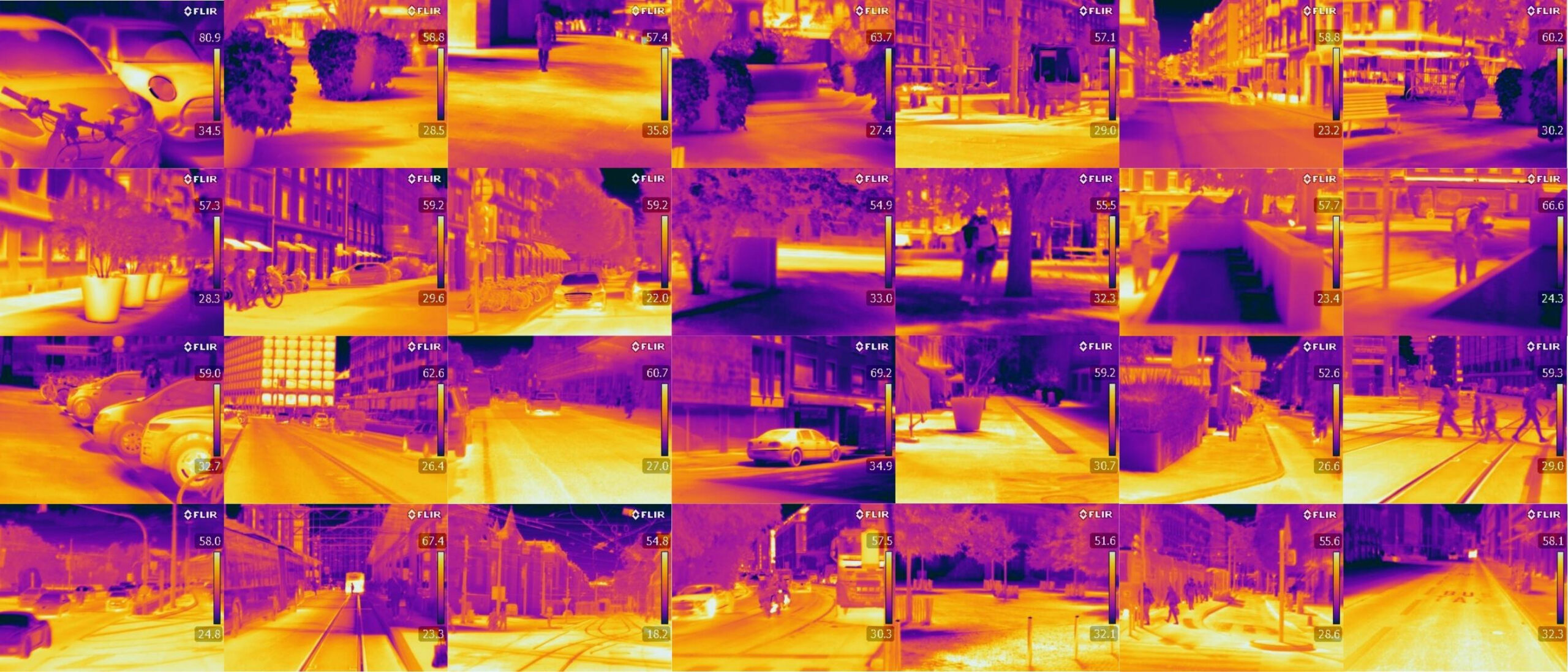 ©
© Secretary-General’s Call to Action on Extreme Heat
The UN Secretary-General’s Call to Action on Extreme Heat brings together the diverse expertise and perspectives of ten specialized UN entities (FAO, ILO, OCHA, UNDRR, UNEP, UNESCO, UN-Habitat, UNICEF, WHO, WMO) in a first-of-its-kind joint product, underscoring the multi-sectoral impacts of extreme heat. In response to the rapid rise in the scale, intensity, frequency and duration of extreme heat, UN Secretary-General António Guterres on 25 July 2024 called for an urgent and concerted effort to enhance international cooperation to address extreme heat in four critical areas:
- Caring for the vulnerable
- Protecting workers
- Boosting resilience of economies and societies using data and science
- Limiting temperature rise to 1.5°C by phasing out fossil fuels and scaling up investment in renewable energy.

Droughts and Fires
Droughts are varied in type, onset, extent and duration, resulting in plural definitions. Generally, these depend on precipitation and/or moisture or hydrological deficits and atmospheric evaporative demand (IPCC, 2021). The IPCC finds medium confidence that agricultural and ecological droughts have increased in several regions on all continents, with variable certainty of human-induced climate change impact on these changes (Chapter 11 of the IPCC AR6 of Working Group 1 (2021).
The UN Convention to Combat Desertification’s 2022 report Droughts in Numbers finds that the African continent has been the most impacted by droughts in the past century, with over 300 episodes and bearing an important death and economic toll around the world. Projections indicate that by 2050, droughts may affect over three-quarters of the world’s population, and an estimated 4.8-5.7 billion people will live in areas that are water-scarce for at least one month each year, up from 3.6 billion today. Up to 216 million people could be forced to migrate by 2050, largely due to drought in combination with other factors including water scarcity, declining crop productivity, sea-level rise, and overpopulation.
Droughts and heatwaves, as effects of hot and dry weather and low soil moisture, are also conducive to wildfires. A wildfire occurs when landscape fires extend out of control (UNEP, 2022). Climate change can influence fires in both direct and indirect ways: droughts, higher temperatures and changes in wind patterns might be considered direct effects; while changes in the nature and availability of biomass/fuel are indirect contributors (UNEP, 2022). According to the IPCC, at higher levels of global warming, fire weather conditions will be more frequent in some regions. Wildfires have devastating impacts on human health, biodiversity, and wildfire, as well as contributing to global warming by favoring carbon release from ecosystems such as peatlands and rainforests.
Heavy Precipitation and Floods
The planet’s warming corresponds to an increased atmospheric water-holding capacity, which causes more frequent, violent and abundant precipitation.
- Rain patterns in the last years across the world have witnessed events accounting for a months’ rain in a day or just a few hours. The observed growth in this phenomenon since 1950 is likely linked to human influence and is directly connected with increased warming. The projected increases in heavy precipitation extremes will lead to more frequent and intense pluvial floods (IPCC, AR6 Technical Summary).
- Heavier and more abrupt precipitation, in contrast with seasonal and moderated rains, can cause floods by raising watercourses levels beyond their natural limits. According to WMO, floods are the deadliest natural hazards, which together with storms have caused over one million deaths in the period 1970 to 2012. Besides changes in precipitation, floods’ destructiveness is exacerbated by soil aridity, another effect of global warming.
- In recent years, hail precipitation also seems to indicate an increase in severity with record-breaking hailstones reaching the size of 20 centimeters. Nevertheless, data inhomogeneities and inadequacies in monitoring systems of hail phenomena require further studies for establishing a clear connection with climate change.
- Climate change’s impact on snowfall leads to two contrasting effects: a global diminish in the mean snowfall and the favorable conditions for extreme snow events to materialize (Quante, L., Willner, S.N., Middelanis, R. et al., 2021). Snow coverage and cold days are globally diminishing, but although counterintuitive, the planet’s warming and consequent polar ice melting can contribute to more intense snowstorms in some regions. Warming in the Arctic corresponds to the weakening of the polar vortex, allowing cold air to navigate south. When cold Arctic air interacts with water-charged and warmer air the conditions for heavy snow precipitation can materialize.
Extreme Storms and Cyclones
Extreme storms such as tropical cyclones (TCs), extratropical cyclones and severe convective storms are rare, rapid and extremely variable events, making attribution to climate change rather complex (IPCC). Studies on historical changes to be attributed to anthropogenic climate change encounter data quantity and quality issues, nevertheless, climate models estimate that under a 2°C scenario, higher storms inundations rates will be recorded, while there is medium-to-high confidence that TC precipitation rates, will increase globally in frequency and intensity.
Impacts of Weather and Climate Extreme Events
Extreme weather events pose risks to human health, biodiversity and ecosystems, and impose significant stress on infrastructure and economic activities. Global warming is also found to increase the frequency of compound events — defined as the combination of two or more (not necessarily extreme) weather or climate events that occur (i) at the same time, (ii) in close succession, or (iii) concurrently in different regions – consequently magnifying the impact on all sectors. Estimates find that the cost of extreme events has increased nearly eight times globally since the 1970s due to multiple factors such as urban density settling in proximity to coasts – which contributes to the destruction of natural coastal defenses.
Human Health
According to the WMO Atlas of Mortality and Economic Losses from Weather, Climate and Water Extremes (1970 – 2019), there were more than 11,000 reported disasters attributed to weather, climate or water hazards globally, with just over 2 million deaths and US$ 3.64 trillion in losses. Weather, climate, and water hazards accounted for 50% of all disasters, 45% of all reported deaths and 74% of all reported economic losses
Heat-related health effects include heat rash to heat cramps, heat exhaustion, heatstroke and death. Exposure to such a climate can create cumulative stress on the body and risks exacerbating the impact of respiratory and cardiovascular diseases, diabetes and kidney disease. While individual thermoregulation plays a key role in people’s responses to high temperatures, factors such as age (being elderly or very young), having pre-existing disease, living alone, being socially isolated, homelessness, and not having access to heat–health information aggravates the risks of suffering from adverse impacts.
A recent research published in Nature Medicine on heat-related mortality during the summer 2022 heatwave across Europe found that the warming observed since 2015 was associated with 18,547 additional summer heat-related deaths for every +1 °C increase in temperature. A similar study led by the University of Bern has shown that about 60 percent of the more than 600 heat-related deaths in the summer of 2022 in Switzerland can be attributed to human-induced global warming. In the absence of adaptation to future summer warming, a heat-related mortality burden of 68,116 deaths on average every summer by 2030, 94,363 deaths by 2040, and 120,610 deaths by 2050 are expected.
While storms, cyclones, fires, and floods’ most dire impact is often death, these events can also bear short and long-term health challenges. The profound changes these cause on the environment can increase and favor the spread of hazardous chemicals and waterborne and vector-borne pathogens and increase the levels of air pollution through the propagation of toxic fumes from fires causing a series of respiratory and infectious issues.
The WHO-WMO joint publication, Climate change and workplace heat stress: technical report and guidance, highlights the growing global health challenges posed by extreme heat on workers and the health and productivity risks faced by billions of workers, especially in manual labor sectors. The report details the physiological, socioeconomic, and mental health impacts of heat stress and outlines evidence-based strategies for prevention and mitigation.
Human Rights
Weather and climate extreme events can impair people’s enjoyment of various human rights as food and water security, housing, forced displacement and more. Such events can have magnified impacts when hitting particularly vulnerable and unprepared and highly ecosystem-dependent contexts, aggravating the already precarious situations of people that live in poverty and face marginalization, including people with disabilities, older people, Indigenous peoples, pregnant people, women, and children. Approximately 3.3 to 3.6 billion people live in contexts that are highly vulnerable to climate change. Between 2010 and 2020, human mortality from floods, droughts and storms was 15 times higher in highly vulnerable regions, compared to regions with very low vulnerability (IPCC, AR6 Synthesis Report).
Extreme weather events, such as extreme heat, can lead to the violation of the safe and healthy working environment, recognized by the ILO’s among its fundamental principles and rights at work. While workers perform their jobs under extreme conditions, they are subjected to short and long-term health risks, which according to ILO’s Convention No. 184:
“[Agricultural] workers are entitled “(a) to be informed and consulted on safety and health matters … (b) to participate in the application and review of safety and health measures … and (c) to remove themselves from danger resulting from their work activity when … there is an imminent and serious risk to their safety and health” (Art. 8). They should not be placed at any disadvantage as a result of these actions.”
Working under the constraints of heat is also an inequality aggravator, with migrant workers often more subjected and less protected due to difficulty in accessing healthcare, inappropriate legal protection and difficult economic conditions.
Biodiversity and Ecosystems
Extreme weather and climate events can have an immense toll on biodiversity and ecosystems, sometimes leading to irreversible consequences. Both slow-onset and sudden-onset events can trigger change in biodiversity and ecosystem, which can unfold immediately after an event or develop after continuous stress, also given by the combination of multiple events.
- Marine heatwaves and extreme temperatures are already contributing to coral bleaching and extinction, and increase the risk of irreversible loss of marine and coastal ecosystems. Prior to extinction, important alterations of ecosystems can include the migration of species. According to the UN Educational, Scientific and Cultural Organization (UNESCO), more than half of the world’s marine species may stand on the brink of extinction by 2100. At a 1.1°C increase in temperature today, an estimated 60 percent of the world’s marine ecosystems have already been degraded or are being used unsustainably. A warming of 1.5°C threatens to destroy 70 to 90 percent of coral reefs, and a 2°C increase means a nearly 100 percent loss – a point of no return.
- Extreme land temperatures, which can cause wildfires and droughts, are positively correlated to declining biodiversity and higher extinction rates. These destroy habitats, impair species’ abilities, cross their adaptation capacities and can cause their death. According to FAO, the percentage of plants affected by drought has more than doubled in the last 40 years, with about 12 million hectares of land lost each year due to drought and desertification. With ecosystems lose their carbon uptake capacities, these progressively become carbon sources (Stocker, B. D. et al., 2019, and Chen, N. et al., 2020)
World Meteorological Day
Every 23 March, we celebrate World Meteorological Day, commemorating the coming into force of the Convention establishing the World Meteorological Organization on 23 March 1950. The observation showcases the essential contribution of National Meteorological and Hydrological Services to the safety and well-being of society, reflecting on topics such as weather, climate, or water-related issues
Climate Governance & International Instruments
The Early Warnings for All initiative
The Early Warnings for All initiative is a groundbreaking effort to ensure that everyone on Earth is protected from hazardous weather, water, or climate events through life-saving early warning systems by the end of 2027. The Early Warnings for All initiative is co-led by the World Meteorological Organization (WMO) and the United Nations Office for Disaster Risk Reduction (UNDRR), with support from the International Telecommunication Union (ITU) and the International Federation of Red Cross and Red Crescent Societies (IFRC) and other partners.
The Early Warnings for All initiative is built around four key pillars: disaster risk knowledge and management; detection, observation, monitoring, analysis, and forecasting; warning dissemination and communication; and preparedness and response capabilities. With human-induced climate change leading to more extreme weather conditions, the early warning systems are live-saving tools that have proven to be an effective way to adapt to climate change by providing a cost-effective and reliable way of protecting lives and livelihoods from natural hazards such as floods, heatwaves, storms, and tsunamis.
SDG13 on Climate Action
Sustainable Development Goal 13 on Climate Action adopted by United Nations Member States at the 2015 UN Summit as part of the 2030 Agenda for Sustainable Development, promotes taking urgent action to combat climate change and its impacts. Target 13.1 (Strengthen resilience and adaptive capacity to climate-related hazards and natural disasters in all countries) particularly looks at the number number of deaths, missing persons and directly affected persons attributed to disasters per 100,000 population (Indicator 13.1.1); the number of countries that adopt and implement national disaster risk reduction strategies in line with the Sendai Framework for Disaster Risk Reduction 2015–2030 (Indicator 13.1.2); and the proportion of local governments that adopt and implement local disaster risk reduction strategies in line with national disaster risk reduction strategies (Indicator 13.1.3).
World Meteorological Organization’s World Weather & Climate Extremes Archive
In 2006, the WMO Commission for Climatology (CCl) WMO Open Area Programme Group (OPAG) 2 group agreed to the creation of a world archive for verifying, certifying and storing world weather extremes. The archive established a set of procedures to verify existing and future record extremes and made these available to the general public. It includes the world’s highest and lowest temperatures, rainfall, heaviest hailstone, longest dry period, maximum gust of wind, longest lightning flash and weather-related mortalities.
Weather extremes are evaluated by a committee consisting of the WMO CCl Rapporteur for Climate Extremes, the chair of the OPAG 2 group, the chair of the overarching CC1 group, a regional authority, and as necessary an authority associated with the specific type of record (temperature, pressure, hail, tornado, tropical cyclone, etc.). The Rapporteur for Climate Extremes, currently Dr. Randy Cerveny, has final authority and responsibility for certifying the record.
Global Heat Health Information Network
The Global Heat Health Information Network (GHHIN) is an independent, voluntary, and member-driven forum of scientists, practitioners, and policy makers focused on improving capacity to protect populations from the avoidable health risks of extreme heat in our changing climate. It was created to help rapidly scale up efforts to manage the complex human health risks introduced by extreme and increasing ambient heat, and to harmonize and improve information and opportunity sharing across the burgeoning local communities of health professionals, decision makers and scientists motivated to address this issue. WMO and WHO are among the founding members. Together with WMO-WHO Joint Office for Climate and Health, Global Disaster Preparedness Center and Red Cross Red Crescent Climate Centre, and the University of Sydney Heat and Health Research Incubator, GHHIN and Google, thanks to a new search feature on the browser will allow the spreading of important health and safety tips.
AI for Drought Detection
The initiative, led by various UN agencies, including the International Telecommunication Union (ITU), UN Environment Programme (UNEP), UN Framework Convention on Climate Change (UNFCCC), UN Educational, Scientific and Cultural Organization (UNESCO), UN Office for Outer Space Affairs (UNOOSA) and World Meteorological Organization (WMO), aims to explore how AI can be effectively used in disaster management, providing expert guidance and support for research, innovation, and the development of standards.
The Role of Geneva
Organizations are listed in alphabetical order.
International Actors
Geneva Climate Change Consultation Group (GeCCco)
GeCCco gathers civil society organizations working in Geneva to bring forward the human rights issues raised by climate change and to introduce these climate change issues in the work of the Geneva-based UN Human Rights Bodies.
International Committee of the Red Cross (ICRC)
The ICRC works to adapt its response to support populations coping with the dual shocks of climate risks and conflicts. In 2020, the ICRC also released the report “When rain turns to dust” illustrating how countries mired in conflict are disproportionately impacted by climate variability and extremes, due to the limited adaptive capacity of people, systems, and institutions already coping with the consequences of conflicts.
International Federation of Red Cross and Red Crescent Societies (IFRC)
The International Federation of Red Cross and Red Crescent Societies (IFRC) is the world’s largest humanitarian network. The IFRC and its 191 National Societies respond to, and work to prevent or lessen the impacts of, all types of crises and disasters. Their work aims at supporting all people, with a focus on the most vulnerable, to save lives, reduce suffering and uphold human dignity. The IFRC invests greatly in prevention and preparedness through disaster risk reduction and climate adaptation and effectively using technology and innovation to anticipate risks and disasters, supporting proactive early action and provide predictive financing. In addition, IFRC provides capacity-building for local responses and adopts a people-centred approach to recovery.
International Labour Organization (ILO)
The International Labour Organization (ILO) supports the response to weather and climate extreme events by applying a rights-based development approach in the development of employment-centered recovery from crises while promoting decent work and social justice as key drivers of resilience and social cohesion. In addition, ILO’s mission is to protect workers from unsafe and unhealthy working environments and conditions, which might be caused or related to extreme weather and climate events.
International Organization for Migration (IOM)
Since 2007, IOM has been working on migration, environment and climate change. Since 2015, it hosts a dedicated Migration, Environment and Climate Change Division (MECC) that addresses the migration, environment and climate nexus. Through it, IOM oversees, supports and coordinates the development of policy guidance for activities with a migration, environment and climate change dimension. IOM established the Environmental Migration Portal: Knowledge Platform on People on the Move in a Changing Climate in 2015. The Portal provides up-to-date information on key policy processes and developments, capacity building efforts, research and publications, and operational projects addressing the migration, environment and climate change nexus. The Portal highlights IOM’s efforts, including with partners, as we work together towards addressing one of the biggest challenges of our times, migration in the context of environmental and climate change.
Intergovernmental Panel on Climate Change (IPCC)
The Intergovernmental Panel on Climate Change (IPCC) is the United Nations body for assessing the science related to climate change. Through its assessment reports and special reports, the IPCC divulgates objective scientific information on the state of scientific, technical and socio-economic knowledge on climate change, its impacts and future risks, and options for reducing the rate at which climate change is taking place. The Working Group I contribution to the Sixth Assessment Report “Climate Change 2021: The Physical Science Basis” dedicated its eleventh chapter to Weather and Climate Extreme Events in a Changing Climate, establishing that human-induced greenhouse gas emissions have led to an increased frequency and/or intensity of some weather and climate extremes since pre-industrial time, in particular for temperature extremes
International Telecommunication Union (ITU)
ITU works on addressing climate change through information and communication technologies (ICTs). Work includes supporting the growth of satellite surveillance and monitoring services from space for, for example, more accurate weather forecasting and prediction of extreme weather events linked to climate change, and particularly for predicting the strength, path and location of landfall of tropical storms.
As part of the Early Warning for All Intiative together with IFRC, UNDRR and WMO, ITU is leading the “Warning Dissemination and Communication” pillar of the EW4A initiative to look at last-mile connectivity and to ensure that warnings reach the people at risk in time to take action.
International Union for Conservation of Nature (IUCN)
The IUCN assesses the impacts of climate change and extreme weather events on species and ecosystems. Through its work on ecosystem-based mitigation, adaptation and disaster risk reduction, it also highlights the important role of nature-based solutions to climate change. It also works to ensure that climate policy and action are gender-responsive, socially inclusive and take into account to the needs of the most vulnerable.
Partnership for Environment and Disaster Risk Reduction (PEDRR)
PEDRR is the clearinghouse for knowledge, training, advocacy and practice on Ecosystem-based Disaster Risk Reduction (Eco-DRR). Eco-DRR is the sustainable management, conservation and restoration of ecosystems to reduce disaster risk, with the aim to achieve sustainable and resilient development. Well-managed ecosystems, such as wetlands, forests and coastal systems, act as natural infrastructure, reducing physical exposure to many hazards and increasing socio-economic resilience of people and communities by sustaining local livelihoods and providing essential natural resources such as food, water and building materials.
Office of the High Commissioner on Human Rights (OHCHR)
The Human Rights Council resolution 41/21 afirms that the effects and impacts of weather and climate extreme events directly and indirectly threaten the full and effective enjoyment of a range of human rights by people throughout the world, including the rights to life, safe drinking water and sanitation, food, health, housing, self-determination, culture, work and development.
Over the past years, the Human Rights Council took on resolutions and discussions on specific aspects of climate change, while Special Rapporteurs contributed with reports on specific thematic angles within their mandates. The Human Rights Council has contributed to raising awareness of the links between human rights and climate change by successive and targeted clarifications of the ways climate change affects human rights, including through the adoption of a series of resolutions related to climate change and human rights. The OHCHR also published a factsheet on the “Frequently asked questions on human rights and climate change”
United Nations Office for Disaster Risk Reduction (UNDRR)
The United Nations Office for Disaster Risk Reduction (UNDRR) is the UN agency engaged in reducing the risks posed by disasters by supporting governments, and decision-makers to adopt better policies and invest in DRR, as well as collect, collate, and share the latest high-quality technical information and data about reducing risk and building resilience more effectively. UNDRR monitors the implementation of the Sendai Framework for Disaster Risk Reduction 2015-2030, supporting countries in its implementation, monitoring and sharing what works in reducing existing risk and preventing the creation of new risk. UNDRR oversees various initiatives to monitor, inform on and reduce the risks of extreme events as the Comprehensive Disaster and Climate Risk Management and the Early Warnings for All Initiative together with IFRC, ITU and WMO among others.
World Intellectual Property Office (WIPO)
WIPO’s WIPO GREEN, as an online platform for technology exchange, supports global efforts to address climate change by connecting providers and seekers of environmentally friendly technologies. Through its database, network and acceleration projects, it brings together key players to catalyze green technology innovation and diffusion. Such technologies include those on efficient heating and cooling, wildfire monitoring and more.
World Bank Group Geneva Office
The World Bank Group is the biggest multilateral funder of climate investments in developing countries and a global leader in disaster risk management, supporting countries to assess exposure to hazards and address disaster risks.
World Health Organization (WHO)
The World Health Organization, as the global health authority, supports countries in building resilient and proactive health systems that can anticipate the needs and challenges during emergencies so that they are more likely to reduce risks and respond effectively when needed, monitors health hazards and impacts of events and provides guidelines. WHO conducts specific work on health effects of climate change, droughts, floods, heatwaves, tropical cyclones, and various other weather-related disasters. In 2023, WHO also elected for the first time a WHO Director-General Special Envoy for Climate Change and Health, underscoring WHO’s commitment to prioritizing climate change and its impact on global health. The current mandate holder is Dr. Vanessa Kerry.
World Meteorological Organization (WMO)
WMO is the recognized authority for verifying extreme weather records. It maintains an official Archive of Weather and Climate Extremes. This includes records of temperatures (globally and per hemisphere), rainfall, aridity, lightning and weather-related mortality. Each year, WMO releases the State of the Global Climate report, which focuses on key climate indicators – greenhouse gases, temperatures, sea level rise, ocean heat and acidification, sea ice, and glaciers, and highlights the impacts of climate change and extreme weather.
Local Institutions
Canton of Geneva
The Canton of Geneva adopted a revised Cantonal Climate Plan (Plan climat cantonal 2030 – 2ème génération) in 2022, after the State Council declared the climate emergency in 2019. Aimed at diminishing by 60% greenhouse gas emissions by 2030 and achieving carbon neutrality by 2050, the Climate Plan aims to protect the population and the environment from the increase of climate extreme events and their consequences. The Canton also offers various suggestion and services to protect the population from extreme heat.
City of Geneva
The City of Geneva is active in protecting its population from extreme climate events, especially cold waves and heatwaves. Since 2014, the heatwave plans (Plans Canicule) offers various measures to protect the most vulnerable to extreme temperatures in summer, namely refreshing areas, shaded refuges from heat islands, free swimming pools, and more. In the winter of 2022, the City of Geneva increased its welcoming capacity in shelters to protect homeless people from the snow and freezing temperatures.