Newsletter 13 Jul 2026
Environment: What’s Up in GENeva | 13 – 19 July 2026
The Geneva Environment Network’s weekly newsletter includes the latest information on the global environmental agenda, main events, job vacancies, as well as other useful resources and updates. The Geneva Environment Network is not responsible for the content of any linked site or any link contained in a linked site. Stay tuned and follow us on X (Twitter), Facebook, LinkedIn, Instagram, Bluesky, Youtube, and WhatsApp, or visit our website regularly for additional updates.
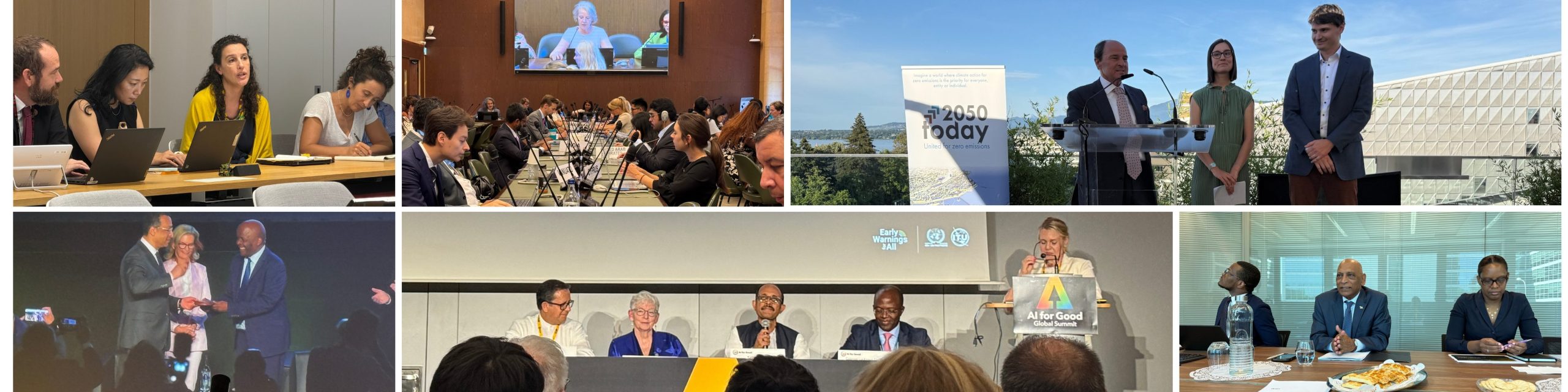
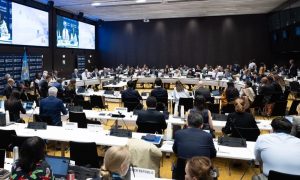
Image of the week | A non-exhaustive snapshot of events and key moments from last week at Palexpo, Palais des Nations, Maison de la Paix, and the Permanent Mission of Guyana, highlighting contributions to advancing the global environmental agenda. © UNEP/GEN
Scientists to Advance Global Priorities for Sustainable Trade and Wildlife Conservation | CITES AC34 & PC28
Following the 20th World Wildlife Conference that convened in November 2025 in Samarkand, Uzbekistan, Parties to the Convention on International Trade in Endangered Species of Wild Fauna and Flora (CITES) have agreed to a substantial programme of inter alia scientific and technical work to continue strengthening the effective implementation of the Convention. The 3 Resolutions, over 350 Decisions, and 76 species listings adopted through amendments to the CITES Appendices must be implemented before the 21st World Wildlife Conference, due to take place in 2028.
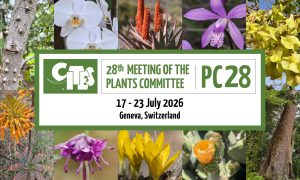
This week, global scientific experts serving as Members of the scientific advisory bodies to CITES, as well as representatives of observer Parties and observer organizations to the Convention, are gathering in Geneva for the 34th meeting of the Animals Committee (AC34), taking place from 13 to 17 July 2026 at the International Conference Centre Geneva (CICG), back-to-back with the 28th meeting of the Plants Committee (PC28), convening from 17 to 23 July 2026.
- The 500 participants registered to attend AC34 will advance the global scientific and technical agenda, reviewing conservation progress and discussing plans for the sustainable management and trade of corals, sharks and rays, eels, big cats, vultures, and amphibians, among other fauna. → Read more in CITES press release, consult all documents, watch live, and check our dedicated page for highlights.
- To address shared priorities, including the Convention’s application to fungi, a process to obtain feedback on the use of the NDF Guidance, enhancing the work and efficiency of the Convention through the permanent committees and capacity-building, including the country-wide review of significant trade, the CITES Animals Committee will meet with the CITES Plants Committee for a joint session on 17 July 2026.
- As part of the meetings, various side events organized by Member States and organizations will be taking from 12:15-13:45 and 17:15-18:45 CEST.
Read more at:
- Scientists to advance global technical agenda for sustainable trade and conservation of corals, eels, big cats & more | CITES | 7 July 2026
- Monitoring online illegal wildlife trade | GI-TOC | 7 July 2026
- Is CITES AC34 supporting GBF Target 5? | Earthmind | 3 July 2026
- Summary of Issues to be Discussed at the Thirty-Fourth Session of the CITES Animals Committee | Species Survival Network
- Summary of Issues to be Discussed at the Twenty-Eighth Session of the CITES Plants Committee | Species Survival Network
19th Session of the Expert Mechanism on the Rights of Indigenous People
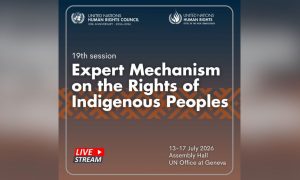
The 19th session of the Expert Mechanism on the rights of Indigenous Peoples (EMRIP19) — a subsidiary body of the Human Rights Council, created through HRC resolution 6/36 adopted in 2007, meeting once a year to provide Indigenous-based expertise to the Council — will convene at Palais des Nations, Assembly Hall from 13 to 17 July 2026. → Consult the EMRIP official page, the Docip resource page, and watch the live stream of the session meetings on UN Web TV.
At this session:
- The Expert Mechanism will present the draft study examining the “Rights of Indigenous Peoples in conflict and post-conflict situation” (A/HRC/EMRIP/2026/2), which highlights the disproportionate impact of conflict on Indigenous Peoples, including violence, displacement, environmental degradation and the erosion of cultural and governance systems, as well as pressure linked to climate change and resource competition.
- The Expert Mechanism will equally focus on enhancing the participation of Indigenous Peoples in the United Nations, following up on the intersessional meetings of the Human Rights Council on concrete ways to enhance the participation of Indigenous Peoples in the work of the Council, held in July and October 2024, as well as the resolution adopted in 2025 (A/HRC/RES/60/13). The meeting is expected to tackle preparations for twenty years of the United Nations Declaration on the Rights of Indigenous Peoples, which will be commemorated in 2027.
- Read the OHCHR press release: Indigenous Peoples’ rights in conflict situations and Artificial Intelligence on the agenda at Expert Mechanism session
Various side events will tackle the environmental-related issues, including:
- UNDRIP20: Advancing Indigenous Peoples’ Human Rights for the Next Twenty Years | 13 July 2026 | 15:00 – 16:00 CEST | Palais des Nations, Room XI | Geneva Office of Indigenous Peoples and Land is Life, Inc. | Interpretation E + S
- Classifying Biocultural Rights Violations in Coastal Conflicts: A Framework for Indigenous Peoples’ Rights towards UNDRIP 20th anniversary | 14 July 2026 | 10:00 – 11:00 CEST | Palais des Nations, Room XI | Universidad de Santiago de Compostela and Rueda de Medicina A.C.
- WHO Framework for Respectful Engagement with Indigenous Peoples on Biodiversity, Health and Traditional Knowledge Systems: From Co-Creation to Implementation | 14 July 2026 | 11:00 – 12:00 CEST | Palais des Nations, Room VII | World Health Organization
- International Courts Advisory Opinions on Climate and Indigenous Peoples: From Legal Clarification to Practical Advocacy Pathways | 14 July 2026 | 12:00 – 13:00 CEST | Palais des Nations, Room VII | Land is Life, Inc., Vanuatu, Geneva Office of Indigenous Peoples, Saniri Alifuru, CIEL, University of Arizona
- Shaping Practical Tools to Support Rights-Based Conservation Consultation workshops | 14 & 15 July 2026 | Palais des Nations, Building H | UNEP (on invitation)
- Thematic Meeting on Indigenous Peoples on Carbon Finance | 14 July 2026 | 13:00 – 15:00 CEST | Palais des Nations, VII | FAO
- Indigenous Peoples’ Sovereignty Amidst Conflict: Addressing Resource Militarization and Land Rights in Asia | 14 July 2026 | 14:00 – 15:00 CEST | Palais des Nations, Room V | Asia Indigenous Peoples Pact
- Indigenous and Human Rights and “Fast Track” approvals under the Building Canada Act | 14 July 2026 | 15:00 – 16:00 CEST | Palais des Nations, Room XI | Manitoba Keewatinowi Okimakanak Inc.
- Let the Xavante Dream: Who pays for the Energy Transition and development in Brazil? Addressing conflicts where Corporations, State-supported infrastructure, and Indigenous rights collide | 15 July 2026 | 10:00 – 11:00 CEST | Palais des Nations, Room XI | Cultural Survival
- Water as a Peace Issue: Indigenous Peoples’ Right to Water in Conflict and Post-Conflict Settings | 15 July 2026 | 12:00 – 13:00 CEST | Palais des Nations, Room XI | Minority Rights Group
- Extractivismo, consulta y derechos de los pueblos indígenas: La comunidad Guaytamari frente al proyecto minero San Jorge | 15 July 2026 | 13:00 – 14:00 CEST | Palais des Nations, Room V | Guaytamari Community, Université libre de Bruxelles and DOCIP
- Indigenous Rights, Traditional Medicines, and Emerging Psychedelic Policy: Implementing UNDRIP in the Context of Sacred Plant Medicines | 15 July 2026 | 13:00 – 14:00 CEST | Palais des Nations, Room XI | Indigenous Medicine Conservation Fund
- Indigenous Peoples in the Russian Federation: Extractivism, Cultural Survival and Challenges | 15 July 2026 | 15:00 – 16:00 CEST | Palais des Nations, Room V | Sakha Policy and Advocacy Center
- Illicit Exploitation of Natural Resources, Harm to Intangible Cultural Heritage and Crimes Against Humanity: Rethinking Violence through International (Criminal) Law | 15 July 2026 | 18:00 – 19:30 CEST | DOCIP Documentation Centre, Rte de Ferney 106
- Realising the WIPO treaty on Intellectual Property, Genetic Resources and Associated Traditional Knowledge | 16 July 2026 | 10:00 – 11:00 CEST | Palais des Nations, Room VII | Native American Rights Fund
- Energy Coloniality and Indigenous Territories: Green Extractivism, Self-Determination, and Solutions from Indigenous Peoples | 16 July 2026 | 10:00 – 11:00 CEST | Palais des Nations, Room XI | Leibniz University Hannover
- Defending Territories, Protecting Defenders: The role of Indigenous-Led Documentation and Data Sovereignty | 16 July 2026 | 14:00 – 15:00 CEST | Palais des Nations, Room XI | Indigenous Peoples Rights International
Shaping the Future of Water Governance | Preparations for the 2026 United Nations Water Conference
Preparations for the 2026 United Nations Water Conference, co-hosted by the Republic of Senegal and the United Arab Emirates, and scheduled to take place from 8 to 10 December 2026 in Abu Dhabi, United Arab Emirates, are well underway with stakeholders across the United Nations system and beyond actively engaging in consultations and coordination efforts to advance the Conference’s objectives and deliver actionable outcomes for the implementation of Sustainable Development Goal 6 and other water-related commitments.
Spotlight on Water in Multilateral Processes
While water governance remains fragmented, important advances have been made since 2023, including the appointment of the UN Special Envoy on Water and the adoption of the UN System-wide Strategy for Water and Sanitation. Building on this momentum, the 2026 UN Water Conference and its Interactive Dialogue on “Water in Multilateral Processes” offer a key opportunity to shape the future of global water governance. Through broad consultations with Member States and stakeholders from across sectors, the process seeks to identify pathways for stronger cooperation and more effective water governance beyond 2030. As co-chairs, Germany and Mexico envision a participatory, ambitious and forward-looking dialogue.
While in-person consultations continue at the HLPF in New York and at Stockholm World Water Week, and also included an in-person session last week in Geneva, the co-chairs have opened a questionnaire to gather wider input from UN Member States and relevant stakeholders on perspectives on strengthening water governance – now and beyond 2030. Inputs will feed into their second State of Play Report and shape discussions leading up to the 2026 UN Water Conference. → The questionnaire will be open until 9 August 2026 and only one submission by Member State / organization is accepted.
Apply for Side Event @ UN Water Conference
In parallel to the official programme of the UN Water Conference, a selected number of high-level side events will be organized by UN Member States, UN entities, Intergovernmental Organizations (IGOs), and all accredited stakeholders. These side events are designed to offer additional opportunities for duly registered participants to collaborate, share knowledge, and accelerate the implementation of Sustainable Development Goal 6 and the 2030 Agenda in general. → Read more in the application guidelines and apply through the official applications form by 31 July 2026
UN Sustainable Development Goal 6 Synthesis Report on Water and Sanitation
Meetings in Geneva and New York last week featured the UN Sustainable Development Goal 6 Synthesis Report on Water and Sanitation 2026 released last month, charting the path towards 2030+. It stresses that moving from incremental and uneven progress to transformative change will require maintaining what is working, while making improvements to the systems, means and processes required to implement SDG 6 better going forward. The report also stresses that a UN multilateral approach for water and sanitation towards 2030 and beyond can be strengthened by:
- Accelerating, improving and transforming SDG 6 implementation through a transformational shift in the approach to finance and capacity development for water and sanitation to support countries in scaling up implementation. Capitalize on the upcoming 2026 and 2028 UN conferences on water to align efforts and strengthen political will, partnership and international cooperation.
- Addressing water as a systemic driver of sustainable development through strengthening cross-sectoral coordination and decision-making to ensure water is coherently integrated into national policies and plans. Continue mainstreaming water-related issues within existing intergovernmental processes by aligning efforts towards compatible policy objectives, targets and indicators.
- Enabling more structured and meaningful multi-stakeholder engagement and dialogue to improve stakeholder coordination and engagement in water and sanitation policies, plans and decision-making processes, as well as within existing and future water-related intergovernmental processes at the UN.
- Building on lessons learned from SDG 6 to improve future water-related goals that better link high-level policy goals and targets with the means of implementation. Consolidate evidence and data to strengthen future goals and targets, including potential candidate indicators for a possible post-2030 framework.
- Ensuring a future intergovernmental process for water at the UN beyond 2030. Such a process could be convened within the UN General Assembly or Economic and Social Council, with substantive outcomes, including the possibility of intergovernmentally agreed declarations.
- Scaling up agile and effective UN system-wide support, coordination and delivery of water and sanitation by strengthening water and sanitation programmes in individual UN entities and scaling up and localizing implementation of the UN System-wide Strategy for Water and Sanitation. Enhance UN-Water by evolving its secretariat into a coordination office that serves the inter-agency mechanism.
Additional News on Water
- Financing Water Security | OECD|
- Summer School on Water Governance 2026: A Wrap-Up | Geneva Water Hub | 8 July 2026
- In the context of HLPF 2026, parties have created momentum to reach 100 Parties accessing the UN Water Convention.
Advancing Action on Chemicals, Waste, and Pollution
Spotlight on the Global Framework on Chemicals | GFC
Adopted in Bonn in September 2023, the Global Framework on Chemicals – For a Planet Free of Harm from Chemicals and Waste (GFC) provides a comprehensive roadmap for the sound management of chemicals and waste throughout their lifecycle. Supported by a Secretariat hosted in Geneva, the Framework sets out five strategic objectives and 28 targets and brings together governments, industry, intergovernmental and non-governmental organizations, academia and youth in a unique multi-stakeholder partnership.
In November 2026, the first International Conference of the Global Framework on Chemicals (GFC-IC1) will convene in Geneva. With the demand for safer and more sustainable products, materials and value chains continuing to grow, the Conference will provide a platform to strengthen accountability, accelerate solutions and unlock investment opportunities that support healthier people, resilient economies and a cleaner environment. Key updates on the road to GFC-IC1 include:
- Registration for the first International Conference of the Global Framework on Chemicals is now open until 17 July 2026 for participants requesting funding or 30 September 2026 for self-funded participants.
- The Call for Expression of Interest for booths at the GFC-IC1 Action and Partnership Hub is also open. Booths are available for Member States and stakeholders participating in the Conference. Registration is open until 31 July 2026.
- Call for Comments: Nominations for New Issues of Concern | The Global Framework on Chemicals invites stakeholders to provide comments on nominations submitted for new issues of concern for consideration at the first meeting of the International Conference. Nominations and work plans include: (a) Chemicals management issues of special concern for children’s health; (b) Towards a broader approach on lead: expanding the scope beyond lead in paint; (c) Pharmaceutical pollution and its effects on human health and the environment; (d) Harmonization of global efforts to protect human, animal, and environment health against the threat from hazardous chemicals by transitioning to New Approach Methods. → Submit comments by 21 August 2026 on Forms
- On the margins of the GFC-IC1, UNEP is convening under the GEF-8 Integrated Programme Eliminating Hazardous Chemicals from Supply Chains the Global Supply Chains Forum: Advancing Circular and Chemical-Safe Supply Chains in Fashion and Construction on 12 and 13 November 2026. → Registrations to participate are open
- At GFC-IC1, the Food Packaging Forum and New York University Grossman Center for the Investigation of Environmental Hazards will hold a Health and Chemicals Forum.
Spotlight on Plastic Governance
The path towards the fourth part of the fifth session of the Intergovernmental Negotiating Committee to develop an international legally binding instrument on plastic pollution, including in the marine environment (INC-5.4) continues to progress. Recent updates include:
- The fourth edition of the Chair’s Informal Webinars with Observers will take place on 14 July 2026, in two sessions in different time zones to facilitate participation: Session 1, from 14:00-15:00 CEST, and Session 2 from 20:00-21:00 CEST.
- The Chair, H.E. Amb. Julio Cordano shared the invitation to the second informal in-person meeting of Heads of Delegation to the INC, to be held from 27 to 30 September 2026, Bangkok, Thailand, preceded by regional consultations on 26 September 2026. The meeting will be held in the format Head of Delegation + 3 delegates (HOD+3). Participants are invited to by 6 September 2026, or by 31 July 2026 to apply for travel support.
- The Chair also shared a save the date for the third informal in-person meeting in the lead up to the fourth part of the fifth session of the INC (INC-5.4), scheduled to take place within the period of 25 January to 2 February 2027. Specific dates and venues will be confirmed in due time.
- Recent information from engaged stakeholders include:
- Plastics Diplomacy Brief – July 2026 | Dan Gocher | 10 July 2026
- Society of Native Nations Warns Plastics Treaty Must Not Be Reframed to Protect Petrochemical Interests | Society of Native Nations | 8 July 2026
Spotlight on the Special Chemicals and Waste Management Programme
The Special Programme, also known as the Chemicals and Waste Management Programme, supports institutional strengthening at the national level for the sound management of chemicals and waste. The Special Programme issues periodic calls for applications for funding of projects aimed at institutional strengthening for the sound management of chemicals and waste.
The Ninth Round of Applications is open until 20 July, subject to the availability of funds. Project proposals should adopt a cross-cutting approach that seeks to enhance implementation of the Basel, Rotterdam and Stockholm Conventions, the Minamata Convention and the Global Framework on Chemicals.
Spotlight on the Basel, Rotterdam and Stockholm Conventions
On the road to the 2027 Meetings of the conferences of the Parties to the Basel, Rotterdam and Stockholm Conventions, parties to the Conventions are requested to provide inputs to advance their work:
- Call for information in follow-up to part I of the seventeenth meeting of the Committee administering the Mechanism for Promoting Implementation and Compliance of the Basel Convention | At the first part of its seventeenth meeting, the Committee administering the Mechanism for Promoting Implementation and Compliance of the Basel Convention agreed to invite Parties and observers to provide feedback on various issues under the 2026-2027 work programme of the Committee by Friday, 31 July 2026.
- Sixth Round of National Reporting under the Stockholm Convention | Pursuant to decision SC-12/19, the Conference of the Parties to the Stockholm Convention decided that Parties shall submit their sixth national reports to the Secretariat by 31 August 2026 for consideration by the Conference of the Parties at its thirteenth meeting.
In Memoriam
In this edition, we pay tribute to Dr. John Alan Haines, who passed away on 7 July 2026 at the age of 88. John was a visionary scientist and international public servant whose work left a lasting mark on UNEP, Geneva-based organizations, and global chemical safety. Through senior roles at UNEP, WHO and later UNITAR in Geneva, he helped shape the international framework for sound chemicals management, fostered cooperation between governments, industry and international institutions, and led pioneering efforts to establish poison-control centres and toxicology services across dozens of countries. His work contributed to advancing environmental protection, improving public health, and saving countless lives. John’s enduring legacy lives on in the institutions, networks and capacities he helped build, which continue to protect people and support safer management of chemicals around the world. → Read more in the dedicated blog.
Highlights from Geneva Digital Week 2026
Last week, over 12,000 participants among Heads of States, Ministers, and Heads of Agencies gathered in Geneva for critical discussions on our shared digital future within the framework of Geneva Digital Week, which, as stated by ITU Secretary-General Doreen Bogdan-Martin, “was all about connecting policy discussions and scientific expertise directly to consultations with civil society, the technical community, and real-world AI solutions.” During this week of “moving from conversation to people-centred action so that AI — and all digital technologies — can benefit everyone, everywhere”, multiple initiatives, reports and prizes have been launched:
- The first Global Dialogue on AI Governance marked an important milestone in ensuring that AI governance reflects the priorities of all nations, not just the most technologically advanced, and that the benefits of AI are shared by all. It also represented an important moment of inclusivity as it gathered more than 4,000 participants, including stakeholders from 1,800 entities, and took stock of more than 1,500 written submissions. At the Dialogue:
- The Independent International Scientific Panel on Artificial Intelligence presented its Preliminary Report of the Independent International Scientific Panel on AI: Evidence-based assessment of opportunities, risks and impacts of AI, launching three warnings on AI’s Speed, Power and Truth. The Panel will continue its work over the next three years, focusing on the preparation of sectoral briefs on the applications of AI.
- An international Coalition for Children’s Rights and Protection in the Age of Artificial Intelligence was launched, setting out to make sure children’s safety and rights are not an afterthought as artificial intelligence reshapes how they learn, play and grow up. Its founding UN members are the Department of Global Communications (DGC), OHCHR, ITU, UNICEF, and UNESCO and the initial seventeen signing countries are Austria, Brazil, Bulgaria, Canada, the Czech Republic, El Salvador, Estonia, France, Indonesia, Italy, Japan, Kenya, Luxembourg, Morocco, the Netherlands, the Republic of Korea and Spain. → Read more in the UN News dedicated article
- It was confirmed that a second session will follow in New York in May 2027.
- The United Nations Secretary-General António Guterres described priorities for the road ahead, stressing efforts should focus on Safety, Red lines, Capacity and Transparency.
- The World Summit on the Information Society (WSIS) Forum 2026 was held in the context of the General Assembly resolution that strengthened the global commitment to build a digital future for all and reinforced the Forum’s unique role in advancing people-centred digital development and international cooperation. WSIS actively engaged civil society not only as participants, but also in shaping the Forum’s programme and agenda. At WSIS 2026:
- Multiple sessions discussed the environment and interlinkages with digital technologies → Check highlights
- 18 Winners and 72 champions, including various related to environmental sustainability, have been announced during the WSIS Prizes 2026 Winners Ceremony. → Read more in the press release
- The AI for Good Global Summit 2026 brought together the world’s leading AI thinkers with the most advanced tech – including agentic AI, robotics and brain-computer interfaces – the Summit showed how artificial intelligence is already improving healthcare, education, food security, disaster response and other vital dimensions of global development. At the Summit:
- ITU launched a global standards initiative to build trust in AI behaviour and identity. The new ITU Focus Group on Trust and Identity for Humans and Agentic AI will address the challenges of trust management for people and AI agents, the overall trustworthiness of agentic AI systems, and ways to strengthen confidence in how AI agents behave while retaining authority over their actions. → Read more in the press release
- The report Leveraging AI to Enhance Multi-Hazard Early Warning Systems by ITU, UNDRR, WMO and IFRC was launched. It discusses the use of artificial intelligence for early warning systems (EWS). The report, produced by the Early Warnings for All (EW4All) initiative, demonstrates AI’s potential to address existing gaps in EWS and to make the systems more effective, resilient, and inclusive. → Read more in the press release and consult the highlights of the launching session
- The second edition of Mapping Disaster Resilience report, focused on GeoAI Best Practices from the UN-SPIDER Network was launched by the Office for Outer Space Affairs, consolidating proven GeoAI practice from across the UN-SPIDER Regional Support Office (RSO) network into a single practical reference, documenting the methods, data, partnerships and measurable outcomes behind each case so that other offices and national agencies can replicate or adapt them.
- The film Plastic Erosion was awarded at the AI for Good Film Festival 2026, spotlighting marine plastic pollution from the angle most likely to land: making the abstract tangible.
The AI conversations in Geneva will continue throughout the year across various fora, including at the 19th session of the United Nations Expert Mechanism on the Rights of Indigenous Peoples (EMRIP) and will gather momentum again next June when the Geneva AI Summit on 21-22 June 2027 will bring the global conversation on artificial intelligence to the heart of multilateralism.
Read more at:
- The Future of AI cannot build itself | United Nations Secretary-General António Guterres | 6 June 2026
- Secretary-General, at First Global Dialogue on Artificial Intelligence, Stresses Safety, Human Rights, Transparency Must Govern Its Development | UN Meetings Coverage and Press Releases | 6 July 2026
The UN Secretary-General highlights the AI Environmental Transparency Initiative launched last month that calls on every major AI company to measure and publicly disclose the full footprint of its systems: carbon, water and land. - AI for Good and WSIS Forum 2026 close with global push for AI for everyone | ITU | 10 July 2026
- From principles to practice: AI for Good Global Summit and WSIS Forum take centre stage after Global AI Dialogue | ITU | 8 July 2026
- Pope on AI: It is important to dialogue with everyone to promote the common good | Vatican News | 8 July 2026
- AI governance debate silent on risks to nature, campaigners warn | Climate Home News | 8 July 2026
- When AI hurts people, who’s to blame? Global experts grapple with accountability | UN News | 7 July 2026
- How Switzerland became a global hub for artificial intelligence | About Switzerland | 7 July 2026
- ‘Everybody has a role to play’ in AI governance, UN expert says | UN News | 7 July 2026
- High Commissioner Türk at the Global Dialogue on AI Governance: Taking Back Our Agency in the Age of AI | OHCHR | 7 July 2026
- New coalition puts children’s rights at the centre of the AI age | UN News | 7 July 2026
- From AI to ‘killer robots’: UN chief issues urgent governance call | UN News | 6 July 2026
- UN Global Dialogue opens with urgent call for safe and inclusive AI that benefits all | ITU | 6 July 2026
- UNOG Media Stakeout | 6 July 2026
- UN stakes claim in AI governance with Geneva conference | Geneva Solutions | 6 July 2026
Outcomes of the 62nd Session of the UN Human Rights Council
On Wednesday, 8 July 2026, the United Nations Human Rights Council concluded its 62nd regular session after adopting 28 resolutions. Resolutions relating to the global environmental agenda, though may not be their main focus, and their main sponsors, include:
- A/HRC/62/L.18/Rev.1 | Human rights and climate change | Philippines, Bangladesh, Viet Nam | Adopted without a vote
- The Council decides that the annual panel discussion to be held at the sixty-fifth session shall be focused on “Human rights and climate adaptation: challenges, good practices, and recommendations on actionable pathways to safeguard the enjoyment of human rights of the present generation and the needs and interests of future generations”, with a summary report by the High Commissioner for Human Rights to be submitted at its sixty- seventh session.
- It requests the Secretary-General to prepare an analytical study on “Human rights and climate adaptation: challenges, good practices, and recommendations on actionable pathways to safeguard the enjoyment of human rights of the present generation and the needs and interests of future generations”, and to submit the report to the Council at its sixty-sixth session, to be followed by an interactive dialogue
- A/HRC/62/L.12 | Freedom of opinion and expression | Canada, Brazil, Fiji, Namibia, Netherlands (Kingdom of the), Sweden | Adopted without a vote
- The Council strongly condemns the threats, reprisals, harassment and violence against, both online and offline, including through repressive activities conducted abroad by States, or actors under their effective control, and the targeting, criminalization, intimidation, arbitrary detention, torture, disappearance and killing of any individual, including human rights defenders, environmental human rights defenders, among others.
- A/HRC/62/L.22 | Extreme poverty and human rights | France, Albania, Belgium, Chile, Morocco, Peru, Philippines, Romania | Adopted as orally revised without a vote
- Deeply concerned that progress towards ending extreme poverty has been reversed at the global level by inter alia, increasing adverse impact of climate change, rising inequalities and increasing debt servicing costs, health challenges, among others, the Council decides to extend, for a period of three years, the mandate of the Special Rapporteur on extreme poverty and human rights. It requests the Special Rapporteur to submit an annual report on the implementation of the present resolution to the Human Rights Council, and, on a biennial basis, to the General Assembly, as of its eighty-first session, and, in accordance with their programmes of work.
- A/HRC/62/L.27 | Human rights and neglected tropical diseases | Malawi, Burkina Faso, Gambia, Kenya, Morocco, United Republic of Tanzania | Adopted as orally revised without a vote
- Recognizing that climate change may alter the transmission and geographic spread of certain neglected tropical diseases, with implications for the enjoyment of human rights, the Council encourages Member States to consider the implications of climate change and environmental degradation as key risk factors for the transmission and geographic spread of vector-borne neglected tropical diseases.
- The Council requests the Office of the United Nations High Commissioner for Human Rights to prepare a comprehensive report on the human rights dimensions of neglected tropical diseases, … and to submit the report to the Human Rights Council at its sixty-fifth session.
Other relevant resolutions include Enhancement of international cooperation in the field of human rights (Uganda, on behalf of the Movement of Non-Aligned Countries, A/HRC/62/L.2), The Social Forum (Cuba, A/HRC/62/L.7), Mandate of Independent Expert on human rights and international solidarity (Cuba, A/HRC/62/L.8), Protection of healthcare in armed conflict (Qatar, A/HRC/62/L.26).
→ Consult our dedicated HRC62 and the environment update for highlights of key moments, side events, and further resources.
Read more on HRC62:
- Summary produced by the United Nations Information Service in Geneva for use of the information media → Human Rights Council Concludes Sixty-Second Regular Session after Adopting 28 Resolutions
- HRC62: Civil society presents key takeaways from the session | International Service for Human Rights | 8 July 2026
Other relevant news include:
- Right to a Healthy Environment (R2HE) Toolkit | NYU Law & UNEP
NYU Law’s Right to a Healthy Environment (R2HE) Toolkit, created in collaboration with the UN Environment Programme, is the first database to map the legal recognition of the right and to analyze significant R2HE case law and developments.
Standing with Environmental Human Rights Defenders
The environment and human rights communities are very concerned about the rearrest earlier this month of Houman Jowkar and Sepideh Kashani, along with Sepideh Kashani’s sister, Sima Kashani. Their lawyer stated that electronic devices were confiscated during the arrest and that the reasons for the detention had not been made clear. Houman and Sepideh are Iranian wildlife conservationists associated with the Persian Wildlife Heritage Foundation (PWHF). They became internationally known after being arrested in Iran in 2018 along with other environmentalists who were working on conservation projects, including efforts to protect the critically endangered Asiatic cheetah. After serving several years in prison, they were released in April 2024 under a pardon. Read more at:
- Iran’s scientists face growing isolation amid war | Eco-Business | 10 July 2026
- Iran: Environmental activists must be immediately released | Article19 | 7 July 2026
- Iran rearrests prominent conservationists freed just two years ago | Mongabay | 3 July 2026
- WCS Expresses Profound Concern and Alarm Regarding the Recent Detention of Wildlife Conservationists in Iran | WCS | 2 July 2026
Various organizations have been developing tools to support environmental defenders. The International Service for Human Rights (ISHR) launched last month the Environmental Human Rights Advocacy Pathway — a free, self-paced toolkit designed to help environmental human rights defenders navigate UN and regional mechanisms to defend the right to a clean, healthy and sustainable environment, as part of its e-learning space, the ISHR Academy.
The situation of environmental human rights defenders will be the focus of the thematic report to the 64th session of the United Nations Human Rights Council of the UN Special Rapporteur on the human right to a healthy environment. The report will examine the situation of environmental human rights defenders, working in the context of the triple planetary crisis, highlighting how violations against them undermine the right to a clean, healthy and sustainable environment. It will outline the obligations of States and non-State actors to protect EHRDs and prevent environmental and climate-related harm, while recognizing both the individual and collective dimensions of environmental human rights defence. The Special Rapporteur will also provide recommendations to strengthen the protection of EHRDs and advance the effective implementation of the right to a healthy environment. The call for input deadline is 21 August 2026. → Submit your input
Appointment of the UN Special Rapporteur on Toxics and Human Rights
The UN Human Rights Council at its 62nd session has appointed new special procedure mandate holders, including Bethanie Carney Almroth of Sweden as the new UN Special Rapporteur on the implications for human rights of the environmentally sound management and disposal of hazardous substances and wastes (toxics and human rights). A professor of ecotoxicology and environmental science at the University of Gothenburg and with a long academic career focused on the environmental and biological impacts of chemicals and plastics, she will be succeeding mandate holder Marcos Orellana. Appointments at the 62nd session of the Human Rights Council are effective from 1 August 2026.
With a track record demonstrating scientific leadership and expertise that supports rigorous, evidence-based assessment of human-rights implications via direct and indirect interactions, including in the right to a clean, healthy environment, Professor Carney Almroth has engaged with many Geneva-based processes, including at the 75th anniversary of the Universal Declaration of Human Rights and at the 5th Forum on Human Rights, Democracy and the Rule of Law.
Reactions include:
- IPEN | IPEN Welcomes the Appointment of Bethanie Carney Almroth as Special Rapporteur on Toxics and Human Rights | 9 July 2026
- CIEL | CIEL Statement on the Appointment of Bethanie Carney Almroth as Special Rapporteur on Human Rights and Toxics | 8 July 2026
International Geneva @ HLPF
The 2026 High-level Political Forum on Sustainable Development (HLPF), taking place under the auspices of the Economic and Social Council (ECOSOC), is now in its second week and expected to conclude on 15 July 2026. The High-level Segment of ECOSOC, including the three-day ministerial segment, will be convened from 13 to 16 July 2026 under the theme “Transformative, equitable, innovative and coordinated actions for the 2030 Agenda for Sustainable Development and its Sustainable Development Goals for a sustainable future for all”. → Follow the IISD Earth Negotiations Bulletin Live Coverage
Various Geneva actors are in New York to contribute to HLPF 2026. Key moments this week include:
- City of Geneva at the High Level Politcal Forum | 13 July 2026
The Mayor of Geneva, Christina Kitsos, will represent the City of Geneva as part of the Swiss delegation, marking the first time a Swiss city has been invited to present its contribution to the Sustainable Development Goals directly. This invitation follows the publication of the City of Geneva’s Voluntary Local Review, a report taking stock of the City’s actions in support of sustainable development and measures the progress made towards the 2030 Agenda’s goals. It highlights local initiatives, the challenges that remain to be addressed and the vital role of local authorities in the ecological, social and economic transition. → Watch live on UN Web TV on 13 July 2026 (The intervention is expected between 22:40 and 23:15 CEST) - High-Level Meeting on Critical Energy Transition Minerals | 14 July 2026
In line with the review of Sustainable Development Goal 7 on affordable and clean energy, the High-Level Meeting on Critical Energy Transition Minerals will be held to advance international cooperation on transparent, equitable and sustainable critical mineral value chains. Discussions will also support the implementation of the Secretary-General’s Panel recommendations on Critical Energy Transition Minerals. → Consult the concept note and the programmes of the Roundtable 1, Roundtable 2, Roundtable 3 - Water Convention at the High-level Political Forum 2026
UNECE will continue its engagement at HLPF, focusing in particular on accelerating accession to and implementation of the Water Convention, strengthening cooperation across water, climate and ecosystems agendas, and advancing momentum towards the 2026 United Nations Water Conference. - UNITAR at the High-level Political Forum 2026
UNITAR will convene leaders, policymakers, academia, UN partners, local authorities and practitioners to explore practical solutions for accelerating progress towards the SDGs. Through a series of high-level events and strategic dialogues, UNITAR will showcase innovative approaches to capacity development, knowledge sharing and multi-stakeholder partnerships that support sustainable, inclusive and resilient development worldwide. → Consult the full list of events - Geneva Water Hub at the High-Level Political Forum 2026
In preparation for the 2026 UN Water Conference, the Geneva Water Hub, in partnership with Pôle Eau Dakar and TRENDS Research & Advisory, with the support of the Permanent Missions of Slovenia and Switzerland to the UN in New York, will host a high-level dialogue “Water as a Tool for Peace: Reassessing Progress and Shaping the Future“. → Register to attend the event taking place only in person on 14 July 2026 at the Permanent Mission of the UAE to the UN in New York
Critical Negotiations on the Future of Deep-Sea Mining | ISA31
The 2nd Part of the 31st Annual Session of the International Seabed Authority (ISA31) is taking place from 13 to 31 July 2026 in Kingston, Jamaica. At ISA31, negotiations on the draft exploitation regulations will continue, building on the achievements of the 30th annual session in terms of working modus operandi of and at the first part of the 31st. Discussions will be structured thematically on environmental matters, financial matters, regulatory, procedural, and institutional matters, and governance matters. → Follow the negotiations on the Web TV of the Authority and the live coverage of the Earth Negotiations Bulletin
Ahead of the negotiation, a growing number of reports, policy briefs and expert statements highlight the environmental, biodiversity, human rights and geopolitical implications of exploiting deep-ocean resources. They underscore the increasing calls for a precautionary approach and for maintaining a moratorium on deep-sea mining until its risks are better understood. Recent resources include:
- Nations Meeting in Jamaica Urged to Maintain Deep-Sea Mining Moratorium | Center for Biological Diversity | 10 July 2026
- From desert frog to deep-sea molluscs, remarkable species at risk – IUCN Red List | IUCN | 9 July 2026
Deep-sea mining threatens over half of molluscs reliant on hydrothermal vents, the update of The IUCN Red List of Threatened Species™ has revealed. - Extraction does not equal control: New report warns deep seabed mining risks worsening global insecurity | WWF | 9 July 2026
Deep seabed mining might lead to governance fragmentation and increase ecological risks, in particular compounding risks to food security. Rather than ensuring security, racing to mine the ocean floor risks raising new problems that compounds existing risks and vulnerabilities. - Entangled Depths: Deep Seabed Mining and the Security Paradox | GIGA | July 2026
- Power Dynamics in the Deep – The Stakes for the ISA and Deep Sea Mining in 2026 and Beyond | Greenpeace | 8 July 2026
- OUTSIDE THE RULES Why Unilateral U.S. Deep-Sea Mining Demands a Council Response | Center for Biological Diversity & Greenpeace Mexico | 7 July 2026
- Africa must act before deep-sea mining becomes a new battleground | ISS | 7 July 2026
- New Report: Risks of Radiation Toxicity from Deep Sea Mining | Deep Sea Mining Campaign| 29 June 2026
- UN experts : Ocean governance related to the deep-sea bed, must be grounded in human rights and international law | Statement by UN Special Procedures mandate holders ahead of the second part of the ISA session | 26 June 2026
- Policy Recommendations on Deep-Sea Mining | DeepSea Conservation Coalition | 25 June 2026
- Deep-Sea Mining: What the World Needs to Know – A 2026 Media and Policy Briefing Series | DeepSea Conservation Coalition | 23 June 2026
- Would-be miners launch legal action against the ISA – Greenpeace reaction | Greenpeace | 5 June 2026
- Ocean and Human Rights. This illustrated booklet is based on the report by Astrid Puentes Riaño, Special Rapporteur on the right to a clean, healthy and sustainable environment (A/HRC/58/59) | Alexandra Dion-Fortin | 2026
More Happening Abroad
Montreal Protocol Meetings | The 48th meeting of the Open-ended Working Group of the Parties to the Montreal Protocol (OEWG48) will take place from 13 to 17 July 2026 in Bangkok, Thailand. The meeting will take place in parallel to the Sixth Extraordinary Meeting of the Parties to the Montreal Protocol (ExMOP6) on 14 July 2026, and back-to-back with the seventy-sixth meeting of the Implementation Committee under the Non-Compliance Procedure for the Montreal Protocol (ImpCom76) from 18 and 19 July 2026. OEWG48 will tackle the scientific and technical work under the Protocol and preparations for the next replenishment of the Multilateral Fund for the Implementation of the Montreal Protocol. → Access all documents and follow the OEWG48 live coverage of the Earth Negotiations Bulletin
Second Global Nature Positive Summit | The Global Nature Positive Summit is an international event focused on accelerating efforts to implement the Global Biodiversity Framework (GBF). The second edition of the forum will take place from 14 to 16 July 2026 in Kumamoto, Japan. The Nature Positive Summit will aim to showcase strategies and roadmaps to deliver nature-positive outcomes, with a particular focus on the private sector. Ahead of other international meetings in 2026, such as the UN Convention on Biological Diversity’s COP17 in Armenia, and the UN Convention to Combat Desertification’s COP17 in Mongolia in August, the Global Nature Positive Summit will help focus attention on how to chart a course to a nature-positive future in business, finance and governance. → Consult the programme
Call for Submissions and Contests | Upcoming Deadlines
With the environment high on the agenda of International Geneva and beyond, international processes, negotiations, and fora regularly call for inputs in preparation for future reports and guidelines or for people to support their process. A dedicated update lists calls for submissions related to the environment. Additional updates also list those related to human rights mechanisms and ongoing contests launched by our partners. Deadlines not to be missed during the coming weeks include:
- Call for Submissions for the Sumaúma Pledging Tree for Human Rights-Based Climate Action | The Sumaúma Pledging Tree for Human Rights-Based Climate Action, an initiative launched by the Office of the UN High Commissioner for Human Rights, the COP30 Special Envoy on Human Rights and Just Transition, the UN Special Rapporteur on the promotion and protection of human rights in the context of climate change at COP30 and the ministry of Human Rights and Climate Change of Brazil to generate climate action pledges from and foster mutual learning across a wide range of actors in order to bring about concrete change towards more effective climate action and greater enjoyment of human rights for all. Submit your stories, initiatives and commitments for human rights-based climate action through the questionnaires in the submissions page to help the Sumauma grow. The deadline for submission is 31 July 2026. → Submit your input
- Registration for experts to review IPCC First Order Draft of Working Group I contribution to the Seventh Assessment Report | Registration is now open for experts to review the First Order Draft of the Working Group I contribution to the IPCC Seventh Assessment Report (AR7). The Working Group I contribution to AR7 is assessing the latest physical science basis of climate change, including observed and projected large-scale climate changes, climate processes and feedback, and regional climate information. The expert review, the first of multiple review stages, will run from 10 August to 2 October 2026. Interested experts are invited to register here by 23:59 CEST on 25 September 2026.
Enjoying a Green Summer in Geneva
The Canton of Geneva has activated its heatwave plan on Tuesday, 7 July 2026, and has since extended the measures until 15 July 2026. These measures include enhanced support for vulnerable groups, while some schools and childcare facilities have introduced temporary arrangements to help cope with the high temperatures. Everyone is encouraged to take simple precautions, such as staying well hydrated, keeping workspaces as cool as possible, adapting schedules when feasible, and avoiding strenuous activities during the hottest hours of the day.
While temperatures remain high, summer continues to bring Geneva’s parks, lakefront, cultural venues, and natural spaces to life. From open-air festivals and outdoor activities to exhibitions, workshops, and guided nature walks, there is something for everyone to experience while embracing a more sustainable lifestyle. Whether you’re looking to cool off in green spaces, dive into sustainability, or simply enjoy the beauty of nature in full bloom, find your inspiration for a vibrant Green Summer in Geneva. Suggestions for this week include:
- Les Aubes | From 13 July – 16 August 2026 | Bain des Pâquis
Celebrate the 20th edition of this loved summer tradition with a series of free sunrise concerts on the Jetée des Bains des Pâquis. Over five weeks, 35 performances welcome the day in a unique setting by the lake, bringing together music lovers, early risers, families, and visitors. As the sun rises over Geneva, enjoy an unforgettable start to the morning with live music in the open air. - «Spécial été» : un objet, un son, une histoire: découvre l’arbre de Sobo | 15 July 2026 | Bibliothèque du Musée de l’Ethnographie
As part of this summer’s Partir en Livres festival, themed “Our Little and Great Heroes,” come along for the moving story of Sobo and her granddaughter Kimi. After exploring a feature of the museum’s temporary exhibition, we’ll dive into their heartwarming tale, accompanied by music from the MEG collection. - «Spécial été»: un objet, un son, une histoire: à la rencontre du garçon saumon | 16 July 2026 | Bibliothèque du Musée de l’Ethnographie
Journey into the world of Alaska’s Indigenous traditions with Shanyaak’utlaax, a timeless tale of respect, transformation, and learning. As part of this Summer’s Partir en Livres programme, we’ll first discover the Chief of the Salmon mask before gathering in the library’s music room for the story, followed by a listening session featuring Indigenous sounds from Alaska. - Stand moustique tigre | 16 July 2026 | Ville de Thônex | Thônex
Visit the dedicated stand to find out everything there is to know about this little insect that’s becoming increasingly common: how to recognise it, how to prevent it from spreading, and what steps to take to protect yourself in your day-to-day life. - Exhibition: One gardener – One Tree | Until 31 July 2026 | Laminae Association | Parc des Bastions
This open-air exhibition sheds light on some of Geneva’s most remarkable trees through the eyes of the gardeners who care for them. Combining personal stories, nature, and local heritage, the exhibition invites participants to discover the unique connections between people and trees while gaining a deeper appreciation for Geneva’s urban biodiversity and green spaces. - Summer at La Canopée | Until 16 August 2026 | La Canopée
Spend the summer by the lake at La Canopée, a lively open-air space on Quai Gustave-Ador. From free fitness and dance classes to stand-up comedy, family activities, and games, there is something for all ages to enjoy. - Scène Ella Fitzgerald | Until 29 August 2026 | Parc la Grange
Set in the beautiful surroundings of Parc La Grange, the Ella Fitzgerald Stage hosts a series of free open-air concerts throughout the summer. Featuring a diverse musical programme, these evening performances offer a unique opportunity to enjoy live music in one of Geneva’s most iconic parks. Concerts take place under the stars, creating a relaxed atmosphere for audiences of all ages. - Emportons malin | Until 1 September 2026 | Various Locations
Choose a more sustainable way to enjoy your takeaway meal with Emportons Malin. This campaign encourages visitors to replace single-use packaging with reusable containers at participating food halls in Geneva. Meet the campaign team, discover practical waste-free solutions, and even receive a free reusable lunch box with the purchase of a meal while stocks last. - Atelier sur la faune et la flore du lac | Until 16 September 2026 | Bains des Pâquis
Discover the hidden life of Lake Geneva during these interactive workshops led by the association La Libellule. Taking place at the Bains des Pâquis, the sessions introduce participants to the lake’s wildlife and plant life, from fish and birds to algae, crustaceans, and plankton. A fun and educational activity for anyone curious about the local environment. - Prendre Racine – Hommes et Plantes en Exil | Until 30 September 2026 | ProSpecieRara | Various locations
This travelling exhibition explores the botanical knowledge and agricultural traditions brought north of the Alps by Huguenot and Waldensian refugees in the late 17th century. The exhibition also draws connections to contemporary issues by showcasing intercultural gardens and reflecting on biodiversity, migration, and climate change across several locations in Switzerland. - Hortus Botanicus Helveticus: Together for 30 years | Until 29 November 2026 | Jardin Botanique de Genève
Marking the 30th anniversary of Hortus Botanicus Helveticus, this outdoor exhibition celebrates the work of Switzerland’s 30 botanical gardens. - Exhibition “Art et évolution” | Until 31 January 2027 | Jardin Botanique de Genève
This exhibition traces the connections between art, botanical science, and evolution. Through the Jardin Botanique’s scientific collections, visitors will be invited to discover how plants and fungi have evolved over time and how biodiversity can be interpreted through an artistic perspective.
What (Else) To Read Next?
- WMO highlights sand and dust storm hotspots, impacts and research | WMO | 10 July 2026
The WMO Airborne Dust Bulletin provides scientific insights to inform policymaking and to improve public safety and well-being. It examines hotspots and reviews advances in research, forecasts and warnings. The 2026 bulletin – the tenth in the annual series – discusses the potential of Artificial Intelligence and satellite technology to improve monitoring and warnings of dust sources and storms. - Peak heat in Europe just broke historic 1970s records | UN News | 9 July 2026
This year marks the hottest June recorded for Western Europe and the second warmest globally, according to the latest report from a climate tracking service released on Thursday. - An Equitable Pandemic Agreement is a Global Public Good | Health Diplomcy Watch | 9 July 2026
As the WHO Intergovernmental Working Group reconvenes in Geneva in the quest to nail down an accord on Pathogen Access and Benefit-Sharing (PABS), the former President of Botswana and the President of AIDS Healthcare Foundation argue that this critical annex to the 2025 Pandemic Agreement needs to ensure benefit-sharing commitments are just as mandatory and enforceable as commitments around rapid and transparent pathogen sharing. - Les PFAS, qu’est-ce que c’est ? | Swiss Federal Office for the Environment | 9 July 2026
Per- and polyfluoroalkyl substances (PFAS) comprise several thousand synthetic industrial compounds. PFAS have been used on a large scale since the 1970s. Many of them are extremely thermally and chemically stable and possess hydrophobic, lipophobic and stain-resistant properties. Despite their advantages and usefulness in many products and processes, PFAS pose problems for the environment and human health. - US-Iran war: Renewed attacks in Strait of Hormuz prompt another global energy alert | UN News | 8 July 2026
Amid reports that three merchant vessels were hit along with Iranian targets, IMO Secretary-General Arsenio Dominguez condemned “reckless attacks” in the past two days against several ships transiting the narrow waterway, a vital conduit for a significant proportion of the world’s energy needs. UN Secretary-General António Guterres said the resumption of strikes and counterstrikes between the United States and Iran in the past 24 hours were “alarming” and risked derailing diplomatic progress made since a ceasefire framework was agreed in April. - 2026 Energy Progress Report Finds Renewables Supply Over 30% of Electricity | IISD SDGs Knowledge Hub | 8 July 2026
The 2026 edition of the Energy Progress Report, co-produced by the International Energy Agency (IEA), the International Renewable Energy Agency (IRENA), the Statistics Division of the UN Department of Economic and Social Affairs (DESA), the World Bank, and the World Health Organization (WHO), features new 2023 and 2024 data. Overall, the report finds that while there is significant progress, it is not happening fast enough for the SDG 7 targets to be achieved by 2030. - NATO’s New Enemy Is the Thermometer | Foreign Policy | 8 July 2026
As last month’s record temperatures across Europe have shown, the territory NATO defends is now far trickier ground. NATO members must make investments that protect the food, water, transportation, energy, and health systems in the societies in which militaries operate. - The Sustainable Development Goals Report 2026 | United Nations Statistics Division Development Data and Outreach Branch | 7 July 2026
The Sustainable Development Goals Report 2026 shows that since their adoption in 2015, the Sustainable Development Goals (SDGs) have delivered results at scale—expanding access to clean water, electricity, health care and digital connectivity for billions of people. - Ocean warming, marine heatwaves and sea-level rise pose increasing risk in South-West Pacific region | WMO | 7 July 2026
The vast ocean expanse in the South-West Pacific is becoming hotter and more acidic, harming local economies and marine ecosystems, whilst rising sea levels threaten vulnerable coastal communities and low-lying island nations. Read also Southwest Pacific’s last tropical glacier could vanish within months by UN News on 7 July 2026.
- Tonga becomes the 100th country to join the UN Nuclear Ban Treaty | ICAN | 7 July 2026
The Kingdom of Tonga has become the 100th country to join the UN Treaty on the Prohibition of Nuclear Weapons, marking a major milestone for the growing global movement to eliminate nuclear weapons. - Multidimensional Agreements and Their Promise for Trade and Social Sustainability | TESS | 7 July 2026
New trade law instruments present a unique opportunity to advance social sustainability goals by expanding trade law from a state-to-state system to one that is firm-centric with a state-to-company dimension. - On the road to COP17: A conversation with Astrid Schomaker, Executive Secretary of the Convention on Biological Diversity | UNEP-FI | 7 July 2026
In this interview, Astrid Schomaker, Executive Secretary of the Convention on Biological Diversity, reflects on progress against key GBF finance targets, the opportunities for banks and insurers to support a nature‑positive transition, the importance of gender‑responsive finance and leadership, and why strong engagement from the finance sector will be critical at COP17. - PFAS remediation across Europe: costs and limited impacts | Alison L. Ling; Raphaëlle Aubert; Eurydice Bersi et al. Royal Society of Chemistry | 6 July 2026
This study estimates potential costs and impacts of widespread PFAS remediation across Europe through two scenarios: a “legacy” scenario targeting previously emitted, long-chain PFAS, and an “emerging” scenario targeting future emissions of all types of PFAS. - Captured! The Critical Chemicals Alliance: by industry, for industry. How private influence shapes public priorities and investment | Corporate Europe Observatory and the European Environmental Bureau | 6 July 2026
Since the Critical Chemicals Alliance’s launch, it has been clear that the European Chemical Industry Council (CEFIC) is in the driving seat of this initiative, with the Commission unconcerned by the risk of the process being unduly influenced by corporate interests. The structure of the Alliance, including its Steering Board and working groups, are designed to give existing chemicals industry players a massive say in the outcomes, notwithstanding their vested interests. - Planetary Boundary for Novel Entities: Time for a Reboot | Annika Jahnke, Yuge Bai, Werner Brack, Bethanie Carney Almroth et al. | Environmental Science & Technology | 2 July 2026
The paper highlights shortcomings of the current quantitative boundary, which applies a purely precautionary interpretation of safety that defines the safe operating space as zero novel entities that are not fully characterized. In practice, the zero limit is unattainable and undesirable for human societies that rely on services provided by novel entities.
Events
See all
Body Meeting
Seventh meeting of the Intergovernmental Working Group on the WHO Pandemic Agreement
06 – 17 Jul 2026
WHO Headquarters
WHO

Body Meeting
19th session of the Expert Mechanism on the rights of Indigenous Peoples
13 – 17 Jul 2026
Palais des Nations | Assembly Hall
OHCHR

Jobs
See all


Consultant
Instructional design (E-Learning Course on Enhancing the Role of NMHSs in Mobilizing Climate Finance)
19 Jul 2026
WMO