Newsletter 19 Oct 2026
Environment: What’s Up in GENeva | 19 – 25 October 2026
The Geneva Environment Network’s weekly newsletter includes the latest information on the global environmental agenda, main events, job vacancies, as well as other useful resources and updates. The Geneva Environment Network is not responsible for the content of any linked site or any link contained in a linked site. Stay tuned and follow us on X (Twitter), Facebook, LinkedIn, Instagram, Bluesky, Youtube, and WhatsApp, or visit our website regularly for additional updates.
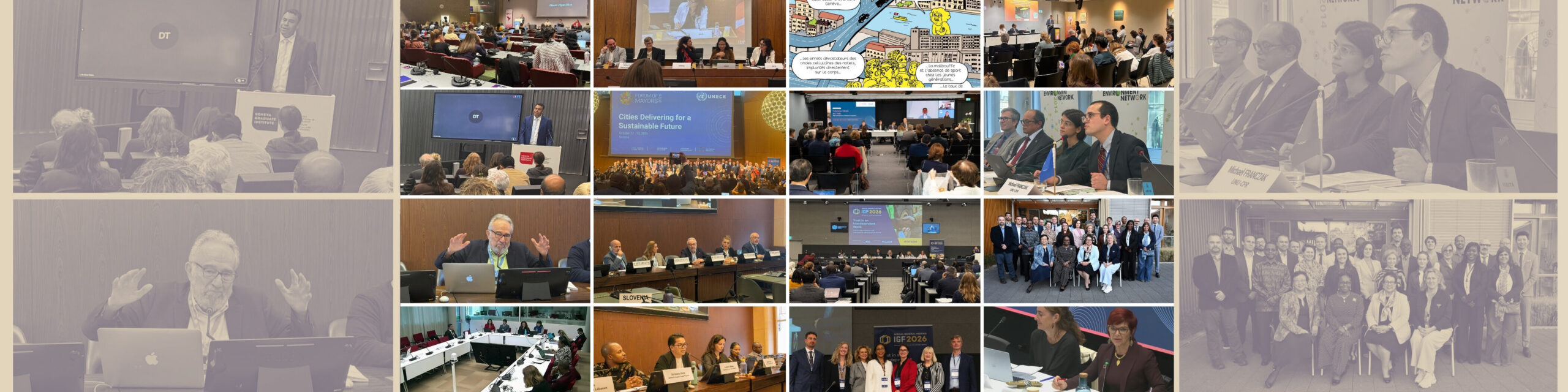
Image of the week | A non-exhaustive snapshot of events and initiatives from last week at Palais des Nations, the International Environment House, the International Conference Centre Geneva (CICG), and the World Intellectual Property Organization (WIPO), highlighting ongoing efforts to advance the global environmental governance agenda. It includes a sneak peek of Prospective, Genève 2050, a collaborative comic book imagining Geneva’s future, produced by the Canton of Geneva jointly with Atrabile Editions, released on 16 October.
Preparing for the 2026 UNECE Environmental Treaty Meetings in Geneva
In December, Geneva will host the governing body meetings of three Multilateral Environmental Agreements (MEAs) administered by the United Nations Economic Commission for Europe (UNECE). The meetings will provide a platform for States across the UNECE region to advance coordinated, science-based and preventive approaches to increasingly interconnected environmental risks, including extreme weather events, persistent air pollution and industrial accidents, as climate change intensifies their frequency, severity and cross-border impacts. The three meetings will bring together Parties to review progress, set priorities and strengthen international cooperation under the three agreements:
- 1–4 December 2026 – 10th session of the Meeting of the Parties to the Convention on Environmental Impact Assessment in a Transboundary Context (MOP-10) and 6th session of the Meeting of the Parties to the Protocol on Strategic Environmental Assessment (MOP-6). The Espoo Convention and its Protocol on SEA help governments anticipate, consult on, prevent or mitigate environmental and health impacts, including across borders, before major projects, plans and programmes are approved.
- 7–10 December 2026 – 46th session of the Executive Body for the Convention on Long-Range Transboundary Air Pollution. The Air Convention enables countries to reduce air pollution collectively through science and agreed emission reductions.
- 9–10 December 2026 – 14th meeting of the Conference of the Parties to the Convention on the Transboundary Effects of Industrial Accidents (CoP-14), preceded by a Global Seminar on the Safe and Secure Management of Hazardous Chemicals on 8 December 2026. The Industrial Accidents Convention helps countries prevent, prepare for and respond to industrial accidents, including those increasingly triggered by climate-related natural hazards.
In the lead-up to the meetings, UNECE and the Permanent Missions of Canada, France and Greece, whose representatives currently chair the governing bodies, will hold a high-level briefing for Ambassadors, representatives of Geneva-based Permanent Missions to learn more about, discuss and comment on key priorities. The briefing will take place Palais des Nations, Room H-207-208-209 and online on 20 October 2026 from 09:00 to 10:45 CEST.
The high-level briefing will be followed by two parallel briefings from 11:00 to 12:30 CEST:
- Briefing for the Focal Points and other stakeholders of the Espoo Convention and its Protocol on SEA on the forthcoming MoP-10/MoP-6 | Palais des Nations, Room H-376 and online
- Briefing for the Focal Points and other stakeholders of the Industrial Accidents Convention on the forthcoming CoP-14 | Palais des Nations, H-207-208-209 and online
International Lead Poisoning Prevention Week 2026 | From Detection to Prevention
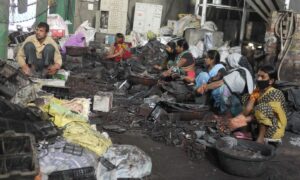
Last week, the World Health Organization (WHO) warned that lead exposure causes more than 3.5 million deaths annually and affects an estimated 815 million children worldwide, renewing calls for stronger regulations, monitoring, and enforcement to eliminate major sources of exposure, including lead paint, industrial contamination, and informal recycling. Although exposure is entirely preventable, fewer than half of countries had confirmed legally binding controls on paint containing lead, according to the agency’s latest global assessment. This warning comes as the fourteenth edition of the International Lead Poisoning Prevention Week (ILPPW) takes place from 18 to 24 October under the theme “From Detection to Prevention”. The campaign emphasizes the importance of identifying lead exposure and its sources so that effective preventive measures can be implemented to protect public health, particularly that of children. → Learn more about the WHO campaign and how to participate
Lead poisoning continues to receive growing attention across global health, environmental and chemicals governance processes. Recent developments include:
- At the 79th World Health Assembly in May, WHO introduced the PREVENT technical package to address lead poisoning. The full technical package, scheduled to be launched in 2027 alongside a draft Global Action Plan on Lead Mitigation as requested by Member States, will include practical implementation guidance for countries across six key actions, with a focus on both the industrial and consumer sectors.
- WHO and Resolve to Save Lives are co-hosting a four-part webinar series on the PREVENT Technical Package on Lead Poisoning Prevention for feedback from technical and policy experts, as well as end users and members of the public. Module 1 “Prioritize Sources: Identify priority sources for intervention”, takes place on 22 October at 14:00 CEST.
- The First International Conference of the Global Framework on Chemicals, taking place from 16 to 20 November 2026 at the Geneva International Conference Centre, will consider issues of concern. As a result of a call for nominations of new issues of concern launched by the Secretariat earlier this year, the Global Alliance on Health and Pollution nominated “Lead” as a new issue of concern.
- The latest newsletter of the Global Alliance to Eliminate Lead Paint, a voluntary partnership led by UNEP and WHO, reports continued progress in lead governance, including new regulations, advancing draft legislation and increased engagement by government authorities worldwide.
- Further reading:
- WHO urges faster action to end lead exposure which kills 3.5 million annually | UN News | 15 October 2026
- Countries move to accelerate action against lead poisoning | WHO | 15 October 2026
- Over 800 Million Children Have Unsafe Lead Levels in Their Blood | Health Policy Watch | 13 October 2026
All Eyes on Yerevan for the UN Biodiversity Conference | Call to End War on Nature
Biodiversity underpins life on Earth, yet climate disruption, pollution, and unsustainable land use are driving an unprecedented decline in nature. With more than one million species facing the risk of extinction, protecting biodiversity is not only essential for preserving ecosystems but also for tackling the interconnected crises of climate change (or “climate chaos” to quote the UN Secretary-General), pollution, and nature loss. This is why urgent and coordinated action is critical to reverse nature loss and secure a sustainable future for people and the planet.
This week, all eyes are therefore on Yerevan, Armenia, where the UN Biodiversity Conference convenes from 19 to 30 October 2026 under the theme “Taking Action for Nature”. The Conference – the second conference in this “Rio COPs” year, advancing negotiations on the three global treaties adopted at the 1992 Rio Earth Summit – includes concurrent meetings of the governing bodies of the Convention and its Protocols: the 17th meeting of the Conference of the Parties to the Convention (COP17), the twelfth meeting of the Conference of the Parties serving as the Meeting of the Parties to the Cartagena Protocol on Biosafety (CP-MOP12), and the sixth meeting of the Conference of the Parties serving as the Meeting of the Parties to the Nagoya Protocol on Access to Genetic Resources and the Fair and Equitable Sharing of Benefits arising from their Utilization (NP-MOP6). It marks the first global review of collective progress in the implementation of the Kunming-Montreal Global Biodiversity Framework (KMGBF) and will feature a High-Level Segment, scheduled for 27 and 28 October 2026. → Visit COP17 Armenian Presidency Website, follow the live coverage by Earth Negotiations Bulletin, consult the daily press conference schedule and watch or rewatch plenaries on UN Web TV.
Key Updates from Last Week
Heads of state and government, international organizations, scientists and representatives of Indigenous Peoples and local communities already started travelling to Yerevan last week for a series of important moments, including:
- Launch of the State of Biodiversity Action report on progress in the implementation of the Kunming-Montreal Global Biodiversity Framework by the UN Secretary-General on 15 October | The report is the first comprehensive global stocktake of progress towards the Framework’s 2030 targets and 2050 vision. The report finds that countries have made significant progress in establishing national commitments to protect and restore nature but greater ambition and faster implementation are needed to meet the world’s biodiversity targets. → Read more at:
- UN Report Finds Growing Global Commitment to Biodiversity Goals, Highlights Urgent Need to Accelerate Action Through 2030 | CBD | 15 October 2026
- ED press statement – launch of the State of Biodiversity Report, COP17 Leaders’ Summit | UNEP | 15 October 2026
- The world is waging a ‘war on nature’ as progress on biodiversity targets lags | UN News | 15 October 2026
- Press Conference – Launch of Global Report “State of Biodiversity Action” – Conference of the Parties (COP 17) | UN | 15 October 2026
- Leaders’ Summit on Biodiversity hosted on 16 October by the incoming Armenian Presidency of COP 17 | The Summit provided an opportunity to review progress in implementing the Kunming-Montreal Global Biodiversity Framework, renew political leadership, and mobilize greater ambition and coordinated global action ahead of COP 17. It concluded with the “Yerevan Declaration – Taking Action for Nature” reaffirming commitment to the implementation of the Framework, including the mission to halt and reverse biodiversity loss by 2030 and achieve the vision of living in harmony with nature by 2050. → Read more at:
- Press Release – Yerevan Declaration – Taking Action for Nature | Armenia | 16 October 2026
- Secretary-General’s remarks to the Leaders’ Summit on Biodiversity at COP 17 | UN SG | 16 October 2026
- Guterres urges faster action and financing to stop biodiversity loss | UN News | 16 October 2026
- Yerevan Declaration recognises not enough biodiversity action but leaves key commitments unresolved | WWF | 16 October 2026
- IUCN President delivers statement at the Leaders’ Summit on Biodiversity ahead of CBD COP17 | IUCN | 16 October 2026
- Ceremonial Opening on 18 October 2026
Multilateral Geneva at the UN Biodiversity Conference
In preparation for this major milestone, various events took place in the past months in Geneva, hosted by the COP-17 presidency, Armenia, the Geneva Environment Network and/or other stakeholders, looking at links with other processes, including human rights, trade, education for biodiversity, and more:
- Achieving Biodiversity Goals Through Trade: Building on Progress Made at UN Biodiversity Conference COP16 | 28 January 2025
- International Biodiversity Day Celebration 2025 | Multilateral Geneva Creating Interlinkages and Driving Transformative Change in Harmony with Nature and Sustainable Development | 22 May 2025
- Strengthening the Science-Policy Interface to Address the Triple Planetary Crisis | 17 December 2025
- Human Rights and Biodiversity: Advancing Rights‑Based Action toward the UN Biodiversity Conference COP17 | Geneva Rights and Environment Talks 2026 | 10 March 2026
- Education for Biodiversity: Accelerating Delivery of the Global Biodiversity Framework | RFSD 2026 | 20 April 2026
- Leveraging Local and Global Action for Nature Towards the UN Biodiversity Conference COP17 | From Geneva to Yerevan | International Day for Biological Diversity | 22 May 2026
- Diplomatic Briefing in Geneva on the Seventeenth Session of the Conference of Parties to the Convention on Biological Diversity | 24 June 2026
- The Rights of Nature: Intersections with the Right to a Healthy Environment | HRC62 Side Event | 2 July 2026
- Nature-Positive Infrastructure: Mainstreaming Biodiversity Across the Transportation Lifecycle | 18 September 2026
- Human Rights at the 17th Meeting of the Conference of the Parties to the Convention on Biological Diversity | HRC63 Side Event | 2 October 2026
- Chemicals and Waste on the Road to CBD COP 17 | Minamata Online | 6 October 2026
Highly engaged throughout the year in the preparations, there is a strong multilateral Geneva presence at the UN Biodiversity Conference, providing contributions to the events and discussions ongoing in the various zones. → Stay up-to-date with the latest news on contributions from actors and stakeholders from International Geneva in our dedicated “From Geneva to Yerevan” update.
Key messages and resources from Geneva-based organizations include:
- Ahead of COP17, UN experts urge States to speed up implementation of biodiversity framework targets and centre human rights | OHCHR | 16 October 2026
- Advancing a Human Rights-Based Approach to the implementation of the Kunming-Montreal Global Biodiversity Framework | UN EMG and OHCHR | 15 October 2026
- UNEP FI at COP17
- From Cali to Yerevan: Is the Financial System on Track? | UNEP FI | 15 October 2026
- CITES at CBD COP17: “Taking action for nature” through sustainable, legal and traceable trade in wild species | CITES | 15 October 2026
- Global Trade Update (October 2026): Can developing countries unlock the potential of biodiversity? | UN Trade and Development | 14 October 2026
- How can developing countries benefit more from biodiversity-based trade? | UN Trade and Development | 14 October 2026
- GEO Secretariat at the 2026 UN Biodiversity Conference COP17
- IUCN at the UN Biodiversity Conference
- IUCN Common Messages to the 2026 Rio Convention Conference of the Parties (COPs)
- The road to Yerevan: Accelerating action on global biodiversity goals | WWF | 14 October 2026
- COP17 must deliver results, not more promises, says WWF, as analysis reveals how to unblock progress for 2030 nature goals | WWF | 14 October 2026
- Landmark universal State of Nature Indicators and Metrics equip businesses and investors in understanding their nature-related dependencies, impacts, risks and opportunities | Nature Positive Initiative | 13 October 2026
- Business for Nature at COP17
- WBCSD’s plans for CBD COP17
Additional Resources
- COP17: The world has a plan to save nature. Is it working? | UN News | 17 October 2026
- Here’s what to expect at a “pivotal” UN conference on biodiversity | UNEP | 16 October 2026
- CBD COP17: What does it really mean to protect 30% of the planet? | Greenpeace | 13 October 2026
Countdown to the UN Climate Change Conference COP31 | Climate Action Updates
Three weeks ahead of the 2026 UN Climate Change Conference (COP31), new scientific assessments, policy reports, and stakeholder initiatives continue to inform governments and negotiators on the state of the climate and priorities for action. Key developments span emissions reductions, climate finance, climate science, adaptation, energy transitions, and international climate governance.
Ambition and the Energy Transition | Efforts to close the gap between current emissions trajectories and Paris Agreement goals remain central to the climate agenda.
- This week, the United Nations Environment Programme will launch its flagship annual 2026 Emissions Gap Report. Released ahead of each climate COP, the report assesses the emissions reductions required to return to a Paris-aligned pathway and highlights policies that have already demonstrated measurable emissions reductions and could be scaled up globally. The launch event is hosted by the ODI Think Tank in London, UK, and will feature opening remarks by UNEP Executive Director Inger Andersen and interventions by lead author Anne Olhoff and Minister for Climate Transitions in the UK government, Katie White. → Follow the livestream on 21 October 2026 from 11:00 CEST
- Recent assessments underline the importance of accelerating renewable energy deployment and electrification:
- 2026 World Energy Transition Outlook (WETO) | IRENA | 13 October 2026
- Electrification with Renewables Holds Key to World’s Energy Needs | IRENA | 13 October 2026
Climate Finance | Finance remains a central topic ahead of COP31, particularly regarding adaptation, health, sustainable cooling, and reform of the international financial architecture. Recent developments include:
- CCAC partners turn to financing solutions as Bangkok meeting concludes with new funding for sustainable cooling | Climate and Clean Air Coalition (CCAC) | 15 October 2026
- Low-income countries’ push for climate financing for health meets resistance ahead of COP31 | Health Policy Watch | 14 October 2026
- Why the world’s financial system matters for the climate | Greenpeace International | 13 October 2026
- Finance meeting: Tax the wealthiest polluters to fund climate action | Greenpeace International | 12 October 2026
Climate Impacts and Adaptation | Recent scientific assessments continue to warn of escalating climate impacts and increasing risks associated with delayed action:
- The 2026 state of the climate report: challenges and opportunities | William J Ripple, Christopher Wolf, Michael E Mann, Johan Rockström et al. | BioScience | 14 October 2026
- 2026 State of the Climate Report Shows a Planet Reaching Its Limits | EOS | 14 October 2026
- Nepal floods are call to action on compound risks | WMO | 12 October 2026
- Second major Himalayan flood in seven weeks raises alarm over compounding mountain hazards | ICIMOD | 13 October 2026
- 300 glaciers have disappeared from the American West since the mid‑20th century | Andrew Fountain, The Conversation | 13 October 2026
- WMO is launching the report Weather and Climate Services for Ski Resorts this week. The report examines how weather and climate services can support ski resorts and mountain tourism operators as they adapt to changing snow conditions, glacier retreat, and increasing climate risks, highlighting the role of climate services in tourism planning, risk reduction, and long-term resilience.
Climate Science | Scientific assessments remain a critical foundation for international climate policy.
- The 65th Plenary Session of the Intergovernmental Panel on Climate Change (IPCC) was suspended by IPCC Chair Jim Skea in Addis Ababa on Friday evening after the meeting ran beyond its scheduled duration and several delegations from least developed countries and Small Island Developing States were unable to remain. Discussions on key agenda items, including the timelines for the Seventh Assessment Report (AR7) and the IPCC budget, remain unresolved and will resume at a later date. → Read the Earth Negotiation Bulletin
Climate Governance and International Cooperation | Beyond technical negotiations, COP31 is increasingly being framed as a test of implementation, accountability, and international trust. In the lead-up to Antalya, the United Nations has emphasized the growing gap between climate commitments and real-world outcomes.
- As disasters mount, next UN climate summit faces a test of trust | UN News | 16 October 2026
Representatives of successive COP presidencies gathered in New York to address a pressing question: How can the world restore trust in climate action when the consequences of a warming planet are already being felt? The discussion was shaped by recent climate disasters, including the devastating floods in Nepal, and by concerns that current policies remain insufficient to meet global climate goals. - Négocier le climat. Géopolitique des COP | Géraldine Pflieger, UNIGE | 15 October 2026
- Quantifying assets for the geopolitics of climate change mitigation | Guanna Pan, Ulrike Kornek, Chen Chris Gong et al. | Nature Sustainability | 15 October 2026
- An African Call for Climate Reparations: Accountability, Equity, and Repair for People and Planet | African Future Lab | 14 October 2026
- Human Mobility in the Context of Climate Change: An overview of key terms, concepts, and dynamics | The Advisory Group on Climate Change and Human Mobility and the Loss and Damage and the Challenges Of Human Mobility and Displacement Working Group | 13 October 2026
- Joint NGO Press Release: Over 50 organisations oppose delaying the EU Methane Regulation | CAN Europe | 13 October 2026
- Joint Communiqué on Long-Term Low Greenhouse Gas Emission Development Strategies (LT-LEDS) to Inform 1.5°C-Aligned Action | 2050 is Now | October 2026
- Delphine Lévi Alvarès, Climate Breakthrough Awardee | Climate Breakthrough
Countdown to UN Water Conference | Addressing Multilateral Challenges in Water Governance
With less than two months remaining until the 2026 United Nations Water Conference, co-hosted by the United Arab Emirates and Senegal in Abu Dhabi from 8 to 10 December 2026, preparations are intensifying across the water community.
The UN Special Rapporteur on the human rights to safe drinking water and sanitation, Pedro Arrojo-Agudo, hosted a series of briefings last week to share the reflections and recommendations of three policy briefs he prepared:
- Multilateral Challenges in Water Governance | In this policy brief, the UN Special Rapporteur addresses issues not covered in his report to the Human Rights Council on “Democratic water governance under a human rights-based approach” (A/80/117), including on the water cycle and climate change, strengthening international human rights law, transboundary river basins and aquifers, risks of conflicts and the role of multilateral banks in the global water crisis. In the face of overlapping water crises and climate change, he emphasizes the need to focus on adaptation strategies beyond the energy transition. As they rely heavily on basin-level hydrological planning, he urges the UN to support the “water transition” for adaptation. In the face of what he calls the UN’s “institutional weakness” in global water governance, he also proposes exploring a framework convention on water governance that is committed to a human rights-based approach to the governance of water and aquatic ecosystems. → Consult the Policy Brief and highlights from the launch.
- Aquatic ecosystems and the human rights to drinking water and sanitation in the Amazon | Sharing how the policy brief arose from a country visit to Peru and the Amazon, the UN Special Rapporteur highlighted how the report was the result of information provided by a wide range of stakeholders, including Indigenous Peoples, riverine and local communities, civil society organizations, human rights defenders, academics, scientists, environmental specialists, international organizations, and public authorities in Amazonian countries. These contributions provided valuable evidence on the environmental, social, cultural, and human rights dimensions of the challenges facing the Amazon basin. In the policy brief, he highlights the effects of mining, frequent oil spills and agrotoxics, an oft-forgotten issue in the Amazon, on both the people and the environment. → Consult the Briefing Document and highlights from the launch.
- The Weaponization of Water | At a time when the global water crisis affects more and more regions and exacerbates transboundary tensions between States, the UN Special Rapporteur dedicates this policy brief to how water is increasingly being used as a weapon of war, thereby flouting international law. He identifies three ways water is weaponized: withholding water through the destruction of infrastructure, blocking access to water, or diverting flows from water sources; turning water into an agent of harm to civilians or ecosystems, by triggering floods or contaminating water; and making water dangerous to reach. Citing various cases globally, his recommendations were establish a global UN registry of complaints concerning water weaponization; make the issue a priority agenda at the Security Council; strengthen the International Criminal Court and the International Court of Justice and the implementation of their rulings; and encourage cooperation among regional human rights courts to improve legal protection of water during and after armed conflicts. → Consult the Policy Brief and highlights from the launch.
The first draft of the Stakeholder and Rights Holder Declaration for the 2026 UN Water Conference, calling for water and sanitation to be permanently anchored at the highest levels of the United Nations system and its Member States, is open for public review until 25 October. Emphasizing that access to safe water and sanitation is a fundamental human right that remains out of reach for billions of people worldwide, the Declaration highlights the 2026 UN Water Conference as a critical opportunity to strengthen accountability, financing and stakeholder engagement, while setting out key expectations for ensuring sustained action beyond the conference.
Addressing Crimes that Affect the Environment at UNTOC and in Multilateral Geneva
This week, the Thirteenth Session of the Conference of the Parties to the United Nations Convention against Transnational Organized Crime (UNTOC COP13) is taking place in Vienna, Austria, from 19 to 23 October 2026, under the auspices of the UN Office on Drugs and Crime (UNODC). A key item on the agenda is the follow-up to the work of the Open-ended Intergovernmental Expert Group on crimes that affect the environment, established following the adoption of resolution 12/4 entitled “Enhancing measures to prevent and combat crimes that affect the environment falling within the scope of the United Nations Convention against Transnational Organized Crime” at the previous COP. Delegates will review progress on addressing environmental crimes that fall within the scope of UNTOC and discuss possible future responses, including the feasibility and merits of developing an additional protocol to the Convention. → Follow the livestream and the live coverage of the Earth Negotiations Bulletin
Further resources:
- IUCN: From Abu Dhabi to Vienna: Keeping Momentum Against Environmental Crime
- GI-TOC: What to Watch at UNTOC COP13
- Earth Negotiation Bulletin: UNTOC and Environmental Crime Overview
- EIA: EIA at major conference to push for action on crimes that affect the environment
Why it Matters | Environmental crime is increasingly recognized as a major driver of the triple planetary crisis of climate change, biodiversity loss and pollution. Yet its scale, impacts and links to organized crime often remain underappreciated. Recent publications provide important context for the discussions taking place at UNTOC COP13:
- UNODC Global Analysis on Crimes that Affect the Environment offers a comprehensive global assessment of the scale, nature and impacts of environmental crime, including links to organized crime and corruption.
- The recently published Analysis of the International Legal Framework on Crimes that Affect the Environment, prepared for the UN expert group under UNTOC, also remains an important reference for current discussions on strengthening international cooperation and criminal justice responses.
- EIA’s report, Crimes that Affect the Environment, examines how environmental crimes are increasingly perpetrated by organized criminal networks and highlights legal and institutional gaps that continue to hinder effective prevention, investigation and prosecution.
Next Week in Geneva | The GCSP will host a Geneva Security Debate on Prosecuting International Environmental Crimes, on 27 October from 12:30 to 14:00 CET. Organized in partnership with the UCLA’s Promise Institute Europe, the event will explore key findings from the recently published Manual on Prosecuting International Environmental Crimes which will be presented and made available to participants. The manual serves as a practical, self-contained resource for national and international practitioners, investigators, and civil society actors. It provides guidance on identifying, framing, and investigating international crimes that cause harm to, or involve the unlawful appropriation of, the natural environment.
Food Security Under Pressure
Marking World Food Day 2026, new reports and statements highlight the growing challenges facing global food systems. From climate-driven disruptions linked to El Niño to the use of hunger as a tool of coercion in conflict settings, they underscore the need for more resilient, equitable and sustainable food systems:
- In his message, the UN Secretary-General António Guterres noted that around 645 million people experienced hunger last year and nearly 2.7 billion people cannot afford a healthy diet. He called for greater use of innovation, data, technology and finance to make nutritious food accessible and affordable for all.
- The World Meteorological Organization warned that the intensifying El Niño phenomenon is already disrupting rainfall patterns worldwide, bringing drought to some regions and flooding to others, with significant consequences for agriculture, fisheries and food production. The article highlights contrasting impacts across regions, from crop and pasture stress in parts of the Greater Horn of Africa and South Asia to increased flood risks elsewhere, while also drawing attention to record-high ocean temperatures, marine heatwaves and threats to fisheries. Against a backdrop of rising global temperatures, WMO stresses that stronger climate services, seasonal forecasts and early warning systems are critical to helping farmers, governments and humanitarian agencies prepare for and manage growing risks to food security and livelihoods.
- FIAN International and the Global Network for the Right to Food and Nutrition released the 2026 edition of the Right to Food and Nutrition Watch, When Food Becomes a Weapon, People Hold the Power to Resist. The report argues that hunger is not merely a consequence of scarcity, but often the result of political and economic power imbalances that determine who controls land, resources and food systems. It examines the growing use of food insecurity as a tool of coercion in situations of conflict and violence, while also highlighting how Indigenous Peoples, small-scale food producers and local communities are building resilience through food sovereignty, collective action and local alternatives. Through contributions from right-to-food defenders and grassroots movements worldwide, the report offers a timely reflection on the links between food, human rights, justice and peace.
- WFP promoted innovation and early action as shocks to the global food system mount. WFP highlighted how conflict, weather extremes and disruptions to global trade are increasing hunger risks. The agency stressed the importance of anticipatory action, digital tools and climate forecasting, warning that the 2026-2027 El Niño event could push an additional 49 million people into acute food insecurity across 45 countries by the end of 2027.
- A World Food Day flagship publication by FAO explores how science, technology, innovation and local knowledge can contribute to more sustainable and inclusive agrifood systems.
Championing for the Planet
Various initiatives and prizes awarding those at the front lines of protecting our planet and championing for the Earth have recently announced new awardees or updates. These include:
- Prize Winners Today: Fighting for a Toxic-Free Future with Yuyun Ismawati | Goldman Prize | 12 October 2026
It’s been nearly two decades since environmental engineer Yuyun Ismawati won the Goldman Environmental Prize in 2009, and the passage of time has done nothing to slow her down. […] While Yuyun still focuses on some of the same environmental issues she did when she won the Prize, her work has expanded dramatically. What began as a community-level response to sanitation and waste management has grown to include international advocacy against toxic pollution in all its forms. - Mrinalini Rai – Women of the Year for Advancing Global Biodiversity & Women’s Environmental Leadership | Women of the Year
Internationally respected environmental advocate Mrinalini Rai was honoured with the Environmental Pioneer Award at the 72nd Women of the Year Lunch and Awards for her outstanding contribution to biodiversity conservation and environmental leadership. As the Founder and Director of Women4Biodiversity, Mrinalini leads a global organization dedicated to advancing women’s leadership in biodiversity conservation and environmental decision-making. - Delphine Lévi Alvarès, Climate Breakthrough Awardee | Climate Breakthrough
Delphine Lévi Alvarès was selected for the Climate Breakthrough Award program in 2026. Petrochemicals are the chemicals derived from oil, gas, and coal that get turned into plastics, fertilizers, pesticides, synthetic textiles, and thousands of other everyday products. […] Delphine’s plan centers on three connected threads. First, she envisions a tool that maps, by region, sector, and material, the multiple pathways out of a petrochemical economy. She will build it collaboratively with other partners in the movement, and the tool is intended for use by decision-makers, investors, advocates, and others. Second, she’ll expand her efforts to convene the civil society groups, movement members, and front-line communities already working on pieces of this problem separately. Third, she aims to build and spread a vivid new vision of what a world without petrochemical dependence looks like—unnecessary plastics eliminated, everyday materials that no longer put our health at risk, and industries that no longer trade away sustainability for short-term convenience.
Enjoying a Green Autumn in Geneva
Every year, on the last Sunday of October — this year on 25 October 2026 — most European countries transition from Central European Summer Time (CEST) back to Central European Time (CET), marking the end of daylight saving and the beginning of shorter days. As nature changes colours, and as schools in Geneva and neighbouring France are closed for holidays, we invite you to explore activities to enjoy a Green Autumn in Geneva, including this week:
- Stage d’automne, vacances scolaires | From 19 to 23 October 2026 | Le Grand Atelier
During the autumn school holidays, Le Grand Atelier invites children aged 7 to 13 to spend a week exploring the world of woodworking through hands-on creativity. From imagining and building to assembling and decorating their own wooden games, participants will learn to use real tools while developing their practical skills, creativity and teamwork. - Diffusion du documentaire « Un tsunami sur le Léman » | 20 October 2026 | Espace de quartier Pâquis
What if a tsunami struck Lake Geneva? This free screening explores the scientific evidence behind the tsunami that hit the lake in 563 AD and examines how such an event could happen again today. The documentary looks back at the chain of events that caused the disaster and questions how well today’s society understands this little-known natural risk. The screening will be followed by a discussion with director Laurent Graenicher. - Les secrets du monde fongique : à la découverte des champignons du Jardin Botanique de Genève | 21 October 2026 | Jardin Botanique de Genève
The Jardin Botanique de Genève invites visitors to discover the fascinating world of fungi during a guided autumn tour. They will learn how to identify visible mushroom species, explore their roles in decomposition and symbiotic relationships with trees, and discover why fungi are evolutionarily closer to animals than plants. - Un objet, un son, une histoire : découvre l’arbre de Sobo | 21 October 2026 | Bibliothèque du Musée d’ethnographie de Genève
The ethnographic museum gives families the opportunity to discover the story of Sobo and her granddaughter Kimi through an object from the MEG’s collections. After exploring part of the temporary exhibition, the visit will bring the story to life through music from the museum’s collection, offering a gentle introduction to the connections between objects, memories and family stories. - Les olympiades des graines | 21 and 23 October 2026 | Jardin Botanique de Genève
In order to celebrate 25 years of its seed bank, the Jardin Botanique de Genève turns seed dispersal into a playful competition. Participants will choose six “champion” seeds and put them to the test in three challenges inspired by the ways seeds travel while discovering the ingenious strategies plants use to spread. - HALLOMANIA – Chasse aux bonbons en char viticole, atelier créatif & dégustation de vins à Gy | 24 and 25 October 2026 | Domaine de la Guérite, Gy
Halloween takes over the vineyards of Gy for a family day combining adventure, sweets and creativity. The experience begins with a ride through the vines before children set off on a candy hunt, followed by a Halloween-themed creative workshop. While the children are busy crafting, adults can enjoy a guided wine tasting with the Domaine’s winemakers, with grape juice available for younger guests. - Exposition Observatoires. Carte blanche à John M Armleder | 25 October 2026 | Musée d’art et d’histoire
The Musée d’art et d’histoire gives John M Armleder carte blanche to create an unexpected dialogue between its historic collections and contemporary art. Across different galleries, animals, abstract paintings, musical instruments, lighting and everyday objects are brought together in surprising combinations, inviting visitors to wander through the museum and make their own connections between works and ideas. - Academic Bike Challenge | Until 30 October 2026| Various Locations, Cafétéria d’Uni Dufour
Take part in the Academic Bicycle Challenge throughout October and join cyclists from universities around the world! Form a team with your colleagues and cycle as much as possible, whether commuting to UNIGE or riding in your free time. Since 2018, UNIGE has taken part in this international challenge, promoting cycling, cleaner air, lower CO₂ emissions and a healthier lifestyle. At the end of the month, discover the results and see how UNIGE ranks among other universities, teams and individual cyclists. - Hortus Botanicus Helveticus: Together for 30 years | Until 29 November 2026 | Jardin Botanique de Genève
Marking the 30th anniversary of Hortus Botanicus Helveticus, this outdoor exhibition celebrates the work of Switzerland’s 30 botanical gardens. As you walk through the Jardin Botanique de Genève, discover 30 illustrated displays, each featuring a representative plant species and highlighting the important role these gardens play in protecting biodiversity and preserving plant life for future generations. - Atelier découverte de la nature pour enfant | Until 12 December 2026 | Swiss Food Academy | Espace de quartier Le99 aux Charmilles, Plainpalais et Eaux-Vives
This autumn, children can discover the chestnut through a fun and sensory workshop! They will explore, taste and learn about this seasonal Swiss favourite while taking part in a gardening activity and enjoying a comforting chestnut tasting. - Create Your Own Rousseau-Style Herbarium | Until 23 December 2026 | Jardin Botanique de Genève
Discover the art of herbarium making in this hands-on workshop inspired by Jean-Jacques Rousseau. Using dried flowers, plants, and traditional paper, participants can create their own herbarium sheet while learning about plant identification and the scientific techniques behind this botanical practice. The activity is free and suitable for visitors aged four and above.
What (Else) to Read Next?
- UN Geneva at 80: building resilient multilateralism for tomorrow | UNOG | 16 October 2026
The year 2025 marked an important moment for the United Nations. As the Organization celebrated its eightieth anniversary, UN Geneva continued to uphold its long tradition as a centre of dialogue, diplomacy, and international cooperation – while adapting to a rapidly changing world and navigating significant transformations at the Palais des Nations.
- AI, green energy and economic transitions risk leaving vulnerable communities behind, UN warns | UN News | 15 October 2026
Rapid transformations – from artificial intelligence and digital technologies to renewable energy and demographic shifts – are reshaping economies worldwide, creating new opportunities but also threatening to deepen socio-economic inequalities, a new UN report warns. - New critical minerals race refocuses attention on old accountability issues | Geneva Solutions | 15 October 2026
As the scramble for critical minerals gathers pace, experts warn against repeating past mistakes, when extraction left countries and communities without the development gains they might otherwise have expected. In Geneva, across the lake from some of the world’s most consequential commodity trading firms, government authorities, international organisations, mining officials and civil society members met at the Palais des Nations last week to exchange notes on building sustainable mineral supply chains as the race for critical minerals heats up.
- UN Forum of Mayors commits to action for sustainable cities and calls for enabling frameworks for local governments | UNECE | 14 October 2026
Mayors from some 90 cities adopt commitments on mobility, green cities, resilience, housing, heritage and innovation, and urge States to empower local and regional governments to advance sustainable development. - Human rights are our greatest source of hope for peace, justice, and sustainability – High Commissioner Türk to Third Committee | OHCHR | 14 October 2026
“Human rights work is low-cost and high-impact, helping to stabilize communities and build trust in institutions. We need ever stronger strategic, political, and financial support, as just pointed out by the President of the General Assembly. Human rights are our greatest source of hope for peace, justice and sustainability, and human agency in today’s troubled times.” - WHO invites organizations worldwide to join the Together for Science and Health movement | WHO | 13 October 2026
WHO announced a global call inviting organizations and institutions to affiliate with Together for Science and Health, a new movement to strengthen the connection between science, health and society and build trust in evidence-informed decision-making. The movement will support this collective effort by connecting organizations across sectors, sharing effective approaches and encouraging practical collaboration around common priorities. - Greenpeace report: Ikea’s hunger for wood destroys Europe’s precious forests | Greenpeace International | 13 October 2026
Ikea, one of the world’s largest consumers of wood, is fuelling the destruction of Europe’s most valuable forests while hiding behind flawed certification schemes, a new report released today by Greenpeace Nordic shows. The report, The Missing Manual: What Ikea Must Do to Protect Europe’s Forests, reveals a huge gap between Ikea’s promises to use its size and scale to make a positive difference and its operational realities on the ground, and that the company fails to measure the true environmental footprint of its supply chain.
- Forest Declaration Assessment 2026 | Forest Declaration Assessment | 13 October 2026
After years of persistently high forest loss, global deforestation fell 15% in 2025—the largest annual decline since the 2018–20 baseline period. The improvement is welcome. But more than 7 million hectares of forest were still lost, and the world remains far off track to halt and reverse deforestation and forest degradation by 2030. Progress also remains uneven. Recent gains reflect stronger enforcement in some countries and changing economic conditions, rather than a lasting shift in the incentives that drive forest loss. The challenge now is to make those gains durable. - With Only Three ‘No’ Votes, UN Adopts Political Declaration on Pandemic Preparedness | Health Policy Watch | 13 October 2026
The United Nations General Assembly adopted the Political Declaration on Pandemic Prevention, Preparedness, and Response (PPPR) by a substantial majority at a plenary meeting in New York on Monday, with 153 countries voting in favor and only three against. The declaration went to a vote after the UN High-Level Meeting on 25 September could not adopt it by consensus – but only the US, Israel, and Argentina voted against it, while New Zealand and Paraguay abstained. - General Assembly adopts pandemic declaration, but not by consensus | UN News | 12 October 2026
The General Assembly on Monday adopted a political declaration on pandemic prevention, preparedness and response, by 153 in favour to three against (Argentina, Israel and United States) with two abstentions (New Zealand and Paraguay). The text was due to be approved by consensus at a high-level meeting on 25 September. - Letter on the Process at the Council of Europe on the recognition of the human right to a clean, healthy and sustainable environment in a legally binding instrument | Special Procedures of the United Nations Human Rights Council | 12 October 2026
“We will continue to closely follow up and support this process, with a view to ensuring that people across Europe can finally enjoy the explicit recognition of the right to a clean, healthy and sustainable environment within their regional human rights system. Such recognition would complement existing legal and policy responses, strengthen the protection of human rights in the face of environmental challenges, and help address the growing impacts of pollution, climate change and biodiversity loss that have become increasingly evident in recent months and years.” - The Lancet Commission on 21st century global threats to health | The Lancet | 12 October 2026
The threats span disease, social and economic conditions, environmental change, technology, and conflict. The Commission assesses threats by calculating the expected cumulative amenable disease burden – measured as disability-adjusted life years (DALYS) from 2025 to 2100 – which can be reasonably altered through policy action. The report concludes that the scale and diversity of 21st century health threats demand a fundamental shift in how governments and multilateral institutions approach long-term risk and points towards three areas of action.
Events
See all
Body Meeting
4th session of the Commission for Weather, Climate, Hydrological, Marine and Related Environmental Services and Applications (SERCOM-4)
19 – 23 Oct 2026
WMO Headquarter
WMO

Virtual
Nature-related Sustainable Finance Regulation in China and the EU
19 Oct 2026 | 10:30 – 11:30
Online | BrightTalk
UNEP FI
Virtual
Environment, Peacebuilding, and Security Policy Working Group
19 Oct 2026 | 16:00 – 17:00
Online | Zoom
ECCP

Conference
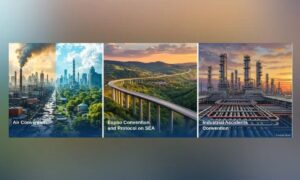
High-level Briefing on Meetings of the Governing Bodies of the Air Convention, Espoo Convention and its Protocol on SEA and Industrial Accidents Convention
20 Oct 2026 | 09:00 – 10:45
Palais des Nations, Room H.207-208-209 & Online
UNECE, Canada, France, Greece
Info Session
Advance Information Session for the 14th Meeting of the Conference of the Parties to the Convention on the Transboundary Effects of Industrial Accidents
20 Oct 2026 | 11:00 – 12:30
Palais des Nations | Room H-207-208-209 & Online | Teams
UNECE Convention on the Transboundary Effects of Industrial Accidents

Info Session
Briefing for National Focal Points and other stakeholders of the Espoo Convention and its Protocol on SEA on the forthcoming sessions of the Meetings of the Parties
20 Oct 2026 | 11:00 – 12:30
Palais des Nations | Room H.376 & Online | Teams
Espoo Convention and the Protocol on SEA

Virtual
WIPO GREEN Technology Showcase Webinar: Green Robotics in Action – Sustainable Automation for a Better Planet
20 Oct 2026 | 13:00 – 14:30
Online | Zoom
WIPO

Virtual
Principles for Responsible Banking Data Centres and AI Services Sector Brief
20 Oct 2026 | 14:00 – 15:00
Online | BrightTalk
UNEP FI
Virtual
UNECE Group of Experts on Energy Efficiency Bimonthly Open Discussion Forum | Data Centres, Water Resources, and Energy Systems: Meeting Infrastructure Needs Under Resource Constraints
20 Oct 2026 | 14:00 – 16:00
Online
UNECE

Press Conference
Press Conference: Wildlife Trade and Conservation Policy Discussions at the 81st Meeting of the CITES Standing Committee (SC81)
20 Oct 2026 | 14:30
Palais des Nations | Press Room & Online | UN WebTV
CITES

Conference
PFAS – The Forever Pollution Project
21 Oct 2026 | 12:15 – 14:00
University of Lausanne | Amphimax, 410
Unil
Conference
Applying taxonomies to scale climate-resilient investment opportunities in Africa and the Middle East
21 Oct 2026 | 13:00 – 14:00
Online | BrightTalk
UNEP FI

Virtual
Beyond Extraction: Country Pathways for Responsible Value Creation, Circularity and Sustainable Development
21 Oct 2026 | 14:00 – 15:30
Online | Zoom
UNECE


Body Meeting
17th Session of the Multi-year Expert Meeting on Commodities and Development
22 – 23 Oct 2026
Palais des Nations | Council Chamber
UNCTAD

Consultation
United Nations Task Force on Critical Energy Transition Minerals: TC-AR1 and TC-AR2 expert consultations (By Invitation Only)
22 Oct 2026 | 14:30 – 18:00
Geneva & Online
UNCTAD

Virtual
WHO PREVENT Technical Package Public Feedback Sessions – Module 1: Prioritize Sources: Identify Priority Sources for Intervention
22 Oct 2026 | 14:00
Online | Zoom
WHO, Resolve to Save Lives
Body Meeting
3rd meeting of the Informal Task Force on the implementation of the San Marino Regional Urban Forestry Action Plan
22 Oct 2026 | 14:30 – 15:30
Online
UNECE
Workshop
Atelier du Management Durable: Action Carbon, Scaling Impact & Geneva, Capital of Impact
23 Oct 2026 | 09:30 – 17:00
Maison de l'Avenir
OSI
Jobs
See all



Intern
Sustainable Fiscal Policy and Public Finance Intern
24 Oct 2026
UNEP Industry Innovation Branch