Newsletter 02 Nov 2026
Environment: What’s Up in GENeva | 2 – 8 November 2026
The Geneva Environment Network’s weekly newsletter includes the latest information on the global environmental agenda, main events, job vacancies, as well as other useful resources and updates. The Geneva Environment Network is not responsible for the content of any linked site or any link contained in a linked site. Stay tuned and follow us on X (Twitter), Facebook, LinkedIn, Instagram, Bluesky, YouTube, and WhatsApp, or visit our website regularly for additional updates.
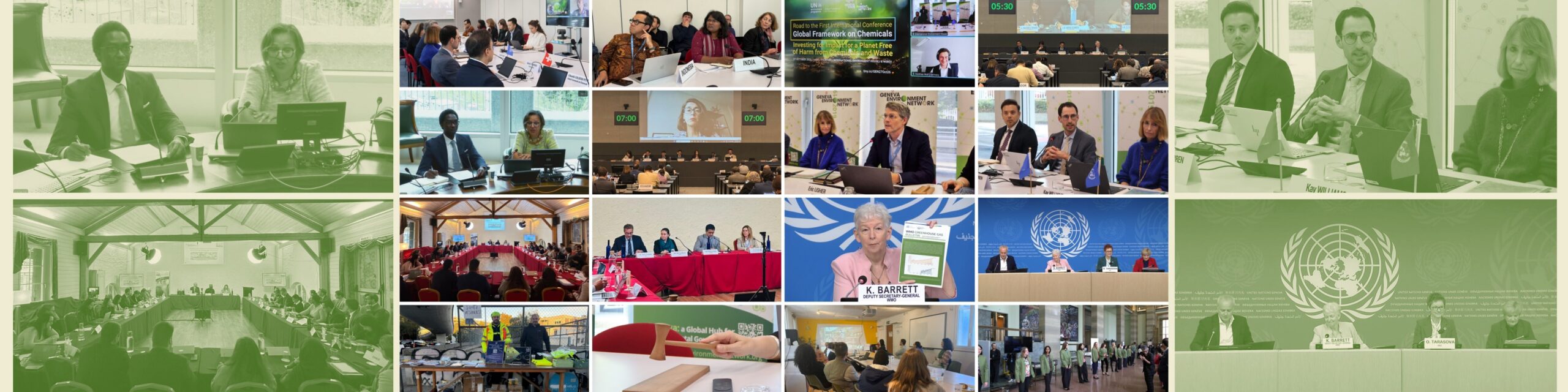
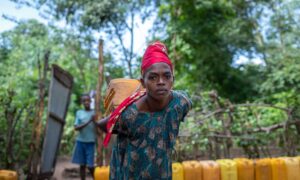
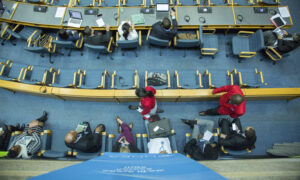
Image of the week | A non-exhaustive snapshot of last week’s events at Palais des Nations, the International Environment House and Domaine de Penthes, highlighting ongoing efforts to advance the global environmental governance agenda. © UNEP/GEN & Permanent Mission of Slovenia.
CITES SC81 Meets in Geneva to Strengthen Wildlife Trade Governance, Compliance and Conservation
The Standing Committee of the Convention on International Trade in Endangered Species of Wild Fauna and Flora (CITES) plays a central role in guiding the Convention’s work between meetings of the Conference of the Parties (CoP), also known as the World Wildlife Conference. As CITES’ principal governing body during intersessional periods, it provides policy and operational guidance on the implementation and enforcement of the Convention.
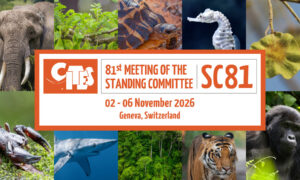
The 81st Standing Committee meeting of CITES (SC81) is convening from 2 to 6 November 2026 at the Geneva International Conference Centre (CICG). Bringing together more than 740 participants from over 70 Parties and 100 observer organizations, the meeting will review progress in implementing the decisions and resolutions adopted at the 20th Meeting of the Conference of the Parties (CoP20), held in Samarkand, Uzbekistan, in 2025. It will also consider recommendations from the Animals Committee and the Plants Committee, the Convention’s two scientific advisory bodies, on the conservation and sustainable trade of a range of species, which convened in July in Geneva. SC81 will address compliance matters, including the application of Article XIII, trade in captive-bred specimens, and National Ivory Action Plans (NIAPs). It will address illegal trade and enforcement matters, including tortoises and great apes, as well as wildlife crime linked to the Internet. The Committee will discuss regulatory matters, such as electronic CITES permitting systems (eCITES), Introduction from the Sea, Legal Acquisition Findings and traceability systems for tree species. Other agenda items include strategic matters, such as enhancing the work and efficiency of the Convention, capacity-building, CITES and people, and the conservation and trade of big cats, elephants, sharks and rays, seahorses and Brazilwood. → Read more in CITES Press Release and follow the SC81 livestream.
A rich programme of side events will complement the formal negotiations, providing opportunities for delegates and observers to exchange experiences on wildlife conservation, sustainable trade, enforcement, community engagement, and emerging policy issues. Discussions will cover topics ranging from the conservation of the vaquita (organized by Mexico on Monday 2 November, 13:45 CET), licensed traditional Chinese medicine products, big cat protection, wildlife crime and online trade, to zoonotic disease risks, tree species conservation, shark compliance, medicinal and aromatic plants, and the role of wildlife economies and local livelihoods.
Further resources:
- CITES SC81 Webpage
- CITES Press Release | Conservation progress and compliance with the world’s wildlife trade treaty: what to expect at the 81st CITES Standing Committee meeting | 29 October 2026
- Environmental Investigation Agency (EIA) | EIA Recommendations for the 81st Meeting of the CITES Standing Committee | EIA’s Recommendations on National Ivory Action Plan
- Species Survival Network (SSN) | SSN’s summary of the issues on the SC81 agenda, with recommendations
- Last month, to support participants’ preparation for the meeting, the CITES Secretariat held a briefing on SC81 within the framework of the Geneva Environment Network. → Rewatch the recording of the event and access resources
- Consult highlights on GEN dedicated page
CITES has announced “Human-Wildlife Conflict and Coexistence: Shared Spaces, Shared Solutions” as the theme for United Nations World Wildlife Day 2027. The theme highlights the growing importance of addressing human-wildlife interactions within the context of the Kunming-Montreal Global Biodiversity Framework and aims to showcase practical solutions that enable people and wildlife to coexist while supporting biodiversity conservation and sustainable development. → Read the press release
A Decade of Action on Environmental Law | Spotlight on Montevideo Programme V
Since 1982, UNEP has advanced environmental law through the Montevideo Programme for the Development and Periodic Review of Environmental Law (Montevideo Programme). Now in its fifth iteration, the Montevideo Programme promotes the development and implementation of environmental rule of law, strengthens related capacities in countries and contributes to the environmental dimension of the 2030 Agenda for Sustainable Development. Over the past four decades, the Programme has served as a catalyst for legal and institutional reforms across countries and regions, helping Member States and stakeholders translate global environmental commitments into effective domestic legislation, policies and enforceable norms. A key focus of the Programme is to strengthen access to environmental information, public participation in environmental decision-making and access to justice in environmental matters, which are essential pillars of effective, inclusive and accountable environmental governance.
From 2 to 6 November 2026 this week, UNEP Environmental Law Week 2026 is bringing together Member States, international organizations, practitioners, academics, civil society and other stakeholders to exchange experiences, identify emerging priorities and explore practical pathways for strengthening the environmental rule of law. The week will feature a series of intergovernmental meetings, discussions and knowledge-sharing events, including:
- The Third Global Meeting of National Focal Points for Montevideo Programme V, taking place online from 4 to 5 November 2026, which will review progress in implementing the Programme, identify emerging priorities in environmental law and provide strategic guidance for the Programme’s implementation through the remainder of its current cycle.
- A series of side events taking place online on 6 November, offering opportunities for further dialogue and knowledge exchange on environmental rule of law:
- Strengthening Environmental Rule of Law through Environmental Law Clinics | 14:00–15:30 EAT (12:00–13:30 CET)
- Strengthening Enforcement of the Montreal Protocol | 16:00–17:30 EAT (14:00–15:30 CET)
Kicking off the week, a briefing on the Montevideo Programme V organized in the framework of the Geneva Environment Network will bring together Member States and stakeholders to raise awareness about the Programme, explore opportunities for engagement and discuss expectations for the upcoming Third Global Meeting. Partners and thought leaders involved in the Programme will share their experiences and reflect on how Montevideo Programme V can further advance environmental rights, access to justice, and stakeholder participation through strengthened partnerships and broader collaboration. → Register to join the event in person at the International Environment House or online via Webex on Tuesday 3 November 2026, from 9:30 to 11:00 CET.
From Geneva to Abu Dhabi | Building Momentum for the 2026 UN Water Conference
With less than five weeks remaining until the 2026 United Nations Water Conference, co-hosted by the United Arab Emirates and Senegal in Abu Dhabi from 8 to 10 December 2026, momentum is building across the water community. On Tuesday 3 November 2026, from 16:30 to 17:30 CET, the UN Water Conference Secretariat will convene a multi-stakeholder webinar to provide updates on preparations for the Conference and opportunities for stakeholder engagement.
This week, two other preparatory events involving the Ramsar Convention on Wetlands will highlight the importance of cross-sectoral approaches and how wetlands can contribute to the themes of the United Nations Water Conference Interactive Dialogues:
- Webinar for National Focal Points: A Wetland Lens for the 2026 United Nations Water Conference | 2 November 2026, 14:30 CET | Online, Zoom
This webinar provides Contracting Parties with an opportunity to hear directly from the co-hosts of the Conference on their vision, priorities and expected outcomes for the 2026 United Nations Water Conference. - UNOG Executive Briefing: From Geneva to Abu Dhabi through Dakar: Positioning Wetlands in the Global Water Agenda | 3 November 2026, 15:00–16:30 CET | Palais des Nations, Room XVI
The briefing will outline opportunities for the political momentum generated at the 2026 Dakar High-Level Preparatory Meeting to be carried forward towards Abu Dhabi and beyond and discuss engagement by the Geneva diplomatic community in support of these efforts.
Last week, Geneva Member States and stakeholders demonstrated their engagement and highlighted contributions for the 2026 UN Water Conference at the 23rd Meeting of the Group of Friends on Water and Peace. The event centred around the presentation of Geneva Water Hub’s Flowing Towards Peace – Recommendations ahead of the 2026 UN Water Conference brief, which underlines the need to spare water from war, use water for preventive diplomacy and connect water and peace policy. → Consult the highlights
Additional water-related events taking place this week in Geneva include:
- W4W Interdisciplinary Symposium | Water Ethics, as Reverence for Life | 3 November 2026, 08:30–12:40 CET | Organized by the Association Workshop for Water Ethics | Musée d’histoire des sciences & Online, Teams
- L’Odyssée de l’invisible – Ce que le Rhône nous révèle | 5 November 2026, 18:15–20:30 CET | Maison de l’Avenir
From Forest Values to Forest Futures | Forest Dialogues in Geneva
This week, forests and forest products will be the focus of various discussions in Geneva, with important meetings organized by the United Nations Economic Commission for Europe:
- 47th session of the UNECE Working Party on Forest Statistics, Economics and Management | 3 November 2026, 10:00–18:00 CET | Palais des Nations, Room XII
The UNECE Working Party on Forest Statistics, Economics and Management is a subsidiary body of the UNECE Committee on Forests and the Forest Industry from which it takes instructions and to which it reports. It contributes to the implementation of the annually approved Programme of Work of the UNECE Subprogramme 7 on Forests and the Forest Industry. A Thematic Focus Session: Getting Forest Values Right will discuss how to improve statistics on the value of forest goods and services, and strengthen the evidence base for sustainable forest management and forest policy. - 84th session of the Economic Commission for Europe Committee on Forests and the Forest Industry (COFFI) | 4–6 November 2026 | Palais des Nations, Room XII
The UNECE Committee on Forests and the Forest Industry (COFFI) works to strengthen sustainable forest management in rural and urban areas while advancing the circular forest-based bioeconomy. COFFI is dedicated to enhancing the contribution of forests and forest products to sustainable development, climate action, and biodiversity conservation throughout the region. Its 84th session will explore how forests can continue to support people, economies and the environment in a changing world. Highlights during the session include:- Roots for the Future: High-level session on the UN Decade for Afforestation and Reforestation (2027–2036) | 4 November 2026, 10:15–11:45 CET | Palais des Nations, Room XII
This high-level session will explore how countries and organizations can work together to shape forests of the future centuries, and how to ensure that they are productive, resilient and biodiverse and withstand future climate conditions. - Navigating the Forest-based Bioeconomy: COFFI Market Discussion 2026 | 4 November 2026, 11:45–16:30 CET | Palais des Nations, Room XII
Policymakers, researchers and market experts will examine short- and long-term market challenges arising from climate change-induced disturbances, global megatrends and shifting policy frameworks, and how to maximize the forest sector’s potential contribution to bioeconomy approaches in the region. - Nature-based Solutions: Urban and Surrounding Urban Forests (IFRC Park visit and breakfast) | 5 November 2026, 8:00–9:00 CET | UNECE & International Federation of the Red Cross and Red Crescent Societies (IFRC)
Discover how urban forests deliver essential Nature-based Solutions for healthier, more sustainable and resilient cities. Join a site visit at the IFRC Park and explore its Miyawaki micro-forest, a living example of urban biodiversity.
- Roots for the Future: High-level session on the UN Decade for Afforestation and Reforestation (2027–2036) | 4 November 2026, 10:15–11:45 CET | Palais des Nations, Room XII
Two Weeks to the First International Conference of the Global Framework on Chemicals
The First International Conference of the Global Framework on Chemicals (GFC IC1) is convening from 16 to 20 November 2026 at the Geneva International Conference Centre (CICG), preceded by regional meetings on 15 November 2026. The Conference marks a critical moment for a planet free of harm from chemicals and waste since the adoption of the Framework in September 2023. In a recently published op-ed titled “We Cannot Afford to Manage Chemicals One at a Time”, UNEP Director of Industry and Economy Division Sheila Aggarwal-Khan highlights that “the greatest gains come when chemical safety is built into economic and industrial decisions from the outset, rather than addressed only after harm has occurred”, making GFC IC1 an important place for governments, industry, workers, scientists, and civil society, including NGOs, to consider how to accelerate implementation across the full life cycle of chemicals and products through sectors where change can happen at scale.
This week, on 5 November 2026, the Inter-Organization Programme for the Sound Management of Chemicals (IOMC) will host the eighth webinar in its series supporting implementation of the Global Framework on Chemicals (GFC). The session, Turning GFC Ambitions into Action: Pilot Testing an Industry Self-Assessment Tool, will examine how a new industry self-assessment tool can help translate the GFC’s objectives into practical action and strengthen sound chemicals management across the private sector. → Join the session on Zoom on 5 November 2026, from 13:00–14:00 CET.
Spotlight on Pharmaceuticals in the Environment
UNEP’s newly released report, Pharmaceuticals in the environment: pathways, hotspots and priorities for action, highlights growing concerns over pharmaceutical pollution, with residues detected in more than 114 countries and increasing risks to ecosystems, public health, and antimicrobial resistance (AMR). Taking a life-cycle and One Health approach, the report identifies priority actions to strengthen governance, monitoring, sustainable pharmaceutical practices, responsible use, and environmentally sound waste management, with a strong emphasis on prevention at source, including green and sustainable chemistry, environmental risk assessment, responsible prescribing and use, sustainable public procurement, extended producer responsibility, take-back programmes and improved waste and wastewater management. The report also aims to inform ongoing discussions on Issues of Concern (IoCs) under the GFC, providing evidence-based recommendations to support international dialogue and decision-making.
The report is highly relevant to the discussions held as part of the event series on Addressing Pharmaceuticals in the Environment through a Lifecycle Approach. → Rewatch and read the summaries of previous sessions.
One Week to the UN Climate Change Conference COP31 | A Decade After Paris
Next week, the world will gather in Antalya, Türkiye, for the 2026 UN Climate Change Conference (COP31), marking the beginning of the second Global Stocktake under the Paris Agreement. As the international community prepares for COP31, this week also marks the tenth anniversary of the entry into force of the Paris Agreement, the landmark treaty that has united nearly every nation behind a common framework for climate action. Recent assessments highlight both progress in implementation and the urgent need to accelerate efforts to meet global climate goals.
Record Greenhouse Gas Levels Raise the Stakes
Ahead of COP31, the World Meteorological Organization’s 2026 Greenhouse Gas Bulletin released last week confirms that atmospheric concentrations of carbon dioxide reached another record high in 2025. According to WMO, greenhouse gases are trapping unprecedented amounts of heat in the atmosphere, contributing to more extreme weather events and long-term climate risks. As stated by WMO Deputy Secretary-General Ko Barrett, “Greenhouse gases are trapping an unprecedented amount of heat in the atmosphere, providing energy for more extreme weather and associated risks to our economies and societies. The past 11 years have been the warmest on record and this trend is set to continue. CO2 has a very long lifetime and so will affect the global climate not just for years but for decades and even centuries.” The findings provide a stark reminder of the scale of the challenge facing negotiators in Antalya. Read more at:
- WMO Greenhouse Gas Bulletin – No. 22 | WMO | 27 October 2026
- Greenhouse gas levels once again reach record high | WMO | 27 October 2026
- Record carbon dioxide levels will impact us for centuries, says UN weather agency | UN News | 28 October 2026
- Ever-Rising Greenhouse Gas Levels Are Driving Global Heat | Health Policy Watch | 27 October 2026
Climate Change a Growing Health Emergency | 2026 Global Report of the Lancet Countdown
The 2026 Lancet Countdown on Health and Climate Change, titled “A decade of escalating health harms and a decisive moment for all”, released last week, finds that climate-related health impacts have intensified over the past decade. While commitments under the Paris Agreement have delivered measurable health benefits, progress remains uneven and insufficient. The report calls for a health-centred response to climate change, based on six global priorities, and underscores the importance of placing public health at the heart of climate policies. Read more at:
- The 2026 Global Report of the Lancet Countdown | The Lancet | 26 October 2026
- Climate change is a growing health emergency, Lancet Countdown warns | WHO | 28 October 2026
- Record heat-related deaths in 2023, WHO-partnered report finds | UN News | 28 October 2026
- Lancet Countdown and WHO sign Memorandum of Understanding to strengthen collaboration on health and climate change | The Lancet Countdown | 26 October 2026
Spotlight on Heat Stress on Jobs
Heat stress remains the leading cause of weather-related deaths globally and is increasingly affecting workers, communities and economies. With rising temperatures and heatwaves becoming more common phenomena in recent years, the impact of heat on health, economics and livelihoods has become more evident and requires a focus on adaptation, strengthening national and international early warnings and anticipatory action. New country studies released last week by the International Labour Organization (ILO), with support from the Climate Vulnerable Forum and the Vulnerable 20 Finance Ministers (CVF–V20), highlight the impacts of heat stress on jobs and productivity in Ethiopia, Ghana, Lebanon, the Maldives, Senegal and Sri Lanka, reinforcing the need for stronger adaptation measures, early warning systems and anticipatory action. → Read the reports, press releases and consult the highlights:
- Heat stress could cost Sri Lanka and the Maldives the equivalent of 147,000 full-time jobs by 2040 | ILO | 30 October 2026
- Heat stress could cost Ethiopia, Ghana and Senegal the equivalent of 2.5 million full-time jobs by 2040 | ILO | 30 October 2026
- Impacts of heat stress on jobs and productivity in Ethiopia | ILO | 29 October 2026
- Impacts of heat stress on jobs and productivity in Ghana | ILO | 29 October 2026
- Impacts of heat stress on jobs and productivity in Lebanon | ILO | 29 October 2026
- Impacts of heat stress on jobs and productivity in the Maldives | ILO | 29 October 2026
- Impacts of heat stress on jobs and productivity in Senegal | ILO | 29 October 2026
- Impacts of heat stress on jobs and productivity in Sri Lanka | ILO | 29 October 2026
Climate Technology and Ocean Solutions
The “Climate Technology Progress Report 2026 – Navigating Ocean Technology,” produced by UNEP Copenhagen Climate Centre and partners, focuses on Ocean Carbon Intelligence, a framework that combines ocean science, monitoring technologies and analytical tools to improve understanding of ocean carbon dynamics. The report emphasizes that technological innovation can support climate action but must complement, not replace, rapid reductions in greenhouse gas emissions and must be guided by strong science, transparency, environmental safeguards, and effective governance. Read more at:
- UN’s 2026 Climate Technology Progress Report | UNEP Copenhagen Climate Centre | 28 October 2026
- UN report urges investment in Ocean Carbon Intelligence to safeguard the ocean’s climate role | UNEP | 28 October 2026
- Ocean’s ability to absorb carbon is weakening as climate change intensifies, UN warns | UN News | 28 October 2026
Reports Launching this Week
Ahead of COP31, several key climate publications are scheduled for release this week, providing important insights on adaptation, resilience and climate impacts, including:
- Adaptation Gap Report 2026 | To be launched on 4 November 2026, the Adaptation Gap Report 2026 provides the latest assessment of global progress on climate change adaptation, examining trends in adaptation planning, finance and implementation.
- Weather and Climate Services for Ski Resorts | WMO will issue a press release on a new report on weather and climate services for ski resorts on 3 November 2026.
Additional Resources
Further analyses published in recent weeks explore climate adaptation finance, climate resilience, just transition pathways, human rights dimensions of climate action, and priorities for COP31 from civil society, research institutions and international organizations.
- WWF: COP31 must deliver beyond the negotiating room | WWF | 30 October 2026
- Record results lift Big Oil’s Q3 profits to a disgusting US$ 63 billion, up 140% over last year | Greenpeace International | 30 October 2026
- Carbon Markets: A Climate Horror Story in Disguise | Erika Lennon, CIEL | 29 October 2026
- Le Giec traverse une grave crise qui menace les négociations climatiques | Reporterre | 30 octobre 2026
- Les émotions pour encourager lʹaction climatique, with Tobias Brosch | Tribu, RTS | 29 October 2026
- UN Climate Change reports show Paris Agreement supporting whole-of-economy approaches, but progress still clearly insufficient; more implementation and acceleration needed | UNFCCC | 27 October 2026
- Global climate body fights for survival: why the IPCC must be saved | Nature | 27 October 2026
- Adapting to the risk of Atlantic Circulation Change | Brenden Jongman & Jim W. Hall | Nature Sustainability | 26 October 2026
- The $365bn climate adaptation gap: a material risk and opportunity for the finance industry | Eric Usher | Net Zero Investor | 25 October 2026
- Including the Undercounted Climate Impacts of Plastics in the UN Climate Regime | The Plastics & Climate Project, Environmental Law Institute, Monterey Bay Aquarium, University of Wollongong/Australia | October 2026
- IUCN position paper for UNFCCC COP31 | IUCN | October 2026
- Symposium Outcome Report: Driving Climate Commitments Toward a Just Transition. Human Rights, Law and Accountability in Action | Geneva Centre for Human Rights Advancement and Global Dialogue | October 2026
- The Quiet Success of the Paris Agreement Enhanced Transparency Framework | Center for Global Sustainability, University of Maryland | 21 October 2026
- Ten years of the Paris Agreement: a global review of health in nationally determined contributions | WHO | 19 October 2026
UN Biodiversity Conference COP17 Concludes with Adoption of Yerevan Pathway
After two weeks of intensive negotiations, the UN 2026 Biodiversity Conference was gavelled to a close in Yerevan, Armenia, on Saturday 31 October 2026 at 10:20 am local time. The Conference delivered a renewed political commitment to biodiversity action through the Yerevan Pathway, underscoring the urgent need to accelerate implementation and significantly increase financing to achieve the 2030 global biodiversity targets. In the words of COP17 President H.E. Hambardzum Matevosyan, the conference “achieved more than we could have expected in the diversity of the agenda items,” while the Convention on Biological Diversity Executive Secretary Astrid Schomaker positively noted that “Parties have owned up to the fact we are off track across all 23 targets of Kunming-Montreal Global Biodiversity Framework, and decided to act.” → Rewatch the closing press conference.
Key Outcomes of the Conference
The conference adopted over 40 decisions, including:
- Adoption of the Yerevan Pathway to accelerate implementation of the Kunming–Montreal Global Biodiversity Framework, outlining priorities for collective action, including the implementation of national plans, mobilization of financial resources, stronger science and monitoring, and broader participation across all sectors of society.
- Agreement on the modus operandi of the Subsidiary Body on Article 8(j) on Indigenous Peoples and local communities.
- Decisions on forest biodiversity, agriculture and biodiversity.
- Decisions on capacity-building; consultations to continue on biodiversity mainstreaming.
- Selection of Ecuador as host of CBD COP18 in 2028.
Reactions and Analysis
The conference outcomes have prompted a range of reactions from governments, civil society, conservation organizations and policy experts, with broad support for the renewed commitment to action alongside concerns over the pace of implementation and the adequacy of biodiversity finance. Recent analyses and reactions include:
- CBD | UN Biodiversity Conference charts Yerevan Pathway to accelerate global action for nature
- Earth Negotiations Bulletin Summary
- UN News | COP17: Nations chart ‘Yerevan Pathway’ to speed up action for nature
- IUCN | IUCN closing statement – 17th UN Biodiversity Conference
- WWF | Countries agree to scale action on 2030 nature targets at COP17, but finance issues continue to haunt implementation
- Greenpeace | COP17 moves biodiversity agenda forward, but critical barriers to action remain
- WCS | COP17 Put Forth a Clearer Picture of the Biodiversity Crisis—but Not the Ambition to Solve It
- Conservation International | Conservation International Executive Director: Subsidy & Incentive Reform Recognized as Necessary Driver of Biodiversity Finance at COP17
- The Nature Conservancy | “Eleventh-hour Agreement in Armenia Signposts Yerevan Pathway Toward Reversing Nature’s Collapse”
- Mongabay | Leaders grapple with finance and harmful subsidies at UN’s COP17 biodiversity conference
- Carbon Brief | COP17: Key outcomes agreed at the UN biodiversity conference in Yerevan
Flagship Initiatives Launched by the Armenian COP17 Presidency
CO17 Armenian Presidency announced major flagship initiatives:
- Yerevan Global Action Platform on Other Effective Area-Based Conservation Measures (OECMs) | COP17 Armenia Presidency | 28 October 2026
- Yerevan Platform for Mountain Ecosystem Conservation | COP17 Armenia Presidency | 27 October 2026
- Yerevan Technology Hub to Strengthen Biodiversity Monitoring | COP17 Armenia Presidency | 27 October 2026
- COP 17 Presidency Launches Initiative to Close the Biodiversity Funding Gap by Reforming Economic Incentives | IISD | 26 October 2026
Restoration Recognized at COP17 | Nature’s Comeback
Released during the Conference, the UN’s Restoration Progress Report: Nature’s Comeback provides the first global assessment of restoration efforts across countries, ecosystems, and international commitments on climate, biodiversity and land. The report finds that 252 million hectares (ha) are under restoration in 149 countries, supporting more than one million green jobs and representing the largest documented global restoration effort to date. However, to achieve the global goal of restoring one billion hectares by 2030, restoration finance must more than quadruple, alongside accelerated action in freshwater, marine and coastal ecosystems. Read more at:
- Nature is making a comeback, but the world must move faster to meet restoration targets – UN Report | UNEP | 29 October 2026
- Nature is making a comeback – now restoration funding must quadruple | UN News | 29 October 2026
- UN report shows nature is being restored at an unprecedented scale | UNEP | 29 October 2026
Within the framework of the UN Decade on Ecosystem Restoration, five initiatives in China, Colombia, Ethiopia, Italy and the United States have been awarded as UN World Restoration Flagships – highlighting successful restoration drives around the world.
New Partnerships and Announcements
New partnerships and initiatives were unveiled during COP17, including:
- Armenia, in partnership with UNEP, launches global initiative to drive action on mountain and related freshwater ecosystems | UNEP | 28 October 2026
- IUCN and Sweden launch major new partnership to advance Nature-based Solutions for biodiversity and resilient communities | IUCN | 28 October 2026
- New Partnership Launched to Advance Nature-based Solutions in Armenia | COP17 Armenia Presidency | 27 October 2026
- IUCN, RGI and Bluedot launch Offshore Wind Nature-Positive Contributions Framework at CBD COP17 | IUCN | 27 October 2026
Reports Released at the Conference
Key publications launched during the conference include:
- Restoration Progress Report – Nature’s Comeback – Scaling ecosystem restoration for people and planet | UNEP | 29 October 2026
- Women’s Biodiversity Outlook – 2026 | CBD Women’s Caucus (CBD WC) | 28 October 2026
- Assessing National Reporting on Target 18 of the Global Biodiversity Framework | IISD | 25 October 2026
- Agroecology in NBSAPs and National Targets: Five Steps from Ambition to Implementation | Biovision Foundation, Global Alliance for the Future of Food, WWF International and Climate Focus | October 2026
- Food Forward NBSAPs: From Global Biodiversity Targets to National Action on Agrifood Systems | WWF International, Biovision Foundation, Climate Focus and Fairr | October 2026
Additional Highlights
Other notable developments during the conference included:
- Why nature-based solutions for cities are the future of urban resilience | UNEP | 30 October 2026
- New model forest act can help halt and reverse deforestation | UNEP | 29 October 2026
- Biodiversity development finance tripled between 2015 and 2024 but gaps remain | OECD | 28 October 2026
- ‘A proper seat at the table’: Lucy Mulenkei on Indigenous decision-making at the COP17 biodiversity summit | Mongabay | 28 October 2026
- Yerevan Global OECM Action Hub to help conserve 30% of the planet by 2030 | IUCN | 28 October 2026
- CBD COP17 Press conference, UNEP Executive Director Press Statement | UNEP | 27 October 2026
- COP17 First-Week Results Highlighted at Press Conference | COP17 Armenia Presidency | 27 October 2026
- From ambition to action: Making Rio synergies work in practice | IUCN | 27 October 2026
- UN Biodiversity Conference gets finance boost for action on nature with $500 million in additional pledges to the GEF and GBFF | The GEF | 26 October 2026
- Indigenous leaders from Latin America, Africa and Asia named first-ever primary forest ambassadors | IUCN | 26 October 2026
Plastics Treaty Negotiations Continue as Preparations Advance
The Chair of the Intergovernmental Negotiating Committee (INC) to develop an international legally binding instrument on plastic pollution, H.E. Amb. Julio Cordano, continues consultations with Member States and observers on the way forward for the global plastics treaty. To support transparency and facilitate preparations for upcoming negotiations, the Chair has been providing regular updates, including letters and reflection notes highlighting key developments and areas for discussion. Recent updates include:
- In his summary of the fourth informal virtual meeting of Heads of Delegation held on 8 and 9 September 2026, the Chair described the informal exchanges on financing, capacity-building, and technology transfer as constructive and informative.
- In line with the Chair’s fourth letter (29 July 2026) encouraging Member States to consider mandates that could be established by the Diplomatic Conference of Plenipotentiaries, the INC Secretariat shared a presentation on the Diplomatic Conference during the Second Informal in-person Heads of Delegation (HODs) meeting on 26 September 2026.
- The INC Secretariat, on behalf of the Chair, shared the Invitation to the third informal in-person meeting of Heads of Delegation, scheduled for 28–30 January 2027, in Nairobi, Kenya, preceded by regional meetings taking place from 25–27 January 2027. Registration closes on 8 January 2027.
Spotlight on the Plastic Pollution Action Dialogues
The Plastic Pollution Action Dialogues, launched last month by UNEP and the Ellen MacArthur Foundation, under the Global Commitment, provide a virtual platform to exchange the latest science, national experiences, market insights and implementation learnings on tackling plastic pollution. The dialogues will resume this week with a focus on “Implementing Extended Producer Responsibility” to examine practical experiences from existing EPR schemes and explore the key elements needed for effective design, implementation, and monitoring. Particular attention will be given to lessons from both developed and developing countries, highlighting practical experiences and considerations that can support the development of effective and context-specific EPR systems. → Register to attend on Teams on 5 November 2026 from 13:00 CET.
Recent Resources from Stakeholders
Recent publications and campaigns from organizations actively engaged in addressing plastic pollution include:
- 28 High-Profile Individuals Go Public with Test Results Exposing Microplastics in Blood | Plastic Pollution Coalition | October 2026
- Microplastics in Me: Finding Plastics in Human Blood | Plastic Pollution Coalition | October 2026
- The chemicals in everyday plastics are harming our health and almost none are regulated, new report and film reveal | Environmental Justice Foundation | 30 September 2026
UN80 and the Environmental Pillar | Latest Developments on Work Package 27
Under the UN80 Initiative – the UN system-wide reform launched by UN Secretary-General António Guterres in March 2025 – a new Information Brief on Work Package 27 (Environment) was issued last week. It outlines proposals to strengthen the coherence, efficiency and impact of the United Nations’ environmental activities. The brief highlights that the environmental pillar of the UN system has expanded significantly over time, resulting in overlapping mandates, fragmented governance arrangements and increasing demands on Member States and stakeholders. To address these challenges, the proposals focus on enhancing coordination among environmental entities, streamlining reporting and meeting processes, improving support to countries, and making better use of existing resources and expertise. The overall objective is to create a more integrated and effective UN environmental architecture capable of supporting Member States in tackling the triple planetary crisis of climate change, biodiversity loss and pollution, while maximizing environmental outcomes and reducing duplication across the system.
This week, a Presentation and discussion on UN80 – Work package 27 is being convened by Friends of Governance for Sustainable Development, in cooperation with the International Science Council, and hosted by the Government of Croatia in cooperation with UNEP. The briefing aims to enable Member States in Nairobi, New York and capitals to hear about the outcomes from WP 27 and to discuss them and a possible way forward. → The session takes place on Zoom on 3 November 2026 at 15:15 CET.
Advancing the Human Rights and the Environment Agenda
Environment and Human Rights @ UNGA81
Last week, the Third Committee (Social, Humanitarian and Cultural Issues) of the 81st session of the United Nations General Assembly (UNGA81) convened a combined briefing on the environmental cluster of human rights under Agenda Item 70 on Promotion and protection of human rights. The session featured presentations of the reports of the UN Special Rapporteur on the right to a healthy environment, Astrid Puentes Riaño, UN Special Rapporteur on climate change and human rights, Elisa Morgera, and UN Special Rapporteur on toxics and human rights, Bethanie Carney Almroth, to the General Assembly. → Rewatch the combined interactive dialogue on UN Web TV.
- A/81/170 | Thirty years of the mandate on toxics and human rights | UN Special Rapporteur on the implications for human rights of the environmentally sound management and disposal of hazardous substances and wastes (report prepared by former mandate holder, Marcos Orellana) | Consult the press release
The report reflects on three decades of work under the mandate, examining the persistent threat of toxic pollution to human rights and identifying priority actions to prevent exposure, strengthen accountability and protect affected communities. - A/81/217 | Rethinking carbon credits according to international climate and human rights obligations | UN Special Rapporteur on the promotion and protection of human rights in the context of climate change | Consult the press release
Identifying structural misalignments between carbon credit markets and the international obligations of States with regard to climate change and human rights, the report calls for an urgent reassessment of this tool in accordance with the advisory opinion of the International Court of Justice on the obligations of States in respect of climate change. - A/81/226 | Planning to care for the planet and its people: enabling thriving societies and protecting the right to a healthy environment | UN Special Rapporteur on the human right to a clean, healthy and sustainable environment | Consult the press release
The report calls for long-term, integrated and rights-based planning to address climate change, biodiversity loss and pollution, emphasizing public participation, policy coherence and respect for planetary boundaries as essential to securing a healthy environment for present and future generations.
In addition to the environmental cluster dialogue, several other Special Procedures mandate holders presented reports related to the environment to the Assembly, including:
- A/81/166 | An urgent and existential threat: the role of justice systems in addressing the climate crisis | UN Special Rapporteur on the independence of judges and lawyers
- A/81/180 | Corporate governance, business and human rights | UN Working Group on the issue of human rights and transnational corporations and other business enterprises
- A/81/181 | Demarcation, registration and titling of Indigenous Peoples’ lands, territories and resources | UN Special Rapporteur on the rights of Indigenous Peoples
- A/81/186 | Youth activism: from systemic exclusion to real participation | UN Special Rapporteur on the rights to freedom of peaceful assembly and of association
- A/81/189 | Finance and the high seas | Independent Expert on the effects of foreign debt and other related international financial obligations of States on the full enjoyment of all human rights
- A/81/211 | Land and sea territorialities under the United Nations Declaration on the Rights of Peasants and Other People Working in Rural Areas | UN Working Group on the rights of peasants and other people working in rural areas
Aarhus Convention Marks 25 Years of Environmental Democracy
On 30 October 2026, the UNECE Convention on Access to Information, Public Participation in Decision-making and Access to Justice in Environmental Matters (Aarhus Convention) marked 25 years since its entry into force. Celebrated at Palais des Nations with the symbolic opening of the “Doors to Democracy,” the anniversary highlights the Convention evolution from 16 Parties in 2001 to 48 today from Europe, the Caucasus, Central Asia and West Africa, turning environmental democracy into enforceable public rights for hundreds of millions of people. At a time of mounting environmental and societal challenges, the Convention’s guarantees of access to information, public participation and access to justice remain essential for transparent, inclusive and effective environmental governance. As it enters its next quarter century, Parties are focusing on strengthening implementation, safeguarding civic space and harnessing digital tools to broaden access while ensuring no one is left behind. → Consult the press release
Marking One Health Day 2026
While not an official United Nations observance, 3 November is widely recognized as One Health Day, a global initiative that promotes the interconnected health of people, animals, plants and ecosystems. Coordinated by the One Health Commission, the One Health Initiative Autonomous pro bono Team and the Global One Health Community, the campaign brings global attention to the importance of cross-sectoral collaboration in preventing and addressing health threats at the human-animal-environment interface. One Health Day provides an opportunity to celebrate the efforts of practitioners, researchers and policymakers advancing this integrated approach, while encouraging wider engagement in building healthier and more resilient societies.
This year, a series of events in Geneva and online will mark One Health Day and highlight the growing momentum behind the One Health agenda:
- One Health Week | One Health in Practice: Connecting Research, Innovation and Implementation | 2 November 2026 | 10:00–11:30 CET | Organized by the World Health Organization | Online, Zoom
- One Health Week | Before the Crisis: WHO Advancing Prevention through a One Health Approach | 3 November 2026, 14:00–15:30 CET | Organized by the World Health Organization | Online, Zoom
- Launch of the open access Quadripartite course: Evaluating the value of One Health | 3 November 2026, 13:00–14:00 CET | Organized by the Quadripartite collaboration (FAO, UNEP, WHO and WOAH) | Online, Zoom
- One Health, Science and Evidence | 4 November 2026, 10:00–11:00 CET | Organized by FAO in Geneva | Palais des Nations, Building H, Room 378
- Quadripartite Webinar – Operationalizing One Health: Translating Enablers, Dismantling Barriers and Aligning Global Policy | 5 November 2026, 14:00–15:30 CET | Organized by the United Nations Environment Programme, Food and Agriculture Organization of the United Nations, World Health Organization, World Organization for Animal Health | Online, Zoom
Enjoying a Green Autumn in Geneva
This autumn brings a wide variety of experiences, from cultural festivals and thought-provoking exhibitions to outdoor walks, forums, and community events, while offering opportunities to connect with nature and enjoy the beauty of the changing landscape. Activities to help you make the most of a Green Autumn this week include:
- A la rencontre du monde à vélo, un film de C. Bernard | 2 November 2026 | Coolturalia | Université Ouvrière de Genève
What can travelling the world by bicycle teach us about ourselves? In his film À la rencontre du monde à vélo, C. Bernard looks back on a year-long journey across 19 countries and five continents. Through breathtaking landscapes and encounters along the way, the film explores solitude, resilience and how the places we discover can shape our identities and perspectives on life. - Atelier-formation “Apprendre à fabriquer ses cosmétiques naturels” | 2 November 2026 | L’Art du Cosmétique au Naturel | Espace de quartier Eaux-Vives
Come and learn how to make your own natural cosmetics in this five-session workshop in Geneva. From facial creams and solid shampoos to body scrubs and massage oils, discover how to use natural and organic ingredients to create everyday skincare products. Combining theory and hands-on activities, the course offers practical skills for a more sustainable approach to personal care. - Communes résilientes à la chaleur | Cycle de conférence Archiclimat | 2 November 2026 | OK Climat | Online
Would you like to find out what concrete steps your community can take to adapt to heat waves? Are you interested in connecting with others who are committed to taking action? Then this webinar is for you! The webinar will be led by the OK Climat team, who are also available to answer your questions about local engagement tools and climate maps. - Congrès sur l’eau | 3 November 2026 | Musée d’histoire des sciences Genève | Parc de la Perle du Lac
Everyone knows that water is more than a natural resource; it is at the heart of all life. On 3 November, the 9th W4W symposium at Geneva’s History of Science Museum will bring together researchers, scientists and health professionals to explore water ethics through Albert Schweitzer’s concept of “reverence for life”. Come and take part in this interdisciplinary discussion on the importance of respecting and protecting water in a changing world. - Bénévolat à la Pointe à la Bise | 3 November 2026 | Pro Natura | Centre Nature de la Pointe à la Bise
Would you like to get involved in nature conservation while spending time in a beautiful natural setting? The Centre Nature de la Pointe à la Bise is looking for new volunteers to help welcome visitors, share information about its activities and occasionally support workshops for children. Join the team, discover the work of the nature centre and contribute to making it a welcoming place for everyone! - Comment être parent à l’ère du changement climatique ? | 3 November 2026 | Parents d’avenir | Online
How can families embrace a more sustainable lifestyle without feeling overwhelmed? Starting on 3 November, this six-week online programme led by Monica Serlavos explores how to balance family life with ecological commitment. Through six interactive workshops, parents will discuss topics such as eco-emotions, responsible consumption, educating children about climate change and developing realistic action plans that respect everyone’s needs and limits. - L’éclate en cuisine à 4 mains ! | 4 November 2026 | Espace de Quartier Eaux-Vives
Winter vegetables and seasonal fruits are the stars of this hands-on workshop organised by Swiss Food Academy on 4 November. Children aged 2 to 5 and their parents will explore apples, pears, red kuri squash and leeks through tasting, observation and cooking activities. - Histoire et découverte d’une serre exceptionnelle | 4 November 2026 | Serres de Pregny | Jardin Botanique de Genève
Discover the history of the Pregny Greenhouses, a remarkable example of 19th-century architecture at Geneva’s Botanical Garden. Once used by Baroness Julie Caroline de Rothschild to display her collection of rare plants, including orchids, this historic greenhouse offers a unique opportunity to explore a little-known part of Geneva’s botanical heritage. - Mission en cuisine des 3 C : Champignon, Clémentine et Châtaigne | 4 November 2026 | Swiss Food Academy | Espace de Quartier Eaux-Vives
Mushrooms, clementines and chestnuts take centre stage in this autumn cooking workshop organised by Swiss Food Academy on 4 November. Designed for children aged 2 to 5 and their parents, the activity encourages little ones to explore unfamiliar flavours, smells and textures while preparing a simple seasonal recipe together. A fun way to discover food through hands-on experience! - International Federation of the Red Cross Park visit and breakfast | 5 November 2026 | IFRC
On 5 November, the IFRC invites you to discover its newly transformed park in Geneva, featuring a 200 m² Miyawaki micro-forest. This visit will highlight how even small urban green spaces can support biodiversity, reduce the effects of heat and strengthen climate resilience. Participants will also have the opportunity to enjoy breakfast at the IFRC headquarters. - Le Léman qui bouge | 5 November 2026 | Musée du Léman
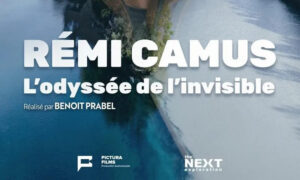
The waters of Lake Geneva are constantly moving, even when the surface appears perfectly calm. In this talk, Tomy Doda, a lake physicist at the University of Lausanne, will explore the hidden currents that transport heat, oxygen, sediments and nutrients throughout the lake. Discover how these invisible movements influence the lake’s ecosystem and explain surprising phenomena, from sudden temperature changes to variations in water levels. - L’Odyssée de l’invisible – Ce que le Rhône nous révèle | 5 November 2026 | Maison de l’Avenir
One year after travelling down the Rhône to analyze its water, explorer Rémi Camus returns to share what the river has revealed to us. In September 2025, Rémi Camus and his team traveled the length of the Rhône, from its source in the Swiss Alps to the Mediterranean Sea, to collect water samples and test for the presence of PFAS and other contaminants. A year later, the results are in and have been published in a scientific journal. The screening will be followed by a presentation of the study’s key findings, then a discussion with the scientists and speakers in attendance. - WonderDays Nature & Company: Atelier Travail Qui Relie | 6 November 2026 | Restaurant du Jardin Botanique Amarante
Taking place in the peaceful surroundings of Geneva’s Botanical Garden, this workshop offers a space to slow down, reconnect with nature and rethink our ways of engaging with the world. WonderDays invites participants to experience Joanna Macy’s Work That Reconnects methodology through immersive activities, collective reflection and exchanges. A plant-based lunch prepared by Restaurant Amarante and several breaks will round off the day, creating space to share ideas. - Le monde fascinant des champignons | 6 November 2026 | Cycle de Vie | Bois de Versoix
Autumn is the perfect time to discover the diversity of fungi growing in our natural surroundings. On 6 November, join Cycle de Vie for a guided walk dedicated to the fascinating world of mushrooms. Starting at 2 pm, this two-hour outing will combine observation, discovery and a chance to enjoy nature in the Geneva region. - Les Automnales | From 6 to 15 November 2026 | Palexpo
The Automnales are back at Palexpo from 6 to 15 November! This popular event offers a wide range of activities for all interests, from markets and culinary demonstrations to international cat shows and cycling exhibitions. With workshops, competitions and interactive experiences, there is something for everyone to enjoy. - Look up ! Cent montgolfières dans le ciel | From 6 November to 5 December 2026 | Bibliothèques municipales de Genève
What would our world look like without an atmosphere? Through her original installation “Look Up”, artist Rosanna Baledda invites visitors to look up at a sky filled with a hundred hot-air balloons and reflect on the vital role the atmosphere plays in protecting life and maintaining the Earth’s climate balance. This exhibition is available at the Bibliothèque des Eaux-Vives from 6 November to 5 December, as part of Geneva’s Climate Week. - Les Rencontres de la faune genevoise 2026 | 7 November 2026 | HEPIA
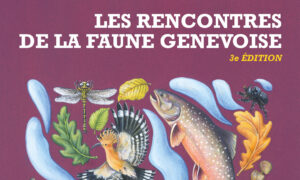
Les Rencontres de la Faune Genevoise return to HEPIA on 7 November 2026 for their third edition! Discover the wildlife of the Geneva region through a series of conferences covering a wide range of topics, from the evolution of freshwater mollusc communities in local ponds to the monitoring of European badgers across the canton. - Des insectes entre les pages | 7 November 2026 | Bibliothèque de Saint-Jean
Butterflies, beetles, dragonflies and grasshoppers will provide inspiration for this creative workshop at the Saint-Jean Library on 7 November. Guided by illustrator and biologist Maud Oïhénart, participants aged 8 and above will explore the shapes, colours and details of different insects before creating their own illustrated mini-book. - Saturday Bicy Tour | 7 November 2026 | Bicy.ch | Place Lise Girardin
Coffee, croissants and a bike ride through Geneva: that is the plan for Saturday 7 November! Bicy.ch invites you to enjoy a free guided outing on two wheels, at a leisurely pace and in a friendly atmosphere. They can provide you with an e-bike, free of charge. The ride starts at 9:30 a.m., with a coffee break beforehand at 9:00 am. - Une balade en forêt, une raclette en extérieur et les saveurs du terroir genevois | 8 November 2026 | Alliance Française de Genève | Meeting Point at Gare Cornavin
A walk through the beautiful natural landscapes of the Allondon Valley, a traditional raclette made with local products, and a visit to a wine-growing hamlet: this outing brings together nature, food and local heritage. On 8 November, join a guided walk through the Allondon nature reserve and along the Roulave gorges before sharing a convivial meal and discovering the wine-growing traditions of Dardagny. - 32nd Geneva International Film Festival (GIFF) | Until 8 November 2026 | GIFF | Various Locations
The Geneva International Film Festival (GIFF) returns for its 32nd edition with a joyful and wide-ranging program featuring more than 113 works from 46 countries. The program will feature 80 Swiss, international and World premieres, including 15 Swiss projects across feature films, series and immersive experiences. The 50 encounters and Talks organized throughout the Festival reaffirm the importance the GIFF and its teams place on debate, exchange and the circulation of ideas. - Hortus Botanicus Helveticus: Together for 30 years | Until 29 November 2026 | Jardin Botanique de Genève
Marking the 30th anniversary of Hortus Botanicus Helveticus, this outdoor exhibition celebrates the work of Switzerland’s 30 botanical gardens. As you walk through the Jardin Botanique de Genève, discover 30 illustrated displays, each featuring a representative plant species and highlighting the important role these gardens play in protecting biodiversity and preserving plant life for future generations. - Atelier découverte de la nature pour enfant | Until 12 December 2026 | Swiss Food Academy | Espace de quartier Le99 aux Charmilles, Plainpalais et Eaux-Vives
This autumn, children can discover the chestnut through a fun and sensory workshop! They will explore, taste and learn about this seasonal Swiss favourite while taking part in a gardening activity and enjoying a comforting chestnut tasting. - Create Your Own Rousseau-Style Herbarium | Until 23 December 2026 | Jardin Botanique de Genève
Discover the art of herbarium making in this hands-on workshop inspired by Jean-Jacques Rousseau. Using dried flowers, plants, and traditional paper, participants can create their own herbarium sheet while learning about plant identification and the scientific techniques behind this botanical practice. The activity is free and suitable for visitors aged four and above.
More Happening Abroad
- 38th Meeting of the Parties to the Montreal Protocol | The Thirty-Eighth Meeting of the Parties to the Montreal Protocol on Substances that Deplete the Ozone Layer (MOP38) will convene in Kigali, Rwanda from 2 to 6 November 2026, back-to-back with the ImpCom77 and MOP37 Bureau. Marking ten years since the adoption of the Kigali Amendment, the Multilateral Fund has helped Article 5 countries turn their national HFC phase-down commitments into action, and MOP38 is expected to agree on the replenishment of the Multilateral Fund for the Implementation of the Montreal Protocol (MLF) and to make progress on organizational, technical, and compliance matters, among other matters. → Follow the live coverage by Earth Negotiations Bulletin
- Fifteenth International Forum on Energy for Sustainable Development | IFESD-15 will take place in Xi’an, China, from 3–6 November 2026, bringing together the five UN Regional Commissions and international partners under the theme “Energy Transition in an Uncertain World: Driving Security, Growth and Resilience.” The programme will address pressing energy issues, with sessions on energy security, digitalization, critical energy transition minerals, energy connectivity and renewable energy, among others.
What (Else) to Read Next?
- From glacier to delta: Spatial distribution of PFAS and tire-derived contaminants along the entire Rhône River continuum | Remi Camus, Jérémy Beaud, Jeff Campens, Julien Paupier et al. | Water Research | 1 January 2027
This study aimed to provide the first integrated dry-weather baseline assessment of PFAS and tire-derived contaminants along the entire Rhône River continuum from alpine headwaters to downstream urbanized areas. These results provide the first integrated source-to-sea dry-weather baseline for PFAS and tire-derived contaminants in the Rhône River and establish a reference framework for future environmental surveillance and regulatory assessment. - Une cartographie inédite du Rhône révèle l’omniprésence de polluants persistants de la source à la Méditerranée | Le Temps | 29 October 2026
Qu’est-ce qui distingue l’eau du Rhône prélevée à 2209 mètres dans les Alpes uranaises, en Suisse, de celle qui s’écoule en Camargue vers la Méditerranée? Réponse: la quantité de traces chimiques des activités humaines. C’est ce qu’ont voulu mesurer des chercheurs de l’Université de Lausanne et de l’Institut des technologies chimiques de la HES-SO.
- UN Geneva unveils sustainable uniforms for tour guides, together with Italy | UN Geneva | 29 October 2026
The UN Office at Geneva, together with the Fondazione Pistoletto Cittadellarte and the Permanent Mission of Italy to the United Nations in Geneva, unveiled a new generation of responsible, traceable and circular uniforms for its guides. The collection was presented at the Palais des Nations, as part of the celebrations marking the 70th anniversary of the Mission. - Environment at a Glance Indicators | OECD | 26 October 2026
This new web format for Environment at a Glance Indicators provides real-time interactive online access to the latest comparable OECD-country data on the environment from the OECD Core Set of Environmental Indicators – a tool to evaluate environmental performance in countries and to track the course towards sustainable development. These indicators provide key messages on major environmental trends in areas such as climate change, biodiversity, water resources, air quality, circular economy and ocean resources. - PFAS flows, treatment and reduction in data centre infrastructure | Bingzheng Wang, Mariam Elgamal, Gage Hills, Martin Scheringer & Fengqi You | Nature Reviews Clean Technology | 26 October 2026
PFASs are used and emitted across data centre infrastructure, including semiconductor manufacturing, data centre cooling and end-of-life management. The accelerating deployment of artificial intelligence (AI) amplifies these existing challenges by increasing infrastructure demand, cooling intensity and hardware turnover. The paper provides an overview of the increasing use of various types of PFAS in AI data centres. It also shows that in the field of AI data centres, with their extreme performance demands, alternatives to PFASs are emerging. - Energy price hikes drove all the rise in eurozone inflation amid war on Iran, Greenpeace analysis finds | Greenpeace International | 26 October 2026
Between January and August 2026, energy prices accounted for the entire rise in eurozone inflation from 1.7% to 3.2%, according to new Greenpeace International analysis that exposes the scale of fossilflation. Without the oil price shock driven by the war on Iran, eurozone inflation in August would have been 2.2%, rather than 3.2%. The findings show how fossil fuel dependence leaves households exposed to price shocks, which in turn have an impact on the wider economy.
Events
See all
Body Meeting
9th meeting of the small intersessional working group on technical guidelines on persistent organic pollutants as wastes
31 Oct – 02 Nov 2026
International Environment House II
BRS

Virtual
One Health Week | One Health in Practice: Connecting Research, Innovation and Implementation
02 Nov 2026 | 10:00 – 11:30
Online | Zoom
WHO

Conference
Vaquita and Community in the Upper Gulf of California | CITES SC81 Side Event
02 Nov 2026 | 13:45 – 15:15
CICG | Room 3
Mexico
Virtual
A Wetland Lens for the 2026 United Nations Water Conference
02 Nov 2026 | 14:30
Online | Zoom
Ramsar Convention
Body Meeting
4th meeting of the small intersessional working group on waste batteries technical guidelines
03 – 06 Nov 2026
International Environment House II
BRS

Conference
W4W Interdisciplinary Symposium | Water Ethics, as Reverence for Life
03 Nov 2026 | 08:30 – 12:40
Musée d’histoire des sciences & Online, Teams
W4W
Conference
Briefing on the Montevideo Programme V: A Decade of Action on Environmental Law
03 Nov 2026 | 09:30 – 11:00
International Environment House 1 | Room 2 & Online | Webex
UNEP, GEN
Body Meeting
47th session of the UNECE Working Party on Forest Statistics, Economics and Management
03 Nov 2026 | 10:00
Palais des Nations
UNECE
Conference
Thematic Focus Session: Getting Forest Values Right | 47th session of the UNECE Working Party on Forest Statistics, Economics and Management
03 Nov 2026 | 10:00
Palais des Nations | Room XII
UNECE
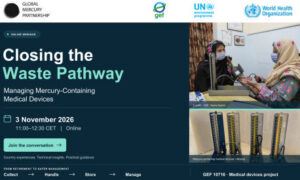
Virtual
Closing the Waste Pathway: Managing Mercury-Containing Medical Devices
03 Nov 2026 | 11:00 – 12:30
Online | Teams
UNEP Global Mercury Partnership

Conference
From Science to Operations: Experiences in Flood Forecasting and Warning Services
03 Nov 2026 | 12:00 – 13:30
WMO Headquarters
WMO
Virtual
The Future of Cities: Smart, Sustainable, Inclusive | 2026 World Cities Day
03 Nov 2026 | 13:00 – 14:00
Online | Zoom
IEC


Virtual
The Role of Risk in Responsible Banking
03 Nov 2026 | 14:00 – 15:00
Online | BrightTalk
UNEP FI
Virtual
One Health Week | Before the Crisis: WHO Advancing Prevention through a One Health Approach
03 Nov 2026 | 14:00 – 15:30
Online | Zoom
WHO
Conference
From Geneva to Abu Dhabi through Dakar: Positioning Wetlands in the Global Water Agenda
03 Nov 2026 | 15:00 – 16:30
Palais des Nations | Room XVI
UNOG, Ramsar Convention
Body Meeting
84th session of the Economic Commission for Europe Committee on Forests and the Forest Industry (COFFI)
04 – 06 Nov 2026
Palais des Nations, Room XII
UNECE

Conference
One Health, Science and Evidence
04 Nov 2026 | 10:00 – 11:00
Palais des Nations, Room H.378 & Online, Zoom
FAO
Conference
High-level session on “Roots of the Future: The United Nations Decade for Afforestation and Reforestation in line with Sustainable Forest Management (2027–2036) in the United Nations Economic Commission for Europe region (including Boreal Forest region) | COFFI84
04 Nov 2026 | 10:15 – 11:15
Palais des Nations | Room XII
UNECE

Conference
Technologies for Disaster Preparedness, Mitigation and Resilience
05 – 06 Nov 2026
CERN Idea | Square
CERN
Body Meeting
15th Meeting of the Task Force on Target Setting and Reporting
05 – 06 Nov 2026
Palais des Nations | Room IX
UNECE/WHO Protocol on Water and Health
Conference
Trade, Biodiversity and the Ocean Economy: Pathways to Resilience
05 Nov 2026 | 10:30 – 12:00
WTO | Room S2
Portugal, Belgium, Fiji
Virtual
GFC Implementation Webinar #8 | Turning GFC Ambitions into Action: Pilot Testing an Industry Self-Assessment Tool
05 Nov 2026 | 13:00 – 14:00
Online | Zoom
IOMC

Virtual
Preparation of the first regular report on loss and damage Information Session: Consortia building, technical and Grant+
05 Nov 2026 | 14:00
Online | Zoom
Santiago Network
Virtual
Quadripartite Webinar – Operationalizing One Health: Translating Enablers, Dismantling Barriers and Aligning Global Policy
05 Nov 2026 | 14:00
Online | Zoom
UNEP, FAO, WHO, WOAH
Afterwork
L’Odyssée de l’invisible – Ce que le Rhône nous révèle
05 Nov 2026 | 18:15 – 20:30
Maison de l'Avenir
Conference
Les Rencontres de la faune genevoise 2026
07 Nov 2026 | 08:45 – 17:00
HEPIA
HEPIA, Republic and State of Geneva, ASL
Jobs
See all