Update
Environment @ 61st Session of the UN Human Rights Council

Last updated: 09 Apr 2026
The 61st Regular Session of the Human Rights Council (HRC61) took place in Geneva from 23 February to 31 March 2026. This page highlights the environmental-related activities of this session.
The 61st regular session of the Human Rights Council took place in Geneva from 23 February to 31 March 2026. The Council proceedings can be viewed on UN Web TV. The meeting summaries are available on the UN Geneva website and the live-updated programme of work on Sched.
Key Highlights @ HRC61
This section provides a brief overview of highlights on the environment and human rights at the sixty-first session of the Human Rights Council.
Right to Clean, Healthy and Sustainable Environment
- The right to a clean, healthy and sustainable environment is the usual main environmental theme of the Council’s March sessions, with the annual report to the HRC of the UN Special Rapporteur on the right to a healthy environment, Astrid Puentes Riaño, on “Priority actions towards breathing clean air, protecting public health and ensuring a healthy environment” (A/HRC/61/47).
- The 2026 edition of the Geneva Rights and Environment Talks took place in the margins of HRC61.
Biodiversity and Human Rights
- A global analytical study (A/HRC/61/36) by the High Commissioner for Human Rights on the implementation of a human rights-based approach into the goals and targets of the Kunming-Montreal Global Biodiversity Framework, in line with the provisions of the Convention on Biological Diversity, was presented in this session of the Council.
Cultural Rights and the Environment
- The UN Special Rapporteur in the field of cultural rights, Alexandra Xanthaki, presented her report (A/HRC/61/49) exploring synergies and challenges in ensuring both cultural rights and the conservation of nature at the same time, clarifying how cultural rights – protecting identities, values and ways of life – are important to the field of nature conservation and vice versa.
Right to Food and the Environment
- The UN Special Rapporteur on the right to food, Michael Fakhri, in presenting his finalreport to the Council (A/HRC/61/51), examined the interlinkages between land and the right to food, with a particular focus on the voices, experiences, and insights of civil society actors working on the ground, including small-scale food producers, Indigenous Peoples, fishers, pastoralists, and youth.
Environmental Human Rights Defenders
- The UN Special Rapporteur on the situation of human rights defenders, Mary Lawlor, presented her final report to the Human Rights Council, “Defending dignity and claiming rights: human rights defenders hold firm to universal values as others desert them” (A/HRC/61/40) that aims to provide a platform for human rights defenders to comment on the state of the international framework designed to protect and support them and to reflect on whether it is meeting that goal.
Other Topics
- The Advisory Committee presented a report on the impact of disinformation on the enjoyment and realization of human rights (A/HRC/61/68) that aims to identify, among others, how human rights are impacted the most by disinformation, including on matters on the environment and climate, how forms of disinformation are considered particularly problematic for human rights, and how some measures to counter disinformation negatively impact human rights’ enjoyment.
- The UN Special Rapporteur on the right to adequate housing, Balakrishnan Rajagopal, presented his report introducing the Guiding Principles on Resettlement (A/HRC/61/43), which highlights the need to ensure rights-compliant solutions for resettlement of all displaced and evicted persons, regardless of cause, including through development projects including infrastructure, agribusiness, energy mining and industry projects; world heritage or other cultural heritage protection; environmental degradation or climate change, including measures for adaptation or mitigation, or nature conservation; and natural or human-made disasters.
- A triennial resolution on the Promotion and protection of human rights and the implementation of the 2030 Agenda for Sustainable Development tabled by Ecuador, together with Azerbaijan, Brazil, Chile, Fiji, Luxembourg, Portugal, Rwanda, Sierra Leone, Thailand, and Uruguay, was adopted in this session of the Council.
- The Human Rights Council also appointed environment-related expert mechanism and special procedure mandate holders at its 61st session, including the UN Special Rapporteur on the right to food, the UN Special Rapporteur on the situation of human rights defenders (provided the mandate itself is extended by the Council), the UN Special Rapporteur on the right to housing, and the UN Special Rapporteur on extreme poverty and human rights.
Opening Session
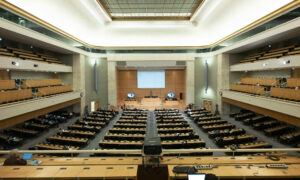
The 61st session of the Human Rights Council kicked off its six-week session in Geneva, with a high-level segment (23–25 February), where dignitaries from more than 120 States address the Council. UN Secretary-General António Guterres, General Assembly President Annalena Baerbock, High Commissioner Volker Türk, and Chief of Swiss Foreign Affairs Ignazio Cassis delivered opening statements. Against a politically charged backdrop, the opening session set the tone for the six weeks of debates, panels, and interactive dialogues on a wide range of human rights issues worldwide, reviews of country situations, and adoptions of outcomes from the Universal Periodic Review of 13 States.
The opening took place on 23 February 2026, with a livestream on UN Web TV.
Right to a Clean, Healthy and Sustainable Environment
The United Nations General Assembly‘s historic decision in July 2022 to recognize that everyone has the right to a clean, healthy and sustainable environment has placed this landmark recognition at the forefront of the human rights agenda, following the same recognition by the Human Rights Council in October 2021. Not only is this a catalyst for accelerated action to tackle the triple planetary crisis, but it also places our attention on people and communities in vulnerable situations. Such a recognition marked a landmark moment which has sent a powerful message that there is widespread, worldwide support for this right – which is already recognized in 156 countries at the national and regional levels.
The right to a clean, healthy and sustainable environment is the usual main environmental theme of the Council’s March sessions, with the Special Rapporteur’s annual Report to the Council.
Report | Priority actions towards breathing clean air, protecting public health and ensuring a healthy environment
Breathing clean air is vital for everyone. Science has unequivocally proven that air pollution poses significant risks to public health, especially for persons in vulnerable situations, and to a healthy environment. 9% of the population worldwide breathes polluted air that exceeds internationally recognized air quality standards. Particularly vulnerable populations include children, even before they are born, pregnant people, older persons and people in living in poverty. Air pollution contributes to about eight million premature deaths annually around the world and is causing non-communicable diseases such as heart disease, stroke, cancer, and chronic respiratory illness, asthma and many others.
Building on past reports and research, including the report on “Issue of human rights obligations relating to the enjoyment of a safe, clean, healthy and sustainable environment” to the Human Rights Council (A/HRC/40/55), the report of the UN Special Rapporteur on the human right to a clean, healthy and sustainable environment, Astrid Puentes Riaño, to the Council (A/HRC/61/47) highlights the need to advance the protection of clean air as a vital element of the human right to a clean, healthy and sustainable environment.
The public health crisis can be solved and further risks prevented, as evidenced by research and improved monitoring and governance to tackle main drivers linked to a fossil-fuel-dependent economy and unsustainable activities. Stronger measures to improve air quality, prioritizing health to protect people, must be urgently implemented by States, aligned with their international and human rights obligations. The duty of private actors to support these efforts, and their urgent responsibility to prevent, reduce and remediate pollution, must also be underscored.
Interactive Dialogue
An interactive dialogue on the report with the Special Rapporteur took place on 6 & 9 March 2026.
Report on the Special Rapporteur Visit
The Special Rapporteur also presented the report on the country visit to Singapore (A/HRC/61/47/Add.1).
Highlights
Part 1
Part 2
Geneva Rights and Environment Talks
In the face of the three interrelated environmental crises — climate change, loss of biodiversity, and pollution — the recognition of the right to a clean, healthy, and sustainable environment by the UN Human Rights Council and the UN General Assembly is an important milestone that puts environmental issues at the forefront of the human rights agenda.
The UN Special Rapporteur on the right to a clean, healthy and sustainable environment reports to the Human Rights Council during its March session on issues related to his mandate. The Geneva Rights and Environment Talks aim to harness the opportunity of this moment of the year to reflect on the challenges posed by the rapid decline of nature and biodiversity.
The 2026 edition of the Geneva Rights and Environment Talks took place in the margins of HRC61, with conferences and discussions, highlighting how Geneva contributes to bringing together the actors working towards ensuring the right to a clean, healthy, and sustainable environment is upheld for all.

Biodiversity and Human Rights
Biodiversity and human rights are closely interlinked. Without healthy, functioning ecosystems, which depend on healthy biodiversity, there would be no clean air to breathe, safe water to drink or nutritious food to eat. In the same manner, the loss of biodiversity has severe consequences for human well-being and human rights. Disruptions in the stability and continuity of ecosystems and the goods and services they provide can negatively impact the full enjoyment of human rights, including the right to life, food, water and sanitation, health and to a clean, healthy and sustainable environment.
Global Analytical Study | Implementation of a human rights-based approach into the goals and targets of the Kunming-Montreal Global Biodiversity Framework
Following Human Rights Council resolution 57/28, the High Commissioner for Human Rights has conducted a global analytical study on the implementation of a human rights-based approach into the goals and targets of the Kunming-Montreal Global Biodiversity Framework, in line with the provisions of the Convention on Biological Diversity, consistent with the considerations set out in section C of the Framework and taking into consideration the outcomes of the sixteenth meeting of the Conference of the Parties to the Convention (A/HRC/61/36). The report is expected to be presented in this session of the Council.
The study provides an examination of the interlinkages between biodiversity and human rights and how these are reflected in the Kunming-Montreal Global Biodiversity Framework and the outcomes of the sixteenth meeting of the Conference of the Parties to the Convention on Biological Diversity. The report explores the key elements for the implementation of the Framework following a human rights-based approach.
International human rights law and standards and the Convention on Biological Diversity and related instruments mutually inform each other and must be implemented coherently. States are required to refrain from acts that foreseeably contribute to or cause significant harm to biodiversity and ecosystems and must cease and repair harm for which they are responsible that has already occurred. The Kunming-Montreal Global Biodiversity Framework provides an authoritative, human rights-based plan for doing so. The implementation of each goal and target of the Framework must be fully in line with States’ obligations to respect, protect and fulfil human rights, including the rights of Indigenous Peoples, peasants, local communities, people of African descent, women and girls, children and youth, older persons and persons with disabilities. This also includes addressing structural and systemic discrimination and inequality. Businesses have the responsibility to respect human rights, including the right to a clean, healthy and sustainable environment, and biodiversity and ecosystems as one of its components. International human rights law, in addition to entailing binding obligations, provides a transformative path towards halting biodiversity loss in a just and equitable manner and living in harmony with nature by 2050.
While biodiversity loss and related measures implicate many human rights, the report is divided into three sections — a section focused on a selection of human rights that are most directly relevant in this context, a section addressing the human rights elements of section C and selected targets of the Kunming-Montreal Global Biodiversity Framework, its monitoring and review system, and promising practices in the implementation of the Framework, and a section providing conclusions and recommendations.
The report was presented on 11 March 2026.
Statement | Human rights-based approach to biodiversity issues and environmental problems
Following the presentation of the report, a statement by Colombia, on behalf of a cross-regional group of countries, including Costa Rica, Guatemala, Marshall Islands, Germany, Malaysia, Portugal, Slovenia, Spain, Cyprus, Chile, Ukraine, Dominican Republic, Switzerland, Mexico, Belgium, Netherlands, Estonia, and Armenia, underscored that “a rights-based approach to biodiversity issues and environmental problems in general is vital to responding adequately to the novel challenges posed by the triple planetary crisis”. They conveyed their “firm commitment to further advancing these matters in the Council with a clear grounding on the best available science and the principles of equity and international solidarity and a view to provide States and developing countries in particular with tools that will facilitate the implementation of their obligations under international human rights law and international environmental law.” → Watch the statement on UN Web TV.
Cultural Rights and the Environment
Cultural diversity is an essential factor for the realization of all universal human rights, and full respect for human rights both creates an enabling environment for, and is a guarantee of, cultural diversity. Environmental degradation, including the triple planetary crisis of climate change, biodiversity loss, and pollution, does not only prevent the realization of the right to a clean, healthy, and sustainable environment but also jeopardizes the “conditions allowing all people, without discrimination, to access, participate in and contribute to cultural life through a process of continuous development” (A/75/298).
Report | Cultural rights and nature conservation
In her report to the Human Rights Council, the UN Special Rapporteur in the field of cultural rights, Alexandra Xanthaki, will consider the intersections between nature conservation and cultural rights (A/HRC/61/49).
Nature conservation is essential for continuing collective existence and has rightfully risen on international and domestic policy agendas. Unfortunately, economic, political and geopolitical considerations, together with a lack of necessary change in mindsets regarding the need for action, have constituted enormous obstacles to environmental protection. Every global target set on international agendas has been missed.
Nature conservation is often carried out either with no consideration for cultural rights or, worse, at the expense of cultural rights, and in disregard of cultural diversity. In some instances, nature conservation is used as a facade for changes aimed at increasing tourism or imposing prevailing cultures. Conservation projects have been weaponized to dispossess groups of their lands, territories and resources and disconnect them from their cultural sites, ways of life and land- and water-based cultural practices. The urgency of safeguarding and fostering biodiversity and climate mitigation provides cover for States and other conservation actors to infringe on cultural rights with relative impunity, in furtherance of a “greater environmental good”. John H. Knox has emphasized that the dominant conservation strategy has been to create national parks and other protected areas that prohibit almost all human activities. Humans are allowed to enter these fortresses of conservation only to experience the beauty of nature: “Those who live in these areas already, no matter how ancient or profound their cultural and material ties, must leave.
The Special Rapporteur notes that the protection of biodiversity necessitates cultural diversity, cautions against the fortress conservation model that has led to severe cultural rights violations and urges States to ensure that their bodies, as well as donors, apply a cultural rights-based approach, favouring special measures, wide consultation and participation, human rights impact assessments and judicial guarantees for cultural rights in nature conservation.
Interactive Dialogue
An interactive dialogue with the UN Special Rapporteur took place on 3 March 2026
Right to Food and the Environment
Hunger and food insecurity are global problems. According to the State of Food Security and Nutrition in the World 2023, 783 million people in the world faced hunger in 2022. This problem is likely to get worse given the expected increase in the world’s population and the stress on natural resources. Moreover, unsustainable food production and consumption practices have led to environmental degradation and exacerbated climate change. In return, food systems suffer from the triple planetary crisis of climate change, biodiversity loss and pollution, which can prevent the realization of human rights, including the right to food.
Report | Land and the right to food
Land and the water that flows through and around it underpins communities’ livelihood, social cohesion and dignity. Cultural, social, economic and political practices around land and water are how people and communities make meaning and create power. Land, therefore, plays an essential role in the realization of human rights, especially the right to food.3 At a time when violence and displacement are escalating globally, access to food and land is increasingly under threat – making already marginalized communities more vulnerable. Land is not just a natural resource that enables food production; people’s decisions about how to use land and water to produce, share and market food are an expression of self-determination.
The UN Special Rapporteur on the right to food, Michael Fakhri, in presenting his report to the Council (A/HRC/61/51), discusses how land and water are the basis of life. He notes that treating land like a commodity and a resource is one of the most destructive global practices and a major cause of hunger and starvation. He outlines the problems of the immense concentration of land in the hands of corporate actors. He also outlines important legal tools to counteract this destructive force, tenure rights, and the right to land and territory.
The report comes at a critical time, ahead of the Second International Conference on Agrarian Reform and Rural Development taking place on 24–28 February 2026 in Cartagena, Colombia, as well as the 17th Conference of the Parties to the UN Convention to Combat Desertification taking place on 17-28 August 2026, in Ulaanbaatar, Mongolia.
Interactive Dialogue
An interactive dialogue with the UN Special Rapporteur took place on 5 March 2026.
Environmental Human Rights Defenders
Environmental human rights defenders (EHRDs) are those who strive to protect, promote and safeguard a clean, healthy, and sustainable environment, as recognized in HRC Resolution 40/11. From the local to the international level, the efforts of EHRDs have provoked responses to the three interlinked environmental crises afflicting our planet – the loss of biodiversity, pollution, and climate change. However, evidence suggests that they remain highly vulnerable and under attack across the globe.
Report | Defending dignity and claiming rights: human rights defenders hold firm to universal values as others desert them
In her final report to the Human Rights Council, the UN Special Rapporteur on the situation of human rights defenders, Mary Lawlor, aims to bring the voice of human rights defenders directly to the Council (A/HRC/61/40). At a time when the international human rights system is facing unprecedented challenges, the Special Rapporteur believes it is more important than ever that States hear directly from human rights defenders.
The report provides a platform for human rights defenders to comment on the state of the international framework designed to protect and support them and to reflect on whether it is meeting that goal. Environmental human rights defenders were also highlighted in the report, demonstrating that,
Environmental human rights defenders point to systemic violations of the right to a clean and healthy environment, including the degradation of nature by State and non-State actors, and the consequent effect on communities, as a motivation for beginning human rights work.
Interactive Dialogue
An interactive dialogue with the UN Special Rapporteur took place on 3 March 2026.
Report | Safety of journalists and the issue of impunity
Following UN General Assembly resolution 78/215, in which the Assembly requested the Secretary-General to submit a report on the safety of journalists and media workers, with a special focus on the safety of those reporting on climate change, environmental and disaster issues and the activities of the United Nations Interagency Network of Focal Points on the Safety of Journalists in addressing the safety of journalists to the Assembly at its eightieth session and to the Human Rights Council at its sixty-first session.
In the report (A/80/345), the Secretary-General describes the current situation in relation to the safety of journalists and media workers worldwide. The report is focused on the safety of those reporting on climate change and environmental and disaster issues, including women journalists and media workers. It also contains an overview of the activities of the Network of Focal Points and concludes with recommendations for improving the safety of journalists reporting on climate change and environmental and disaster issues.
Other Themes
Disinformation and Human Rights
Report | Impact of disinformation on the enjoyment and realization of human rights
Following resolution 55/10 of the Council, the Advisory Committee is presenting a report on the impact of disinformation on the enjoyment and realization of human rights at HRC61 (A/HRC/61/68). In the report, the Advisory Committee promotes the integrity of the information system as a framework based on human rights, media pluralism and public empowerment. Recalling the need to protect freedom of expression, it recommends that States avoid abusing anti-disinformation laws, support independent media and media literacy, regulate technology and artificial intelligence companies, and require that businesses conduct human rights due diligence and refrain from spreading or monetizing disinformation. The Advisory Committee underscores the need to protect the victims of disinformation and elaborates on the concept of environmental disinformation.
Environmental disinformation is unique in that the biggest companies in the world are engaged in it for financial gain. It is spread through a vast number of methods targeting a broad range of issues beyond climate change, including land degradation, plastic and chemical pollution, extractive activities and food and water security. Disinformation not only distorts public understanding of environmental issues, but also actively obstructs policymaking. It undermines urgent climate action, including for a just transition, and erodes public trust in climate science by spreading false narratives about climate science, policy and solutions.
Publicly harmful consequences of environmental disinformation include the continued production and use of toxic and hazardous substances, distrust in legitimate scientific research in favour of false technological solutions, the promotion of hypothetical, speculative and misleading environmental solutions, the weakening of environmental policies and the undermining of fundamental human rights, including the rights to health, to food, to water, to freedom of scientific research and to a clean, healthy and sustainable environment, as well as procedural rights, including the rights to access to information, to participation and to access to justice, and the free, prior, and informed consent of Indigenous Peoples.
To positively address the epistemological crisis, the Advisory Committee has extracted three common principles for the integrity of the information system from United Nations documents, placing emphasis on public empowerment and media and information literacy; the bolstering of free, independent and pluralistic media; and the accountability of business. In addition, the Advisory Committee takes particular interest in the need to protect victims of disinformation and to elaborate on the concept of environmental disinformation, which has not been sufficiently addressed in United Nations documents on disinformation.
The report was presented to the Council on 17 March 2026.
Summary Report | Half-day workshop on disinformation and human rights
In its resolution 55/10, the Human Rights Council requested OHCHR to prepare a summary report on a half-day expert workshop to review the methods used to disseminate disinformation and to promote tools and approaches to counter those challenges while protecting and reinforcing human rights standards, held on 12 June 2025. The Council had before it the report of OHCHR (A/HRC/61/80).

Sustainable Development
Report | Best practices, challenges and lessons learned concerning integrated approaches to the promotion and protection of human rights and the implementation of the 2030 Agenda for Sustainable Development at the global level
The report by the Office of the High Commissioner for Human Rights (A/HRC/61/13) contains an analysis of how approaches integrating human rights into the implementation of the 2030 Agenda for Sustainable Development can enhance the achievement of the Sustainable Development Goals while protecting human rights. Best practices, challenges and lessons learned across economic, social and environmental dimensions of sustainable development at the global level are identified, with an emphasis on scalable approaches and actionable recommendations to advance human rights and sustainable development for all by 2030 and beyond.
The 2030 Agenda was adopted by consensus as an ambitious global action agenda for a more equitable, just and sustainable development. In the past decade, the world has made undeniable progress: millions have gained access to essential services, over half the global population now benefits from some form of social protection (a 10-percentage point leap in 10 years) and child and maternal mortality rates have fallen.
However, the world is on track to meet or is making “moderate” progress on 35 per cent and insufficient progress on 47 per cent of the targets of the Goals and there has been regression from the 2015 baseline in relation to 18 per cent. The Secretary-General has warned of a “global development emergency”. Insufficient and uneven implementation has been hindered by more frequent and intense conflicts, geopolitical tensions, climate change and environmental devastation, economic shocks, pandemic disruptions, surging global debt, shrinking civic space and rampant inequalities, further exacerbated by cuts in overseas development assistance.
In terms of the various dimensions of sustainable development, the environmental dimension falls under Sustainable Development Goals (SDGs) 13, 14 and 15, as well as targets on food security (Goal 2), healthy lives (Goal 3), water and sanitation (Goal 6), safe and clean energy (Goal 7) sustainable cities (Goal 11) and responsible consumption and production (Goal 12). The Goals precede the recognition of the right to a clean, healthy and sustainable environment, which can be a catalyst for action to achieve the Goals.
Systematically integrating human rights into the implementation of the 2030 Agenda has demonstrated potential to accelerate progress on achieving the Goals. If work towards achieving the Goals is anchored in international human rights law, relevant efforts can also help to more effectively reduce discrimination and inequalities, tackle poverty, enhance health, education and social protection, protect the planet, maximize positive business contributions and hold Governments and other stakeholders accountable.
Human rights are relevant to all dimensions of sustainable development. States need to ensure that economic and environmental decision-making is not a human rights-free zone. At the national level, with the support of the international community, countries need to take steps to widen the fiscal space and devote the maximum of available resources for rights-based action to achieve the Goals. Human Rights need to be placed at the centre of global discussions on global governance, reforms of the international financial, tax and debt architecture and environmental and climate action.
The report was presented to the Council on 11 March 2026.
Adequate Housing
Report | Guiding Principles on Resettlement
The UN Special Rapporteur on adequate housing as a component of the right to an adequate standard of living, and on the right to non-discrimination in this context, Balakrishnan Rajagopal, will present his report introducing the Guiding Principles on Resettlement (A/HRC/61/43). International human rights law establishes a clear baseline: forced evictions and coercive or involuntary displacement are always illegal and wherever possible any other evictions or resettlement must be avoided Nonetheless, there are circumstances in which resettlement becomes necessary, for example to protect residents from imminent risks or to secure durable solutions for those displaced by conflict or disasters who cannot safely return home.
Around the world, societies are facing an escalating crisis of evictions and displacement, and inadequate responses to the resettlement needs of the people affected. This crisis stems from a wide range of factors: rapid urbanization and urban planning, large-scale development projects, natural and human-made disasters, environmental degradation, heritage and nature conservation, climate change, violent conflict and occupation. Although displacement itself often receives public attention, what happens, or should happen, after people are uprooted – the process of resettlement – is far less understood, far less monitored and all too often implemented in ways that violate human rights and deepen existing vulnerabilities.
Developed over two years, pursuant to Human Rights Council resolution 55/11, the Guiding Principles on Resettlement address a critical yet neglected protection gap in international law to ensure rights-compliant solutions for resettlement of all displaced and evicted persons. Such Principles apply to all situations of displacement, eviction, relocation, or resettlement, regardless of cause, including through development projects including infrastructure, agribusiness, energy mining and industry projects; world heritage or other cultural heritage protection; environmental degradation or climate change, including measures for adaptation or mitigation, or nature conservation; and natural or human-made disasters.
The objective of these Guiding Principles is to prevent all involuntary resettlement and, towards that end, to identify the rights and guarantees relevant to the protection of persons before, during and after resettlement and the obligations of States, businesses, international organizations and non-State actors. They aim to ensure that resettlement is pursued as a last resort and that its processes and outcomes respect, protect and fulfil the rights and dignity of affected individuals and communities, consistent with existing obligations under international human rights law and other applicable norms and standards of international law.
An interactive dialogue with the UN Special Rapporteur took place on 4 March 2026.
Human Rights and Climate Change
Report | Fifth session of the Forum on Human Rights, Democracy and the Rule of Law
Pursuant to Human Rights Council resolution 52/22, the fifth session of the Forum on Human Rights, Democracy and the Rule of Law was held in Geneva on 13 and 14 October 2025 on the theme “Democracy and climate change: focusing on solutions”. The report by the Chair (A/HRC/61/64) contains a summary of the discussions held and the recommendations made during the Forum.
In his concluding remarks, the Chair emphasized that climate change was a test of democratic governance, requiring transparency, participation and accountability. The key challenge ahead lay in translating international legal obligations into national legislation, budgets and climate plans. Democracy, human rights and the rule of law were the strongest enablers of climate action. He called on participants and Member States to expand civic space and participation, and to advance climate solutions rooted in justice, equality and harmony with nature.
Summary Report | Panel discussion on human rights and climate change
In its resolution 56/8, the Human Rights Council requested the High Commissioner to submit to the Council a summary report on the panel discussion on human rights and climate change held at its fifty-ninth session and to make the report available in accessible formats, including in easy-to-read versions. The Council had before it a note by the Secretariat (A/HRC/61/82).
Statement | Climate and environmental justice
On behalf of the Community of Portuguese-Speaking Countries (CPLP), Cabo Verde delivered a statement during the General Debate under Item 3 in this session of the Council, focusing on climate and environmental justice. Highlighting how for many of their countries, including small island and coastal states, “climate change directly threatens human rights—particularly those of the most vulnerable groups—as well as territorial integrity, access to water, agriculture, and economic stability,” the statement urges all States to “reaffirm their commitments under the United Nations Framework Convention on Climate Change and its Paris Agreement, in particular by intensifying mitigation efforts to limit the global temperature increase to 1.5°C, by strengthening capacities to adapt to the adverse effects of climate change, and by promoting climate resilience,” including the “Global Mutirão,” one of the key decisions of COP30 held in the Brazilian city of Belém last November, recognizing the importance of ensuring that States’ climate action respects, promotes, and takes into account their human rights obligations. The statement also calls on States to take into account the landmark advisory opinion of the International Court of Justice that recognizes “that the adverse effects of climate change can undermine the effective enjoyment of human rights and that a sustainable, clean, and healthy environment is a fundamental prerequisite for the exercise of rights.” → Read the full statement or watch on UN Web TV.
Safe Drinking Water and Sanitation
Summary Report | Panel discussion on the realization of the human rights to safe drinking water and sanitation
In its resolution 57/13, the Human Rights Council requested the High Commissioner to prepare a summary report on the panel discussion on the realization of the human rights to safe drinking water and sanitation, held at its fifty-ninth session. The Council had before it a note by the Secretariat (A/HRC/61/84).
2030 Agenda for Sustainable Development
Resolution | Promotion and protection of human rights and the implementation of the 2030 Agenda for Sustainable Development
A triennial resolution on the Promotion and protection of human rights and the implementation of the 2030 Agenda for Sustainable Development (A/HRC/61/L.18), tabled by Ecuador, together with Azerbaijan, Brazil, Chile, Fiji, Luxembourg, Portugal, Rwanda, Sierra Leone, Thailand and Uruguay, was adopted without a vote in this session of the Council.
Appointments at HRC61
The Human Rights Council also appointed environment-related expert mechanism and special procedure mandate holders at its 61st session. These include:
- UN Special Rapporteur on the right to food: Sofia Monsalve Suárez (Colombia)
- UN Special Rapporteur on the situation of human rights defenders: Andrea Bolaños Vargas (Colombia)
- UN Special Rapporteur on adequate housing as a component of the right to an adequate standard of living, and on the right to non-discrimination in this context: Koldo Andoni Casla Salazar (United Kingdom)
- UN Special Rapporteur on extreme poverty and human rights: Elena Carolina Díaz Galán (Spain)
The Council is also expected to appoint members of the Expert Mechanism on the Rights of Indigenous Peoples and the Expert Mechanism on the Right to Development.
Civil Society Participation in the Human Rights Council
Ahead of HRC61, various civil society organizations from Geneva and beyond have submitted a letter to States underscoring the importance of maintaining hybrid participation during informal consultations on resolutions throughout 2026 (HRC61, HRC62 and HRC63). The letter highlights that during and after the COVID-19 pandemic, the Human Rights Council set a strong example by enabling meaningful remote participation alongside in-person engagement. These practices significantly improved accessibility, diversity, and representation — particularly for civil society actors, human rights defenders, and victims from the Global South and marginalized communities — ensuring that Council discussions and outcomes were informed by those most affected.
However, the letter underscores that since early 2024, these gains have been steadily undermined by new barriers to participation. These include fees for using online platforms and for interpretation during side events, cuts to travel support, and growing visa restrictions. The letter calls on States to safeguard and restore hybrid participation as essential to an inclusive, effective, and credible Human Rights Council.
Related Activities on the Sidelines of HRC61
The 24th edition of the Geneva International Film Festival and Forum on Human Rights (FIFDH) took place from 6 to 15 March 2026. Taking place in the margins of HRC61, this year’s edition features the environment highly as the various films, exhibitions and conferences tackle the interlinkages between human rights issues and toxics, minerals and metals, Indigenous People’s rights, environmental (and) human rights defenders, and questions on economic growth, among others.

Impact Days
The FIFDH Impact Days bring together NGOs, filmmakers, impact practitioners, and funders to find joint strategies around common human rights themes, including on the environment. Taking place from 8 to 10 March 2026, the 8th edition of Impact Days featured documentary projects, with the goal of working with filmmakers to refine their impact goals, and facilitate partnerships within the vast ecosystem of organizations, policymakers and funders active around International Geneva. → Discover the program.
Events
Date and time of some events subject to change on the live-updated programme of work on Sched.

Demonstration on New Features of the EVENTS Platform for NGO Side Events
26 January 2026 | 14:00 CET | Online, Teams

HRC61 Info-Sharing Session | Human Rights and the Environment
27 January 2026 | 10:00 – 11:00 CET | IEH1, Room 2 & Online, Webex

Organizational meeting for the 61st session of the Human Rights Council
9 February 2026 | 10:00 CET | Palais des Nations, Assembly Hall & Online

Opening of oral statements registration | NGOs
17 February 2026 | 14:00 CET

Opening of the session and high-level segment
23 February 2026 | 9:00 – 12:00 CET | Palais des Nations, Assembly Hall & Online
Informal consultations on the draft resolution on the promotion and protection of human rights and the implementation of the 2030 Agenda for Sustainable Development
26 February 2026 | 9:00 – 12:00 CET | Palais des Nations, Room IX
Ecuador, Azerbaijan, Brazil, Chile, Fiji, Luxembourg, Portugal, Rwanda, Sierra Leone, Thailand & Uruguay
Protection Mechanism for Human Rights Defenders and Journalists in Mexico | HRC61 Side Event
26 February 2026 | 14:00 – 15:00 CET | Palais des Nations, Room III
Mexico
Roundtable with UN Special Rapporteur Human Rights Defenders Mary Lawlor in the margins of HRC61
2 March 2026 | 10:00 – 11:30 CET | Rue de Varembé 1
ISHR
Informal consultations on the draft resolution on the Mandate of Special Rapporteur on the situation of human rights defenders
3 March 2026 | 10:30 – 12:00 CET | Palais des Nations, Room III & Online
Norway

Interactive Dialogue with SR human rights defenders
3 March 2026 | 14:30 – 16:15 CET | Palais des Nations, Assembly Hall & Online
Interactive Dialogue with SR cultural rights
3 – 4 March 2026 | 16:15 CET onwards | Palais des Nations, Assembly Hall & Online
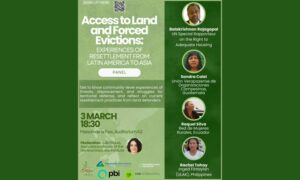
Access to Land and Forced Evictions: Experiences of resettlement from Latin America to Asia
3 March 2026 | 18:30 – 20:00 CET | Maison de la Paix, Auditorium A2
LANI & other partners
Interactive Dialogue with SR on housing
4 March 2026 | 10:30 – 12:30 CET | Palais des Nations, Assembly Hall & Online
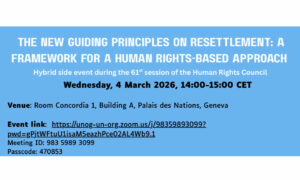
Guiding principles on resettlement: ensuring human rights when people have to move | HRC61 Side Event
4 March 2026 | 14:00 – 15:00 CET | Palais des Nations, Concordia 1 & Online, Webex
UN SR right to adequate housing, OHCHR, Brazil, Finland, Germany & Namibia
Right to Food and Role of Faith Leaders | HRC61 Side Event
4 March 2026 | 15:00 – 16:00 CET | Palais des Nations, Room IX
Caritas Internationalis (International Confederation of Catholic Charities)
Consultation on “Transforming food systems to protect human rights and prevent climate harm"
5 March 2026 | 12:00 – 13:00 CET | Palais des Nations, Room III
UN SR climate change
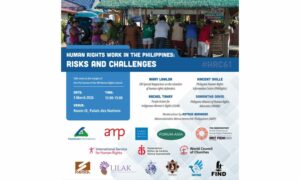
Human Rights Work in the Philippines: Risks and Challenges | HRC61 Side Event
5 March 2026 | 12:00 – 13:00 CET | Palais des Nations, Room IX
Franciscans International & other partners
Interactive Dialogue with SR right to food
5 March 2026 | 14:30 – 16:00 CET onwards | Palais des Nations, Assembly Hall & Online

Informal consultations on the draft resolution on the Mandate of Special Rapporteur on the situation of human rights defenders
6 March 2026 | 10:30 – 12:00 CET | Palais des Nations, Room III & Online
Norway
Interactive Dialogue with SR right to healthy environment
6 & 9 March 2026 | 12:00 CET onwards | Palais des Nations, Assembly Hall & Online
Human Rights and Climate Tipping Points | HRC61 Side Event
6 March 2026 | 12:00 – 13:00 CET | Palais des Nations, Room IX
Just Atonement Inc.
Food, Land, and Agrarian Reform: ICARRD+20 Outcomes and the Case for Redistribution | HRC61 Side Event
6 March 2026 | 13:00 – 14:00 CET | Palais des Nations, Room IX
FIAN

FIFDH Impact Days 2026
8 – 10 March 2026
Actions to Breathe Clean Air: Protecting Public Health and Ensuring a Healthy Environment | HRC61 Side Event
9 March 2026 | 13:00 – 14:00 CET | Palais des Nations, Room IX
SR right to healthy environment
Keeping the Air We Breathe Safe | Geneva Rights and Environment Talks 2026
9 March 2026 | 14:30 – 15:30 CET | Palais des Nations, Room A-286-1
SR right to healthy environment, Earthjustice, GEN
Exile: Rebuilding Legal, Institutional, and Care Frameworks for Human Rights Defenders in Exile | HRC61 Side Event
9 March 2026 | 15:00 – 16:00 CET | Palais des Nations, Room VIII
Right Livelihood, Global Campus for Human Rights, AfricanDefenders, ISHR
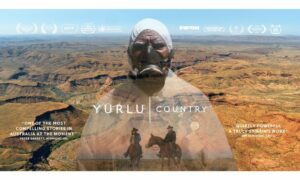
A “Poison Country” – The Impact of Deadly Asbestos Fibers and the Struggle of Indigenous Peoples for Their Right to a Clean, Healthy and Sustainable Environment | HRC61 Event
9 March 2026 | 16:00 – 17:00 CET | Palais des Nations, Room VIII
Earthjustice, ISHR, FIDH, FIFDH, GEN
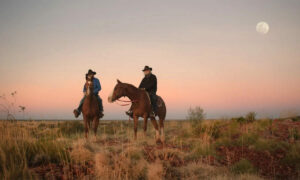
Yurlu | Country | FIFDH Film Screening and Panel Discussion
9 March 2026 | 19:30 CET | Espace Pitoëff – Théaâtre, Rue de Carouge 52
Available at FIFDH. Film screening will be followed by a panel discussion, “Wittenoom: Poisoned Land, Ignored Crime”
Climate Justice & Human Rights | HRC61 Side Event
10 March 2026 | 11:00 – 12:00 CET | Palais des Nations, Room IX
Community Human Rights and Advocacy Centre
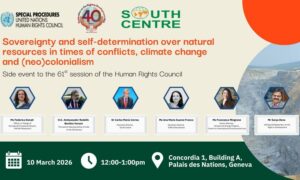
The right to development and self-determination over natural resources | HRC61 Side Event
10 March 2026 | 12:00 – 13:00 CET | Palais des Nations, Concordia 1
SR development & South Centre
Towards Effective Environmental, Social, and Human Rights Impact Assessments | Geneva Rights and Environment Talks 2026
10 March 2026 | 12:30 – 13:30 CET | Palais des Nations, Room A-286-1
SR right to healthy environment, Earthjustice, GEN
Advancing a Just Transition: How Human Rights Can Underpin International Processes to Phase Out Fossil Fuels | HRC61 Side Event
10 March 2026 | 14:00 – 15:00 CET | Palais des Nations, Room IX
CIEL

Human Rights and Biodiversity: Advancing Rights‑Based Action toward the UN Biodiversity Conference COP17 | Geneva Rights and Environment Talks 2026
10 March 2026 | 15:15 – 16:15 CET | Palais des Nations, Room A-286-1
SR right to healthy environment, GeHRBiL, Earthjustice, GEN
Presentation of report of IGWG TNCs and SG/HC/OHCHR/thematic reports
11 March 2026 | 11:00 – 12:30 CET | Palais des Nations, Assembly Hall & Online
Advancing Global Cooperation on Glaciers: Experiences and Multilateral Action | HRC61 Side Event
17 March 2026 | 12:00 – 13:00 CET | Palais des Nations, Room IX
Tajikistan & Nepal
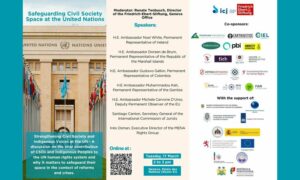
Safeguarding Civil Society Space at the United Nations | HRC61 Side Event
17 March 2026 | 14:00 – 15:00 CET | Palais des Nations, Room XI
ICJ & Friedrich Ebert Stiftung
The 40th Anniversary of the Declaration on the Right to Development: Scientific Solutions to Human Rights Challenges | HRC61 Side Event
17 March 2026 | 14:00 – 15:00 CET | Palais des Nations, Concordia 1
China & Network for International Exchanges
Presentation of reports of Advisory Committee
17 March 2026 | 16:15 – 17:30 CET onwards | Palais des Nations, Assembly Hall & Online
Draft Proposals | Submission Deadline
18 March 2026 | 13:00 CET
Rights of Indigenous Peoples in Asia | HRC61 Side Event
18 March 2026 | 17:00 – 18:00 CET | Palais des Nations, Room XI
Japan Society for History Textbook
Right to Development | HRC61 Side Event
19 March 2026 | 11:00 – 12:00 CET | Palais des Nations, Room XI
Global Institute for Water, Environment and Health
40th Anniversary of the Declaration on the Right to Development | HRC61 Side Event
23 March 2026 | 14:00 – 15:00 CET | Palais des Nations, Concordia 1
International Youth and Student Movement for the United Nations
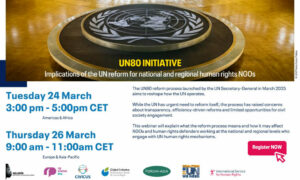
UN80 Initiative: implications of the UN reform for national and regional human rights NGOs (session for Americas & Africa)
24 March 2026 | 15:00 – 17:00 CET | Online
ISHR & Partners
Financing for the Sustainable Development Goals: Need for a Human Rights Approach | HRC61 Side Event
25 March 2026 | 15:00 – 16:00 CET | Palais des Nations, Concordia 1
Sikh Human Rights Group
UN80 Initiative: implications of the UN reform for national and regional human rights NGOs (session for Europe & Asia-Pacific)
26 March 2026 | 9:00 – 11:00 CET | Online
ISHR & Partners
Business and Human Rights | HRC61 Side Event
27 March 2026 | 15:00 – 16:00 CET | Palais des Nations, Room XI
Egypt Peace for Development and Human Rights

Decisions and Conclusions
27 – 31 March 2026 | Palais des Nations, Assembly Hall & Online
HRC61 Info-Sharing Session
Environmental issues are present in various agenda items of each session of the Human Rights Council (HRC) and their side events.
In order to develop more synergies among stakeholders and a better outreach on the environmental agenda of HRC61, including the activities taking place in parallel to the Council’s session, the Geneva Environment Network and its partners convened an information-sharing session. This event discussed and shared information on planned environment-related activities at and around HRC61, such as in person and online events, publications or exhibitions, among others, and exchange on possible synergies. They feed the GEN page on HRC61 which provide an updated calendar of these environment-related events. → Share information on your activity!
Reports
Reports presented at HRC61 relating to the global environmental agenda are listed below. The full list of reports can be consulted on the HRC website.
- A/HRC/61/13 | Best practices, challenges and lessons learned concerning integrated approaches to the promotion and protection of human rights and the implementation of the 2030 Agenda for Sustainable Development at the global level | OHCHR
- A/HRC/61/36 | Global Analytical Study on the implementation of a human rights-based approach into the goals and targets of the Kunming-Montreal Global Biodiversity Framework, in line with the provisions of the Convention on Biological Diversity | High Commissioner for Human Rights
- A/HRC/61/40 | Raising their voices: HRDs respond to the human rights crisis | UN Special Rapporteur on the situation of human rights defenders
- A/HRC/61/43 | Guiding Principles on Resettlement | UN Special Rapporteur on adequate housing as a component of the right to an adequate standard of living, and on the right to non-discrimination in this context
- A/HRC/61/47 | Protecting Clean Air | UN Special Rapporteur on the human right to a clean, healthy and sustainable environment
- A/HRC/61/47/Add.1 | Country Visit to Singapore | UN Special Rapporteur on the human right to a clean, healthy and sustainable environment
- A/HRC/61/49 (advanced edited version)| Nature conservation and cultural rights | UN Special Rapporteur in the field of cultural rights
- A/HRC/61/51 | Interlinkages between land rights and the right to food | UN Special Rapporteur on the right to food
- A/HRC/61/64 | Fifth session of the Forum on Human Rights, Democracy and the Rule of Law | Report by the Chair
- A/HRC/61/68 | Impact of disinformation on the enjoyment and realization of human rights | Advisory Committee
- A/HRC/61/80 | Summary Report on half-day workshop on disinformation and human rights | OHCHR
- A/HRC/61/82 | Summary Report on the panel discussion on human rights and climate change | OHCHR
- A/HRC/61/84 | Summary Report on panel discussion on the realization of the human rights to safe drinking water and sanitation | OHCHR
Resolutions and Decisions
Resolutions and decisions (found on the HRC61 website) relating to the global environmental agenda tabled or adopted by their main sponsors at HRC61 and their subsequent decisions are listed below. A summary of actions on the resolutions is provided by the Geneva Centre for Human Rights Advancement and Global Dialogue.
- A/HRC/61/L.2 | The negative impact of unilateral coercive measures on the enjoyment of human rights | Uganda (on behalf of the Movement of Non-Aligned Countries) | Adopted by vote (28-17-1)
- Deeply disturbed by the negative impact of unilateral coercive measures on… the right to a clean, health (sic) and sustainable environment
- Expresses its deep concern over the increasing negative effects of unilateral coercive measures on the environment and natural resources, leading to serious violations of human rights of targeted populations, and strongly condemns the continued unilateral application of such measures, which result in various environmental transboundary and transgenerational implications for present and future generations
- A/HRC/61/L.13 | The right to food | Cuba | Adopted without a vote
- Recognizing also the complex character of food insecurity and its likely recurrence owing to a combination of several major factors, including the effects of the global financial and economic crisis, environmental degradation, biodiversity loss, desertification and the impact of global climate change, drought, natural disasters and public health emergencies
- Recognizes the importance of giving due consideration to the adverse impact of climate change on the full realization of the right to food
- Reiterates that improving access to productive resources and responsible public investment in rural development, taking into consideration the Principles for Responsible Investment in Agriculture and Food Systems, as endorsed by the Committee on World Food Security, is essential for eradicating hunger and poverty, in particular in developing countries, including through the promotion of investment, including private investment, in sustainable agriculture practices and climate-resilient food systems, appropriate small-scale irrigation and water management technologies in order to reduce vulnerability to and recover from droughts, tackle water scarcity and ensure the preservation and sustainable use of ecosystems;
- A/HRC/61/L.18 | Promoting human rights and the Sustainable Development Goals through transparent, accountable and efficient public service delivery | Azerbaijan, Ecuador, Georgia, Kenya, Malaysia, Thailand, Türkiye | Adopted without a vote
- Acknowledging that the promotion and protection of human rights and the implementation of the 2030 Agenda for Sustainable Development are interrelated and mutually reinforcing
- Recognizing that natural disasters can undermine the effective enjoyment of human rights, and that failures in public service delivery during disaster preparedness, response and recovery disproportionately affect persons in vulnerable situations
- Emphasizing that resilient, inclusive and accountable public institutions constitute one of the primary means through which States implement their human rights obligations in natural disaster contexts, and recognizing, in this regard, the importance of early warning and early action mechanisms, including through initiatives such as the United Nations “Early Warnings for All” (EW4ALL), to strengthen preparedness, protect human rights, and ensure effective and timely public service delivery before and during disasters
- A/HRC/61/L.21 | Adequate housing as a component of the right to an adequate standard of living, and the right to non-discrimination in this context | Germany, Brazil, Finland, Namibia | Adopted without a vote
- Emphasizing that the adverse effects of climate change have a range of negative implications, both direct and indirect, for the effective enjoyment of human rights, inter alia, the right to adequate housing as a component of the right to an adequate standard of living
- Calls upon States:
- To take the right to adequate housing into account in strategies for adaptation to and mitigation of climate change, and to develop and promote environmentally sustainable and sound housing design, construction and maintenance, energy efficiency, and climate resilience, ensuring accessibility and affordability for all, to address the effects of climate change while ensuring the right to adequate housing
- Decides to extend, for a period of three years, the mandate of the Special Rapporteur on adequate housing as a component of the right to an adequate standard of living, and on the right to non-discrimination in this context
- A/HRC/61/L.26 | The human rights of persons in street situations | Brazil, Cabo Verde, Dominican Republic | Adopted without a vote
- Noting that factors leading to street situations are complex and multidimensional, including drivers such as… displacements induced by extreme weather events, environmental degradation or conflicts
- Recognizing that the international community faces increasing challenges posed by the negative impact of climate change, natural disasters and environmental degradation…
- Also encourages States…
- integrate persons in street situations into national policies on disaster risk reduction, climate resilience and housing reconstruction strategies, particularly in disaster-prone and climate-vulnerable regions
- A/HRC/61/L.28 | Promotion and protection of human rights and the implementation of the 2030 Agenda for Sustainable Development | Ecuador, Azerbaijan, Brazil, Chile, Fiji, Luxembourg, Portugal, Rwanda, Sierra Leone, Thailand, Uruguay | Adopted as orally revised without a vote
- Recalling resolution 79/1 of 22 September 2024, in which the General Assembly adopted the Pact for the Future and its annexes, recognizing, inter alia, that sustainable development in all its three dimensions – economic, social and environmental – is a central goal in itself and that its achievement, leaving no one behind, is and always will be a central objective of multilateralism
- Recognizing that sustainable development and the protection of the environment, including ecosystems, contribute to and promote human well-being and the full enjoyment of all human rights, for present and future generations
- Recalling the United Nations Conference on Sustainable Development, held in Rio de Janeiro, Brazil, in June 2012, and its outcome document entitled “The future we want”, which reaffirmed the principles of the Rio Declaration on Environment and Development, and taking note with appreciation of the outcomes of the thirtieth session of the Conference of the Parties to the United Nations Framework Convention on Climate Change, the sixteenth session of the Conference of the Parties to the Convention on Biological Diversity, the sixteenth session of the Conference of the Parties to the United Nations Convention to Combat Desertification, and of other meetings of multilateral environmental agreements, Recalling Human Rights Council resolution 48/13 of 8 October 2021 and General Assembly resolution 76/300 of 28 July 2022, recognizing the human right to a clean, healthy and sustainable environment
- Noting the International Court of Justice advisory opinion of 23 July 2025 on the obligations of States in respect of climate change
- Decides to organize two full-day intersessional meetings for dialogue and cooperation on human rights and the 2030 Agenda for Sustainable Development, to be held in advance of the 2027 and 2029 meetings of the high-level political forum on sustainable development, under the theme of the aforementioned meetings.
- A/HRC/61/L.29 | Mandate of Special Rapporteur on the situation of human rights defenders | Mandate of Special Rapporteur on the situation of human rights defenders | Norway | Adopted without a vote
- Decides to extend the mandate of Special Rapporteur on the situation of human rights defenders for a period of three years in the same terms as provided for by the Human Rights Council in its resolution 16/5
- Requests the Special Rapporteur to continue to report on an annual basis to the Human Rights Council and to the General Assembly at its eighty-first and eighty-third session, and urges any financial efficiency savings made in relation to this change in reporting frequency to be used to support the wider activities of the mandate, in particular country visits
Call for Submissions
Special Procedures
The special procedure mandate-holders are independent human rights experts who help advance human rights, by reporting and advancing from a country-specific or thematic perspective, some of which are related to the environment. Calls for submissions are made to help mandate-holders prepare their reports to the Human Rights Council.
The International Service Human Rights (ISHR) has published a Practical Guide to the UN Special Procedures provides an overview of the system of independent human rights experts known as the Special Procedures, and the different ways human rights defenders can make use of it to further their human rights causes.
Videos and Highlights
Videos and highlights of related events will be featured in this section.
23 February | Opening of the Session
4 March 2026 | Guiding principles on resettlement: ensuring human rights when people have to move | HRC61 Side Event
4 March 2026 | Right to Food and Role of Faith Leaders | HRC61 Side Event
5 March 2026 | Consultation on “Transforming food systems to protect human rights and prevent climate harm”
5 March 2026 | Human Rights Work in the Philippines: Risks and Challenges | HRC61 Side Event
6 March 2026 | Human Rights and Climate Tipping Points | HRC61 Side Event
6 March 2026 | Food, Land, and Agrarian Reform: Situating the ICARRD+20 Outcomes within the Geneva context and providing the case for redistribution | HRC61 Side Event
9 March 2026 | Actions to Breathe Clean Air: Protecting Public Health and Ensuring a Healthy Environment | HRC61 Side Event
9 March 2026 | Keeping the Air We Breathe Safe | Geneva Rights and Environment Talks 2026
9 March 2026 | A “Poison Country” – The Impact of Deadly Asbestos Fibers and the Struggle of Indigenous Peoples for Their Right to a Clean, Healthy and Sustainable Environment | HRC61 Side Event | Geneva Rights and Environment Talks 2026
9 March 2026 | FIFDH Screening of YURLU | COUNTRY
10 March 2026 | Towards Effective Environmental, Social, and Human Rights Impact Assessments | Geneva Rights and Environment Talks 2026
10 March 2026 | Advancing a Just Transition: How Human Rights Can Underpin International Processes to Phase Out Fossil Fuels | HRC61 Side Event
10 March 2026 | Human Rights and Biodiversity: Advancing Rights‑Based Action toward the UN Biodiversity Conference COP17 | Geneva Rights and Environment Talks 2026
17 March 2026 | Advancing Global Cooperation on Glaciers: Experiences and Multilateral Action | HRC61 Side Event
17 March 2026 | Safeguarding Civil Society Space at the UN | HRC61 Side Event
Links and Resources
- 61st session of the UN Human Rights Council
- UNOG Library | Conference Primer – HRC61
- GCHRAGD | Updates on HRC61
- ISHR | HRC61 | Key issues on agenda
- URG | Inside Track: HRC61
- GEN | Human Rights and the Environment
News and Updates
Relevant news and updates are featured in this section.
- Human Rights Council Concludes Sixty-First Regular Session after Adopting 38 Resolutions | UN Geneva Information Service | 1 April 2026
- HRC61: Civil society presents key takeaways from the session | ISHR | 31 March 2026
- Statements at the 61th Session of the UN Human Rights Council | Franciscans International | 31 March 2026
- Multilateralism Under Strain: Why the Human Rights Council Matters for Environmental Justice | Francesca Mingrone, CIEL | 23 March 2026
Past HRC Sessions
Environment @ HRC60 | Environment @ HRC59 | Environment @ HRC58 | Environment @ HRC57 | Environment @ HRC56 | Environment @ HRC55 | Environment @ HRC54 | Environment @ HRC53 | Environment @ HRC52 | Environment @ HRC51 | Environment @ HRC50 | Environment @ HRC49 | Environment @ HRC48 | Environment @ HRC47 | Environment @ HRC46 | Environment @ HRC45 | Environment @ HRC44 | Environment @ HRC43
Who to Follow on X
@UN_HRC | UN Human Rights Council
@IndonesiaGeneva | Permanent Mission of Indonesia to the United Nations Office and other international organizations in Geneva, President of the Human Rights Council in 2026
@ONUGinebraEC | Permanent Mission of Ecuador to the United Nations Office and other international organizations in Geneva
@marcevzb | H.E. Amb. Marcelo Vàzquez Bermúdez, Permanent Representative of Ecuador to the United Nations Office and other international organizations in Geneva, Vice-President of the Human Rights Council in 2026
@EstoniaGeneva | Permanent Mission of Estonia to the United Nations Office and other international organizations in Geneva, Vice-President of the Human Rights Council in 2026
@SpainUNGeneva | Permanent Mission of Spain to the United Nations Office and other international organizations in Geneva, Vice-President of the Human Rights Council in 2026
@UNHumanRights | The Office of the High Commissioner for Human Rights (UN Human Rights)
@volker_turk | UN High Commissioner for Human Rights
@SREnvironment | Astrid Puentes Riaño, SR on the right to a clean, healthy, and sustainable environment (also @astridpuentes)
@SRclimatechange | Elisa Morgera, SR on the promotion and protection of human rights in the context of climate change
@SRtoxics | Marcos Orellana, SR on toxics and human rights
@AlbertBarume | Albert K. Barume, SR indigenous peoples
@SRWatSan | Pedro Arrojo Agudo, SR on rights to water and sanitation
@MichaelFakhri | Michael Fakhri, SR on right to food
@AXanthaki | Alexandra Xanthaki, SR on cultural rights
@SRpoverty | Olivier De Schutter, SR on poverty and human rights (also @DeSchutterO)
@ISHRglobal | The International Service for Human Rights
@FranciscansIntl | Franciscans International
@Geneva_Academy | Geneva Academy of International Humanitarian Law and Human Rights
@hrw | Human Rights Watch
@URGthinktank | Universal Rights Group (URG)
@YvesLador | Special Representative of Earthjustice in Geneva
@duycks | Senior Attorney – Climate and Energy Programme at the Center for International Environmental Law
@katha_nina | Katharina Rall, Senior Environment Researcher at Human Rights Watch
@ChildRightsCnct | Child Rights Connect
@CERI_Coalition | Children’s Environmental Rights Initiative (CERI)
@CRINwire | Child Rights International Network