
Event Conference
From Stockholm to Rio and Geneva | Six Decades of Enhancing Collaboration in the Fight Against the Triple Planetary Crisis: A Roundtable with Elders | GEN @ 25
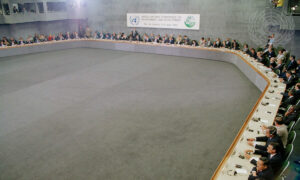
28 Nov 2024
14:00 – 15:30
Venue: International Environment House I, Room 2 & Online
Organization: Geneva Environment Network
This roundtable discussion, organized as part of the Geneva Environment Network's 25th anniversary series of events, celebrated Geneva’s legacy in global environmental governance. Retired high-level experts and diplomats who have worked in International Geneva have been invited to provide their reflections and examine the evolution of partnerships and frameworks that address the triple planetary crisis.
About this Event
For over fifty years, Geneva has served as a strategic hub for environmental diplomacy, hosting seminal meetings and fostering international cooperation on pressing global issues.
This roundtable discussion, organized as part of the Geneva Environment Network’s 25th anniversary series of events, aims to celebrate Geneva’s legacy in global environmental governance. Retired high-level experts and diplomats who have worked in International Geneva have been invited to provide their reflections and examine the evolution of partnerships and frameworks that address the triple planetary crisis.
Speakers explored the historical roles of Geneva-based institutions in the early stages of environmental governance, as well as the city’s role in key global milestones, from the Stockholm Conference, the Brundtland Commission, the First World Climate Conference, to the UN Conference on the Human Environment. Panelists will reflect on their personal experiences in international Geneva, highlighting moments of meaningful impact and the collaborative spirit that has defined the city’s approach to global environmental challenges.
Discussions also examined the evolution of environmental conventions and multilateral environmental agreements, reflecting upon the development of foundational environmental frameworks – from the UN Framework Convention on Climate Change (UNFCCC), the Convention on Biological Diversity (CBD), to the Strategic Approach to Integrated Chemicals Management (SAICM) to more recent agreements – from the Paris Agreement, the Kunming-Montreal Global Biodiversity Framework (GBF) to the Global Framework on Chemicals (GFC). Panelists will assess the strengths and gaps in these frameworks, offering perspectives on their ambition and proposing adjustments that may strengthen their impact.
Finally, the event considered Geneva’s unique role in this new era of multilateral diplomacy, discussing the city’s distinctive characteristics that position it as a key player in fostering sustainable global policies. In light of the recently adopted Pact for the Future, speakers also considered recommendations for present and future generations tasked with addressing environmental issues.
GEN 25th Anniversary
The celebration of the 25 Years of the Geneva Environment Network – the pivotal platform of international Geneva dedicated to enhancing collaboration among stakeholders in the fight against the triple planetary crisis – will start with a series of events exploring and highlighting frameworks and partnerships that can strengthen environmental governance. It will conclude on 20 January 2025 with a closing ceremony. This approach aims to create a meaningful and impactful celebration, inspiring renewed commitment to environmental governance and collaborative action.
Speakers
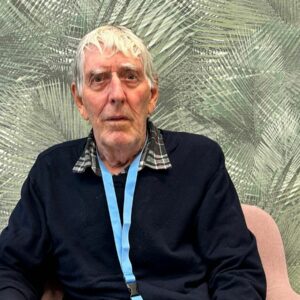
Frits SCHLINGEMANN
Former Director and Regional Representative, Europe Office, UN Environment Programme

Cécile MOLINIER
Former Director, UN Development Programme, Geneva Representation Office | Member, Executive Committee, Greycells
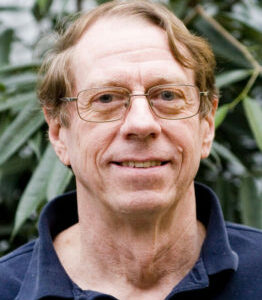
Arthur DAHL
President, International Environment Forum | Former Deputy Assistant Executive Director, UN Environment Programme
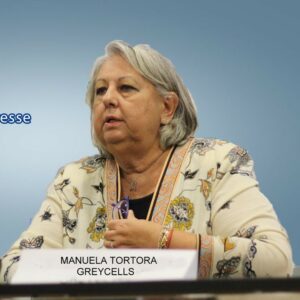
Manuela TORTORA
Former Chief, Technical Cooperation Service, UN Trade and Development | Member, Greycells

Larry KOHLER
Former Head, ILO Washington Office, and former Focal Point for Environment and Sustainable Development of ILO | Former Executive Director, International Council for Science

Anaelle CATHELINEAU
Environment Affairs Intern, Geneva Environment Network | Co-moderator
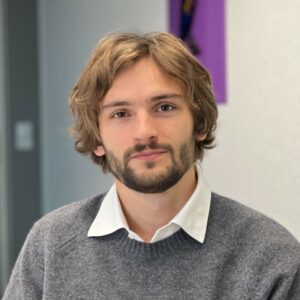
Jules LEISTNER
Environment Affairs Intern, Europe Office, UN Environment Programme | Co-moderator
Highlights
Video
Live from International Environment House 1
Summary
Diana RIZZOLIO | Coordinator, Geneva Environment Network
- Today we are joined by retired colleagues who have worked for different agencies of the United Nations system. I am not sure we can really say that they have retired because they are all still engaged in international Geneva and beyond: they are activists who care about the future of humanity and our planet.
- Elders are now often overlooked in our fast-paced society. We fail to recognize the wealth of knowledge and experience they carry.
- The experienced friends we have invited today will reflect and examine the evolution of partnerships and frameworks that address the triple planetary crisis.
Anaëlle CATHELINEAU | Environment Affairs Intern, Geneva Environment Network | Co-moderator
- During my final year of high school, like many of my generation, I skipped school on Fridays to join the Fridays for Future demonstrations. I remember standing in Place des Nations, looking across the alley of flags at the Palais des Nations and wondering why the people inside the Palais des Nations were not doing more to address the planetary crisis.
- Today as an intern at UNEP, I see the enormous work that was already happening back then but I also see how much remains to be done. With the Geneva Environment Network, I have been witnessing how active International Geneva is for the environmental agenda.
- I think our generation has moved well beyond the idea of pointing fingers. We are taking responsibility for our future. We are ready to listen and learn because without the experience, wisdom and knowledge of seniors in this field, we will not be able to make our voices heard.
- The Grands Monsieurs and Grandes Dames who are joining us today have been instrumental in shaping the environmental agenda, whether here in Geneva or around the globe. Together we will reflect on six Decades of collaboration in tackling the triple planetary crisis and explore how we can build on these accomplishments and face the challenges ahead.
Jules LEISTNER | Environment Affairs Intern, Europe Office, UN Environment Programme | Co-moderator
- Our approach to the environment is shaped by generational differences, different work practices, production systems and the language we use to address it.
- Our panelists have both observed and contributed to the evolution of these conceptions through their roles. Their backgrounds reveal their impressive commitment to environmental protection, a dedication that extends far beyond their professional careers. Their actions reflect values that they continue to uphold and pursue today in their ways whether through associations they founded, joined or continue to actively support or through the remaining very close engagement with UN agencies. Their ongoing efforts remind us that politics also happens in formal institutions and their journeys and commitments serve as a call to action now.
Frits SCHLINGEMANN is the Former Director and Regional Representative of Europe Office of the UN Environment Programme, starting in 1996. Before that, Frits SCHLINGEMANN was the Assistant Executive Director at UNEP headquarters and held senior roles in the Dutch Ministry of Foreign Affairs. Notably, he was involved in the preparations and follow-up of the United Nations conference on environment and development – the Earth Summit – held in Rio in 1992.
Frits SCHLINGEMANN | Former Director and Regional Representative, Europe Office, UN Environment Programme
- I have been involved in environmental matters for over 50 years in various positions, including at the Dutch Ministry of Foreign Affairs, the United Nations Center for Human Settlements in Nairobi, and from 1996 until 2010 as the Director of the UNEP Europe Office in Geneva.
- In the early days of my career, environmental care was seen as a luxury, especially by many developing countries, who blamed the rich, developed nations for the environmental problems and believed they should be responsible for solving them. It took a long time to prove and convince others that respecting the environment is not just necessary to protect and sustain human resources, but also a condition for development.
- Symposia, such as those in Cocoyoc, Mexico, and here in Switzerland, were essential in securing the participation of developing countries in the Stockholm Conference in 1972. Reports like those by the Club of Rome and the Brundtland Commission paved the way for aligning environmental interests with development imperatives.
- The conferences in Rio in 1992 and Johannesburg in 2002 codified what we now call sustainable development.
- During my tenure as UNEP’s Assistant Executive Director in Nairobi, my main focus was promoting environmental care as an integral part of the development agenda. Mechanisms like the Committee of International Development Institutions for the Environment and the Global Environment Facility were established to ensure that environmental care was integrated into the work of governments, the United Nations system, development banks, and the IMF.
- UNEP acted as the environmental guardian, providing catalytic resources to support these efforts. During my assignment as Regional Director in Geneva, the global focus shifted more towards directly combating resource depletion and environmental decline. Today, we speak of the triple environmental crisis, which surpasses mere development concerns. I welcome the growing number of initiatives in research, technology, and action aimed at addressing climate change, protecting biodiversity, and fighting pollution.
Environmental concerns are now at the forefront of governments’ agendas and international attention. However, I continue to believe that all the actions we see today address only the symptoms of the crisis, while the root causes remain largely untouched.
- Concerns about the growing world population, for instance, disappeared from the global agenda years ago. Reducing consumption is not enough to reduce our ecological footprint, which now shows that every year we consume more of the natural capital our children need to survive. This issue is still not on the agenda of world leaders.
- More than 50 years after the publication of the Club of Rome’s report, we still cannot accept, and our leaders still cannot sell, the idea that there are limits to growth. The global economy needs to slow down, focusing on poverty alleviation, controlled market access, and equality rather than on growth. The technology fixes that were once hailed to solve these problems have proven inadequate.
- In this sense, the world has not changed, and I believe it will not change until one of the three crises truly takes center stage.
Main Achievements of UNEP Europe Office from 1996 to 2010
- One must not forget that what UNEP could do in Geneva depended largely on the mandates and instructions from its headquarters in Nairobi. During my tenure, supported by UNEP’s leadership in Nairobi, UNEP’s Regional Office for Europe was able to build and manage an ever-growing program of policy interventions and concrete assistance.
- Among the networks of assistance we created were two sub-regional conventions for the protection of the Mediterranean and Caspian Seas, a program with the UN Economic Commission for Europe (UNECE) and NATO to address environmental problems posing security risks, annual training courses on environmental politics in collaboration with the University of Geneva, and joint publications with the European Environment Agency in Copenhagen.
- We organized numerous meetings to support and advise governments and NGOs in preparing and implementing global environmental decisions.
- However, in the final years of my tenure and after my retirement, UNEP headquarters began to take on more and more responsibility for what was done in Geneva. As a result, the impact and visibility of the organization in Europe decreased, even to the point where promising projects were lost.
- Let me end with an anecdotal story about how UNEP’s Europe Office ended up in Châtelaine.
- Initially, the Swiss government wanted to build a new building for Human Rights at Palais Wilson and had promised to host UNEP there. However, when the Swiss government realized that building a new facility would negatively affect the housing market for international organizations, they abandoned the idea and gave Palais Wilson to the Human Rights Commission.
- The Swiss then offered UNEP the largely vacant premises in Châtelaine.
- When I was informed of this decision, I questioned why UNEP had not been consulted beforehand. The Swiss Ambassador explained that he had been unable to reach me, though I had been in the office the entire time. After that, UNEP’s executive director was advised to contact the Swiss authorities to change their decision. However, when I asked how this could be done after the Secretary-General had already made his decision, the Ambassador laughed and apologized, and that was the end of the matter.
Cécile MOLINIER is the former Director of the United Nations Development Programme (UNDP) Office in Geneva, a position she held from 2007 to 2012. During her tenure, she actively promoted partnerships with subnational entities, academic institutions, civil society, and the private sector. Her career began as a translator for the United Nations, and she went on to hold various positions within the UN Secretariat. Later, she served as UN Resident Coordinator and UNDP Representative in several African countries, including Tunisia, São Tomé and Príncipe, Mauritania, and Togo.
Cécile MOLINIER | Former Director, UN Development Programme, Geneva Representation Office | Member, Executive Committee, Greycells
- Since retiring in 2012, I chose to remain in Geneva because it is such an interesting and stimulating place.
- One of the things I valued most during my time here was the opportunity to exchange ideas with practitioners working on development issues in a variety of contexts and with academics, which I found particularly rewarding.
- During my years in the field with UNDP, particularly in Africa, I worked in countries severely affected by environmental crises, such as Mauritania. These challenging environments, marked by degradation and waves of intense drought, vividly illustrated the human impact of environmental challenges.
- When I arrived in Geneva in 2007, coming directly from Mauritania, the contrast was immense, not just in terms of landscapes, but also in terms of the diplomatic and institutional context. For the first time, I discovered the depth and complexity of the policy work being conducted in Geneva on issues I had confronted in the field.
- One of the most significant developments I observed is the growing integration of a human rights-based approach to addressing the triple planetary crisis.
- At Rio in 1992, the aim was to move away from siloed thinking, treating the environment, development, human rights, and political affairs as interconnected issues. This approach has been strengthened by milestones such as the 2022 resolution recognizing access to a healthy environment as a human right—an extraordinary achievement.
- I have also noticed the increasing involvement of youth in environmental negotiations. Their voices are more prominent today, but it is essential that they have opportunities to address decision-makers directly, particularly heads of state. This is not merely symbolic; their contributions must be listened to and translated into action.
- Additionally, older generations are also making their voices heard, as seen in initiatives like the Swiss Senior Women who successfully brought their government to the European Court of Human Rights to demand stronger climate action.
- The future of environmental diplomacy lies in a human rights-centered approach and a stronger commitment to multi-stakeholder engagement. It is through the pressure from associations, NGOs, and civil society that we can push governments to act.
Arthur DAHL is a former Deputy Assistant Executive Director of UNEP and an expert in sustainability, indicators, coral reefs, and small island development. He served as consultant for UNEP, the World Bank, and the World Economic Forum, among many other organizations. He were present at the Stockholm Conference in 1972, which established UNEP, and played a key role in the Secretariat of the 1992 Earth Summit in Rio. Since then, he has been an active participant in landmark COPs, including COP20 and the Paris COP21. He also authored several books exploring the intersections of environmental governance and faith. Currently, Arthur DAHL serve as the President of the International Environment Forum.
Arthur DAHL | President, International Environment Forum | Former Deputy Assistant Executive Director, UN Environment Programme
- My journey has always been guided by a deep connection to both science and spirituality. Raised in the Bahá’í Faith, I was always driven by the desire to help developing countries integrate science with religion. Growing up along the California coast, I developed a love for nature, which led me to earn a Doctorate in Marine Biology. I then joined the National Museum in Washington.
- Early on, I pondered how to understand unity and diversity in nature, particularly in coral reefs as a model for human society, where everything cooperates and supports each other in a grand symbiosis. These values shaped my career path and my desire to contribute to global environmental governance.
- In 1972, I attended the Stockholm Conference representing the Bahá’í International Community. It was a pivotal moment, as it was rare for NGOs to speak at that time. I managed to convince key actors to integrate collaboration with NGOs into future environmental work, which became part of the action plan.
- In 1974, I took on the role of regional ecological advisor for Pacific island nations. Working with small island states gave me a deep understanding of the value of indigenous knowledge and alternative worldviews, as well as the challenges these small islands face in terms of sustainability. This experience helped shape the idea of “sustainable development” and influenced major thinkers like Maurice Strong, who visited me in New Caledonia.
- My work there laid the foundation for the Regional Seas Program, which would later be directed from Geneva.
- In 1979, I moved to Geneva and became involved in UNEP’s Earthwatch program, focusing on monitoring global environmental conditions. This position had me coordinating information across 50 UN programs, which was both a challenge and an opportunity.
- I worked on the development of sustainability indicators and authored The Eco Principle: Ecology, Economics, and the Politics of Sustainability.
- My work also involved organizing efforts to save coral reefs globally, which I led starting in the year 2000.
- After retirement, I continued working on environmental governance, writing books like Global Governance and the Emergence of Global Institutions for the 21st Century and contributing to discussions on UN reform.
- My role in the Climate Governance Commission has also led to a proposal for a Global Environment Agency, designed to upgrade UNEP and strengthen global environmental governance.
- One of the most impactful things I did in the UN was to help build frameworks for cooperation across the system, with a particular focus on identifying new global environmental issues before they became urgent crises.
- The Earthwatch initiative helped ensure that all agencies worked together and shared information, even without significant financial backing.
- A key memory from my time in Geneva relates to my involvement in organizing the 1992 Earth Summit in Rio. I was tasked with drafting the chapter on oceans, coastal areas, and small island developing states, which remains one of the most influential chapters in the action plan.
- During that time, I also initiated discussions that eventually led to the establishment of a global conference for small island states, which has met regularly since then in Barbados, Mauritius, and Samoa.
- Retirement has not been a time to rest. I have focused on furthering discussions around UN reforms, the importance of scientific assessments, and establishing binding planetary boundaries.
- There’s growing interest in taking environmental governance to the next level, and I believe Geneva will continue to play a key role in this evolution.
- My experience has shown that secretariats and behind-the-scenes roles are not without influence. The work we do can have a lasting impact, shaping policies and inspiring future generations to make a difference.
- I hope that my story today has inspired you to keep pushing forward, as we continue striving to solve the pressing global environmental challenges.
Manuela TORTORA held from 1980 to 1999 senior positions on the Executive Board of the World Bank, in Latin American economic organizations, and as a seasoned negotiator and diplomat with Venezuela’s Foreign Affairs Ministry. Later, from 2003 to 2014, she served as the Chief of the Technical Cooperation Service at the UN Conference on Trade and Development (UNCTAD). Since 2020, she authored several articles reflecting your commitment to reforming the UN, advocating for more cross-agency collaboration and greater civil society mobilization. A consistent theme in her work has been providing a platform for those often unheard on the international stage, including developing countries and civil society.
Manuela TORTORA | Former Chief, Technical Cooperation Service, UN Trade and Development | Member, Greycells
- The lessons I learned should also be learned by youth associations, individuals, and civil society in general.
- After 100 years of multilateral diplomacy here in Geneva, we can clearly identify three main features of the “International Geneva” that are particularly useful for environmental diplomacy among other multilateral issues.
- Geneva has at the global level, at the multilateral level, a normative role. Of course, norms are also elaborated in New York, for instance, by the General Assembly, but it is really here where the technical work, the scientific work, is transformed through negotiations into normative instruments international treaties, agreements, and so on, in all domains: global health, international trade, telecommunications, artificial intelligence, internet you name it, the environment, among others. The normative role is already a sort of basic feature and infrastructure that suits environmental diplomacy perfectly.
- Geneva is, by definition, a multidisciplinary and multilateral location. More than anywhere else in the UN system, the network of institutions here, both NGOs and international organizations, as well as academia, is so rich, so dense, and so concentrated in such a small geographical area. The intensity of multidisciplinary work is greater here than anywhere else, and by definition, the environment like other issues has to be seen as a holistic topic.
- Geneva is very well equipped to have the facility for multi-partner, multi-stakeholder initiatives, particularly those that involve the public sector, international organizations, and the private sector. Again, the role of the private sector is key. Without enterprises, we do not get very far.
Geneva is certainly at the core of any environmental diplomacy you may need, and you should not forget that. You have to take advantage of the features of International Geneva for environmental purposes.
Lessons Learned
- Multidisciplinarity is absolutely key in all topics. I am not an economist, but I was pushed into the pool of economic and trade negotiations by accident as I am a political scientist with a PhD in international relations not from an economic perspective, but I was recruited precisely because I was not an economist.
- I learned that multidisciplinarity was key whenever trade negotiations were at stake, particularly from the point of view of an oil-producing country. As you can imagine, when the multilateral level started talking about environmental concerns in the 70s and 80s, it was a very sensitive issue for an oil-exporting country. But we took a positive approach and understood that environmental concerns would grow in the future, so we had to take positions that were not only defensive. For instance, the Ministry of Environment in Venezuela was one of the first in Latin America to be established, and it was extremely active at the multilateral level, despite being an oil-exporting country.
- I started learning also about multidisciplinarity related to trade when trade and environment appeared on the agenda of the Uruguay Round (1986 – 1995). Trade and the environment were discussed for the first time in history at that point. Nobody knew how to deal with it. Yes, the idea was good, but how do you integrate environmental goods and services? What about tariffs and border policies affecting market access? We had to try to understand the legal consequences of having a WTO agreement on trade and the environment.
- I am usually quite optimistic, but these days I ca not avoid being more cynical, particularly when talking about global governance. From my experience in trade negotiations and multilateral trade systems, I learned that the main feature of the international trading system and multilateral trade rules is that they have “teeth” because they are binding.
- A global governance system that aims to protect a global public goods, like the environment, trade, health, peace, and security, without binding agreements will really have a problem.
- Environmental activists, youth, and NGOs need to understand what this means in practical terms. Today, there is a tremendous deficit in multilateral trust. Since 1945, we have had plenty of crises, but the “mother of all crises” is the deficit of the multilateral system itself.
- Without a system that works, it is impossible to address these crises.
- That’s the essence of the lesson: be aware of the power dynamics, and don’t give up on creating a system with teeth.
- Lastly, we used to talk about three crises at the UN—debt, financial, and supply chain crises during COVID. But the real crisis today is the crisis of multilateral governance. Without a strong, effective system, we cannot hope to address global environmental challenges.
Larry KOHLER was the head of the ILO’s Washington office, and served as the organization’s focal point for environment and sustainable development. He will soon celebrating 50 years in Geneva. He’s also been the executive director of the International Council for Science, advocating for integrating labor and environmental policies. He participated in the 1992 Rio Earth Summit.
Larry KOHLER | Former Head, ILO Washington Office, and former Focal Point for Environment and Sustainable Development of ILO | Former Executive Director, International Council for Science
- I came to Geneva by accident, as so many others who are here.
- I want to give a little personal hope for the interns as I came here for only one year, 50 years ago this month. I visited Switzerland and at the time I was doing my PhD in Washington and working as a consultant to the Senate for the Renovations Committee on multinational corporation activities. Before I left, I had read about the ILO’s proposed study on labor and social aspects of multinational oil corporations and wanted to learn about that proposal. So, I arranged a one-hour interview before we flew out of Geneva home. At the end of the two-hour interview, they offered me the job to do the project, as I had been able to explain to them what they needed to do to complete it. I was in total shock and surprised, but by November 1974, we were here, and the oil project had been cancelled, postponed. The project was out, and it had just disappeared.
- I was put into the industrial committee sector and participated in lots of different industrial committees at the ILO. I took on a special project to assess labor and social aspects of the offshore drilling industry and later became involved more effectively in the Petroleum Committee itself. It’s interesting to note that the Petroleum Committee at the ILO was basically the only body in the UN system that dealt with the oil industry. The oil industry had separated completely from the UN, but basically, it was not possible to do that later.
- I was asked to lead the ILO’s work for the conference on new and renewable energy in Nairobi in 1981, and this led to my becoming the ILO focal point for environment and energy for many, many years going forward.
- But I also should note, however, that I took two leaves of absence from the ILO to work at the SC in the science community on the environment. In 1997, I left the ILO and became the director of the International Human Dimensions Program (IHDP). This group, the IHDP, was actually based at the University of Geneva here but had not really been able to launch a major program of activities. I was given the opportunity to take the IHDP to Bonn, Germany, which provided significant financial help and free facilities to establish a large research program on social sciences. Bonn was empty as the government had moved to Berlin, and the EU offered money to enable us to carry on a large range of new projects.
- I led the program for two years, and it was exciting and very positive. I returned to the ILO in 1999, but the environment was still not very much alive.
- So, in 2000 and 2001, I became the director of ICSU, the International Council for Science, which included 26 national academies and 24 scientific disciplines. I was the first social scientist there as a director, and I was determined to integrate more multidisciplinary collaboration in their research and in their work. I absolutely loved that job and sincerely encourage other UN officials who are listening or involved to take advantage of such leaves of absence and mid-career to recharge their batteries and minds as it opens up new opportunities for you and for your organizations.
- I returned to the ILO in 2002. We had a new DG, and I proposed that I be assigned to ensure that the ILO actively participated in the 2002 Johannesburg conference. We were able to significantly move the environment and sustainability forward within the ILO.
- The most important impact I had in Geneva was related to the development of the concept of major groups following the Brundtland Commission and “Our Common Future” before Rio. Maurice Strong and Nitin Desai were preparing the Rio Conference here in Geneva, and early on, they introduced and promoted the establishment of a business council to advise them on the Rio Process. I was quite concerned and talked with my ILO DG, Francis Blouin, and he asked me to follow up on this to get other major groups involved, particularly workers and their trade unions, building on the very active and wide range of NGOs here in Geneva.
- With support from Maurice Strong and Nitin Desai, we were able to mobilize eight additional major groups in a very limited time period. These major groups continue to exist today in many different environmental fora and are really vital to the successful integration of views and perspectives about how different groups and real people move forward to meet our environmental challenges.
- At the time, many of these groups had never really had the resources or time to participate directly in the UN’s activities, and they needed help to prepare for their participation in Rio. I think that these groups were crucial to the overall writing and implementation, and even the tone of Agenda 21. They also influenced the overall support around the world after Rio.
- These nine groups are: women, children and youth, indigenous people and their communities, NGOs, local authorities, workers and their trade unions, business and industry, science and technology, and farmers. These major groups need to continue to have more influence on our current negotiations on the three planetary challenges. Governments also need to listen to their own national major groups at home.
- I also remain strongly committed to the important concept, initially promoted by the trade unions in 2002 at Johannesburg, of the concept of a just transition. It remains on the agenda, but it is not yet part of the decision-making process. There has been some limited movement towards the just part of the transition.
- We have generated more money and assistance for action in developing countries, most effectively for climate change. But as regards the transition itself, there appears to be denial of the need for a well-planned and aggressive transition to the new planetary triple challenge.
- The just transition needs to be better defined and implemented, not just referred to year after year. The trade unions are continuing their efforts to ensure that work across the globe is supported, and when jobs are lost, skills need to be changed and upgraded to meet our environmental challenges. But a just transition goes far beyond just for workers, and we have not yet been able to move the concept forward.
Open Discussion
Frits SCHLINGEMANN | Former Director and Regional Representative, Europe Office, UN Environment Programme
- The human rights discussion in Geneva dwelt to a large extent on the human rights discussion in Strasbourg, where the Institute of René Cassin, one of the first founders of the United Nations, developed the concept of three groups of human rights: development, peace, and environment. That was also the basis for what is happening now here in Geneva. The third generation of human rights was developed because in the UN they found that there was a profound difference of opinion about human rights between developing and developed countries. Developed countries were very much strongly pushing the right to freedom of expression and opinion, and developing countries said, “We are not interested in that, we want development, and only when we have development can we talk about freedom of expression.” So that was basically the bottom line of this whole discussion that happened.
- An example of one environmental convention with teeth is the of Convention on International Trade in Endangered Species of Wild Fauna and Flora (CITES) as it can impose trade bans. Once, when there was a discussion about trade bans related to saving elephants, a colleague from the WTO asked me: “Why are you pestering us with trade bans related to elephants? My children love dinosaurs, they are extinct, so what’s the problem with your elephants?” Environment has never been a main issue, and that is what I said in the beginning of conventions with teeth—except for CITES. The majority of the population in the world believes that the environment is a luxury. It costs money, and so there’s no need to make teeth to that. Trade is not a luxury, it is necessary. I don’t believe that we are on the road to solving the environmental and sustainable development problems.
- Environmental governance is very complicated. The discussion on where to put the environmental niche in the United Nations started even before the Stockholm Conference. The decision to headquarter UNEP in Nairobi was for some dictated by the reasoning “We put it there to keep the interest of developing countries for the issue”, while for others it was, “Well, it’s far away from where everything happens in New York, so let them do a little bit in Nairobi; we rule the world in New York.” That discussion is basically the core of the whole environmental governance discussion in UNEP. The discussion has always been very difficult also because the environment should be considered as part of all other activities in the world at the same time, not as an after thought. There are two streams: one, you promote environmental issues as such, and the other, you promote the environment as part of development and as part of all other activities. Putting the environment to a higher level of decision-making was done out of the push of the Brundtland Commission, which of course, created because the Nordic countries had a feeling that in the United Nations there was too little attention to the environment, so they had to lift it to the level of the General Assembly and the Bretton Woods institutions. Even the decision of passing from a Governing Council to the UN Environment Assembly reflects this attempt to lift it to a higher level. Up until now, we have never been able to succeed in that.
- Again, this comes back to the basic question: people are interested in trade and economy, not necessarily in the environment.
- Major groups and NGOs have not been introduced only in the environment, but it has always been in the United Nations as part of the question of how to involve major groups and their influence. It has been continuous, and it will continue to be an issue in the United Nations system.
- It looks like we have been struggling also in Geneva for a long time with all these types of institutional issues and procedural issues with our colleagues in Geneva, with the human rights people who, in the very beginning, were working on these three rights. The right to development was the most important, the right to peace was to please the Eastern European side of the world, and the right to the environment was to please the Western European side of the world. This is how it was developed: these three things, so they clustered all these things into three rights.
Janos PASZTOR | Former Assistant Secretary-General in the Executive Office of the UN and Senior Adviser to the Secretary-General on Climate Change
- The anectode on Palais Wilson or Châtelaine is part of why UNEP unfortunately did decide not to play a very active role in the Rio Conference, and that had a huge impact during the conference and afterwards. That was part of the geopolitical reality that fed into decisions of whoever decided the importance.
- The loss of the three Rio Conventions Secretariat in Geneva was significant, as it allowed working together. Governments decided to move the secretariats to different places, which was very detrimental to the way they operated between each other and the way governments operated on those issues and so on and so forth. This is evidenced in recent climate COPs. The fact that the three conventions Secretariats are separated is implicates that issues are not enough brought together and it is definitely one of the important reasons why the UNFCCC is having difficulty: because it’s being looked at as climate in isolation, in a silo, instead of looking at the totality of the issues.
- The world is unfortunately getting into a situation where it’s getting warmer and warmer. The world is simply not ready to discuss what that means, what the implications of the increasingly serious environmental, ecological and human rights impacts are. Geneva-based organizations must look into that and maybe those impacts that are going to come. We have to start talking about it, and we have to start coming ourselves together to address those issues
Q: What changes have you observed over the years in how these international conferences and events and agreements address indigenous people’s rights and their role in ecosystem protection? And what do you think should be the next step to improve their participation in decision-making?
Arthur DAHL | President, International Environment Forum | Former Deputy Assistant Executive Director, UN Environment Programme
Having worked for many years in the Pacific Islands, I can say that the Biodiversity Convention has gone much further. They already have working groups on indigenous peoples, and there’s a formal structure now in the convention, so they are part of the negotiating process. They have moved forward because they see the total relevance of indigenous knowledge to biodiversity management. It’s been slower in other areas, but more and more, there is an acknowledgment that there are other forms of knowledge besides Western science that help us address these problems, both in terms of the material side and also the logic of what our purposes are here. So, I think we are moving forward. We have to keep fighting for that, and I think the small island developing states as a group, particularly speaking for indigenous peoples, have been a very important voice. Now, you can see it going to the International Court of Justice for the Batu question on government responsibility and so on. So, it’s coming to the top. We are not all there yet, but we’re making a lot of progress in that area.
Frits SCHLINGEMANN | Former Director and Regional Representative, Europe Office, UN Environment Programme
Just to add to what Arthur says one of the problems has always been that in the beginning there were two major indigenous people organization in the United Nations General Assembly and ECOSOC and they could never get to terms with each other and so it weakened their lobby for positioning themselves in the entire United Nations discussion and there is still the issue of organization and lobby work. It was also a question of diversity in the Indigenous people community that made it very difficult to come to common points of view.
Manuela TORTORA | Former Chief, Technical Cooperation Service, UN Trade and Development | Member, Greycells
The recently-adopted WIPO treaty on traditional knowledge and indigenous traditions and science is the result of some more than 10-15 years of negotiations at WIPO and finally it provides the legal instruments to indigenous community to defend the rights that they have at the global level regarding their own knowledge and products in terms not only of trade but intellectual property and their cultural heritage.
Larry KOHLER | Former Head, ILO Washington Office, and former Focal Point for Environment and Sustainable Development of ILO | Former Executive Director, International Council for Science
ILO Convention for Indigenous and Tribal Peoples also in the negotiating stage was in introduced the idea of environment which was very difficult to do within the ILO and but the WIPO convention is really the path to follow for the future because it has teeth.
Miraj MOHAMUD, Executive Director, Africa Climate Initiative
I run my own local NGO in Kenya on climate. You talked about teething issues and in terms of global governance where I come from there serious climate crisis in a region in Northern Kenya where it borders Somalia when when there’s drought the next is flooding, it’s really a crisis that we keep on and observing every time myself of course I’ve happened to have worked for this International organizations in Ethiopia in Somalia with the UN and but this kind of crisis keeps on being discussed on a higher level on the table but there are not kind of solutions especially in terms of governance the NGS are not strengthening. They are not given enough power to and bring solutions to climate issues so when you talked about teething issues here and that people are not being supported it really worries me. And as a young man of course I admire your age of in terms of experience but again you said you’re cynical in terms of implementations of climate processes so what kind of advice will you give to young people like me and maybe the interns who are here on how to approach issues like this to find long-lasting Solutions so
that we don’t experience these kind of issues maybe in the future, thank you.
Manuela TORTORA | Former Chief, Technical Cooperation Service, UN Trade and Development | Member, Greycells
The mother of all crises is the crisis of the multilateral system. Without multilateralism young people will not go very far because the crisis of multilateral system affects for instance Global Health. The Global Health governance system is also stuck because of the same deficit that is also affecting the environmental governance. On the other hand, other areas like artificial intelligence lack a global governance and yet they are advancing. We surely see the deficit of the global governance regarding peace and security.
We talk a lot about resilience which for me is constructive rebellion. Instead of being resilient, people must be ‘active rebels’ with concrete proposals able to go beyond advocacy, mobilize and infiltrate the mechanism.
Wondy Asnake | Policy & Partnerships Coordinator, UNEP Europe Office
We are experiencing a moral deficit and what we are missing are sustainability champions.
The Summit of the Future held in September 2024 resulted in The Pact of the Future, providing good principles and goals to build the future on. Intergenerational Equity is not only about the older generation actually the younger generation today is suffering big time in terms of economic opportunities, so we how do we take it the beautiful 56 actions that The Pact has put together and bring them forward?
Instead of reviewing SDG17 every year, we should focus on reviewing SDG16, the goal about accountability as an accountability tool to answer many of the questions that were asked here
Frits SCHLINGEMANN | Former Director and Regional Representative, Europe Office, UN Environment Programme
There was a beautiful exercise done on enforcement and compliance by Bob Monroe and a whole team of environmental lawyers. They created these beautiful principles on environmental law enforcement and
compliance they were brought to the UN governing Council the UN governing Council adopted them then they were brought to New York they were completely killed in New York. The book is still there so are the principles on enforcement and compliance the annotations are still there, they’re still very valuable.
Arthur DAHL | President, International Environment Forum | Former Deputy Assistant Executive Director, UN Environment Programme
The elephant in the room is the fact there is no governance for the private sector and most of the leading actors doing all the wrong things and and lobbying to protect their interests are those making billions of dollars in the arms industry, in the IA industry, in the agriculture so on. How do we plan for governance that reaches beyond weak governments struggling with their debt and the private sector that is booming and that is controlling everything else? We should start talking about where do we go from here to address that enormous problem of governance as
we go forward.
Cécile MOLINIER | Former Director, UN Development Programme, Geneva Representation Office | Member, Executive Committee, Greycells
I would not want you to leave this discussion with a feeling that you know it’s all doom and gloom and that nothing can be done. The situation of course is very serious one, especially in the eyes of people like us who have spent all of their careers and energy and dedication trying to show concretely what multilateralism means. What I see as sources of hope is that not only obviously is awareness a lot stronger than it was 20 or 30 years ago about the seriousness and the urgency of a problem, I also see a lot more action and energy on the part of what we call civil society. There is a lot of push back precisely because those important actors realize that the push from Civil Society is getting stronger and stronger and is actually putting the issues on the agenda and contributing to awareness.
Human Rights must be translated into legal terms in terms of implementation. We need to have a mechanism that can be enforced by a court of law and look at the number of actions that are actually being brought to different court of laws regarding matters related to the environment to me that is a positive and important development.
Manuela TORTORA | Former Chief, Technical Cooperation Service, UN Trade and Development | Member, Greycells
Constructive rebellion instead of resilience that’s the bottomline to have a guidance. The private sector has a huge responsibility but the private sector is not acting in isolation. There are leaders governments ,laws, legislations and
policies that are in place and this is government’s responsibility in the first place.We live in capitalism but even within capitalism we should not fall into the law of the jungle.
Larry KOHLER | Former Head, ILO Washington Office, and former Focal Point for Environment and Sustainable Development of ILO | Former Executive Director, International Council for Science
The world has recognized after a number of major economic crisis that banks need to be carefully monitored and managed because they have become too big to fail. We in Switzerland know about that better than most and I’m convinced that in the future the oil and gas industry including its national oil companies and oil rich countries are also too big to fail. If they continue to fail and take up the challenge of a significantly decreased carbon budget, they also must be more effectively monitored and encouraged going forward. We have to take action on them.
Photo Gallery


Links
Photo Credit
UN Photo/Michos Tzovaras
More on GEN @ 25 Celebration

Faith-based Organizations Leadership in Tackling the Triple Planetary Crisis | GEN @ 25
16 December 2024 | 14:00 – 15:30 CET | International Environment House 1, Room 2 | With GIF
Geneva Environment Network High Level 25th Anniversary Celebration
20 January 2025 | 9:00 – 12:00 CET | International Environment House 2

Strengthening Scientists Engagement: Shaping the Future of Chemicals, Waste, and Pollution Prevention | Road to OEWG 3.2 | GEN @ 25
26 September 2024 | 14:00 – 15:30 CEST | Online (Webex) | With SPPCWP OEWG Secretariat
How to Keep the United Nations Environmental Agenda in Times of Crisis? | GEN @ 25
15 November 2024 | 10:00 – 11:30 CET | International Environment House I, Room 2 | With the Geneva Graduate Institute Global Governance Center
ICJ Oral Hearings on Climate Justice – Diplomatic Screening and Commentary | GEN @ 25
2 December 2024 | 9:00 CET | Palais des Nations, Room XXIII | With CIEL, Geneva Human Rights Platform, Earthjustice, World’s Youth for Climate Justice
Pushing Boundaries Through Collective Action: How Can Citizens Drive Systems Change and Catalyze Climate Action? | Climate Solutions to Keep 1.5° Alive | GEN @ 25
2 December 2024 | 15:30 – 17:00 CET | Palais des Nations, Room XVII | With UNDP Geneva