Event Conference
How to Keep the United Nations Environmental Agenda in Times of Crisis? | GEN @ 25
15 Nov 2024
10:00 – 11:30
Venue: International Environment House I, Room 2 & Online | Webex
Organization: Geneva Environment Network, Geneva Graduate Institute
This event, organized as part of the Geneva Environment Network's 25th anniversary series of events aiming to explore and highlight frameworks and partnerships that strengthen environmental governance, discussed the findings of the research project "First Things First!" – a three-year research project directed by Prof. Lucile Maertens, Associate Professor in International Relations and Co-Director of the Global Governance Center at the Geneva Graduate Institute, and funded by the Swiss National Science Foundation.

About this Event
Global crises can disrupt political agendas and challenge institutions in keeping long-term priorities, like environmental protection, at the forefront of the political agenda. At the international level, practitioners tasked with advancing these long-term issues often find themselves navigating settings where urgent crisis response takes precedence. Yet, even if the specific issues they are mandated to manage and solve may be (momentarily) cast away, international practitioners keep on trying to advance their thematic agenda.
This presentation draws on findings from a three-year research project that investigated how UN actors attempted to keep the environment on the global agenda during the COVID-19 pandemic. By exploring the strategies and approaches they employed to address competing priorities, this talk will offer reflections on the challenges and opportunities involved in ensuring that critical long-term issues, such as environmental concerns, remain on the agenda even in times of crisis.
In today’s context where international Geneva practitioners and environmental defenders in general face deep uncertainty, overlapping crises, and competition between major problems, remaining politically relevant appears critical to ensure steady progress in the fight against the triple planetary crisis.
Leading experts invited to join the panel of this event discussed how this project contributes to improving the understanding of the United Nations’ functioning, providing information on its internal dynamics and questioning the temporal division of the work of the emergency sector and the sustainability policy field. They focused on examples for international Geneva and what lessons can support strengthening environmental policy.
Light refreshments were served.
GEN 25th Anniversary
The celebration of the 25 Years of the Geneva Environment Network – the pivotal platform of international Geneva dedicated to enhancing collaboration among stakeholders in the fight against the triple planetary crisis – will start with a series of events exploring and highlighting frameworks and partnerships that can strengthen environmental governance. It will conclude on 20 January 2025 with a closing ceremony. This approach aims to create a meaningful and impactful celebration, inspiring renewed commitment to environmental governance and collaborative action.
Speakers
By order of intervention.

Arnold KREILHUBER
Director, Europe Office, UN Environment Programme | Chair

Lucile MAERTENS
Co-Director, Global Governance Center, Geneva Graduate Institute
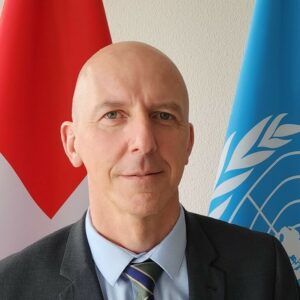
H.E. Amb. Julien THÖNI
Deputy Permanent Representative of Switzerland to the United Nations Office and other international organizations in Geneva
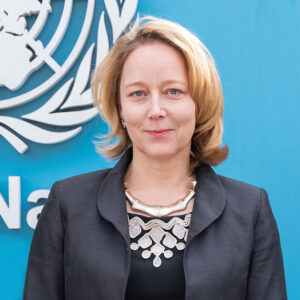
Agi VERES
Director, UN Development Programme Geneva

David OGDEN
Deputy Executive Secretary, Basel, Rotterdam and Stockholm Conventions

Dina IONESCO
Senior International Technical Expert, Asylum and Migration, UN High Commissioner for Refugees

Sébastien DUYCK
Senior Attorney & Campaign Manager, Human Rights & Climate, Climate & Energy Program, Center for International Environmental Law
Highlights
Video
Live from the International Environment House.
Summary
Opening
Arnold KREILHUBER | Director, Europe Office, UN Environment Programme | Chair
- Looking back at COVID-19 and other crises, it is clear that the environment itself holds a mirror up to all of us and shows us that we are living in a world of environmental crises.
- The current crises show us that solving the environmental crisis directly impacts our ability to solve many of the other crises that we face – especially the relationship between health and the environment.
- During COVID-19, the UN system has responded with its One Health Agenda, in terms of making these linkages between zoonosis and how we treat our environment, how we reform our environmental practice, our economic practices in view of these environmental crises going forward.
- The COVID-19 crisis has also seen a lot of progress in terms of setting the environmental agenda globally: for example, the negotiation of the global diversity framework during the pandemic –showing how multilateralism can react and adapt to the different situations it faces.
- Recently, multilateralism has received new energy through the adoption of the Global Pact for the Future.
- Multilateralism has no rivals. This year with the occurrence of three Conferences of the Parties — COP16 for the UN Biodiversity, COP29 for the UN Climate Change Conference and COP16 for the UN Convention to Combat Desertification and hopefully the adoption of a Plastic Treaty in Busan, we can show its revamp.
Presentation of the Research
Lucile MAERTENS | Co-Director, Global Governance Center, Geneva Graduate Institute
- This research project aims to be policy-relevant, therefore it is really important to share the identified practices that could be of use to the future and to get feedback from practitioners in the field.
- Crises are perceived to have a form of inevitable competition or that there is a comparison between crises.
- The starting point of this project is to understand there are overlapping and contrasting agendas, and especially tensions between short-term and long-term priorities and assess the most important one: first things first.
- This has implications on how international organizations are able to push their specific agenda: long-term projects or activities may not be seen as a priority when a crisis hits. That led to the formulation of the research question: how do IOs keep an issue which is not seen as a priority on the agenda in times of crisis?
- To respond to it, the researching team has specifically been looking at the case of UN actors in the context of the COVID-19 pandemic with a series of case studies:
-
- The division working on environmental migration at the IOM
- UNEP (based on the discourse delivered by the ED during the pandemic period, and the operational activities of UNEP in Haiti)
- The UN Secretary-General and its climate agenda, how he tried, during the COVID-19 pandemic, to maintain attention on climate change, especially through the “Building Back Better Together” initiative
- As a side project, along with another research project on the Swiss mandate at the UN Security Council, it looked at how elected members have been able to maintain attention on climate change and climate security.
Conceptualization of the Concept of Agenda-Keeping
- Academic literature on agenda-setting is abundant, while information on how to keep issues on the agenda, especially when priorities are reshuffled is scarce.
- The First Things First! project has been focusing on “agenda-keeping”, defined as a process of maintaining a public issue among other competing public problems, a priority to act on.
- Based on the different case studies, there are four main strategies through which agenda-keeping can unfold:
- Definitional Process
- Reframing: connecting a given issue with the ongoing crisis to maintain its relevance.
- Positioning: If the given issue to maintain is completely transformed to connect it to the crisis, it risks becoming indistinguishable and other actors might take over the issue. Positioning is the strategy of presenting the problem as distinctive but still requiring attention despite the crisis.
2. Spatiotemporal Processes
- Space-securing: ensuring that you can preserve the space of deliberation, advocacy and decision-making.
- Time-ordering: the ability to prioritize action and challenge the rhythm and pace imposed by the crisis.
Practical Examples of Agenda-Keeping Strategies
Reframing
- During the pandemic, reframing allowed keeping the environmental dimension high by highlighting the connection between the destruction of the natural habitat and zoonotic diseases. Examples of such practices include publishing reports that focus on zoonotic diseases and communicating the idea that it is actually by solving the ecological crisis that we will prevent other crises from happening.
- Reframing bears challenges. In the case of IOM, the connection between migration and the environment and its link to health during the pandemic was not obvious. IOM resorted to calling for external expertise to ensure this connection was visible. Using extrarnal support is a way for organizations to stay relevant avoiding being completely absorbed by the crisis.
- Reframing can also be done by highlighting what the crisis is doing in terms of reinforcing the environmental problem. During the COVID-19 pandemic, the focus, for example, on plastic waste has been increasing, since plastic waste grew exponentially due to the pandemic. Pollution remained therefore relevant.
- Another practice is to promote joint solutions, as in the case of the UN Secretary-General’s strategy. It does not only address one crisis but aims to make sense of different crises at the same time.
Positioning
- Problems need to be presented as distinctive and requiring attention despite the crisis, to avoid its complete integration into crisis management and that priorities are not completely reordered in the long run.
- At the very beginning of the pandemic, the UNSG delivered a discourse in which he recognized the importance of the COVID-19 pandemic while emphasizing the unfolding planetary environmental crisis is an equally deep emergency. This aimed to ensure people did not forget about the ecological crisis during the pandemic.
- In UNEP ED Inger Andersen’s discourses, the message went further in saying that the triple planetary crisis could be costlier or deadlier than any pandemic, stressing that solving the ecological crisis will therefore be the solution for any of those problems. To make sure that the environment stays on the agenda, positioning aims to make it a meta-problem that needs to be solved first to be able to solve the other ones.
Space-securing
- Defined as the ability to preserve spaces of advocacy, deliberation, and decision-making.
- It is necessary to have both symbolic and material spaces to continue working on the issue. Sometimes, it even means creating new spaces.
- An example is UNEP saying from the very beginning of the pandemic that they are “still open for business”, and that the space of deliberation and advocacy they created so far is operational.
- For UNEP in Haiti this had a very concrete dimension: making sure that the staff can work providing all the necessary materials to work despite lockdowns.
- Creating new spaces was particularly prolific online, with webinars and platforms ensuring environmental discussions continued during lockdowns.
- The UN Security Council enacted the strategy of displacing actions. As a result of the polarization within the UNSC, conversation on climate security could take place only on the sidelines of the SC room, boosting the creation of an informal expert group on climate security where the conversation continued even when the place was not the most favorable one at the time.
Time-ordering
- Time-ordering is about ensuring that you challenge the pace and rhythm imposed by the crisis to prioritize action on the environment.
- Both spaces and actors must have time to invest and engage in those spaces.To avoid decisions from being completely stopped, one of the first strategies that emerged was avoiding postponement. While the UN Climate Conference COP26 was postponed as a meeting, commitment deadlines were met by member states as in the case of NDCs rendering.
- Time-ordering allows to maintain a sense of urgency avoiding the urgency to tackle climate change to be halted. The Secretary-General’s “now or never” motto stressed this was the make-or-break moment for the planet.
- This strategy is not only about acting and making sure that we still do something, but it is sometimes about pushing for acceleration. UNEP’s discourses tried to emphasize that the pandemic could be as an opportunity to speed up action on climate change, on the triple planetary crisis by using the pandemic recovery as an opportunity.
Conclusion
- As these are only preliminary findings of the study, the analysis of which of the strategies worked will be addressed in the next steps, with indications this is a context-based matter.
- In some organizations, some practices have been more effective than others. However, we identified that some practices or strategies tend to be adopted differently depending on the organization.
- The organization’s characteristics have a strong influence on which strategy they can use: the more autonomous, the more able to, for example, act more competitively. If the mandate is of general purpose, it is easier to reframe. When mandates are specific using the positioning strategy might be easier.
- Besides the organization’s characteristics, the validity of the strategies depends on the issue and the crisis at stake.
- It is important to identify which crises are easier to connect to. Looking at what is happening today, drawing attention to the ecological damages of armed conflict is a way to keep the environment on the agenda while war is going on or presenting biodiversity loss as a challenge much more important to our food system than any economic crisis, in the long run, is also a way to ensure that you connect to another crisis.
- It is interesting to identify what is specific to the environment in this case. The identified practices could work for other topics: women’s rights during armed conflict, the protection of cultural inheritance, etc. But is there something specific about the environment given the scope and temporal horizon of the ecological crisis?
Panel Discussion
H.E. Amb. Julien THÖNI | Deputy Permanent Representative of Switzerland to the United Nations Office and other international organizations in Geneva
- Keeping the UN environmental agenda in times of crisis is especially relevant in this specific time, with important geopolitical tensions, a tighter budget and recurrent questioning and pushbacks in terms of multilateralism.
- We are living in a time when multilateralism is under pressure, even under attack. In this context, some actors think it is easier to conclude bilateral agreements or have transactional dealings instead of trying consensus and compromises. It is a world order where many things are under pressure, but nevertheless, multilateralism is always the platform and the way through which we can find solutions together, for environmental issues, but also for many other topics.
- Populism is also on the rise. Fake news is everywhere. In this context, fact-based and science-based analyses and policies are very important. But also, we have to consider the question of purchasing power. Inflation is directly affecting many citizens and populations worldwide. This has to be taken into account when we format or think about, yes, how we can put the environment back on the first side of the scenario.
- We cannot just dismiss the three planetary crises that we are living in, especially the global crisis of climate change, the global temperature rise and the biodiversity loss that we are living, as well as the rising sea levels.
Switzerland’s Priorities on Climate Action, the Role of Geneva, UNEP and GEN in this Specific Context
- The 2024-2027 foreign policy strategy emphasizes the need to address climate change, biodiversity and pollution, underscoring the need for a consistent approach to global sustainability.
- Switzerland put climate security as one of the four priorities for our tenure as a member of the Security Council, which will end in December. We had many actions in this segment of climate security, showing it is possible for states to define climate security and climate change as priorities according to their wishes, but also as a way to support the agenda on the environment.
- Switzerland champions efficient global environment regimes, collaborating closely with UNEP and other stakeholders to guide effective, consistent solutions that benefit to all.
- Switzerland is a host state. We support as much as we can the settlement of IOs, NGOs and CSOs in Geneva. Such actors work on the environment, trade, health, labor, human rights, and humanitarian affairs, which have important dimensions in keeping the environmental agenda up.
- Geneva hosts various science-based organizations such as UNEP, IUCN, WMO, and others like the Santiago Network, working to have exchanges based on scientific facts. They produce reliable data, essential for crafting effective policies. Those organizations are also in Geneva and offering research, and dialogue, as well as taking part in various exchanges that are pushing for consensus. This is exactly the essence of multilateralism. Through the Geneva Environment Network, we have a way to amplify these voices as GEN creates collaboration and synergies among actors whose work intersects with the environment.
- Geneva has a unique position at the intersection of many different topics: environment, health, trade, human rights, and humanitarian affairs, providing the leverage needed to mainstream these environmental priorities. For instance, disarmament is also helping preserve the environment. Diplomats and practitioners working on disarmament must be aware of environmental challenges and able to interact in those discussions.
- UNEP and GEN, in these times of geopolitical tension and financial strain, are important partners. Your commitment is crucial. UNEP is, for us, the authoritative voice, guiding global policy with science-based insights. UNEP plays a key role in Geneva, engaging with all relevant actors, from science to policy, to action, and you play an instrumental role by offering scientific analyses, political advocacy, and ground support.
- GEN is also crucial as “the convening arm for UNEP” in Geneva. It is a place where we can meet, share ideas and further advocate for our priorities. GEN must be seen as a platform, that links not only governmental bodies or intergovernmental bodies, but also academic institutions, the private sector and others who are interested in the topic. The GEN demonstrated good use of the strategies assessed in the study as it created spaces to keep the environment on the agenda through a series of online events that were connected to the crisis, assessing the impact of COVID-19 on environmental negotiations and launching the Geneva Beat Plastic Pollution Dialogues that started during the COVID crisis to keep the momentum.
- There is still potential to increase cooperation and visibility for UNEP and the environmental agenda, although multilateralism is under pressure and environmental policies are sometimes not very popular. This is a must as we cannot escape working on this very large crisis.
- The Pact for Future dedicated two specific actions to the environment, showing a further commitment to multilateralism in many different areas and working on consensus-based actions. We need to remind states and stakeholders that those actions have been taken and push towards implementation.
Agi VERES | Director, UN Development Programme Geneva
- UNDP is not a single-issue agency, it covers several development issues, thus advocacy strategy is at the forefront of our thinking.
- When we are off the agenda, that is exactly what we are trying to do: reframe how to position, how to use the existing platforms, how to use the spaces, how to bring the issue back into the forefront of policymakers’ attention, and so forth.
- UNDP is uniquely positioned in this discourse as it brings integrated actions together, with a focus on how systems fit together and how they interact.
- There is competition between different policy areas, not just from the perspective of politicians’ attention, which then translates into the availability of resources, ability and the spaces to address these issues.
- When we do address these issues, we have to do it with them, hand in hand. You cannot call attention to a topic in today’s world as a standalone issue. It just does not work not just from an attention perspective, but from an action and response perspective as well.
- In line with reframing, UNDP was focused on the socio-economic impact of COVID-19, especially in middle-income countries. This included impacts on jobs and people without a social safety net. In terms of response, we were looking at the green pillars: not just to rebuild or respond to the socioeconomic crisis, but to respond to it in a green way, seeing the pandemic as an opportunity. COVID-19 took over everything and suddenly, climate disappeared from our radars. Therefore our responses had to benefit from this opportunity. As people witnessed it is possible to reduce emissions, and the response to the crisis offered an opportunity to turn it into actions that reflect that ambition and respond in an integrated way.
- Such a mindset applies to our response to the current conflict crisis in Ukraine and in the Middle East. In Ukraine, UNDP works very closely with UNEP and the other agencies to ensure the crisis response and the hope for reconstruction is framed around sustainable rebuilding, aligned with long-term climate goals and putting sustainable energy in the center of it, because that relates very much to the root causes of the conflict as well.
- A very innovative example from Ukraine, presented at the Mine Action Conference a few weeks ago in Lausanne, concerns the fact that the equivalent of three and a half times the size of Switzerland is spread with mines and explosives in Ukraine, the breadbasket of Europe. One of the innovative solutions concerns the costs and the speed of mining. We are looking at a way to bring public and private partnerships towards addressing the mining issue and the ambitions of greening.
- Reframing also entails a tweaking from business as usual with something new, something appealing added both from a solution and attention perspectives.
- Positioning, is essential for all organizations. UNDP mantra behind doors is how do we position UNDP in the Geneva setting?
- If we take the global policy agenda and the topic of environment and climate change, one of the interesting thing UNDP did after the COVID-19 crisis was exactly an attempt to grab attention. How to position the issue back on the agenda, but in a specific way? You do that by connecting to a particular topic within that.
- UNDP enacted that with the “Don’t choose extinction” campaign, a little animation with a dinosaur walking into the General Assembly and saying: “we got extinct by meteorites, but what is your excuse for making yourselves extinct?”.
- UNDP was looking at the issue of the surge of fossil fuel subsidies, one of the root causes and used an appealing way and animation that could go viral on social media and elsewhere. Bringing the issue back on the agenda after COVID-19 or during other crisis times can be done by grabbing attention, so people at least think for a second and then, we can offer solutions.
- One issue with this positioning is following up. Once one managed to grab attention, it is impoortant to transform it into action. This shows the importance of inter-agency and inter-organizational collaborations, because it is a way to channel actions in different avenues that maybe on organization cannot actually support.
- Space-securing is well represented by the Geneva Environment Network as it has been able to maintain for 25 years its unique role in Geneva.
- UNDP tries to leverage opportunities of the Human Rights Council, as one of the biggest platforms in Geneva, where you really have all member states present, all the other organizations, and because where the links between human rights and the environment can be highlighted. Through this angle, we highlight these environmental crises intertwined with crisis of inequality, inextricably linked to the protection of human rights fulfillment and sustainable development.
- Our aim is to bring realities to policymakers. From UNDP’s perspective, the added value is, for example, policy decisions in developing countries and how developing countries realities can feed discussions and shape policymaking that is happening in platforms such as the Human Rights Council or normative agendas.
- Time-ordering. Through convening multi-stakeholder events and platforms in line with these recommendations, we are also focusing on intergenerational equity and engagement with the youth to enforce the urgency. When we talk about time-ordering, we also have to talk about who is involved. It really is how we bring in future generations, and we need to get more serious about it. From my personal perspective, we should have youth everywhere, shadowing and accompanying every process in a meaningful way. Not just to tag on the table, saying youth, and there is one person in a room of 400 people, but somehow meaningfully involve them. We are also working on it.
- Going from the youth to general citizen action, we have to look at how citizens can participate, and how other parts of society, other than those who are already well organized to participate in, can be involved in that space.
David OGDEN | Deputy Executive Secretary, Basel, Rotterdam and Stockholm Conventions
- During the COVID-19 Pandemic, the priority for the BRS Secretariat was to keep things rolling.
- As we convene Conference of the Parties every two years, planning was challenged by having to continually revise it to deal with the situation. In the process of planning and adjusting, we learned a lot and it has been helpful in the longer term.
- The BRS Conventions implemented a business continuity plan, allowing us to implement it during the COVID-19 pandemic.
- In times where everyone was working from home, tools like Microsoft Teams has been a real godsend for us.
- Our first focus was to maintain the Secretariat’s operations functional by moving so much of our work online.
- We saw incredible willingness from participants with long-meetings stretching across times zones. This showed ow committed people are to our work, to our mission.
- In BRS, we have a crisis management team, which oversees how we’re going to deal with the various crises that come up, including when people could come back. This is has been a big part of keeping things going.
- We had to keep our parties and other partners informed of our activities and what to expect, because communication can be a challenge. One of the direct areas related to this is continuing the program of work. We have given a top priority to ensuring that this was done.
- Moving from face-to-face to online meetings has been a challenge and it is difficult to do as much as you could do in a face-to-face meeting.
- Prioritizing issues within agenda is challenging. We work on two-year budget cycles like most of the UN does and getting budget adopted is essential to maintain people’s salaries avoiding the work to halt. In a sense, it sounds a bit self-serving, but if you can’t keep the organization running, then the work is not going to get done. We had to do a lot of structuring of the budgets and how to work the budgets. Even moving away from the pandemic times, we had to move some of the budget to the next biennium, which is a real challenge, but we managed to do that as well. We have had to have a coordinated sort of approach to dealing with voluntary funded activities, because many of the activities have come from donors and there were time deadlines associated with those. We had to work with the donors to extend the deadlines because we were not able to do everything that was called for in these. Some things just have to be done face-to-face and on the ground. Those were some challenges. But donors were very understanding and we were able to manage that.
- Linking to the crisis is important as well as identifying which elements may have higher visibility and higher priority on the international agenda. We were very careful in ensuring we were linking to climate change, biodiversity. Chemicals are sort of a horizontal issue, so you will find them in every sort of these areas, and so we are able to do that.
- We also were able to link to the COVID itself. There was a big emphasis on dealing with waste, because one of the most significant impacts of COVID-19 pandemics for the conventions concerned waste management, large volumes of potentially contaminated waste regenerated by hospitals and other healthcare facilities. The volume of plastic waste, in particular single use plastic, surged and other impacts were observed, such as a greater use of disinfectants and hand sanitizers. The patterns of generation of domestic and commercial waste changed, and this has created a lot of challenges for governments.
- Within the Basel Convention, we have a very flexible sort of approach to helping with waste management. The governments and the parties prepared technical guidelines on dealing with various waste management streams in an environmentally sound manner. We certainly have redone the one we have for plastic waste, but also dealing with hospital and other healthcare waste. These have been revised and tend to be very useful for governments in dealing with these things.
- Our efforts paid off. We were able to keep things working and moving. We delayed what had to be delayed, but we have since caught up.
- Another benefit was the innovation that came during this crisis, which had to move us to other spaces. Switching to online or hybrid modalities is good for allowing everyone to participate to even in one-day meetings.
- Strategies we adopted during the COVID-19 pandemic were space-securing and time-ordering, and we ensured that our programs continued to run smoothly by shifting meetings and events from face-to-face to online and postponing when we had to. Generally speaking, we did not postpone very much, but it was good to have this sort of flexibility.
- We also implemented the reframing and repositioning strategies. We highlighted that waste management was essential in the fight against COVID-19 and to minimize possible secondary impacts upon health and the environment. Thus, the cross-secretariat team focused on COVID and waste. It was established and together, with our partners, which included UNEP and UNDP and others, we engaged in supporting parties in the critical response and resilience-building process.
Dina IONESCO | Senior International Technical Expert, Asylum and Migration, UN High Commissioner for Refugees
- During the COVID-19 crisis, I was in charge of the migration, environment and climate change work at IOM, and I have worked just after in the following with the UNFCCC, seconded by IOM on the climate agenda and then with the climate vulnerable forum as well. I looked at it from an organization that had a mandate on migration, or who did not have a mandate on environment, and then from organizations that dealt with climate issues as the centerpiece of their work.
- The reframing vision reflects what we mean by connecting as migration is always connected with something.
- Migration, environment, climate change and also health dimensions are linked together in a triple nexus. We tried to frame the three key contemporary policy challenges together, and part of it was already in place, but part of it we really tried to enhance. It was extremely tough for them to also take into account climate in the connections among these. That was the first step in this hybrid kind of approach. To respond to the need to get more knowledge and more research we launched a blog series, which was an appeal to get knowledge from outside. A lot of the research has now been developed and has grown in importance.
- In the reframing, there is also a positioning and space-securing strategy we tried to use the word “enhancing” as the crisis highlighted important key issues in migration. For instance, immobility, trapped populations that cannot migrate, and the impact on health it had, in particular in camps for displaced populations. This strong focus is taken much further by IOM now.
- There is the question of moving internally to spaces that are not secure, that highlighted the issue of inequality of access of migrants, refugees and internally displaced persons to different services, in particular health services. That was one important topic that grew now, and where there is much more work on that now.
- There was more work on seasonal migration and explaining that migration in times of crisis is not only displacement issues, but that it is the strategies of migration that are the most common that are put into question by the crisis, but also by climate change’s impacts. Seasonal migration is directly connected to all the environmental issues. It helped us also highlight environmental issues , in particular access to water resources and food security issues. Everything frames the human security dimension in some ways.
- Other domains grew, such as mental health. It has really developed through the crisis in relation to eco-anxiety issues, and that is a key space for research far beyond IOM.
- From IOM’s perspective, we try to translate, reframe and revise our activities. What was planned to be policy dialogues at the regional level (West Africa, the Pacific) with a strong focus on the migration and environment and climate change agenda, could not happen in person. Therefore, it has been reframed as research, and the fruits are now at the policy level. For instance, the Pacific has a new framework for migration, mobility and climate. It really had an impact in the post-crisis.
- During crisis time, practical applications were enhanced. IOM is a project organization, with a lot of activities that go through projects. So we had a lot of work to do in working with our donors, colleagues, and inside the organization at the administrative level. It was a nightmare to review administrative lines for projects to continue and be renewed, so that people could be paid. It was a huge investment at a human level and at an administrative level, and working with colleagues across the world to maintain our solidarity and joint vision.
Key Takeaways:
- From the UNFCCC side, with the climate convention and the climate vulnerable forum, there are loads of interesting things to consider. For instance, the power of very vulnerable countries to climate change was maybe enhanced through the focus on the links between climate and health, and the link with the environment. As an example, the Climate Vulnerable Monitor research, done with the Lancet and the Climate Vulnerable Forum, with contributions and support from IOM, UNFCCC and WHO provided a whole research that is extremely interesting, taking heat, wildfires, inflectional disease, food security, all climate risks and health risks as connected together. And we had a big post-COVID crisis event about that.
- There is also resistance from colleagues, leaders, staff and donors to just maintain issues on the agenda in solidarity.
- For IOM, it was key to showcase that less movement meant a reduced footprint at the environmental level, and a lot of reflection on waste and clean energy went on. That merits to be considered in the framework that was so eloquently put together.
- To me, this whole research on the topic and this experience raised very strong, almost moral philosophical, personal, and emotional questions. I saw a whole strand of communication on reducing freedoms and restraining individual mobility, and the right to movement as also a way to say: look, if we did this, we could do this for the environment. So, it raises in me a big question on how we transform this so that it is not contradictory.
Sébastien DUYCK | Senior Attorney & Campaign Manager, Human Rights & Climate, Climate & Energy Program, Center for International Environmental Law
- International Geneva was successful in establishing a functioning infrastructure before the COVID-19 crisis, helping the United Nations agencies, institutions and the different rights holders around them to react and maintain issues on the agenda. GEN is definitely an organization that plays an important role in helping us foster those linkages, and I think it is very appropriate to have this conversation hosted by GEN.
- Crises are not just pandemics. We have a crisis of multilateralism at the moment, whether it is due to recent elections and the threats to institutions that come with it, including in relation to funding and other issues that we know will be hard for some institutions, but also in terms of lack of credibility that some institutions have when it comes to protecting the universal projects of human rights in the light of some of the conflict ravaging some regions of the world, in particular in Easter Europe, Middle East and also on other continents.
- From our perspective, a note of hope on how we collectively, the United Nations institutions, but also other actors have been able to maintain issues on the agenda. To show this success, two dates are key:
- On 6 February 2020, there was the first workshop organized in Geneva to discuss whether it was the right moment to recognize the right to a clean, healthy and sustainable environment. On 7 October 2021, the Human Rights Council adopted a resolution recognizing the human right to a clean, healthy and sustainable environment. Those were the 18 months during which the pandemic was really at its strongest, and we could see so much progress happening at this time. On 7 October 2021, the Human Rights Council also established a new mandate for a special rapporteur on human rights and climate change. A lot of momentum was maintained, sustained and actually amplified over this 18 months’ time window.
- During these 18 months UN agencies kept the environmental agenda high. For instance, 15 UN entities came out strongly in favor of the recognition of the right to a healthy environment in February 2021 and supported the efforts of other actors, whether states or civil society, to actually accelerate this path towards the recognition of a right to a clean, healthy and sustainable environment.
- Recognizing that agenda-keeping or building strategies at United Nations forums rely on three sets of partners: the UN institutions or processes, the states carrying this agenda, and civil society.
- Therefore, there are some lessons that we would like to draw from COVID on the role that civil society was unable to play. On one side, new modalities for participation provided good practices and allowed to keep building on in terms of facilitating the participation for those on other continents. We mentioned time zones issues, but let’s recall the fact that in June 2021, when we were participating in the UNFCCC subsidiary body on implementation and the subsidiary body on scientific and technological advice, we had three weeks of sessions and the meetings took place online at different time slots: one appropriate for the European colleagues, one for the Americans colleagues, one for the Asian colleagues. So there are ways to conduct this virtual participation in a way that is equitable as it can be.
- At the same time, there are many challenges concerning public participation in times of crisis, and in particular in the context of virtual participation. Our experience is that our access to UN human rights bodies in particular, such as treaty bodies, was really limited during that time. Our interactions with treaty body secretariats and members were a lot more complicated. Some of those new modalities have had a long-lasting impact, beyond the lack of access to the buildings themselves because of a pandemic. We have to be extremely careful to understand where we backtracked or slid back in terms of public participation in institutions, and how to ensure some of those new modalities do not have such long-lasting impacts.
- At the same time, UN bodies based in Geneva are also helping us understand the implications between COVID and public participation. For instance, the statement of the Aarhus Convention Compliance Committee on public participation both during the COVID-19 pandemic and in the subsequent phase of economic recovery really helps governments understand what the legal obligations remaining in terms of public participation in the context of such a crisis are.
- COVID-19 clearly showed the importance of cooperative solutions. It highlighted that resources are available to states when they treat crises with the level of urgency required. It also revealed the lack of global solidarity to a large extent and the fact that other crises do not receive the same level of attention.
- Just today, negotiations at the UN Climate Conference COP29 are struggling to decide on a new collective quantifiable goal for climate finance. This shows the double standards as trillions were mobilized for the recovery in some countries during the pandemic. Why can’t we make those available when it comes to other crises and when we have international legal principles that require us to do that?
- In the equation of how to keep the environment on the agenda during times of crisis, is important to account for the contributions of institutions, states, and civil society.
- The Geneva Environment Network helped us, and other processes to build synergies among institutions, including for when a crisis hits, for us to have resilience within the system.
- States are particularly important regarding the right to a healthy, clean and sustainable environment. We had five states at the forefront of these efforts. It shows that just a small number of states can drive things. At the same time, when multilateralism is under attack, then states must not undermine regional courts that work on environmental issues. Civil society and indigenous people being the third actors, of course, very important when it comes to helping, and supporting other actors, working in close partnership with other institutions.
- During the pandemic, despite the success of the right to a clean, healthy and sustainable environment campaign, it was difficult for us to interact with permanent missions and do the hand-in-hand work that sometimes happens at the Serpent Bar in the Palais des Nations.
Q&A
United Nations Institution for Training and Research (UNITAR): I work on the Partnership for Action on Green Economy (PAGE), which also includes UNEP and UNDP. We came out of Rio+20 with this idea, in a period of steady economic growth, that if you take a little bit of your GDP and you invest it in green activities, it will lead to job creation and economic growth. Then, the crisis hit, and I remember that there was this renewed positive energy among all of us, thinking that now, we would have this kind of green recovery and it was an opportunity to redirect all these resources towards sustainable infrastructure, renewing our transport systems in a greener way, etc.
But I think there was this realization towards the end of the pandemic that things were not going into that direction. Green recovery was on the agenda, but what was the action? I think you never actually did this tracking of how much of the recovery spendings went towards green activities.
If the situation today is not fundamentally different than it was then. Now, there are multiple crises. There is also this crisis fatigue. How can we communicate? As part of the PAGE Initiative, we are also looking for a new narrative, which is not easy to find in this context of multiple crises and increasing uncertainties. To what extent can we be more proactive: here is the crisis, how do we reframe it? How do we position? The SG is calling on us to do more strategic foresight, to plan for this type of situation, but that is really difficult to do. We are working on our new strategic framework for UNITAR and we just did a strategic foresight retreat. As we looked at all the trends and things that could happen over the next years, nobody mentioned a global pandemic. We spent an hour doing the exercise and, at the end, nobody thought about a new health emergency. It was all about geopolitical tensions, potential wars, etc. We are so easily mentally focused on what is happening right now. So what are some of the strategic foresight or anticipatory strategies we can adopt?
International Union for the Conservation of Nature (IUCN): During the pandemic, IUCN established the Nature-Based Recovery Initiative, aiming to emphasize the importance of keeping on investing in nature conservation during the crisis. We framed it as an advocacy strategy, which was a departure from IUCN’s traditional way of doing work, as we are more on the science-based approach and the policy-influencing side. We used this approach because we wanted to pass a bold request: investing at least 10% in nature-based solutions in recovery packages. The percentage reflected something concrete, yet aspirational, where we could drive our members both on the state side, government agencies, NGOs, civil society organizations, and Indigenous people’s organizations, to push for that sort of raising or increasing ambition in terms of investing in nature-based recovery by investing on nature-based solutions. Investments in, for instance, jobs in conservation, which yield better results, longer-term results than investing only in traditional or conventional jobs, and giving opportunities to women, communities, and youth in these types of nature jobs.
We found that the narrative behind it made sense, that the message was passed, and that our members were engaged. Yet we faced a lot of challenges in terms of priority settings and pushbacks from many countries. The narrative was there, the understanding was there, and the rationale was clear. Yet, at the time of the decision-making, priorities on the environment or investments in nature went back down. Finding the data to back up the claim was difficult because we could not reach all the cases in different parts of the world to say: it is connected to you, to your reality, if you invest in restoration jobs for the women in your community, it is going to yield back satisfactory results. We could not find that immediate sourcing of the evidence. So making the claim was difficult. But the advocacy strategy kept on being simple: repeating the message and keeping the agenda of nature conservation.
We are facing a trust crisis. On the developed countries’ side, we saw it in the Convention on Biodiversity meeting just now, the EU, for instance, made strong claims for keeping the ambition high, and kept going towards raising the bar. Whereas the developing world, the G77 and all the developing countries used the development first, then the environment argument. We need the funding and support to make that ambition happen.
It is important to reflect as an international community, how we bridge that divide in trust. How do we call for that consensus-making in terms of decisions? And when we see that it is part of the crisis of trust, I would say it is the space for observers, like IUCN, to take the floor and say: parties, please, take a much bolder approach here, and let’s decide for the benefit of young generations and the good for all. Something concrete. They are closing up spaces on the official level. You can go and talk to delegates themselves, approach them and have a conversation, but to take the floor, the UN agencies, the intergovernmental organizations like us, civil society organizations, there are fewer and fewer spaces at the level of officials. So that is another crisis that is linked to the one on multilateralism that we need to approach bang on and head on.
International Federation of Red Cross and Red Crescent Societies
From a humanitarian perspective, it had taken a lot of effort to get climate-related issues onto the agenda at all, and then COVID hit, risking completely losing that interest within the humanitarian community. To maintain momentum, we created new spaces and brought the climate agenda into existing and new spaces, finding synergies to move forward. If you focus on disasters, our focus is on working with communities affected by disasters, and the disaster risk management cycle, you have been seeing the impacts of climate change for many years, and you cannot ignore it despite the pandemic. It just meant that the actual practical action of response was much harder.
It was at that time that we managed to build some new spaces for dialogue here in Geneva. We established the Interagency Standing Committee, which is the Humanitarian Coordination Mechanism, a climate change working group. We shifted everything online, but that space continued and it kept building. The humanitarian community was seeing that, despite their focus on COVID, the climate fuel disaster was still hitting them and had to be dealt with. It became a more important conversation for many, and we were able to keep the momentum. At the same time, we managed to get this issue of climate change onto the ISC principles, so that all the heads of organizations talked about it, and to move forward on a climate charter for humanitarian organizations that now has some 400 signatories. We somehow created a new space that ended up helping to really build the dialogue.
COVID-19 helped us bringing forward the synergies around the intersection between health and climate change, with health ministers talking about climate change in an unprecedented fashion.
With a note of positivity, the agenda has managed, particularly in the climate realm, to be supported by some of what happened, and there was a real strength moving forward out of the crisis.
Closing
Sébastien Duyck
- We can achieve a lot during crises. We need to have faith, to roll up our sleeves, but crises are no excuse to move forward on what is essential. This can be done if we keep the faith and confidence in multilateralism. We must demand that states keep committing systematically to intergovernmental organizations to deliver on their commitments, including in relation to finance and other aspects.
- Resilience can be strengthened through the connections that are created and sustained through public participation. That is something to focus on before the crisis and to sustain during the crisis at a level of priority that enables us to move forward.
Dina Ionesco
- I am always struck by the tragedy of humanity: we create crises to be able to advance and rebuild. It is tragic, but, in parallel, it creates opportunities, and we see partnerships at the heart of the response. So much is about people, and that is my last point, what they do individually and collectively. Once again, I want to close on how important the GEN is. It is an amazing space with amazing people that need to be recognized.
David Ogden
- The survival side makes sure that you continue to do your core business, however, that takes and requires a lot of quick thinking and redressing things.
- There is flourishing when you grow out of the crisis. Linking through the issues that are really important to waste management. It is what helped us to flourish within the Basel Convention context. Linking to other issues was also key. Both the survival and growth are part of it.
Agi Veres
- If we want to keep the agenda alive, we need to take it from the perspective of people, because they need solutions that link issues together, and not one thing. That is where the systemic thinking comes together.
H.E. Amb. Julien THÖNI
- We mentioned investing in the next generation, not only now, but also to have specialists working on those questions and specialists working in international organizations and governments to push.
- Giving the space to critical thinking, and especially the voice of civil society, and also to open up. Working on hybrid conferencing is very important to us.
- We need to see concrete results for citizens, for the population. Linking that with the environment is key. This is also the question of developing nature-based solution effective for people. Then, you will have the democratic support for keeping the environment top on the agenda.
Lucile Meaertens
- I started looking at this specific topic of agenda-keeping, COVID-19 and the environment, but it connects to much bigger questions, to the reform of the system, and how the system is structured. It is fragmented, siloed, and thematically organized. The crises we are facing today are transversal. Therefore, we can also build this new system that will be able to address this transversality in a way that does not necessarily create competition between issues. I hope that academia can bring something to that conversation in the future.
Photo Gallery


Documents
Links
- First Things First!
- Two-pager Brief on the Project
- Global Governance Center, Geneva Graduate Institute
More on GEN @ 25 Celebration

Faith-based Organizations Leadership in Tackling the Triple Planetary Crisis | GEN @ 25
16 December 2024 | 14:00 – 15:30 CET | International Environment House 1, Room 2 | With GIF
Geneva Environment Network High Level 25th Anniversary Celebration
20 January 2025 | 09:00 – 12:00 | International Environment House II

Strengthening Scientists Engagement: Shaping the Future of Chemicals, Waste, and Pollution Prevention | Road to OEWG 3.2 | GEN @ 25
26 September 2024 | 14:00 – 15:30 CEST | Online (Webex) | With SPPCWP OEWG Secretariat
From Stockholm to Rio and Geneva | Six Decades of Enhancing Collaboration in the Fight Against the Triple Planetary Crisis: A Roundtable with Elders | GEN @ 25
28 November 2024 | 14:00–15:30 CET | International Environment House I, Room 2 & Online | Webex
ICJ Oral Hearings on Climate Justice – Diplomatic Screening and Commentary | GEN @ 25
2 December 2024 | 9:00 CET | Palais des Nations, Room XXIII | With CIEL, Geneva Human Rights Platform, Earthjustice, World’s Youth for Climate Justice
Pushing Boundaries Through Collective Action: How Can Citizens Drive Systems Change and Catalyze Climate Action? | Climate Solutions to Keep 1.5° Alive | GEN @ 25
2 December 2024 | 15:30 – 17:00 CET | Palais des Nations, Room XVII | With UNDP Geneva