Nouvelle
The Ocean, Human Rights, and the Role of Geneva
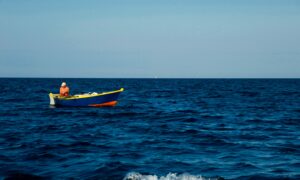
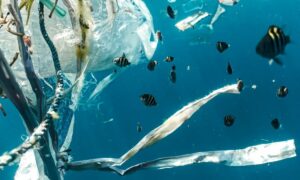
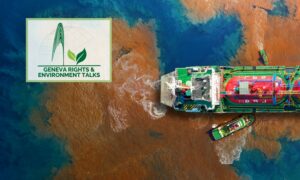
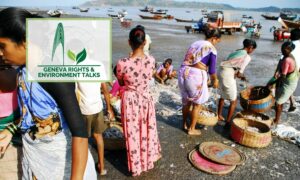
The ocean covers 70% of the planet. As a single interconnected biome, home to many ecosystems and to a lot of biological diversity, the ocean is also where life on Earth began. However, its declining health due to various global challenges -- from plastic and microplastic pollution, chemical waste entering the ocean, and the harmful effects of offshore oil and gas industry -- not only pose severe risks to ecosystems but also to human rights, as they contribute to ocean degradation, thus threatening marine wildlife and the wellbeing of coastal communities.
Human Rights Depend on a Heathy Ocean
The ocean is the largest biome on Earth, covering 70 percent of its surface. However, it is not only a a vast, renewable resource, it is also essential to human well-being as one third of the human population (2.4 billion people) live within 100 km of an ocean coast.
Its declining health directly threatens the health and well-being of people globally. Historically, the ocean has provided coastal communities with livelihood services such as food, clean air, and a healthy living environment, has protected humanity from the adverse impacts of climate change, and has played a key role protecting marine biodiversity, ensuring healthy fish stocks, thus food security and economic resilience. The threats over the ocean’s health jeopardizes both the environment and human survival.
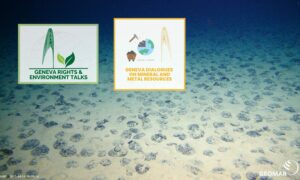
Threats to ocean ecosystems and to global marine diversity are numerous: they entail industrial overfishing, illegal unreported and unregulated fishing, plastic pollution, habitat destruction, dredging, offshore oil and gas projects and exploitation of the deep sea for sand and mineral exploitation, amongst others. The degradation of ocean ecosystems through biodiversity loss, marine and coastal pollution, overfishing, ocean heating, acidification and climate change directly impacts human rights: the right to self-determination through overexploitation of marine resources, the right to food and health through marine pollutants that harm ecosystems and accumulate in species, and other climate change related impacts such as ocean warming, acidification and extreme weather that threaten the security, infrastructure and livelihoods of coastal communities.
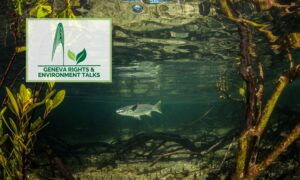
A healthy ocean is fundamental to robust biodiversity and thriving ecosystems, as well as the full enjoyment of human rights, including the human right to a clean, healthy and sustainable environment.
Challenges for the Ocean and Human Rights
The ocean is fast approaching the brink of collapse in its ability to regulate ocean balance and sustain marine biodiversity. The interconnected crises of climate change, biodiversity loss and pollution are intensifying pressure on a distressed ocean, further jeopardizing the rights of Indigenous Peoples, fisher communities, peasants, women, children, people with pre-existing health conditions, older persons, persons with disabilities and those facing marginalization.
Valuing the ocean as a common heritage rather than its natural resources only as commodities is critical for protecting all human rights, including the right to a clean, healthy and sustainable environment. Competing economic, trade and industrial interests and the exclusion of ocean-dependent front-line communities from meaningful participation in ocean governance reinforce colonial, patriarchal and unsustainable development. Such development processes do not prioritize the protection of the ocean and human rights and are at the core of the threat of irreversible damage to the ocean. The UN Special Rapporteur on the human right to a clean, healthy and sustainable environment has laid out some of the main challenges for ocean and human rights.
Sea-Level Rise and the Role of Geneva
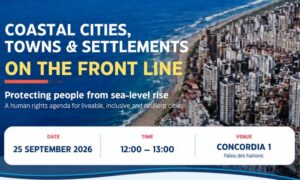
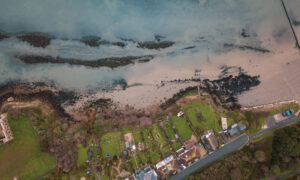
Learn more about the human rights impacts of sea-level rise and how Geneva is tackling these in our dedicated update.
Importance of a Human Rights-based Approach in Addressing Ocean Threats
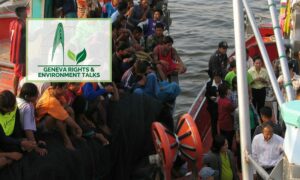
Addressing the ocean’s health is not only a matter of managing natural resources. It also requires understanding the interdependence and interconnectedness of humans and the ocean and that any impact on the ocean affects human rights, even for those living inland. This is especially so as the negative effects of ocean degradation are disproportionately felt by vulnerable communities such as Indigenous Peoples, coastal communities, small scale fishers, ship workers and persons with disabilities. Mainstreaming a human rights-based approach to ocean governance enables the incorporation of ancestral knowledge and the rights of present and future generations, integrating a long-term vision, which is currently missing and which is crucial to solving the current planetary crises.
Some key interlinkages among the ocean and human rights identified by the UN Special Rapporteur on the right to a clean, healthy and sustainable environment in her report to the 59th session of the Human Rights Council include:
- Sustainable food system: Globally, around 492 million people depend at least partially on small-scale fishing, with women accounting for almost half. As fisheries contribute to food security, ensuring the right to a healthy environment of fisherfolk is crucial.
- Healthy ecosystems: Encompassing multiple ecosystems, a healthy ocean provides interconnected habitats for marine life as well as vital services to human and animal communities. Protecting the ocean, including through the use of Indigenous Peoples’ traditional knowledge,
- Safe climate: The ocean regulates the Earth’s climate, filters air and water, recycles nutrients and mitigates the impact of natural disasters. It is the largest active carbon reservoir on the planet, storing about 38,000 billion tons of carbon – over 28 times more than carbon stored by land vegetation and the atmosphere combined. The ocean has stored more than 90 per cent of the heat from human-caused climate change and one third of the world’s carbon emissions.
- Ocean defenders: Ocean defenders, from Indigenous Peoples and coastal communities, particularly women and girls, to children and young people, are at the forefront of advocacy efforts to safeguard their livelihoods and cultures against the extractive industrialization of the ocean. Ocean defenders, who are also human rights defenders, suffer from harassment, intimidation, marginalization, criminalization, attacks and assassination. Instead, they should be recognized, rewarded and supported.40 Protecting them is a prerequisite for effectively and equitably protecting the ocean and the rights of current and future generations.
A human-rights based approach in ocean governance centers human rights and social equity as the main objectives. Effective conservation measures upholding human rights in ocean management need to be holistic, comprehensive, integrated, and gender responsive. This approach should be grounded in both human rights and ecosystem-based principles, ensuring that all efforts towards ocean protection are inclusive and effective.
Human Rights Depend on a Healthy Biosphere: Human Rights, Biodiversity, and the Role of Geneva
Biodiversity and human rights are closely interlinked. Without healthy, functioning ecosystems, which depend on healthy biodiversity, there would be no clean air to breathe, safe water to drink or nutritious food to eat. The loss of biodiversity has severe consequences for human well-being and human rights. Consult this page highlighting the role stakeholders from International Geneva, as a global hub for environmental governance, play in advancing a human rights-based approach in tackling biodiversity loss.
Addressing Ocean Protection in Human Rights Instruments
The various human rights mechanisms and instruments present in Geneva, such as the Human Rights Council, Special Procedures, and Human Rights Treaty Bodies, play an increasingly pivotal role in addressing the threats that ocean degradation on human rights. They can help clarify the relevant obligations of States to advance human rights while addressing the degradation of ocean ecosystems.
Several international instruments guide the human rights-based approach, including:
Human Rights Treaty Bodies
The human rights treaty bodies are committees of independent experts that monitor implementation of the core international human rights treaties. The treaty bodies have addressed climate change and human rights in a number of statements, decisions, concluding observations, General Comments and General Recommendations. This body of work provides guidelines for the interpretation and application of State party obligations deriving from the respective Covenants and Conventions in relation to climate action and constitutes part of the evolving international human rights law framework that is increasingly addressing environmental issues.
Human Rights Council
The Human Rights Council (HRC) has contributed to raising awareness of the links between human rights and the ocean including the adoption of a resolution that provides the mandate of the UN Special Rapporteur on the right to a clean, healthy and sustainable environment (A/HRC/Res/55/2). The Council has also adopted a resolution on biodiversity and human rights that requests OHCHR to provide technical assistance to states with a human rights-based approach to biodiversity conservation and stands ready to support states in implementing the Kunming-Montreal Global Biodiversity Framework (KMGBF).
UN Declaration on the Rights of Indigenous Peoples (UNDRIP)
Traditional Indigenous territories encompass around 22 per cent of the world’s land surface and they coincide with areas that hold over 80 per cent of the planet’s biodiversity. Studies have demonstrated that the territories of Indigenous Peoples who have been given land rights have been significantly better conserved than adjacent lands.
The UNDRIP makes specific reference to conservation in article 29, affirming that Indigenous Peoples have the right to the conservation and protection of the environment and their lands, territories and resources. The degradation of the ocean ecosystems not only poses a grave threat to Indigenous Peoples’ natural resources and livelihoods, but also to their cultural identity and survival.
UN Declaration on the Rights of Peasants and Other People Working in Rural Areas (UNDROP)
While small-scale farmers and peasants feed around 70-80 per cent of the world, they represent 80 per cent of the world’s hungry and 70 per cent of those living in extreme poverty. UNDROP provides a framework to enable a just and sustainable transition to a food system where biodiversity and human rights flourish.
The UNDROP, adopted by the Human Rights Council and the UN General Assembly in 2018, recognizes the past, present and future contributions of peasants and other people working in rural areas in all regions of the world to development and to conserving and improving biodiversity. It also includes references to nomadic and semi-nomadic people. Ongoing academic work seeks to interpret these terms in the context of Sea Nomads to better support their rights and recognition.
Article 14.1 focuses on Peasants and other people working in rural areas and reaffirms their right to work in safe and healthy working conditions.
UN Special Rapporteur on the human right to a clean, healthy and sustainable environment
The mandate on the UN Special Rapporteur on the right to a healthy environment, currently held by Astrid Puentes, exists to examine the human rights obligations relating to the enjoyment of a safe, clean, healthy and sustainable environment and to promote best practices of the use of human rights in environmental policymaking, especially in the area of environmental protection. The Special Rapporteur also presents thematic reports to both the Human Rights Council and the UN General Assembly, highlighting relevant issues on human rights and the environment, including aspects on addressing ocean degradation, and this has been the focus of her last report.
Universal Periodic Review
The Universal Periodic Review (UPR) of the Human Rights Council — a periodic review of the human rights records of all 193 United Nations Member States — is increasingly addressing the links between biodiversity and human rights through the recommendations made by Member States to the State concerned.
Office of the UN High Commissioner for Human Rights
As the leading UN entity on human rights, the Office of the UN High Commissioner for Human Rights (OHCHR, UN Human Rights) aims to provide guidance that encourages policy coherence and ensures that efforts to address the issues related to human rights and the environment, including those of the ocean, are adequate, sufficiently ambitious, non-discriminatory and compliant with human rights obligations.
Guided by principles and standards derived from international human rights law, especially the Universal Declaration of Human Rights and the core universal human rights treaties, as well as the 2030 Agenda, UN Human Rights aim to help States, businesses and other duty-bearers meet this expectation. The OHCHR and UNEP have published a joint Key Messages on human rights and biodiversity that provide an outline on how this is possible, where participation, non-discrimination, and equality are critical.
International Instruments and Standards Addressing Ocean and Human Rights
The growing recognition of the right to a clean, healthy, and sustainable environment has reinforced the need for stronger global governance mechanisms to address various ocean challenges. This section highlights the key international instruments and standards that integrate ocean protection with human rights principles. These frameworks increasingly acknowledge the rights of Indigenous Peoples and local communities, promote inclusive governance of marine resources, and call for equitable and sustainable use of ocean ecosystems.
Kunming-Montreal Global Biodiversity Framework (KMGBF)
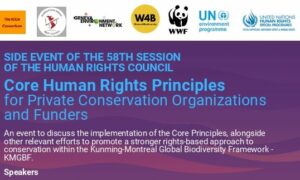
Adopted under the Convention on Biological Diversity, the Kunming-Montreal Global Biodiversity Framework includes ambitious targets relevant to the conservation and sustainable use of marine and coastal ecosystems. Target 3, commonly referred to as the “30×30” goal, aims to ensure that at least 30% of marine and coastal areas are effectively conserved by 2030. This target emphasizes not only spatial coverage but also the importance of equitable governance and respect for the rights of Indigenous Peoples and local communities.
Target 2 further stresses the restoration of degraded ecosystems, which includes marine environments affected by pollution, overfishing, and habitat loss. The Framework calls for a “whole-of-society approach” that fully integrates the voices and knowledge of Indigenous Peoples, fisherfolk, women, youth, and other marginalized groups in decision-making. This is echoed in Target 22, which mandates inclusive participation and the protection of environmental human rights defenders.
The KMGBF recognizes that sustainable marine conservation cannot be achieved without addressing social equity, historical injustices, and the need for benefit-sharing. Questions of governance, financing, and the role of Marine Protected Areas (MPAs) remain central, particularly as MPAs expand rapidly. Ensuring these areas do not repeat exclusionary conservation models of the past is essential for protecting both ocean ecosystems and the rights of communities that depend on them.
Convention on Biological Diversity (CBD)
While originally focused on terrestrial biodiversity, the CBD has expanded its scope to marine and coastal biodiversity through various decisions and protocols. Its provisions for protected areas, articulated in Article 8, extend to marine ecosystems, and recent decisions, such as those emerging from COP15 and the upcoming COP16, reinforce the importance of inclusive governance and respect for human rights in the management of marine and island biodiversity. These decisions stress the need for access to information, participation in environmental decision-making, and access to justice, particularly for Indigenous Peoples, women, youth, and environmental defenders.
United Nations Framework Convention on Climate Change (UNFCCC)
Oceans play a vital role in climate regulation, and ocean-based climate solutions, such as blue carbon initiatives and carbon removal strategies, are increasingly prominent under the UNFCCC. However, these initiatives must include robust environmental and social safeguards to prevent harm to coastal and Indigenous communities. The integration of human rights standards within climate mitigation and adaptation efforts is crucial to ensuring that ocean-based solutions are sustainable and equitable.
Agreement on Marine Biodiversity of Areas Beyond National Jurisdiction (BBNJ Agreement)
The BBNJ Agreement, adopted under the United Nations Convention on the Law of the Sea (UNCLOS), represents a landmark development in the governance of ocean spaces beyond national jurisdiction. It emphasizes the conservation and sustainable use of marine biological diversity in areas that were previously underregulated. The Agreement recognizes the importance of Indigenous knowledge and affirms the need to respect the rights of Indigenous Peoples and local communities in the establishment and governance of MPAs in these areas.
As of early 2025, only 20 countries have ratified the BBNJ Agreement out of the 60 needed for its entry into force. The UN Ocean Conference (UNOC-3) was expected to serve as a pivotal moment for securing additional ratifications. The Agreement’s implementation will require sustained international cooperation to ensure its provisions are aligned with human rights principles and equitable access to marine genetic resources.
Maritime Labour Convention (MLC), 2006
Adopted by the International Labour Organization (ILO), the MLC sets out minimum working and living standards for all seafarers. It seeks to ensure fair treatment and protection of the rights of those working at sea, including provisions on hours of work, conditions on board, health and safety, and social protection. The Convention is instrumental in upholding labor rights within the maritime sector, where precarious working conditions and exploitation remain pressing concerns.
FAO Code of Conduct for Responsible Fisheries
This voluntary international agreement, adopted by the Food and Agriculture Organization of the United Nations (FAO), promotes sustainable fisheries and the responsible use of aquatic ecosystems. Article 6.17 of the Code specifically urges States to ensure that fisheries infrastructure, equipment, and operations support safe, healthy, and fair working conditions in accordance with international labor standards. The Code also advocates for the participation of fishing communities in decision-making processes, recognizing their integral role in ocean stewardship.
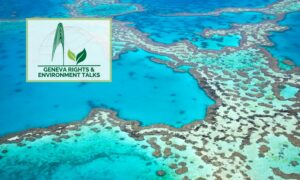
Geneva Rights and Environment Talks
The 2025 edition of the Geneva Rights and Environment Talks were organized to provide a space for discussion to unpack and reflect on some of the key messages of the UN Special Rapporteur in her latest report on the ocean and human rights, as it was the first time that a Special Rapporteur dedicated their work on the oceans and human rights.

Role of International Geneva
Beyond the above-mentioned international standards and instruments tackling ocean depletion and human rights, many organizations are based in Geneva and tackle the issue of ocean and human rights. Geneva as a hub for international governance is central to tackle the siloed and compartmentalized approach and to implement a systematic and consistent way to deal with issues and the ocean instead.
Various Geneva-based organizations or secretariats – listed below in alphabetical order – work actively to protect and restore the oceans and promote a sustainable blue economy.
Center for International Environmental Law (CIEL)
CIEL is a non-profit organization dedicated to strengthening and using international law and institutions to protect the environment, promote human health, and ensure a just and sustainable society. Applying a human rights-based approach as a means to protect the peoples and communities on the frontline of climate change, it works to design and integrate policies to safeguard rights and ecosystems, including the ocean, and to ensure effective public participation within key climate institutions and mechanisms
Convention on International Trade of Endangered Species of Wild Fauna and Flora (CITES)
CITES is a multilateral agreement to ensure that international trade in specimens of wild animals and plants – including listed marine species – does not threaten their survival.
Earthjustice
Earthjustice is a nonprofit public interest environmental law organization that wields the power of law and the strength of partnership to protect people’s health, to preserve magnificent places and wildlife, to advance clean energy, and to combat climate change. Earthjustice’s Oceans Program uses the power of the law to safeguard imperiled marine life, reform fisheries management, stop the expansion of offshore oil and gas drilling, and increase the resiliency of ocean ecosystems to climate change.
Food and Agriculture Organization Liaison Office in Geneva
The FAO Geneva Office works with the Fisheries Division to strengthen global governance and the managerial and technical capacities of members and to lead consensus-building towards improved conservation and utilization of aquatic resources.
Franciscans International
Franciscans International addresses the root causes of injustices by bringing cases of discrimination and violence committed against individuals and groups living on the margins, including fishers folk and coastal communities, to the attention of the international community.
Global Resource Information Database – Geneva (UNEP/GRID-Geneva)
GRID-Geneva is a partnership between UNEP, the Swiss Federal Office for the Environment (FOEN) and UNIGE. GRID-Geneva main’s role is to transform data into information and knowledge to support the decision making process related to environmental issues. GRID-Geneva is actively contributing to protect and restore the oceans and promote a sustainable blue economy, through various projects under the umbrella of the World Environment Situation Room, which is the UNEP data, information, and knowledge platform.
Group on Earth Observations (GEO)
GEO is a partnership of more than 100 national governments and in excess of 100 Participating Organizations that envisions a future where decisions and actions for the benefit of humankind are informed by coordinated, comprehensive and sustained Earth observations. GEO is contribute to the Ocean Decade by providing data and observations on the status of the oceans, for instance through the GEO Blue Planet Initiative.
Intergovernmental Panel on Climate Change (IPCC)
The IPCC is the United Nations body for assessing the science related to climate change. Its reports provide scientific knowledge on the role of oceans in regulating climate change and the impacts of global warming on the oceans. The Special Report on the Ocean and Cryosphere in a Changing Climate, published in 2019, provides an extensive review of the state of science in the field of climate science in marine environments.
International Institute for Sustainable Development (IISD)
The IISD is an independent think tank working to create a world where people and the planet thrive. The Institute supports the current WTO negotiations to end harmful fisheries subsidies, recognizing the need to restore the sustainability of fish stocks while supporting livelihoods and food security.
International Service for Human Rights (ISHR)
ISHR is an independent, non-profit organisation promoting and protecting human rights, by providing support and solidarity to human rights defenders, including those working on environmental justice and sustainability.
International Union for Conservation of Nature (IUCN)
IUCN is the world’s largest conservation network with the mission to influence, encourage and assist societies throughout the world to conserve the integrity and diversity of nature. The IUCN Red List is the world’s most comprehensive information source on the global extinction risk status of animal, fungus and plant species – including marine species. IUCN also advocates to influence policy and international agreements for a sustainable management of fisheries and aquaculture worldwide.
Oceana
Oceana is an international organization focused on oceans, dedicated to achieving measurable change by conducting specific, science-based policy campaigns with fixed deadlines and articulated goals. Since its founding, Oceana has won over 200 victories and protected more than one million square miles of ocean.
Partnership for Environment and Disaster Risk Reduction (PEDRR)
PEDRR is the clearinghouse for knowledge, training, advocacy and practice on Ecosystem-based Disaster Risk Reduction (Eco-DRR). PEDRR is reinforcing knowledge to manage ecosystems,including coastal systems, in a way to reduce physical exposure to many hazards and increasing socio-economic resilience of people and communities.
Pew Charitable Trusts
Pew’s ocean work includes efforts to create large marine reserves; end illegal fishing; protect key species such as penguins, sharks, tuna and forage fish; and establish policies that protect, maintain, and restore the health of marine ecosystems.
The SeaCleaners
The SeaCleaners fights for a pollution-free ocean, by integrating economic, social, human, educational and scientific perspectives in a dynamic and solidarity-based project. The SeaCleaners is active on several fronts: raising awareness and promoting prevention, sharing scientific knowledge, accelerating the transition to a circular economy, and developing innovative solutions for waste collection and repurposing on land and at sea.
Unearthodox
Unearthodox, launched in March 2023 out of the legacy of the Luc Hoffmann Institute, is an independent foundation fostering the commitment to innovate for diverse, equitable societies that value nature and actively regenerate all life on Earth.
United Nations Conference on Trade and Development (UNCTAD)
UNCTAD is supporting developing countries to identify the opportunities and challenges that the oceans economy can bring. It also supports national trade and other competent authorities to design and create an enabling policy and regulatory environment that promotes the development and emergence of a sustainable blue economy.
United Nations Economic Commission for Europe (UNECE)
The UN Fisheries Language for Universal Exchange (UN/FLUX) developed under UNECE’s UN/CEFACT enables the automatic exchange of fisheries data. This is crucial in the fight against Illegal, Unreported and Unregulated fishing practices. UN/FLUX is now implemented in EU member states, with preparations underway to control fish stocks in the North-East Atlantic.
UN OHCHR
University of Geneva
The University of Geneva (UNIGE) is Switzerland’s second largest university. The Department F.-A. Forel for Environmental and Aquatic Sciences investigates physical processes at a wide variety of study sites, including coastal oceans, rivers, frozen lakes, and even the arctic. The Aquatic Physics group utilizes these state-of-the-art field measurements, combined with system analytics and modeling, to explore important physical processes and their impacts.
World Economic Forum (WEF)
The WEF is an international organization for public-private cooperation shaping shape global, regional and industry agendas. Its work on oceans aims to shape a new ocean economy, addressing the interlinkages between oceans, climate change, biodiversity, technologies, governance and more. The WEF convenes the Friends of Ocean Action – a coalition of over 65 ocean leaders who are fast-tracking solutions to the most pressing challenges facing the ocean. It also hosts the Global Plastic Action Partnership which supports the transition to a circular plastics economy.
World Meteorological Organisation (WMO)
As a specialized agency of the United Nations, WMO is dedicated to international cooperation and coordination on the state and behaviour of the Earth’s atmosphere, its interaction with the land and oceans, the weather and climate it produces, and the resulting distribution of water resources.
World Trade Organisation (WTO)
The WTO is the only global international organization dealing with the rules of trade between nations. Since 2001, WTO members are negotiations rules to eliminate subsidies for illegal, unreported and unregulated fishing and to prohibit subsidies that contribute to overcapacity and overfishing, with special and differential treatment for developing and least developed countries.
World Wildlife Fund for Nature (WWF)
WWF is one of the leading organizations in wildlife conservation and endangered species, including in the marine environment. WWF works to help local communities conserve the natural resources they depend upon; transform markets and policies toward sustainability; and protect and restore species and their habitats.