Newsletter 29 Jun 2026
Environment: What’s Up in GENeva | 29 June – 5 July 2026
The Geneva Environment Network’s weekly newsletter includes the latest information on the global environmental agenda, main events, job vacancies, as well as other useful resources and updates. The Geneva Environment Network is not responsible for the content of any linked site or any link contained in a linked site. Stay tuned and follow us on X (Twitter), Facebook, LinkedIn, Instagram, Bluesky, Youtube, and WhatsApp, or visit our website regularly for additional updates.
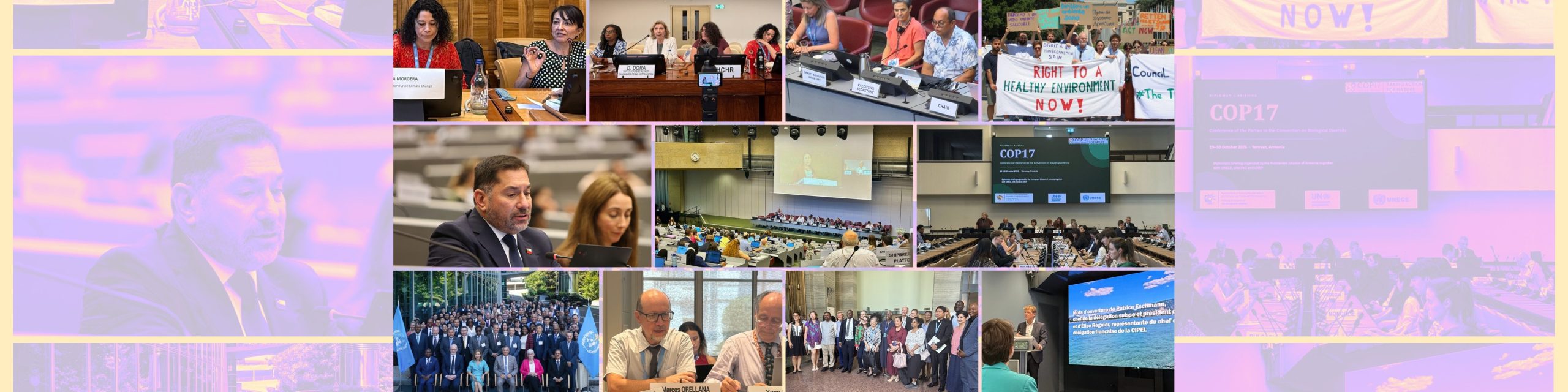
Image of the week | A non-exhaustive snapshot of events and key moments from last week at Palais des Nations, the Geneva International Conference Center (CICG), Villa Barton, Place des Nations and the World Meteorological Organization (WMO), all contributing to advancing the global environmental agenda. © UNEP/GEN, BRS MEAs, WMO.
Environment @ 62nd Session of the UN Human Rights Council
The 62nd session of the UN Human Rights Council (HRC62) enters its third week, with the Council expected to begin its deliberations on draft proposals.
Draft resolutions that address environmental issues, though not always as their primary focus, include:
- A/HRC/62/L.18 | Human rights and climate change | Philippines, Bangladesh, Viet Nam
- A/HRC/62/L.2 | Enhancement of international cooperation in the field of human rights | Uganda (on behalf of the Movement of Non-Aligned Countries)
- A/HRC/62/L.7 | The Social Forum | Cuba
- A/HRC/62/L.8 | Mandate of Independent Expert on human rights and international solidarity | Cuba
- A/HRC/62/L.12 | Freedom of opinion and expression | Canada, Brazil, Fiji, Namibia, Netherlands (Kingdom of the), Sweden
- A/HRC/62/L.22 | Extreme poverty and human rights | France, Albania, Belgium, Chile, Morocco, Peru, Philippines, Romania
- A/HRC/62/L.26 | Protection of health care in armed conflict | Qatar
- A/HRC/62/L.27 | Human rights and neglected tropical diseases | Malawi, Burkina Faso, Gambia, Kenya, Morocco, United Republic of Tanzania
This week, the links between human rights and the environment continue to remain present in the agenda of the Council, as the Geneva Environment Network is supporting various side events at the Human Rights Council, including:
- Human Rights Obligations Beyond Direct Emissions, Including Exports of Fossil Fuel – The implications of two recent groundbreaking legal cases | HRC62 Side Event | 29 June 2026 | 13:00 – 14:00 CEST | Palais des Nations, Room XI | Earthjustice, with the support of GEN
This side event will present two legal cases — a human rights complaint with the UN Human Rights Committee against the Australian government for fossil fuel exports, and a ground breaking decision in the case brought by a coalition of associations and the City of Paris against the French company TotalEnergies — with the lawyers involved and discuss the importance of holding States accountable for their exports of fossil fuels.- The Rights of Nature: Intersections with the Right to a Healthy Environment | HRC62 Side Event | 2 July 2026 | 11:00 – 12:00 CEST | Palais des Nations, Concordia 1 | OHCHR, Panama, with the support of GEN
Panama recently announced its intentions to bring a Universal Declaration on the Rights of Nature before the UN General Assembly, jointly with the Foundation For Nature. The rights of nature are rights held by non-human animals, species, and ecosystems. This event will explore how protecting nature and its rights could reinforce human rights – particularly the right to a clean, healthy, and sustainable environment and advance harmony with nature.- Human Rights Implications of Crimes that Affect the Environment and Emerging Global Responses | HRC62 Side Event | 3 July 2026 | 13:00 – 14:00 CEST | Palais des Nations, Room XI | WWF International, Earthjustice, UNCAC Coalition, OHCHR, GeHRBiL, GEN, GI-TOC and Wildlife Justice Commission
This side event will discuss how crimes that affect the environment can be addressed within the policy discourse of the Human Rights Council, anchored in the human right to a clean, healthy and sustainable environment. It will also highlight the importance of ensuring that ocean-related crimes and their adverse human rights impacts are not overlooked.
→ Regular updates on key environmental issues at HRC62, side events, and further resources are available on our dedicated HRC62 and the environment update.
Other events of note taking place this week include:
- Climate Change and Human Rights | HRC62 Side Event | 2 July 2026 | 10:00 – 11:00 CEST | Palais des Nations, Room XI | Villages Unis
- A Small Island Story: 20 Years of SIDS Advocacy and Influence at the Human Rights Council | HRC62 Side Event | 1 July 2026 | 13:00 – 14:00 CEST | Palais des Nations, Concordia 1 | Maldives
- Mobility and Forced Displacement of Indigenous and Minorities Peoples | HRC62 Side Event | 1 July 2026 | 13:00 – 14:00 CEST | Palais des Nations, Room XI | Genève pour les droits de l’homme : formation internationale
- The rights of nature: intersections with the right to a healthy environment | HRC62 Side Event | 2 July 2026 | 11:00 – 12:00 CEST | Palais des Nations, Concordia 1 | OHCHR, Panama, GEN
- Human rights situation in Ukraine: Strengthening accountability and environmental protections in the context of armed conflict | HRC62 Side Event | 3 July 2026 | 14:00 – 15:00 CEST | Palais des Nations, Concordia 1 | Latvia, Ukraine & EU
Relevant news and updates include:
- Rethinking progress: UN expert calls to fight poverty beyond growth and expand social protection | OHCHR | 25 June 2026
- Financing the transition, Silencing defenders | Coalition for Human Rights in Development | 24 June 2026
- States, businesses and investors must adopt rights-based approaches to food security, say UN experts | OHCHR | 23 June 2026
- Transforming food systems key to protecting climate and human rights, says UN expert | OHCHR | 23 June 2026
- Communication on the situation of the human rights of two women environmental human rights defenders in Türkiye | UN Special Rapporteurs on climate change and human rights, on the right to a healthy environment, and on toxics and human rights, and other UN Special Procedures | 23 April 2026
- Protecting Civic Space: How Climate Advocacy is at Risk during UNFCCC Conferences | Palestinian Institute for Climate Strategy (PICS) and Climate Activist Defenders (CAD) | June 2026
Rangelands and Pastoralists at the Crossroads of International Geneva
Rangelands cover nearly half of the world’s land and support the livelihoods and food security of millions of pastoralists. They are essential for food security, climate resilience, and biodiversity, yet face growing pressure from climate change and land degradation. With over 700 million people facing hunger, sustainable pastoralism offers important solutions for resilient livelihoods and ecosystems. On 15 March 2022, the United Nations General Assembly at the initiative of the Government of Mongolia, declared 2026 as the International Year of Rangelands and Pastoralists (IYRP) and invited the Food and Agriculture Organization of the United Nations (FAO) to facilitate its implementation.
This week, the Food and Agriculture Organization of the United Nations, the Permanent Mission of Mongolia, the International Union for Conservation of Nature, and Kenya, with the support of the Geneva Environment Network are hosting a high-level event Rangelands and Pastoralists at the Crossroads of International Geneva | Advancing Rights, Health, Trade, Nutrition, Environment, Resilience and Sustainability bringing together Permanent Missions, international organizations, and Geneva-based partners to strengthen dialogue and action across key global agendas. → Register on Indico to attend the event taking place on Monday 29 June 2026 from 10:30 – 12:30 CEST at Palais des Nations, Room VII
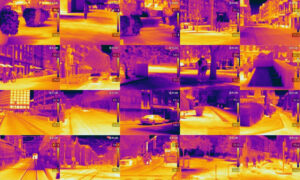
Intense Heatwave in Europe Breaks Records
Europe has been experiencing an intense, record‑breaking heatwave, with temperatures in many regions reaching levels more typical of late July or August. According to WMO, the widespread late‑June heat event has shattered numerous national and local records, with temperatures often running 3°C to 10°C above seasonal averages and exceeding 40°C in several countries. Beyond record temperatures, the heatwave is having severe impacts on human health, labour productivity, infrastructure, agriculture and ecosystems, worsening drought, raising wildfire risks, bringing localized violent storms, and contributing to increased mortality, including reported drowning deaths linked to attempts to cool off. The heatwave is expected to spread across large parts of western, central and southern Europe over the next few days.
Reactions to the heatwave include:
- The deadly European heatwave formed the backdrop to a major keynote speech by UN Secretary-General António Guterres at London Climate Action Week. He made an urgent call to action to cut methane emissions — one of the fastest and most powerful drivers of global warming. The Secretary-General also highlighted that as energy demand continues to rise, we must confront one of its fastest-growing sources: AI data centres. “Artificial intelligence can accelerate climate solutions, it can help cure disease, transform education, and enable humanity to tackle challenges once thought beyond our reach. We must harness that potential. But AI is also hungry for land, water and power. The data centres behind it already consume more electricity than most nations. By 2030, they could use more power than all but five countries – and enough water to meet the basic needs of all 1.3 billion residents of sub‑Saharan Africa for an entire year.”
- UN climate chief Simon Stiell weighed in on the extreme temperatures in Europe, saying the “savage heatwave has the fingerprints of the climate crisis all over it”. He warned that “until humanity stops burning coal, oil and gas, extreme heat will keep getting worse,” highlighting the need for countries to accelerate the shift to renewable energy, protect forests and boost climate resilience.
- WHO Director-General Tedros Ghebreyesus highlighted that more than 1,300 excess deaths have been recorded since 21 June linked to high temperatures in Europe. Heat stress is often called the “silent killer” – and European homes, workplaces and schools were not built for these temperatures. WHO is working with its Member States and partners to address the health threats posed by extreme and implement heat health action plans, as part of the broader agenda to protect health against climate change.
- To help, staffers here at the United Nations Environment Programme (UNEP) offered some pointers on how to cool your home – and yourself – when the temperatures spike.
Read more at:
- Records fall as extreme heat grips Europe | WMO | 26 June 2026
- Europe heatwave breaks records as UN agencies ramp up health warnings | UN News| 25 June 2026
- Nine ways to stay cool during a heatwave | UNEP | 22 June 2026
- WHO | Tips for keeping cool in the heat
- UNDRR / PreventionWeb | Extreme Heat Portal
- UN Secretary-General’s Call to Action on Extreme Heat brings together the diverse expertise and perspectives of ten specialized UN entities (FAO, ILO, OCHA, UNDRR, UNEP, UNESCO, UN-Habitat, UNICEF, WHO, WMO).
- Heatwaves and the Role of Geneva
MétéoSwiss forecasts that heatwave conditions will persist over the Geneva basin in the coming days. In view of these high temperatures continuing for more than 10 consecutive days, the Geneva Cantonal Medical Service, as of 28 June, activated reinforced measures to address the heatwave. This public health response phase includes the intensification of institutional measures and the suspension of certain non-priority activities. Recent reports from Swiss and Geneva-based sources also highlight the accelerating impacts of extreme heat and climate change. Martin Beniston, Honorary Professor at the University of Geneva and former IPCC Vice-Chair, warns that climate disruption is no longer a distant threat but a rapidly unfolding reality, stressing that the key challenge is the speed at which its effects are being felt, while noting that solutions remain within reach. Data from MétéoSwiss confirm the exceptional nature of the current heatwave, with temperatures exceeding 35°C at 30 monitoring stations in Switzerland and a new June national record of 38°C recorded in Basel, with even higher values under validation. At the same time, Geneva authorities have reported increased ozone levels linked to prolonged sunshine and high temperatures, issuing health recommendations to protect vulnerable populations. Read more at:
- «Le problème n’est plus le climat futur, c’est la vitesse à laquelle il est déjà là» | TDG | 28 June 2026
- Une pluie de records, et ce n’est pas fini | MétéoSuisse-Blog | 26 June 2026
- Suivi du smog estival et qualité de l’air: annonce du 22.06.2026 – Hausse temporaire de l’ozone | Republic and State of Geneva | 24 June 2026
The latest statement issued by the authorities provides recommendations to protect the health of the most vulnerable people. - Recommandations en cas de fortes chaleurs | ge.ch
- Trop chaud? | ge.ch
- Lieux de fraicheur à Genève | ge.ch
- Heat wave plan for the City of Geneva
- Heat | CH
- Heat | MétéoSuisse
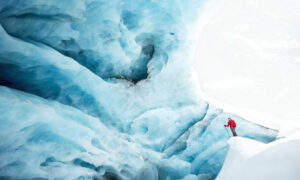
Swiss Glaciers Exhausted Their Snow Reserves | Glacier Loss Day
Among the most dramatic evidence that our climate is changing is the retreat and disappearance of mountain glaciers around the world. Based on preliminary data, 2025 was the 39th year in a row that the glaciers in the climate reference network tracked by the World Glacier Monitoring Service lost ice. Tallying up each year’s losses or gains through 2025, reference network glaciers have lost ice mass equivalent to more than 30 meters of water since 1950.
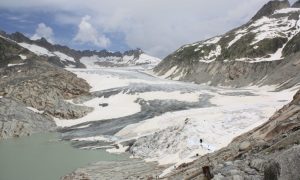
Switzerland’s glaciers have had a difficult start to the year, with conditions continuing to worsen. Snow cover in April was at record lows in some areas and only average in others, while Saharan dust events in March and ongoing heatwaves have accelerated melting. As a result, 29 June already marks “Glacier Loss Day” — the point at which any further melting directly reduces glacier mass, as remaining snow reserves have been depleted by melt at lower elevations. A similar pattern occurred in 2022, when Glacier Loss Day fell even earlier, on 26 June, following low winter snowfall and three heatwaves that made it the warmest year on record since 1864; only 2003 saw higher summer temperatures. That year, glaciers lost around 6% of their mass, and current conditions suggest 2026 could follow a similar trajectory. While increased meltwater can temporarily buffer low river levels and rising temperatures, research shows that in extreme years this benefit is already diminishing: despite more extensive melting in 2022 than in 2003, glaciers contributed less to runoff in many catchments. Experts note that although high melt rates currently mask the decline in water contribution, this effect will be short-lived as shrinking ice masses will eventually be unable to sustain meltwater flows. → Read ETHZ press release
Read more at:
- The Swansong of the Glaciers | WSL | 26 June 2026
- Swiss Glaciers in figures | Matthias Huss, GLAMOS | 25 June 2026
Plastic Pollution Treaty Negotiations | Advancing Preparations for INC‑5.4
The process towards the fourth part of the fifth session of the Intergovernmental Negotiating Committee to develop an international legally binding instrument on plastic pollution, including in the marine environment (INC-5.4) continues to progress, with a key milestones taking place this week:
- The INC Chair, H.E. Amb. Julio Cordano shared last week the summary of the third informal virtual meeting of Heads of Delegation to the INC, held on 3 and 4 June 2026. It refers to informal discussions organized and facilitated by Members outside the agreed Roadmap while underscoring that the pragmatic and constructive engagement of the Members reflect continued progress in the process. It provides an overview of the responses and perspectives shared during the meeting, with a view to informing and building upon these discussions as preparations for INC‑5.4 advance.
- Delegates are convening in Nairobi for the First Informal in-person Heads of Delegation (HODs) meeting from 30 June to 3 July 2026, following regional consultations on 29 June 2026. To support the delegates’ preparations, the INC Chair, H.E. Amb. Julio Cordano shared a document containing Guiding Questions. Reminding them to consider the methodology of the “four Cs” – conceptual discussions, clarity in the text, connections between parts of the instrument, and a comprehensive view of the instrument – and the guiding criteria of this process when preparing their interventions, the Chair highlights the objectives of the meeting are reviewing the state of progress overall, as a basis for the development of an informal reference document; and exchanging new ideas and a further understanding of proposals to advance towards possible landing solutions. Useful information includes: Daily Schedule, Note by the Chair (2 June 2026), Additional Note by the Chair (16 June 2026), Guiding questions by the Chair (23 June 2026), Information to participants (10 April 2026).
Observers participating in the process have continued to contribute to discussions by sharing position papers and analytical inputs. Recent contributions include:
- How Can the Future Treaty on Plastic Pollution Protect Our Health? | Carolyn Deere Birkbeck & Lizzie Fuller, Forum on Trade, Environment, & the SDGs (TESS) | 24 June 2026
- The Plastics Plot: The Corporate Disinformation Tactics Behind Plastics Pollution | CIEL | 23 June 2026
- Reaching agreement on priorities for the Global Plastics Treaty: The role of independent science in helping negotiators find common ground | Reliable science to inform discussions at the Heads of Delegation (HODs) meetings | Scientists’ Coalition for an Effective Plastics Treaty | June 2026
- Quick Views on the Plastics Treaty INC Heads of Delegation Meeting | IPEN | June 2026
Outcomes of Basel Convention OEWG-15
The 15th Meeting of the Open-ended Working Group of the Basel Convention (OEWG-15) concluded on Friday, 26 June 2026, at the International Conference Center Geneva. Throughout the week, delegates advanced significant work ahead of the 2027 Meetings of the Conferences of the Parties to the Basel, Rotterdam and Stockholm Conventions with a spirit of collaboration and compromise, showing that the Basel Convention is alive and relevant, as underscored by Chair Nneka Nicholas of Antigua and Barbuda.
Progress was made on key issues, including:
- Adoption of steps to improve the Prior Informed Consent (PIC) procedure.
- Directions to review key annexes (I & III) that underpin waste controls.
- Advancing updates to guidelines on POPs, batteries, tyres, e‑waste, and plastics.
- Issues of legal clarity.
- A new round of comments by Parties and observers on possible options for the Convention to tackle the growing problem of trade in used textiles and textile waste.
- Strengthened collaboration with the World Customs Organization (codes alignment) and IMO (ship recycling).
Work ahead of 2027 BRS COP will continue this week as the Bureau of the Conference of the Parties to the Basel Convention will meet from 30 June to 1 July 2026, to discuss, among other things, the provisional agenda and preparations of the eighteenth meeting of the Conference of the Parties to the Basel Convention (BC COP-18).
Read more at:
- Earth Negotiations Bulletin summary
- Historic First Joint Session Brings Together Compliance Committees of the Global Chemicals and Waste Conventions | BRS MEAs | 22 June 2026
Outcomes of the 80th Session of the WMO Executive Council
Dr. Abdulla Al Mandous, Director General of the National Center of Meteorology of the United Arab Emirates and President of WMO, highlighted the outcomes of last week’s WMO Executive Council, setting the road to the 20th World Meteorological Congress next year. As underscored by the WMO Secretary-General, Prof. Celeste Saulo, in her closing speech, WMO Members represent different realities, different capacities and different priorities. Yet, despite those differences, they reached important agreements at the Executive Council. These include:
- Strategic Plan 2028–2031: Long-term goals officially approved.
- Financing: Secured maximum expenditure for the next financial period.
- Governance reform: Adopted the UN Joint Inspection Unit recommendations in full. A dedicated Task Force will drive structural change.
- Celebrate outstanding contributions:
- 70th IMO Prize: Professor Xu Jianmin, for his pioneering work in meteorological satellite systems.
- 71st IMO Prize: Dr. Florence Rabier (France).
- 30th Vilho Väisälä Award (Outstanding Research): Le Coz, J., Lagouy, M., Pernot, F., Buffet, A., and Berni, C. (France), for their paper on a low-cost streamgauging ruler.
- 11th Vilho Väisälä Award (Developing Countries): Dieudonné Sama, Doua Allain Gnabahou, and Ali Ganame (Burkina Faso), for automating real-time runway condition monitoring.
- 2026 Young Scientists Award: Dr. Shoyon Panday and Dr. Valentin Dallerit (Canada), for research on advanced atmospheric flow simulations.
In Memoriam | Tessa Goverse
Our dear UNEP colleague, Tessa Goverse, who had been missing since 20 June during a hike in the Salève while on mission in Geneva, has been found deceased on 23 June. In a message of tribute, UNEP Executive Director Inger Andersen recalled that, over the past decade, Ms. Goverse devoted her work to advancing action on chemicals, waste and pollution. She served as Chief of the Source to Sea Pollution Unit in the Ecosystems Division and, most recently, as Head of the Interim Secretariat of the Intergovernmental Science‑Policy Panel on Chemicals, Waste and Pollution (ISP‑CWP). Under Tessa’s leadership, the ISP-CWP extended secretariat team was awarded the Kipepeo Award for 2025, in the Environmental Impact category.
The ISP-CWP Chair, Osvaldo Alvarez, also shared the tragic news last week. He mentioned that many of us had the privilege of working closely with Tessa over the years. She was an exceptional professional and a warm, generous person, deeply committed to multilateralism and advancing our collective work on chemicals, waste, and pollution. Her energy, intelligence, and kindness left a mark on every process she supported and on every colleague who collaborated with her.
We pay tribute to her dedication and tireless efforts in support of the conventions and the new science-policy panel, embodying the spirit of cooperation. In losing Tessa, our community has lost not only a highly respected expert but also a friend whose humanity and calm, thoughtful presence enriched our negotiations and work together.
In Geneva, delegates and observers gathered to pay tribute to Ms. Goverse’s memory and at the beginning of the plenary of the Basel Convention OEWG‑15, on Wednesday, 24 June. Rolph Payet, Executive Secretary of the Basel, Rotterdam and Stockholm Conventions, remembered her as someone “who brought people together” and who “dedicated more than two decades to advancing environmental action and the establishment of the ISP‑CWP,” noting that her legacy will continue to guide and inspire. ISP‑CWP Chair Osvaldo Alvarez also took the floor and paid homage to her memory.
The Geneva Environment Network extends its deepest condolences to Ms. Goverse’s husband, family, and friends; to the ISP-CWP Secretariat and Bureau; to colleagues; and to the broader environmental community during this difficult time. → Share a message or a cherished memory in Tessa’s Condolence Book (opened until 17 July)
Happening Abroad
2026 OECD Green Growth and Sustainable Development Forum | The Forum, taking place on 1-2 July in Paris and online, focuses on the economics of climate adaptation. Across six sessions, the Forum will explore how adaptation investments can generate economic benefits beyond avoided losses. It will also explore how adaptation gets integrated in public and private decision-making and mainstreamed across economic sectors, discussing the role of businesses and nature in driving progress and the job implications of adaptation action.
Enjoy a Green Summer in Geneva
As summer unfolds, Geneva comes alive with sunshine, nature, and endless possibilities. From open-air festivals and lakeside activities to exhibitions, workshops, and nature walks, discover a variety of events that celebrate the season of light and environmental awareness. Whether you’re looking to cool off in green spaces, dive into sustainability, or simply enjoy the beauty of nature in full bloom, find your inspiration for a vibrant Green Summer in Geneva. Suggestions for this week include:
- Village des Z’Ethnos | 29 June – 4 July 2026 | ADEM
Children aged 6–12 will explore cultures from around the world through music, dance, art, storytelling, and nature activities. They’ll also create their own music using digital tools and enjoy plenty of games, laughter, and creative play. The week ends with a lively performance for family and friends, celebrating everything they’ve discovered and created. Led by passionate artists and educators, Z’Ethnos Village is the perfect place to learn, create, and make new friends! - Camp d’été résidentiel EAU’tour du Léman | 29 June – 4 July 2026 | ASL | Around Lac Léman
A unique six-day residential summer camp aboard a traditional 19th-century sailing boat. As they cruise from port to port across Lake Geneva, children aged 10 to 13 discover the lake’s remarkable wildlife, hands-on science, outdoor activities, swimming, and exploration. It’s an adventure that builds confidence, curiosity, teamwork, and lasting memories. Financial support is also available. - Dessins nomades | 30 June 2026 | Bains des Pâquis
Come and start your day by sketching beside the lake, with sand under your feet and Lake Geneva as your inspiration. Led by artist Delia Meyer, this free outdoor drawing session welcomes both beginners and experienced artists for a morning of creativity, and experimentation. All materials are provided; you just must bring your curiosity and enjoy drawing in one of Geneva’s most iconic settings. - Midi du Léman | 30 June 2026 | ASL | Plage des Eaux-Vives
Take a break and enjoy a relaxing lunch by Lake Geneva. Watch great crested grebes and coots with their chicks, then explore the underwater meadows where tench and carp gather to spawn. It’s a refreshing way to reconnect with nature without leaving the city. - “Spécial été” : un objet, un son, une histoire : rencontrer Wambi le chasseur d’antilopes | 30 June 2026 | Bibliothèque du musée d’Ethnographie de Genève (MEG)
After observing the arched harp in the permanent exhibition, visitors will listen to how Wambi the antelope hunter crafts a musical instrument in order to aid him in finding his missing mother and sisters. Entry is free. - Les plantes aquatiques dans nos ouvrages | 1 July 2026 | Jardin Botanique de Genève
A guided visit exploring the fascinating world of aquatic plants through the scientific collections of the Geneva Botanical Garden. Drawing on more than two centuries of botanical research, the tour gives the opportunity to discover species such as green algae, diatoms, and the rare shoreweed (Littorella uniflora) while learning how scientists have documented aquatic ecosystems over time. - L’herbier de Jean-Jacques Rousseau | 1 & 5 July 2026 | Jardin Botanique de Genève
Step back in time and discover a remarkable herbarium created by philosopher and writer Jean-Jacques Rousseau more than 200 years ago. Through this guided visit, visitors will learn about the history of this rare collection, recently acquired by the Geneva Botanical Garden, and explore the fascinating connection between botany, science, and one of the Enlightenment’s most influential thinkers. - Exhibition: One gardener – One Tree | 1 to 31 July 2026 | The LAMINAE Association | Parc des Bastions
This open-air exhibition puts the light on some of Geneva’s most remarkable trees through the eyes of the gardeners who care for them. Combining personal stories, nature, and local heritage, the exhibition invites participants to discover the unique connections between people and trees while gaining a deeper appreciation for Geneva’s urban biodiversity and green spaces. - Atelier Bout de bois | 1 July & 15 August 2026 | Musée d’ethnographie, Genève
What can a simple piece of wood become? During this hands-on workshop, children and adults work side by side to create games and small wooden objects inspired by traditional skills. Guided by artist Gerry Oulevay, participants will experiment with simple tools, discover the possibilities hidden in natural materials, and leave with a unique creation of their own. - Nocturne d’été des Bains | 2 July 2026 | Quartier des Bains
Spend a summer evening exploring one of Geneva’s most vibrant cultural districts. During the Nocturne d’été des Bains, galleries and art spaces across the Quartier des Bains open their doors for a special late-night programme. Take the chance to discover contemporary exhibitions, meet fellow art enthusiasts, and experience the neighbourhood’s creative atmosphere in festive setting. - Festijovial | 4 July 2026 | Ecoboost | Vernier
Good food, local beer, live entertainment, and a strong community spirit come together for this festive day in Vernier. Organised by local residents, the Festijovial celebrates neighbourhood life through shared meals and family-friendly activities. Whether stopping by for lunch, meeting new people, or simply enjoying the atmosphere, the festival invites everyone to take part in a day built around conviviality. - La Nuit de la Science | 4 & 5 July 2026 | City of Geneva | Parc de la Perle du Lac
Join an unforgettable weekend where science leaves the laboratory and comes alive in the heart of Geneva. From fascinating demonstrations and interactive games to inspiring conversations with researchers, La Nuit de la Science invites visitors of all ages to explore, question, and be amazed. - Grand Juillet | 4 – 12 July 2026 | Various Locations
Summer is definitely the perfect time to slow down and reconnect with literature. For 9 days, across farms, gardens, parks, museums, and unexpected corners of Geneva, Grand Juillet brings together Swiss and international writers and readers for a week of conversations, walks, performances, and shared meals. Designed as a celebration of books and ideas, the festival offers audiences the opportunity to discover literature beyond traditional venues and experience it at a more human pace. - Open Day 2026 | 5 July 2026 | WTO
To celebrate the 100th anniversary of the Centre William Rappard, the World Trade Organization is opening its historic headquarters to the public for a day of discovery and celebration. Visitors can explore the building through guided tours, learn about its history and artworks, take part in interactive activities, and enjoy live music and international food. - Concert at the Geneva Botanic Garden | 5 July 2026 | Jardin Botanique de Genève
Take a break from the city and enjoy a morning of live music surrounded by the greenery of the Geneva Botanical Garden. Performed by musicians of the Geneva Chamber Orchestra, this open-air concert features a programme inspired by folk traditions and is designed to be in a relaxed and informal setting.
What (Else) to Read Next?
- Energy crisis, critical minerals and jobs: what’s at stake for Latin America and the Caribbean | ILO | 25 June 2026
The new energy geopolitics is reshaping employment, investment and development prospects in Latin America and the Caribbean. The challenge will be to turn the opportunities created by the energy transition into more and better jobs through strong institutions, social protection and social dialogue. - Global trends in climate change litigation: 2026 snapshot | LSE | 25 June 2026
This report focuses on key trends and evolutions in global climate change litigation from the calendar year 2025, while also highlighting important nw developments through to May 2026. The primary source of data is the Climate Litigation Database maintained by the Sabin Center for Climate Change Law.
- Victoire : TotalEnergies condamnée pour manquement à son devoir de vigilance climatique ! | Notre Affaire à Tous | 25 June 2026
Dans le contentieux climatique porté par Notre Affaire à Tous, Sherpa, France Nature Environnement et la ville de Paris contre TotalEnergies, le tribunal judiciaire de Paris vient de condamner la multinationale pour manquement à son devoir de vigilance climatique. Le tribunal reconnaît que l’entreprise a bien un devoir de vigilance climatique qui s’étend à ses émissions issues de la combustion des produits pétroliers et gaziers (scope 3), qui représentent près de 90% de ses émissions. Il demande à la multinationale de compléter son plan de vigilance dans un délai de six mois, en incluant les mesures adaptées pour réduire ces émissions. À défaut, TotalEnergies sera de nouveau condamné. - Beyond Denial. How Oil Execs Shaped a Landmark Climate Study | ProPublica | 25 June 2026
For a generation, people learning how to address global warming were taught the ideas in the “Wedges” paper. What they didn’t learn was this: “Wedges” was significantly shaped by the British oil giant BP — one of the single global entities most responsible for causing climate change. - Wildfire Smoke: The Health Emergency That Urgently Needs a Seat at the Climate Table | Health Policy Watch | 25 June 2026
As Europe sweats through the hottest week on record for June, the continent faces the looming spectre of wildfires – just one year after last year’s deadly events in Turkiye and Southern Europe. But wildfire season is no longer episodic. It has evolved into a year-long threat, fueled by a warmer climate and its side effects.
- 655 million people still living without electricity underscore urgent need to deliver on universal energy access target | WHO | 24 June 2026
The latest edition of Tracking SDG 7: The Energy Progress Report, featuring new 2023 and 2024 data, shows that while most regions are nearing universal access, progress in Sub-Saharan Africa has slowed significantly, and the pace of electrification must triple to achieve universal access by 2030. Despite these challenges, the report highlights encouraging progress in several areas of sustainable energy. - At Our Ocean Conference a Dangerous Push for Marine Geoengineering Undermines Ocean Protection | Home Alliance | 24 June 2026
As Our Ocean Conference comes to an end, civil society groups across the globe are raising serious concerns over a series of announcements accelerating the development and scaling of marine geoengineering, particularly marine carbon dioxide removal (mCDR), under the guise of climate action. New initiatives unveiled at the conference, including the launch of an African Marine CDR Roadmap by the Ocean Climate Innovation Hub Kenya and a major funding commitment by the Carbon to Sea Initiative to expand global research into ocean alkalinity enhancement, signal a coordinated push to normalize large-scale interventions in ocean ecosystems.. - Climate crisis: UN chief lays out a blueprint for clean energy transition solutions | UN News | 23 June 2026
In a major keynote speech at London Climate Action Week, the UN chief called on AI firms to “come clean” on the full environmental impact of data centres in terms their carbon, water and land footprints. The Secretary-General also highlighted how the world’s dependence on oil is driving both the climate crisis and an energy sovereignty crunch, the latter linked to massive shipping disruption in the Strait of Hormuz and the war involving Iran, Israel and the United States. - UNEP, partners ramp up efforts to address major methane leaks as UN chief urges rapid cuts | UNEP | 23 June 2026
UNEP and Bloomberg Philanthropies announced efforts to help countries raise their response rate to major methane leaks around the world to 80 percent by 2030, ensuring that the causes of emissions seen from space are investigated and put on a path to mitigation. To date, only 10 early moving countries have achieved an 80 percent response rate.
- Energy Dept. Unveils $17.5 Billion Plan to Kick-Start New Nuclear Plants | The New York Times | 23 June 2026
The US federal government wants to help utilities buy large components for up to 10 large nuclear reactors. It’s unclear which, if any, companies might participate. - The world’s fertilizer supply hangs on a disputed strait | ITC | 22 June 2026
ITC’s Market Access Map tracked 42 trade and trade-related measures linked to the disruption. Governments introduced a mix of export restrictions, import-facilitating measures, customs tariffs, tax adjustments and licensing requirements. Those affected energy products, fertilizers and other strategic inputs. While some measures sought to secure domestic supplies, others aimed to cushion the inflationary effects of rising fuel and fertilizer costs.
- Agricultural standards and Nature Positive | IUCN | June 2026
This assessment aims to guide dsm-firmenich and other companies in understanding which criteria are important to deliver Nature Positive outcomes and how standards align with them. Additionally, the assessment aims to help standard bodies enhance their frameworks in alignment with the Nature Positive goal to halt and reverse nature loss by 2030 and achieve full recovery by 2050. - Report: First International Conference on Transitioning Away from Fossil Fuel | June 2026
From 24 to 29 April 2026 Colombia and the Netherlands organized the first Conference on Transitioning Away from Fossil Fuels. The conference, hosted in Santa Marta, convened 57 countries and more than 1000 stakeholders to advance global commitments made under the Paris Agreement. Over the course of five days, countries and representatives from 14 groups created a safe space for dialogue on how to advance a just, orderly, and equitable transition away from fossil fuels. - The Landscape of Sustainability Risk Integration | UNEP FI | June 2026
This new report, aimed at risk professionals at banks, assesses the extent to which sustainability risks are being integrated by the global banking sector. It draws on three evidence streams: a consultation with 28 signatories to the Principles for Responsible Banking across five regions conducted in April and May 2026; stocktakes and thematic reviews published by banking supervisors and international bodies; and industry surveys published between December 2023 and May 2026. - 6 Reasons Protecting Nature is the Smartest Investment We Can Make | The Nature Conservancy | 10 June 2026
Nature and the economy are deeply related. We wouldn’t even have an economy without nature. When we help it, it helps us. And when we value nature, we can better protect it. - Negotiation Process-Design Is Key for Article 109 UN Charter Review | Jerome Bellion-Jourdan | June 2026
This policy brief suggests concrete ways to overcome challenges on the path toward an Article 109 Conference to review. The focus on process would allow moving away from a “win-lose” approach to negotiation and foster a “win-win” approach, with a third win, the win of the collective: “people and planet.”
Events
See all
Body Meeting
62nd session of the Human Rights Council | HRC62
15 Jun – 08 Jul 2026
Palais des Nations | Assembly Hall
HRC

Conference
16th session of the Trade and Development Commission
29 Jun – 03 Jul 2026
Palais des Nations | Room XII
UNCTAD
Body Meeting
UN Global Seaweed Initiative: Annual meeting
29 – 30 Jun 2026
Palais des Nations, Room H.207-209
UNCTAD
Conference
Rangelands and Pastoralists at the Crossroads of International Geneva | Advancing Rights, Health, Trade, Nutrition, Environment, Resilience and Sustainability
29 Jun 2026 | 10:30 – 12:30
Palais des Nations | Room VII
FAO, Mongolia, IUCN, Kenya, GEN
Virtual
From Pledges to Practice: Sustaining Action on Alternatives to Detention, Protection at Sea, and Protection from Trafficking
29 Jun 2026 | 13:00 – 14:30
Online | Teams
UNHCR, IOM, UNICEF, Special Procedures of the UN Human Rights Council, OHCHR, IFRC
Conference
Human Rights Obligations Beyond Direct Emissions, Including Exports of Fossil Fuel – The implications of two recent groundbreaking legal cases | HRC62 Side Event
29 Jun 2026 | 13:00 – 14:00
Palais des Nations, Room XI
Earthjustice

Virtual
Together for health, we stand with science: Country data and SDGs on air pollution and health
30 Jun 2026 | 08:30
Online | Zoom
WHO
Virtual
Climate Action Conversation Series Episode 6: How to Respond to Water Bankruptcy
30 Jun 2026 | 12:00 – 13:30
Online | Zoom
GEAF

Virtual
Policy Gaps: Opportunities to Reduce Highly Hazardous Pesticides
30 Jun 2026 | 13:30 – 15:30
Online | Zoom
GGKP, UNEP, UNDP, UNIDO

Body Meeting
Expert meeting on Best Available Techniques and Best Environmental Practices under the Stockholm Convention
30 Jun 2026 | 14:00 – 16:30
Online | Zoom
BRS

Virtual
Meeting of the Team of Specialists on Sustainable Forest Products
30 Jun 2026 | 15:30 – 17:30
Online
UNECE

Conference
The Rights of Nature: Intersections with the Right to a Healthy Environment | HRC62 Side Event
02 Jul 2026 | 11:00 – 12:00
Palais des Nations, Room Concordia 1
OHCHR, Panama, GEN

Virtual
Webinar on “the Treaty on the Protection of Persons in the Event of Disasters and Disaster Displacement”
02 Jul 2026 | 13:30 – 15:00
Online | Zoom
Platform on Disaster Displacement

Virtual
Consultative Dialogue for the Development of a Strategy on Children and Youth Engagement under the Basel, Rotterdam and Stockholm Conventions
02 Jul 2026 | 14:00 – 15:30
Online | Zoom
BRS

Conference
Human Rights Implications of Environmental Crime | HRC62 Side Event
03 Jul 2026 | 13:00 – 14:00
Palais des Nations, Room XI
GHRH, WWF, Earthjustice, UNCAC Coalition, OHCHR, GeHRBiL, GEN, GITOC, WJC

Jobs
See all