Newsletter 22 Jun 2026
Environment: What’s Up in GENeva | 22 – 28 June 2026
The Geneva Environment Network’s weekly newsletter includes the latest information on the global environmental agenda, main events, job vacancies, as well as other useful resources and updates. The Geneva Environment Network is not responsible for the content of any linked site or any link contained in a linked site. Stay tuned and follow us on X (Twitter), Facebook, LinkedIn, Instagram, Bluesky, Youtube, and WhatsApp, or visit our website regularly for additional updates.
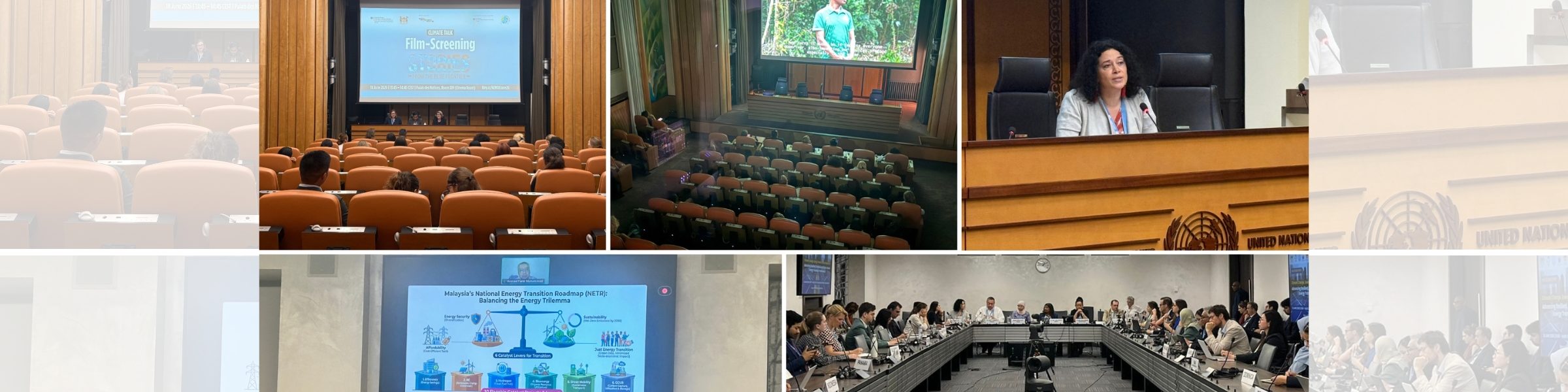
Image of the week | Snapshots of two events that took place at Palais des Nations on 18 June 2026: the screening of the documentary “Stories from the Blue Frontier” in the margins of the 62nd session of the UN Human Rights Council, and the Climate Change, Energy Transition and Adaptation: Advancing Resilient, Inclusive and Rights-Based Energy Transition Frameworks, an official side event to the Council.
Environment @ 62nd Session of the Human Rights Council
Climate change continues to be high on the agenda of the 62nd session of the UN Human Rights Council (HRC62), as it continues on its second week in Geneva. → Regular updates on key environmental issues at HRC62, side events, and further resources will be made available on our dedicated HRC62 and the environment update.
Last week, the annual panel discussion on the adverse impacts of climate change on human rights focused on climate financing. The discussion underscored that global climate finance is failing those most affected despite growing legal obligations to act, highlighting deep inequalities in funding distribution and calling for accountability from those who have profited most from emissions. Climate finance is indeed an economic imperative, and as the International Court of Justice has confirmed in its advisory opinion, it is underpinned by clear legal obligations. The High Commissioner called on leaders to phase out fossil fuel subsidies, equitably and progressively, to build fair tax systems, including taxes on fossil fuel profits, to redirect revenue from taxes and subsidies to climate action and social protection, and to help those in greatest need to get support first. He also added, “I often wonder whether in a few decades, our descendants will look back on this time and accuse us of ecocide or even crimes against humanity.” Numerous Member States and organizations made valuable contributions during the panel, also highlighting corporate impunity and the need to build a fair system.
Also on Friday, 19 June, the UN Special Rapporteur on climate change and human rights, Elisa Morgera presented her report, Transforming food systems for a safe climate and health for all (A/HRC/62/44), which further clarifies the human rights imperatives of defossilizing our economies.
The report clarifies the interrelated human rights obligations not only to decarbonize but also crucially to defossilize and detoxify our food systems, in accordance with state obligations to protect the climate system, clarified by the advisory opinion of the International Court of Justice.
Warning of the “unprecedented concentration of power across food systems”, the Special Rapporteur highlights how it sheds light on who else is part of a fossil fuel-based economy and the extent to which their profits are premised knowingly on harming human and planetary health. As highlighted by UNEP during the interactive dialogue, the latest Global Environment Outlook confirms that current food systems are a major driver of climate change, biodiversity loss, land degradation, and pollution, with existing patterns of production and consumption remaining environmentally unsustainable and socially inequitable. In line with the Special Rapporteur recommendations, UNEP remains committed to working with Member States and other stakeholders to strengthen legal and policy frameworks that support the transformation of food systems, including their decarbonization, defossilization, and detoxification. → Consult the highlights and rewatch the dialogue.
The conversation on climate change and human rights continues this week, as the Geneva Environment Network is supporting side events at the Human Rights Council, including:
- Transforming Food Systems and Ensuring Corporate Accountability as a Climate and Human Rights Imperative | HRC62 Side Event | 22 June 2026 | 12:00 – 13:00 CEST | Palais des Nations, Room IX | FIAN International, SR climate change, FES, Franciscans International, CETIM, CIEL, La Via Campesina, Indonesian Peasant Union, Marshall Islands
In the context of the UN Special Rapporteur’s report, this side event connects communities’ lived experiences of climate change and corporate impunity´s impacts on the right to food with action, calling for a human rights-based transformation of food systems and aiming to combat climate change.- Human Rights of Future Generations and Sustainable Development | HRC62 Side Event | 22 June 2026 | 13:00 – 14:00 CEST | Palais des Nations, Concordia 5 | CIEL & FIAN International
Human rights experts, including the UN Special Rapporteurs on climate change, Elisa Morgera, and on toxics and human rights, Marcos Orellana, will discuss the legal norms related to the human rights of future generations, and opportunities to guarantee better protection of the rights of present and future generations in the context of relevant policy processes.- The Sumaúma Pledging Tree for Human Rights-Based Climate Action | HRC62 Side Event | 22 June 2026 | 14:00 – 15:00 CEST | Palais des Nations, Room V | OHCHR, Ministry of Human Rights and Citizenship of Brazil, UN Special Rapporteur on human rights and climate change, UNFCCC COP30 Special Envoy on Human Rights and Just Transition
The Sumaúma Pledging Tree invites different stakeholders to make commitments for Human Rights-Based Climate Action. The event will highlight examples of climate action that are transformative, innovative, catalytic and actionable, which brings about positive impacts for the enjoyment of human rights. States and other relevant actors are urged to propose pledges to help the Sumaúma Pledging Tree grow and thrive.
The UN Special Rapporteur on toxics and human rights is also in Geneva to attend the meeting of the Open-Ended Working Group of the Basel Convention, where he will engage in various events. On the margins of the Council, he is co-convening with Earthjustice and the Geneva Environment Network, the Toxic Free Talk The Threats of PFAS on Human Rights, the so called “Forever Chemicals”, at Palais des Nations, Room S-29, on Friday 26 June, from 13:45 t0 14:45 CEST. → Register on Indico to join in person or on Webex to join online
Other events of note taking place this week include:
- Right to Free, Prior and Informed Consent | HRC62 Side Event | 23 June 2026 | 12:00 – 13:00 CEST | Palais des Nations, Room IX | Conselho Indigenista Missionário CIMI
- Interactive Dialogue with the Working Group on transnational corporations | 23 June 2026 | 16:00 – 18:00 CEST | Palais des Nations, Assembly Hall & Online
- Our Common Home, Our Common Climate, Our Rights: Voices of the Displaced | HRC62 Side Event | 24 June 2026 | 12:00 – 13:00 CEST | Palais des Nations, Room IX | Caritas Internationalis, JRS, ICMC, Forum of Catholic Inspired NGOs
- Women Human Rights Defenders | HRC62 Side Event | 25 June 2026 | 10:00 – 11:00 CEST | Palais des Nations, Room IX | Right Livelihood Award Foundation
- Interactive Dialogue with the UN Special Rapporteur on extreme poverty | 25 June 2026 | 11:30 CEST onwards | Palais des Nations, Assembly Hall & Online
- Draft Proposals | Submission Deadline | 25 June 2026 | 13:00 CEST
- Energy Transition, Governance and Human Rights: Towards Integrated Approaches to the Right to Development in North Africa | 25 June 2026 | 17:00 – 18:00 CEST | Club Suisse de la Presse, Chem. de l’Imperatrice 18 | IOPDHR, Alliance Suisse-Maroc & PDES-ONG
- The Forgotten Pacific | Film Screening | 26 June 2026 | 13:00 – 15:30 CEST | Palais des Nations, Room XIV (Cinema Room) | Australia, Republic of the Marshall Islands, Pacific Islands Forum, Micronesia, Fiji, Kiribati, Nauru, New Zealand, Papua New Guinea, Samoa, Vanuatu
- Rights of Peasants | HRC62 Side Event | 26 June 2026 | 14:00 – 15:00 CEST | Palais des Nations | Centre Europe – tiers monde
- The effective participation of people in poverty beyond growth strategies | HRC62 Side Event | 26 June 2026 | 14:00 – 15:00 CEST | Palais des Nations | France & ATD Quart Monde
Basel OEWG-15 Convenes in Geneva to Advance Global Action on Hazardous and Plastic Waste
The fifteenth meeting of the Open-Ended Working Group (OEWG) of the Basel Convention on the Control of Transboundary Movements of Hazardous Wastes and their Disposal (OEWG-15) is convening from Tuesday, 23 June to Friday, 26 June 2026, at the International Conference Centre Geneva (CICG), with pre-meetings, including Bureau and regional meetings, taking place on Monday, 22 June. The OEWG is expected to advance key items within its work programme, focusing on a range of priority areas. These include efforts to improve the functioning of the prior informed consent procedure, as well as the development of technical guidelines addressing Persistent Organic Pollutants, e-waste, waste lead-acid batteries, used and waste pneumatic tyres, and mercury. Additional topics of focus include plastic waste, used textiles and textile waste, and the provision of greater legal clarity. Furthermore, the OEWG will support activities under the Basel Convention Partnership Programme and strengthen cooperation with the World Customs Organization and the International Maritime Organization.
→ Follow the Earth Negotiations Bulletin live coverage, read the summary of the dedicated Briefing on the Preparations for the Fifteenth Meeting of the Open-ended Working Group of the Basel Convention (OEWG-15) and other Subsidiary Bodies under the Basel, Rotterdam and Stockholm Conventions and access the presentations made during the event to learn more
Views from stakeholders engaged in the process include:
- IPEN | Quick Views | More resources
- Basel Action Network | Basel Action Network Comments eWaste Amendment Guidelines | February 2026
- EIA | EIA Submission to Basel Convention Secretariat – Plastic Waste | 28 February 2026
OEWG-15 will feature various side events that will serve as a platform for Parties and observers to share knowledge, build capacity, network, and exchange experience in the implementation of the Basel Convention. They also contribute to discussions on specific issues under consideration at OEWG-15. In-person participation is open to the registered participants in this negotiation. Side events co-hosted with the Geneva Environment Network include:
- The Case for Basel Controls on all Plastic Wastes: Local Realities of the Global Waste Trade | 23 June 2026, 18:30 – 19:30 CEST | Organized by Basel Action Network and IPEN with the support of the Geneva Environment Network | CICG, Room 4 & Online, Webex
Taking the example of the Basel Convention E-Waste Amendments, which placed all exports of e-wastes under Basel control procedures, without any exemptions, this event offers a place to discuss why prior informed consent (PIC) is necessary as a minimum control procedure for all plastic waste under the Basel Convention. - E-Waste Trafficking Out of Control One Year After Basel E-Waste Amendments | 25 June 2026, 13:30 – 14:30 CEST | Organized by Nexus3 Foundation in collaboration with Basel Action Network and BAN Toxics with the support of the Geneva Environment Network | CICG, Room 4 & Online, Webex
This event will examine whether current Basel Convention mechanisms are sufficient to address evolving e-waste flows and explore practical solutions to strengthen enforcement, regional cooperation, and environmentally sound management of both imported and domestically generated e-waste.
Other Side Events for which online participation is possible include:
- Used Textiles in Practice: Trade, Impacts and Development Pathways | Organized by Bureau of International Recycling | 23 June 2026, 18:30 – 19:30 CEST | Zoom (Passcode 436795)
- Understanding E-waste Challenges to Enable Environmentally Sound Management | Organized by Partnership for Action on Challenges relating to E-waste (PACE II), ITI | 24 June 2026, 13:30 – 14:30 CEST | Zoom
- Advancing and Scaling -up Solutions to Reduce Pollution and Exposure from Used Lead-Acid Batteries | Organized by Global Alliance on Health and Pollution | 24 June 2026, 18:30-19:30 CEST | Zoom
- Advancing Zero Waste approaches: Policy, enabling factors and good practices for waste prevention and circularity | Organized by IETC | 13:30 – 14:30 CEST | Teams
- ESM of plastic waste under the Basel Convention through technical assistance and regional solution | Organized by BCRC Senegal, BCRC South Africa | 26 June 2026, 13:30 – 14:30 CEST | Teams
- SIDS-led E-waste Solutions under the ISLANDS Programme: Addressing Structural Barriers | Organized by Green Growth Knowledge Partnership (UNEP) | 26 June 2026,13:30 – 14:30 CEST | Zoom
Further Advancing Coordinated Action on Pollution
Spotlight on the Intergovernmental Science-Policy Panel on Chemicals, Waste and Pollution | ISP-CWP
Saturday, 20 June 2026, marked one year since Member States established the Intergovernmental Science-Policy Panel on Chemicals, Waste and Pollution (ISP-CWP) in Punta del Este, Uruguay, completing the global scientific trifecta to address the triple planetary crisis of climate change, nature loss and pollution, alongside the Intergovernmental Panel on Climate Change (IPCC) and the Intergovernmental Science-Policy Platform on Biodiversity and Ecosystem Services (IPBES). Now with 133 members, efforts to operationalize the panel are ongoing:
- At the first part of its first session of the ISP-CWP in February 2026, the Plenary elected the Chair, Osvaldo Alvarez from Chile, and eight of the ten Bureau members and entrusted the Bureau to select the venue, dates, and agenda for the resumed session to complete deliberations on the Rules of Procedure and the Trust Fund. The ISP-CWP Bureau will meet on 22 June 2026 to see whether consensus can be reached on a venue for the resumed Plenary session (Plenary 1.2) and move from discussion to decision. The Chair remains fully committed to working with key colleagues across regions to help pave the way towards a balanced and inclusive outcome that serves the interests of all Members.
- The ISP-CWP interim secretariat will be present at the Basel Convention OEWG-15, where it will host a side event “Strengthening the Science-Policy Interface on Waste through International Collaboration” on 23 June 2026 from 13:30-14:30 CEST.
Spotlight on the Global Framework on Chemicals | GFC
In November 2026, three years after the adoption of the Global Framework on Chemicals, governments, industry, businesses, investors, civil society, academia, development partners and international organizations will convene in Geneva for the first International Conference of the Global Framework on Chemicals (GFC-IC1). As the demand for safer and more sustainable products, materials and value chains continues to grow, the Conference will provide a platform to strengthen accountability, accelerate solutions and unlock investment opportunities that support healthier people, resilient economies and a cleaner environment. Key updates on the road to GFC-IC1 include:
- Registration for the first International Conference of the Global Framework on Chemicals is now open until 17 July 2026 for participants requesting funding or 30 September 2026 for self-funded participants.
- The Call for Expression of Interest for booths at the GFC-IC1 Action and Partnership Hub is also open. Booths are available for Member States and stakeholders participating in the Conference. Registration is open until 31 July 2026.
Spotlight on Plastic Governance
The path towards the fourth part of the fifth session of the Intergovernmental Negotiating Committee to develop an international legally binding instrument on plastic pollution, including in the marine environment (INC-5.4) continues to progress. Recent updates include:
- The third edition of the Chair’s Informal Webinars with Observers will take place on 23 June 2026, in two sessions in different time zones to facilitate participation: Session 1, from 9:00-10:30 CEST and Session 2 from 17:00-18:30 CEST.
- Next week, many delegates will convene in Nairobi for the First Informal in-person Heads of Delegation (HODs) meeting taking place from 30 June to 3 July 2026 and preceded by regional consultations on 29 June 2026.
- The Chair, H.E. Amb. Julio Cordano circulated on 16 June an Additional Note on the informal in-person meeting of Heads of Delegation, which complements the Chair’s first letter of 19 March 2026, and represents an attempt at sharing some of these ideas, bringing everyone together in one single conversation and providing a more refined view of the meeting in Nairobi. In the Additional Note, completing also his previous Note circulated on 2 June 2026, the Chair:
- Underscores that his expectation is that at the informal in-person meeting of Heads of Delegations, two concrete goals are achieved. First, conclude a comprehensive review of progress, which will be the basis for the development, under the Chair’s authority, of an informal reference document or “Aid to Negotiations”. The second goal will involve exploring new ideas and proposals that can be the basis for future progress, and will be covered in a Summary Note to be prepared by the Chair with the support of the Secretariat and in consultation with the Co-facilitators of the meeting.
- Expands on the mode of work, which will include both joint meetings and Cluster meetings, which will comprise four groups of topics. These Clusters will seek to follow the methodology of the “four Cs” expressed in the third letter of 16 April 2026 – conceptual discussions, clarity in the text, connections between parts of the instrument, and a comprehensive view of the instrument.
- Calls upon all to work together in unity as “the universal nature of plastic pollution shows us that individual efforts of governments are important steps but will fall short of what we really need to advance towards a comprehensive approach and that provide a firm vision, including in the long-term” and recalling the informal meeting will adopt a “Pamoja–Umoja” approach anchored in the Swahili concepts of “togetherness” and “unity” to guide its structure and tone.
- The INC Secretariat shared a Save the Date for the Second informal in-person meeting in the lead-up to INC-5.4, to be held from 27 to 30 September 2026, in Bangkok, Thailand, preceded by regional consultations on 26 September 2026.
Discussions on plastics continue in other fora, including:
- At the 62nd Session of the UN Human Rights Council, the Special Rapporteur on the promotion and protection of human rights in the context of climate change, Elisa Morgera, presented her thematic report Transforming food systems for a safe climate and health for all (A/HRC/62/44). The report discusses how the impact of plastics used throughout the agrifood value chain and increasingly accumulated in terrestrial and aquatic environments undermines the rights to health and to food and key elements of the right to a healthy environment. → Consult highlights
- At the Basel Convention OEWG-15, plastic waste amendments are on the agenda, and textile waste will be discussed for the first time. Plastics-related discussions will also take place during side events, including:
- Used textiles in practice: Trade, impacts and development pathways | Organized by the Bureau of International Recycling in collaboration with UN Trade and Development | 23 June 2026, 18:30 – 19:30 CEST | CICG, Room C & Zoom
Chile convened the ‘Global Textile Ministerial and Industry Summit’ from 15 – 17 June in Santiago. - Improving the sustainability in the global trade of used textiles and textile waste, opportunities and interventions under the Basel Convention | Organized by UNEP | 24 June, 13:30 to 14:30 CEST | CICG, Room C
- Used textiles in practice: Trade, impacts and development pathways | Organized by the Bureau of International Recycling in collaboration with UN Trade and Development | 23 June 2026, 18:30 – 19:30 CEST | CICG, Room C & Zoom
- At the 30th meeting of the Working Group of the Parties to the Aarhus Convention, a thematic session on the Promotion of the Convention’s Principles in International Decision-making on Plastics, Chemicals, Waste and Pollution, will take place on 25 June 2026 from 15:10 CEST. The Executive Secretary of the Plastic Pollution INC Secretariat, Jyoti Mathur-Filipp, will intervene.
Additional news include:
- Wondering where the The Thinker’s Burden by Benjamin Von Wong that was located for two weeks in Place des Nations last summer is now? The installation, alongside other artworks of the artist, are now showcased in Ontario, Canada, as part of a new exhibition by Science North named Earth Works: Where Art Meets Change. The exhibition is now on view and will be open at Science North until the end of summer.
- Considerations for Ensuring Protection of Human Health From Plastic Pollution in the Future International Legally Binding Instrument: A Cross-Cutting Approach | TESS | 18 June 2026
- Why tiny microplastics add up to a full-scale invasion across planetary systems | EIA | 18 June 2026
- Making the Invisible Visible: An Interview with Dr. Roman Lehner on the Future of Plastics Monitoring | Swissnex in San Francisco | 16 June 2026
- Multilateralism is alive: How global cooperation can help save us from plastic pollution and the climate crisis | Greenpeace | 12 June 2026
- The Plastics & Climate Project Newsletter | The Plastics & Climate Project | June 2026
- Quick Views on the Plastics Treaty INC Heads of Delegation Meeting | IPEN | 2 June 2026
- Plastics Diplomacy Brief – June 2026 | Dan Gocher | June 2026
- A Crash Course in Food Contact Materials and Health | Food Packaging Forum
Spotlight on PFAS
Per- and polyfluoroalkyl substances (PFAS) — known as “forever chemicals” — pose significant risks to both human health and the environment. Recognized as an Issue of Concern, PFAS are being addressed through international measures and negotiations:
- The UN Special Rapporteur on toxics and human rights, Marcos Orellana, is preparing a report to the 63rd session of the Human Rights Council, taking place from 7 September to 9 October 2026, on the human rights implications of forever chemicals (PFAS), to be presented by his successor. → Consult the written submissions made to the call for inputs
On the margins of HRC62, the UN Special Rapporteur is co-convening the Toxic Free Talk The Threats of PFAS on Human Rights, the so called “Forever Chemicals”, at Palais des Nations, Room S-29, on Friday 26 June, from 13:45 t0 14:45 CEST. → Register on Indico to join in person or on Webex to join online
- Specific PFAS chemicals are listed under the UN Stockholm Convention on Persistent Organic Pollutants (POPs) for elimination. The twenty-second meeting of the Persistent Organic Pollutants Review Committee (POPRC.22) under the Convention will meet in Rome, Italy from 21 to 25 September 2026 and advance technical matters related to PFAS.
- The UN Basel Convention addresses hazardous wastes containing PFAS.
- The UN Rotterdam Convention deals with prior informed consent for trade in hazardous chemicals, including some PFAS.
- The First International Conference of the Global Framework on Chemicals, to be held from 16 to 20 November 2026 in Geneva, is another important milestone to accelerate global action.
- → Read more on the UNEP dedicated webpage.
In recent months, PFAS have made the headlines and have been central to various discussions:
- Commissioner Roswall holds high-level dialogue on PFAS-related pollution challenges | European Commission | 15 June 2026
The talks, announced in the Chemicals Industry Action Plan, brought together a broad range of perspectives, including NGOs, affected communities, researchers, water and waste treatment operators, PFAS producers and users, and users of PFAS alternatives. The EU is advancing regulatory, innovation, and remediation measures, including a potential PFAS restriction by 2026, alongside efforts to promote safer alternatives and strengthen monitoring and clean-up. - Levels of ‘forever chemicals’ in dolphins and whales are rising globally | The Conversation | 17 June 2026
PFAS concentrations in cetaceans have increased globally since 2000. Animals in the Pacific Ocean were the most contaminated, with humpback dolphins showing the highest PFAS concentrations. - No PFAS, No Problem: Product Testing Reveals Success of CA and NY PFAS Textile Laws | NRDC | 8 June 2026
In 2025, the States of California and New York passed laws prohibiting the sale of textiles with intentionally added PFAS. To evaluate compliance with these laws, NRDC tested 115 textile products purchased in both states since the bans. The results suggest that statewide bans have the potential to greatly reduce PFAS exposure for consumers. - How Jomo Kenyatta International Airport Is Leading Africa’s Transition to Safer Firefighting | UNEP | 5 June 2026
- French government taken to court over PFAS pollution | ChemTrust | 28 May 2026
Since last month, the French government and two chemical companies have been under scrutiny over their role in PFAS pollution. Four UN Special Rapporteurs (Right to a Healthy Environment, Right to Food, Toxics, Water and Sanitation) addressed a letter to France, acknowledging that while recent efforts by French authorities to regulate PFAS, no robust monitoring system was implemented in time to detect and report contamination of water, soil, and air in the Chemical Valley. Local authorities also did not consistently require environmental and health impact assessments for relevant industrial projects, missing opportunities to anticipate risks and better protect the population. Three French NGOs (Générations Futures, Notre Affaire à Tous and BLOOM) and six residents of PFAS-contaminated areas are suing the French government over its failure to address PFAS pollution. In a separate legal case, previously covered by CHEM Trust, 192 citizens from the Chemical Valley are taking both chemical companies to court. - Research finds far-reaching ‘forever chemical’ pollution in the Danube Basin | EU Directorate-General for Environment | 22 April 2026
A study of PFAS contamination in the Upper Danube Basin revealed the extent of pollution, including industrial hotspots and groundwater contaminated by old landfill sites and previous application of fire-fighting foam. - PFAS: From non-stick to stuck in court | Plant Tracker | 31 March 2026
The report highlights the rapidly evolving field of PFAS litigation, already creating multibillion-dollar liabilities that are materially relevant to many companies’ earnings and valuations, with exposures likely to grow as regulation tightens. - Over 30% of non-organic U.S. fruit and vegetables have PFAS pesticide residues | EWG | 24 March 2026
The Environmental Working Group (EWG) released the 2026 Shopper’s Guide to Pesticides in Produce, which ranks popular fresh fruits and vegetables based on levels of pesticide contamination and pesticide toxicity. - European Chemical Agency supports EU-wide restriction on ‘forever chemicals’ | EIA | 31 March 2026
The European Chemical Agency (ECHA)’s two scientific committees have announced their support for an EU-wide restriction, subject to specific derogations, on the manufacture, placing on the market and use of PFAS. The Committees also recommend that restrictions should be complemented by effective measures to minimize emissions. - PFAS: OUR FOREVER POISONS | Stenka Quillet, Arte | 31 March 2026
An investigation between Europe and the US highlighting the scale of this disaster and the emergency for collective European action against this global threat, the documentary highlights the work of citizens collectives and associations to ban PFAS. → Read more in Sandrine Berthaud-Clair’s dedicated article on Le Monde on 31 March 2026.
Spotlight on Cadmium
Cadmium — a non‑essential, highly toxic element, also recognized as an issue of concern — has also made the headlines in recent months due to rising concerns about human exposure. This heavy metal primarily damages the kidneys and bones and is carcinogenic when inhaled. Cadmium accumulates in the body, especially in bones, acting as a long‑term source of exposure. Used in batteries, pigments, plastics, and electroplating, it is released through metal production, fossil fuel combustion, and the use of phosphate fertilizers and sewage sludge. Cadmium can travel long distances from the source of emission by atmospheric transfer. It is readily accumulated in many organisms, notably mollusks and crustaceans. Lower concentrations are found in vegetables, cereals and starchy roots. Human exposure occurs mainly from consumption of contaminated food, active and passive inhalation of tobacco smoke, and inhalation by workers in a range of industries. Policy resources developed by the UN system include:
- WHO has issued various guidelines and information documents for decision makers.
- Since 2001, UNEP has been mandated to address the environmental and health risk of lead and cadmium. More recently, in paragraph 8 of its resolution 6/9 on the sound management of chemicals and waste, the United Nations Environment Assembly requested the Executive Director of UNEP to prepare a report, subject to the availability of resources, building on existing measures and initiatives to address lead, cadmium, arsenic and organotins. The report on lead, cadmium, arsenic and organotins was released in September 2025.
- The 1998 Aarhus Protocol on Heavy Metals under the UNECE Convention on Long-range Transboundary Air Pollution targets three particularly harmful metals, including cadmium. One of its primary obligations requires Parties to reduce emissions of these metals to levels below those of 1990 (or an alternative year between 1985 and 1995).
Recent media reports have highlighted concerns about cadmium in everyday food, particularly in light of statements from French national health authorities. In February 2026, the French Agency for Food, Environmental and Occupational Health and Safety (Anses) published two reports assessing exposure of the French population to cadmium, finding that nearly one in two adults has levels of this heavy metal in their body that exceed the threshold considered critical for bone effects. This is despite new European regulations that came into force in 2023. The second report goes beyond assessment by ranking priority actions to better protect the population, identifying where action should be taken first. Earlier this month, France’s parliament has overwhelmingly approved a bill to curb exposure to cadmium. Read more at:
- Cadmium: Switzerland seen as safe, but imports raise doubts | Swissinfo | 19 June 2026
- French MPs approve tougher cadmium limits despite government opposition | RFI | 4 June 2026
- Contamination au cadmium : un premier pas à l’Assemblée nationale mais la mobilisation continue! | France Assoc Santé | 4 June 2026
Climate Action Needs Science
At the recently concluded June Climate meetings, the Group of Friends of Science — co-chaired by Switzerland — held a press conference with diplomats from Fiji, Nepal, the European Union, Switzerland, Sierra Leone and Panama standing up to defend science and called for the decision-making in the UN climate process to remain based on the “best available science”. As highlighted by the Co-Chair of the Friends of Science group, H.E. Amb. Felix Wertli, “science is the foundation of evidence-based climate decision-making. It has enabled countries to build consensus and advance collective action.” The call to defend science also underscored the fundamental role played by the Intergovernmental Panel on Climate Change (IPCC), its assessments and scientists in providing the best available evidence, while the role of Parties is to determine the policy response. → Read more in the dedicated Climate Home News article
Climate science will be high on the multilateral agenda this week as the eightieth session of the Executive Council (EC‑80) of the World Meteorological Organization (WMO) — the executive body of the WMO responsible for implementing the decisions made by Congress — convenes in Geneva from 22 to 26 June 2026. It coordinates programmes, manages the budget, and considers and acts upon resolutions and recommendations from regional associations and technical commissions. Additionally, it studies and makes recommendations on issues that affect international meteorology and related activities. → More info in the WMO Secretary General notification circular letter to WMO Members and follow the webcast
Last week, WMO published two regionally focused scientific assessments with authoritative information on key climate indicators, impacts and risks to support decision-making:
- The State of the Climate in Africa 2025 finds that extreme weather and climate-related events affected at least 13 million people and led to over 3,000 reported fatalities in Africa in 2025, with knock-on effects across all sectors of the economy and society. Key messages include:
- Extreme weather wreaks heavy economic and human cost
- Floods are most common reported hazard
- African glaciers – including iconic Mt Kilimanjaro – are vanishing
- Sea level rise along some African coasts outpaced the global average since 1999
- Africa faces critical gap in early warning systems but is making progress
- → Read more in WMO press release
- The State of the Climate in Asia 2025 provides authoritative information on key climate indicators, major extreme events, impacts and risks. Key messages include:
- Dangerous heat, devastating floods, severe drought and dust storms affect millions
- Extreme weather wreaks heavy economic and human cost
- High Mountain Asian glaciers continue to retreat
- Ocean heat hits new high, with widespread marine heatwaves
- Early warnings and coordinated action help reduce disaster impacts
- Read more in WMO press release
Additional news include:
- IPCC has opened registration for governments and experts to serve as Expert Reviewers on the Second-Order Draft (SOD) of the Special Report on Climate Change and Cities. Scheduled for release in March 2027, the Special Report on Climate Change and Cities will be the first IPCC report published in the seventh assessment cycle and the only special report in the current cycle. The report aims to provide a timely assessment of the latest science related to climate change and cities, including climate impacts and risks, as well as adaptation and mitigation options. Interested experts can register for participation in the review here. The registration of experts closes on 26 June 2026.
- Extreme weather and climate events impact millions in Africa in 2025 | WMO | 18 June 2026
- Climate shocks accelerating as El Niño threat looms over already vulnerable regions | UN News | 18 June 2026
- Permafrost is not simply a carbon time bomb | EPFL | 18 June 2026
- Extreme heat and rainfall, glacier loss and record ocean heat impact Asia in 2025 | WMO | 17 June 2026
Extreme Heat in Focus
Central and Southern Europe are experiencing their second heatwave of the year, driven by a high-pressure system, with subtropical air masses moving north. The Geneva Cantonal Medical Service has therefore announced that the Geneva canton was activating its “high temperatures” plan as of Thursday, 18 June, due to heatwave conditions forecast by MeteoSwiss. These high temperatures are expected to persist at least until Tuesday, 23 June. On Sunday 21 June, MeteoSwiss has extended the heatwave warning until 27 June for north of the Alps and 28 June for the south. To ensure a reliable exchange of information and allowing to adapt their measures in real time, the Cantonal heatwave coordination unit will meet every other day.
Other plans and resources developed by the Swiss Confederation, the Canton and the City of Geneva to protect the population during these episodes include:
- Recommandations en cas de fortes chaleurs | ge.ch
- Trop chaud? | ge.ch
- Heat wave plan for the City of Geneva
- Heat | CH
- Heat | MétéoSuisse
- Swiss government warns of severe heatwave | Swissinfo | 17 June 2026
- Établissement d’une vague de chaleur intense | MétéoSuisse-Blog | 17 June 2026
- Forte chaleur en fin de semaine – encore des incertitudes | MétéoSuisse-Blog | 15 juin 2026
→ Learn more about heatwaves and find useful resources in our dedicated update on Heatwaves and the Role of Geneva
This week, extreme heat will also be the theme of various discussions taking place in Geneva:
- Geneva Heat Resilience Dialogue | The Imperative and Opportunities for Extreme Heat Risk Governance and Investment | 22 June 2026, 10:30 – 12:30 CEST | Permanent Mission of India and UNDRR | Permanent Mission of India (Avenue Appia 21, 1292 Chambésy, Geneva)
The dialogue will feature a first panel addressing the governance, policy and regulatory gaps that leave critical systems such as energy grids, transport networks, health and food systems exposed to extreme heat. This will be followed by the launch of Financing Heat Resilience, a joint paper by UNDRR, India’s National Disaster Management Authority with inputs from Centre for Disaster Protection, which examines how governments and the private sector can finance action on extreme heat, from reducing risk to managing its impacts. The second panel then explores how public and private finance can be mobilized at scale. A closing open dialogue invites participants to identify opportunities for collaboration and concrete next steps. - Joint FAO/WFP Briefing on Hunger Hotspots, El Niño and Joint Scaling Up of Anticipatory Response | 22 June 2026, 15:00- 16:00 CEST | FAO/WFP | Palais des Nations, Room H-379
An El Niño event is developing at a time when the escalating Middle East crisis is pushing millions more people into hunger. At this critical moment, FAO and WFP are issuing, for the first time, a joint forward-looking appeal for anticipatory action at scale for the 2026 El Niño. This will be preceded by a presentation of the latest Hunger Hotspots report (June–November 2026) by the Global Network Against Food Crises (GNAFC), offering a forward-looking analysis of where and why acute food insecurity is expected to worsen. The report identifies key countries and drivers offering early warnings to guide timely humanitarian action and help prevent further deterioration.
Additional news and resources include:
- Bracing for El Niño: FAO and WFP launch joint appeal to protect 8.8 million people from extreme weather events | FAO/WFP | 18 June 2026
- Early risk detection tool for river fish during heatwaves | WSL News | 18 June 2026
- Children’s Climate Risk Report (2026) | UNICEF | 16 June 2026
- Triple climate threats affect nearly half the world’s children | UN News | 15 June 2026
- Heat–health action plans: guidance, second edition | WHO | 11 June 2026
- How can local governments #BeatTheHeat? | Global Cities Hub – Geneva | 2 June 2026
Preparing for the UN Biodiversity Conference in Yerevan
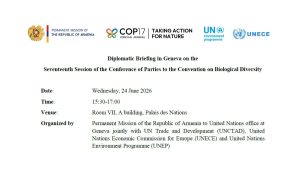
In preparation for the 2026 UN Biodiversity Conference (COP17), convening in Yerevan, Armenia, from 19 to 30 October 2026 under the theme “Taking Action for Nature”, a new diplomatic briefing, convened by the Permanent Mission of Armenia, will take place at Palais des Nations on 24 June 2026, at 15:30 CEST, Room VII. The event aims to inform the Permanent Missions and the relevant international organizations of the preparations leading up to the COP17, in particular, to present the vision of the upcoming Armenian COP17 Presidency, its priorities, and organizational arrangements. As a global hub for biodiversity governance, there will be a strong multilateral Geneva presence at the UN Biodiversity Conference, providing contributions to the events and discussions. → From Geneva to Yerevan | International Geneva @ UN Biodiversity Conference
Earlier this month, the Secretariat of the Convention on Biological Diversity (CBD) announced the release of the first draft of the global report on collective progress in the implementation of the Kunming-Montreal Global Biodiversity Framework (KMGBF), marking an important step in the Global Review process ahead of COP 17. As the world approaches the halfway point toward the Framework’s 2030 targets, the Global Review is the first major global stocktake on implementation of the KMGBF. The draft report shows that since its adoption, the Framework has driven unprecedented global engagement for nature. However, more needs to be done at all levels, and faster, to match the Framework’s ambition and achieve its 2030 targets.
Outcomes of the 2026 June Climate Meetings
The June Climate Meetings concluded in Bonn, Germany on 18 June 2026. While the meeting negotiations concluded without agreement on various issues, including the Global Goal on Adaptation, the Mitigation Work Programme (MWP), research and systematic observation, and certain technology-related matters, important steps were taken towards the operationalization of the just transition mechanism, and to set up the review of the just transition work programme. Parties agreed to select UNEP as the host of the Climate Technology Centre (CTC). Looking towards COP31 in Türkiye, UNFCCC Executive Secretary Simon Stiell underscored in his closing remarks that “We simply cannot afford to re-open previous decisions, to renegotiate existing targets, or to backslide. […] All Parties must be comfortable and confident in restating our existing global commitments. […] Commitments made in the first global stocktake; commitments that respond to the science and the 1.5 degrees limit; on Loss and Damage; on 300 billion; on 1.3 trillion; on tripling adaptation finance; and more. These are the baselines.”
News and opinions on the recently concluded Bonn Climate Change Conference include:
- Earth Negotiations Bulletin Summary
- Daily Policy Updates for the 64th Session of the UNFCCC Subsidiary Bodies (SB 64) | The Loss and Damage Collaboration
- WWF: Bonn signals climate agenda is shifting from talk to delivery | WWF | 18 June 2026
- SB64 exposes growing gap between implementation rhetoric and delivery | Climate Action Network International | 18 June 2026
- June Climate Talks Expose Hard Truth: COP31 Must Reform the UNFCCC to Deliver Climate Action | CIEL | 18 June 2026
- STATEMENT: Bonn Climate Talks Spotlight Practical Steps to Drive Action, Importance of Trade | WRI | 18
- FAO, Türkiye Propose Initiative for Action at Food-Water-Climate Nexus | IISD Knowledge Hub | 17 June 2026
- From COP30 to COP31: Bonn Session Highlights Information Integrity as a Pillar of Climate Implementation | Brazil COP30 Presidency | 17 June 2026
- ITC highlights green competitiveness at Trade and Climate Dialogue | ITC | 15 June 2026
- Bonn Discussions Reinforce Global Convergence Around COP30 Presidency Roadmap to Halt Deforestation and Forest Degradation | Brazil COP30 Presidency | 15 June 2026
- COP30 Presidency Presents Elements of its Roadmap on Transitioning Away from Fossil Fuels | Brazil COP30 Presidency | 15 June 2026
- The just transition mechanism | Friedrich-Ebert-Stiftung | June 2026
Outcomes of G7 Summit
The G7 Summit concluded on 17 June 2026 in Évian-les-Bains, France, adopting 9 declarations on major geopolitical crises and shared challenges, including on securing supply chains for critical minerals, committing to reduce critical dependencies and promoting efficient design, reuse, repair and remanufacturing of products and components rich in critical minerals. The declaration also establishes the G7 Critical Minerals Resilience and Production Alliance, a comprehensive platform for cooperation within the G7 and partner countries to strengthen the diversification and resilience of critical minerals value chains and streamline existing initiatives on critical raw materials.
More news on the outcomes include:
- Warning against ‘consumer club’ as G7 forms critical minerals alliance | Climate Home News | 18 June 2026
- The outcomes of the Évian G7 Summit | G7 France | 17 June 2026
- G7 leaders’ declaration on securing supply chains for critical minerals | G7 France | 17 June 2026
- G7 leaders’ statement on geopolitical issues | G7 France | 17 June 2026
- Leaders’ declaration on mutually beneficial international partnerships | G7 France | 16 June 2026
Tracking Commuting Patterns to Palais des Nations
The Green Mobility Working Group of the Palais des Nations — established to examine issues relating to staff and visitor commuting to and within the Palais des Nations, and to make recommendations to UNOG’s Division of Administration — is currently collecting responses to an anonymous survey (available in French and English) targeting anyone who works at, or regularly visits, the Palais des Nations, as well as personnel of other UN entities in Geneva. The survey aims to track the evolution of commuting patterns since the last survey, which was completed in 2019, and help estimate our commuting-related carbon footprint. The survey will also help ascertain how we can support individuals who work at or regularly visit the Palais with their mobility needs, including those who would like to adopt more sustainable commuting patterns. → The deadline to complete the survey is 10 July 2026.
More Happening Abroad
- London Climate Action Week | An open and inclusive platform for action — and a public good — London Climate Action Week (LCAW) is one of the world’s largest independent climate events. Hosted by E3G — Third Generation Environmentalism, its eighth edition is convening from 20 to 28 June 2026. The UN Secretary-General António Guterres will be at LCAW on 23 June 2026 to deliver a Special Address on the Global Response to the Climate and Energy Crises. → Follow on UN Web TV
- UNEP FI Global Roundtable 2026 | The 19th edition of the Global Roundtable on Sustainable Finance (GRT) will take place in London, UK, from 23 to 25 June 2026. Set out to be one of the UN’s largest sustainable finance-focused events, the event will take place alongside London Climate Action Week. Held in collaboration with the Green Finance Institute, this year’s theme, From Risk to Resilience: Financing the Future’, reflects the growing need across the financial industry to respond to global challenges with vision and leadership for a resilient future. → Learn more about the agenda and register to watch the livestream (23 June only)
- Caux Democracy Forum 2026 | The third edition of the Caux Democracy Forum will take place from 22 to 26 June 2026 at the Caux Palace in Montreaux, following an opening ceremony at the Geneva Graduate Institute. Held under the theme ‘Revitalising Democracy: Hope, Healing and Human Security’, the Forum will discuss the environment in one of its thematic tracks: Towards a Thriving Economy for People and Planet – Shaping systems aligned with well-being and planetary boundaries.
Enjoy a Green “Hot” Summer in Geneva
The Canton of Geneva has activated its heatwave plan from through Tuesday 23 June 2026, and MetoSuisse extended its heatwave warning on Sunday until 27 June for north of the Alps and 28 June for the south. The measures include additional protections for vulnerable groups, and some schools and childcare facilities have introduced exceptional arrangements. While temperatures are high, all are encouraged to take appropriate precautions, including staying hydrated, keeping workspace as cool as possible, adjusting schedules where feasible, and limiting strenuous activities during the hottest parts of the day.
As summer unfolds, Geneva comes alive with sunshine, nature, and endless possibilities. From open-air festivals and lakeside activities to exhibitions, workshops, and nature walks, discover a variety of events that celebrate the season of light and environmental awareness. Whether you’re looking to cool off in green spaces, dive into sustainability, or simply enjoy the beauty of nature in full bloom, find your inspiration for a vibrant Green Summer in Geneva. Suggestions for this week include:
- L’alimentation durable : un privilège de bobos ? | 23 June 2026 | APRÈS-Ge | L’ESPACE
This interactive event explores the real economic and social costs of our food system. Through participatory activities, and exchanges with producers, researchers, restaurateurs, and community organizations, attendees are invited to examine the relationship between affordability, sustainability, and fair compensation across the food chain. - How can we talk about climate change without scaring people? | 23 June 2026 | Parents d’avenir | Arcade Mère et Terre
Throughout this three-part workshop series, you will learn about how to discuss environmental issues with children in a constructive way, as parents and caregivers. - AMR Jazz Festival in Les Cropettes | 24-28 June 2026 | AMR | Parc Des Croppettes
AMR Jazz Festival is a free open-air music festival celebrating jazz and improvised music in the heart of Geneva. During it, participants are invited to discover a diverse programme of local artists through 27 concerts set in the welcoming atmosphere of Parc des Cropettes. With food stands, refreshments, and live performances throughout the festival, the event offers an opportunity to enjoy music, community, and summer evenings. - De la guerre froide à la guerre verte | 25 June 2026 | Public Eye | Cinéma Bio
A special screening of Anna Recalde Miranda’s documentary exploring the links between Paraguay’s dictatorial past and present-day struggles over land, agriculture, and environmental justice. The film “De la guerre froide à la guerre verte” will be followed by a discussion with the director and investigative journalist Pierre Abramovici, questioning the social and environmental issues highlighted in the film. - Between nature and me | 25 June 2026 | City of Geneva | Espace de quartier Jonction
With this creative workshop, seniors are invited to transform recycled materials into unique artistic objects. Led by local artist Claudia Osorio, the sessions offer a welcoming space to explore creativity, share ideas, and give new life to everyday materials through hands-on activities. - Projection de courts-métrages sur la jetée | 25 June 2026 | La jetée des Bains
An open-air screening of three short films, presented by Cinema Spoutnik, on the jetty of the Bains des Pâquis. Through stories exploring memory, tradition, identity, and spirituality, the programme invites all the audiences to discover unique perspectives from around the world. - Tous à la Plage Festival | 25 – 27 June 2026 | TAP Festival | La Canopée
This lively open-air festival brings together Afro-Latin, jazz, and Latin music on Geneva’s lakeside. Over three evenings, music lovers are invited to enjoy concerts, dancing, and a festive summer atmosphere at La Canopée. Set along the waterfront, the festival offers a welcoming space to celebrate music, discover new artists, and make the most of long summer evenings in the city. - Chanter le Léman | 26 June 2026 | ASL | Espace Léman
A fun singing workshop open to all ages and experience levels. Guided by singer and vocal coach Circé Luginbühl, participants are invited to explore songs inspired by Lake Geneva through vocal exercises, group singing, and creative musical activities. - 4th Edition of the Léman Bouquet Festival | 26 – 28 June 2026 | Léman Bouquet Festival | Various Locations
Come and enjoy this unique cross-border music festival gathering classical music, jazz, opera, and choral performances in several villages around Lake Geneva. Over three days, audiences can enjoy concerts, musical discussions, and a cycling journey linking venues on both the Swiss and French shores. - Faites du nautisme | 27 – 28 June | ASL | Evian, Village de l’environnement, Centre nautique
Association pour la Sauvegarde du Léman (ASL) will partake in the “Faites du Nautisme” event: the 60th anniversary of the Nautical Center and 400thn anniversary of the French Navy. Visitors can engage in nautical introductions, sports activities, and environmental awareness events during this weekend. - 25th anniversary Exhibition of Four Paws | Until 18 June 2026 | QUATTRE PATTES | Maison de Quartier de Saint Jean
This exhibition celebrates 25 years of FOUR PAWS’ commitment to animal welfare through a collection of photographs and personal testimonies highlighting key milestones of the organization’s work. Visitors can explore the challenges and achievements of animal protection efforts in Switzerland and beyond, while gaining insights into the importance of promoting animal welfare and responsible treatment of them. - Exhibition “Quel froid!” | Until 30 August 2026 | Maison Tavel
This exhibition explores the theme of winter in Geneva and beyond, bringing together traditions, artists’ perspectives, and visual archives. Visitors are guided through popular practices, urban scenes, and majestic landscapes, from Lake Geneva to the Alps. - Temporary Exhibition – « Jamais la nature ne nous trompe » | Until 23 December 2026 | Jardin Botanique de Genève
Discover a scientific and aesthetic object that bears witness to Jean-Jacques Rousseau’s passion for nature and botany: one of his rare portable herbariums, designed to deepen knowledge of plants and awaken an interest in botany. - Exhibition “Art et évolution” | Until 31 January 2027 | Jardin Botanique de Genève
Through the Jardin Botanique’s scientific collections, visitors will be invited to discover how plants and fungi have evolved over time and how biodiversity can be interpreted through an artistic perspective. The exhibition highlights the importance of understanding and preserving living ecosystems while fostering dialogue between science and society.
What (Else) to Read Next?
- Our Ocean Conference Announces Canada and Jamaica as Next Hosts | WRI | 19 June 2026
Canada and Jamaica have been confirmed as the next hosts of the Our Ocean Conference (OOC) in 2027 and 2029, respectively. World Resources Institute serves as the Secretariat for the conference. - WMO Bulletin Vol. 75/01: The Air Issue | WMO | 19 June 2026
The WMO Bulletin looks at how observations, science, data and global cooperation shape the way the world understands and responds to weather, climate and water risks. It focuses on the real-world impact of the work of the WMO community, in supporting early warnings and informed decision-making.
- Shipping disruptions and maritime CO₂ emissions: Evidence from the closure of the Strait of Hormuz | OECD | 18 June 2026
The OECD’s experimental Maritime Transport CO2 emissions database tracks CO2 emissions for the global fleet, with breakdowns by vessel-type and by country. In this article, we use these data to examine how the current crisis has reshaped the emissions profiles of oil and Liquefied Natural Gas (LNG) tanker fleets most directly affected.
- UNEP and GEF kick off global initiative to strengthen monitoring of toxic chemicals and mercury | UNEP | 18 June 2026
UNEP and GEF have officially kicked off a US$ 23.5 million Global Chemicals Monitoring Programme (GCMP). The initiative is designed to support the evaluation of the effectiveness of the Stockholm Convention on Persistent Organic Pollutants (POPs) and the Minamata Convention on Mercury; it aims to reduce global pollution while strengthening developing countries’ capacity to monitor hazardous chemicals and support evidence-based policy making.
- Banks Pump Over US$250 Billion Into Petrochemicals Despite Growing Industry Risks | CIEL | 17 June 2026
Major banks have channeled over US$250 billion into the world’s top fifteen petrochemical companies since 2019, according. Deep Pockets, Dirty Profits: How Banks and Investors Are Financing the Global Petrochemical Industry exposes the financial scale of the petrochemical industry worldwide. It highlights that these investments are embedded in large-scale financial plans and backed by systemic financing, despite growing recognition of the industry’s environmental, human rights, and public health impacts. - Country-level analysis: Iran War increasing global poverty and food insecurity | IFPRI | 16 June 2026
The economic impacts flowing from the closure of the Strait of Hormuz continue to reverberate, raising concerns across developing countries facing spiking global fuel and fertilizer prices. New economy-wide modeling conducted by IFPRI shows that high prices could increase global food insecurity and push more than 20 million into poverty across 20 developing countries.
- Global fish production hits new high, but climate threats loom | UN News | 16 June 2026
Global fisheries and aquaculture production reached a record 188.2 million tonnes in 2024, cementing seafood’s role as a critical source of nutrition and income for billions of people, according to The State of World Fisheries and Aquaculture 2026. For the first time, aquaculture now accounts for the majority of fish destined for human consumption, a historic shift with profound implications for food security and environmental sustainability. The study shows that aquatic foods supply essential proteins, omega-3 fatty acids, vitamins and minerals that are difficult to obtain from other sources, particularly for vulnerable populations in low-income countries. - New polling shows overwhelming global business support for clean electrification amid fossil fuel volatility | E3G | 15 June 2026
Powering Up: Business Perspectives on Electrification warns that countries failing to electrify risk losing out to more electrified economies, with 62% saying they would consider moving operations if their government did not offer sufficient support to electrify. The polling, conducted across key economies and emerging markets underscores growing business demand for clean electrification as a strategy for energy security, competitiveness and economic growth, as well as tackling climate change. - ‘Finish Pandemic Agreement,’ Tedros and Lula Urge Ahead of G7 | Health Policy Watch | 15 June 2026
World leaders need to finalize the Pandemic Agreement by applying political will at the “highest level”, a spirit of equity and a sense of urgency. This is the call made by World Health Organization (WHO) Director-General Dr Tedros Adhanom Ghebreyesus and Brazilian President Luiz Inácio Lula da Silva in an open letter published on Monday ahead of the G7 summit in France. - States must end escalating conflicts and address the root causes of forced displacement to make progress towards SDGs | Special Procedures of the United Nations Human Rights Council | 15 June 2026
UN experts have expressed concern that escalating conflicts and record levels of internal displacement are undermining and reversing the progress toward the Sustainable Development Goals (SDGs). As displacement becomes increasingly protracted, its impacts risk eroding hard-won gains, the experts said ahead of the annual ECOSOC Transition Meeting from Relief to Development taking place on 16 June in New York. - Biofuels and biodiversity | IUCN | June 2026
Biofuels can offer a more sustainable alternative to fossil fuels, but their sustainability depends on how biomass is grown, sourced and governed. Poorly planned production and expansion can harm biodiversity, ecosystems and food security. Sustainability varies across biofuel types. Crop-based fuels often compete with food crops and drive the conversion of natural areas into farmland, while advanced biofuels from waste, residues or algae offer lower-impact alternatives. Biodiversity safeguards, strong policy frameworks, clear sustainability standards and community participation are key to ensuring sustainable biofuel production.
Events
See all
Body Meeting
62nd session of the Human Rights Council | HRC62
15 Jun – 08 Jul 2026
Palais des Nations | Assembly Hall
HRC
Body Meeting
Eightieth Session of the Executive Council (EC-80)
22 – 26 Jun 2026
WMO Headquarters
WMO
Conference
Geneva Heat Resilience Dialogue | The Imperative and Opportunities for Extreme Heat Risk Governance and Investment
22 Jun 2026 | 10:30 – 12:30
Permanent Mission of India
India, UNDRR
Conference
Transforming Food Systems and Ensuring Corporate Accountability as a Climate and Human Rights Imperative | HRC62 Side Event
22 Jun 2026 | 12:00 – 13:00
Palais des Nations | Room IX
FIAN International, Special Procedures of the UN Human Rights Council, FES, Franciscans International, CETIM, CIEL, La Via Campesina, Indonesian Peasant Union, Republic of the Marshall Islands
Conference
Human Rights of Future Generations and Sustainable Development | HRC62 Side Event
22 Jun 2026 | 13:00 – 14:00
Palais des Nations | Concordia 5
CIEL, FIAN International

Conference
The Sumaúma Pledging Tree for Human Rights-Based Climate Action | HRC62 Side Event
22 Jun 2026 | 14:00 – 15:00
Palais des Nations, Room V
OHCHR
Virtual
GEEE Task Force on Industrial Energy Efficiency Bimonthly Open Discussion Forum 2026 | Systemic Efficiency and Resilience in Urban Heating and Cooling
22 Jun 2026 | 14:00 – 16:00
Online
UNECE
Conference
Joint FAO/WFP Briefing on Hunger Hotspots, El Niño and Joint Scaling Up of Anticipatory Response
22 Jun 2026 | 15:00 – 16:00
Palais des Nations, Room H.307.1
FAO, WFP
Virtual
A Just Transition in Domestic and Community Care: A Webinar About Care Work and Just Transition
22 Jun 2026 | 15:30 – 17:00
Online | Zoom
UNRISD

Body Meeting
15th Meeting of the Open-ended Working Group of the Basel Convention (OEWG-15)
23 – 26 Jun 2026
International Conference Center Geneva (CICG)
BRS
Virtual
Environment, Climate, Conflict and Peacebuilding (ECCP): June Monthly Meeting
23 Jun 2026 | 14:00 – 15:00
Online | Zoom
ECCP
Conference
The Case for Basel Controls on all Plastic Wastes: Local Realities of the Global Waste Trade | Basel OEWG-15 Side Event
23 Jun 2026 | 18:30 – 19:30
CICG, Room 4 & Online | Webex
Basel Action Network, IPEN
Body Meeting
30th meeting of the Working Group of the Parties to the Aarhus Convention
24 – 26 Jun 2026
Palais des Nations | Room III
Aarhus Convention
Conference
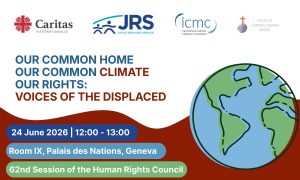
Our Common Home, Our Common Climate, Our Rights: Voices of the Displaced | HRC62 Side Event
24 Jun 2026 | 12:00 – 13:00
Palais des Nations, Room IX
Caritas Internationalis, Jesuit Refugee Services, ICMC, Forum International

Conference
The Road Ahead: Sustaining Peace Through Decent Work | UN Peacebuilding Week 2026 Side-event
24 Jun 2026 | 14:30 – 16:00
ILO Headquarters Room VIII & Online
ILO, UNDP, Geneva Peacebuilding Platform, Switzerland
Virtual
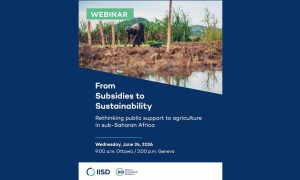
Report Launch | From Subsidies to Sustainability: Rethinking public support to agriculture in sub-Saharan Africa
24 Jun 2026 | 15:00 – 16:15
Online | Zoom
IISD
Conference
Diplomatic Briefing in Geneva on the Seventeenth Session of the Conference of Parties to the Convention on Biological Diversity
24 Jun 2026 | 15:30 – 17:00
Palais des Nations | Room VII
Armenia, UNCTAD, UNECE, UNEP
Body Meeting
Negotiating Group on Rules Information session – Data on fisheries subsidies and fish stock
25 Jun 2026 | 10:00
WTO | Room CR
WTO

Conference
E-Waste Trafficking Out of Control One Year After Basel E-Waste Amendments | Basel OEWG-15 Side Event
25 Jun 2026 | 13:30 – 14:30
CICG, Room 4 & Online | Webex
Nexus3 Foundation, Basel Action Network, BAN Toxics, EARTH Thailand
Conference
Energy Transition, Governance and Human Rights: Towards Integrated Approaches to the Right to Development in North Africa
25 Jun 2026 | 17:00 – 18:00
Club Suisse de la Presse
IOPDHR, Alliance Suisse Maroc, PDES-ONG
Conference
Horizon Léman 2030 – Bilan à mi-parcours du Plan d’action CIPEL
26 Jun 2026 | 09:00 – 13:30
Auditorium Jacques Freymond, Parc Barton
CIPEL

Conference
The Geneva Nexus: Oceans, Health, and Food Security
26 Jun 2026 | 10:00 – 12:30
Palais des Nations | Room XI
Portugal

Cinema
The Forgotten Pacific | Film Screening
26 Jun 2026 | 13:00 – 15:30
Palais des Nations, Room XIV (Cinema Room)
Australia, Republic of the Marshall Islands, Pacific Islands Forum, Micronesia, Fiji, Kiribati, Nauru, New Zealand, Papua New Guinea, Samoa, Vanuatu
Conference
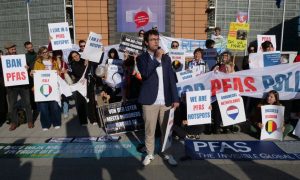
The Threats of PFAS on Human Rights, the so-called “Forever Chemicals” | Geneva Toxic Free Talks
26 Jun 2026 | 13:45 – 14:45
Palais des Nations, Room S-29
Earthjustice, GEN, Special Procedures of the UN Human Rights Council
Jobs
See all

Intern
Stagiaire en gestion de projet et communication environnementale à 80 %
23 Jun 2026
J'aime ma Planète


Professional
Collaborateur ou Collaboratrice scientifique – Coopération à 80-90%
25 Jun 2026
Geneva Botanic Garden

Professional
Junior Professional Officer (JPO) | Associate Scientific Officer (Early Warning Services)
26 Jun 2026
WMO
Learning
See all
Course in Geneva
Santé environnementale: Changement climatique et enjeux sanitaires
16 – 23 Jun 2026
University of Geneva
UNIGE
Course in Geneva
Ecole d’été ODD: Diplomatie scientifique, multilatéralisme et enjeux globaux | Geneva Summer School
22 Jun – 03 Jul 2026
University of Geneva
UNIGE, SDG Solutions Space
Course in Geneva
Science & Policy for Environmental Action | Geneva Summer School 2026
22 – 26 Jun 2026
UNIGE