
Newsletter 04 Nov 2024
Environment: What’s Up in GENeva | 4 – 10 November 2024
The Geneva Environment Network’s weekly newsletter includes the latest information on the global environmental agenda, main events, job vacancies, as well as other useful resources and updates. Stay tuned and follow us on X (Twitter), Facebook, LinkedIn, Instagram, and Youtube, or visit our website regularly for additional updates.
Celebrate with us and join our 25th Anniversary of the Geneva Environment Network call for video messages. To take part, record a video message (maximum 2 minutes) on how the Geneva Environment Network has been GENerating participation and engagement for increased collaboration among stakeholders for stronger environmental governance in the fight against the triple planetary crisis.
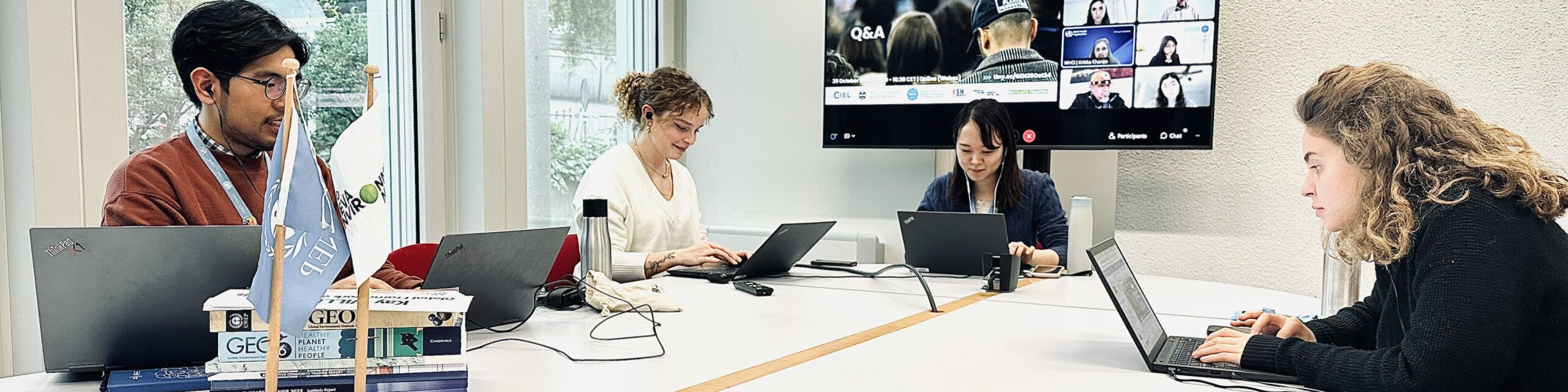
Image of the week | The Geneva Environment Network team working behind the Scenes at the Road to Busan Geneva Beat Plastic Pollution Dialogue on “Prioritizing Principles of Accountability, Transparency and Justice in the Future Global Plastics Treaty” making links with various obligations under various Geneva multilateral processes. Rewatch the Beat Plastic Pollution Dialogues on the dedicated YouTube playlist.
Road to Busan | An Ambitious, Credible and Just Deal to End Plastic Pollution
As we approach the fifth session of the Intergovernmental Negotiating Committee to develop an international legally binding instrument on plastic pollution, including in the marine environment (INC-5), to convene at the end of this month in Busan, Republic of Korea, initiatives and discussions continue highlighting important aspects to achieve the goal of ending plastic pollution and support a timely outcome at this final negotiating session.
Last week:
- The Second Ministerial Conference on Plastic Pollution Including Marine Litter held on 28 October, within the framework of the UN Biodiversity Conference in Cali, counted on the participation of the UN Secretary-General, António Guterres, who stressed that people around the world “are demanding” action on plastic pollution and that “an ambitious, credible and just agreement is the only way“. The Secretary-General urged negotiators meeting in Cali to conclude an agreement by the end of 2024 — as Member States recommitted to in September, when they issued the Pact for the Future. → Read the co-hosts and co-facilitators summary and the UN News Article
- The INC Chair, H.E. Amb. Luís Vayas, released his third Non-paper, a document building that will serve as the basis for negotiations in Busan.
- A WWF policy brief analysing the third iteration of the non-paper, finds the document lacking in core measures that would make the resulting treaty fit for purpose. → Read the press release.
- CIEL updated its Comparison Table of Future Elements of the Plastics Treaty, outlining the evolution of the drafts of the future plastics treaty, including the Chair’s non-paper that were prepared in advance of INC-5. → Consult CIEL preparatory materials for INC-5.
- IPEN released its Quick Views, stressing that in finalizing the negotiations for the future Plastics Treaty, the INC should ensure that the health-protective objectives of the Treaty are supported by meaningful global controls and that the INC fulfils the UNEA mandate by addressing the full life cycle of plastics. → Consult IPEN Resources.
- Sara Hussein, “Future of the Planet” reporter for AFP, has collected in her article New Doubt Over Production Cuts In Plastic Pollution Treaty, released on 31 October, reactions from Member States and stakeholders on the Chair’s non-paper.
- Greenpeace International, Plastic Pollution Coalition, and the Break Free from Plastic movement launched the “Champions of Change“ joint initiative — a group of progressive and ambitious businesses from around the world, have signed an open letter calling on the world’s governments to negotiate an ambitious Global Plastic Treaty that will cut plastic production for good — and make it easier for companies to do the right thing. → Read the press release.
- More than 20 chief executives from some of the world’s largest companies have called on governments to agree ‘global binding rules’ to address the issue of plastic pollution. The 21 business leaders have signed an Open Letter ahead of INC-5 organized by the Business Coalition for a Global Plastics Treaty.
This week:
- Two Geneva Beat Plastic Pollution Road to Busan Dialogues will gather Member States and stakeholders to discuss
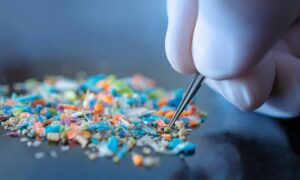
- Launch and Panel Discussion | Analysis of Governments’ Authority to Mitigate Micro- and Nanoplastic Releases to Inform the Global Plastics Treaty Negotiations | This event, co-organized by the University of Wollongong with the support of the Minderoo Foundation and the Geneva Environment Network, will launch a new report presenting a chemical engineering systems approach to the design of plastic products to mitigate micro- and nanoplastic exposure and harm. Leading experts joining the panel of this event will reflect on its findings and messages, as well as links with other recent studies and to the global plastics instrument, emphasizing the need to include specific measures, approaches and principles in the instrument related to micro- and nanoplastics. → Register and join us on Webex on 6 November 2024 from 14:00 to 15:30 CET.
- Plastics Treaty Talks: Designing an Effective Treaty | This event, co-organized by the Center for International Environmental Law and Geneva Environment Network, aims to explore the lessons learned from various multilateral spaces to inform the design of an effective treaty. The event will be an opportunity to discuss different treaty approaches, compare experiences from other multilateral environmental agreements, and identify actions that can be deferred to the Conference of the Parties (COP) decisions versus those that would require future treaty amendments. → Register and join us on Webex on 7 November 2024 from 16:00 to 17:30 CET.
- Other events of interest taking place this week include:
- The Work of the WTO Dialogue on Plastic Pollution: Insights and Reflections for the INC Process | TESS | 6 November 2024 | 11:00 – 12:15 CET
- Plastics and Human Health | BreakFreeFromPlastics | 6 November 2024 | 09:00 CET
Other recent news include:
- What do bath bombs, ice cream, and reusable coffee cups have in common? | Greenpeace | 30 October 2024
- We encourage Member States and stakeholders following Geneva multilateral processes to rewatch the dialogue Road to Busan | Prioritizing Principles of Accountability, Transparency and Justice in the Future Global Plastics Treaty that made links and mentioned obligations under the Aarhus Convention, the WHO Framework Convention on Tobacco Control, as well as human rights procedures.
- Shells To Surfboards: How Wildlife Has Adapted To Plastic | Sara Hussein | AFP | 30 October 2024
- The Growing Scourge Of Plastic Pollution: In Numbers | Isabel Malsang | AFP | 29 October 2024
- How Harmful Are Microplastics To Human Health? | Isabelle Cortes| AFP | 29 October 2024
- Are Bioplastics Really The Wonder Alternative To Petro Plastics? | Isabel Malsang | AFP | 29 October 2024
- Countdown To Busan: Is A Plastic Pollution Treaty In Reach? | Sara Hussein | AFP | 28 October 2024
- The next president could address the plastics crisis — or worsen it. Here’s how. | Joseph Winters | Grist | 1 November 2024
→ Preparing to attend INC-5 in Busan? Check our regularly updated Road to Busan | Plastic Pollution INC-5 page for resources and updates and rewatch the latest Geneva Beat Plastic Road to Busan Dialogues.
Environment @ 2024 Annual Conference of the Geneva Human Rights Platform
The 2024 Annual Conference of the Geneva Human Rights Platform will gather the international community both within and beyond Geneva to highlight pressing issues and challenges confronting Geneva-based actors in the field of human rights. In the face of turbulent times, human rights remain the guiding principles that unite humanity and offer a path through the current crises, as emphasized by the UN High Commissioner for Human Rights. As the interconnections between human rights and various policy areas are becoming increasingly evident — including global health, internet governance and new technologies, environmental issues, and climate change — the sixth edition of the Conference will explore how the strength and potential of human rights can be harnessed to benefit the work of other actors. → Register to attend the Annual Conference at Maison de la Paix, Petal 5, Room C1 on 5 November 2024 from 9:15 to 15:00 CET.
Two sessions of the Conference dive deeper into the interlinkages between human rights and the environment:
- Human Rights in Preventing Environmental Triggers to Conflict | Workshop | 11:00 – 12:30 CET
This workshop, co-organized by the Geneva Human Rights Platform, the Geneva Environment Network, the Geneva Peacebuilding Platform, Earthjustice, will explore pressing questions about community expectations on the role of human rights in preventing environmental triggers from escalating into conflict. By examining the lessons learned from Geneva’s role in peacebuilding, where the Second International Conference on Environmental Peacebuilding took place in 2022, and considering the potential of human rights, especially those related to the environment, as a tool for conflict prevention, this workshop aims to foster an in-depth discussion on how human rights can contribute to a more peaceful future.
- High-level Inter-agency Panel on Human Rights | 13:30 – 15:00 CET
This panel discussion, co-organized with the Geneva Graduate Institute, closes the 2024 Annual Conference of the Geneva Human Rights Platform. In light of the recently adopted Pact for the Future, high-level representatives of various UN agencies, are invited to reflect upon where human rights are present in their mandates, policies and programs, and what further input and guidance they would welcome from the human rights system.
From Geneva to Baku | From Climate Emergency to Action
While stakeholders from all over the world start heading towards Baku, Azerbaijan, for the 2024 UN Climate Change Conference COP29, taking place from 11 to 22 November 2024, the climate emergency continues making the headlines for its devastating impacts, including:
- Devastating floods have hit eastern Spain over the past week. With over 400 litres of rainfall per sq meter falling in just eight hours in the area around Valencia, the disaster has become the deadliest episode of flooding in the country’s modern history.
- Typhoon Kong-rey makes landfall in Taiwan, becoming the strongest to hit it in decades, with winds that reached over 200km/h before it made landfall, making it the equivalent of a Category 4 hurricane.
As impacts of climate change become more frequent and devastating, the upcoming climate COP marks a pivotal step to boost international collaboration on climate adaptation and mitigation. To inform negotiations, various reports and studies are being launched, including last week:
- Lancet Countdown on health and climate change: facing record-breaking threats from delayed action | Lancet | 29 October 2024
The latest Lancet Countdown report reveals the health threats of climate change have reached record-breaking levels. While people in every country face unprecedented health threats from the changing climate, continued investment in fossil fuels and lagging funding for action to protect health persist. Urgently redirecting resources from the fossil fuel-based economy towards a zero-emissions, healthy future will deliver rapid health and economic benefits. - 2024 Nationally Determined Contributions (NDC) Synthesis Report | UNFCCC | 28 October 2024
The report assesses the combined impact of nations’ current national climate plans (NDCs) on expected global emissions in 2030, among other measures. As stated by UN Climate Change Executive Secretary Simon Stiell, “the report’s findings are stark but not surprising – current national climate plans fall miles short of what’s needed to stop global heating from crippling every economy, and wrecking billions of lives and livelihoods across every country.” - WMO Greenhouse Gas Bulletin No. 20 | WMO | 28 October 2024
The Greenhouse Gas Bulletin found that GHG levels surged to a new record in 2023, committing the planet to rising temperatures for many years to come. Carbon dioxide (CO2) is accumulating in the atmosphere faster than any time experienced during human existence, rising by more than 10% in just two decades. → Read WMO Press Release. - 10 New Insights in Climate Science 2024/2025 | Future Earth, The Earth League, World Climate Research Programme | 28 October 2024
Each year, leading scientists from around the world review the most pressing findings in climate change-related research. Summarized into 10 concise insights, the result has been a rich and valuable synthesis for policy and society at large.
- Physical Climate Risk Assessment and Management: An investor playbook | Developed by the Adaptation and Resilience Investors Collaborative (ARIC), the playbook provides investors with a simplified step-by-step approach to integrate the identification, assessment and management of physical climate risks in the investment process. UNEP FI is the Secretariat for ARIC and has supported the preparation and development of this playbook.
Additional reports to be launched this week include:
- UNCTAD report on The New Collective Quantified Goal on climate finance: quantitative and qualitative elements emphasizes that for this new goal to truly make a difference, it must go beyond simply setting a high funding target. Instead, it should also focus on ensuring that funds are allocated in ways that address the unique needs of developing countries, enabling them to build climate-resilient economies capable of enduring and thriving in the face of climate change. The report will be launched online on 4 November 2024 at 14:00 CET.
- The Least Developed Countries Report 2024: Leveraging Carbon Markets for Development | This annual UN Trade and Development report provides a source of socio-economic analysis and data on the world’s most impoverished countries. The 2024 edition tackles the timely questions of whether, and to what extent, carbon markets can contribute to green structural transformation in the least developed countries. It highlights the current state of play and the future potential of carbon markets to mobilize finance and undertake mitigation of greenhouse gases in the least developed countries. The Report is under embargo until 4 November 2024, 17:30 CET.
- Adaptation Gap Report 2024 | UNEP’s Adaptation Gap Report series provides a science-based assessment of the global progress on adaptation planning, financing, and implementation. It also explores options for enhancing and advancing national and global adaptation efforts and provides analysis of selected issues of interest. The 2024 edition provides a more in-depth assessment of technology transfer and capacity building. UNEP will officially launch its annual Adaptation Gap Report at an online press conference on 7 November 2024. → Watch the live stream
- State of Climate Services Report 2024: Five years of progress | As part of a series of reports to be released for the UN Climate Change COP29, WMO will release this report on 7 November 2024.
Additional news and resources include:
- IUCN at UN Climate Change Conference COP29 | Guided by its position paper, IUCN will be actively engaged in various processes and spaces across the conference.
- What Will Happen at COP 29? Q and A with Jennifer Bansard of Earth Negotiations Bulletin | IISD | 1 November 2024
- Business Breakthrough Barometer | WBCSD | 31 October 2024
- Inside COP29 | IISD
- Adding Fuel to the Fire: How export restrictions can exacerbate climate change’s impacts on global food security | Facundo Calvo | IISD | 28 October 2024
- How Can a Fossil Fuel Levy Cut Emissions and Finance Climate Action? | David Manley and Paola Yanguas Parra | IISD | 24 October 2024
- Mortality burden attributed to anthropogenic warming during Europe’s 2022 record-breaking summer | Thessa M. Beck, Dominik L. Schumacher et al. | npj Climate and Atmospheric Science volume | 29 October 2024
- Time to protect environmental defenders and ensure their safe participation in international forums relating to the environment and climate change. A joint statement by international and regional human rights expert | 29 October 2024
- 10 actions to strengthen national climate commitments | IPU | 22 October 2024
Events taking place this week include:
- Climate Classroom | Loss and Damage: Updates on the Fund and Board | UNCC: Learn | 4 November 2024 | 10:00 CET | Online, Zoom
- COP29: Can countries unlock new climate finance? | Geneva Solutions, Geneva Press Club | 4 November 2024 | 12:15 CET | Domaine du Château de Penthes & Online
- Climate Classroom | Climate Change and Human Rights | UN CC:Learn, OHCHR | 4 November 2024 | 14:00 | Online | Zoom
- Addressing climate mitigation for banks in Africa and Middle East: Insights and perspectives from banks in the region | UNEP FI | 6 November 2024 | 11:00 – 12:30 CET | Online, BrightTalk
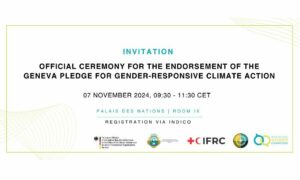
- Official Ceremony for the Endorsement of the Geneva Pledge for Gender-Responsive Climate Action | International Gender Champions, Germany, Costa Rica, IFRC, Climate Bridges | 7 November 2024 | 09:30 – 11:30 CET | Palais des Nations, Room IX
- Climate Classroom | Inclusive Entrepreneurship for Climate Action | UN CC:Learn, UN Women | 7 November 2024 | 10:00 CET | Online, Zoom
- Climate Classroom | Climate Change Negotiations and Health | UN CC:Learn, WHO | 7 November 2024 | 13:00 CET | Online, Zoom
- Climate Classroom | Integrating Nature in National Adaptation Plans (NAPs) | UN CC:Learn, UNEP | 8 November 2024 | 10:00 CET | Online, Zoom
- A Geneva Policy Dialogue for Impact: Country solutions on education in emergencies and climate change | Geneva Global Hub for Education in Emergencies, Colombia, Philippines, Switzerland, United Kingdom | 8 November 2024 | 10:30 – 12:00 CET | Palais des Nations, Room V & Online
- Climate Classroom | Climate Services for Climate Action | UN CC:Learn, WMO | 8 Nov 2024 14:00 | Online, Zoom
→ Stay tuned with more updates on the contributions of Geneva actors on the road to Baku with our dedicated page
From Cali to Geneva | Progress and Challenges in Making Peace with Nature
The 16th meeting of the Conference of the Parties to the Convention on Biological Diversity (CBD COP 16) was suspended at 8.27 am of Saturday 2 November, after roughly 12 hours of meeting in the Plenary session. COP 16 lost quorum and was suspended before approval of a few last items. It will resume at a later date and venue to complete the agenda. Member States:
- agreed on an expanded role of Indigenous Peoples and local communities in biodiversity decision-making, establishing a subsidiary body on Article 8(j) and related provisions of the Convention,
- adopted a decision on the role of people of African descent in the implementation of the Convention,
- adopted an agreement on the operationalization of a new global mechanism to share benefits from digital genetic information.
- failed to establish a new wider biodiversity fund and to approve the Convention budget for the next two years.
With a record number of 23,000 pre-registered delegates, a High-level Segment attended by six Heads of States, more than 130 Ministers and Vice Ministers, and over 70 leaders of international organisations, what has been by far the largest CBD COP — the People’s COP — welcomed and allowed the participation of a broad set of stakeholders, with Indigenous Peoples at the centre stage. The results, built on a spirit of compromise, and dialogue, demonstrate that “multilateralism can still achieve results in a fractious time”. Armenia will host the UN Biodiversity Conference COP17 in 2026. → Read more on the outcomes in the CBD press release and the Earth Negotiation Bulletin.
Reactions to the outcomes of the Cali meetings include:
- IUCN | IUCN Director General’s statement on COP16 of the Convention on Biological Diversity
- WWF | Some successes, but COP16 in Cali ends in disappointment, with crucial finance agreements delayed
- CIEL | UN Biodiversity Conference Reaffirms Geoengineering Moratorium but Falls Short on Fossil Fuel Phaseout
- IISD | COP 16 in Cali Delivers Key Outcomes for Nature but Questions Remain on Funding
- UNEP | UNEP Executive Director Video Statement on COP16 has delivered but critical tasks lie ahead
- GEF | GEF CEO Reflections on COP16 in Colombia
- UN News | COP16: Landmark biodiversity agreements adopted
Statements and documents issued last week include:
- In a statement, 141 groups of Indigenous Peoples, civil society organizations, and social movements, urge Ministers of Environment and National Focal Points of the CBD COP16 to take immediate action to halt new oil and gas activities and manage the decline of existing operations, especially in areas of high biodiversity importance.
- Global Ecosystems Atlas unveiled to transform ecosystems stewardship | The Group on Earth Observations (GEO) announced the launch of the proof-of-concept of the Global Ecosystems Atlas, the first harmonised resource dedicated to mapping and monitoring all the world’s ecosystems. The Global Ecosystems Atlas will serve as an essential tool to support the protection, restoration and sustainable management of ecosystems critical to addressing global environmental crises.
- Protect Planet Report | Launched by UNEP WCMC and IUCN, the report provides the first official global evaluation of progress towards one of the Framework’s 23 targets – Target 3 (the global commitment to protect and conserve 30% of the Earth’s lands and waters by 2030). Target 3 goes well beyond coverage, it requires that protected and conserved areas are effectively managed, equitably governed and recognized with respect for the rights of Indigenous Peoples and local communities. It also commits governments to conserve the most important natural spaces and to ensure that these areas are connected to each other. In short, the elements of the target call for in situ conservation to be scaled up in ways that benefit both nature and people. → Read UNEP’s press release
- First Global Tree Assessment | According to the first Global Tree Assessment, published in the updated IUCN Red List of Threatened Species, thirty-eight % of the world’s trees are at risk of extinction. For the first time, the majority of the world’s trees have been listed on the IUCN Red List, revealing that at least 16,425 of the 47,282 species assessed are at risk of extinction. Trees now account for over one-quarter of species on the IUCN Red List, and the number of threatened trees is more than double the number of all threatened birds, mammals, reptiles and amphibians combined. Tree species are at risk of extinction in 192 countries around the world.
- Designing and managing protected and conserved areas to support inland water ecosystems and biodiversity | Motivated by the Kunming-Montreal Global Biodiversity Framework’s inclusion of inland waters in the target to conserve 30% of the planet by 2030, this IUCN report provides guidance in employing protected areas and other effective area-based conservation measures to benefit these ecosystems and the biodiversity they support. Through a series of case studies and synthesized research, it highlights how integrating the unique needs of inland waters into area-based strategies can improve conservation effectiveness across all realms, build climate resilience and sustain critical ecosystem services.
- What Are Nature Strategies and Nature Transition Plans? | Developed by Business for Nature, Glasgow Financial Alliance for Net Zero, Science Based Targets Network, Taskforce on Nature-related Financial Disclosures, WBCSD, WEF and WWF, this explainer document aims to help organizations articulate how they plan to respond and contribute to the transition implied by the GBF and support businesses and financial institutions drive accountability, and manage their nature-related dependencies, risks and opportunities.
- Exploring nature-positive buildings | WBCSD, in collaboration with its members and supported by global sustainable development consultancy Arup, has launched this research on how to measure and monitor the nature impacts of buildings across their whole lifecycle.
- 10 Years of Tiger Conservation Action | This comprehensive report celebrates a decade of success in protecting and restoring tiger habitats across Asia thanks to our implementing partners and funding from the German Cooperation via KfW Development Bank. It not only provides a detailed overview of key milestones in tiger conservation, but also emphasises the critical role of Indigenous Peoples and local communities in fostering sustainable stewardship of wildlife and their habitats.
- IUCN marks 60th anniversary of Red List with year-long campaign to accelerate species assessments | IUCN | 30 October 2024
→ Learn more about Geneva’s contribution to COP16 in our dedicated page.
International Day for Preventing the Exploitation of the Environment in War and Armed Conflict
Celebrated each year on 6 November, the International Day for Preventing the Exploitation of the Environment in War and Armed Conflict is an opportunity to reiterate the great importance to ensuring that action on the environment is part of conflict prevention, peacekeeping and peacebuilding strategies. Indeed, there can be no durable peace if the natural resources that sustain livelihoods and ecosystems are destroyed. → Learn more on how International Geneva protects the environment in armed conflict and finds ways in which environmental management can support conflict prevention, reduction, resolution, and recovery in our dedicated update.
The Conflict and Environment Observatory is organizing the webinar “Addressing War-Linked Threats to Water in Ukraine” on 6 November 2024, from 10:00 – 11:30 CET, aiming at explore how the war is influencing water quality in Ukraine and how water needs and threats may change over time, both in respect to Ukraine’s recovery but also as a result of climate change and future regulatory alignments. Stay tuned on the day as other resources will be issued by UNEP, PAX and others actors on the occasion of this celebration.
Green Autumn in Geneva
Suggestions to enjoy your free time and a Green Autumn in Geneva this week include:
- This week, environmentalist Jane Goodall will be in Geneva. She will be a Guest Speaker at a conference at Ecolint on 5 November 2024, where nearly 1,000 students will have the opportunity to hear her speak.
- Theater: Atacama | 22 October – 10 November 2024 | Théâtre de la Parfumerie
A contemporary poem about migration, memory and mining. - L’illustration botanique : l’Art au service de la Science | 5 November 2024 | 12:30 CET | Conservatoire et Jardin botaniques Genève
Trace the history of botanical illustration, a true reflection of scientific knowledge whose artistic techniques have evolved over the centuries to serve Science. - La Suisse, terre de guérison | 7 November 2024 | Bibliothèque de Genève
The first half of the 20th century was the golden age of high-altitude climatic resorts and the emergence of the tourist poster. Join the discussion about the golden age of weather station posters. - “DéLivre-moi tes secrets” avec MARIEMO | 9 November 2024| Bibliothèque des Eaux-Vives
Author MarieMo presents her comic strip “Les Mains Glacées”, a sensitive vision of the polar marine environment and the fragility of its ecosystem. - RE & UP Cycling Expo | 8 – 10 November 2024 | Palexpo Les Automnales
Take this opportunity to meet companies, artisans, associations, and pioneering experts in second-hand goods, all dedicated to giving items a second life. - Salon du Vélo et de la Mobilité | 8 – 10 November 2024 | Palexpo Les Automnales
Explore sustainable solutions for movement! Join this exposition that puts cycling as a symbol of modern, responsible, and accessible for everyone. - 54e Bourse aux minéraux de Genève | 9 – 10 November 2024 | Société Genevoise de Minéralogie
A tradition in Geneva and one of the oldest fairs of the same name, the Bourse aux Minéraux is an opportunity for young and old to acquire or simply admire the wonders of the earth. - GIFF – Geneva International Film Festival | 1 – 10 November 2024 | Various locations
A crossroads of genres and disciplines, a place of experimentation, encounters and celebration, it offers every year for ten days, films, series, interactive installations and virtual reality works to some 36,000 festival-goers. - Je suis un arbre | 8 November 2024 | Bibliothèque des Minoteries
A show collection of musical tales that touch our senses and question our emotions. A repertoire woven around tree stories that speak of the wisdom of ancestors and biodiversity. - Couleurs d’automne, structures végétales | 6 November 2024 | Conservatoire et Jardins Botaniques
In autumn, the abundance of fruit of all shapes, textures and colors feeds our creativity. We’ll explore colors in the Garden before creating temporary works of art. - Atelier p’tits chefs : avoir l’air d’une courge | 6 November 2024 | Swiss Food Academy
The Little Chefs brigade will be preparing a delicious squash-based recipe, under the expert guidance of our Chef Alicia, to showcase the flavours of autumn. - Nos voisins les oiseaux | 9 November 2024 | Bibliothèque de Saint -Jean
A workshop proposed by the association La Libellule to learn how to recognize birds and make bird feeders. - Aidons les oiseaux en hiver | 9 November 2024 | Centre Nature de la Pointe à la Bise
A workshop to prepare tasty dishes for the region’s robins, sparrows and other winged friends. - Fabrication de bougies | 10 November 2024 | Centre Nature de la Pointe à la Bise
Come and discover the extraordinary material they use to make their homes: beeswax. - Exhibtion: Medusae | 1 – 30 November 2024 | Bibliothèque des Pâquis
Medusae, little sister of the major exhibition Cinquecento Medusae, represents a school of colorful, light and dancing jellyfish, made of veil and organza. - Exhibition: Corallium | 1 – 30 November 2024 | Bibliothèque des Eaux-Vives
Corallium is a large coral reef made with crochet.
Happening Abroad
Twelfth Session of the World Urban Forum WUF12 | WUF12, convened by the United Nations Human Settlements Programme (UN-Habitat), will take place in Cairo, Egypt, from 4 to 8 November 2024, returning to the African continent after more than 20 years. Held under the theme “It All Starts at Home: Local Actions for Sustainable Cities and Communities”, WUF12 will focus on localizing the Sustainable Development Goals, shedding light on the local actions and initiatives required to curb the current global challenges affecting the daily life of people, including unaffordable housing, rising living costs, climate change, the lack of basic services, and ongoing conflicts.
Earthshot Week 2024 | Inspired by President John F. Kennedy’s “Moonshot” challenge in 1962 to land a man on the moon within a decade, The Earthshot Prize was launched by William, Prince of Wales, in 2020 to search for and scale the most innovative solutions to the world’s greatest environmental challenges. This year’s edition will consit of five days of events around Cape Town, from 3 to 7 November. An evening of storytelling and star-studded performances, will take place on 6 November to celebrate the work of this year’s fifteen Finalists, with five Winners each being awarded £1 million to scale their solutions. You can watch the Awards live on YouTube.
What (Else) to Read Next?
- Quadripartite partners organize High-Level One Health meeting in collaboration with Brazil’s Ministry of Health at the G20 Summit | WHO, UNEP, FAO, WOAH | 1 November 2024
The quadripartite co-organized the G20 High-Level Meeting on One Health, featuring the panel discussion “Creating an Enabling Environment for One Health Implementation,” emphasizing the critical need for robust governance and multisectoral coordination to advance the One Health approach, supported by real-life examples. - Marshall Islands: International community morally bound to support efforts to address historical and future displacement | UN OHCHR Special Procedures | 31 October 2024
“Legacies of nuclear testing and military land requisitions by a foreign power have displaced hundreds of Marshallese for generations, while the adverse effects of climate change threaten to displace thousands more,” said Paula Gaviria Betancur, Special Rapporteur on the human rights of internally displaced persons, in a statement following a 10-day visit to the country. - Uzbekistan to host CITES CoP20 in historic city of Samarkand in 2025 | CITES | 31 October 2024
The Government of the Republic of Uzbekistan and the CITES Secretariat signed an agreement formalizing Uzbekistan’s offer to host the 20th meeting of the Conference of the Parties to CITES (CITES CoP20). The signing took place on 29 October 2024 at the 16th meeting of the Conference of the Parties to the Convention on Biological Diversity (CBD CoP16) in Cali, Colombia, underscoring the interconnectedness of global efforts to conserve the planet’s biodiversity. - Water investment key to averting global conflict surge | Institute for Economics & Peace | 30 October 2024
The Ecological Threat Report 2024 finds that countries with higher levels of ecological threat are more likely to have higher levels of conflict, and lower levels of societal safety and security. Without concerted international action, ecological degradation will continue to accelerate, intensifying a range of social issues, including malnutrition and forced migration. - Pan-European Strategy aims to align Transport, Health and Environment policies by 2050 | UNECE | 29 October 2024
The strategy, adopted in Geneva at the 22nd session of the Steering Committee of the Transport, Health and Environment Pan-European Programme (THE PEP), lays out a road map for the transformation of transport systems by 2050, promoting sustainable urban mobility, cleaner technologies and climate resilience. This brings synergies with other UNECE initiatives, such as the Inland Transport Committee’s Strategy on Reducing Greenhouse Gas Emissions from Inland Transport.
- High levels of mercury found in tinned tuna posing a ‘colossal risk to public health’ in Europe | Euronews | 29 October 2024
Canned tuna in Europe has a high mercury concentration, exceeding the limit for other fish, according to a new report from the Paris-based NGO Bloom, which focuses on preserving the marine environment, and consumer rights organisation Foodwatch. The NGOs analysed nearly 150 cans of tuna from five European countries: Germany, the United Kingdom, Spain, France, and Italy. They found that all of the products contained mercury and 57 per cent exceeded the limit of 0.3 parts per million (ppm) that applies to other fish. - Dr Jane Goodall gives “A Speech for History” at UNESCO | UNESCO | 29 October 2024
Dr Jane Goodall, the renowned scientist whose research on chimpanzees changed the way we perceive animals, came to UNESCO to deliver an optimistic message on conservation and the role that everyone can play in preserving our planet. Her speech also spoke to the heart of UNESCO’s mission to educate youth and communities to protect and respect the natural world. - Can international law promote innovation from genetic resources and benefit sharing while recognizing the rights of traditional knowledge holders? | SouthViews No. 276 | Southcenter | 29 October 2024
Indigenous peoples and local communities have been innovating for millennia and contributing to the development of new products and processes. For international law to promote innovation, it is indispensable to promote indigenous peoples and local communities’ rights to prior informed consent, to benefit sharing, and to guaranteeing their territories, culture, and existence.
Events
See all
Body Meeting
Twelfth meeting of the Intergovernmental Negotiating Body (INB) for a WHO instrument on pandemic prevention, preparedness and response
04 – 15 Nov 2024
WHO Headquarters
WHO

Local
Économie Durable : Etes-vous prêts pour les nouvelles exigences ?
04 Nov 2024 | 09:00 – 12:30
FER Genève
FER Genève
Conference
COP29: Can countries unlock new climate finance?
04 Nov 2024 | 12:15
Domaine du Château de Penthes & Online
Geneva Solutions, Geneva Press Club
Virtual
UNCTAD report on The New Collective Quantified Goal on climate finance: quantitative and qualitative elements
04 Nov 2024 | 14:00 – 15:00
Online
UNCTAD
Virtual
Nature-based Solutions for Sustainable Development and the Role of the IUCN Global Standard
04 Nov 2024 | 15:00 – 16:00
Online | Zoom
IUCN
Body Meeting
10th Expert Group Meeting on DDT
05 – 07 Nov 2024
International Environment House I
BRS
Body Meeting
Joint Meeting of the Bureaux of the Conferences of the Parties to the Basel, Rotterdam and Stockholm Conventions
05 – 06 Nov 2024
International Environment House II
BRS
Body Meeting
Consultative meeting on capacity-building needs for effective implementation of sustainability reporting requirements
05 Nov 2024 | 09:00 – 17:00
Palais des Nations | Room XVII
UNCTAD
Conference
2024 Annual Conference of the Geneva Human Rights Platform
05 Nov 2024 | 09:15 – 15:00
Maison de la Paix | Petal 5, Room C1
GHRP

Conference
No Place Like Home: Charging Infrastructure and the Environmental Advantage of Plug-in Hybrid Electric Vehicles
05 Nov 2024 | 14:15 – 15:30
Maison de la Paix, Room S5
IHEID

Local
Visit of Infomaniak’s New Data Center | Sustainable IT WG
05 Nov 2024 | 16:00 – 17:00
Chem. du Bois-Ecard 6, 1228 Plan-les-Ouates
2050Today
Conference
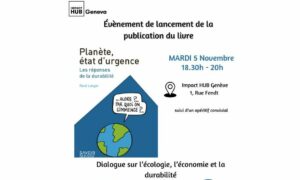
Planète, état d’urgence: Les réponses de la durabilité | Évènement de lancement de la publication du livre
05 Nov 2024 | 18:30 – 20:00
Impact hub Geneva
Impact Hub Geneva
Body Meeting
29th session of the Committee on Environmental Policy
06 – 08 Nov 2024
Palais des Nations | Room XXI
UNECE

Body Meeting
NZAOA 2024 Annual General Meeting: Reviewing five years of success and shaping the Alliance’s 2030 vision
06 – 07 Nov 2024
Palais des Nations | Room V & Online
UNEP FI
Virtual
Addressing climate mitigation for banks in Africa and Middle East: Insights and perspectives from banks in the region
06 Nov 2024 | 11:00 – 12:30
Online | BrightTalk
UNEP FI
Virtual
The Work of the WTO Dialogue on Plastic Pollution: Insights and Reflections for the INC Process
06 Nov 2024 | 11:00 – 12:15
Online | Zoom
TESS
Virtual
Evidence-based One Health Governance: Voice of the One Health High-Level Expert Panel (OHHLEP)
06 Nov 2024 | 12:00 – 13:00
Online
WHO
Conference
CBAM in Action: Lessons learned & Industry Perspectives
06 Nov 2024 | 13:00 – 15:00
Villa Moynier & Online | Zoom
IHEID, GTP
Virtual
Road to Busan | Launch and Panel Discussion | Analysis of Governments’ Authority to Mitigate Micro- and Nanoplastic Releases to Inform the Global Plastics Treaty Negotiations
06 Nov 2024 | 14:00 – 15:30
Online | Webex
University of Wollongong, Minderoo Foundation, GEN
Consultation
Global Forum on Migration and Development (GFMD) Preparatory meeting
06 Nov 2024 | 14:00 – 16:00
Palais des Nations | Room XXIII & Online
GFMD

Virtual
Development Dialogues | From Cali to Baku: A rights-based approach to addressing the triple planetary crisis
06 Nov 2024 | 15:00 – 16:00
Online
Special Procedures of the UN Human Rights Council, CIEL
Virtual
The Latest Developments on the Nature-Finance Nexus
06 Nov 2024 | 15:00 – 16:00
Online | Zoom
IUCN

Local
Jeudi de l’environnement | Sols : ces compagnons que nous méconnaissons !
06 Nov 2024 | 18:00 – 19:30
HEPIA
Republic and State of Geneva
Body Meeting
9th meeting of the Task Force on Access to Information under the Aarhus Convention
07 – 08 Nov 2024
Palais des Nations | Room XXIV
Aarhus Convention
Conference
Official Ceremony for the Endorsement of the Geneva Pledge for Gender-Responsive Climate Action
07 Nov 2024 | 09:30 – 11:30
Palais des Nations | Room IX
International Gender Champions, Germany, Costa Rica, IFRC, Climate Bridges
Virtual
Reporting Matters 2024 Launch Webinar | Changing gears: How are companies navigating higher expectations and demands in sustainability reporting?
07 Nov 2024 | 10:00 – 11:30
Online | Zoom
WBCSD
Virtual
Road to Busan | Plastics Treaty Talks: Designing an Effective Treaty
07 Nov 2024 | 16:00 – 17:30
Online | Webex
CIEL, GEN

Cinema
Documentary Film Screening | Seed Stories
07 Nov 2024 | 18:15 – 19:30
Maison de la Paix | Room S8
IHEID
Afterwork
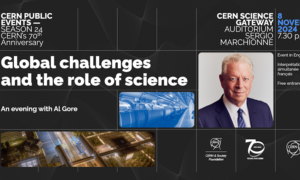
Global Challenges and the Role of Science
08 Nov 2024 | 19:30 – 20:30
CERN Science Gateway
CERN
Jobs
See all



Consultant
End-of-Programme Case Study Publication: Climate-Smart Livelihoods Programming
08 Nov 2024
IFRC
Learning
See all
Online Course
Classifier et étiqueter les produits chimiques conformément au SGH de l’ONU
30 Sep – 13 Dec 2024
UNITAR
Updates
See all
02 Dec 2024
Road to Busan | Plastic Pollution INC-5

19 Aug 2026
Protecting the Environment in Armed Conflict


23 Aug 2026