
Nouvelle
Human Rights, Climate Change, and the Role of Geneva

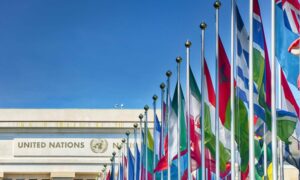
Climate change is one of the greatest existential threats for people and the planet. Its harmful effects undermine the full enjoyment and realization of all human rights, posing a serious risk to the fundamental rights to life, health, food and an adequate standard of living of individuals and communities across the world and disproportionately affecting those who are already in situations of vulnerability. This page highlights the role stakeholders from International Geneva as a global hub for environmental governance play in advancing a human rights-based approach in climate action.
LATEST NEWS
- Climate Justice: A youth guide to legal responsibility, policy action and accountability | UNDP | 13 April 2026
Despite growing youth leadership in climate advocacy, policy engagement, and litigation, participation has not consistently translated into meaningful influence, implementation, or accountability. The report responds to this gap by advancing youth legal advocacy as an enabling pathway for climate action. Grounded in climate, human rights, and environmental law, the Guide frames legal empowerment as a tool to complement policy engagement, community mobilization, and institutional reform.- UN experts urge states to support General Assembly resolution operationalising ICJ Advisory Opinion on climate obligations | UN Special Rapporteurs on the right to healthy environment, on climate change and human rights, and on toxics and human rights | 12 March 2026
All states must support a UN General Assembly resolution upholding the 2025 Advisory Opinion by the International Court of Justice (ICJ) on climate change obligations, UN experts said today, expressing concern about attempts to block discussion of the proposal.- Upholding ICJ opinion vital for global climate action: Regenvanu | Daily Post Digital Network | 10 February 2026
Vanuatu has introduced the zero draft of a United Nations General Assembly (UNGA) resolution endorsing the International Court of Justice’s (ICJ) Advisory Opinion (AO) on the Obligations of States in Respect of Climate Change, handed down on 23 July 2025. A statement released over the weekend said a core group of States contributed to the zero draft, representing diverse regions. Members include Vanuatu, Barbados, Burkina Faso, Colombia, Jamaica, Kenya, the Marshall Islands, the Federated States of Micronesia, the Kingdom of the Netherlands, Palau, the Philippines, Singapore, and Sierra Leone.- How climate change is threatening human rights | UN News | 26 December 2025
With rising effects of climate change across the globe, the world has started recognising that climate change is not just an ecological collapse, but also a human rights crisis.
Human Rights-based Approach in Climate Action
The science is clear: climate change poses an existential threat to the people and the planet. From rising sea levels, floods, heat waves, droughts, desertification, water shortages, and the spread of tropical and vector-borne diseases, the intensification of climate change-related extreme and slow-onset events constitutes one of the greatest threats to human rights. These undermine the full enjoyment and realization of a range of human rights by people throughout the world, including the rights to life, safe drinking water and sanitation, food, health, housing, self-determination, culture, work, and development, and a clean, healthy and sustainable environment.
As the Intergovernmental Panel on Climate Change (IPCC) has warned in its Sixth Assessment Report, an increase above 1.5°C compared to pre-industrial levels in global average temperatures would lead to ecosystem collapse and jeopardize the livelihoods of millions of people, especially affecting disproportionately those who are already in situations of vulnerability.
Effectively addressing climate harm requires States to take meaningful measures to stop greenhouse gas emissions, tackle the impacts of climate change, and address related losses and damages, in a way that is grounded in human rights and takes into account intersecting forms of discrimination and marginalization. Moreover, ensuring the safe and meaningful participation of affected communities, civil society, and Indigenous Peoples in relevant policy spaces is essential to achieve ambitious and equitable climate action, building toward having access to effective remedies and means of adaptation to enjoy lives of human dignity.
A global crisis requires a global rights-based response. As such, it is critical to apply a human rights-based approach, where global policies and measures designed to address climate change are guided by principles and standards derived from international human rights law – especially the Universal Declaration of Human Rights and the core universal human rights treaties.
Fossil Fuel and Human Rights: The imperative of defossilizing our economies to protect human rights
The UN Special Rapporteur, Elisa Morgera, in her report to the Human Rights Council, “The imperative of defossilizing our economies” (A/HRC/59/42) clarifies States’ international human rights obligations and businesses’ responsibilities to phase out fossil fuels and related subsidies within the current decade. In her report, the UN Special Rapporteur underscored that “the interlinked, intergenerational, severe and widespread human rights impacts of the fossil fuel life cycle, coupled with six decades of climate obstruction, compel urgent defossilization of our whole economies, for a just transition that is effective, human rights-based and transformative in protecting the climate, nature, water and food on which life and health for present and future generations depend.”
The report outlines the human rights impacts of the fossil fuel life cycle, connecting evidence on the global climate crisis, toxic pollution and biodiversity loss, global plastic pollution and harmful petrochemical production. It underlines that the impacts are intersectoral, underscoring the need to address fossil fuels beyond the energy sector, through system-wide transformation. Main points include:
- The burning of fossil fuels is the main historical and current driver of greenhouse gas emissions. And yet the main cause of climate change continues to rise. The risks of the impacts of climate change on all human rights and their disproportionate impacts on
individuals and groups in vulnerable situations, have already justified an interpretation of the right to a healthy environment as
giving rise to an obligation of fossil fuel phaseout, to avoid significant, foreseeable harm to the climate system and to ensure a non-toxic environment, through specific actions concerning land, freshwater and the oceans. - In addition to climate-related human rights impacts, each stage of the fossil fuel life cycle entails significant and pervasive risks and harm for the rights to life, health and an adequate standard of living and for cultural rights throughout the whole of people’s lives and across different generations. Such harm is due to toxic pollution and biodiversity loss, impacting the right to a healthy environment and further exacerbating climate change impacts, especially as the human rights impacts of the fossil fuel life cycle do not remain localized.
- The increasing production of plastics and petrochemicals is embedding dependence on fossil fuels in our economies within and beyond the energy sector, regardless of continued contributions to climate change and other human rights harm. In addition, plastics and petrochemicals cause their own host of severe human rights impacts, worsening climate change, biodiversity loss and toxic pollution, and thereby compounding negative impacts on the rights to life, health, an adequate standard of living and a healthy environment and on cultural rights.
- The fossil fuel industry has benefited from extremely large profits, while being heavily subsidized. While it is difficult to assess who ultimately benefits from these subsidies, they all contribute to limiting investment in alternative energy sources… Ultimately, the tax burdens of the just transition are placed on low- and middle-income households, while the loss of fiscal revenue and fiscal incentives for the just transition undermines the realization of economic, social and cultural rights, and the right to a healthy environment.
- Extensive research has documented the fossil fuel sector’s evolving strategies to keep the public uninformed about the severity of climate change and about the role of fossil fuels in causing it (“the playbook”). This has undermined the protection of all human rights, including the rights to information, education and science, undermining the exercise of civil and political rights and preventing effective human rights protection that are negatively impacted by climate change, for over six decades.
The report makes clear that “Priority, comprehensive, coherent action on the fossil fuel phaseout within this decade is necessary to ensure a liveable future for all, as an urgent precondition for a just transition and for effective human rights protection in the context of current planetary crises.” Recommendations include defossilizing the economy, reprioritzing energy demands, carefully phasing out fossil fuel subsidies, “defossilizing” information systems, to protect human rights in the formation of public opinion and democratic debate from undue commercial influence, remediating fossil fuel-related harm to transform the economy, advance multilateral reforms, and ensuring business responsibilities.
Addressing Climate Change in Human Rights Instruments
The various human rights mechanisms and instruments present in Geneva, such as the Human Rights Council, Special Procedures, and Human Rights Treaty Bodies, play an increasingly pivotal role in addressing the human rights impacts of climate change — such as how the Human Rights Council took on resolutions and discussions on specific aspects of climate change, while Special Rapporteurs contributed with reports on specific thematic angles within their mandates. Not only do they identify the rights and the specific groups affected by climate change, they also help clarify the relevant obligations of States to advance human rights while addressing the triple planetary crisis.
Human Rights Treaty Bodies
The human rights treaty bodies are committees of independent experts that monitor implementation of the core international human rights treaties. The treaty bodies have addressed climate change and human rights in a number of statements, decisions, concluding observations, General Comments and General Recommendations. This body of work provides guidelines for the interpretation and application of State party obligations deriving from the respective Covenants and Conventions in relation to climate action and constitutes part of the evolving international human rights law framework that is increasingly addressing climate change.
UN Committee on Economic, Social and Cultural Rights
The Committee on Economic, Social and Cultural Rights — the body of 18 independent experts that monitors implementation of the International Covenant on Economic, Social and Cultural Rights by its State parties — published General Comment No. 27 (2025) on economic, social and cultural rights and the environmental dimension of sustainable development. General Comments are authoritative explanations and interpretations of various UN human rights treaties issued by treaty bodies to clarify States parties’ obligations.
In its General Comment, the Committee affirmed that a clean, healthy and sustainable environment is an essential precondition for the enjoyment of economic, social and cultural rights. It warned that escalating environmental crises are already eroding these rights and pushing the planet toward “irreversible biophysical tipping points that threaten fundamental ecological systems and process that sustain life.”
UN Committee on the Rights of Child
The Committee on the Rights of the Child — the body of 18 independent experts that monitors the implementation of the Convention on the Rights of the Child by its State parties — published General comment No. 26 (2023) on children’s rights and the environment with a special focus on climate change, which is part of a series of recommendations by the Committee on any issue relating to children to which it believes the State parties should devote more attention.
The General Comment emphasizes the urgent need to address the adverse effects of environmental degradation, with a special focus on climate change, on the enjoyment of children’s rights, and clarifies the obligations of States to address environmental harm and climate change. The Committee also explains how children’s rights under the Convention on the Rights of the Child apply to environmental protection, and confirms that children have a right to a clean, healthy and sustainable environment.
Universal Periodic Review
The Universal Periodic Review (UPR) of the Human Rights Council involves a periodic review of the human rights records of all 193 United Nations Member States. The UPR is increasingly addressing the links between climate change and human rights. Between 2008 and 2018, States made 114 recommendations explicitly addressing climate change. A larger number of recommendations were made on matters related to climate change, such as disaster risks reductions and displacement.
Human Rights Council
The Human Rights Council (HRC) has contributed to raising awareness of the links between human rights and climate change by successive and targeted clarifications of the ways climate change affects human rights, including through the adoption of a series of resolutions related to climate change and human rights, including:
- 2025 (HRC59) – Resolution on human rights and climate change, with a focus on climate finance (resolution 59/25)
- 2024 (HRC56) – Resolution on human rights and climate change, with a focus on just transition (resolution 56/8)
- 2023 (HRC53) – Resolution on human rights and climate change, with a focus on loss and damage (resolution 53/6)
- 2021 (HRC48) – The establishment of the mandate of a Special Rapporteur on the promotion and protection of human rights in the context of climate change (resolution 48/14)
Special Procedures of the Human Rights Council
As independent human rights experts with mandates to report and advise on human rights from a thematic or country-specific perspective, the Special Procedures of the Human Rights Council make links with their own mandates with issues on climate change and human rights. This includes work achieved when they undertake country visits; act on individual cases and concerns of a broader, structural nature by sending communications to States and others in which they bring alleged violations or abuses to their attention; conduct thematic studies and convene expert consultations, contribute to the development of international human rights standards, engage in advocacy, raise public awareness, and provide advice for technical cooperation. Since 2008, the Special Procedures mechanisms have been actively involved in addressing the human rights impacts of climate change.
UN Special Rapporteur on climate change and human rights
At its 48th session in October 2021, the Human Rights Council has established the mandate of the Special Rapporteur on the promotion and protection of human rights in the context of climate change to specifically study and identify how the adverse effects of climate change, affect the full and effective enjoyment of human rights. The Special Rapporteur is also mandated to:
- Identify existing challenges, including financial challenges, of States’ efforts
- Synthesize knowledge, including Indigenous and local traditional knowledge, and identify good practices, strategies and policies
- Promote and exchange views on lessons learned and best practices
- Raise awareness on the human rights affected by climate change, especially of persons living in developing countries particularly vulnerable
- Facilitate and contribute to the exchange of technical assistance, capacity-building and international cooperation in support of national efforts
- Integrate a gender-responsive, age-sensitive, disability inclusive and social-inclusion perspective
- Work closely with States and relevant stakeholders, including business enterprises to adopt a human rights perspective
Office of the UN High Commissioner for Human Rights
As the leading UN entity on human rights, the Office of the UN High Commissioner for Human Rights (OHCHR, UN Human Rights) aims to provide guidance that encourages policy coherence and ensures that climate change mitigation and adaptation efforts are adequate, sufficiently ambitious, non-discriminatory and compliant with human rights obligations.
Guided by principles and standards derived from international human rights law, especially the Universal Declaration of Human Rights and the core universal human rights treaties, as well as the 2030 Agenda and the Paris Agreement on climate change, UN Human Rights aim to to help States, businesses and other duty-bearers meet this expectation. OHCHR has published Key Messages on Human Rights and Climate Change outlining key human rights obligations in the context of climate change.
Since 2015, as mandated by the UN Human Rights Council (HRC), OHCHR has also organized annual panel discussions on climate change at HRC, cov0ering diverse subjects such as climate change and the rights of the child; human rights, climate change and human mobility; climate change and the effective enjoyment of the right to health; gender-responsive climate action; and the impacts of climate change on the rights of persons with disabilities. The Office has also produced analytical studies on all these subjects.
A comprehensive overview of references to climate change made by special procedures, treaty bodies (including concluding observations) and the UPR (including the recommendations in the reports from the working groups) can be found by searching the Universal Human Rights Index.
Integrating Human Rights and Climate Change in International Processes
The recognition of the adverse effects of climate change on the full enjoyment of human rights have also been increasingly recognized in various international and regional processes. This section aims to show the growing links between the environment and human rights agenda, and also identifies the various international and regional processes that clarify the relevant obligations of States to advance human rights in addressing environmental harm and climate change.
UN Framework Convention on Climate Change (UNFCCC)
The importance of addressing human rights in the context of ongoing discussions related to the United Nations Framework Convention on Climate Change (UNFCCC) and integrating a rights-based approach to climate change have been underscored.
The first direct reference to human rights in the context of the UNFCCC was made when decision 1/CP.16 (2010) referred to HRC resolution 10/4, which recognizes the adverse effects of climate change on the effective enjoyment of human rights and calls upon States to ensure respect for human rights in their climate actions.
Paris Agreement
The Paris Agreement establishes the first international framework that commits states to take steps to keep temperature increase below 1.5ºC, under which all states have agreed to take climate action on the basis of equity. Significantly, the Paris Agreement also placed climate action in the context of efforts to achieve sustainable development, stressing the relationship between climate action and poverty eradication. It further reaffirms the need for governments to respect and promote human rights, including the rights of indigenous peoples, gender equality and the empowerment of women, the fundamental priority of safeguarding food security, the importance of public participation and access to information, the imperatives of a just transition and creation of decent work, and the importance of securing ecosystems integrity.
The Paris Agreement is the first universal, legally binding climate change agreement to explicitly include human rights. Preamble to the Paris Agreement to the UNFCCC (1/CP.21) expands upon this language calling on States, when taking action to address climate change, to « respect, promote and consider their respective obligations on human rights ».
Human Rights @ Climate Change COP30
The UN Climate Change Conference COP30 is being held from 10–21 November 2025 in Belém, Brazil. For the first time ever, as part of the Presidency of COP30 initiatives, COP30 will hold Justice and Human Rights Days from 12 to 13 November.
Justice and Human Rights Days will put people and rights at the centre of the climate discussion. Across high-level and community-led sessions, the Justice and Human Rights Days programme will seek to advance a human rights-based approach to mitigation, adaptation, loss and damage, climate finance and NDCs 3.0—with a strong focus on participation, non-discrimination, access to information and remedy, and protection of environmental human rights defenders.
Guided by recent advisory opinions of the International Court of Justice and the Inter-American Court of Human Rights on climate change, Justice and Human Rights Days will feature a Presidency high-level dialogue on States’ obligations in the climate crisis, followed by the launch of a year-long call for pledges to operationalize those obligations in practice. Throughout, Indigenous leaders, youth, civil society, experts and decision-makers will share evidence, knowledge and solutions for climate action, including COP30 outcomes, that respect, protect and fulfil human rights while accelerating a just and equitable transition to sustainable economies and societies. A special closing event on 13 November will bring together participants to share key recommendations and takeaways. → Find the full programme.
The Sumaúma Pledging Tree for Human Rights-Based Climate Action – Advancing harmony with nature through human rights solutions
The Sumaúma Pledging Tree, a new initiative of OHCHR, the COP30 Special Envoy on Human Rights and Just Transition, and Brazil’s Ministry of Human Rights and Citizenship, with support from the UN Special Rapporteur on human rights and climate change, invites States and other actors to make concrete commitments to a human rights-based approach to climate action. → For more information, consult the Preliminary Guidance for Pledges to the Sumaúma Pledging Tree.
Other resources
- Just Transition brief for COP30
- Gender Action Plan brief for COP30
- Global Goal on Adaptation brief for COP30
- The Right to Participation brief for COP30
Landmark Ruling on Climate Justice: ICJ Advisory Opinion on Climate Change
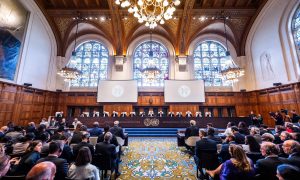
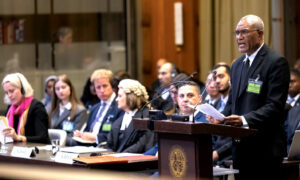
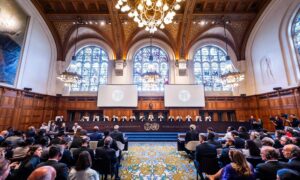
23 July 2025 marks a turning point in the fight against climate change, as the International Court of Justice (ICJ), the UN’s principal judicial body, released its much awaited advisory opinion on States’ obligations with respect to climate change and the legal consequences for failing to live up to these obligations. The world’s highest court unanimously ruled that States have an obligation to protect the environment from greenhouse gas (GHG) emissions, the obligation under the Paris Agreement on climate change to limit global warming to 1.5°C above pre-industrial levels, and act with due diligence and cooperation to fulfill this obligation. The Court further ruled that if States breach these obligations, they incur legal responsibility and may be required to cease the wrongful conduct, offer guarantees of non-repetition and make full reparation depending on the circumstances.
Among the key findings of the Advisory Opinion, the Court confirmed:
- International Law Demands More Than Voluntary Action: Simply following the Paris Agreement is not enough. The Court says that States have obligations under relevant areas of international law, including human rights, environmental law, and relevant treaty commitments, which must be implemented together and harmoniously.
- Clear Legal Duties: The Court confirms that States and major and historical polluters have a clear legal obligation to cut emissions, prevent serious harm, and work together to protect those most at risk, both within their borders and beyond. This duty applies to fossil fuel consumption, extraction, expansion, and subsidies, or a lack of adequate regulation, and extends to States that are not a party to climate change treaties and private entities that operate within their jurisdiction.
- Best Available Science as the Standard: The Court recognises that decisions must be guided by the best available science, especially reports from the IPCC. The Paris Agreement’s 1.5°C temperature limit is the is legal reference point for determining sufficient ambition, action, and responsibility. The decision confirms that “business as usual” is no longer acceptable: States that fail to act, allow high emissions, or ignore the science can now be held internationally accountable.
- Human Rights and Climate Justice Go Hand in Hand: Governments are required to protect people’s rights to life, health, a healthy environment, and self-determination. Special attention is required for Indigenous Peoples, Small Island Developing States, youth, and future generations. The right to a clean, healthy and sustainable environment is a precondition to respect, protect and fulfill all other human rights.
- Accountability and Remedies: The Court affirms that States with high historical and current emissions have heightened obligations to remedy climate harm, including through reparations, support, and regulation of private actors. The Court makes clear that States can be held responsible for both what they do and what they fail to do. Ceasing conduct causing climate harm might require revoking all administrative measures and policies contributing to such damage.
In its conclusion, the Court highlights:
The questions posed by the General Assembly represent more than a legal problem: they concern an existential problem of planetary proportions that imperils all forms of life and the very health of our planet. International law, whose authority has been invoked by the General Assembly, has an important but ultimately limited role in resolving this problem. A complete solution to this daunting, and self-inflicted, problem requires the contribution of all fields of human knowledge, whether law, science, economics or any other. Above all, a lasting and satisfactory solution requires human will and wisdom — at the individual, social and political levels — to change our habits, comforts and current way of life in order to secure a future for ourselves and those who are yet to come. Through this Opinion, the Court participates in the activities of the United Nations and the international community represented in that body, with the hope that its conclusions will allow the law to inform and guide social and political action to address the ongoing climate crisis.
History of the Request for the Advisory Opinion
The UN General Assembly at its 64th plenary meeting held on 29 March 2023, under agenda item 70, adopted by consensus resolution 77/276 entitled “Request for an advisory opinion of the International Court of Justice on the obligations of States in respect of climate change”.
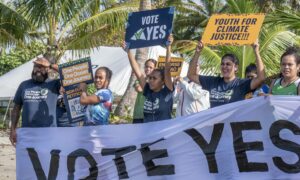
The groundbreaking advisory opinion was conceived in 2019 by law students from The University of the South Pacific, which inspired the world’s youth to demand State support for the UN request and meaningful participation in the Court’s proceedings. Through the campaign, Pacific Islands Students Fighting Climate Change (PISFCC) and World’s Youth for Climate Justice (WYCJ) have united over 1,500 organizations and secured the UN adoption of the advisory opinion request.
The Assembly decided to request the Court to render an opinion on the obligations of States under international law to ensure the protection of the climate system from anthropogenic emissions of greenhouse gases. The text further requested the Court’s opinion on the legal consequences under obligations for States where they, by their acts and omissions, have caused significant harm to the climate system with respect to States, and in particular, small island developing States, and people of present and future generations.
Geneva Dialogues on ICJ Ruling
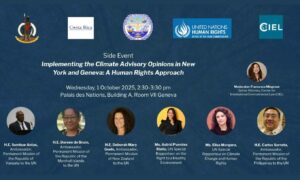
Geneva-based human rights mechanisms and international organizations, through their wealth of resolutions, authoritative statements, and reports have informed the advisory opinions and continue to guide States in developing national policies and measures. They now have the opportunity and the responsibility to build on the findings by the ICJ, as well as other advisory opinions on climate change, to advance effective human rights-based climate action.
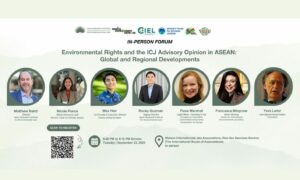
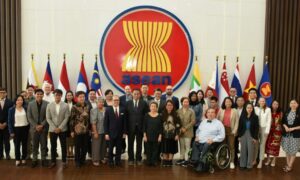
Various events that featured the ICJ advisory opinion took place in Geneva and highlighted how Geneva-based institutions and organizations have contributed to further advancing human rights-based climate action, as well as their role in elevating and building on these rulings.
Human Rights and Climate Change in Other International and Regional Climate Advisory Opinion Processes
International Tribunal of the Law of the Sea (ITLOS)
The International Tribunal for the Law of the Sea received a request on 12 December 2022 from the Commission of Small Island States on Climate Change and International Law to render an advisory opinion on the specific obligations of State Parties to the UN Convention on the Law of the Sea (UNCLOS) to prevent, reduce and control pollution of the marine environment in relation to the deleterious effects that result or are likely to result from climate change and to protect and preserve the marine environment in relation to climate change impacts.
The International Tribunal for the Law of the Sea (ITLOS) has delivered its much-awaited advisory opinion regarding climate change obligations under the UN Convention on the Law of the Sea (UNCLOS). In the opinion, the ITLOS specified that state parties to the UNCLOS have the obligation to take “all necessary measures to prevent, reduce, and control marine pollution from anthropogenic GHG emissions and to endeavor to harmonize their policies in this connection” (para 243). Additionally, the tribunal emphasized that the due diligence obligation of the state parties is a stringent one (para 242). This decision is issued in the wake of the European Court of Human Rights decision related to climate change obligations under the European Human Rights Convention and is another in a series of recent climate change-related international proceedings, such as the ICJ Advisory Opinion on climate change and the Inter-American Court of Human Rights.
Association of Southeast Asian Nations
The Association of Southeast Asian Nations (ASEAN) has adopted the ASEAN Declaration on the Right to a Safe, Clean, Healthy and Sustainable Environment on 26 October 2025 at the 47th ASEAN Summit held in Kuala Lumpur, Malaysia. The Declaration, « cognisant of the growing and pressing need to address global and transboundary environmental concerns, in particular, the triple planetary crisis of climate change, biodiversity loss and environmental pollution », states its commitment to « advance the right to a safe, clean, healthy and sustainable environment for present and future generations » and to promote and foster « the implementation of environmental law » and of « multilateral environmental agreements to which all ASEAN Member States are parties ». They also commit to improve « efforts to provide for a safe and enabling environment » to ensure the exercise of this right.
The Declaration comes two months after the International Court of Justice published its landmark Advisory Opinion on States’ obligations and climate change, reaffirming that all States have the erga omnes obligation to prevent environmental harm and that international human rights law applies to climate and environmental action. → Consult the full declaration
European Court of Human Rights
The European Court of Human Rights delivered a landmark ruling in one of the three cases concerning climate change, on 9 April 2024. The top human rights court in Europe considered that in the case Verein KlimaSeniorinnen Schweiz and Others v. Switzerland, the Swiss authorities are not taking sufficient action, despite their duties under the European Convention of Human Rights, to mitigate the effects of climate change. The case, concerning a complaint by four women and a Swiss association, was judged to have found a violation of Article 8 (right to respect for private and family life) and of Article 6 § 1 (access to court) of the Convention. The landmark case is expected to bolster climate litigation not only in the region but globally, as the ruling clarifies that States have the responsibility to combat climate change to protect human rights. → Read more on the decision.
Inter-American Court of Human Rights
The Inter-American Court of Human Rights received a submission from Colombia and Chile requesting the Court for an advisory opinion to clarify the scope of State obligations, in their individual and collective dimension, to respond to the climate emergency within the framework of international human rights law, paying special attention to the differentiated impacts of this emergency on individuals from diverse regions and population groups, as well as on nature and on human survival on our planet.
In early July 2025, the Inter-American Court of Human Rights issued a landmark ruling on States’ responsibilities to tackle the climate crisis in response to the request by the Republics of Colombia and Chile. In this major judicial ruling (known as Advisory Opinion 32), the Court sets out what human rights law demands of governments in the face of the climate emergency. The ruling draws on an unprecedented participatory process involving over 260 amicus briefs and 160 delegations of States, Indigenous and Afro-descendant Peoples, frontline communities, and civil society groups taking part in the oral hearings. Numerous organizations reacted to the ruling.
African Court on Human and Peoples’ Rights
On 2 May 2025, the Pan African Lawyers Union (PALU), supported by civil society organizations including the African Climate Platform, Natural Justice, Resilient40, and the Environmental Lawyers Collective for Africa, filed a petition before the African Court on Human and Peoples’ Rights requesting an Advisory Opinion on the human rights obligations of African states in the context of climate change (see Climate Case Chart). The request was submitted pursuant to Article 4 of the Protocol to the African Charter on Human and Peoples’ Rights on the Establishment of an African Court on Human and Peoples’ Rights.
The petition seeks the Court’s interpretation of regional human rights instruments, notably the African Charter on Human and Peoples’ Rights, the Maputo Protocol, the Kampala Convention, and the African Charter on the Rights and Welfare of the Child, as they relate to climate change. It argues that climate change poses a significant threat to numerous rights protected under these instruments, including the rights to life, health, food, water, housing, development, dignity, a healthy environment, and the rights of vulnerable groups such as women, children, Indigenous peoples, people with disabilities, and internally displaced persons.
The applicants request the Court to clarify states’ obligations regarding:
- Legal standards for climate change mitigation, adaptation, resilience, and the redress of loss and damage;
- The protection of environmental defenders and affected communities from reprisals;
- Participation, transparency, and accountability in climate-related decision-making;
- The just and equitable transition to low-carbon energy systems;
- The regulation of third-party conduct, particularly that of multinational corporations;
- The decolonization of natural resource governance frameworks.
The petition emphasizes the disproportionate impact of climate change on Africa, despite the continent’s minimal contribution to historical greenhouse gas emissions. It calls on the Court to affirm that African states have an obligation to protect their populations from climate-related harms and to ensure human rights are safeguarded in all climate action.
Various organizations from International Geneva and beyond have filed amicus briefs and written observations in March 2026. These include:
- Amicus filed by Astrid Puentes Riaño, United Nations Special Rapporteur on the human right to a clean, healthy and sustainable environment | UN Special Rapporteur on the right to a healthy environment | 30 March 2026
- Defining States’ Climate Obligations and Responsibilities in the African Context | CIEL | 30 March 2026
- Protecting biodiversity is a human rights obligation in the climate crisis, says WWF in submission to African court | WWF | 30 March 2026
- World’s Youth for Climate Justice’s Amicus Curiae Submission | WYCJ | 30 March 2026
- Human Rights Watch Submission for the African Court Advisory Opinion on State Obligations Related to the Climate Crisis | Human Rights Watch | 30 March 2026
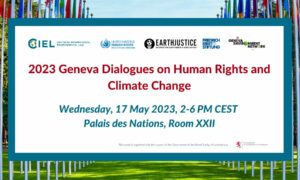
Geneva Rights and Climate Talks
The Special Rapporteur on human rights and climate change reports to the Human Rights Council during its June session on issues related to her mandate. The Geneva Rights and Climate Talks aim to harness the opportunity of this moment of the year to reflect on the challenges posed by the impacts of climate change, and on how Geneva contributes to bringing together the actors working towards placing human rights at the heart of climate action.

Role of Geneva
Referred to as the world capital for multilateralism and home to numerous international organizations, permanent missions, non-governmental organizations and other institutions based in Geneva that place climate issues at the center of their work, Geneva is at the center of numerous debates and negotiations, including cross-disciplinary expertise and discussions on human rights and climate change. Placing human rights at the heart of climate action, International Geneva is mobilized in the fight against climate change. This section provides several Geneva-based stakeholders that advance the work on human rights and climate change.
Center for International Environmental Law | CIEL
CIEL is committed to applying a human rights-based approach as a means to protect the peoples and communities on the frontline of climate change. In doing so, it works to design and integrate policies to safeguard rights and ecosystems and to ensure effective public participation within key climate institutions and mechanisms. CIEL also provide support and build the capacity of peoples and communities adversely affected by climate impacts and climate policies to support their direct participation in those decisions that affect their lives and livelihoods, including working with partners to develop new legal strategies to hold corporations accountable and accelerate the transition away from fossil fuels. With the Global Initiative for Economic, Social, and Cultural Rights, CIEL published « States’ Human Rights Obligations in the Context of Climate: Guidance Provided by the UN Human Rights Treaty Bodies« .
Earthjustice
Earthjustice works with partners to end the use of fossil fuels and bring about a swift and just transition to zero carbon emissions and 100% clean energy.
Franciscans International
A study by Franciscans International and the Lutheran World Federation examines how these communities can help safeguard human rights during the shift away from a dependency fossil fuel and extractivism, promoting inclusive and sustainable solutions. It also addresses ethical challenges in climate action, such as the risks of embracing “false solutions” like carbon trading and geoengineering that may worsen inequality. By highlighting the importance of participation, the study underscores the need for marginalized voices to be actively involved in shaping climate decisions at all levels. Ultimately, it seeks to identify barriers to a Just Transition and how faith-based organizations can help overcome them, ensuring that effective climate responses are guided by compassion, equity, and respect for both people and the planet.
Global Alliance of National Human Rights Institutes | GANHRI
Representing more than 110 national human rights institutes (NHRI), their members and staff across all regions, GANHRI is one of the largest human rights networks worldwide. At the 2020 GANHRI Annual Conference, NHRIs from all regions pledged to work individually and collectively to promote human rights-based climate action. The conference statement – Climate Change: The Role of National Human Rights Institutions – sets out the practical ways that NHRIs will work for climate justice.
Geneva Climate Change Consultation Group | GeCCco
GeCCco gathers civil society organizations working in Geneva to bring forward the human rights issues raised by climate change and to introduce these climate change issues in the work of the Geneva-based UN Human Rights Bodies. The GeCCco also keeps a close eye on the UNFCCC processes thanks to the NGO Working Group on Human Rights and Climate Change, the oldest and main coalition on this matter, to which a number of the participating organizations are also members.
Geneva Interfaith Forum on Climate Change, Environment and Human Rights | GIF
From its inception in 2008, the Geneva Interfaith Forum on Climate Change, Environment and Human Rights (GIF) has addressed climate change within a holistic perspective, recognising its environmental, developmental, political, economic, social and cultural implications. Furthermore, from a spiritual and ethical perspective the GIF advocates for climate justice to be central to human rights and climate change discussions.
Geneva Pledge on Human Rights and Climate Action
The Geneva Pledge on Human Rights and Climate Action is a voluntary initiative undertaken by countries to facilitate the sharing of best practice and knowledge between human rights and climate experts at a national level. In recognizing the injustice faced by the poorest and most vulnerable people who are disproportionately affected by the impacts of climate change, this diverse group of countries pledge to enable meaningful collaboration between national representatives in UNFCCC and the processes of the Human Rights Council. The practical and constructive initiative will help countries to better design climate action that is good for people as well as the planet.
Intergovernmental Panel on Climate Change | IPCC
The IPCC was set up to provide an objective source of scientific information. In 2013, the IPCC provided more clarity about the role of human activities in climate change when it released its Fifth Assessment Report. It is categorical in its conclusion: climate change is real and human activities are the main cause. Its Sixth Assessment Report recognizes the magnitude of recent changes in the overall climate system and serves as a « dire warning about the consequences of inaction », including violations of human rights.
International Committee of the Red Cross | ICRC
The ICRC works to adapt its response to support populations coping with the dual shocks of climate risks and conflicts, also addressing the human rights violations brought by these crises. In 2020, the ICRC also released the report “When rain turns to dust” illustrating how countries mired in conflict are disproportionately impacted by climate variability and extremes, due to the limited adaptive capacity of people, systems, and institutions already coping with the consequences of conflicts.
International Federation of Red Cross and Red Crescent Societies | IFRC
The IFRC held its first-ever virtual climate summit, Climate: Red, on 9-10 September 2020. It brought together members, staff, youth activists, government officials, experts, and indigenous leaders from around the world to discuss how to tackle the climate emergency.
Climate and Environment Charter for Humanitarian Organizations
Guided by an Advisory Committee of experts and stakeholders, the ICRC and IFRC led the development of a climate and environment charter for humanitarian organizations, sending a clear signal that humanitarian organizations have a key role to play in addressing these crises. Launched in May 2021, the Charter provides a framework for action, setting out commitments to guide the humanitarian sector in addressing these crises. It sends a clear signal that humanitarian organizations have a key role to play in addressing these crises. It underscores our responsibility to help communities adapt to the realities of a changing climate and environment while improving the sustainability of our own operations.
International Federation for Human Rights | FIDH
Defending all civil, political, economic, social and cultural rights as set out in the Universal Declaration of Human Rights since 1992, FIDH has mobilized to fight impunity to hold States and business accountable for environmental degradation, advocating that a just transition away from fossil fuels must be an imperative for all climate action ahead. FIDH, in its submissions to both the Santa Marta and the COP31 roadmap, calls for: meaningful and effective participation of rightsholders and human rights defenders in phaseout action plans; reform of trade and investment agreements to serve human rights and climate objectives instead of corporate interests; tax justice reform to remedy budgetary crunches arising from the phaseout and find new, increased resources to fulfil human rights.
International Labour Organization | ILO
Spearheaded by the ILO, it launched the Climate Action for Jobs Initiative by United Nations Secretary-General António Guterres. The initiative brings together governments, workers’ and employers’ organizations, international institutions, academia and civil society to place jobs at the heart of ambitious climate action and to promote a just transition.
International Organization for Migration | IOM
Since 2007, IOM has been working on migration, environment and climate change. Since 2015, it hosts a dedicated Migration, Environment and Climate Change Division (MECC) that addresses the migration, environment and climate nexus. Through it, IOM oversees, supports and coordinates the development of policy guidance for activities with a migration, environment and climate change dimension. IOM established the Environmental Migration Portal: Knowledge Platform on People on the Move in a Changing Climate in 2015. The Portal provides up-to-date information on key policy processes and developments, capacity building efforts, research and publications, and operational projects addressing the migration, environment and climate change nexus. The Portal highlights IOM’s efforts, including with partners, as we work together towards addressing one of the biggest challenges of our times, migration in the context of environmental and climate change.
International Union for Conservation of Nature | IUCN
The IUCN assesses the impacts of climate change on species and ecosystems. Through its work on ecosystem-based mitigation, adaptation and disaster risk reduction, it also highlights the important role of nature-based solutions to climate change. It also works to ensure that climate policy and action are gender-responsive, socially inclusive and take into account to the needs of the most vulnerable.
Lutheran World Federation
A study by Franciscans International and the Lutheran World Federation examines how these communities can help safeguard human rights during the shift away from a dependency fossil fuel and extractivism, promoting inclusive and sustainable solutions. It also addresses ethical challenges in climate action, such as the risks of embracing “false solutions” like carbon trading and geoengineering that may worsen inequality. By highlighting the importance of participation, the study underscores the need for marginalized voices to be actively involved in shaping climate decisions at all levels. Ultimately, it seeks to identify barriers to a Just Transition and how faith-based organizations can help overcome them, ensuring that effective climate responses are guided by compassion, equity, and respect for both people and the planet.
Office of the United Nations High Commissioner on Human Rights | OHCHR
As climate change threatens the effective enjoyment of a range of human rights, the OHCHR aims to ensure that environmental and climate policies and plans are implemented in accordance with international human rights standards. To help States, businesses and other duty-bearers meet this expectation, OHCHR’s Key Messages on Human Rights and Climate Change, outline key human rights obligations in the context of climate change. Since 2015, as mandated by the UN Human Rights Council (HRC), OHCHR has also organized annual panel discussions on climate change at HRC, and produced analytical studies on various subjects on climate change and human rights. → Consult the section on the work of OHCHR.
Partnership for Environment and Disaster Risk Reduction | PEDRR
PEDRR is a global partnership of 24 organizations that promotes ecosystem management as a key strategy to enable vulnerable communities and countries to reduce disaster risk and build resilience to disasters and climate change.
Platform on Disaster Replacement
Climate refugees are on the increase and the Platform on Disaster Displacement is a State-led initiative that aims to follow up on the work started by the Nansen Initiative and to implement the Nansen Initiative – Agenda for the Protection of Cross-Border Displaced Persons in the Context of Disasters and Climate Change, endorsed by more than 100 States in October 2015.
Special Procedures of the UN Human Rights Council
As independent human rights experts with mandates to report and advise on human rights from a thematic or country-specific perspective, the Special Procedures of the Human Rights Council, such as the UN Special Rapporteur on the promotion and protection of human rights in the context of climate change, have addressed issues on climate change and human rights, as it relates to their mandate. This includes work achieved when they undertake country visits; act on individual cases and concerns of a broader, structural nature by sending communications to States and others in which they bring alleged violations or abuses to their attention; conduct thematic studies and convene expert consultations, contribute to the development of international human rights standards, engage in advocacy, raise public awareness, and provide advice for technical cooperation. Since 2008, the Special Procedures mechanisms have been actively involved in addressing the human rights impacts of climate change. → Consult reports by Special Procedures & other mechanisms addressing human rights and climate change.
United Nations Office for Disaster Risk Reduction | UNDRR
UNDRR oversees the implementation of the Sendai Framework for Disaster Risk Reduction 2015-2030, supporting countries in its implementation, monitoring and sharing what works in reducing existing risk and preventing the creation of new risk. As climate-related risks are increasingly affecting people around the world, UNDRR is also actively promoting climate adaptation to reduce these risks.
United Nations Economic Commission for Europe | UNECE
The UNECE region is a major source of greenhouse gas emissions, responsible for 34% of the world’s CO2 emissions from fossil fuel combustion. The people of the region are increasingly feeling the impacts of climate change – from wildfires to flooding, heatwaves and drought. Through its norms, standards, conventions and policy assistance, UNECE provides key tools supporting countries in their climate change mitigation and adaptation efforts.
United Nations Environment Programme | UNEP
The work of UNEP on climate action cuts across the fields of science, policy, technology and finance. It empowers countries to pursue low-emission development and boost their capacity to adapt and be resilient to climate heating. UNEP is also working to implement the Paris Agreement and its contributions include bringing science to policymakers, playing a leading role in transformative global partnerships, and helping dozens of countries develop national plans to cut greenhouse gas emissions. In addition, UNEP equips countries to seize new investment opportunities that reduce greenhouse gas emissions from deforestation and forest degradation and supports the development of new finance models to accelerate the transition to a green economy. Through the Climate Finance Unit, UNEP also focuses on supporting developing countries to access climate finance (directly and through accredited entities) from the Green Climate Fund (GCF), the Global Environment Facility (GEF), and the Adaptation Fund (AF) as well as through other bilateral or multilateral public sources.
Ahead of the UN Climate Change Conference COP21, UNEP published report on climate change and human rights (2021) providing an assessment of the relationship between climate change and human rights law and by making recommendations for incorporating a human rights lens into international and domestic climate action.
United Nations High Commissioner for Refugees | UNHCR
Refugees, internally displaced and stateless people are on the frontlines of the climate crisis. UNHCR is working to protect them and strengthen their resilience to its current and future impacts, while also reducing our own environmental footprint.
Building on their Strategic Framework for Climate Action, their Strategic Plan for Climate Action 2024-2030 details a global roadmap for prioritized action in support of governments and in collaboration with a wide range of partners to realize the ambitious goal of protecting increasing numbers of forcibly displaced and stateless people fleeing from climate-fueled crises and/or living in climate-vulnerable countries, helping them find solutions and make resilient to the impacts of climate change, towards the means to live self-sufficient lives.
United Nations Human Rights Council
The Human Rights Council (HRC) has contributed to raising awareness of the links between human rights and climate change by successive and targeted clarifications of the ways climate change affects human rights, including through the adoption of a series of resolutions related to climate change and human rights, including the yearly resolution on human rights and climate change, and the resolution establishing the mandate of a UN Special Rapporteur on the promotion and protection of human rights in the context of climate change (A/HRC/RES/48/14) in 2021.
World Health Organization (WHO)
The WHO indicates that the world population is encountering unfamiliar human-induced changes in the lower and middle atmospheres and world-wide depletion of various other natural systems. Beyond the early recognition that such changes would affect economic activities, infrastructure and managed ecosystems, there is now recognition that global climate change poses risks to human population health. Climate change is emerging as a major theme in population health research, social policy development, and advocacy. Consideration of global climatic-environmental hazards to human health will become a central role in the sustainability transition debate. To amplify WHO’s climate and health messaging and addressing the climate crisis as an health crisis, WHO appointed in June 2023 Dr Vanessa Kerry as the first-ever Director-General Special Envoy for Climate Change and Health.
World Wildlife Fund (WWF)
WWF works to tackle the climate crisis in a variety of ways. From encouraging governments to implement more ambitious climate policies, to supporting the shift to renewable energy, to working with cities, businesses and communities to create a climate-resilient, net-zero future. WWF’s goal is to adaptively halve greenhouse gas emissions through a stark reduction in energy demand, an increase of at least 40% of non-hydro renewable energy in electricity mix and the implementation of nature-based solutions at scale which ensure people and nature resilience to climate change. In June 2023, WWF adopted its climate action plan « Climate action right now: Everyone, everywhere, all at once » enshrining its expectations for COP28 and achieving the goals set by the Paris Agreement.
GEN Events
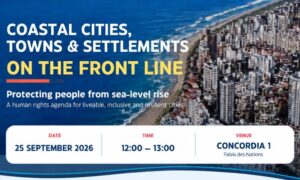
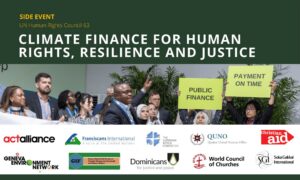
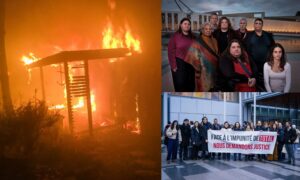




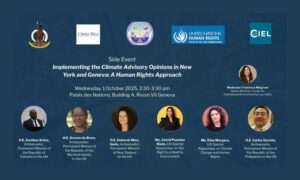

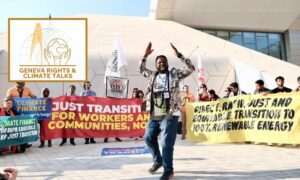
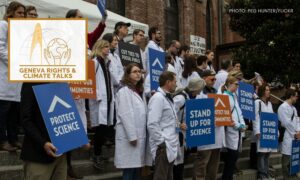
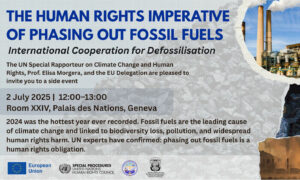
Just Transition and Human Rights | Reducing Dependence on New Mineral Resource Extraction | HRC59 Side Event
1 July 2025
Organized within the framework of the Geneva Dialogues on Mineral and Metal Resources


Resources
General Resources
- Human rights, climate change and migration | OHCHR and climate change
- Mapping Loss and Damage Activities in 2024 | Loss and Damage Collaboration
- Human Rights and the Environment | GEN
- Mobilizing Climate Actors in International Geneva | GEN
Relevant News
- Leveraging the ICJ Climate Ruling at COP30 to Unlock Ambition and Advance Accountability. A Pocket Guide for Negotiators and Allies | Pacific Islands Students Fighting Climate Change, WY4CJ, CIEL, Climate Action Network Pacific Islands
- Open Letter from the United Nations High Commissioner for Human Rights, Volker Türk, on priorities for COP30 | OHCHR | 31 October 2025
- What Role Can the ICJ Advisory Opinion Play in Climate Politics? | IISD | 8 October 2025
- Over 3,000 climate litigation cases are reshaping global climate policy today | UNEP | 3 October 2025
- UN experts welcome recognition from International Court of Justice that all States must protect the climate system | OHCHR | 28 July 2025
- World Court says countries are legally obligated to curb emissions, protect climate | UN News | 23 July 2025
- UN experts hail landmark Inter-American Court opinion on States’ extensive duties to protect the climate | OHCHR | 11 July 2025
- HC Türk: Climate emergency is a clarion call for a new politics | OHCHR | 3 June 2025
- We must challenge rising demand for transition minerals, says UN rapporteur | Climate Home News | 30 January 2025
- COP29: Unexpected adoption of carbon market standards in Baku raises concerns | UN Independent Expert on the effects of foreign debt & UN Special Rapporteur on human rights and climate change | 19 November 2024
- States’ Human Rights Obligations in the Context of Climate Change: Guidance Provided by the UN Human Rights Treaty Bodies | CIEL | August 2024
- Realising human rights as a critical contribution to confronting the triple planetary crisis | URG | May 2024
- Global Climate Litigation Report: 2023 Status Review | UNEP | 27 July 2023
- Joint Statement at HRC53 on the importance of transparent, inclusive, safe and meaningful participation by civil society in international climate discussions | EU, on behalf of 70 States | 3 July 2023
- Funds for world’s climate hotspots woefully neglect the needs of children, new report finds | UNICEF | 22 June 2023
- Joint Statement: UAE Human Rights Record Ahead of COP28 | Human Rights Watch | 1 May 2023
- States must step up climate action now, before it is too late: UN expert | OHCHR | 23 March 2023
- Status of climate applications before the European Court | European Court of Human Rights | 9 February 2023
- Human Rights and Climate Change | Interview with SR Ian Fry and Therese Arnasen | CB Stories – PCCB Network Podcast | 16 December 2022
- Egypt: UN experts alarmed by harassment of civil society actors at COP27 climate summit | OHCHR | 18 November 2022
- Human Rights implications of COVID-19 response measures in the context of climate change | OHCHR | 16 November 2022
- Secretary-General’s remarks to High-Level opening of COP27 | UN Secretary-General Antonio Guterres | 7 November 2022 | Video
- What Does a Human Rights-based Approach to Addressing Loss and Damage Look Like?: Key Demands for the Outcomes of Cop 27 at the Intersection of Loss and Damage and Human Rights | ESCR-Net, Human Rights & Climate Change Working Group, Loss & Damage Collaboration | 1 November 2022
- Egypt: UN experts alarmed by restrictions on civil society ahead of climate summit | OHCHR | 7 October 2022
- Australia should compensate Torres Strait Islanders for climate crisis failure, UN says | | Adam Morton and Paul Karp | The Guardian | 23 September 2022
- Findings of consultations with children and young people informing General Comment No. 26 | Child Rights Environment Report
- Bangladesh: First visit by UN human rights expert on climate change | OHCHR | 29 August 2022
- HRC Advisory Committee Concludes its 28th Session – Advances Work on New Technologies for Climate Protection and on Racial Justice and Equality | 28th Session of HRC Advisory Committee | 12 August 2022
- Report of the Special Rapporteur on the human rights of migrants on climate change, human rights, and migration | A/77/189 | 19 July 2022
- Violence against women and girls in the context of the climate crisis, including environmental degradation and related disaster risk mitigation and response | Report of the Special Rapporteur on violence against women and girls, its causes and consequences | A/77/136 | 11 July 2022
- Promoting Human Rights in Climate Action: A Global Stocktake Informed by Human Rights | CIEL
- Climate change expert brings passion, experience to new post | OHCHR | 29 April 2022
- UN appoints first independent expert on climate change and human rights | Interview, UN News | 25 April 2022
- Climate Crisis and Displacement: From Commitment to Action | Platform on Disaster Displacement | March 2022
- States’ Human Rights Obligations in the Context of Climate Change: Guidance Provided by the UN Human Rights Treaty Bodies | CIEL | March 2022
- A UN Special Rapporteur on Human Rights & Climate Change? Regional Perspectives | CIEL | January 2021
- The Human Rights Impact of Climate Change: An International and Local Challenge | Michelle Bachelet | Speech at HRC49 Side Event | 14 March 2022
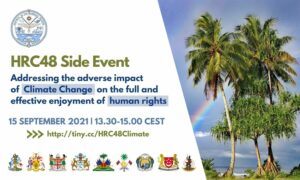
- Addressing the adverse impact of Climate Change on the full and effective enjoyment of human rights | HRC48 Side Event | 15 September 2021
- Safe Climate Report (A/74/161) | SR Environment
- Frequently Asked Questions on Human Rights and Climate Change, Fact Sheet No. 38 | OHCHR
- Concept note of the General comment on children’s rights and the environment with a special focus on climate change | OHCHR Committee on the Rights of a Child
- About General Comment No. 26 on children’s rights and the environment
- Summary of the panel discussion on the human rights of older persons in the context of climate change – Report of the Office of the United Nations High Commissioner for Human Rights (A/HRC/49/61)
Photo Credit
© Eugene Sibomana, UNHCR